Does Winter Have a Sound? Writing Prompts and Publishing News

This week We are starting off our blog by sharing links for three new magazines on the scene that provide publishing opportunities for poets. Two of the publications, Only Poems and SWIMM Every Day, are on the publishing platform Substack. The third, New Verse News, is on Blogspot. Take note that Swwimm only publishes work by women. Although these magazines will try to entice you to support them by becoming a paid subscriber, you don’t have to subscribe to submit. But do read them, do decide whether they might be a good home for your work. Here are their links. Check them out.

Only Poems

SWIMM Every Day

New Verse News

Writing Prompt

It’s snowing, freezing in many places around the USA and around the world. I take a walk in my neighborhood and notice sound is different in a snowstorm. I hear the crunch of my footsteps, the thud of a snow clump falling from a tree branch, the scraping of a snow shovel. No car engines. No beeping construction trucks today. The morning is quiet.  

Sound, one of the six senses, is a powerful writing tool. This winter week in January, think about the following seven ways to integrate sound into your poetry and prose and then put them to use.

Rhyme

The matching of identical or similar word endings was once a requirement, in some poems. Now public opinion has swayed in the opposite direction, and some publications specifically will not publish rhyming poetry. It all depends, which way your mind bends. Rhyme can add emphasis and shading to both poetry and prose and can also elicit humor.  

Rhythm

The manipulation of syllabic patterns in a passage, can add intensity and create suspense. A line of poetry or prose, rhythmically pleasing is a joy to read. Writing prose, sentence by sentence, experiment with how different words and word sequences with varying syllable length can change the impact of your writing.

Consonance

The name sounds like consonants and its meaning refers to repetition of consonants — specifically, those at the ends of words: The injured steed stayed on the ground and I stroked his head.

Onomatopoeia

 A long fancy sounding term,onomatopoeia refers to words that are sound effects.  Can you find words that concurrently indicate meaning while also mimicking a sound? Here are two examples: The cock-a-doodle doo of the rooster woke me up at six. The clanging pots annoyed everyone.

Repetition

Repetition is the repeating of a word or phrase. When used adeptly it will create a structure or pattern that adds emphasis to the desired meaning of a passage. Remember “The Raven” by Edgar Allen Poe? The first stanza goes:

Once upon a midnight dreary, while I pondered, weak and weary,

Over many a quaint and curious volume of forgotten lore—

    While I nodded, nearly napping, suddenly there came a tapping,

As of some one gently rapping, rapping at my chamber door.

“’Tis some visitor,” I muttered, “tapping at my chamber door—

            Only this and nothing more.”

Alliteration

Alliteration, two or more words within a phrase or sentence that begin with the same sound, can add shading, emphasis and lyricism. Alliteration can be delivered two ways: consecutively delivered as with deep and daring or spread out within a sentence, promises can be painful and keeping up with party invitations practical.

Assonance

Assonance as with Consonance relies on repetition of a letter in the alphabet. In this case, instead of a consonant it is a vowel. The use of repetitive vowel sounds can be powerful in both a phrase or an entire paragraph. We who must not see the bees hiding in the trees look on bended knee for the lost honey.

We close with a winter poem by William Carlos Williams.

Blizzard

BY WILLIAM CARLOS WILLIAMS

1883-1963

Snow:

years of anger following

hours that float idly down —

the blizzard

drifts its weight

deeper and deeper for three days

or sixty years, eh? Then

the sun! a clutter of

yellow and blue flakes —

Hairy looking trees stand out

in long alleys

over a wild solitude.

The man turns and there —

his solitary track stretched out

upon the world.

Thank you for reading our bog. Follow us on Facebook and visit the Old Scratch Press page at Devils Party Press

Available now: Robert Fleming’s white noir. An eclectic, visual collection you won’t want to miss.

Want to Get Published? Where & How to Submit Your Work

By Ellis Elliot

Sharing your work by submitting it for publication can be a daunting task in many ways, not only because it causes a vulnerability hangover, but also because it can be overwhelming and hard to figure out where to start. I’m hardly an expert, but I have submitted dozens of poems to literary journals and contests, and found a good bit of success, and this is what I’ve learned.

            First, begin by stalking online and print literary journals. Find some you like and respect. Consider the type of writing you want to submit. You would not submit your Southern Gothic short story to a literary journal for Christian Sci-Fi (yes, that’s a thing). Find the right kind of “fit”, as far as genre and theme, for your work. See if the journal resonates with you. And while it is never wrong to “shoot for the stars” and submit to the New Yorker or another of that ilk, it also makes sense to spread your net wide, over a variety of journals, big and small.

How do you even find these journals in the first place? Maybe your school has one, or you can broadly search online for ones in your genre, and then read some. Read to get a sense of specific journals, and what all is out there.

Also, there are numerous free and paid websites that have lists of journals, and some can even narrow it down for you based on your preferences.  A few I use are: Submittable, Duotrope, Poets and Writers magazine, Writer’s Digest, and Authors Publish. (See links below) These provide lists of publications, along with dates and details. Always check if there are fees involved, and choose wisely. I’m the first to admit, it is a lot of work to wade through the sea of lit journals in order to filter down to the ones you want, but once you find them, your list has begun, and from there you can only add to it. Plus, once those algorithms get in your computer, you’ll be getting all sorts of lit-related stuff, like it or not.

Once you’ve narrowed it down to the journals you want to send your work to, be sure to read the guidelines carefully. You don’t want your work tossed because you sent five poems when they asked for one, or sent a 500-word bio when they asked for 50.

Photo by Pixabay on Pexels.com

Be prepared with a good cover letter, short biography, and a photo. Your cover letter should be addressed to the editor of your genre in that publication. It should be brief and can include references to the journal you’re submitting to, like how you enjoyed their recent issue on butterfly migration, but don’t overdo. They are there to read your writing, not your cover letter. Be sure to thank them for their time and effort, because it does require a lot of both.

The bio should also be matter-of-fact, including salient facts, like where you live, what job you have, or family and pets. Include any writing-related experience you’ve had, whether it’s school, workshops, or clubs. If you’ve been previously published, be sure to include those titles. 

You can always throw in a little personality and add things like, “in my spare time I like to taxidermy butterflies and run on the beach.”

            Finally, the photo. I recently paid for a headshot, but that was only after years of using shots I made my husband take of me immediately after I got home from the hair salon. Just be sure you have something ready to go.

            Once you’ve sent your best work in the best way you can, you wait. Most lit journals get a boat-load of submissions and turn-over time can take months. When you get an inevitable rejection, know that the process is entirely subjective. If it is your best, then it is art, and no two people necessarily will see your art in the same way. If you get accepted, let that feeling cover you like syrup, do a happy dance, then get to work withdrawing from all the journals you sent that piece to. Most journals allow “simultaneous submissions” with the caveat that you alert them if it is accepted elsewhere. It’s a good problem, but necessary to maintain good

            I write all of the above only after having made every conceivable mistake and had innumerable rejections. But, I have learned a lot along the way.  Like anything, submitting is work, and a job unto itself. It is also well worth it when you have the satisfaction of seeing your work in print.

Ellis is one of our founding collective members. Her poetry collection, Break in the Field, is available for purchase here.

Below are some links to get you started on sending out your work.

https://www.submittable.com/

https://duotrope.com/

https://www.pw.org/

Publishing Opportunity for Poets and Prose Writers. Old Scratch to curate Instant Noodles.

DID YOU KNOW….

Instant Noodles is on online literary magazine. Part of the Devil’s Party Press family, Instant Noodles is the opportunity that brought the majority of the authors to Old Scratch Press. It is ALWAYS free to read, and free to submit to.

DID YOU KNOW….

Instant Noodles has its own website now? https://instantnoodleslitmag.com Bookmark it!

DID YOU KNOW…

Old Scratch Press is curating the December 2023 issue? The theme for the December edition is “Cooold Turkey.”

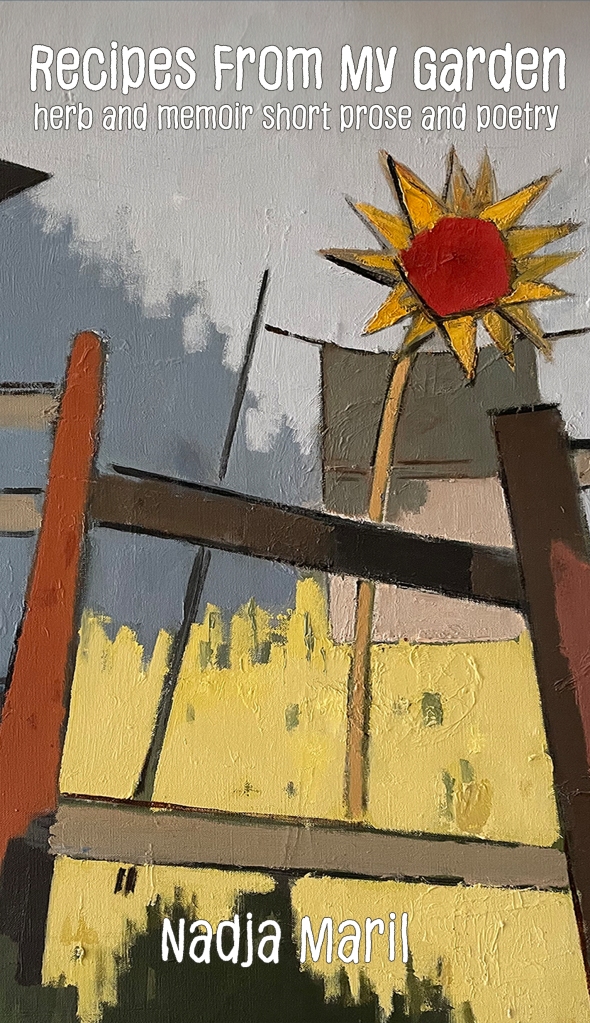
Please take note, we’re shortening our word count. Can you take the challenge and keep it brief by making every word count? For our Winter issue we’re asking our writers to limit their poetry submissions to 2 poems (up to a combined total of 500 words). Prose writers, we’ll be only publishing work that is 500 words or less. (If you need to finish a sentence, we’ll cut you a little slack). Remember, we only publish writers over the age of forty and it’s important to submit work that is somehow related to the theme.  Guest Editors for the Winter issue include: GABBY GILLIAM: Poetry, R.DAVID FULCHER: Fiction, ALAN BERN and DIANNE PEARCE: Art, and NADJA MARIL: Memoir/Creative Nonfiction.

The issue opens for submissions August 15, 2023. Submissions close on October 15th.

You can submit here!

Introducing Collective member R. David Fulcher

In 1993, while still a student at the University of Maryland, College Park, R. David Fulcher founded a literary magazine. As he writes in an article, this is how it all began:

“During my studies I came across the Buddhist concept of samsara, the continuous cycle of suffering and rebirth until one achieves enlightenment.  Of course, my twisted college brain immediately thought:  “Why wouldn’t that be wonderful!  A literary journal based on suffering!”

Well, maybe there was a  bit more to it than that.  After all, the official theme of the journal is artwork, poetry and fiction centered around suffering and healing, the latter being arguably far more important to us as human beings.

Through the years, the magazine’s reach has expanded (we’ve published writers from Africa, Canada, Mexico, France, Japan, and the United Kingdom), and my wonderful wife Lisa Flach-Fulcher joined the effort as the Managing Editor, vastly improving many of the day-to-day operations of the journal.  Despite these changes, Samsara has remained true to form, only accepting works that emphasize the central theme of suffering and healing.  Beyond that, the magazine has no genre restrictions, and we’ve been amazed by the variety of ways that artists and writers have incorporated these themes into their submissions over the years.

We expected stories from cancer survivors, those recovering from addiction, and those mourning a lost love.  All these themes are critically important to Samsara.  But the creative spark will not be denied, and we received pleasantly unexpected new spins on suffering and healing as well.  Consider the suffering of an alien race slowly perishing due to a dying sun, or a vampire with dementia.  Consider a man plagued by the voice of a subway train that lures him to his death, or a paranoid individual convinced that fish live in his waterbed, giving him incurable insomnia.”

It’s not surprising that when publisher Dianne Pearce thought of writers she’d worked with, that she invited R. David Fulcher to be one of the founding members of the writers working behind the scenes to help support the concept of a press focused on publishing poetry and short form work.

Ten dedicated writer poets comprise the Old Scratch Short Form Collective, with the goal of working with the Devil’s Party Press, a small independent publisher, to bring to fruition the concept of publishing chapbooks of poetry and short form prose under the imprint Old Scratch Press.

This week we are introducing founding member R. David Fulcher

David’s work has appeared in numerous small press publications including Lovecraft’s Mystery Magazine, Black Satellite, The Martian Wave, Burning Sky, Shadowlands, Twilight Showcase, Heliocentric Net, Gateways, Weird Times, Freaky Frights and the anthologies Dimensions and Silken Ropes. Fulcher’s work can also be found in the DPP collection Halloween Party 2019, available at Amazon and at the DPP online store.

Author of horror, science fiction, fantasy, and poetry. Major literary influences include H.P. Lovecraft, Dean Koontz, Edgar Allen Poe, Fritz Lieber, and Stephen King. Fulcher’s first novel, a historical drama set in World War II, Trains to Nowhere, and his second novel, a collection of fantasy and science fiction short stories, Blood Spiders and Dark Moon, are both available from authorhouse.com and  Amazon.

In the Fall of 2023, Devil’s Party Press released a new collection of R. David Fulcher’s horror tales called The Pumpkin King: The Collected Horror Stories of R. David Fulcher. While some of these stories have appeared in the past in other collections and anthologies, this will be the first time all of horror stories will be consolidated into two volumes.

The first volume, The Pumpkin King, will focus on his traditional horror stories.  The second volume, Asteroid 6 and Other Tales of Cosmic Horror, will focus on his cosmic horror stories. 

A writer, with diverse interests and talents, if you’d like to check out one of David’s poems, entitled “Perception” published by Poetry Pacific in May 2020, here’s a link, Enjoy. And don’t forget to sign up to follow this blog, where you’ll get the latest news about the Old Scratch Press writers and ways to stay connected to the poetry and short form prose community. Thank you for reading.