Poems to Read to Your Toddler

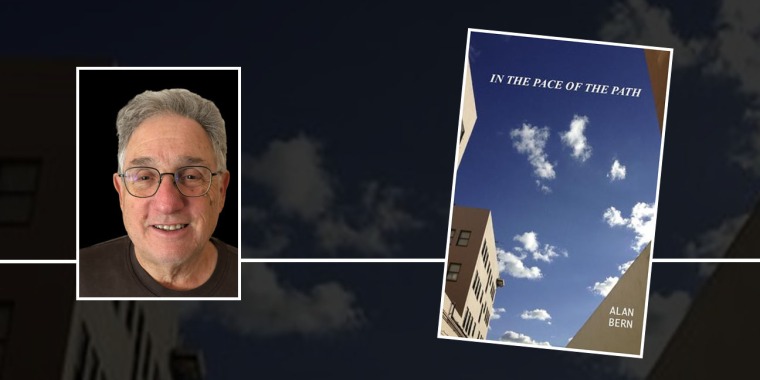
Looking for recommendations for what to read to your toddler? Poet, writer and former Children’s Librarian Alan Bern has a favorite:

“The Owl and the Pussycat” by Edward Lear, illustrated by James Marshall ; afterword by Maurice Sendak.

By Alan Bern

Edward Lear’s “classic love ballad, “The Owl and the Pussycat,” was voted the most popular British childhood poem in 2014, and has been set to music by everyone from Stravinsky to Laurie Anderson.” (”The Sense Beneath Edward Lear’s Nonsense” by Adam Gopnik, The New Yorker, April 16, 2018) If not as popular in the United States, “The Owl and the Pussycat” has spawned a number of illustrated picture books here. Of the many illustrated picture books of this absolutely brilliant poem for very young listeners and readers by Edward Lear, “The Owl and the Pussycat,” my top choice is the version by James Marshall. Next to Lear’s own illustrations for his poem, James Marshall’s illustrations, although he died before fully finishing them, are my favorites. Marshall creates wonderful characters that match so perfectly the sounds and voices of Lear’s poem. It is a nonsense poem, but it’s always made perfect sense to me and to so many. Young children will love the poem and the book; so will elementary school kids when they need to feel just a bit regressed. Heck, adults will love it, too. As I do.

Nonsense Suggesting Sense

As Gopnik explains later in his essay: “This gift for creating pathos without sacrificing absurdity is what makes “The Owl and the Pussycat” one of the greatest poems in the language… In “The Owl and the Pussycat,” meanings rush in:

They dined on mince, and slices of quince,

Which they ate with a runcible spoon…

Not even Humpty Dumpty could explain what a runcible spoon is. We know it by its verbal vibration, by its presence, by its sheer runcibleness… This gift for making something felt without having first to make it familiar is one that we later admire in Beckett. Nonsense suggesting sense is a familiar pattern. Nonsense suggesting the numinous is not.”

Artist/illustrator James Marshall

Personal Connections

And here’s a personal story to go with the poem. As a children’s librarian for many years, I was honored to serve on the American Library Association’s Caldecott Committee in 1992, and I suggested Marshall’s illustrations for this book as a finalist. It was not chosen, most probably because Marshall never quite finished the illustrations. I continued to love the book anyway, and I always wondered why the poem always spoke to me… when I read it or when I listened to another read it. Shortly after my Mom died, I found out why. One day while going through some letters, from my Mom to my Aunt, letters that my Aunt had kept from the early 1950s. My parents were on sabbatical leave (my Dad was a young professor) in Cambridge, England, and I was almost two. In one letter, my Mom wrote: ‘It’s wonderful to be here, Howard and I are having such a good time, and we love having our little boy with us; however, he does drive us crazy and asks over and over and over that we read “The Owl and the Pussycat” to him.’ That brought such a wide smile to my face: of course, I don’t remember it, but it now explains, in part, my continuing love for the poem. Thanks, Mom and Dad, and thank you very kindly, Mr. Edward Lear! And now I shall reach for my runcible spoon.

Thank you for reading . Remember, only a few days remain before the submission window for the spring issue of the literary magazine, curated by members of the Old Scratch Press Collective closes. Submit here –https://duotrope.com/duosuma/submit/instant-noodles-O0jFm

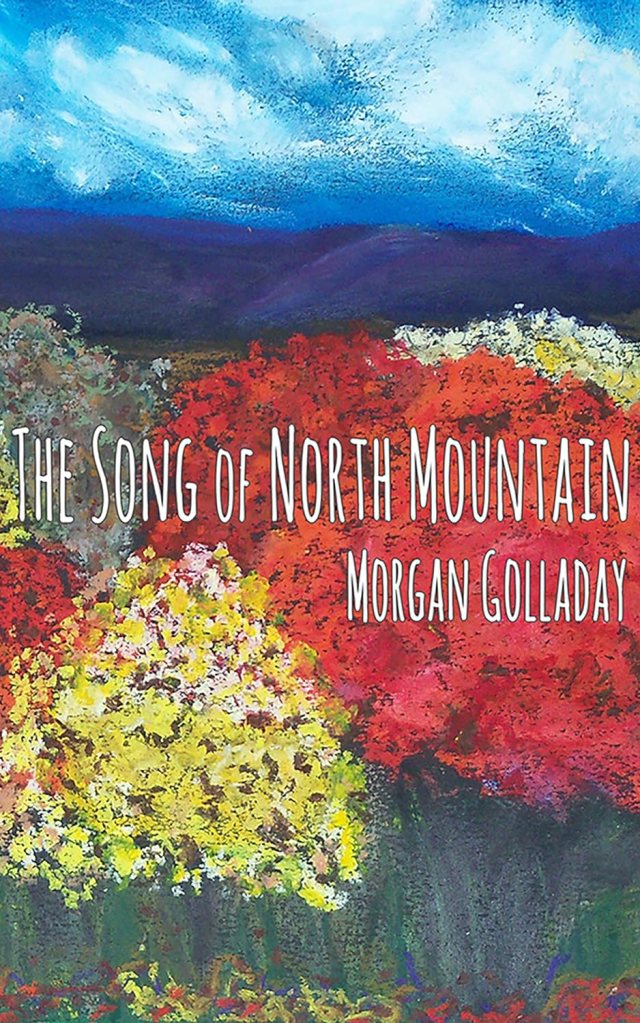
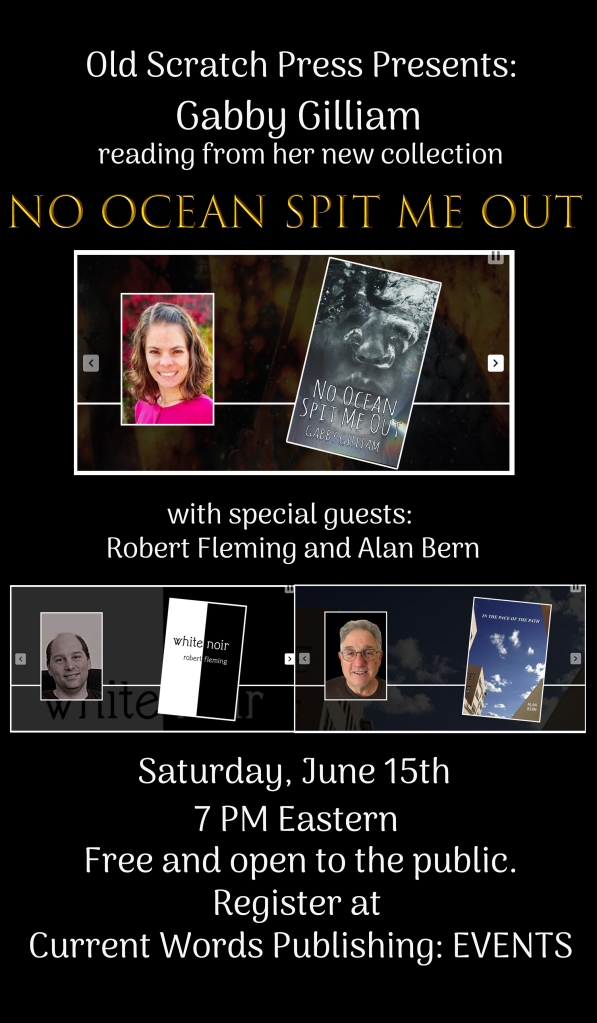
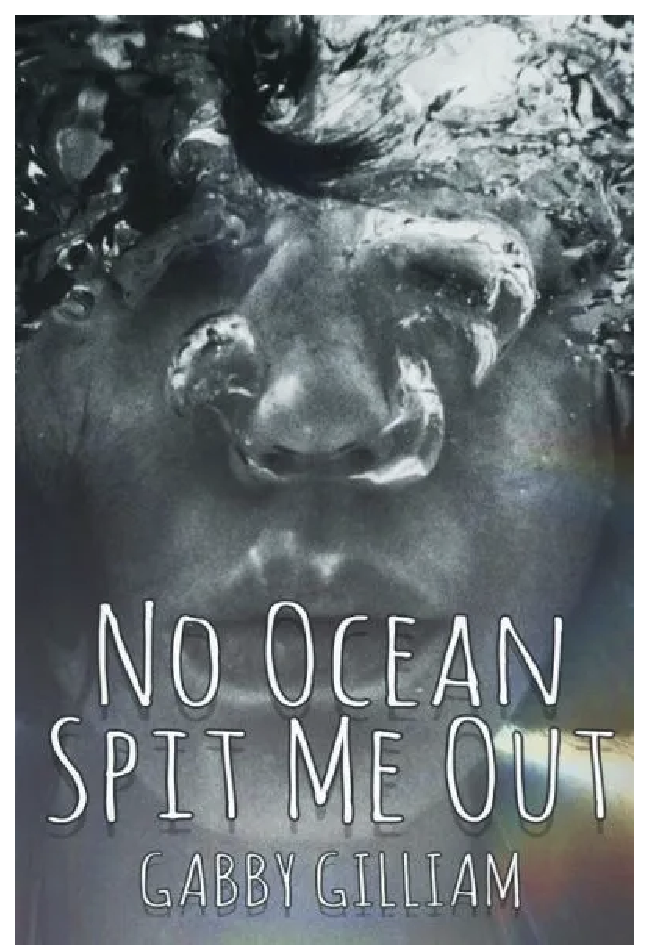
If you haven’t done so already, please follow our blog here for free and also follow us on Facebook.And coming soon is our newest chapbook release, The Song of North Mountain, by Morgan Golladay followed by chapbooks penned by Gabby Gilliam, Alan Bern, and Nadja Maril.

Poems to Read With Your Kids

By Gabby Gilliam

So many people think poetry is serious and difficult to understand. But language can also be fun. There are so many poets that use words to delight readers with something unexpected. Most people are familiar with Shel Silverstein, whose poems are light-hearted, but there are so many poems out there that both you and your kids will love for their silliness.

Many know Judith Viorst for Alexander and the No Good, Horrible, Very Bad Day, but she also wrote this fun poem about a mom who really doesn’t want a pet.

Photo by Lum3n on Pexels.com

Mother Doesn’t Want a Dog

by Judith Viorst

Mother doesn’t want a dog.
Mother says they smell,
And never sit when you say sit,
Or even when you yell.
And when you come home late at night
And there is ice and snow,
You have to go back out because
The dumb dog has to go.

Mother doesn’t want a dog.
Mother says they shed,
And always let the strangers in
And bark at friends instead,
And do disgraceful things on rugs,
And track mud on the floor,
And flop upon your bed at night
And snore their doggy snore.

Mother doesn’t want a dog.
She’s making a mistake.
Because, more than a dog, I think
She will not want this snake.

https://poets.org/poem/mother-doesnt-want-dog

One of the first books I ever remember buying for myself was The New Kid on the Block by Jack Prelutsky, so it’s no surprise that a poem by him makes this list. I was in elementary school, and must have used birthday money. I was so excited about getting the book that I started reading it in the car on the way to a different store. While I loved the poems, I also discovered reading makes me extremely carsick. It was not a pleasant birthday lesson, but I treasured the book anyway. Here’s a great example of the fun poems in that book.

Photo by Ksenia Chernaya on Pexels.com

Be Glad Your Nose is on Your Face

by Jack Prelutsky

Be glad your nose is on your face,
not pasted on some other place,
for if it were where it is not,
you might dislike your nose a lot.

Imagine if your precious nose
were sandwiched in between your toes,
that clearly would not be a treat,
for you’d be forced to smell your feet.

Your nose would be a source of dread
were it attached atop your head,
it soon would drive you to despair,
forever tickled by your hair.

Within your ear, your nose would be
an absolute catastrophe,
for when you were obliged to sneeze,
your brain would rattle from the breeze.

Your nose, instead, through thick and thin,
remains between your eyes and chin,
not pasted on some other place—
be glad your nose is on your face!

https://poets.org/poem/be-glad-your-nose-your-face

My son’s friend introduced me to the next poet. Chris Harris plays with words in a way that will delight both adults and kids alike. He claims he’s not very good at writing poems, but I think his I’m Just No Good at Rhyming books are delightful. I even used one as an example when we discussed humorous poetry in the Teen Poetry Workshop I facilitate at my local library.

By Chris Harris

We all seem to have an ingrained fear of the dark and what might be prowling in it. In this poem, Innarenko takes the reader on a fun adventure as multiple scenarios are conjured to explain where a strange noise might be coming from. The epiphany at the end is a delightful finale.

Home Alone

© Innarenko

Published by Family Friend Poems on 02/12/2020

My family’s gone; there’s no one home.
It’s only me who’s home alone.
I shouldn’t hear a single squeak.
There shouldn’t even be a creak,

So what’s that thumping that I hear?
It must mean one thing: death is near.
“You’re an adult, you’ll be just fine.”
I tell myself as I dial “nine”…

Was that a knock upon the door?
My heart beats faster than before
I know it’s closed; I’ve checked the lock.
At least my killer knows to knock?

I cannot sleep, though I’m in bed.
I’ve made amends with God instead.
If He decides that it’s my time,
Then this will be my very last rhyme.

I hear a bang and then a break.
My head shoots up; there’s no mistake!
I turn my music volume high
So I won’t hear the way I die.

I run upstairs, desk lamp in hand.
Over my head, ready to land,
And right before it did just that…
I remembered – I have a cat.

Those who aren’t familiar with Brian Bilson’s work are in for a treat. I will caution that some of his poems, though very fun, may not be suitable to read with children. This visual poem, though, is spatially interesting and shows poetry can do unexpected things. It makes me smile every time I come across it. If you enjoy this poem, I recommend checking out more of his work. Click below on the word “needles”.

Thank you for reading. Which poems are your favorite children’s poems. We’d like to know. We welcome guest posts. Please follow Old Scratch Press by subscribing to this blog for FREE and following us on Facebook. Learn more about Collective member Gabby Gilliam by visiting her website.

Robert Fleming’s Valentine’s Day Advice

By Robert Fleming

On Valentine’s Day, write a sonnet. A sonnet is for love. In the 13th-century, the sonnet was invented by Giacomo da Lentini, a member of the Italian Court of the Holy Roman Emperor Frederick II in Palermo, Sicily.

William Shakespeare popularized the sonnet. William lived 1564–1616 in Stratford-upon-Avon, Warwickshire, England.

The original sonnet is a fourteen-line poem in iambic pentameter with endline rhyme with the sequence: ABAB CDCD EFEF GG. The last two lines, GG, are a change, called a Volta. I still confuse iambic pentameter with the Olympic Pentameter event where a shepherd guides lambs over hurdles.

Perhaps, William’s most famous sonnet is #18: Shall I compare thee to a summer’s day?

Shall I compare thee to a summer’s day?

Thou art more lovely and more temperate:

Rough winds do shake the darling buds of May,

And summer’s lease hath all too short a date;

Sometime too hot the eye of heaven shines,

And often is his gold complexion dimm’d;

And every fair from fair sometime declines,

By chance or nature’s changing course untrimm’d;

But thy eternal summer shall not fade,

Nor lose possession of that fair thou ow’st;

Nor shall death brag thou wander’st in his shade,

When in eternal lines to time thou grow’st:

                So long as men can breathe or eyes can see,

                So long lives this, and this gives life to thee.

Where is William’s poetry title? Don’t poems have to have a title? Some poets don’t give titles and when published the publisher makes the first line the title.

As a poet for fifty years, I have written many sonnets and teach a two-hour workshop on how to write a sonnet. I am proud, at the end of my workshop, many participants write a first draft and complain they are exhausted. Beware of the sonnet sweat.

My writing which responds to William’s sonnet #18:

William does this frock make me look fat?

Why should I compare you?
Shall my rating do good?
Will it make me want

you more than what I had,

nor worse than what I can’t get?
Your score will be my score.

Shall there come a day when you won’t ask?
Oh no, no, not that frock, take it off!

Robert, your poem does have a title, but only nine lines. It is not a sonnet. As a tribute to Cole Porter, who composed Anything Goes in 1934, the less taxing American sonnet was invented which is a fourteen-line poem that does not demand iambic pentameter nor endline rhymes. If the American sonnet’s fourteen lines is still too sweaty for you, write a monostich-1 line poem: I Love You.

The author, Robert Fleming is a founding/contributing editor of Old Scratch Press (OSP). To read more of Robert’s work:

What I Learned from Poet and Essayist Artress Bethany White

By Virginia Watts

Artress Bethany White is a poet and essayist I met during a summer writing conference at Rosemont College. I was fortunate enough to attend her poetry workshop where I learned so much about the craft and art of poetry. Artress is the author of the essay collection Survivor’s Guilt: Essays on Race and American Identity (New Rivers Press, 2020) and My Afmerica: Poems (Trio House Press, 2019). Her work is unique and unflinching. She is forging new ground. It is at one turn poetry that leaves you dead in your tracks and in another historical documentation. She is an unfailingly brave writer willing to wade into the complex racial dilemma of our country. She is the kind of writer that can make a difference. Read one of her poems or essays and you will want to read them all. Then you will never forget them.

Her personal story adds another layer of interest to her work. She herself is descended from one of the largest slaveholding families in America and she is raising her own transracial family. What I remember about her most is how encouraging she was to her students, fledging poets. She had a way of making us believe in ourselves and that we too had something importantly human to say.

Pancakes Keep Coming to Mind: A Sestina Commemorating the Demise of Aunt Jemima on the Pancake Box 

BY ARTRESS BETHANY WHITE

June 2020

I invoke my great-great-grandmother’s name on exhaled breath,

the vowels arranging themselves in shorts and longs,

syntax and semantics duking it out.

Mima, that could have been birthed from an African tongue.

Enee, meenemimamo, respectable marriage of village,

continent, and town, without a diabolic Je like a pendulum swing

to the scarlet kerchief blooming in my brain, pancakes on my tongue,

unwilling to utter that name over black families now living out

their American dream. Like reinvention, how the heart longs

to reconcile past and present, within a village

raising a newer child clawing out of epicureal stink to swing

free from stereotypes, auction block, and Aunt Jemima’s mealy breath.

Instead, pancakes every time my forebears’ syllabics touch my tongue.

Mima sans  Je, not Meema, or Mi’ma[e], coy notes stepping out

of a history where grits and flapjacks were birthed in a village

to skirt my teeth or strut ’cross my lips on exhaled breath,

that ample bosom and backside mocking me, she who longs

to rear up and bark Breakfast! and Brunch! on a revolving door swing.

You are not my Auntie or Aunt pronounced like the creature crawling out

over cadavers of supermarket boxes choking my breath

on a collapsed lung of shady marketing to keep bodies bound in a village-

cum-ghetto of stranger than strange imagined black things, girl-on-a-swing

dreams culled from western imaginings of what that colored gal longs

to do over a hot stove, flipping and flapping ’cause the griddle got her tongue.

Names as revenue monikers on revue, line dancing on a hip swing.

Oh, how daring to cogitate on destiny, each syllable a village

of preferred ubiquity, once the Ghanaian name Afua translated out

to first girl child born on a Friday, sonic genealogy on the tongue,

but changed to post-baptismal Mary, a rigid catechism of colonial breath

blowing across centuries of arid longing.

Food me, fooled me, sold me, told me, held me, bled me, tongue

afire with dreams of love, life, and freedom a profusion of days swinging

between something and more. My village compound, my village

quarters, my village a city block, each century censuring my breath.

What I seek is what I speak, not handed a script of nostalgic longing.

Jemima wrenched from shelves, but a litany in my brain still playing out.

Ain’t nothing but a jonesing to tweak culinary history so my village

knows my branches are thick, swaying and swinging with longing and breath,

rolling descendancy off my tongue, blessing consumption out. 

Source: Poetry (May 2021)

Thank you for reading this week’s blog post from Old Scratch Press, written by collective member VIrginia Watts. Her collection of short stories Echoes From the Hocker House just won the Bronze Feathered Quill Book award fro Best Anthology. You can purchase a copy here.

Bam, Crack, Klunk: Why Sound Matters in Poetry

“Bam!”, “Crrraack!”, “Klunk!” are just a few on the list of words used in the 1960’s TV show Batman, usually held within a colorful cartoon bubble. We immediately conjure what is trying to be conveyed, and part of that understanding is because of the sounds of these particular words. In any writing, the sounds of words can produce not only feelings, but physical effects on the body. In poetry specifically, sounds become even more important because words must be carefully chosen in order to “say the most with the least”. We must pay attention to the vowels, consonants, stresses, etc. in the words we choose dependent on the idea or tone we are trying to convey.

Take a look at the information about vowel and consonant sounds pictured above, courtesy of Cathy Smith Bowers, Queens University., (excuse my notes and shadow!)Then, look at these two examples below. Read them aloud and ask yourself if it feels like flow and glide, or stop and start? Is there an emotion or physical reaction you can sense as you read?

I caught this morning morning’s minion, king-

            dom of daylight’s dauphin, dapple-dawn-drawn Falcon, in his

            riding.

                                                -from The Windhover,by Gerard Manley Hopkins

We real cool. We

Left school. We

Lurk late. We

Strike straight.

                                                –from We Real Cool by Gwendolyn Brooks

That was pretty easy, huh? Now, go to one of your favorite poems and see if you can see how the word choices the poet made regarding sound serve the tone, subject matter, and larger themes of the poem. Then, look at one of your own.

Sound is just one of the many devices poets use, and it is a powerful one. A poem that uses short lines with high-frequency vowel sounds will sound very different than one with long lines using low-frequency sounds. And remember, the importance comes from not just the reaction to the words in your ears, but also the subsequent emotion or felt reaction in the body, and there is music to be found in all of them.

Thank you for reading. Don’t forget to sign up to follow our blog as well as follow us on facebook.

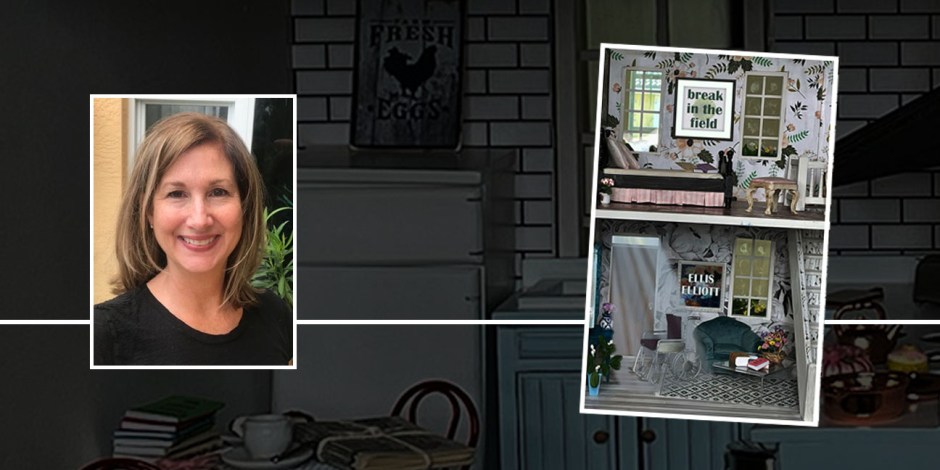
Ellis is author of the National Book Award nominee poetry collection Break in the Field published by Old Scratch Press.

Political Poetry, New Year’s Resolutions & Publishing Opportunities

Writing poetry is a personal, introspective experience, a way to communicate our innermost feelings as art.

Enter politics. Around the United States, around the globe humans are in conflict. It doesn’t matter which side you agree with, we all have our opinions, even if our opinion is to try and ignore the chatter.

Poetry, for centuries, has been a way for artists to convey their opinions. Attend a political rally and you’ll hear speeches, chants, songs. A number of poems have become beloved “classics” and they just might inspire you to write a few of your own.

If We Must Die

By Claude McKay

Claude McKay, 1889-1948 was born in Jamaica who later moved to the U.S. and lived abroad for a number of years., was a key figure in the Harlem Renaissance, a prominent literary movement of the 1920s. His published work included poetry, essays, a short story collection and several novels.

If we must die, let it not be like hogs

Hunted and penned in an inglorious spot,

While round us bark the mad and hungry dogs,

Making their mock at our accursèd lot.

If we must die, O let us nobly die,

So that our precious blood may not be shed

In vain; then even the monsters we defy

Shall be constrained to honor us though dead!

O kinsmen! we must meet the common foe!

Though far outnumbered let us show us brave,

And for their thousand blows deal one death-blow!

What though before us lies the open grave?

Like men we’ll face the murderous, cowardly pack,

Pressed to the wall, dying, but fighting back!

*

Beat! Beat! Drums!

By Walt Whitman

Walt Whitman,1819-1892, is regarded as one of America’s important 19th century poets. During the Civil War, while working as a desk clerk in Washington D.C., he visited wounded soldiers in his spare time.

Beat! beat! drums!—blow! bugles! blow!

Through the windows—through doors—burst like a ruthless force,

Into the solemn church, and scatter the congregation,

Into the school where the scholar is studying,

Leave not the bridegroom quiet—no happiness must he have now with his bride,

Nor the peaceful farmer any peace, ploughing his field or gathering his grain,

So fierce you whirr and pound you drums—so shrill you bugles blow.

*

Beat! beat! drums!—blow! bugles! blow!

Over the traffic of cities—over the rumble of wheels in the streets;

Are beds prepared for sleepers at night in the houses? no sleepers must sleep in those beds,

No bargainers’ bargains by day—no brokers or speculators—would they continue?

Would the talkers be talking? would the singer attempt to sing?

Would the lawyer rise in the court to state his case before the judge?

Then rattle quicker, heavier drums—you bugles wilder blow.

*

Beat! beat! drums!—blow! bugles! blow!

Make no parley—stop for no expostulation,

Mind not the timid—mind not the weeper or prayer,

Mind not the old man beseeching the young man,

Let not the child’s voice be heard, nor the mother’s entreaties,

Make even the trestles to shake the dead where they lie awaiting the hearses,

So strong you thump O terrible drums—so loud you bugles blow.

London

By William Blake

William Blake, 1792-1827, was an English visionary painter, engraver and poet of modest means who lived in London. In June 1780, Blake found himself in the midst of a riot calling for an end to the war on the American colonies. Often in his work, he questioned the status quo of the traditional order of society.

 I wander thro’ each charter’d street,

Near where the charter’d Thames does flow. 

And mark in every face I meet

Marks of weakness, marks of woe.

*

In every cry of every Man,

In every Infants cry of fear,

In every voice: in every ban,

The mind-forg’d manacles I hear 

*

How the Chimney-sweepers cry

Every blackning Church appalls, 

And the hapless Soldiers sigh

Runs in blood down Palace walls 

*

But most thro’ midnight streets I hear

How the youthful Harlots curse

Blasts the new-born Infants tear 

And blights with plagues the Marriage hearse 

If one of your resolutions for 2024 was to write more poetry, there’s never a better time than now.

Maybe wake up a little earlier, take a mid-day break, any time of the day will do, but just write a first draft without censoring your thoughts. For tips on revisions and the submission process, click here.

And to get you a little more hyped, here are a few places that are open for submissions this month, January 2024.

Opportunities for Poets in January

Rock Paper Poem

https://rockpaperpoem.com/submit.html?fbclid=IwAR3hbef037kzvt0BbN3r64V2EDIZXtOrloRXAcvrIM8nkDR66_s0BOw7cSE

Poem Alone

https://poemalone.blogspot.com/?fbclid=IwAR2njw45cL46szMDrDeBWN9qv0UnZgEJT8bNLeicL-5stZdVv3_KqWKyMps

Beakful

https://beakful.blogspot.com/?fbclid=IwAR2dqEQh7rE2bq_StnfndCKnfSN4YmwoXQnCSeVdSLXbvmR-PhMJTqEU3xQ

Raven Poem Competition

Strix.  (no simultaneous submissions)

https://www.strixleeds.com/submit

Black Iris

https://www.blackirispoetry.com/new-page

Lascaux  Review

Acumen

https://acumen-poetry.co.uk/submissions-guide/

Allegro Poetry Magazine

https://www.allegropoetry.org/p/submit.html

Thank You for reading our blog. Don’t forget to sign up to follow us on Facebook and here on wordpress.

Favorite Poet Ted Kooser

By Virginia Watts

When people hear that I try to write some poetry, I can tell they are thinking, formulating the common question. I stiffen and get ready for it. “Who is your favorite poet?” I used to respond with the complete truth, that I have many favorites. Sometimes I’d tick off a list of names they didn’t ask for and wouldn’t remember.

Now, I tell them first that a favorite poet is someone a reader returns to when they need them most. Your favorite poet is a companion, a friend’s voice in the dark. Poetry gives us laughter when we need it. Poetry comforts us when we are afraid, sad, lost. I tell people this because I hope they will search for a favorite poet of their own. I know once they find one, they’ll understand.

My favorite poet is Ted Kooser, a former United States Poet Laureate and winner of the Pulitzer Prize in 2005. He has published numerous books of poetry as well as children’s books and works of nonfiction. Kooser’s poems are drawn from midwestern landscape and everyday rural life. I read poetry often, as much as I can, but Kooser’s poems are the ones I return to like home’s fire to sit with again.

IT DOESN’T TAKE MUCH

BY TED KOOSER

Maybe an hour before sunrise, driving alone
on the way to reach somewhere, seeing,
set back from the highway, the dark shape
of a farmhouse up against deeper darkness,
a light in one window. Or farther along

into a gray, watery dawn, passing
a McDonald’s, lighted bright as a city,
and seeing one man, in ball cap, alone
in a booth, not looking down at his table
but ahead, over the empty booths. Or

maybe an hour farther, in full daylight,
at a place where a bus stops, seeing
a woman somewhere in her forties,
dressed for cold, wearing white ear muffs,
a red and white team jacket, blue jeans

and Muk Luks, one knit mitten holding
a slack empty mitten, her bare hand
extended, pinching a lit cigarette,
dry leaves—the whole deck of a new day—
fanned out face-down in the gutter, but

she’s not stooping to turn over a card,
but instead watching a long ash grow
even longer at the ends of her fingers.
Just that much might be enough for one
morning to make you feel part of it all.

From The Path to Kindness: Poems of Connection & Joy.
Forthcoming from Storey Publishing, 2022.

Thank you for reading. Follow us on Facebook and X. We’d love to hear about which poets inspire you.

OLD SCRATCH PRESS SUPPORTING MNI SOTA THIS WEEKEND!

Participate in the Reclaiming Mni Sota Indigenous Writers Grant 24-Hour Fundraiser!

Join us for a dynamic online event: the Reclaiming Mni Sota Indigenous Writers Grant 24-Hour Live Fundraiser, starting on Friday, Nov 3, at 7pm (Central Daylight Time). This event is dedicated to supporting and elevating Indigenous writers in Mni Sota (Minnesota).

Over the course of 24 hours, we’ll host a series of captivating interviews featuring distinguished guests from the writing, editing, and publishing realms. You’ll have the opportunity to connect with accomplished writers, delve into their experiences, and gain insights into their creative processes.

By participating in this fundraiser, you’ll be making a meaningful contribution to the Reclaiming Mni Sota Indigenous Writers Grant, an initiative promoting literary diversity by aiming to raise $10,000 for a Minnesota-based Indigenous writer. Your support can have a significant impact on nurturing Indigenous voices and storytelling.

Make a note on your calendar and be part of this extraordinary event. Together, let’s celebrate and pay tribute to Indigenous writers, their narratives, and their invaluable contributions to our communities.

The silent auction, featuring numerous exclusive prizes, begins on Tuesday, October 10, and concludes on Saturday, November 4, just an hour before the 24-hour live fundraiser ends. The winners of the silent auction items will be announced during the final hour of the event. All proceeds from the auction will directly benefit the Reclaiming Mni Sota Indigenous Writers Grant. To view and place bids on the items, visit this link: https://historythroughfiction.betterworld.org/auctions/reclaiming-mni-sota

Poetry Contests You May Want to Know About

Poetry contests are a great way to achieve recognition and several have deadlines coming up soon. Submitting your work, is the first step, so what are you waiting for?

Photo by Dziana Hasanbekava on Pexels.com

Westchest University Poetry Center sponsors the

Donald Justice Poetry Prize


Deadline: November 15, 2023 

The distinguished American poet Donald Justice is recognized as one of the finest poets of the late twentieth century. 

• Accepts – Poetry • Fee: $25 • Prize: $1500

Munster Literature Centre sponsors

Gregory O’Donoghue International Poetry Competition

Deadline: November 30, 2023 

The competition is open to original poems in the English language of 40 lines or fewer that have never been publicly broadcast or published. The poem can be on any subject, in any style, by a writer of any nationality, living anywhere in the world. 

• Accepts – Poetry • Fee: €7 or €30 for 5 • Prize: €2,000

Frontier Magazine Award for New Poets

Frontier Poetry Contest

Deadline: December 1, 2023 

They are looking to uplift an up-and-coming poet, with no more than one full-length collection forthcoming or published at the time of submission. “We award $3,000 for the winning poem, selected by our guest judge. Our second- and third-place winners receive $300 and $200, respectively. All three winners will be published”

• Accepts – Poetry • Fee: Yes • Prize: $3000

Slippery Elm Literary Journal

Slippery Elm Poetry Prize

Deadline: February 1st

Entry is $15. All entrants will receive a copy of their 2024 print issue.  

Photo by Karolina Grabowska on Pexels.com

Elizabethtown College

Joy Bale Boone Poetry Prize

Deadline: December 1, 2023 

We are honored to host the annual Joy Bale Boone Poetry Prize whose winners and finalists will appear in the following Spring issue of The Heartland Review. 

• Accepts – Poetry • Fee: $10

 Prize: $500 GRAND PRIZE GIFT CARD, $140 SECOND PLACE GIFT CARD, $100 THIRD PLACE GIFT CARD.

Read contest rules carefully. Most contests require your name be removed from all work and many have specific requirements for formatting. Do not wait until the last minute and check your work over carefully before sending. Good Luck! May Your Words Resonate With the Judges! Please sign up to follow the Old Scratch Press blog so you never miss submission opportunities.

Simple Poems That Pack A Punch, Make a List

By Nadja Maril

Today I was attending an online workshop led by CNF writer and poet Nicole Breit and she was talking about different writing forms. One of those forms was the list format, which Nicole has used in her essay entitled, Atmospheric Pressure, published in Room Magazine. Her lyric list form essay jumps backwards and forwards in time to convey the cycle of grief

The mention of lists, immediately brought to mind flash prose.  Plenty of flash fiction and CNF flash stories use the list form. Just think of what kind of story you can tell with a curated shopping list, a packing list, or list of desired skills in the Help Wanted section of the classifieds.

Before Nicole began focusing on writing memoir, she was writing poetry, Many of her creative ideas for creative nonfiction come from poetry, which got me to thinking about List Poetry. 

Simply stated, a list poem consists of a list of images or adjectives. The compilation of the items as a group creates the poem. By their nature, List Poems use repetition. They also often use what is called anaphora, the reoccurrence of the same sound to create a driving rhythm.

An old favorite poem of mine is by Alice Duer Miller (1874-1942) who was very active in the American suffragette movement.

Photo by Pixabay on Pexels.com

Why We Oppose Pockets for Women

By Alice Duer Miller

1. Because pockets are not a natural right.
2. Because the great majority of women do not want pockets. If they did they would have them.
3. Because whenever women have had pockets they have not used them.
4. Because women are required to carry enough things as it is, without the additional burden of pockets.
5. Because it would make dissension between husband and wife as to whose pockets were to be filled.
6. Because it would destroy man’s chivalry toward woman, if he did not have to carry all her things in his pockets.
7. Because men are men, and women are women. We must not fly in the face of nature.
8. Because pockets have been used by men to carry tobacco, pipes, whiskey flasks, chewing gum and compromising letters. We see no reason to suppose that women would use them more wisely.

Another famous poem that also takes the form of a list, is Walt Witman’s (1819-1892) I Hear America Singing.

Photo by RDNE Stock project on Pexels.com

I Hear America Singing

By Walt Whitman

I hear America singing, the varied carols I hear,
Those of mechanics, each one singing his as it should be blithe and strong,
The carpenter singing his as he measures his plank or beam,
The mason singing his as he makes ready for work, or leaves off work,
The boatman singing what belongs to him in his boat, the deckhand singing on the steamboat deck,
The shoemaker singing as he sits on his bench, the hatter singing as he stands,
The wood-cutter’s song, the ploughboy’s on his way in the morning, or at noon intermission or at sundown,
The delicious singing of the mother, or of the young wife at work, or of the girl sewing or washing,
Each singing what belongs to him or her and to none else,
The day what belongs to the day—at night the party of young fellows, robust, friendly,
Singing with open mouths their strong melodious songs.

Thank you for reading the Old Scratch Press blog. Please sign up to follow us if you haven’t already done so, and check out our next chapbook, Robert Fleming’s White Noir.