Poems and cockroaches…call the exterminator!

by Anthony Doyle

Pluriplaneta apocalyptica

Poor poetry. Such a bad rep. 

As Ben Lerner says in The Hatred of Poetry, writing a poem is a heroic gesture doomed to failure, because it attempts to do something nigh-impossible: be totally unique whilst speaking to universal experience—and doing all that with song

It’s not hard to be unique (we all are). It’s not hard to speak to universal experience (we’re born contributors). But try doing both at once, and set to a drumbeat made out of syllables… Poetry, he says, “arises from the desire to get beyond the finite and the historical . . . and to reach the transcendent or divine.” What could possibly go wrong? Tilting at fire-breathing windmills…it’s a strange occupation to choose, and a thankless one, too. 

When poets are not being scoffed at for being genuine failures, we can also be derided for being posers (inauthentic failures). That’s largely because being a poet is quite easy to fake. You can appear to be doing it without actually doing it. Just write down pretty much anything, break it up into shorter lines, throw in some indents, give it a catchy title and…voilà: you’re a poet. 

So failure or poser, the poet cannot win; paradoxically, we’re the only thing full of hot air that never actually rises.  

Individually, we’re an inconvenience. Collectively, we’re a plague. An infestation.

Yes, poets are everywhere, and so are our poems. You’ll find us/them on social media, on hand towels, on subway trains, graffitied on underpasses, printed on T-shirts. You’ll find us scrawled on the third tile from the left, three rows up from the floor of the school restroom, just under the leaky sink…

Yes…poems are literature’s cockroaches. Want proof?

  • They teem in their millions
  • They feed on literally anything at all
  • Kill one, ten more take its place
  • You’re never more than a foot away from one, know it or not
  • There are 4,600 different types
  • They will survive a nuclear blast

Okay, that last one is not exactly true. Contrary to popular belief, cockroaches would not survive a nuclear war. Blattaphiles (yes, “roach lovers”) reluctantly acknowledge that the intense heat would put an end to their beloved Gregor Samsas, one and all. 

But poems would survive. Poems will. 

When those post-apocalyptic, bunker-dwelling Adams and Eves re-emerge from underground, minus their smartphones, laptops, tablets, moleskines, poems will begin to appear all over the waste land, scratched into the walls of ruins or etched into rockfaces. Poems will mysteriously turn up on charred ground, like crop circles in corn fields, or old SOSes arranged out of wreckage on dead beaches. There’ll be elegies smeared onto the sides of burnt-out cars; odes scrawled with metal into blackened concrete; sonnets gouged into radioactive mud in some brave new cuneiform. With time, epics will strut triumphantly across abandoned concourses, the flagstones turned to stanzas, daubed, if need be, in human blood.  

If we survive, poems will survive. Because when our vast literature gets blown to pieces along with the badly designed Death Star that is our civilization, it’ll be poetry they take with them into the escape pods. No novels, no plays, just a volume of poems. Condensed poiesis. Poetry is the seed, the source code. An iamb’s all it takes to set the cogs in motion again. 

Perhaps on those long Fallout nights, with no streaming, no social-media feeds, nothing to entertain us, the poet will be appreciated for what Lerner calls our “tragic failures”, and for the occasional bawdy limerick or snide acrostic. Our day will come again. Our star will rise. 

And we still won’t sell, because there won’t be any money.  

As for the cockroaches, not even the anti-Noahs of the exterminating arts will keep them out of those arks. So they, too, will escape the purge. We’ll see them scuttle free alongside us to reclaim the world…with a haiku scribbled on their backs.

Anthony Doyle is the author of the novel Hibernaculum and the poetry book Jonah’s Map of the Whale, coming soon from OSP.

Five Books for Teens or Tweens to Read Before Halloween

With Halloween just around the corner, it’s the perfect time to cozy up with a good book that brings just the right mix of spooky thrills, chills, and adventure. Whether you’re a teen or tween looking for something eerie or simply a fan of supernatural stories, here are five great books to read before Halloween!

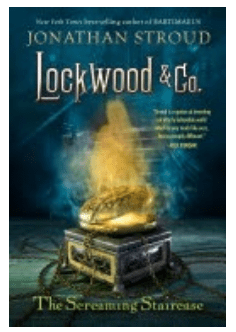
The Screaming Staircase (Lockwood & Co.) by Jonathan Stroud

Genre: Supernatural, Mystery

London is plagued by ghosts, and psychic agencies are tasked with containing them. Lockwood & Co. is a small but talented team of ghost hunters led by the charismatic Anthony Lockwood. When Lucy Carlyle joins them, they take on their most dangerous case yet, facing terrifying spirits and uncovering dark secrets. With fast-paced action, witty banter, and eerie hauntings, this series is a thrilling Halloween read. (As a bonus, Netflix made one season based off of this book series. It’s a great series, and a shame Netflix didn’t renew it.)

Perfect for fans of: Ghost hunting, supernatural mysteries, and witty characters.

City of Ghosts by Victoria Schwab

Genre: Paranormal, Adventure

Cassidy Blake can see ghosts, and her best friend happens to be one. When her family heads to Edinburgh, one of the world’s most haunted cities, for a paranormal TV show, Cassidy discovers that the city is filled with more than just legends. As she navigates her ability to cross the “Veil” between the living and the dead, she gets entangled in a chilling adventure. This spooky, fast-paced story is a perfect October read.

Perfect for fans of: Ghosts, supernatural adventures, and haunted locations.

Miss Peregrine’s Home for Peculiar Children by Ransom Riggs

Genre: Fantasy, Dark Adventure

This eerie fantasy novel is perfect for those who like a mix of spooky and magical elements. Sixteen-year-old Jacob stumbles upon an orphanage that houses children with peculiar abilities, and he quickly becomes involved in their strange world. The story, woven with vintage photographs, creates a mysterious and haunting atmosphere that’s bound to get readers in the Halloween spirit.

Perfect for fans of: Mysteries, dark fantasy, and stories with a touch of the supernatural.

The House with a Clock in its Walls by John Bellairs

Genre: Gothic Mystery

When orphaned Lewis Barnavelt moves in with his Uncle Jonathan, he expects an ordinary life. But he quickly learns his new home is anything but normal—his uncle and their neighbor, Mrs. Zimmermann, are both witches! Lewis is thrilled to witness their magical abilities and enjoys Mrs. Zimmermann’s delicious cookies. At first, simply watching is enough for Lewis, but his curiosity soon gets the best of him. When he tries magic on his own, he accidentally revives Selenna Izard, the house’s sinister former owner. Selenna and her husband had hidden a deadly clock in the walls—one that could wipe out humanity. With the ominous ticking growing louder, the Barnavelts must race against time to find the clock and stop its destructive power.


Perfect for fans of: Eerie atmospheres, ghost stories, and magical adventures.

The Dark Lord Clementine by Sarah Jean Horwitz

Genre: Fantasy, Adventure

Clementine Morcerous has grown up as the heir to her father’s dark magic throne. But when her father falls under a curse, Clementine begins to question her life as a future Dark Lord. This whimsical yet spooky story mixes dark humor, magic, and adventure, making it an entertaining Halloween read.

Perfect for fans of: Quirky fantasy, dark humor, and magical adventures.

If you didn’t see anything that inspired you to curl up under a blanket with a cup of cocoa or hot tea, I’d like to offer an extra suggestion. My novella duology is a spooky read for teen readers! Both books are available now. 

Two teens discover what they think is a cure for a dangerous parasite that turns humans into mindless husks. However, administering the cure is dangerous and none of the grown-ups in charge want to listen to them. Follow Tyler and Bree as they travel across husk-ravaged lands to test their cure and prove they might be able to save humanity from the threat of husks once a for all!

Play a Game With Us and Win a Prize!

It’s the spooky season! Let’s play Exquisite Corpse!

“What,” you may ask, “is Exquisite Corpse, and how do I engage in such an outlandishly named game?”

Before we all get the vapors…

Exquisite Corpse is a collaborative poetry game that traces its roots to the Parisian Surrealist Movement. Exquisite Corpse is played by several people, each of whom writes a word on a sheet of paper, folds the paper to conceal it, and passes it on to the next player for his or her contribution.
In order to write a poem, participants should agree on a sentence structure beforehand. For example, each sentence in the poem could be structured “Adjective, Noun, Verb, Adjective, Noun.” Articles and verb tenses may be added later or adjusted after the poem has been written. The game was also adapted to drawing, where one participant would draw thehead of a figure, the next the torso, etc. The name “Exquisite Corpse” comes from a line of poetry created using the technique: “The exquisite corpse will drink the young wine.”
https://poets.org/text/play-exquisite-corpse

While we cannot share a piece of paper, we can, all the same, play the game. Please join us!

The rules for this game are as follows”

SUBMIT: one line of “poetry”

FORM: The line must be arranged to have these elements in THIS ORDER ONLY as the main elements:

Adjective, Noun, Verb, Verb, Adjective or Adverb (one only), Adjective, Noun

Punctuate (or not) as you see fit.

YES! You can add conjunctions, articles, etc., as needed, but the main words must be Adjective, Noun, Verb, Verb, Adjective or Adverb (one only), Adjective, Noun

So, this would work:

Happy frogs jumped and swam quickly, green sparks

Happy(adjective) frogs(noun) jumped(verb) and swam(verb) quickly(adverb), green(adjective) sparks(noun).

And this would not:

Frogs jumped happily and swam quickly making green sparks

Got it?

You do!

Send it to dianne@currentwords.com between now and October 29th at midnight PT, for publication on Halloween!

Make the email subject: Exquisite Corpse.

ONE entry per person!

PRIZES:

SUBMIT and you will be given a free digital copy of the OSP book of your choice!

Three lucky people, chosen at random by Robert Fleming and his random number generator, will be given a print (paperback) copy of the OSP book of his/her/their choice!

One Lucky Person (not publishing with CWP) will win a free 5-page edit from me!

OSP members and other people CWP publishes are welcome to join in, and can claim a free Kindle of their choice from OSP, but are not going to get one of the three free print books or the edit (so sorry! Let’s give those to our guests!).

YES, everyone who enters will be subscribed to OSP news through Current Words newsletter, which is sent out to email addresses one time almost every month. At the bottom of your first newsletter (and all the rest of them) is an unsubscribe button, and if you really don’t want to stay on the list, that will get you right off (Mailchimp don’t play.).Honestly, we’re not trying to bother you; we’re out to have fun!

So, let’s have fun!

Ooooo, you can already start dreaming of the OSP book you’re going to choose for your prize! Take a look at your options:

Happy Fall, y’all, and Happy Halloween!

I cannot wait to read your exquisite corpse!

🙂 Dianne

Happy Birthday, Sylvia Plath

Alamy/BBC

The month of October (October 27) marks the birthday of Sylvia Plath, one of the most famous poets of the 20th century. Sylvia Plath is known for writing about deep feelings like sadness, frustration, and the search for who we really are. Her poems are powerful and still connect with readers today.

Who Was Sylvia Plath?

Even from a young age, Sylvia Plath loved to write. She was born in Boston, MA in 1932 and published her first poem when she was only eight years old. Major themes that appear in her poetry are how hard it can be to figure out who you are, mental illness, and what it’s like to be a woman in society.

She studied at Smith College and, later, Cambridge University in England. While at Cambridge, she met and married the poet Ted Hughes. Sylvia Plath faced many struggles in her personal life, and took her own life when she was only 30 years old. However, her writing has lived on, and she remains one of the most important poets of her time.

You can hear a brief interview with Sylvia Plath about her early influences here:

Sylvia Plath’s Powerful Poetry

I first read a poem by Sylvia Plath in high school for a Dual Enrollment English course. I’m fairly certain we read “Lady Lazarus” because I can recall discussing the pronunciation of the German words in the poem. I remember being amazed by her work and remember that it was the first time I really paid attention to the language in a poem. Her word choices were striking and she was the first poet whose work I sought to read outside of class. 

Plath’s poems often show strong emotions. She writes in a way that can feel personal and sometimes painful, but also very honest. She nearly lost her life multiple times before her death and discusses those experiences in one of her most famous poems, called “Lady Lazarus.” In this poem, Plath writes about feeling reborn, even after going through something difficult. Here’s a part of it:

“Out of the ash  
I rise with my red hair  
And I eat men like air.”

While most of the poem recounts her previous experiences with death, these lines show how strong and fierce she feels after going through those difficult times. She compares herself to a phoenix, a mythical bird that rises from the ashes.

Another well-known poem by Sylvia Plath is “Daddy.” In this poem, she talks about her feelings toward her father, who died when she was young. It’s full of anger and sadness. Here’s a line from that poem: 

“You stand at the blackboard, daddy,
In the picture I have of you,
A cleft in your chin instead of your foot
But no less a devil for that, no not
Any less the black man who

Bit my pretty red heart in two.
I was ten when they buried you.
At twenty I tried to die
And get back, back, back to you.
I thought even the bones would do.”

Plath uses intense language to talk about how hard it was to live in the shadow of her father, but also the complicated feelings she has about him now that he’s dead.

These lines are just a small sample of Sylvia Plath’s ability to use words to explore complex feelings like despair, identity, and the search for meaning. Each one is a powerful reminder of her unique voice in literature.

Sylvia Plath also wrote a novel called “The Bell Jar” and her prose is just as lyrical as her poetry. In “The Bell Jar,” she writes:

“I took a deep breath and listened to the old brag of my heart: I am, I am, I am.”

This quote is famous for capturing the feeling of simply being alive, despite the struggles that come with it. It’s a powerful reminder of existence itself, and, paired with her poem “Lady Lazarus,” shows you how much she needed to remind herself that she was still alive.

Why We Remember Sylvia Plath

On Sylvia Plath’s birthday, we honor her for the way she used her writing to express feelings that many people go through. She wasn’t afraid to write about things like sadness, anger, and the search for identity. Her work gives readers a window into the struggles of life, but also shows the beauty of using words to express those feelings. Her poetry continues to inspire people of all ages. Even though her life was short, her words continue to resonate with readers.

What do you think about Sylvia Plath’s poetry? Does it make you feel something special? Share your thoughts in the comments below!

Bettmann / Getty Images

Breaking Through

Strategies for Overcoming Creative Blocks

Creative blocks can be frustrating, but they’re a normal part of the creative process. Here, I explore three common types of creative blocks that I experience on a regular basis, and share my strategies to overcome them and get back into my creative flow.

Common Types of Creative Blocks:

  • Self-Doubt: Feeling like your work isn’t good enough? That would be a hard yes for me, every single day. Self-doubt can paralyze creativity. Who am I to go to grad school in writing at my age? Who am I to publish a poetry book? Who am I to think I can even begin to write a mystery novel? Remember, while there are plenty of success stories out there, we won’t know our own abilities unless we give it a try. You might decide it’s not your thing, or get caught up in the process and ride the wave to the end. By all means, do not compare yourself to others, unless you think it’s really bad, in which case the thought should be, “I can do this, but better”. It really doesn’t matter what you think until you actually start something. Like the curling sticky note on my desk says: Begin.
  • Perfectionism: Waiting for the perfect idea or execution can stop you in your tracks. As will waiting for the perfect time, or the perfect desk chair, or external motivation. Embrace imperfection and focus on progress rather than perfection. It’s called a “shitty first draft” for a reason.
  • Burnout: Sometimes, the creative well runs dry. Recognize when you need rest and allow yourself to recharge (see below).

Strategies to Overcome Blocks:

  • Change of Scenery: Sometimes a change of scenery can spark new ideas. Go for a walk, visit a museum, or simply move to a different room. Move your body, listen to music, or anything to temporarily switch off the “I’m Stuck” reel playing in your head.
  • Experiment with PLAY: This is my favorite. Take a break from your current project and try something completely different—doodle, cook, or build with LEGOS. I like to cut and paste, myself. Play can reignite creativity.
  • Set Bite-Size Goals: Break down your project into manageable tasks, i.e. Write for 10 minutes. Completing small steps can build momentum and reduce overwhelm.

“Creative Reset”: Set a timer for 15 minutes and engage in a creative activity unrelated to your current project. The goal is to refresh your mind and relieve pressure, allowing creativity to flow more freely when you return to your work.

Finally, I once had a teacher who said there was no such thing as a creative block, and the problem was not that there was nothing to draw from, but that there was too much. Too much, or not enough? You decide.

Ellis Elliott

Ellis Elliott

Ellis Elliott is a published author and poet. Join her Bewilderness Writing Workshops and use free writing to find yourself and your voice on the page. Order her poetry collection Break in the Field and find out about her Work-in-Progress, a mystery novel set in the misty mountains of Appalachia.

Celebrating PRIDE MONTH an Interview with Beyond The Veil Press: publisher of LGBTQIA+ Poetry & Art Anthologies

By Robert Fleming

LGBTQIA+ (lesbian, gay, bisexual, transgender, queer/questioning, intersex, asexual, + (two-spirit, non-binary, pansexual, demisexual, aromantic, genderfluid, agender)

Curious to learn what a LGBTQIA+ publishers offer readers, as a Contributing Editor at Old Scratch Press and a LGBTQIA+ author myself, I interviewed Sarah Herrin Co- Founder and Editor of Beyond the Veil Press.

BVP is an indie press based in San Diego, California and Denver, Colorado, United States.

Beyond The Veil Press – Poetry & Art For Mental Health Awareness.

Sarah Herrin, (they/them) BVP, co-founder and editor in chief

Robert:            What opportunities do you have for readers?

Sarah:  We publish work centered on themes of mental health awareness. As a reader, one could find voices similar to their own and learn of new experiences they may also relate with. Sharing work on such vulnerable topics as violence against queer people or surviving sexual assault builds empathy and community.

Robert: What genres have you published?

Sarah:  We publish print anthologies of poetry and visual art, as well as eBooks.

Robert: For pride reading what do you recommend in your catalogue and why?

Sarah: For Pride, we’ve published two anthologies so far: We Apologize For The Inconvenience in response to the Club Q shooting in November 2022

We Apologize For The Inconvenience: Queer and Trans Voices: Press, Beyond The Veil: 9798373661560: Amazon.com: Books

and Relics of Unbearable Softness with the theme of Queer Joy

Relics of Unbearable Softness: A Poetry & Art Anthology of Queer Joy: Veil Press, Beyond the: 9798858878872: Amazon.com: Books

Robert: outside of your catalogue, what do you recommend and why?

Sarah: We suggest work by Ouch! Magazine, a queer-focused zine based in California

ouch! collective (ouchcollective.com)

and Querencia Press based in Chicago who donates a lot of their proceeds to nonprofits.

Querencia Press

Robert: What are your published authors/books and what do they offer the reader?

Sarah: Neurotica for the Modern Doomscroller by Eddie Brophy offers a relatable look at doomscroll culture and examines the collective trauma that Millennials have grown up with.

Neurotica for the Modern Doomscroller: Brophy, Eddie, Veil Press, Beyond The: 9798859549757: Amazon.com: Books

Heretic: A Story of Spiritual Liberation in Poems by Kristy Webster tells the struggles of one queer  woman’s fight to free herself and her children from the religious cult she was born into.

Amazon.com: Heretic: A Story Of Spiritual Liberation In Poems: 9798376825822: Webster, Kristy, Veil Press, Beyond the, Herrin, Sarah: Books

Robert: What are your upcoming authors/books and what do they offer the reader?

Sarah: Taking Back The Body by Talicha J. about recovering from and living with the trauma of sexual assault – May ’24

Acid Rain Epithalamium by Becca Downs about coping with sudden divorce after only 3 months of  marriage and redefining the relationship structures society places on us – July ’24.

Interview Responses End

**

yours truly, asked, but unanswered:

LGBTQIA+ includes new categories: queer/questioning, intersex, asexual, two-spirit, non-binary, pansexual, demisexual, aromantic, genderfluid, agender

Do you have any offerings whom the protagonist/voice are the last added?

  • If yes, what do they offer the reader in themes and forms? (give author name, work name, purchase link)

with no responses, what is the response to an Amazon search:

book category: queer/questioning

closest category found: LGBTQ+ Demographic Studies

A Queer World: The Center for Lesbian and Gay Studies Reader 

A Queer World: The Center for Lesbian and Gay Studies Reader: Duberman, Martin: 9780814718759: Amazon.com: Books

book category: intersex

closest category found: Genetics (Books)

A Comprehensive Guide to Intersex by Jay Kyle Petersen 

A Comprehensive Guide to Intersex: Petersen, Jay Kyle, Laukaitis, Christina M.: 9781785926310: Amazon.com: Books

book category: asexual, pansexual, demisexual

closest category found: Legal Theory & Systems

Sexual Category Type by Olivia Emma (Author)

Sexual Category Type: Emma, Olivia: 9798891817999: Amazon.com: Books

book category: non-binary

closest category found: none

The Category is Me: A non-binary journal by Jeremy Brown (Author)

Amazon.com: The Category is Me: A non-binary journal: 9798747372955: Brown, Jeremy: Books

book category: genderfluid

closest category found: LGBTQ+ Demographic Studies

How to Understand Your Gender by Alex Iantaffi (Author)

Amazon.com: How to Understand Your Gender: 9781785927461: Iantaffi, Alex: Books

book category: two-spirit, aromantic, agender

closest category found: none

books: none

for the no-response to “two-spirit, aromantic, agender”, retry search for pride 2025, until then attend the June, 2024 pride art show at Camp Rehoboth, Rehoboth Delaware CAMP Rehoboth |

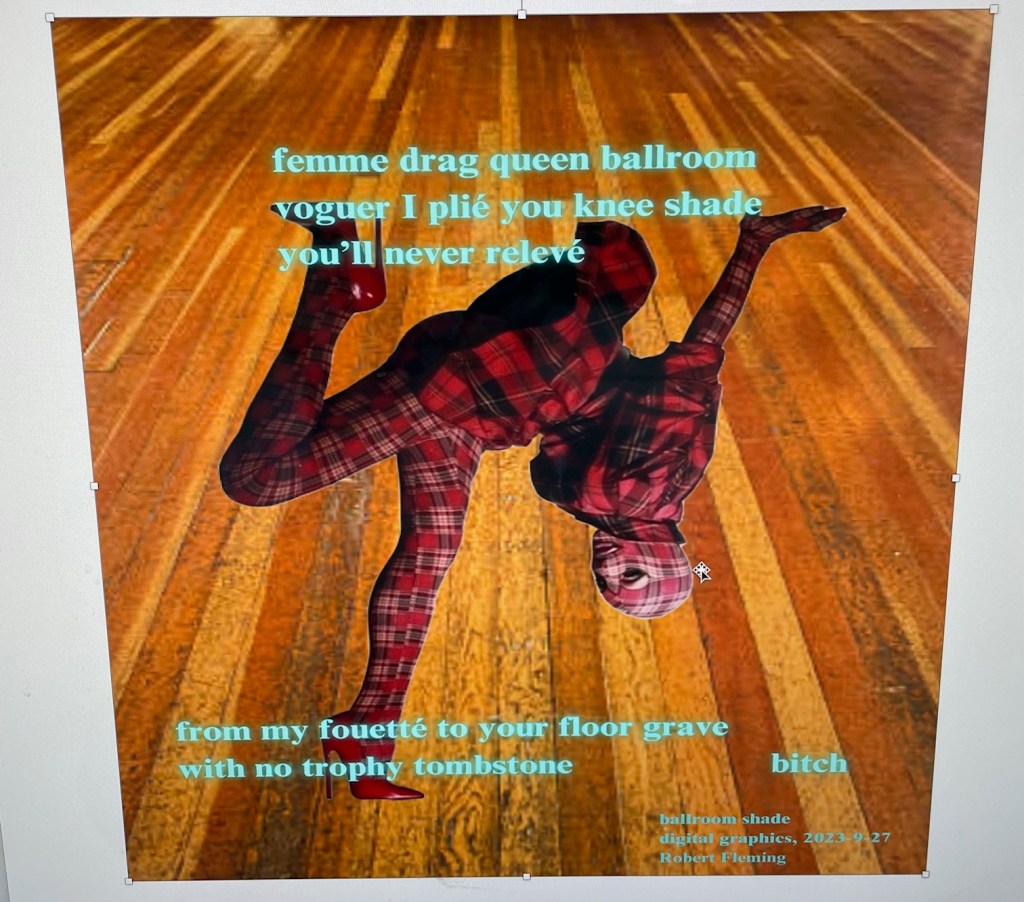
to include one of yours truly’s visual poems:

if you like my visual poetry, buy my visual poetry book White Noir

white noir: Fleming, Robert: 9781957224183: Amazon.com: Books

Follow our Old Scratch Press blog or visit our facebook page for the latest news. Thank you.

No Ocean Spit Me Out Pre-order!

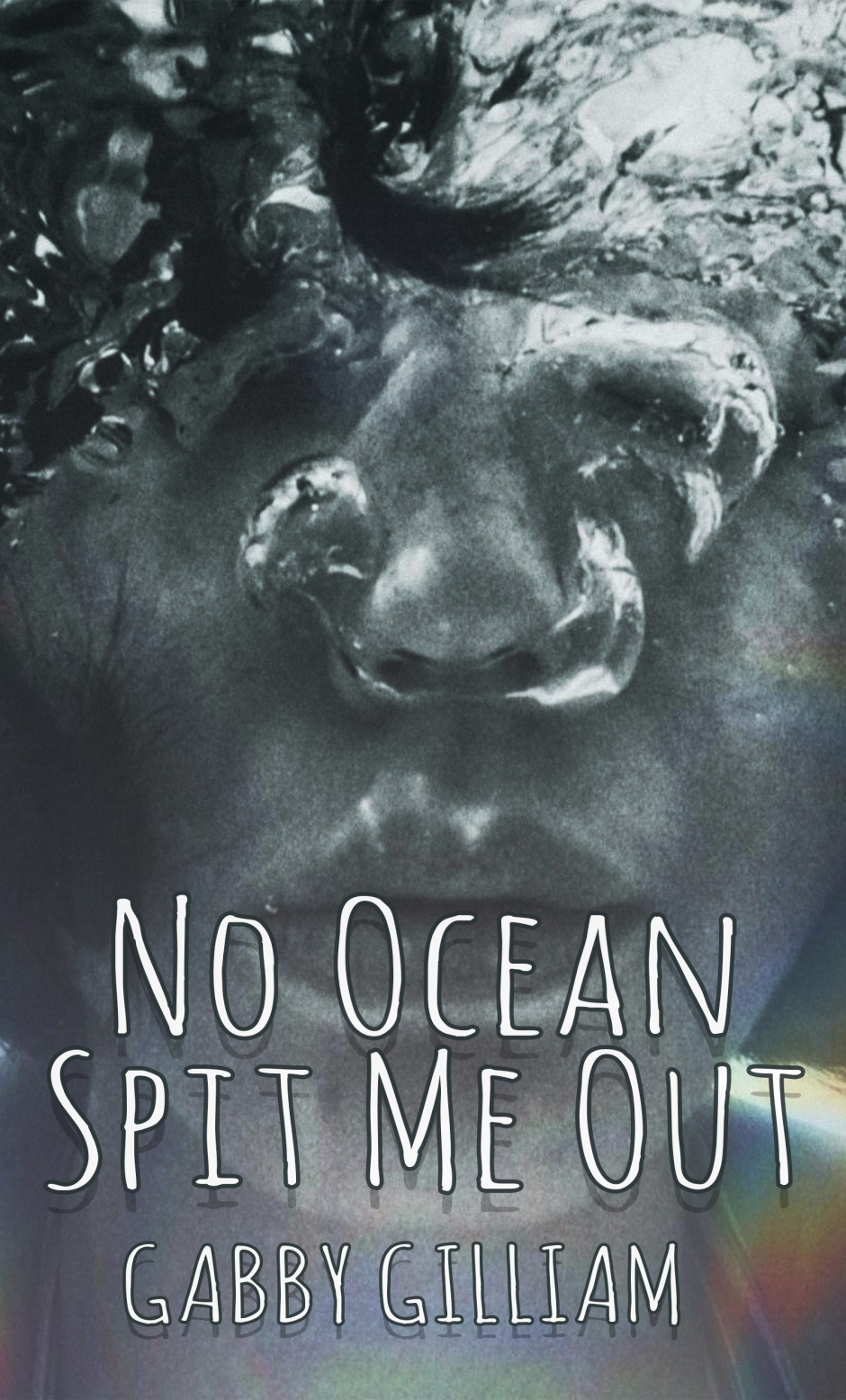
Dianne here, and I am so excited to tell you that, right now, Gabby Gilliam is brining us the fourth book from Old Scratch Press, NO OCEAN SPIT ME OUT.

Gabby Gilliam’s verse preserves the feel of the summer farm, contrasting its fertile brightness with the struggle between grief and the sudden absence of connection to family and place. Belonging and the struggle to continue remembering clash on the page, while the passion for life’s diverse and tactile experiences dazzle the reader with tantalizing gasps of zucchini, crab apples, and blackberry wine. Each poem gives the reader their own lingering taste of her ghosts. -Kim Malinowski

NO OCEAN SPIT ME OUT is a captivating debut collection of poetry that delves deep into the intricate tapestry of family dynamics and personal evolution. Within its 30 poems, the collection embarks on a profound journey through the stages of coming of age, navigating the complexities of familial bonds, grappling with organized religion, and ultimately, embracing the essence of self-acceptance.

Each poem in NO OCEAN SPIT ME OUT serves as a poignant reflection of the human experience, capturing moments of vulnerability, resilience, and growth with eloquence. Through lyrical prose and emotive imagery, Gilliam paints a vivid portrait of the joys and struggles inherent in the process of self-discovery.

Whether you’re seeking solace in the shared experiences of family relationships or searching for introspective insights into the nuances of identity and faith, this collection offers a profound and thought-provoking exploration of the human condition.

NO OCEAN SPIT ME OUT is National Book Award nominee!

Pre-order your copy now!

PAPERBACK

eBOOK

Echoes From the Hocker House Makes Short List

OSP Founding member Virgina Watts’ collection of short stories, ECHOES FROM THE HOCKER HOUSE has made the short list of finalists for the 2024 da Vinci Eye Award and also for the Eric Hoffer Book Award, which announces soon!

I worked as Virginia’s editor for this book, and I can tell you that you will find this book captivating. It will transport you to another time and place, and I bet you’ll want to read it straight through in one sitting because the stories are so engrossing.

Congratulations Virginia! Fingers crossed that you win it all!

INSTANT NOODLES IS UP!

Check out the wonderful writing and art: curated by Old Scratch Press!
Lot’s of poetry for National Poetry Month plus other literary delights await you!

Just like a great lunch you can get it in an instant!

APRIL is National Poetry Month. Time to Start Celebrating and Sharing Our Favorite Poems!

April is almost here, time for National Poetry Month, an entire month to celebrate poetry. Do you have a favorite poem or poet? Let us know and we’ll try to post a story about the poet or the poem on the Old Scratch Press website.

National Poetry Month was launched in 1996 by the Academy of American Poets as a way to promote educational events that encourage students to interact with poets and poetry.

Photo by Andrea Piacquadio on Pexels.com

One of these programs sponsored by the Academy of American Poets is called Dear Poet. Designed for students in grades five through twelve, participating students can write letters in response to poems this year ( 2024)  read online by Patricia Smith, Ed Roberston, Mara Pastor, John James, Nikky Finney, Nicole Cecillia Delgado, Marilyn Chin, and Chen Chen.The submission period for Dear Poet 2024 is now open until April 22, 2024.

If asked, who is my favorite poet it really very much depends on the time of year, time of day, and my mood because I was lucky to have grown up in a household filled with poetry books.

My mom was an English major and she enjoyed reading me her favorites. At a young age I listened to Gerald Manley Hopkins, T.S. Elliot, Robert Frost and Emily DIckinson.

Children love repetition, and when they discover a favorite story they like to have it read to them over and over again. Many Many times I’d ask to be read my two favorite poetry books in pre-school: A.A. Milne’s When We Were Very Young and Robert Louis Stevenson’s, A Child’s Garden  of Verses.

I remember reading to myself “The Swing” at age eight.

The Swing

Photo by Ksenia Chernaya on Pexels.com

By Robert Louis Stevenson (1850-1894)

How do you like to go up in a swing,

             Up in the air so blue?

Oh, I do think it the pleasantest thing

             Ever a child can do!

Up in the air and over the wall,

             Till I can see so wide,

River and trees and cattle and all

             Over the countryside—

Till I look down on the garden green,

              Down on the roof so brown—

Up in the air I go flying again,

              Up in the air and down!

I found all the poems in When We Were Very Young to be irresistible, but my constant favorite was the one about that difficult girl named Mary Jane.

Rice Pudding

By A.A. Milne ( 1882-1956)

What is the matter with Mary Jane?
She’s crying with all her might and main,
And she won’t eat her dinner – rice pudding again –
What is the matter with Mary Jane?

What is the matter with Mary Jane?
I’ve promised her dolls and a daisy-chain,
And a book about animals – all in vain –
What is the matter with Mary Jane?

What is the matter with Mary Jane?
She’s perfectly well, and she hasn’t a pain;
But, look at her, now she’s beginning again! –
What is the matter with Mary Jane?

What is the matter with Mary Jane?
I’ve promised her sweets and a ride in the train,
And I’ve begged her to stop for a bit and explain –
What is the matter with Mary Jane?

What is the matter with Mary Jane?
She’s perfectly well and she hasn’t a pain,
And it’s lovely rice pudding for dinner again!
What is the matter with Mary Jane?

If you have school children, don’t forget to check out all the poetry programs this month and whatever your age make a point of reading a poem a day. The Old Scratch Press is trying to make new poetry more available by publishing several chapbooks each year, so check out what’s in our catalogue and what is about to be released by following us here as well as following our Facebook page. Thank you for reading.