Secrets to Publishing Your First Creative Work

Founding member Robert Fleming share his insights on How to be successful at publishing your first creative writing work

You’ve put it on your bucket list to be a published author. Well done. Who are you doing this for: yourself, others, or both?

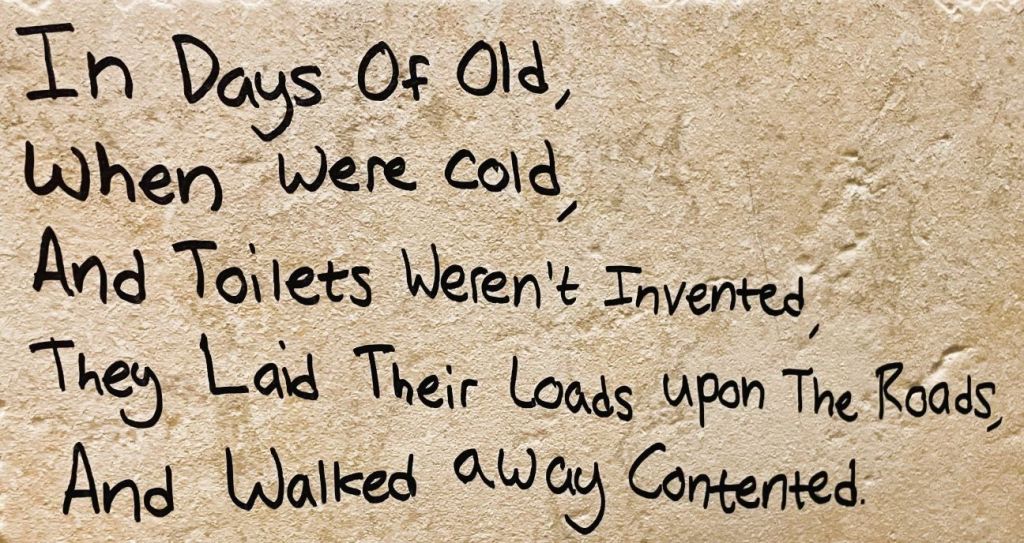
Yours truly, without even knowing, wanted to be published. In 1973, at age ten, I published text on the bathroom brick wall of Roslyn Elementary School in Westmount, Montreal, Quebec. My work looked like the work following but also had curse words and genitalia graffiti.

Bathroom Wall Poem

This talented toilet author made choices: what topic to write about (poo poo), what language to use (English), where to publish (on the bathroom on brick), who the publisher is (self), what genre (poetry), what poetry devices to use (rhyme, humor, 5-lines), and to not disclose the author name (anonymous).

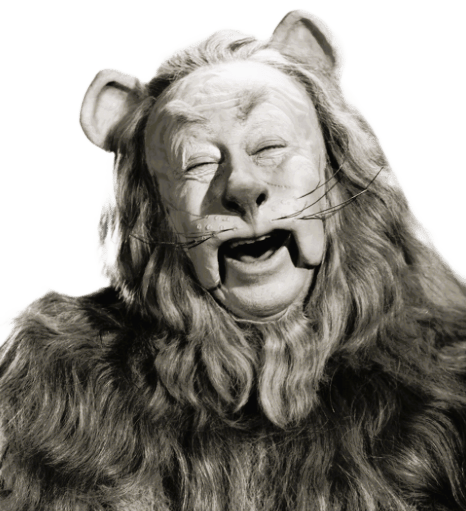
Where you target your publication is guided by your confidence (courageous or timidity) about having other human see and judge your work. If you are feeling timid like the Cowardly Lion, publish your writing in your personal diary. Be sure to select a diary with a lock and attach the key to your necklace that you wear even when you shower.

Cowardly Lion from movie Wizard of Oz

If you get a little courage, self-publish your work on social media (Facebook), like I did in the following work.
On Facebook, other humans will see your work, but you will not experience the review/selection of a judge who accepts or rejects your work.

https://fourfeatherspress.blogspot.com/2024/09/40-poets-being-published-in-doors-of.html

If you find the courage of Joan of Arc, send your work to a publication where work is selected by an editor.

Joan of Arc

Tips for setting yourself up for your best chance of publication acceptance
• For your first publication, select a publication that has a fifty-percent or greater acceptance rate like vanity press where you will have to buy a book that could cost $50, an organization newsletter like a religious one you are a member of or a school you are an alumni of.
• Read the target publication and only submit to them if they publish work similar to yours (genre: poetry, theme: love)
• Read the submission directions and follow them: sometimes there is a theme like love. When there is a theme only submit work that is the theme requested.

Ready? Take a bid breath in, hold three seconds, exhale. What is your publication confidence: timid or courageous. Go forth.


Yours Truly is:

Robert Fleming, a contributing editor of Old Scratch Press.

Who published an Amazon best seller visual poetry book: White Noir.

an editor of the digital magazine Instant Noodles

and the creator of an upcoming magazine cover for Tell-Tale Inklings #7, to be released Autumn, 2024. Visit Tell-Tale Chapbooks on Facebook.

Exploring the Intersection of Sports and Poetry

October is a sports lover’s dream. Most of the major leagues are in full swing, from the NBA, NFL to the NHL. There are college football games every weekend, and even the crisp Fall air makes it feel like football weather.

So what does this have to do with poetry?

There are some cases, perhaps uncommon, where sports and poetry intersect. While in school, I was introduced to the excellent baseball-related poem “Casey at the Bat” by the poet Ernest Lawrence Thayer. From the roar of the crowd to the “Strike!” being called by the umpire, Thayer does a remarkable job of transporting the reader to that fateful match in Mudville. The poem culminates with perhaps its most famous line: “But there is no joy in Mudville—mighty Casey has struck out.”

In college my friends and I would play pickup basketball on the courts on campus. These were disorganized gatherings with teams hastily assembled at the last moment, but these were some of my favorite memories from my college years.

My poem below is an attempt to recapture some of those moments. Unlike “Casey at the Bat”, there was much joy to be found in College Park during those amateur games.

This was written during my college years, and I don’t know if I could write this today, or even should write something like this today, as this poem is full of rough edges and not overflowing with beautiful language.

However, that is what I think I love about it. Much like our simple attempts at basketball all those years ago, the poem is pure and raw, even somewhat unfinished. Ah, the folly of youth!

Photo by Pixabay on Pexels.com

So without further introduction, I hope you enjoy my poem “Hoops”.

Hoops

It wasn’t the easy, fluid style of play you see on TV,
It was the jerky, nervous style of amateurs
played on asphalt several feet away from where I was sitting.
My shorts had ripped horrendously down the back during the last game,
but that really didn’t matter in the big scheme of things,
and besides, the jocky guy Chris would have never
picked me to play after screwing up the last game so badly.
An observer watched the game from the other side of the court, grinning to himself secretly.
Perhaps he was happy to see the different bodies working so well together, Van, the Vietnamese guy; Joy, the Indian; Greg the African American and Danny the Anglo; or perhaps that was just what I wanted to see.

Chris the jock made a three-pointer, and murmurs of approval such as, “Good shot, man” or “Nice one, Chris” fill the air, replacing the sound of the tennis shoes against the pavement.
I never questioned Chris’ basketball prowess.
It was his attitude that puzzled me.
I wanted to shake him and say, “Hey, Chris! Listen to what I’m saying, man! You’re just a pebble in the stream, man! Just a lowly grain of salt! This shot won’t change the world, dig?”
But you can’t tell a guy like Chris something that big.
He would just laugh it off and call you a stinkin’ liberal hippie, and go about his business of shooting politically correct jump shots, while I would go about my business of trying to change the things that couldn’t be changed.

-R. David Fulcher, OSP Founding Member

5 Reasons Every Book Lover Should Attend a Book Festival

For book lovers, there’s nothing quite like the magic of a book festival. These vibrant events bring readers, authors, and publishers together in a celebration of storytelling, creativity, and community. If you’ve never been to one, here are five great reasons to mark your calendar for the next book festival near you.

1. Meet Your Favorite Authors

Imagine having a face-to-face conversation with the authors behind your favorite stories. Book festivals often feature a wide array of authors—from bestsellers to emerging voices. You can attend book signings, hear authors speak on panels, and even ask questions during Q&A sessions. It’s a great chance to connect with the creative minds shaping today’s literary landscape.

2. Discover New Books

Browsing through endless stalls at a book festival can feel like stepping into a treasure trove. You’ll have access to books you may not find at your local store, including limited editions, indie publications, and advanced releases. Plus, many vendors offer special discounts, so it’s the perfect time to stock up on fresh reads.

3. Participate in Workshops and Panels

Book festivals aren’t just for browsing and buying; they’re also educational. Many events feature workshops, panel discussions, and lectures that cover topics ranging from writing techniques to industry trends. Book festivals are usually free to attend which gives you the chance to attend these workshops for free! Whether you’re an aspiring writer or just curious about the publishing process, these sessions offer valuable insights.

4. Connect with Fellow Book Lovers

If you’re passionate about reading, there’s nothing quite like bonding with others who share your enthusiasm. Book festivals provide a space for literary conversations, allowing you to swap recommendations, discuss your favorite genres, and maybe even join a book club. It’s a community experience that extends beyond the event itself.

5. Support Local and Independent Authors

Book festivals often highlight local talent and independent authors (like me!) who might not have the same platform as big-name writers. Attending a festival gives you a chance to support these creators, discover hidden gems, and diversify your reading list with unique, lesser-known voices.

From meeting your favorite authors to discovering new books and making connections with fellow readers, book festivals are a must for anyone passionate about literature. Whether you’re a casual reader or a die-hard bibliophile, attending one can enhance your love of books in unexpected ways. So, find the next book festival near you, grab your tote bag, and dive into the literary world!

The Legacy of Edna St. Vincent Millay

By Nadja Maril

As a writer and a poet, I do a lot of reading. Sometimes I read a poem that resonates with me so strongly, I read it several times. Sometimes I commit a poem or favorite passage to memory to make it easier to revisit. One of those poems is

“Recuerdo”

by Edna St. Vincent Millay 

(February 22, 1892 – October 19, 1950)

It starts out

We were very tired, we were very merry—

We had gone back and forth all night on the ferry.

It was bare and bright, and smelled like a stable—

But we looked into a fire, we leaned across a table,

Composed of three stanzas, each containing three couplets, you can read the rest of the poem courtesy of the Poetry Foundation here.

Maybe it’s the rhythm, that mirrors for me the rocking of a ferry boat, the repetition of the line “We were very tired, we were very merry” that begins each stanza or the way she captures the exuberance of youth and the generous spirit of the poet and her companions, but I’ve always loved that particular poem.

Surprising, is how many people are unfamiliar with the name Edna St. Vincent Millay. The very first woman to win the Pulitzer Prize for poetry (1923), she was one of the most famous and successful American writers of the mid 20th century. Millay broke sales records and was a cultural celebrity who traveled across the United States giving captivating poetry readings to sold-out crowds.

A feminist, who openly loved both women and men, she was a prominent member of the literary community writing plays, publishing an opera libretto, as well as magazine articles under a pseudonym as well as publishing more than one dozen poetry collections. Her prize-winning poem “The Ballad of the Harp-Weaver” was dedicated to her mother. The poem tells a story of a penniless, self-sacrificing mother who spends Christmas Eve weaving for her son “wonderful things” on the strings of a harp, “the clothes of a king’s son.”

Raised in Maine by a single mother who elected to leave her husband during an era when divorce was not widely accepted, Millay was the eldest of three girls who largely had to take care of themselves while their mother would be absent from the house working as a homecare nurse. Surrounded by poetry, music and literature, Millay began writing her own poems at a young age.

WHERE TO LEARN MORE ABOUT EDNA ST. VINCENT MILLAY

To learn more about her complicated life, I highly recommend Nancy Milford’s biography, Savage Beauty; The Life of Edna St. Vincent Millay. Over 500 pages in length, it was comprehensively researched with the cooperation of Millay’s sister Norma, sole heir to the Edna St. Vincent Millay estate. and contains excerpts of Millay’s letters and poetry.

Here are two more poems to whet your appetite for Millay’s poetry.

“What lips my lips have kissed, and where, and why”

By Edna St. Vincent Millay

What lips my lips have kissed, and where, and why,

I have forgotten, and what arms have lain

Under my head till morning; but the rain

Is full of ghosts tonight, that tap and sigh

Upon the glass and listen for reply,

And in my heart there stirs a quiet pain

For unremembered lads that not again

Will turn to me at midnight with a cry.

Thus in the winter stands the lonely tree,

Nor knows what birds have vanished one by one,

Yet knows its boughs more silent than before:

I cannot say what loves have come and gone,

I only know that summer sang in me

A little while, that in me sings no more.

Vanity Fair 1920

“I shall go back again to the bleak shore”

By Edna St. Vincent Millay

I shall go back again to the bleak shore

And build a little shanty on the sand,

In such a way that the extremest band

Of brittle seaweed will escape my door

But by a yard or two; and nevermore

Shall I return to take you by the hand;

I shall be gone to what I understand,

And happier than I ever was before.

The love that stood a moment in your eyes,

The words that lay a moment on your tongue,

Are one with all that in a moment dies,

A little under-said and over-sung.

But I shall find the sullen rocks and skies

Unchanged from what they were when I was young.

To learn more about her life and times, information is available from the Edna St. Vincent Millay Society. https://millay.org/

The author of this blogpost, Nadja Maril, has been published in dozens of publications including, Defunkt Magazine), Lunch Ticket, The Compressed Journal of Creative Arts, BarBar and Across the Margin. A former journalist and magazine editor, Nadja has an MFA in Creative Writing from the Stonecoast Program at the University of Southern Maine. She recently published a collection of

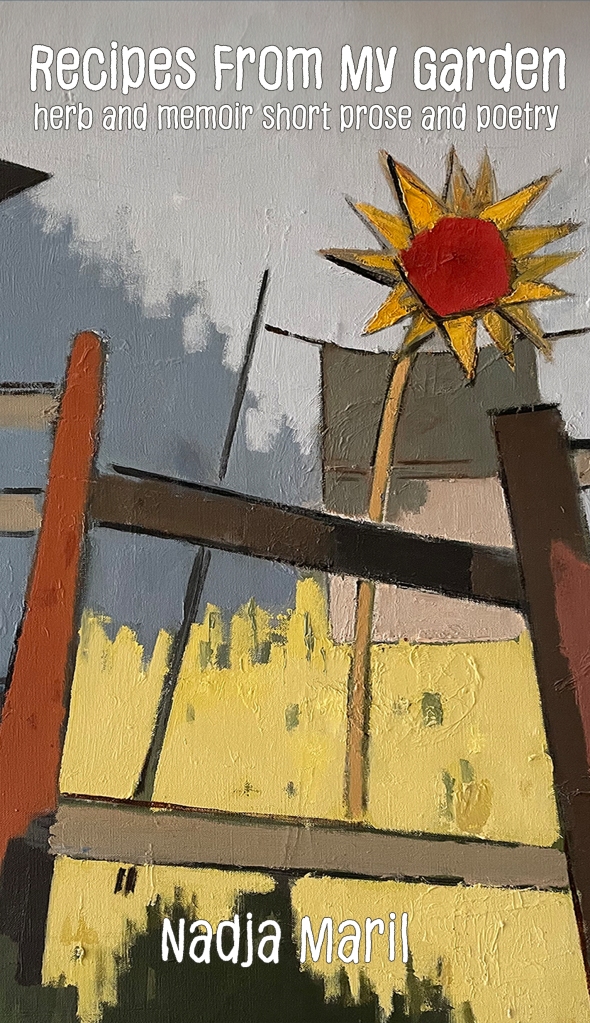
poems and short essays: RECIPES FROM MY GARDEN– (Old Scratch Press Sept. 2024) a great gift to yourself and for friends at $8.95. To learn more about Nadja’s writing visit Nadjamaril.com

The Healing Power of Poetry

By Virginia Watts

Poetry is an old art form dating back to ancient Greece. Why has it been with mankind so long? For one thing, writing and reading poetry is good for us. It allows us to manage our emotions which in today’s complicated and divided world can be an overwhelming task. During the recent pandemic many literary journals called for submissions about their experiences during the pandemic. Many poets answered the call, and no doubt felt better for it.

During the months of lockdown, people all over the world lost many things. We were suffering. Some of us lost loved ones, some of us were very ill ourselves. We all lost our normal sense of community, isolated as we were. Humans aren’t meant for isolation. Many people were lonely. Things we enjoyed such as travel, comradery in an office or school setting, had to be put on hold. Writing poetry and sharing poems created a bond among people when it was sorely needed.

 As it turns out, poetry can be a powerful healer. Rhythmic language is soothing. Think of a lullaby. Poetry also helps us contemplate and reflect our lives back to us. Through poetry, we learn about different cultures and histories which helps us to stop focusing on ourselves and leads to a better understanding among peoples.

 Through poetry we can stop to appreciate and experience what is beautiful in our world or share a poet’s experience with something we are also struggling with. This improves our mood. Poetry is often read to hospitalized children to reduce their fears and worries. Additionally, reading poetry out loud has been shown to slow breathing and help a person relax.

            So, three cheers for all the healthy things poetry does for the human body and spirit. During the pandemic I remember reading this famous poem by Maggie Smith. It has stayed with me.

Maggie Smith, poet

Good Bones

By Maggie Smith

Life is short, though I keep this from my children.

Life is short, and I’ve shortened mine

in a thousand delicious, ill-advised ways,

a thousand deliciously ill-advised ways

I’ll keep from my children. The world is at least

fifty percent terrible, and that’s a conservative

estimate, though I keep this from my children.

For every bird there is a stone thrown at a bird.

For every loved child, a child broken, bagged,

sunk in a lake. Life is short and the world

is at least half terrible, and for every kind

stranger, there is one who would break you,

though I keep this from my children. I am trying

to sell them the world. Any decent realtor,

walking you through a real shithole, chirps on

about good bones: This place could be beautiful,

right? You could make this place beautiful.

Copyright Credit:
Maggie Smith, “Good Bones” from Waxwing.  Copyright © 2016 by Maggie Smith.  Reprinted by permission of Waxwing magazine
 

Source: Waxwing magazine (Issue IX, Summer 2016) (2016)

To learn more about the writer/poet Virginia Watts, check out her short story collection https://www.amazon.com/Echoes-Hocker-House-Virginia-Watts/dp/1957224177/

Some Odes to Autumn

By R. David Fulcher

Autumn has always held a special magic for me, a season in which the poet John Keats aptly described as “a season of mists and mellow fruitfulness.”

Indeed, if there is an hour for magic, it strikes in the crisp dawn of an early Fall day. And further, if magic has a language, surely its language is poetry.

So I find this an appropriate time to post some of my own verse (hopefully imbued with magic itself) for your reading pleasure.

The first poem is “Ode to the Night”, and it hints at the darker aspects of this time of year, a time when pumpkins cast you crooked smiles and ghosts and goblins are generally free to roam:

Ode to the Night

To the Night, the Night, the dark delight,

The children sleep soundly in gentle white,

Breathing in time with the Raven’s flight.

To the Night, the Night, the waxen moon,

Audience of one to the witches’ croon,

Driving the tides for the sailors’ doom.

To the Night, the Night, its starlit fires,

Which guide the ghosts from funeral pyres,

Which soften the Harpy to play the lyre.

I hope you enjoyed “Ode to the Night”, and at a minimum it puts you into the Halloween spirit!

My second poem is “Melinda”, a story of lost love, and although not directly a tribute to the season was nonetheless designed to evoke a haunted mood:

Melinda

Sometimes in the lonely hours

I would walk the hill

Leaving the clamor and din behind

For headstones gray and still,

As I neared the place where the dead did lie

I knelt and bowed my head

A fool is he who visits the graves

Without homage to the dead,

‘Melinda’ read the stone I sought

Melinda, my betrothed,

Only a thief as clever as Death

Could steal the health of Melinda, my love

Often I hear Melinda’s voice

Soft upon the breeze

I answer her call of eternal love

And grow hoarse among the trees.

I hope you enjoyed “Melinda”! Last but not least is an ode to a much maligned creature, a symbol of the undead, but in reality a beautiful animal that sustains our ecosystem. This last poem is called “The Bat”:

Photo by Photo By: Kaboompics.com on Pexels.com

The Bat

Taking inverted Sabbath in the caverns of Carlsbad

I measure time in locust-breath and calcite drip,

My bird-chest rising and falling with the gentle tides

Of this black carpet of brotherhood.

Footsteps fill my dreams,

Sun-bleached tourists groping into the cavern’s belly

To enter the sublime,

Their voices like a million valves releasing pressure.

For an instant they will recognize the face of God in this hard darkness,

The stalactite points of his beard,

The cascading rock formations of his brow,

And that fraction of animal intellect will rush forth,

Freed from concept and equation,

To join our ranks as we veer through this Jerusalem darkness

Toward dusk and sustenance,

Toward the amphitheater where they wait for their own departure.

Thank you for reading! I hope you enjoyed these odes to the season and wish all of you a sublime Autumn.

-R. David Fulcher, Founding Member of Old Scratch Press

REST

Photo by Erik Mclean on Pexels.com

I am recovering from major surgery nine weeks ago. I have been described by some who are nearest and dearest that I am not just an overachiever, but a classic type A personality. To which I say “Balderdash. Not in the least.” But one thing that has become all too apparent is that I love naps. At last one, if not more, a day. And while it feels like an enforced putting down of my will to write, and do, and create, and clear out, I don’t really care. My body has other plans. This is what my medical team refers to as “rest and recuperation.” Rest. Now there’s a thought.

I’m a writer – poetry, short stories, and an almost completed first novel. In all writing (and my reading) I find that the rest periods allow me, the reader, to think, to consider what I just read. One habit I recently developed is reading my poetry out loud, primarily to myself (unless there is a willing listener close by). This is not a new habit, just rediscovered, after a lapse of more than 50 years. I used to do this in college, for it helped me understand what the writer was trying to get across.

What I found in my personal poetry was timing. which phrases required slight stress, pauses, clear enunciation. And my habit of reading each one thee times allowed me to hear with different ears. The rhythm, the internal stresses, cadence, alliteration.

Poetry has always been a way of understanding the emotional frame of mind of both the poet and the listener. The oldest poetry we have records of shows that the stories and sagas were all oral, as well as aural. They transported the listener into another world, a world of magic, feeling, creation, alternate realities, explanations of heroic journeys.

And reading and hearing poetry aloud gives me a different perspective. I remember my grade school librarian reading stories to us. Magic. We could not get enough. It whetted an appetite for more, for it was a group activity led by an older and wiser person.

And the greatest value in my listening, was when she paused, created a resting spot, and then continued. I can imagine sitting around a night fire, listening to a traveling bard recite sagas. Just for me. It became personal, and valuable, and I was personally included in the vast story.

My current resting spot is in my recliner, head back, legs propped up. Napping away. I am not “shoulding” on myself as much. I am resting more, waiting for the next phrase, the next idea, the next thing I don’t have the energy to do. Resting is good, although it is contrary to my nature. But the recliner is so very comfortable!

Play a Game With Us and Win a Prize!

It’s the spooky season! Let’s play Exquisite Corpse!

“What,” you may ask, “is Exquisite Corpse, and how do I engage in such an outlandishly named game?”

Before we all get the vapors…

Exquisite Corpse is a collaborative poetry game that traces its roots to the Parisian Surrealist Movement. Exquisite Corpse is played by several people, each of whom writes a word on a sheet of paper, folds the paper to conceal it, and passes it on to the next player for his or her contribution.
In order to write a poem, participants should agree on a sentence structure beforehand. For example, each sentence in the poem could be structured “Adjective, Noun, Verb, Adjective, Noun.” Articles and verb tenses may be added later or adjusted after the poem has been written. The game was also adapted to drawing, where one participant would draw thehead of a figure, the next the torso, etc. The name “Exquisite Corpse” comes from a line of poetry created using the technique: “The exquisite corpse will drink the young wine.”
https://poets.org/text/play-exquisite-corpse

While we cannot share a piece of paper, we can, all the same, play the game. Please join us!

The rules for this game are as follows”

SUBMIT: one line of “poetry”

FORM: The line must be arranged to have these elements in THIS ORDER ONLY as the main elements:

Adjective, Noun, Verb, Verb, Adjective or Adverb (one only), Adjective, Noun

Punctuate (or not) as you see fit.

YES! You can add conjunctions, articles, etc., as needed, but the main words must be Adjective, Noun, Verb, Verb, Adjective or Adverb (one only), Adjective, Noun

So, this would work:

Happy frogs jumped and swam quickly, green sparks

Happy(adjective) frogs(noun) jumped(verb) and swam(verb) quickly(adverb), green(adjective) sparks(noun).

And this would not:

Frogs jumped happily and swam quickly making green sparks

Got it?

You do!

Send it to dianne@currentwords.com between now and October 29th at midnight PT, for publication on Halloween!

Make the email subject: Exquisite Corpse.

ONE entry per person!

PRIZES:

SUBMIT and you will be given a free digital copy of the OSP book of your choice!

Three lucky people, chosen at random by Robert Fleming and his random number generator, will be given a print (paperback) copy of the OSP book of his/her/their choice!

One Lucky Person (not publishing with CWP) will win a free 5-page edit from me!

OSP members and other people CWP publishes are welcome to join in, and can claim a free Kindle of their choice from OSP, but are not going to get one of the three free print books or the edit (so sorry! Let’s give those to our guests!).

YES, everyone who enters will be subscribed to OSP news through Current Words newsletter, which is sent out to email addresses one time almost every month. At the bottom of your first newsletter (and all the rest of them) is an unsubscribe button, and if you really don’t want to stay on the list, that will get you right off (Mailchimp don’t play.).Honestly, we’re not trying to bother you; we’re out to have fun!

So, let’s have fun!

Ooooo, you can already start dreaming of the OSP book you’re going to choose for your prize! Take a look at your options:

Happy Fall, y’all, and Happy Halloween!

I cannot wait to read your exquisite corpse!

🙂 Dianne

Happy Birthday, Sylvia Plath

Alamy/BBC

The month of October (October 27) marks the birthday of Sylvia Plath, one of the most famous poets of the 20th century. Sylvia Plath is known for writing about deep feelings like sadness, frustration, and the search for who we really are. Her poems are powerful and still connect with readers today.

Who Was Sylvia Plath?

Even from a young age, Sylvia Plath loved to write. She was born in Boston, MA in 1932 and published her first poem when she was only eight years old. Major themes that appear in her poetry are how hard it can be to figure out who you are, mental illness, and what it’s like to be a woman in society.

She studied at Smith College and, later, Cambridge University in England. While at Cambridge, she met and married the poet Ted Hughes. Sylvia Plath faced many struggles in her personal life, and took her own life when she was only 30 years old. However, her writing has lived on, and she remains one of the most important poets of her time.

You can hear a brief interview with Sylvia Plath about her early influences here:

Sylvia Plath’s Powerful Poetry

I first read a poem by Sylvia Plath in high school for a Dual Enrollment English course. I’m fairly certain we read “Lady Lazarus” because I can recall discussing the pronunciation of the German words in the poem. I remember being amazed by her work and remember that it was the first time I really paid attention to the language in a poem. Her word choices were striking and she was the first poet whose work I sought to read outside of class. 

Plath’s poems often show strong emotions. She writes in a way that can feel personal and sometimes painful, but also very honest. She nearly lost her life multiple times before her death and discusses those experiences in one of her most famous poems, called “Lady Lazarus.” In this poem, Plath writes about feeling reborn, even after going through something difficult. Here’s a part of it:

“Out of the ash  
I rise with my red hair  
And I eat men like air.”

While most of the poem recounts her previous experiences with death, these lines show how strong and fierce she feels after going through those difficult times. She compares herself to a phoenix, a mythical bird that rises from the ashes.

Another well-known poem by Sylvia Plath is “Daddy.” In this poem, she talks about her feelings toward her father, who died when she was young. It’s full of anger and sadness. Here’s a line from that poem: 

“You stand at the blackboard, daddy,
In the picture I have of you,
A cleft in your chin instead of your foot
But no less a devil for that, no not
Any less the black man who

Bit my pretty red heart in two.
I was ten when they buried you.
At twenty I tried to die
And get back, back, back to you.
I thought even the bones would do.”

Plath uses intense language to talk about how hard it was to live in the shadow of her father, but also the complicated feelings she has about him now that he’s dead.

These lines are just a small sample of Sylvia Plath’s ability to use words to explore complex feelings like despair, identity, and the search for meaning. Each one is a powerful reminder of her unique voice in literature.

Sylvia Plath also wrote a novel called “The Bell Jar” and her prose is just as lyrical as her poetry. In “The Bell Jar,” she writes:

“I took a deep breath and listened to the old brag of my heart: I am, I am, I am.”

This quote is famous for capturing the feeling of simply being alive, despite the struggles that come with it. It’s a powerful reminder of existence itself, and, paired with her poem “Lady Lazarus,” shows you how much she needed to remind herself that she was still alive.

Why We Remember Sylvia Plath

On Sylvia Plath’s birthday, we honor her for the way she used her writing to express feelings that many people go through. She wasn’t afraid to write about things like sadness, anger, and the search for identity. Her work gives readers a window into the struggles of life, but also shows the beauty of using words to express those feelings. Her poetry continues to inspire people of all ages. Even though her life was short, her words continue to resonate with readers.

What do you think about Sylvia Plath’s poetry? Does it make you feel something special? Share your thoughts in the comments below!

Bettmann / Getty Images

Exploring Horror Writing: A Q&A with R. David Fulcher

We learn from asking questions, and what better way to explore the craft of writing than through an engaging Q&A with an author! This month the author I’m interviewing is R. David Fulcher who happens to be a member of the Old Scratch Press Poetry and Short Form Collective.

R. David Fulcher is a talented author with multiple books to his name. His most recent work, a captivating short story collection titled THE PUMPKIN KING AND OTHER TALES OF TERROR, showcases his passion for storytelling. A writer of both poetry and prose, he deeply loves speculative fiction, particularly science fiction and horror. You can explore more of his work on his blog at Rdavidfulcher.com.

This is the perfect month—the season of ghosts and goblins—to delve into the exciting craft of writing horror. Most of my questions in this post will focus on the intriguing insights from THE PUMPKIN KING AND OTHER TALES OF TERROR. Let’s celebrate the art of writing together!

Q: Question

R: Response

R. David Fulcher

Q: As a writer, what is your primary goal when interacting with your readers?

R: As a horror writer, I have two primary goals: 1) Establish an “eerie” atmosphere; and 2) Elicit a physical response in the reader. Yes, I hope to stimulate the readers’ minds as well, but I primarily want to elicit fear – a racing pulse, the small hairs standing up on the back of your neck, a shiver in your spine – only good horror tales have this effect.

Q: Was there a specific moment you remember, perhaps an experience that spurred you on to want to write this particular book?

R: The Pumpkin King and Other Tales of Terror (and the follow-up volume “Asteroid 6 and Other Tales of Cosmic Horror”) is sort of a “greatest hits” collection of my short stories, so unlike a traditional novel the stories were developed over many years and inspired by many moments and experiences throughout my life.

To give a sense of the age of some of the stories, the title story “The Pumpkin King” first appeared in a small press magazine entitled Mausoleum back in 2001!  Of course, all the stories have been heavily revised in the new book.

To provide an experience that spurred me to write a particular story, “Castle Marienburg” was inspired by a tour of that very castle during a visit to Germany in college.

Q: As both a horror writer and a poet, how has Edgar Allen Poe influenced your work?

R: In a way, Edgar Allen Poe led me to my genre. My high school English teacher taught a semester on Poe, and I was hooked.  I started writing dark, gothic short stories that day after school and submitting them to small press magazines shortly thereafter.

Q: Writing poetry and writing prose, how has the two different types of genres influenced each other in your writing?

R: My love for both poetry and prose has caused me to experiment with inserting sequences of poetry into my fiction.  Some examples of my stories that include embedded poems are “A Night Out with Mr. Bones”, “The Faerie Lights”, and “All Across the Mountain”.

Q: Did you work alone or did you rely on some feedback from others?

R: I initially write on my own, but I really enjoy it when people close to me review my work and give feedback on it.  For example, my brother Dale helped proofread the manuscript for The Pumpkin King and Other Tales of Terror, and after reading my short story “Asteroid 6” my wife Lisa was really impressed with the tale, so I was inspired to title my second volume coming out this Fall as “Asteroid 6 and Other Tales of Cosmic Horror”.

Of course, my publishers David and Dianne are also tremendous editors and their feedback has been essential to my work.

Q:Do you imagine you are writing for a specific person or a certain audience?

R: No specific audience. I will say that my writing is almost always in the realm of the fantastic, so fans of my work must be able to “suspend their disbelief” and just go along for the ride, trusting me to take them to a magical, almost unbelievable ending, even if all the facts don’t line up with reality. I think fans of hard science-fiction (Isaac Asimov, etc.) will have a hard time enjoying my work.

Q: How do you approach revision?

R:This goes back to things I’d tell my former self.  I used to put down the pen (yes, I write my stories out long-hand!) after a long, intense burst of writing (sometimes an entire story in a single sitting), push the manuscript back on the desk with a smile, and say “Perfect!”

I would then immediately submit the tale for publication, only to receive rejection after rejection, never understanding why.

I’ve finally learned that being a professional writer means spending almost twice the amount of time revising your work as you spent writing it in the first place.  So I approach it like work. I allocate time for editing/proofreading, I set deadlines, and I hold myself to them. The difference between my original manuscript written after a burst of artistic inspiration and the manuscript after several rounds of revision is often night and day.

Q: If you could give advice to your younger self, what would you want to tell them?

R: I’d remind my younger self that the success of a book is up to me. I used to self-publish with AuthorHouse (formerly 1st Books) and believed that getting my book on Amazon and buying the publisher’s “marketing kit” would instantly propel me to fame and the bestseller’s list.  I have learned the hard way over the years this is not the case. Publishing the book is just Step 1.  The real work is in the marking and promotion.

Q: How did you find your publisher or did they find you?

R: David and Dianne of Devil’s Party Press (now Current Words Publishing) met at the Indie Lit Fest at Frostburg State University in Frostburg, MD.  At the time they were accepting submissions for one of their Halloween Party anthologies and provided me with the information.  I submitted and was accepted. The rest as they say is history! 

Q: Do you have a specific horror story favorite you’ve read?

R: Several novels by modern horror writers have had a tremendous influence on my writing.  They include “Something Wicked This Way Comes” by Ray Bradbury, “The Tommyknockers” by Stephen King, and “HIdeaway” by Dean Koontz.

In your own portfolio, a story you are particularly proud of?

R: I have a few favorites among my stories that don’t always correlate to fan favorites.  The first is “Castle Marienburg”, which was originally titled “Eyes in the Night”. A horror editor in the small press called it one of the best horror stories he had ever read, which was very satisfying. Others include “Spectra’s Masterpiece”, a science fiction story about AI published back in the early 2000’s well before AI became a commonplace topic, and “The Land Spider” in the way that it incorporates native American mythology.

Q: Do you have a “day job” to help pay for your writing habit, and it so, has it impacted in any way your writing?

R: During my day job I work as an IT Contractor.  My work with computers has spilled into my fiction with my stories “ELECTRIC”, where a boy becomes one with his home computer, and “The Witch Toaster,” where a group of programmers within an IT Department must battle supernatural forces.

Thank you for reading and visit the Old Scratch Press Website to learn more about our authors and upcoming publications.