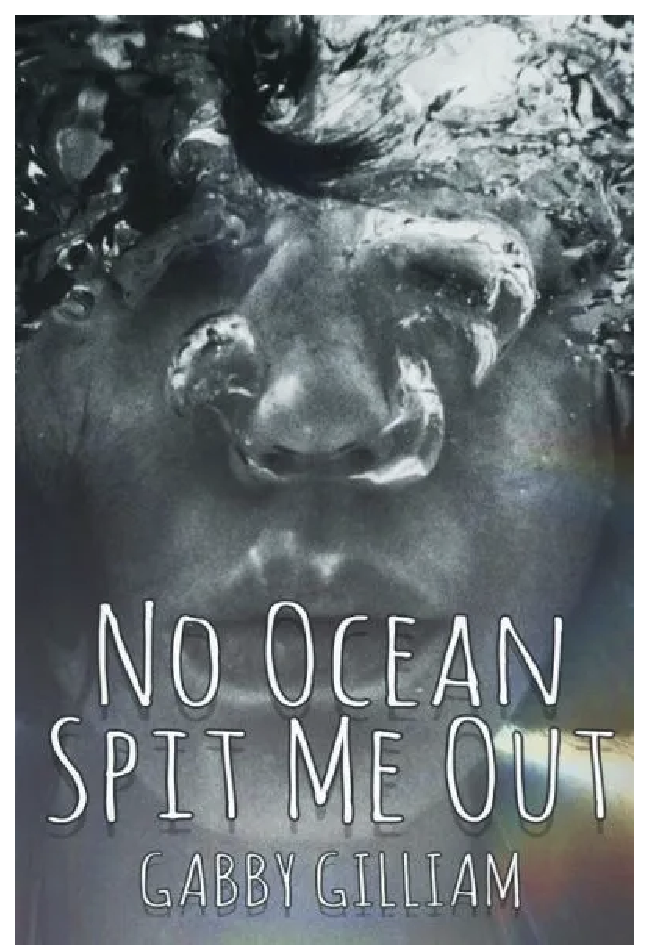
No Ocean Spit Me Out. Gabby Gilliam’s first chapbook of poems, published by Old Scratch Press, is now available for purchase. Shipments will begin on September 15th. Recently I had the opportunity to ask Gabby a few questions about her work and her newest book.
The poems in Gabby Gilliam’s new book, No Ocean Spit Me Out, explore the dynamics and evolution of family relationships.
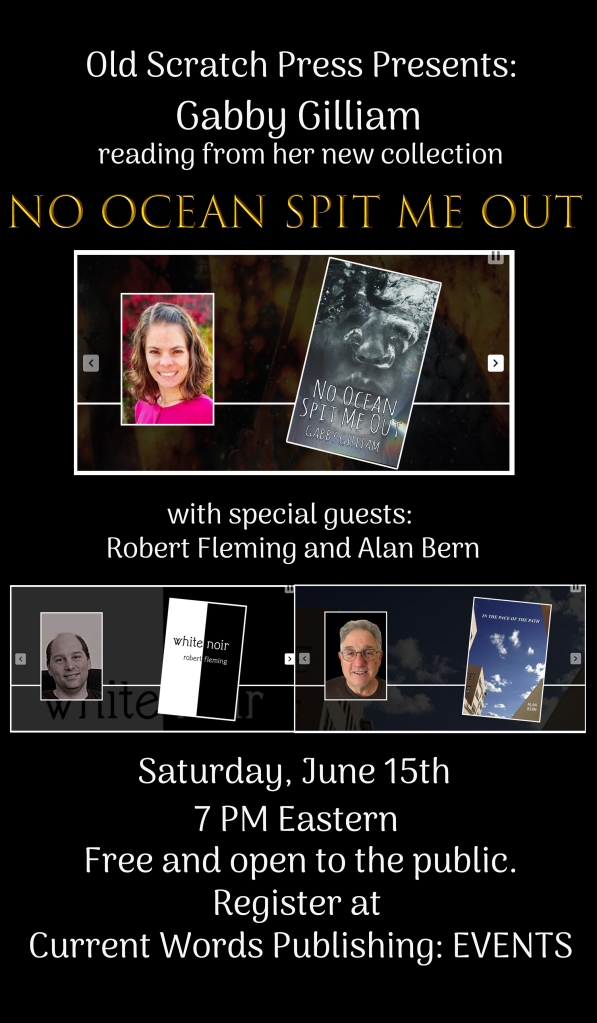
A live reading zoom event is coming up, JUNE 15tth and you can register to hear Gabby read from her new book as well as hear poets Alan Bern and Robert Fleming read from their work as well. To register click here.
What do you like best about writing poetry?
I love that you can use poetry to describe things in new ways––to make the familiar fresh and universal at the same time. It’s one of the things I like best about reading poetry as well.
Which is your favorite poem in this collection and why?
I think my favorite poem might be the one that gives the book its title, No Ocean Spit Me Out. It’s a tribute to my dad. In this poem, I compare my dad to the god Zeus, and Zeus fails to measure up. Since my dad passed away, most of my poems about him are darker and focus more on my grief. I like this poem because it focuses on some of the things that made me love him so much.
What would you like readers to know about you in connection to your work?
Many of my poems focus on aspects of family connection. From dealing with addiction to witnessing my dad’s complicated relationship with his faith (which had an influence on my own struggle with religion and faith), the poems in this collection are a collage of my childhood and gradual self-acceptance. I hope readers can connect with my personal experiences by reflecting on the nuances of their own familial relationships and the impact they have on shaping our identities. I think the power of shared experiences is what make poetry so resonant, and I hope readers find that within the pages of this collection.
More about Gabby
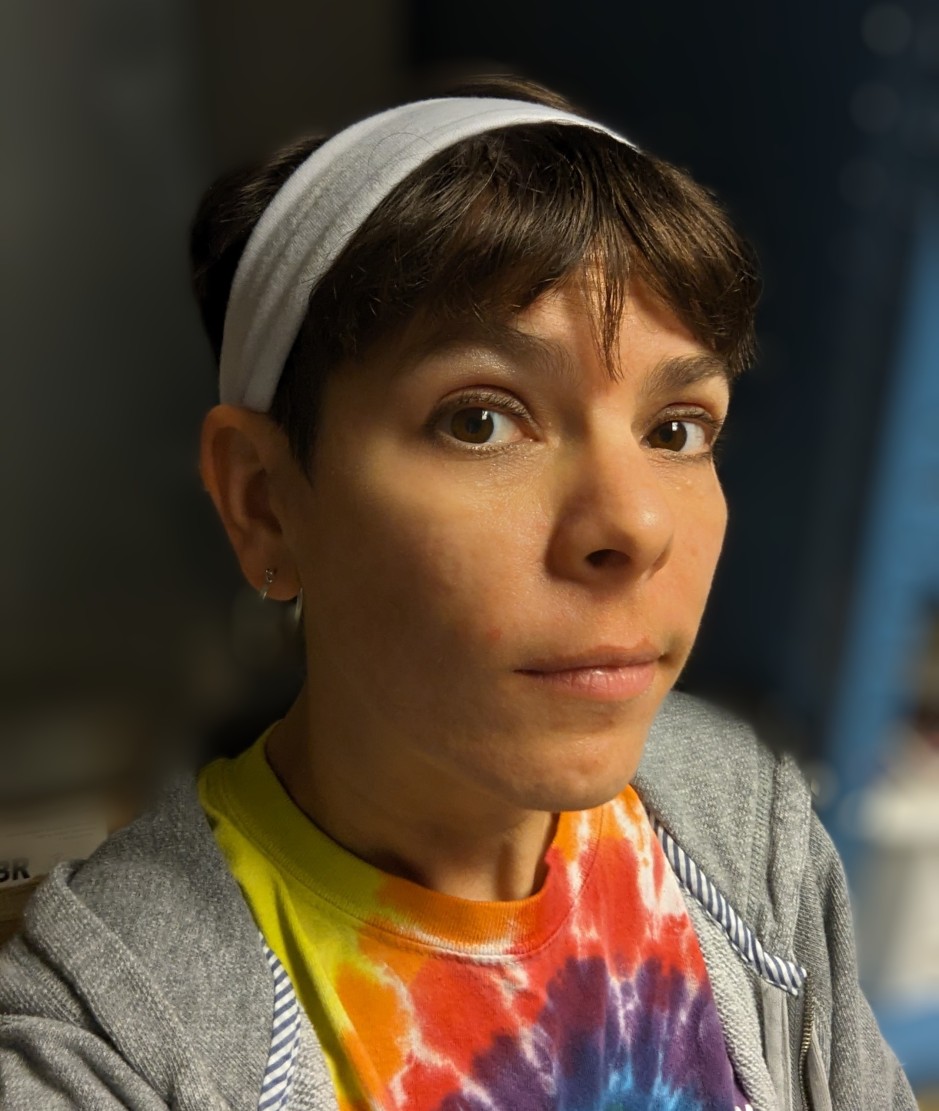
Fellow collective member Gabby Gilliam is a writer, an aspiring teacher, and a mom. Gabby’s poetry has appeared in One Art, Anti-Heroin Chic, Plant-Human Quarterly, The Ekphrastic Review, Vermillion, Deep Overstock, and Spank the Carp.
Not only is she a poet, but Gabby pens the Drumming for the Cure series of novels. Two thus far, Trouble in Tomsk and Chasing the Cure have been published by Black Hare Press. She lives in the DC metro area with her husband and son.
To purchase your own copy of No Ocean Spit Me Out, click here. Please remember to leave a review if you like it because customer rankings count. And please follow Old Scratch Press on Facebook.
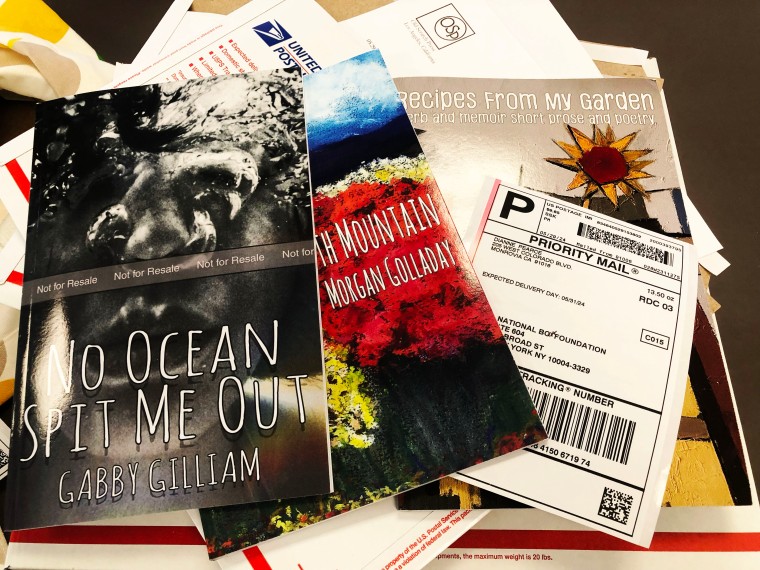
I was thrilled today to have the privilege to mail three new Old Scratch Press books off to the National Book Awards! If you follow all of our doings around here you may have seen this post from last year, where I was lucky enough to do the same thing!
Gosh, you know, we’re going up against the big guys when we send our books in to the National Books Awards. Most of the other books being sent in are going to have been written by well-established poets with a long history of publication, or brand new poets being championed by their mentors who are the big guys in their fields, and those other books are also going to come from traditional (read as: large and monied) presses or university presses, which, like the big publishing houses, also have lots of disposable income and connections. I got my MFA; I know how that all works. And still, I don’t care about the competition. I care that we have wonderful poets. Morgan Golladay has been writing her poetry throughout most of her adult life, and salting it away for “someday,” and Nadja Maril and Gabby Gilliam have been submitting and getting small wins with their writing for years now, and why isn’t their writing as deserving as anyone else’s? It absolutely is! It gives me a total thrill to just think about getting them into this contest, where they get a chance to stand shoulder to shoulder with the “big guys.” And get this—Carolyn Forché is one of the judges this year! Carolyn Forché! It’s mind-blowing to think that a poet from our little collective is going to be read by her. I still remember how my teachers raved about Carolyn Forché’s book THE COUNTRY BETWEEN US back in the ’90s. We read it and discussed it over and over with reverence. The idea that she’ll be reading one of our books? It’s just wild.
So, lovely people following our progress as a collective and a press, please join me in crossing your fingers and blowing on one of these:
as we send Gabby, Nadja, and Morgan off to the National Book Awards to try their luck!
And hey, dear reader of this blog, why not snag a copy for yourself in a show of support?
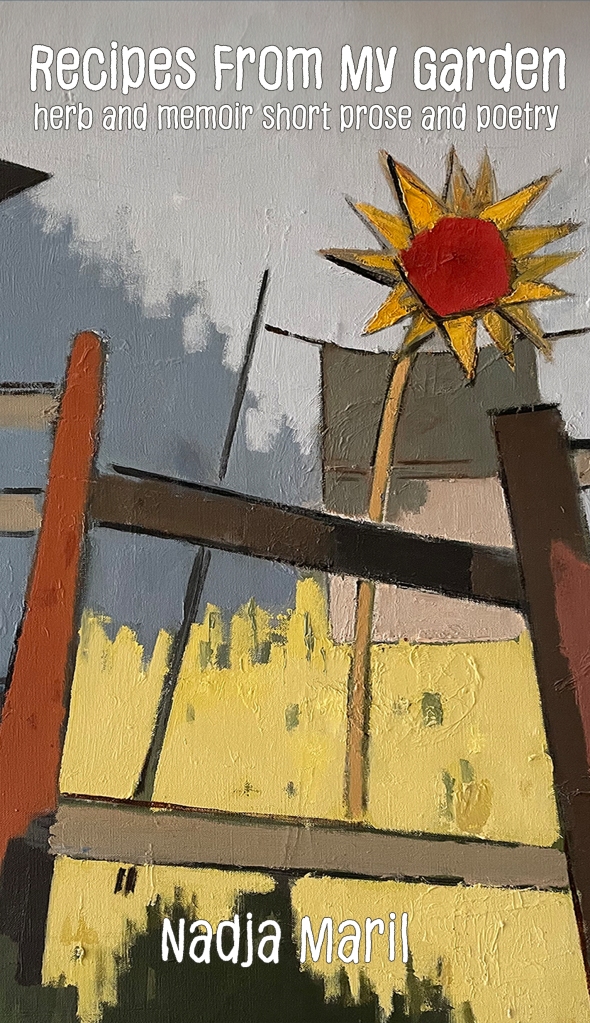
Flash prose, poetry, and essays inspired by her kitchen, garden, and family memories; Nadja Maril’s chapbook, RECIPES FROM. MY GARDEN is a sensual feast for the soul. Drawing upon her life experiences as an artist’s daughter, antiques dealer, journalist, and author; Maril mines simple objects for meaning and creates a lavish buffet.
Editorial Praise for RECIPES FROM MY GARDEN
“Suffused with the tastes of cilantro, mint, and cucumber fresh from a garden, the smell of salt air from the ocean’s edge, the familiar scent of coffee and tobacco from a father’s hug, or the simple pleasure of the sounds of clicking insects through a backdoor screen, Nadja Maril’s lovely and sensitive RECIPES FROM MY GARDENis a feast for the senses and a balm for the spirit. While exploring personal memories that touch on abstract questions of identity and history, Maril also reminds us of the tiny yet profound comforts of earthly existence.” –Aaron Hamburger, author of HOTEL CUBA—
“In RECIPES FROM MY GARDEN, Nadja Maril casts a richly sensual literary spell. From the deft and resonant garden-inspired pieces that find the taste of ‘summer’ in basil and celebrate the ‘welcoming gaze of sunflowers,’ to the sharply observed portraits of small yet potent memories— buying a perfect dress with her mother; baking a cake ‘too beautiful to be cut’– Maril mines moral and spiritual meaning from everyday life. The promise Maril makes about a ‘chicken and rice’ recipe is true of this whole vibrant chapbook: ‘soul nutrition it will provide.’ ” –Elizabeth Searle, novelist and scriptwriter (A FourSided Bed; I’ll Show You Mine)–
“RECIPES FROM MY GARDENcelebrates the splendor of traversing a literary life and surviving the time of Covid. Nadja Maril’s first collection of poetic prose, flash memoir, and poetry introduces us to her family, her nurtured garden, and the myriad spaces she navigates to cope with our world. With true artistic excellence, Nadja’s words yearn for an understanding of what troubles us, inviting us into a landscape of riddles, questions and puzzles.” –Indigo Moor, author of Everybody’s Jonesin’ for Something—
“[RECIPES FROM MY GARDEN] is a treasure of small love stories: odes to beloved kitchens, and vegetable gardens, and the simple joys of a blooming sunflower. It is a book of memory and of pleasure that speaks of the love of family across many generations. The passed-down recipes inside the pages are themselves the most generous kind of love letter.” –Susan Conley, author of Landslide—
[In NO OCEAN SPIT ME OUT] Gabby Gilliam’s verse preserves the feel of the summer farm, contrasting its fertile brightness with the struggle between grief and the sudden absence of connection to family and place. Belonging and the struggle to continue remembering clash on the page, while the passion for life’s diverse and tactile experiences dazzle the reader with tantalizing gasps of zucchini, crab apples, and blackberry wine. Each poem gives the reader their own lingering taste of her ghosts. -Kim Malinowski-
NO OCEAN SPIT ME OUT is a captivating debut collection of poetry that delves deep into the intricate tapestry of family dynamics and personal evolution. Within its 30 poems, the collection embarks on a profound journey through the stages of coming of age, navigating the complexities of familial bonds, grappling with organized religion, and ultimately, embracing the essence of self-acceptance. Whether you’re seeking solace in the shared experiences of family relationships or searching for introspective insights into the nuances of identity and faith, this collection offers a profound and thought-provoking exploration of the human condition.
“Sometimes stark, but always beautiful, these free verse celebrations of North Mountain introduce a seasonal sense of environmental transitions to the observer and reader’s eye, with time’s passage changing everything and nothing…Aside from a personal visit to North Mountain, there is no better way of appreciating its beauty, impact, and presence over the eons than through THE SONG OF NORTH MOUNTAIN.” —MIDWEST BOOK REVIEW—
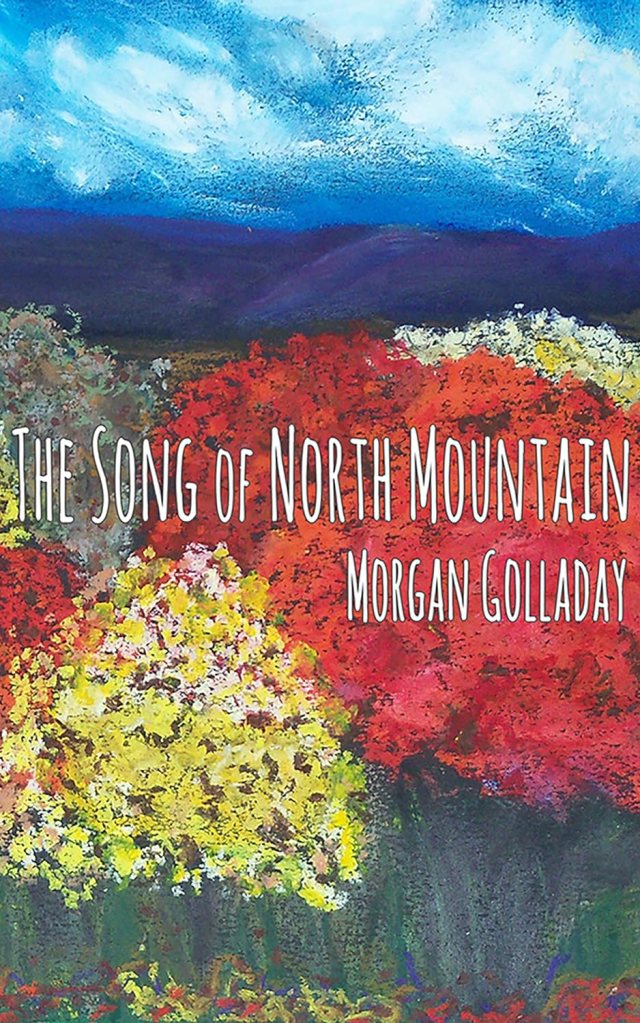
From the mighty pen of artist and author Morgan Golladay comes THE SONG OF NORTH MOUNTAIN, a transformative collection of poetry and art celebrating the famous and mystical North Mountain of Appalachia. North Mountain, a wildland in the George Washington and Jefferson National Forests of western Virginia, has been recognized by the Wilderness Society as a special place worthy of protection from logging and road construction. The Wilderness Society has designated the area as a “Mountain Treasure.” Morgan Golladay brings her readers to dwell in the reverence of this wonderful wilderness. Golladay is an award-winning author who was raised on North Mountain and lives in coastal Delaware as part of a thriving artist and author community. All words and art in this book are by Golladay.
Two OSP Founding Members, Morgan Golladay and yours truly Robert Fleming, won awards at the Delaware Press Association professional communications contest 5/1/2024 in Newark, DE. Escorting Morgan through the entrance, she answered my dress question: “my Old Scratch Press T-shirt is not fancy enough for a banquet, best black only.” I wore a tight shirt to accentuate my pecs, in-case there was anyone looking for a date. At a banquet, you must send the right signals.
Here is the low-down on who won which awards:
Morgan Galladay won first and second place in short stories: single story for “Under the Rhodendrons” published in Halloween Party ’23: Halloween Party ’23: Keeten, Jeffrey, Heron, Robert Lewis, Goodridge, James, Golladay, Morgan, DeCicco, Kim, Dickerson, Marc, Howd, Eric Machan, Machan, Katharyn Howd, Paige, Michael, Cantu, Juan: 9781957224503: Amazon.com: Books
“Second Christmas” published in Solstice, volume 3: Solstice: A Winter Anthology (The Solstice Winter Anthology Series): Pearce, Dianne, Doyle, Anthony, Golladay, Morgan, Watts, Virginia, Johnson, John, Fitzgerald, Christian, Aakaash, Buffy, Fulcher, R. David, Crandell, William F., Pearce, Dianne: 9781957224039: Amazon.com: Books and honorable mention in creative verse: single poem for “March Wind” published in Instant Noodles: MARCH WIND – Morgan Golladay – INSTANT NOODLES (instantnoodleslitmag.com)
What’s next for Morgan: At the banquet Robert spilled ranch dressing on Morgan’s black skirt. Morgan screamed she will immediately send her suit to the dry cleaner. Robert agreed to pay for his stain. While Morgan is waiting to pick up her dry cleaning, she is promoting her upcoming book Song of North Mountain, published by Old Scratch Press: DPP CATALOG – Devil’s Party Press, LLC (devilspartypress.com)
Robert Fleming won third place in creative verse: single poem for “Cheese Sonnet #263” published in Four Feathers Press: rhythms of Southern California
Honorable mention in Graphics and Design for “Timothy Gager is with Ellis Elliott at Boston Harbor with the Dire Literary Series.”
Robert Fleming won third place in creative verse: single poem for “Cheese Sonnet #263” published in Four Feathers Press: rhythms of Southern California
honorable mention in Graphics and Design for “Timothy Gager is with Ellis Elliott at Boston Harbor with the Dire Literary Series.”
At my club house gym yesterday, a neighbor approached me to purchase my book White Noir:
After showering, I delivered my book to my neighbor who invited me inside and paid me, after I signed my book. That was the end of the neighborly encounter because the neighbor’s husband, watching tv on the couch, sneered at me. I promptly departed my neighbor’s house, as the husband rose and walked toward his pistol.
Unwounded, I created three graphic images for Four Feather’s Press upcoming publication: Landmarks of Southern California. Learn more about the author here: https://www.youtube.com/watch?v=FOAb33t1NFc
April is almost here, time for National Poetry Month, an entire month to celebrate poetry. Do you have a favorite poem or poet? Let us know and we’ll try to post a story about the poet or the poem on the Old Scratch Press website.
National Poetry Month was launched in 1996 by the Academy of American Poets as a way to promote educational events that encourage students to interact with poets and poetry.
One of these programs sponsored by the Academy of American Poets is called Dear Poet. Designed for students in grades five through twelve, participating students can write letters in response to poems this year ( 2024) read online by Patricia Smith, Ed Roberston, Mara Pastor, John James, Nikky Finney, Nicole Cecillia Delgado, Marilyn Chin, and Chen Chen.The submission period for Dear Poet 2024 is now open until April 22,2024.
If asked, who is my favorite poet it really very much depends on the time of year, time of day, and my mood because I was lucky to have grown up in a household filled with poetry books.
My mom was an English major and she enjoyed reading me her favorites. At a young age I listened to Gerald Manley Hopkins, T.S. Elliot, Robert Frost and Emily DIckinson.
Children love repetition, and when they discover a favorite story they like to have it read to them over and over again. Many Many times I’d ask to be read my two favorite poetry books in pre-school: A.A. Milne’s When We Were Very Young and Robert Louis Stevenson’s, A Child’s Garden of Verses.
I remember reading to myself “The Swing” at age eight.
I found all the poems in When We Were Very Young to be irresistible, but my constant favorite was the one about that difficult girl named Mary Jane.
Rice Pudding
By A.A. Milne ( 1882-1956)
What is the matter with Mary Jane? She’s crying with all her might and main, And she won’t eat her dinner – rice pudding again – What is the matter with Mary Jane?
What is the matter with Mary Jane? I’ve promised her dolls and a daisy-chain, And a book about animals – all in vain – What is the matter with Mary Jane?
What is the matter with Mary Jane? She’s perfectly well, and she hasn’t a pain; But, look at her, now she’s beginning again! – What is the matter with Mary Jane?
What is the matter with Mary Jane? I’ve promised her sweets and a ride in the train, And I’ve begged her to stop for a bit and explain – What is the matter with Mary Jane?
What is the matter with Mary Jane? She’s perfectly well and she hasn’t a pain, And it’s lovely rice pudding for dinner again! What is the matter with Mary Jane?
If you have school children, don’t forget to check out all the poetry programs this month and whatever your age make a point of reading a poem a day. The Old Scratch Press is trying to make new poetry more available by publishing several chapbooks each year, so check out what’s in our catalogue and what is about to be released by following us here as well as following our Facebook page.Thank you for reading.
Old Scratch Press is pleased to announce the upcoming release of The Song of North Mountain, by Morgan Golladay. Slated for May release, the book includes original artwork by the author to accompany her poems. The collection is now available for pre-order.
Founded in 2023, Old Scratch Press is a cooperative of poets and short-form authors who have come together to promote the publication and appreciation of poetry and short-form writing. The Song of North Mountain will be the third chapbook, published by the small independent press.
Break in the Field by Ellis Elliot was their first book, nominated for the National Book Award, followed by avante-garde wordsmith and artist Robert Fleming’s poetry collection, White Noir.
The Song of North Mountain, says Morgan, “is about my relationship with this Earth, focusing on one small mountain in one small chain, in one small part of this vast world.
This book is about a connection – my personal experience sitting in stillness on this mountain, as well as many other mountains. North Mountain is, for me, a symbol of my relationship with this Earth. The permanence of the land, regardless of how it changes; the cycles of life, the quiet continuation of change. It has been a long time since I personally was able to sit quietly and listen to the tree branches and leaves speak to each other. I cannot scale the trails as I once did. But the magic of place is still in my memory, whether it’s the rocks in the rivers, the trails on the mountain tops, or the joy of sharing ripe wild berries.
“…my personal experience sitting in stillness on this mountain, as well as many other mountains. North Mountain is, for me, a symbol of my relationship with this Earth.”
Morgan Golladay
The cover design, an original painting, and the 10 black and white interior illustrations were created specifically for the book. Pre-order availability on Amazon and on the Old Scratch catalogue page will be coming soon.
To keep up with the latest news, please follow our blog here for free and also follow us on Facebook. Later this year look for more chapbooks penned by Gabby Gilliam, Alan Bern, and Nadja Maril. Thank you for reading. Special note: the deadline for Instant Noodles LIterary Magazine submissions has been extended to the end of the month.
Looking for recommendations for what to read to your toddler? Poet, writer and former Children’s Librarian Alan Bern has a favorite:
“The Owl and the Pussycat” by Edward Lear, illustrated by James Marshall ; afterword by Maurice Sendak.
By Alan Bern
Edward Lear’s “classic love ballad, “The Owl and the Pussycat,” was voted the most popular British childhood poem in 2014, and has been set to music by everyone from Stravinsky to Laurie Anderson.” (”The Sense Beneath Edward Lear’s Nonsense” by Adam Gopnik, The New Yorker, April 16, 2018) If not as popular in the United States, “The Owl and the Pussycat” has spawned a number of illustrated picture books here. Of the many illustrated picture books of this absolutely brilliant poem for very young listeners and readers by Edward Lear, “The Owl and the Pussycat,” my top choice is the version by James Marshall. Next to Lear’s own illustrations for his poem, James Marshall’s illustrations, although he died before fully finishing them, are my favorites. Marshall creates wonderful characters that match so perfectly the sounds and voices of Lear’s poem. It is a nonsense poem, but it’s always made perfect sense to me and to so many. Young children will love the poem and the book; so will elementary school kids when they need to feel just a bit regressed. Heck, adults will love it, too. As I do.
Nonsense Suggesting Sense
As Gopnik explains later in his essay: “This gift for creating pathos without sacrificing absurdity is what makes “The Owl and the Pussycat” one of the greatest poems in the language… In “The Owl and the Pussycat,” meanings rush in:
They dined on mince, and slices of quince,
Which they ate with a runcible spoon…
Not even Humpty Dumpty could explain what a runcible spoon is. We know it by its verbal vibration, by its presence, by its sheer runcibleness… This gift for making something felt without having first to make it familiar is one that we later admire in Beckett. Nonsense suggesting sense is a familiar pattern. Nonsense suggesting the numinous is not.”
Artist/illustrator James Marshall
Personal Connections
And here’s a personal story to go with the poem. As a children’s librarian for many years, I was honored to serve on the American Library Association’s Caldecott Committee in 1992, and I suggested Marshall’s illustrations for this book as a finalist. It was not chosen, most probably because Marshall never quite finished the illustrations. I continued to love the book anyway, and I always wondered why the poem always spoke to me… when I read it or when I listened to another read it. Shortly after my Mom died, I found out why. One day while going through some letters, from my Mom to my Aunt, letters that my Aunt had kept from the early 1950s. My parents were on sabbatical leave (my Dad was a young professor) in Cambridge, England, and I was almost two. In one letter, my Mom wrote: ‘It’s wonderful to be here, Howard and I are having such a good time, and we love having our little boy with us; however, he does drive us crazy and asks over and over and over that we read “The Owl and the Pussycat” to him.’ That brought such a wide smile to my face: of course, I don’t remember it, but it now explains, in part, my continuing love for the poem. Thanks, Mom and Dad, and thank you very kindly, Mr. Edward Lear! And now I shall reach for my runcible spoon.
If you haven’t done so already, please follow our blog here for free and also follow us on Facebook.And coming soon is our newest chapbook release, The Song of North Mountain, by Morgan Golladay followed by chapbooks penned by Gabby Gilliam, Alan Bern, and Nadja Maril.
So many people think poetry is serious and difficult to understand. But language can also be fun. There are so many poets that use words to delight readers with something unexpected. Most people are familiar with Shel Silverstein, whose poems are light-hearted, but there are so many poems out there that both you and your kids will love for their silliness.
Many know Judith Viorst for Alexander and the No Good, Horrible, Very Bad Day, but she also wrote this fun poem about a mom who really doesn’t want a pet.
Mother doesn’t want a dog. Mother says they smell, And never sit when you say sit, Or even when you yell. And when you come home late at night And there is ice and snow, You have to go back out because The dumb dog has to go.
Mother doesn’t want a dog. Mother says they shed, And always let the strangers in And bark at friends instead, And do disgraceful things on rugs, And track mud on the floor, And flop upon your bed at night And snore their doggy snore.
Mother doesn’t want a dog. She’s making a mistake. Because, more than a dog, I think She will not want this snake.
One of the first books I ever remember buying for myself was The New Kid on the Block by Jack Prelutsky, so it’s no surprise that a poem by him makes this list. I was in elementary school, and must have used birthday money. I was so excited about getting the book that I started reading it in the car on the way to a different store. While I loved the poems, I also discovered reading makes me extremely carsick. It was not a pleasant birthday lesson, but I treasured the book anyway. Here’s a great example of the fun poems in that book.
My son’s friend introduced me to the next poet. Chris Harris plays with words in a way that will delight both adults and kids alike. He claims he’s not very good at writing poems, but I think his I’m Just No Good at Rhyming books are delightful. I even used one as an example when we discussed humorous poetry in the Teen Poetry Workshop I facilitate at my local library.
We all seem to have an ingrained fear of the dark and what might be prowling in it. In this poem, Innarenko takes the reader on a fun adventure as multiple scenarios are conjured to explain where a strange noise might be coming from. The epiphany at the end is a delightful finale.
My family’s gone; there’s no one home. It’s only me who’s home alone. I shouldn’t hear a single squeak. There shouldn’t even be a creak,
So what’s that thumping that I hear? It must mean one thing: death is near. “You’re an adult, you’ll be just fine.” I tell myself as I dial “nine”…
Was that a knock upon the door? My heart beats faster than before I know it’s closed; I’ve checked the lock. At least my killer knows to knock?
I cannot sleep, though I’m in bed. I’ve made amends with God instead. If He decides that it’s my time, Then this will be my very last rhyme.
I hear a bang and then a break. My head shoots up; there’s no mistake! I turn my music volume high So I won’t hear the way I die.
I run upstairs, desk lamp in hand. Over my head, ready to land, And right before it did just that… I remembered – I have a cat.
Those who aren’t familiar with Brian Bilson’s work are in for a treat. I will caution that some of his poems, though very fun, may not be suitable to read with children. This visual poem, though, is spatially interesting and shows poetry can do unexpected things. It makes me smile every time I come across it. If you enjoy this poem, I recommend checking out more of his work. Click below on the word “needles”.
Thank you for reading. Which poems are your favorite children’s poems. We’d like to know. We welcome guest posts. Please follow Old Scratch Press by subscribing to this blog for FREE and following us on Facebook. Learn more about Collective member Gabby Gilliam by visiting her website.







 OLD SCRATCH PRESS