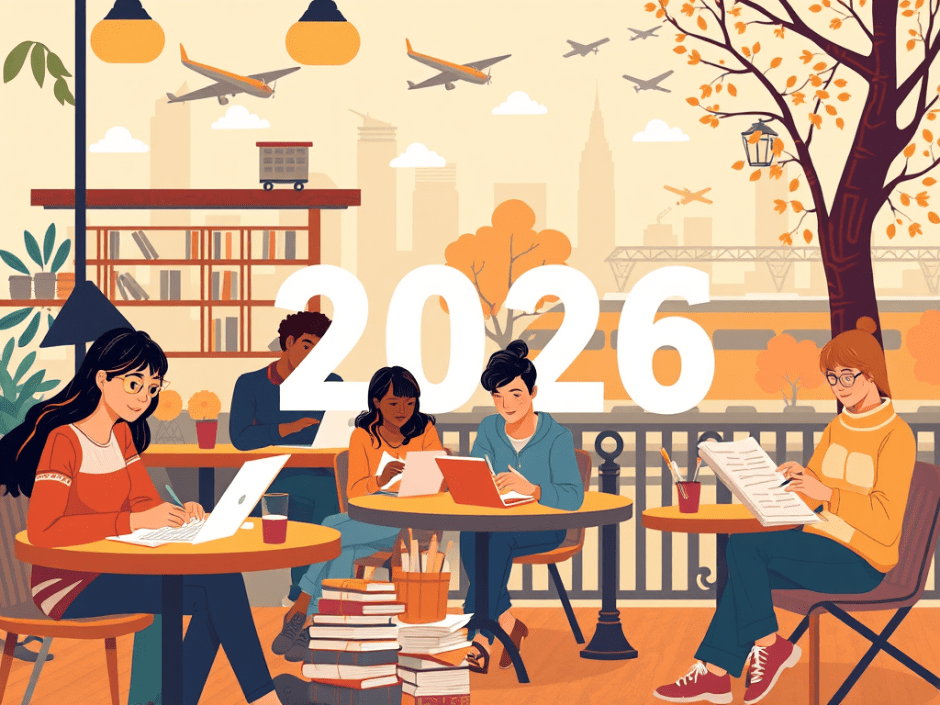
Get Published: Submit to Instant Noodles Literary Magazine 2026


by Nadja Maril,
 a founding member of Old Scratch Press Collective

Happy New Year to readers and writers around the world. May your New Year 2026 be happy, safe, and productive. If one of your New Year’s Resolutions is “get more writing done” you’ve come to the right place. In our Old Scratch Press blog we will continue to discuss different kinds of short form writing, provide instruction and prompts, and share publishing opportunities.

First up is to tell you about our own publication Instant Noodles Literary Magazine. A member of CLMP (Community of Literary Magazines and Presses), we nominate for the Pushcart Prize and Best of the Net.

Planes, Boats, Cars, Trains is our theme for the Spring Issue 2026 of Instant Noodles Literary Magazine.  

Maybe you love to travel or maybe you like to stay at home, but when you venture out— what kind of transportation takes you on your journey? Are you invigorated by the open water, frantic following road signs, anonymous on a plane, or comforted by the train station whistle?  In the process of getting to your destination, how did the vehicle you’re traveling in affect the outcome?

We’re looking for flash prose (up to 500 words) fiction and nonfiction, as well as poetry, drama, visual art, and multi-media submissions. Deadline: March 15th.

When you send in your submission, as you should with any submission, the piece should be polished and complete with no grammar mistakes and no misspellings.

Also included should be a brief cover letter. The remainder of this blog I’m going to talk about what I think is the appropriate cover letter for a Literary Magazine. (Each magazine is slightly different so always read their guidelines).

Photo by Oscar Ruiz on Pexels.com

Editors at Literary Magazines generally use the cover letter that contains a very brief biography ( 50 to 75 words) as the same biography they use in the publication, if you are lucky enough to have your story or poem accepted. Thus, even if writing is a new found love or second career, you want to keep it “professional.” 

Rather than listing everywhere you’ve been published, pick no more than three places. (ex. They’ve been published in Dawn Magazine, Sunshine Press, Dark Days and many other publications.) If you have never been published, that’s okay. Magazines are always looking for NEW TALENT.

In your cover letter, DO NOT SUMMARIZE the work you are submitting. Editors want to read it without preconceived notions. If it needs to be “explained” this is a red flag. DO NOT excessively brag about what a wonderful writer you are or exaggerate your accomplishments.

IF you have one interesting personal fact ( ex. They’re a champion parachutist.) you’d like to include, it can enhance a cover letter, but to tell the story of your life is not recommended. Too long a cover letter can be a turn off.

Links to a book you’ve published and/or your website or blog is always a good idea. If a reader wants to read more of your work it is helpful.

Always be polite and kind in your dealings with other writers and editors. Everyone is working hard and many are volunteering their time because they love the art of writing.

Never give up, if you think you’ve written something good. Often pieces, particularly in a theme call, are rejected because they are not a good fit for a particular issue. Always work to improve unpublished work by revisiting it and revising it, when appropriate. Read and submit to multiple magazines.

HAVE A GREAT WRITING YEAR and keep perfecting your craft. LEARNING is part of the journey.

Thank you for reading. Please sign up to follow Old Scratch Press here on WordPress and on Facebook.

Nadja Maril is an award winning writer and poet who has been published in dozens of online and print literary journals and anthologies including: Lunch Ticket, Invisible City Literary Review, and The Journal of Compressed Creative Arts. She is the author of Recipes From My Garden, published by Old Scratch Press (September 2024), a Midwest Review California Book Watch Reviewer's Choice. An Anne Arundel County Arts Council Literary Arts Award winner, her work has been nominated for the Pushcart Prize and The Best of the Net. She has an MFA in creative writing from Stonecoast at USM. 
Check out Nadja's chapbook of flash memoir and poetry below.
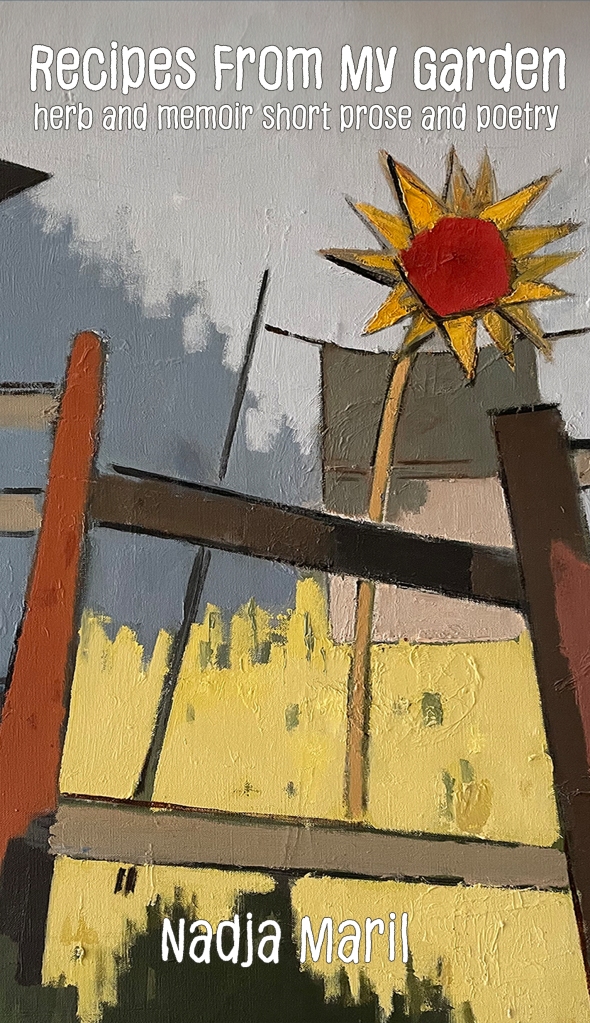
https://www.barnesandnoble.com/w/recipes-from-my-garden-nadja-maril/1145598579

Writing About Food and Announcing the Latest Issue of Instant Noodles Literary Magazine!

by Nadja Maril,a founding member of Old Scratch Press Collective

Food. We spend a substantial part each day preparing, serving, and eating. The tastes, aromas and textures bring back memories. And over the winter holidays, the sensations become magnified as we taste the turkey roasting in the oven, the creamy mashed potatoes, the fragrant puddings, the sweet and savory carrots, onion topped green beans, latkes and apple sauce, cheese blintzes, and buttery chocolate chip cookies.

This is why I enjoy writing about food. It’s easy. All I have to do is close my eyes, remember and think of words to describe memorable dishes, new tastes I discovered, and meals I’ve shared. Try it. Think of a favorite meal, why it stands out in your mind and the emotions you associate with that time. Write down you uncensored thoughts. Read over what you’ve written. Maybe cross out a few sentences and rewrite others. You’ve begun to write memoir, the start of what is called Creative Nonfiction and it wasn’t hard at all.

You can take those food thoughts and memories and turn them into fiction as well. There’s no shortage of food in fairy tales: the witch in Hansel and Gretal with the house made of gingerbread and candy, the red apple in Snow White, the porridge eaten by Goldilocks and the Three Bears.

Wonderful poems have been written about food ingredients. One of the most important items I use in savory dishes is onion. Chilean poet Pablo Neruda (1904-1973) wrote a wonderful poem about the onion I’d like to share.

ODE TO THE ONION
by Pablo Neruda

Onion,
luminous flask,
your beauty formed
petal by petal,
crystal scales expanded you
and in the secrecy of the dark earth
your belly grew round with dew.
Under the earth
the miracle
happened
and when your clumsy
green stem appeared,
and your leaves were born
like swords
in the garden,
the earth heaped up her power
showing your naked transparency,
and as the remote sea
in lifting the breasts of Aphrodite
duplicating the magnolia,
so did the earth
make you,
onion
clear as a planet
and destined
to shine,
constant constellation,
round rose of water,
upon
the table
of the poor.

You make us cry without hurting us.
I have praised everything that exists,
but to me, onion, you are
more beautiful than a bird
of dazzling feathers,
heavenly globe, platinum goblet,
unmoving dance
of the snowy anemone

and the fragrance of the earth lives
in your crystalline nature.

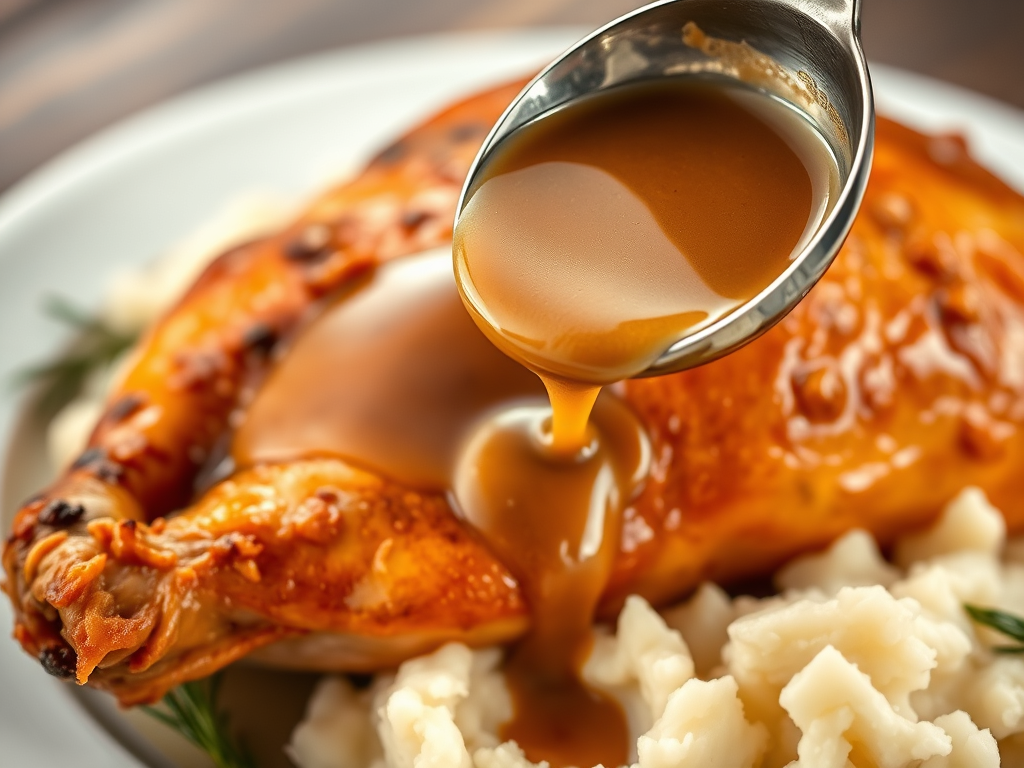
If you need more inspiration, start reading the latest issue of Instant Noodles Literary Magazine .All the stories and poems are inspired by GRAVY.

One of my favorites in this issue is “Thanksgiving Leftovers” by Arielle Arbushites which begins “Gravy gravy everywhere/and not a drop to drink” Hear her read the poem by clicking this link.

Forty-two creative expressions inspired by GRAVY! Who would have thought we’d get so many fine submissions on this topic. Read them and enjoy the writer’s different takes on the subject. Maybe it is a holiday dinner that goes wrong or a humble food offering that needs a splash of pzazz but all the stories have something to do with gravy.

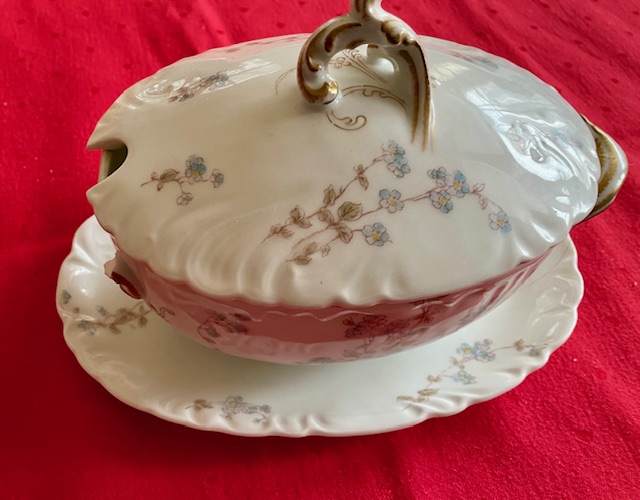
My creative nonfiction includes a nod to my great-grandmother’s Limoges covered gravy dish and a recipe. You can access it here or if you don’t want to read, you can listen here

Writers and Readers, don’t forget to forget to follow us on Facebook to get the latest news and learn about submission opportunities.

Nadja Maril is an award winning writer and poet who has been published in dozens of online and print literary journals and anthologies including: Lunch Ticket, Spry Literary Journal, Invisible City Literary Review, Instant Noodles and The Journal of Compressed Creative Arts. She is the author of Recipes From My Garden, published by Old Scratch Press (September 2024), a Midwest Review California Book Watch Reviewer’s Choice. An Anne Arundel County Arts Council Literary Arts Award winner, her work has been nominated for the Pushcart Prize and The Best of the Net. She has an MFA in creative writing from Stonecoast at USM.

Check out Nadja’s chapbook below and here.

Join Us! You Know You Want To!

The Joy of Writing and Reading: A Personal Reflection

By Old Scratch Collective member Nadja Maril

I love words and sentences, writing them. I also love reading something really good. So, part of my day circles around writing and revising. Another part is reserved for reading.

If your desire is that each piece of writing you create is superior to its predecessor, then it’s a good idea to read other writer’s creations. We learn what we like and what we don’t like by reading the work of others. Experiencing through someone else’s words can give us the opportunity to learn new ways of approaching an essay, poem, or story.

Reading to write because writers are part of human expression.
Those five little earrings could represent the various framents of the essay that focuses on what we hear or don’t.

First thing this morning, I clicked on a link provided by the literary magazine, Sweet. A Literary Confection that was titled “In My Head: Tinnitus” by Marcia Aldrich which the editors have nominated for the 2023 “Best of the Net.” I liked the way Aldrich broke the essay into very short sections. This type of CNF essay is called a fragmented essay, specifically in this case, a narrative mosaic because all the sections were directly linked to the topic of Tinnitus, but all approached the word/ the subject/ the experience from different vantage points. Here is the link if you’d like to read it.

Next I read the under 250 word CNF essay  from Riverteeth’s weekly newsletter Beautiful Things titled  “Sugar in the Evening” by Jennifer Anderson. Deceptively simple. it resonates. I don’t necessarily like every weekly Beautiful Things selection, but this one is truly a gem. To read it click here.

Finally, to round out the morning, before I started revising a story of my own, I clicked to read some poems in Sunlight Press capturing a sense of nostalgia and the delight of movement by Alfred Fournier. You can click to read them here.

Evenings and Sunday afternoons are for “hard copy.” I love a book that pulls me in and keeps me guessing. I never want to be able to confidently predict where the plot is heading. So I’d like to recommend The Great Circle, published in 2021 by Maggie Shipstead, a Booker Prize finalist.

A very long novel (655 pages) I was lucky enough to pick up in one of the several Little Free Libraries in my neighborhood, it is both entertaining and instructive to fellow novelists in approach and structure. I try very hard not to read multiple books by the same author in an effort to “meet on the page” more writers and I’d already read Seating Arrangements, but I am so happy I did make an exception and grab that almost new paperback.  This novel is far superior to Shipstead’s previous work in that it adds multiple layers of time, place and setting to a compelling storyline.

Comprised of two narrative arcs, The Great Circle tells the story of a pioneering female aviator, Marian Graves, born in 1914, who wants to be the first to circumnavigate the globe by flying over both the North and South Poles.  The second storyline focuses on actress Hadley Baxter who is chosen to play the role of Marian in a Hollywood movie produced in 2014.

The 20th century narrative is told in third person, and while it primarily focuses on Marian’s life it also tells the story of her twin brother Jamie, and the role women aviators played in World War II. The 2lst century narrative is told in the first-person voice of Hadley.

As to what happens, I’ll leave it to you the reader to discover first-hand. Enjoy and keep reading, whether it is long or short, on paper or on your phone.  And yes, I listen to stories as well. My most recent listen was Companion Piece by Ali Smith, a melding of reality and splendid storytelling.

Here is CNF piece written and read by me nominated for “Best of the Net” ,”REBOOT” in Instant Noodles. While you are on the site, you might as well enjoy the rest of the issue– some great Spring inspired stories and poems. The next theme “word” for the autumn issue is Sanctuary followed for the Holiday 2025/26 issue by Gravy.

Thank you for reading and don’t forget to sign up to follow us on Facebook.

Calls for Submissions: Instant Noodles Literary Review 2025

Nadja Maril, author of RECIPES FROM MY GARDEN, is one of the founders of Old Scratch Press

The Editors of Instant Noodles Literary Review, published three times a year, have announced the themes for 2025: Current, Sanctuary and Gravy.

Edited by members of the Old Scratch Short Form Collective who have volunteered their time, submissions are free. The Instant Noodles submission box which you can access through Duotrope is filling up fast.

While artists and writers selected for publication receive no financial renumeration, the publishers and editors do their utmost to promote the work in each issue. Instant Noodles nominates for industry prizes, Best of the Net and the Pushcart Prize. One of the magazine’s promotions is a zoom reading, giving contributors around the world a chance to meet.

Published three times a year, the magazine is posted online for everyone to read. One of the biggest reasons work gets rejected, is that writers don’t follow submission guidelines and familiarize themselves with the publication.

In addition to Visual Art and Multimedia Creations, the magazine publishes Prose & Poetry

Photo by Anni Roenkae on Pexels.com

Instant Noodles focuses on SHORT pieces. Short work 500 and 750 words in length can be powerful. If you are submitting prose, whether is it hybrid, nonfiction, or fiction, the word limit is 1000 words or less. 

All work must be original and must belong to the author. Works that have been previously published will not be considered. Stories must be complete and self-contained (i.e., do not submit chapters of a larger work). 

NOTE: Accepted works will be published as submitted without editing; as such, in addition to the originality of the work itself, we are looking for manuscripts that are clean and press ready. Be sure to review your grammar, spelling, tenses, proper punctuation, and other general rules of the written word before hitting “Send.” Work should be submitted through Duotrope as a Microsoft Word file (when it is poetry, drama, NF or fiction) as 12-point New Times Roman, double-spaced (single-spaced for poetry submissions). All other types of work have details as to their file types on the Duotrope page.

Connect to the Theme

The Editors request that submissions should have a connection to one of the themes for which they were submitted:  Current, Sanctuary and Gravy—and labelled as such.

They are looking for more submissions in the categories of creative nonfiction, drama, multimedia and visual art.

“When I’m reading poetry submissions for Instant Noodles,” Says contributing Poetry Editor Gabby Gilliam, “I’m looking for poems that concisely fit our theme and resonate. I want lines that linger in my mind long after I’m finished reading.

As a contributing editor, I suggest it is never too early to start contemplating ideas associated with our spring theme, current, as well as the subsequent themes that follow. What ideas does the word current evoke for you? Are you thinking about being hip, cool and up on “current” events or are you traveling on an air “current.”  Where does the word take you?

Try writing a story about yourself, something you observed, or something entirely imaginary. Create a video, a picture, combine two mediums.

Work should be publication ready

Do not submit until your piece is ready. Have you read your piece out loud and checked for misspellings and grammar mistakes? Does it fit the theme and are you ready to share it with the world?

The deadline for the spring issue with the theme Current is March 16th.  We look forward to reading your work!

Nadja Maril is the author of Recipes from my Garden, Old Scratch Press, September 2024.

Thank you for reading. Please sign up to follow us here on WordPress and on Facebook.

Making Moments Count

One of the things I like best about poetry is its ability to capture the beauty of a single moment, even if it’s not something that would normally be seen as beautiful. At its heart, poetry is emotional storytelling. A moment becomes significant when it is infused with feeling—joy, sorrow, nostalgia, or wonder

Last year, I edited an issue of Instant Noodles with the theme of ‘instant.’ I was looking for poems that captured that exact essence of poetry that appeals so much to me. I wanted the beauty of the grief or the joy of a single moment captured in a poem. It’s probably my favorite issue of Instant Noodles that I’ve edited to date. I think the poems we published in that issue were the kind that will resonate long after reading them because every reader shares that moment with the poet.

That issue of Instant Noodles can be read for free here . I highly recommend giving it a look.

Life is filled with fleeting moments—those golden, mundane, or bittersweet slices of time that often pass unnoticed. But poetry has the unique ability to crystallize these moments, transforming them into something timeless and profound. Capturing moments in poetry is about taking the ephemeral and making it eternal.

Here’s a poem of mine that captures the moment when I held my son for the first time. It appeared in the Instant issue of Instant Noodles.

Contraction

After hours of flesh seizing 
muscles finally relaxed 
and I cradled a fresh universe 
in my arms, puckered face 
already rooting for food. 

My world imploded, contracting 
until nothing existed but this 
one tiny fist raised at the audacity 

of the air to be so dry 
the lights so bright 
the scream that replaced the rhythm 
of my familiar heartbeat 

and I traced constellations 
across freckled skin as I eased
into a new center of gravity.

The Power of Specificity

Great poetry thrives on specificity. Think of a single red leaf falling on a crisp autumn afternoon or the smell of fresh bread wafting through an open window. These details evoke emotions and anchor the reader in the poet’s world. Poetry doesn’t need grand metaphors to capture the essence of a moment. Sometimes, a simple, honest line is more powerful than elaborate language.

Share Your Moments

Because life is poetry, everyone is a poet. You can write about your own moments and shape your memories into poems. Then, you’re sharing that moment with others. Your words let them feel what you felt and maybe even remind them of their own special memories.

Poetry helps us slow down and notice what’s around us. It takes the little things that we might normally ignore and makes them important. So grab a notebook, start noticing the world, and turn your moments into poems that last forever.

Mastering the Art of Writing: Sage Tips from Chuck Palahniuk and Steven King

By Nadja Maril, a member of the Old Scratch Poetry and Short Form Collective

Note: Everyone who writes has a different approach. This is a repost of a blog I wrote several years ago for my Nadjamaril.com website and since then I’ve gotten a whole lot of stuff published so it could be that some of this works.

I just started listening to Chuck Palahniuk’s Consider This: Moments in My Writing Life After Which Everything Was Different for the second time.  I wanted to remind myself again to put into practice some of many sage tips he gives to writers.  Tips that include: use multiple points of view, active verbs, short sentences, and nonverbal communication to  reduce dialogue.

Being read, being published is the end game, but it’s the act of writing which is for me most important. Before we write we read. It’s my love of reading that drew me to writing. What better charge is there than finding the perfect assemblage of words to create in someone else’s mind— a feeling, a scene, a story.  I’m addicted.

This is why I write. It’s the creative process I become emerged in that has me hooked. It’s an art form that evolves. And I always want to improve my craft. This means I’m always challenging myself to try different approaches and learn from other writers.

Each writer has different visions of what they’re striving to convey, but for me I’m seeking to find new ways to describe a scene and the inner thoughts and motivations of my characters. I listen to books on tape and also like to read words on paper. Helpful are a number of books on my shelf.  About fifteen years ago I picked up Steven King’s bible for writers, On Writing, published in 2000. I bought it on the remainder table for one dollar. I think initially “literary writers” were dubious that the king of pop fiction would have useful advice, but now in 2021 his book is a favorite. Open the book to the section entitled “Toolbox” and you’ll receive sound advice like, “Remember the basic rule of vocabulary is to use the first word that comes to your mind, if it is appropriate and colorful.” In his section entitled “On Writing” King explains that he gets his writing impetus not from imagining What if?. “ A strong enough situation renders the whole question of plot moot, which is fine with me. The most interesting situations can be expressed in the What-if question:

What is vampires invaded a small New England Village? ( Salem’s Lot)

What if a policeman in a remote Nevada town went berserk and started killing everyone in sight. (Desperation)

Both Palahniuk and King emphasize the importance of reading other writer’s work, one of the best books to guide you in this is Francine Prose’s Reading Like a Writer (2006).  The book covers all the craft elements so important for all creative writers: close reading, words, sentences, paragraphs, narration, character, dialogue, details, and gestures. What is most invaluable, in addition to all the books she cites throughout the text, is the reading list at the end. Yes, we may all be readers, but it is important to seek out unfamiliar authors who are masters of their craft. Best sellers come and go. Books fall in and out of favor and an important authors are forgotten. While many of the authors and books on her list I was familiar with, I got introduced to Elizabeth Bowen, Henry Green and Denis Johnson (Yes, Denis Johnson who I selected for my in depth research MFA research project) thanks to Francine Prose.

Try not to repetitively read the same authors you like. Discover old and new talent.

I’ve got a number of books on writing in my library, John Gardner’s The Art of Fiction,  Jon Franklin’s Writing for Story  and The Half-known World on Writing Fiction by Robert Boswell, but it seems that all these books are written by men. As more women and people of color take leadership roles in publishing, perhaps we’ll see books on writing from a more diverse group of authors. Meanwhile I will close with talking about one more favorite book, number four on my list. I’ve read Unless It Moves the Human Heart by Roger Rosenblatt (2011) several times.  Rosenblatt’s book shares the writing process from the teacher’s viewpoint as he interacts with his students at Stony Brook University. He taught classes in poetry, creative nonfiction, and fiction and what ensues is a thoughtful introspective dialogue that stimulates the reader to look at their own work with fresh eyes.

In closing I will repeat again for emphasis, read as well as write. You are never finished learning how to be a better writer. So what are you waiting for?  Have you written, revised, and re-revised some stories today?

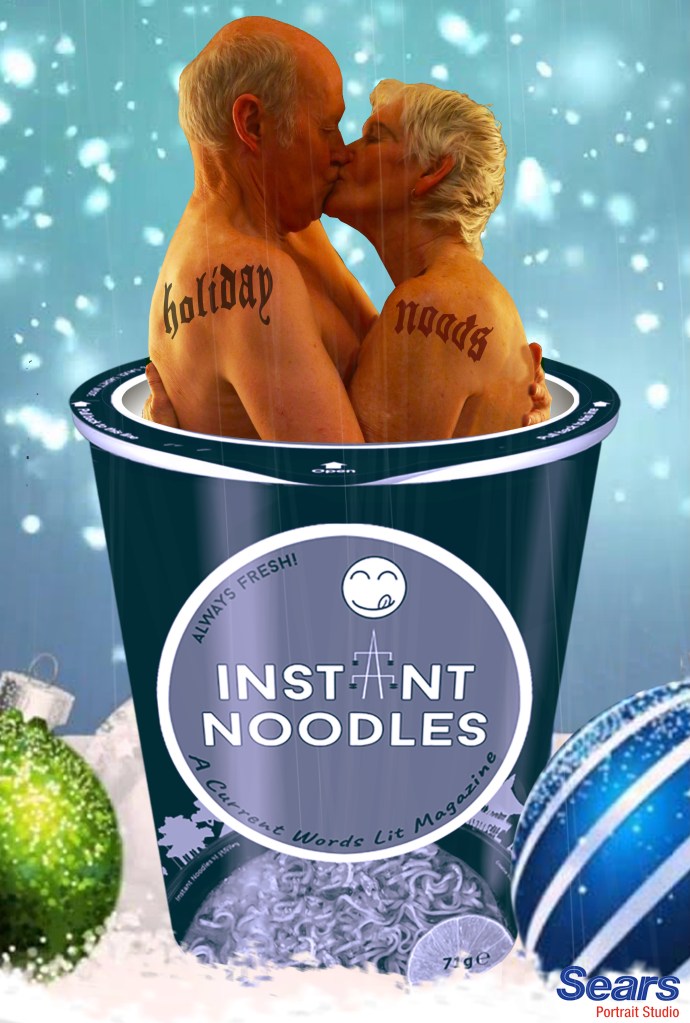
Follow Nadja Maril on {“X” at SN Maril or read one of her pieces at Nadjamaril.com. Check out Nadja’s soon to be released chapbook, RECIPES FROM MY GARDEN here. Don’t forget to submit your brief piece or poems on the theme “Holiday Noods” to be considered for publication in the Winter issue of Instant Noodles here.

Update from Alan Bern

Hello Friends,

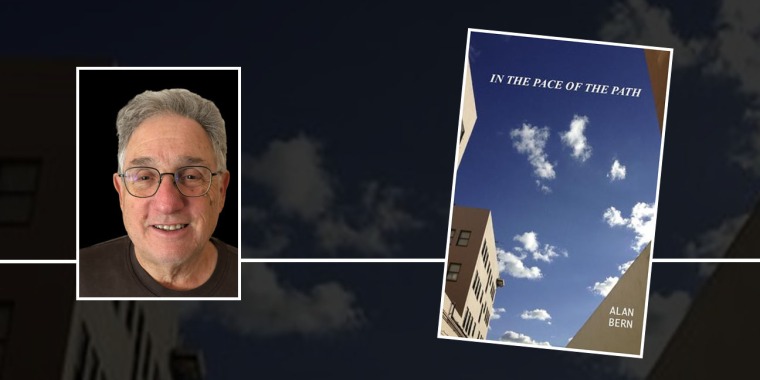
If you’re in the Berkely (California) area please join us at Pegasus Books Downtown on Thursday, June 27th for an evening of music, text, and storytelling with me, Alan Bern, Berkeley-based storyteller, performer, author of IN THE PACE OF THE PATH. Bern’s reading will be accompanied by music from cellist Gael Alcock. Recently released by UnCollected Press, IN THE PACE OF THE PATH is a hybrid work of poetry, prose, and photos that charts my life in my hometown of Berkeley and my career at the Berkeley Public Library.

From 6:30-7pm, browse books and enjoy Bach’s Cello Suite #4 performed by Alcock, in memory of Larry Bensky, host of KPFA’s ‘Sunday Salon’ and ‘Piano’.” Reading and conversation with me will follow, at 7pm. Copies of the book will be available for purchase and signing at the reading.

Alan Bern’s IN THE PACE OF THE PATH walks the border between poetry and prose, between the surreal and the realism where surrealism spawns, between the past and future which is the pace of the moment by moment of a life. I have learned from Bern’s clarity in poetry and prose to walk the edges of my homeland and step out into the unknown, while carrying the life I have lived within me. This is such an important work to read now and reread as we move through our lives.

—Rusty Morrison, Co-Publisher of Omnidawn—

Enjoy a video by L. Scott Jones of Wrapped in Ruins, a gallery piece and the most recent performance of PACES: dance & poetry fit to the space, a collaboration with other artists of dancer/choreographer Lucinda Weaver and me:

I will also present an art piece near the end of:

FREE LIVE EVENT: INSTANT NOODLES LAUNCH AND LIVE AUTHOR READING.

DATE: June 20, 2024
TIME: 4:30 PM PT  | 7:30 PM ET
Join us in celebrating the release of the newest issue of INSTANT NOODLES, the online literary magazine that features original poetry, art, and short fiction. Meet the authors and listen in as they perform their work live. This online event is open to the public. Click below to register.

https://us06web.zoom.us/meeting/register/tZUlfumprTgsE93vS-zfSLwlM-Mf-Vvyy-KU#/registration

There is wonderful writing in this issue of Instant Noodles, and I hope you can attend!

Thanks so much for your interest in the work of the authors of Old Scratch Press!

—Alan

Poems to Read to Your Toddler

Looking for recommendations for what to read to your toddler? Poet, writer and former Children’s Librarian Alan Bern has a favorite:

“The Owl and the Pussycat” by Edward Lear, illustrated by James Marshall ; afterword by Maurice Sendak.

By Alan Bern

Edward Lear’s “classic love ballad, “The Owl and the Pussycat,” was voted the most popular British childhood poem in 2014, and has been set to music by everyone from Stravinsky to Laurie Anderson.” (”The Sense Beneath Edward Lear’s Nonsense” by Adam Gopnik, The New Yorker, April 16, 2018) If not as popular in the United States, “The Owl and the Pussycat” has spawned a number of illustrated picture books here. Of the many illustrated picture books of this absolutely brilliant poem for very young listeners and readers by Edward Lear, “The Owl and the Pussycat,” my top choice is the version by James Marshall. Next to Lear’s own illustrations for his poem, James Marshall’s illustrations, although he died before fully finishing them, are my favorites. Marshall creates wonderful characters that match so perfectly the sounds and voices of Lear’s poem. It is a nonsense poem, but it’s always made perfect sense to me and to so many. Young children will love the poem and the book; so will elementary school kids when they need to feel just a bit regressed. Heck, adults will love it, too. As I do.

Nonsense Suggesting Sense

As Gopnik explains later in his essay: “This gift for creating pathos without sacrificing absurdity is what makes “The Owl and the Pussycat” one of the greatest poems in the language… In “The Owl and the Pussycat,” meanings rush in:

They dined on mince, and slices of quince,

Which they ate with a runcible spoon…

Not even Humpty Dumpty could explain what a runcible spoon is. We know it by its verbal vibration, by its presence, by its sheer runcibleness… This gift for making something felt without having first to make it familiar is one that we later admire in Beckett. Nonsense suggesting sense is a familiar pattern. Nonsense suggesting the numinous is not.”

Artist/illustrator James Marshall

Personal Connections

And here’s a personal story to go with the poem. As a children’s librarian for many years, I was honored to serve on the American Library Association’s Caldecott Committee in 1992, and I suggested Marshall’s illustrations for this book as a finalist. It was not chosen, most probably because Marshall never quite finished the illustrations. I continued to love the book anyway, and I always wondered why the poem always spoke to me… when I read it or when I listened to another read it. Shortly after my Mom died, I found out why. One day while going through some letters, from my Mom to my Aunt, letters that my Aunt had kept from the early 1950s. My parents were on sabbatical leave (my Dad was a young professor) in Cambridge, England, and I was almost two. In one letter, my Mom wrote: ‘It’s wonderful to be here, Howard and I are having such a good time, and we love having our little boy with us; however, he does drive us crazy and asks over and over and over that we read “The Owl and the Pussycat” to him.’ That brought such a wide smile to my face: of course, I don’t remember it, but it now explains, in part, my continuing love for the poem. Thanks, Mom and Dad, and thank you very kindly, Mr. Edward Lear! And now I shall reach for my runcible spoon.

Thank you for reading . Remember, only a few days remain before the submission window for the spring issue of the literary magazine, curated by members of the Old Scratch Press Collective closes. Submit here –https://duotrope.com/duosuma/submit/instant-noodles-O0jFm

If you haven’t done so already, please follow our blog here for free and also follow us on Facebook.And coming soon is our newest chapbook release, The Song of North Mountain, by Morgan Golladay followed by chapbooks penned by Gabby Gilliam, Alan Bern, and Nadja Maril.