
There are many types of formal poetry and for anyone who likes to write poetry, it’s worth your time getting to know these forms and trying a few as well. This teaches us all about meter and rhyme, how a poem should look on the page, and trying some of these is just plain fun. Here is a short run down of twenty different types of poetry. See how you do with some of these! You might surprise yourself, find a from you really like, and write a collection of them.
Acrostic: first letter of each line spells something
Ballad: narrative like a folk story
Blank Verse: Unrhymed but has iambic pentameter
Cinquain: five-line poem with 2-4-6-8-2 syllables per line
Concrete: has a shape on the page like a tree
Elegy: a mourning to someone gone
Epic: long, narrative work like Hiawatha
Found: taking and reframing words from other sources like newspapers
Ghazal: couplets that share rhyme and refrain
Haiku: Japanese form of 5-7-5 syllable pattern
Limerick: a humorous poem of 5 lines
Lyric: short poems of emotion
Narrative: a form of story telling
Ode: message to a subject, event or object
Pastural: Idealized environment, often rural life
Sestina: complex 39-line poem
Slam: Oral, competitive poetry
Sonnet: 14-line poem with specific rhyme scheme about love think Shakespeare
Villanelle: 19-line. 5 tercets followed by a quatrain with 2 repeating rhymes and 2 refrains
The Ode is a great form to try. Odes were developed in Ancient Greece. An ode then was a song or chant performed to celebrate athletic victories. Odes are praise using rich and clever description. Here’s a famous example of an ode poem.
Ode to the Hotel Near the Children’s Hospital
BY KEVIN YOUNG
Praise the restless beds
Praise the beds that do not adjust
that won’t lift the head to feed
or lower for shots
or blood
or raise to watch the tinny TV
Praise the hotel TV that won’t quit
its murmur & holler
Praise the room service
that doesn’t exist
just the slow delivery to the front desk
of cooling pizzas
& brown bags leaky
greasy & clear
Praise the vending machines
Praise the change
Praise the hot water
& the heat
or the loud cool
that helps the helpless sleep.
Praise the front desk
who knows to wake
Rm 120 when the hospital rings
Praise the silent phone
Praise the dark drawn
by thick daytime curtains
after long nights of waiting,
awake.
Praise the waiting & then praise the nothing
that’s better than bad news
Praise the wakeup call
at 6 am
Praise the sleeping in
Praise the card hung on the door
like a whisper
lips pressed silent
Praise the stranger’s hands
that change the sweat of sheets
Praise the checking out
Praise the going home
to beds unmade
for days
Beds that won’t resurrect
or rise
that lie there like a child should
sleeping, tubeless
Praise this mess
that can be left
Virginia Watts is the author of poetry and stories found in The MacGuffin, Epiphany, CRAFT, The Florida Review, Reed Magazine, Pithead Chapel, Eclectica Magazine among others. She has been nominated four times for a Pushcart Prize. Her debut short story collection Echoes from the Hocker House was short listed for 2024 Eric Hoffer Grand Prize, selected as one of the Best Indie Books of 2023 by Kirkus Book Reviews, and won third place in the 2024 Feathered Quill Book Awards. Please visit her.
Virginia’s new book is now available from Old Scratch Press:

Her prior poetry chapbooks Shot Full of Holes and The Werewolves of Elk Creek
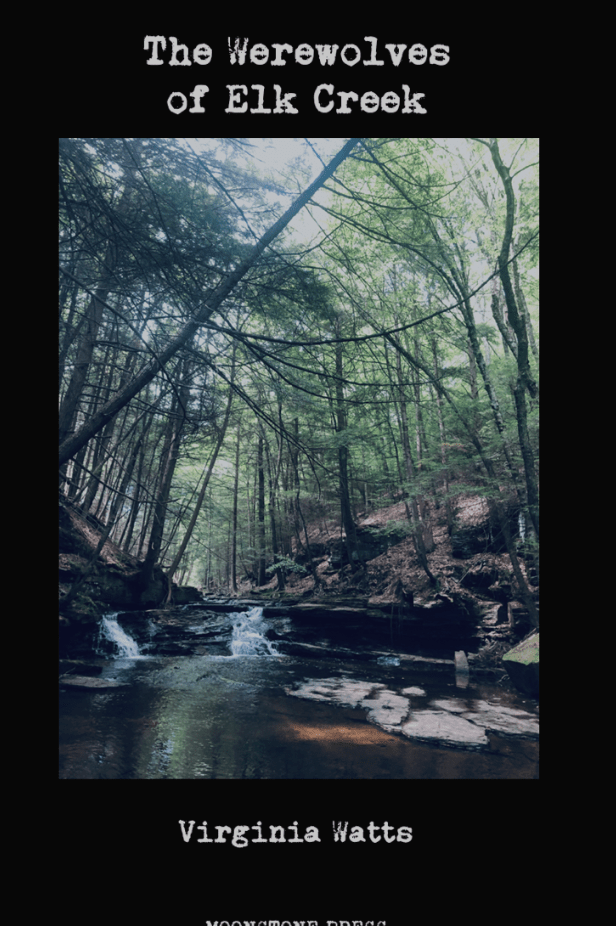
are available from Moonstone Press. And her debut short story collection Echoes from the Hocker House is not to be missed!




 OLD SCRATCH PRESS