Happy Saturday everyone.
I’m working on bringing out my poetry collection this year, and I thought I’d share one of my poems with you.
For the past year I’ve been traveling with my little sister to her cancer appointments. Luckily I do not have cancer, but I am cancer-adjacent, and that has its own challenges. When I want to say worrying things, when I read case studies, which I do, when I am by myself as she naps through a treatment and I wait, when I drive in and out of West Hollywood alone, sometimes in the threes and fours in the morning depending on treatment time, and I ruminate, I try to put it on paper, rather than on my sister. I’m also a clothes lover and a people watcher from back in junior high with my then boyfriend and bestie Joe Perna. We called ourselves the fashion police in 7th grade, like we were such good dressers. Joe and I observed details, and made guesses based on what we saw. In general the thing I am most curious about is the lives of other people. I think I am (possibly) overly empathetic, and I imagine stories for strangers all day long. I also tend to notice the small things happening around me. As I sit and wait for my sister, or drive alone, or struggle to make small talk (as I do without cancer! I have never been good at it), my brain is humming away wondering about people, and making stories to go with them, and wondering if their cancer is curable and how it will all play out. Most people I see only once, even though we go the same time and day quite often. It is my curse to want to know everything, and to never be able to know, purely because I am a nosy so-and-so. When cancer comes to town your ability to be quiet in the never-knowing is mightily tested.
I also don’t want this to be a totally maudlin book about being upset about my sister. I don’t want it to be a book about my sister. Though I love her dearly, her story is hers, and I don’t want to steal it, which would add, in my view, insult to injury. It’s important when you write about real-live people who are not famous people that you be considerate and kind. I am not able to do that when talking if a joke comes to mind. If I think of something funny about something you’ve said or how you look, etc., it’s coming out unfiltered, that second, and I’m going to laugh. Yeah. Kind of a shitty trait, but what do they say, “At least all the trauma made me hysterical.” Yup. But when I write about anyone who I will see again, it is important to me to serve my needs while not disregarding theirs. There are compromises. My sister may not want me announcing she has cancer, for example, but she has told the people in her life, and I need to be able to discuss it too, so she loses that bit of control, just another thing cancer steals, privacy. For that she has to allow me the book as a coping mechanism. Sorry sis.
Another thing to note, as I assume most people who read this blog are authors: you have to be careful where you put your work before you publish your book. I am publishing my book through OSP, so I can put this poem here, and OSP will not disallow it from the book. If another publisher was publishing my book, they might not be happy for me to stick a poem out in public on a blog. They may or may not be happy for me to publish a poem somewhere in advance, because that anthology or lit mag where the poem is published may hold rights that conflict with the publishing company then using the poem when publishing my book. So there’s that. You have to be careful. You can always post a question here, and one of us will try to answer it. In fact, I’ll run a monthly post that offers a chance for you to ask questions, and reminds you that you can do it.
This book has a theme that runs through the whole book. Some collections do have a theme, but often the theme is that all the poems are written by the same person. The theme in my book is cancer, but, more drilled down, my reactions to cancer, my observations on the cancer experience, which I am holding together in the idea of the cafeteria at the clinic. People who are going through cancer as patients or support are often in the cafeteria as a place to stop being wrapped up in the cancer events and procedures. It’s the downtime place, and, because of that, people drop their masks a bit there. I am not telling anyone’s secrets as much as I am interpreting what I see, which changes the observation from what it is, to what I see. There is much intrusion from observers, so don’t worry that I am revealing anyone’s truths besides my own.
I have trouble tapping a poem with my scepter and declaring it complete. I expect many poets are the same. Sometimes a poem comes out almost fully-formed, but most still have growing and shrinking to do.
I write longer poems. I write narrative poems. I tend to write personal poems. Sometimes my poems are true, and sometimes they are true in the sense that they are true, for me. That doesn’t mean they would qualify as legally true. If the person was a brunette, and brunette doesn’t work, guess what, red hair is what I am going to write.
This poem, “Pink Dress,” is pretty much done. I will say it is an uncorrected proof here, as I may change it a bit before it hits the book galley. But it feels good to me as it is, and I was able to read it aloud to myself without having major anxiety, so I feel like it is okay.
The OSP group has become my friends as well as my colleagues, and, based on schedules and etc., we often ask each other to look at each other’s work. That’s part of the deal with this collective. So far I have shared some of my writing for this book with Robert, Anthony, Gabby, and Ginny. I cannot express how much I have appreciated them and their taking the time to give me really helpful, kind, and actionable feedback.
Here, without further ado, is one of the poems destined to be released later this year in the collection, In the Cancer Cafeteria.
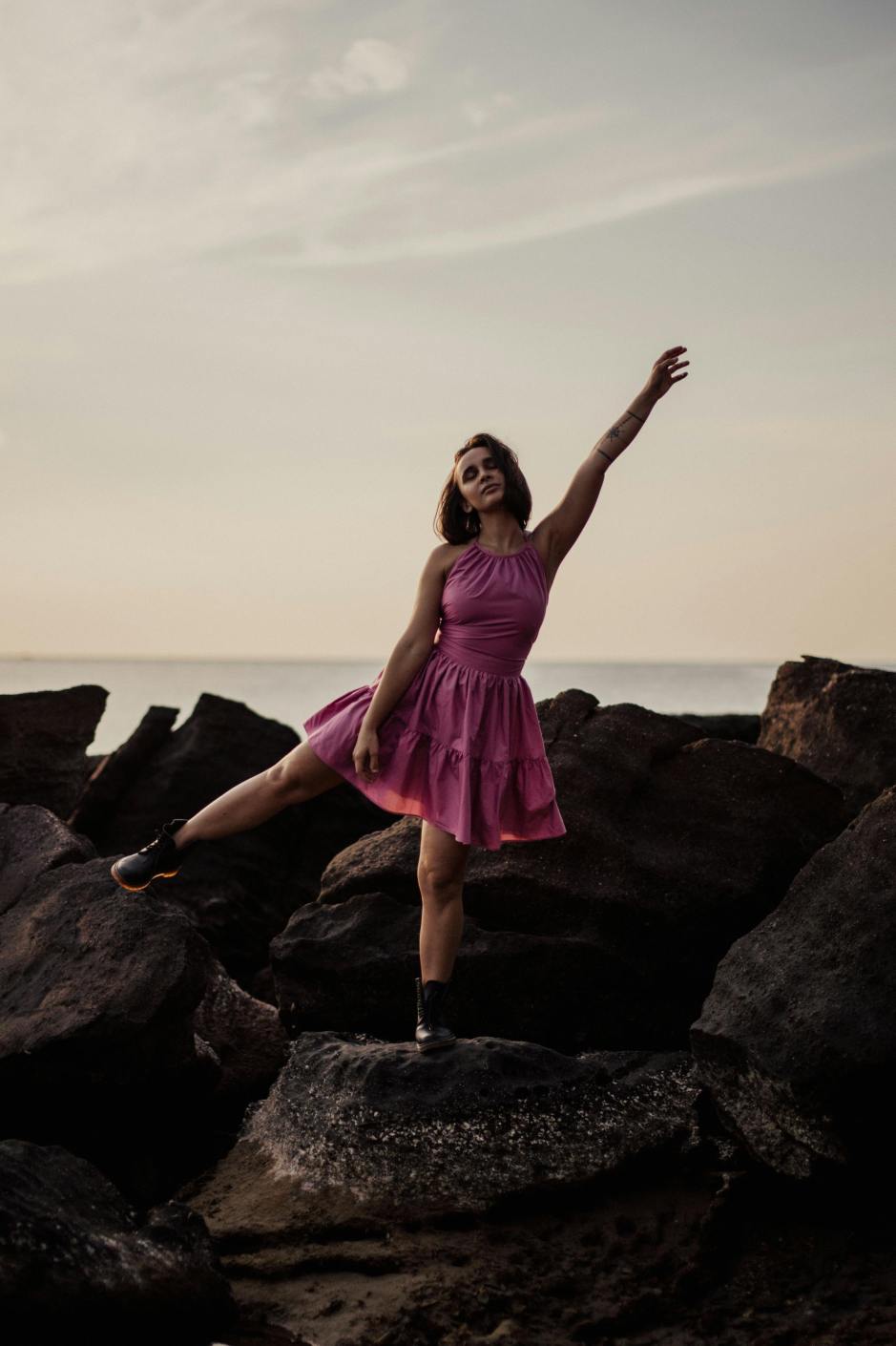
Pink Dress
Her pink dress is too tight too short
the old sneakers don’t go
hair twisted up and split
two rolls of mussed-up teddy ears.
He is all belly
under his big and tall polo
up top tangled hair needs
a brush run through
but beard is spun silk.
He is the one who gets up
moves around
paces because he’s in the cancer cafeteria and who doesn’t pace?
She doesn’t.
She smiles at the screen in her hands.
Whenever he gets up
he runs his finger down her bicep.
Her chubby thighs
twitch back at him against the tight pink hem.
The dress is a mini
I can see her cotton crotch and I don’t tell her
because each time he slides his finger down her arm
her smile goes wicked at the corners
for a second
as her thighs twitch
call and response
and it’s not my song to sing.
I shut up I pretend I don’t see.
When he manages to sit
his chair is up against instead of across from
his long tangled curls try to nestle under her neck
wheedle around her earlobes.
I can’t tell for certain who is victim
who is victim support.
Some secrets are not for me to know.
He needs to move again
gets up abrupt
clumsy all the other chairs
tables reach for his legs
stepping around best he can into the hall
gazing in confusion at the baby grand
sitting there
playing “Wichita Lineman” by itself
from 1968
a year him and his girl know only as a number, and not real.
He stares at the piano
rocks on his heels in his shoes as he has rocked since he was five years old
knees bend out to the sides
a boy just learning how legs work
walking through a day’s same endless agenda
treatment, wait, consultation, wait, scan, wait.
Head nodding at Jimmy Webb’s F major D major
he tries to find his way to the tune
gives up, moves back to her
comes in for a landing
finger trails down and up
bare meaty skin.
She ripples in response.
Appearing now on all her bare places
languishing goose pimples
long only to be released
to go home
so two may unzip the tight pink dress together.
Dianne Pearce is the chief editor and bottle washer at Current Words Publishing, and the half-cocked imaginer behind Old Scratch Press and Instant Noodles. Pearce loves helping writers realize the dream of having their work published. I mean she is really crazy about doing that for some reason. To that end, to join in the fray, to look at the thing from the other side, to stand in another’s shoes, and all of those things, she is fully expecting and promising to publish her first collection of poetry, In the Cancer Cafeteria, spring of 2026. Please don’t hold your breath. For very long. Happy 2026!







 OLD SCRATCH PRESS