CONGRATULATIONS TO GABBY and THANK YOU!

Hi All~

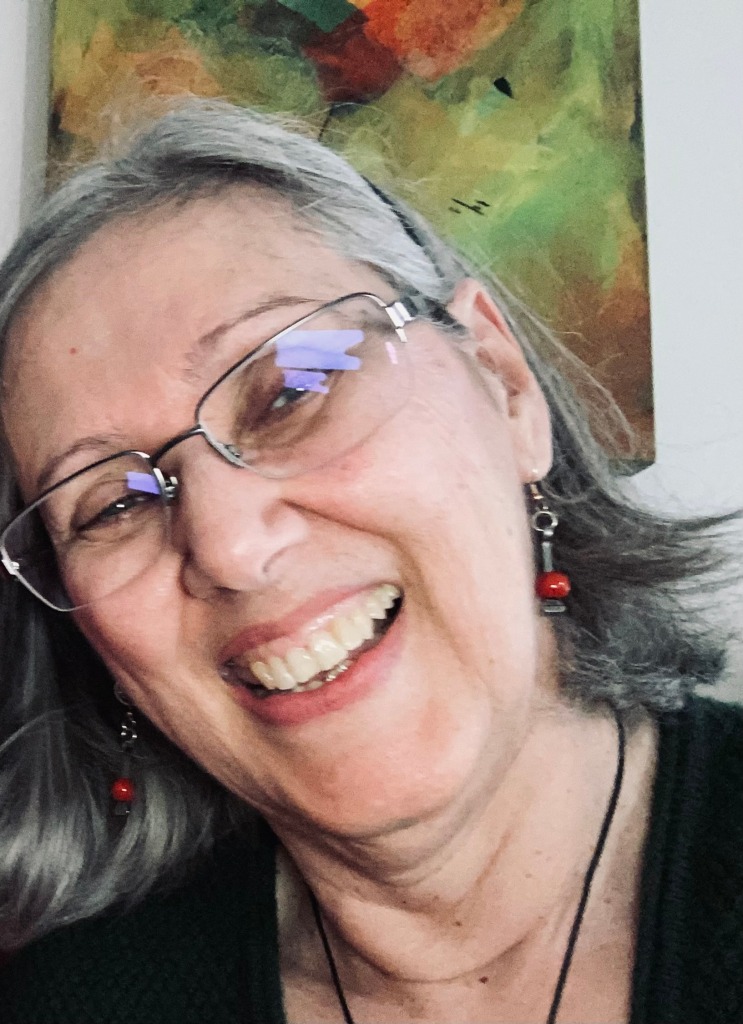
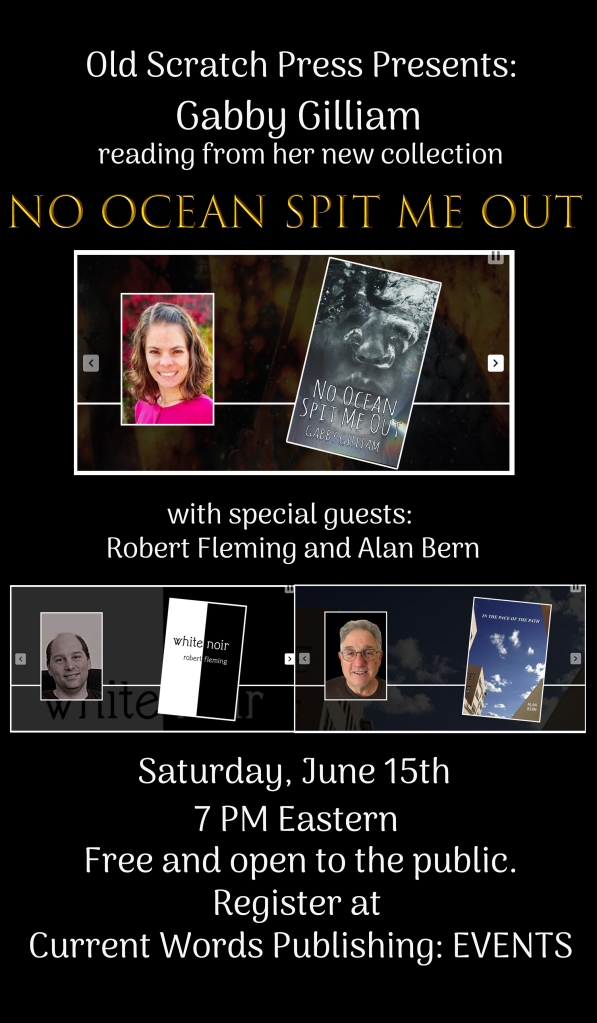
Today we celebrated the launch of Gabby Gilliam’s book: NO OCEAN SPIT ME OUT with a reading on Zoom by Gabby and Robert and Alan.
I am going to guess that many of the guests were friends/family of the authors, and I am so grateful for their kindness as we navigated our first live event since 2020, in a different house, on different equipment, and on the opposite coast. I’m not going to say we were a well-oiled machine, but our hearts were in the right place. 😉

Within the coming week we will create a nice video of the event and post it here, as well as send it to the participants.

If you attended, or if you missed, please consider coming to future events. It meant so much to me to hear the authors read the books live that Dave and I often work on alone, in silence. I tend to read the books we publish a few times, but this is a whole different and rich experience.

So, if you were able to attend, I thank you for doing so, and being such a gracious guest.

If you were unable to attend, not to worry, as we will be posting the event here ASAP.

And don’t forget to visit the catalogue page and see what OSP books are available! The OSP authors keep 100% of their royalties, so help them earn a little coin at this writing game.

Also, next week, if you’re feeling game and supportive, join us again for the live reading of INSTANT NOODLES… VOLUME 4 (has it been 4 years???) ISSUE 1.

The writing for this issue, chosen by Gabby Gilliam, Anthony Doyle, Nadja Maril, and with visuals chosen by Robert Fleming and Alan Bern, is not to be missed!

Thank you for supporting indie authors.

Much love~
Dianne & David

New Poetry Collection by Gabby Gilliam; An Interview with the Author

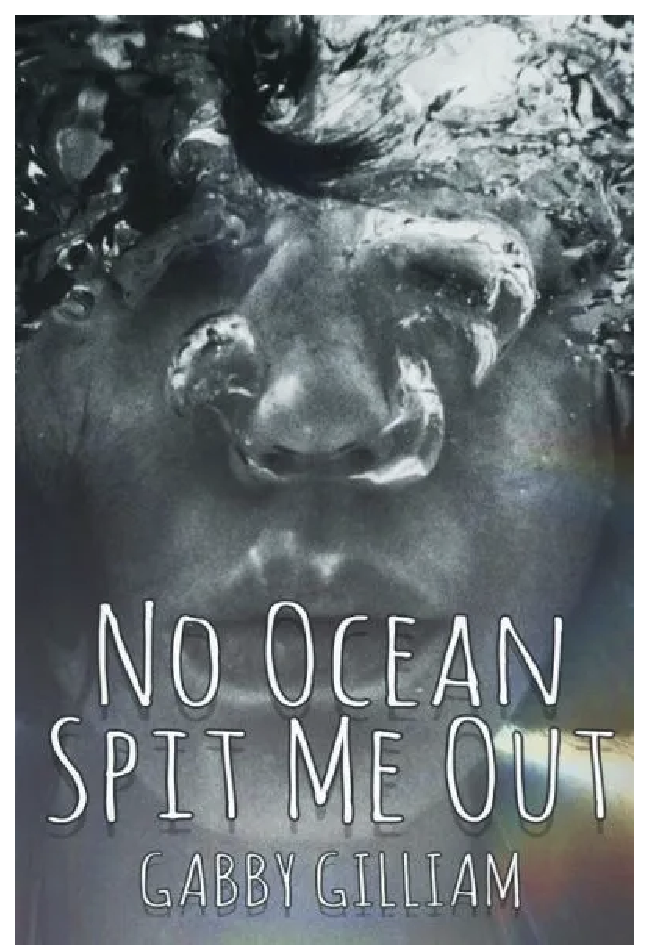
No Ocean Spit Me Out. Gabby Gilliam’s first chapbook of poems, published by Old Scratch Press, is now available for purchase. Shipments will begin on September 15th.  Recently I had the opportunity to ask Gabby a few questions about her work and her newest book.

The poems in Gabby Gilliam’s new book, No Ocean Spit Me Out, explore the dynamics and evolution of family relationships.

A live reading zoom event is coming up, JUNE 15tth and you can register to hear Gabby read from her new book as well as hear poets Alan Bern and Robert Fleming read from their work as well. To register click here.

 What do you like best about writing poetry?

I love that you can use poetry to describe things in new ways––to make the familiar fresh and universal at the same time. It’s one of the things I like best about reading poetry as well.

Which is your favorite poem in this collection and why?

I think my favorite poem might be the one that gives the book its title, No Ocean Spit Me Out. It’s a tribute to my dad. In this poem, I compare my dad to the god Zeus, and Zeus fails to measure up. Since my dad passed away, most of my poems about him are darker and focus more on my grief. I like this poem because it focuses on some of the things that made me love him so much.

What would you like readers to know about you in connection to your work?

Many of my poems focus on aspects of family connection. From dealing with addiction to witnessing my dad’s complicated relationship with his faith (which had an influence on my own struggle with religion and faith), the poems in this collection are a collage of my childhood and gradual self-acceptance. I hope readers can connect with my personal experiences by reflecting on the nuances of their own familial relationships and the impact they have on shaping our identities. I think the power of shared experiences is what make poetry so resonant, and I hope readers find that within the pages of this collection.

More about Gabby

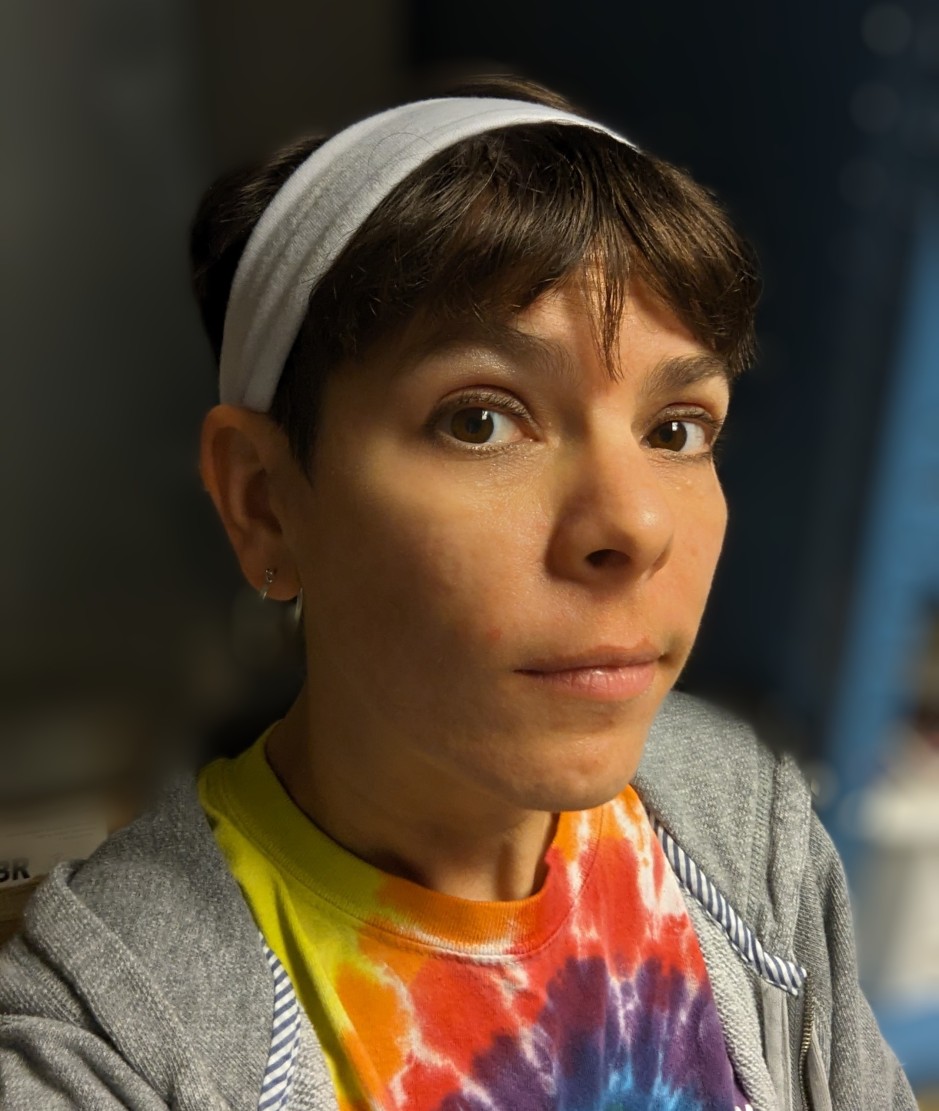
Fellow collective member Gabby Gilliam is a writer, an aspiring teacher, and a mom. Gabby’s poetry has appeared in One Art, Anti-Heroin Chic, Plant-Human Quarterly, The Ekphrastic Review, Vermillion, Deep Overstock, and Spank the Carp.

Not only is she a poet, but Gabby pens the Drumming for the Cure series of novels. Two thus far, Trouble in Tomsk and Chasing the Cure have been published by Black Hare Press. She lives in the DC metro area with her husband and son.

To purchase your own copy of No Ocean Spit Me Out, click here. Please remember to leave a review if you like it because customer rankings count. And please follow Old Scratch Press on Facebook.

Writer’s Toolkit: 5 Techniques for Handling Emotional Intensity in Writing

By Ellis Elliot

As writers, we often draw from our own lives for inspiration, tapping into our memories and emotions. However, delving into difficult experiences or memories can be challenging. It’s important to use techniques, or “lifelines”, to navigate this process. For example, author Gillian Flynn separates herself from the intense emotions of her writing by enjoying her favorite Broadway show tunes for a few minutes after she finishes writing. Poet Ada Limón ensures she has a way out of the emotional intensity by reminding herself that writing is the outlet for her feelings.

“Memory takes a lot of poetic license. It omits some details; others are exaggerated, according to the emotional value of the articles it touches, for memory is seated predominantly in the heart. The interior is therefore rather dim and poetic.”

                                 -Tennessee Williams

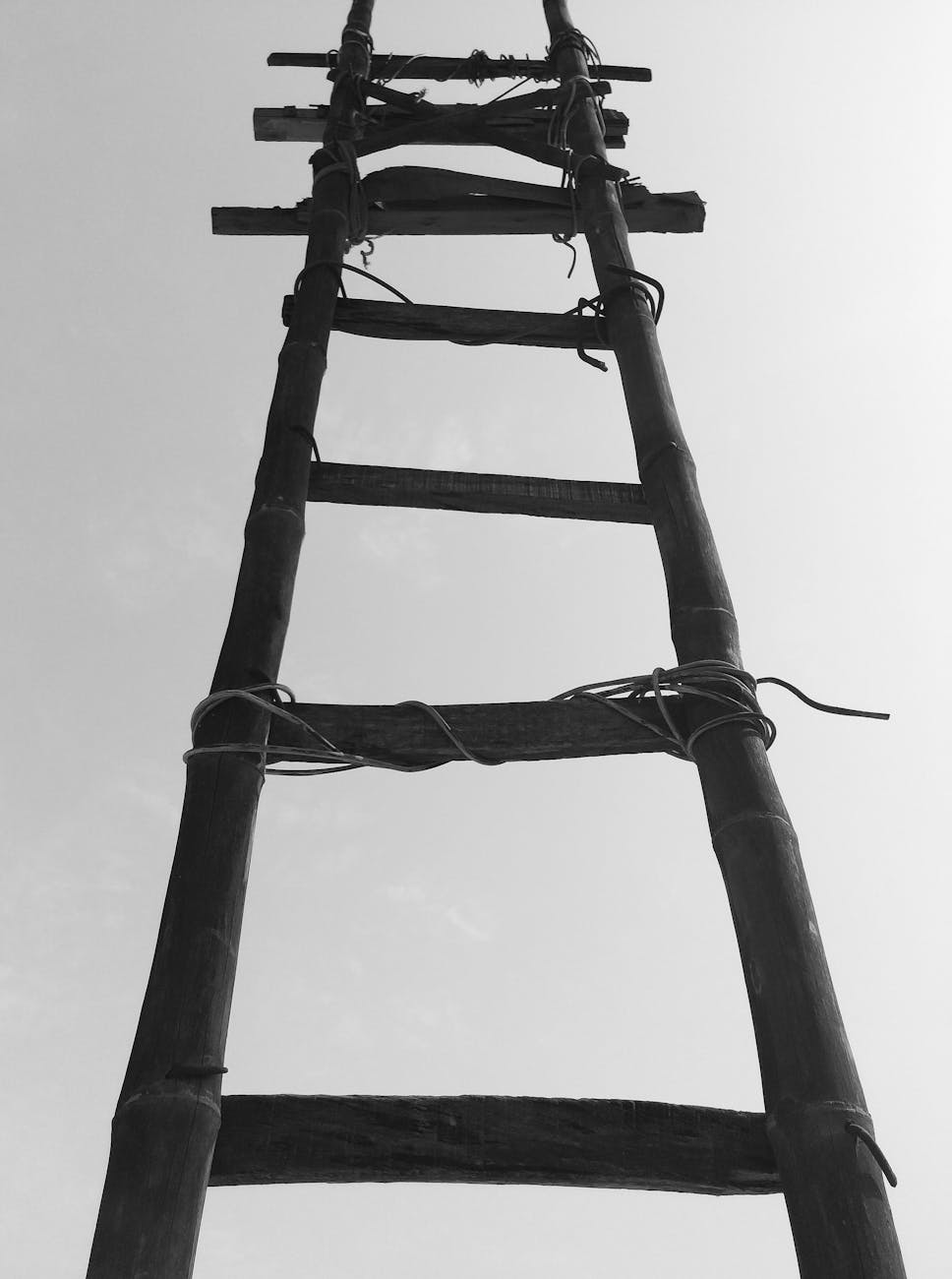
What does the “ladder out” look like? For me, the five techniques below are the rungs I use and find most helpful when the “going gets hard”:

Photo by Khimish Sharma on Pexels.com
  1. Method to Shift from Interior to Exterior- when I feel myself spiraling, I will tell myself to notice: 5 things I can see, 4 things you can hear, 3 things you can touch, 2 things you can smell, and 1 thing you can taste, OR NOTICE 3 things in the shape of a square, 3 things in the shape of a circle, and 3 things in the shape of a rectangle.(I thank my therapist for that one!)
  • Breath Work-Breath connects directly to the nervous system, hence, when our breath quickens with excitement/fear we can consciously slow it down to bring calm. There are a lot of different kinds of breath-work, but the method I use (because I can remember it) when on the high-dive is called “box breathing”. You simply inhale 4 counts, hold 4, exhale 4, hold 4. More info here: https://www.calm.com/blog/breathing-exercises-for-anxiety
  • Form Constraints-Choose a form, any form. Maybe it’s a sonnet, or as simple as making a list. Maybe it’s a haiku, or in the form of dialogue. Having a form helps switch the brain away from emotionally charged subject matter, and over to the more linear, logical side. Like swim-lane ropes, it helps give our work specific direction when it feels like we’re dog-paddling to nowhere.
  • Movement and/or Music-Take a walk. Sit in your chair, reach your arms out and upward as you breathe in, bring them down as you exhale. Roll your shoulders. Try some chair yoga. Turn on the music. Take a dance break. The mind/body connection is a strong and proven one. Get out of your head and into your body. Discharge that pent-up emotional energy with movement. Your writing, and your body, will thank you.
  • Decline the Invitation-“Going there” in your writing is up to you. Trust the wisdom of your body. If something comes up you don’t want to address, you can absolutely say, “no, thank you”, and shut the door behind it.

Maybe think of the above as the hard-hat and knee-pads for certain aspects of the hard work of writing. Find comfort in knowing that many are sharing the journey with you. If you’re lucky enough to have writer friends, talk about it. Many of us circle and circle around our truths, but never get there. Suit up and see where it can take your writing.

Thank you for reading. For more about the author Ellis Elliot visit. And check out her book.

Break in the Field

Delaware OSP Founding Members Honored With Multiple Awards

By Robert Fleming

Two OSP Founding Members, Morgan Golladay and yours truly Robert Fleming, won awards at the Delaware Press Association professional communications contest 5/1/2024 in Newark, DE. Escorting Morgan through the entrance, she answered my dress question: “my Old Scratch Press T-shirt is not fancy enough for a banquet, best black only.” I wore a tight shirt to accentuate my pecs, in-case there was anyone looking for a date. At a banquet, you must send the right signals.

Here is the low-down on who won which awards:

Morgan Galladay won first and second place in short stories: single story for “Under the Rhodendrons” published in Halloween Party ’23:
Halloween Party ’23: Keeten, Jeffrey, Heron, Robert Lewis, Goodridge, James, Golladay, Morgan, DeCicco, Kim, Dickerson, Marc, Howd, Eric Machan, Machan, Katharyn Howd, Paige, Michael, Cantu, Juan: 9781957224503: Amazon.com: Books

“Second Christmas” published in Solstice, volume 3:
Solstice: A Winter Anthology (The Solstice Winter Anthology Series): Pearce, Dianne, Doyle, Anthony, Golladay, Morgan, Watts, Virginia, Johnson, John, Fitzgerald, Christian, Aakaash, Buffy, Fulcher, R. David, Crandell, William F., Pearce, Dianne: 9781957224039: Amazon.com: Books
and honorable mention in creative verse: single poem for “March Wind” published in Instant Noodles: MARCH WIND – Morgan Golladay – INSTANT NOODLES (instantnoodleslitmag.com)

What’s next for Morgan: At the banquet Robert spilled ranch dressing on Morgan’s black skirt. Morgan screamed she will immediately send her suit to the dry cleaner. Robert agreed to pay for his stain. While Morgan is waiting to pick up her dry cleaning, she is promoting her upcoming book Song of North Mountain, published by Old Scratch Press:
DPP CATALOG – Devil’s Party Press, LLC (devilspartypress.com)


Robert Fleming won third place in creative verse: single poem for “Cheese Sonnet #263” published in Four Feathers Press: rhythms of Southern California


Honorable mention in Graphics and Design for “Timothy Gager is with Ellis Elliott at Boston Harbor with the Dire Literary Series.

DPP CATALOG – Devil’s Party Press, LLC (devilspartypress.com

Robert Fleming won third place in creative verse: single poem for “Cheese Sonnet #263” published in Four Feathers Press: rhythms of Southern California

honorable mention in Graphics and Design for “Timothy Gager is with Ellis Elliott at Boston Harbor with the Dire Literary Series.”

(2) Facebook

What’s next for Robert?

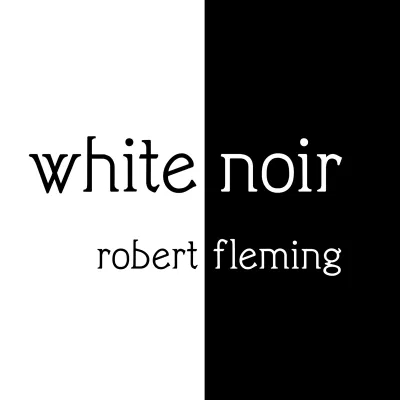
At my club house gym yesterday, a neighbor approached me to purchase my book White Noir:

After showering, I delivered my book to my neighbor who invited me inside and paid me, after I signed my book. That was the end of the neighborly encounter because the neighbor’s husband, watching tv on the couch, sneered at me. I promptly departed my neighbor’s house, as the husband rose and walked toward his pistol.

Unwounded, I created three graphic images for Four Feather’s Press upcoming publication: Landmarks of Southern California. Learn more about the author here: https://www.youtube.com/watch?v=FOAb33t1NFc

Small Independent Presses Provide Opportunities for New Voices

By Morgan Golladay

Five major publishing companies pretty much cover the market for books. But it’s the indies that take more risks on new authors, like me and my fellow writers at Old Scratch Press (an imprint of Current Word Publishing {CWP}). We write because we have something to say, not necessarily for fame and fortune (although that certainly wouldn’t hurt).

If you find a book you like, ESPECIALLY if it’s from an indie publisher, give it a review on whatever national website for books that comes up. Just that small bit of verbal support that says “I like this book” means a great deal to the writer, and the publisher. And it doesn’t have to be my book (but it’d be great if it were!).

So let me tell you about my book. There are fifty-five poems, 8 black and white full-page sketches, several smaller sketches, and other material in the book. They are all original I hope you’ll buy it, either in Kindle or print form.

Hot Off the Press: The Song of North Mountain an Amazon Top 100 Bestseller 8/17/24

For those of you who don’t know me, there are a few things that are important. I am 77, and I have retired from two jobs. I started publishing only in late 2019, and this truly is my Very First Book that is by myveryownself. At times I feel like it’s awfully late to start a new career, but then again.

I live in a community where many people move to when they downsize into their own retirements. THIS part is important: there’s no reason to stop just because we’re retired, or older, or more physically limited than we were when we were 35. We still have the ability to create, whether with words, paint and brush, whisks and casserole dishes, pottery wheels, or needle and thread. There really is nothing we can’t do, just some things we may not do as well as when we were younger (like blacksmithing, or crawling under vehicles).

Available here for pre-order  on Kindle with delivery May 1st, I hope you like The Song of North Mountain. https://www.amazon.com/dp/B0D1P64FHC soon to be available in softbound print as well.

This post was adapted from an essay on Morgan’s own blog and you can read more of her words at https://morgangolladay.wordpress.com/ Don’t forget to follow this blog and our facebook page for the latest news.

HAY FOR THE HORSES

gary snyder

I want to share with you today, as I do my 9-5 job, one of my favorite poems ever, “Hay for the Horses,” by Gary Snyder.

Gary Snyder reading Hay for the Horses

Hay for the Horses

by Gary Snyder

He had driven half the night
From far down San Joaquin
Through Mariposa, up the
Dangerous Mountain roads,
And pulled in at eight a.m.
With his big truckload of hay
behind the barn.
With winch and ropes and hooks
We stacked the bales up clean
To splintery redwood rafters
High in the dark, flecks of alfalfa
Whirling through shingle-cracks of light,
Itch of haydust in the 
sweaty shirt and shoes.
At lunchtime under Black oak
Out in the hot corral,
—The old mare nosing lunchpails,
Grasshoppers crackling in the weeds—
“I’m sixty-eight” he said,
“I first bucked hay when I was seventeen.
I thought, that day I started,
I sure would hate to do this all my life.
And dammit, that’s just what
I’ve gone and done.”

I like to think of this poem periodically, to make sure I am doing what I want to do with my life.

It’s tax season. That’s a time I also always wonder if I am doing something worthwhile, or at least not onerous, for my daily bread.

Are you a writer or artisit who’s been bucking hay for 51 years instead of making?

Time to create!

See all about “Hay for the Horses” and Gary Snyder here.

APRIL is National Poetry Month. Time to Start Celebrating and Sharing Our Favorite Poems!

April is almost here, time for National Poetry Month, an entire month to celebrate poetry. Do you have a favorite poem or poet? Let us know and we’ll try to post a story about the poet or the poem on the Old Scratch Press website.

National Poetry Month was launched in 1996 by the Academy of American Poets as a way to promote educational events that encourage students to interact with poets and poetry.

Photo by Andrea Piacquadio on Pexels.com

One of these programs sponsored by the Academy of American Poets is called Dear Poet. Designed for students in grades five through twelve, participating students can write letters in response to poems this year ( 2024)  read online by Patricia Smith, Ed Roberston, Mara Pastor, John James, Nikky Finney, Nicole Cecillia Delgado, Marilyn Chin, and Chen Chen.The submission period for Dear Poet 2024 is now open until April 22, 2024.

If asked, who is my favorite poet it really very much depends on the time of year, time of day, and my mood because I was lucky to have grown up in a household filled with poetry books.

My mom was an English major and she enjoyed reading me her favorites. At a young age I listened to Gerald Manley Hopkins, T.S. Elliot, Robert Frost and Emily DIckinson.

Children love repetition, and when they discover a favorite story they like to have it read to them over and over again. Many Many times I’d ask to be read my two favorite poetry books in pre-school: A.A. Milne’s When We Were Very Young and Robert Louis Stevenson’s, A Child’s Garden  of Verses.

I remember reading to myself “The Swing” at age eight.

The Swing

Photo by Ksenia Chernaya on Pexels.com

By Robert Louis Stevenson (1850-1894)

How do you like to go up in a swing,

             Up in the air so blue?

Oh, I do think it the pleasantest thing

             Ever a child can do!

Up in the air and over the wall,

             Till I can see so wide,

River and trees and cattle and all

             Over the countryside—

Till I look down on the garden green,

              Down on the roof so brown—

Up in the air I go flying again,

              Up in the air and down!

I found all the poems in When We Were Very Young to be irresistible, but my constant favorite was the one about that difficult girl named Mary Jane.

Rice Pudding

By A.A. Milne ( 1882-1956)

What is the matter with Mary Jane?
She’s crying with all her might and main,
And she won’t eat her dinner – rice pudding again –
What is the matter with Mary Jane?

What is the matter with Mary Jane?
I’ve promised her dolls and a daisy-chain,
And a book about animals – all in vain –
What is the matter with Mary Jane?

What is the matter with Mary Jane?
She’s perfectly well, and she hasn’t a pain;
But, look at her, now she’s beginning again! –
What is the matter with Mary Jane?

What is the matter with Mary Jane?
I’ve promised her sweets and a ride in the train,
And I’ve begged her to stop for a bit and explain –
What is the matter with Mary Jane?

What is the matter with Mary Jane?
She’s perfectly well and she hasn’t a pain,
And it’s lovely rice pudding for dinner again!
What is the matter with Mary Jane?

If you have school children, don’t forget to check out all the poetry programs this month and whatever your age make a point of reading a poem a day. The Old Scratch Press is trying to make new poetry more available by publishing several chapbooks each year, so check out what’s in our catalogue and what is about to be released by following us here as well as following our Facebook page. Thank you for reading.

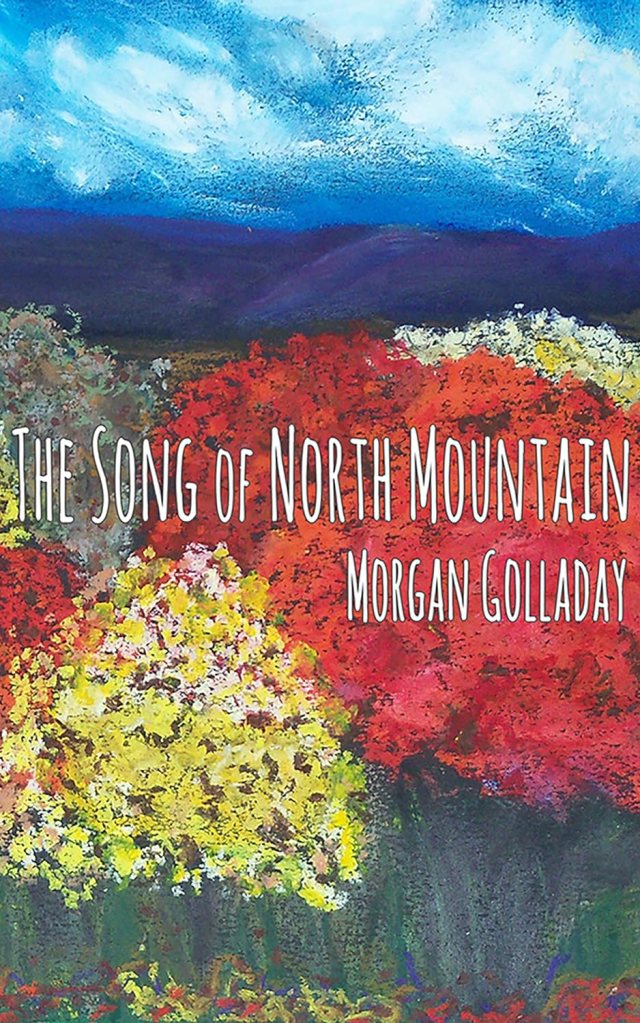
The Song of North Mountain by Morgan Golladay features Poetry and Art

Old Scratch Press is pleased to announce the upcoming release of The Song of North Mountain, by Morgan Golladay. Slated for May release, the book includes original artwork by the author to accompany her poems. The collection is now available for pre-order.

Founded in 2023, Old Scratch Press is a cooperative of poets and short-form authors who have come together to promote the publication and appreciation of poetry and short-form writing. The Song of North Mountain will be the third chapbook, published by the small independent press.

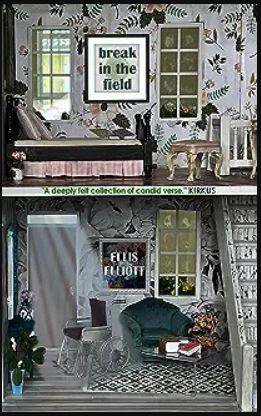
Break in the Field by Ellis Elliot was their first book, nominated for the National Book Award, followed by avante-garde wordsmith and artist Robert Fleming’s poetry collection, White Noir.

The Song of North Mountain, says Morgan, “is about my relationship with this Earth, focusing on one small mountain in one small chain, in one small part of this vast world.

This book is about a connection – my personal experience sitting in stillness on this mountain, as well as many other mountains. North Mountain is, for me, a symbol of my relationship with this Earth. The permanence of the land, regardless of how it changes; the cycles of life, the quiet continuation of change. It has been a long time since I personally was able to sit quietly and listen to the tree branches and leaves speak to each other. I cannot scale the trails as I once did. But the magic of place is still in my memory, whether it’s the rocks in the rivers, the trails on the mountain tops, or the joy of sharing ripe wild berries.

“…my personal experience sitting in stillness on this mountain, as well as many other mountains. North Mountain is, for me, a symbol of my relationship with this Earth.”

Morgan Golladay

The cover design, an original painting, and the 10 black and white interior illustrations were created specifically for the book. Pre-order availability on Amazon and on the Old Scratch catalogue page will be coming soon.

To keep up with the latest news, please follow our blog here for free and also follow us on Facebook. Later this year look for more chapbooks penned by Gabby Gilliam, Alan Bern, and Nadja Maril. Thank you for reading. Special note: the deadline for Instant Noodles LIterary Magazine submissions has been extended to the end of the month.

What Books Are You Reading? Author Gabby Gilliam Shares Five of Her Favorites

By Gabby Gilliam

Author of Drumming for the Dead, Black Hare Press and founding member of Old Scratch Press

Every year, I set a goal of reading 52 books before the year ends. In 2023, I went well above my goal, and read 74 books. I’ve made it a personal goal to read more collections of poetry, and I think that helped boost my number.

One of my top reads for the year was a collection of poems, Unshuttered, by Patricia Smith. An ekphrastic anthology of poems inspired by vintage photographs of Black men, women, and children the author collected, Smith’s poems give the photographs’ subjects a voice. The collection is powerful. I highly recommend it.

 The remaining books in my top five are fiction, and have at least a taste of magic in them.

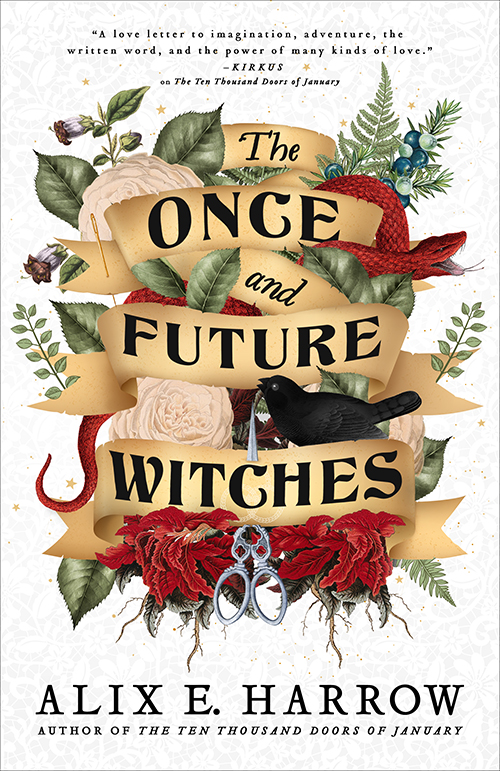
When I was younger, one of my favorite Disney films was The Sword in the Stone. In high school, I read The Once and Future King by E.B. White as an assigned novel for English class. So, when I came across The Once and Future Witches by Alix E. Harrow, I borrowed it from my local library.

I wasn’t disappointed. There’s magic and wit and the tangled storylines of three sisters that slowly converge. The youngest sister, Juniper reminds me of Granny Weatherwax from Terry Pratchett’s books (who is one of my favorite witches of all time). In Once and Future Witches, Harrow gives us a feminist adventure story full of magic, and I devoured every page of it.

I only picked up Nettle & Bone by T. Kingfisher because I was trying to read all of the Hugo Award nominees. I didn’t expect much since it’s such a short read. The heroine of the novella is given three impossible tasks and, through stubborn determination, begins to make her way through them. What I liked about this fairy tale is that the princess didn’t wait to be saved by anyone. She didn’t even want to marry a prince. Instead, she does her best to kill one.

I’m more than a little late to the party, but I started the Wheel of Time series by Robert Jordan last year. I decided to give the first book a try after watching the first season of the television series. The show left me with some questions that I hoped the book would answer. I was right. And the book was so good that I decided to dive into the rest of the series, even though I suspect it will be a few years before I make it through them all since the hold list for the audiobooks is rather long.

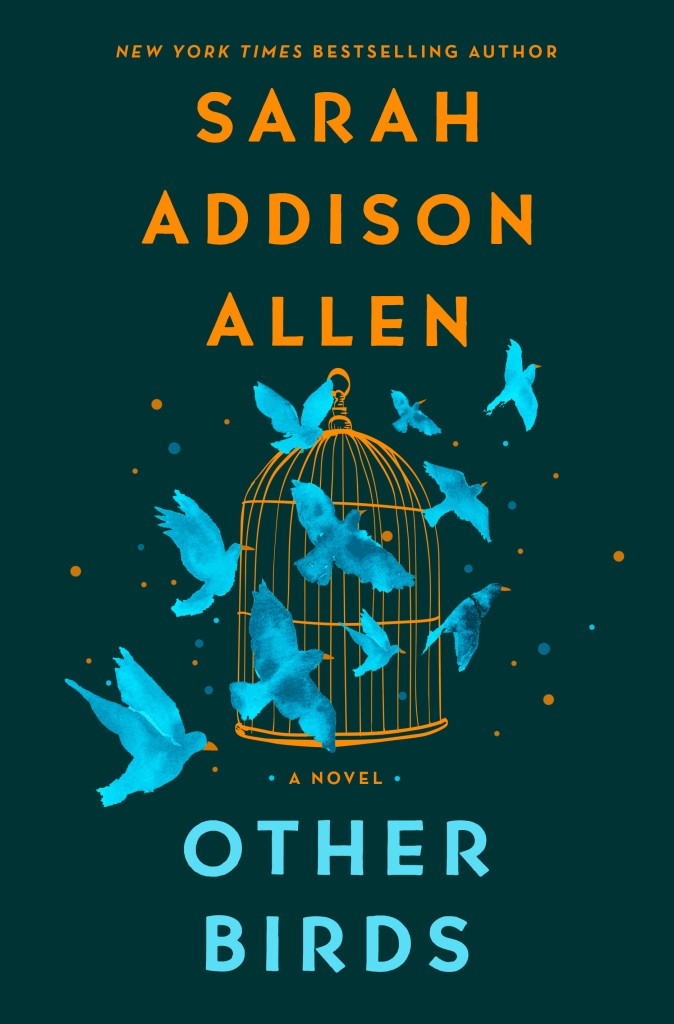
My favorite read of the year came from one of my favorite authors, Sarah Addison Allen. Allen is a master of magical realism. While her novel, Other Birds, wasn’t my all-time best-loved book of hers (that honor belongs to Garden Spells), I still loved this story of complicated grief and the bond formed between found family.

I’ve set a goal of 52 books again for 2024. I’m off to a slow start, but I really enjoyed Fourth Wing by Rebecca Yarros (I recommend the Graphic Audio version. A full cast really enhances the experience.).

The year is still young, and I’m looking forward to chipping away at my growing to-be-read list. What was the last great book you read? I’d love to add it to my list! Please leave a comment on this post on the Old Scratch website or on our Old Scratch Facebook page.

Robert Fleming’s Valentine’s Day Advice

By Robert Fleming

On Valentine’s Day, write a sonnet. A sonnet is for love. In the 13th-century, the sonnet was invented by Giacomo da Lentini, a member of the Italian Court of the Holy Roman Emperor Frederick II in Palermo, Sicily.

William Shakespeare popularized the sonnet. William lived 1564–1616 in Stratford-upon-Avon, Warwickshire, England.

The original sonnet is a fourteen-line poem in iambic pentameter with endline rhyme with the sequence: ABAB CDCD EFEF GG. The last two lines, GG, are a change, called a Volta. I still confuse iambic pentameter with the Olympic Pentameter event where a shepherd guides lambs over hurdles.

Perhaps, William’s most famous sonnet is #18: Shall I compare thee to a summer’s day?

Shall I compare thee to a summer’s day?

Thou art more lovely and more temperate:

Rough winds do shake the darling buds of May,

And summer’s lease hath all too short a date;

Sometime too hot the eye of heaven shines,

And often is his gold complexion dimm’d;

And every fair from fair sometime declines,

By chance or nature’s changing course untrimm’d;

But thy eternal summer shall not fade,

Nor lose possession of that fair thou ow’st;

Nor shall death brag thou wander’st in his shade,

When in eternal lines to time thou grow’st:

                So long as men can breathe or eyes can see,

                So long lives this, and this gives life to thee.

Where is William’s poetry title? Don’t poems have to have a title? Some poets don’t give titles and when published the publisher makes the first line the title.

As a poet for fifty years, I have written many sonnets and teach a two-hour workshop on how to write a sonnet. I am proud, at the end of my workshop, many participants write a first draft and complain they are exhausted. Beware of the sonnet sweat.

My writing which responds to William’s sonnet #18:

William does this frock make me look fat?

Why should I compare you?
Shall my rating do good?
Will it make me want

you more than what I had,

nor worse than what I can’t get?
Your score will be my score.

Shall there come a day when you won’t ask?
Oh no, no, not that frock, take it off!

Robert, your poem does have a title, but only nine lines. It is not a sonnet. As a tribute to Cole Porter, who composed Anything Goes in 1934, the less taxing American sonnet was invented which is a fourteen-line poem that does not demand iambic pentameter nor endline rhymes. If the American sonnet’s fourteen lines is still too sweaty for you, write a monostich-1 line poem: I Love You.

The author, Robert Fleming is a founding/contributing editor of Old Scratch Press (OSP). To read more of Robert’s work: