Creative Writing Prompt Inspired by Ann Patchett’s novel Tom Lake

By Nadja Maril, a founding member of the Old Scratch Short Form and Poetry Collective.

Summer and reading go hand in hand. You go on vacation and take along a stack of all those books you’ve been meaning to read.

Sometimes, for me I have to confess I’m actually listening instead of turning pages.( Did you know that most of the books published by Old Scratch Press are available as audio books as well as ebooks?) Half of the books I enjoy these days are recorded books because I can listen and do various chores at the same time.

I can also eat lunch and be entertained by a book without smearing avocado or salad dressing on its pages.

And then if I really love the book, or just want to see it laid out on the page, I get a physical copy from the library and enjoy it again.

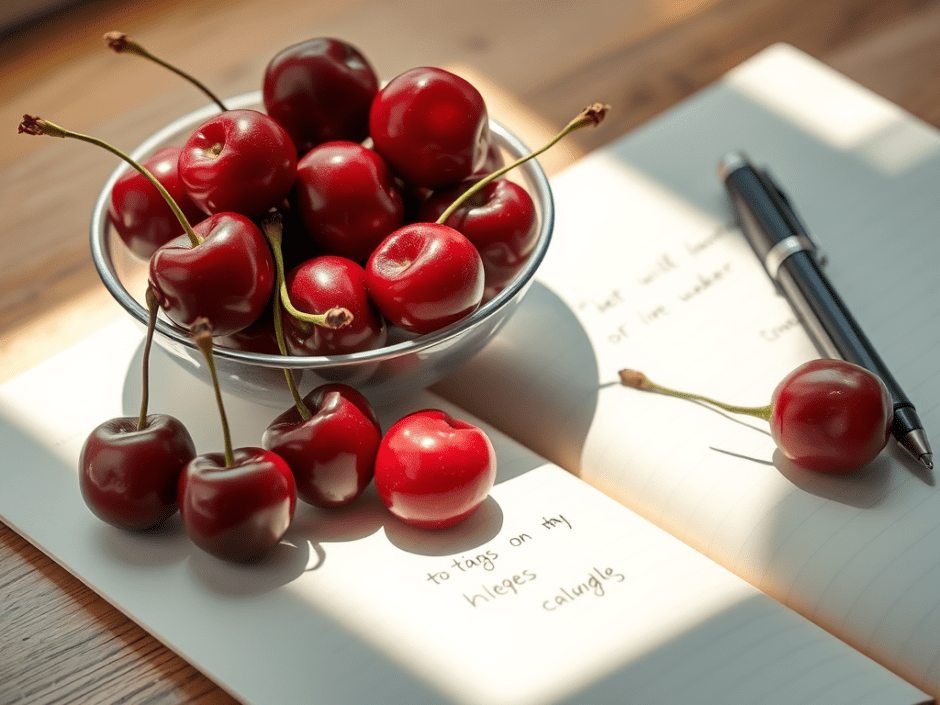
I try really hard not to read books by the same authors, so I can introduce myself to new voices. However, I couldn’t resist downloading Ann Patchett’s latest novel, Tom Lake, because I was curious about what it had to do with cherry orchards. The audio version is narrated by Meryl Streep. What a treat.

I’m a Meryl Streep fan and the narrator and protagonist of Tom Lake, the novel is a former actress. True, she is a different kind of actress, “a natural”, as she reveals in her story telling, unlike Streep who has portrayed a wide range of characters, but the protagonist has performed on stage and screen nevertheless. Streep does an impeccable job

What I truly want to recommend about the novel is its construction. So, writers, and aspiring writers pay attention. Not only does Patchett incorporate unpredictable twists and turns into the storyline, but she skillfully interweaves past and present.

The present setting is a farm near Traverse City Michigan during the Covid Pandemic. The past setting, that jumps back and forth into the storyline, is a summer stock theater also in Northern Michigan called Tom Lake. Part of the fun of this story is the gradual reveal of how present and past fit together.

I highly dislike predictable plotlines. Thus, I shout the praises for a novel that continued to surprise me to the very last page.

If you are a writer, continuing. on the journey of further refining your craft, you may be interested in the upcoming opportunity to join the Old Scratch Press Writing Collective or the opportunity to become published in Instant Noodles Literary Review. The Collective applications are available here and the deadline is closing soon.

The next theme subject for the Holiday/Winter Issue of Instant Noodles is Gravy. Write a true story, a poem or a piece of fiction related to Gravy. Keep it short. We prefer prose that is less than 500 words in length.

Back to my thoughts on the novel Tom Lake and not wanting to give any spoilers, I’m going to provide a WRITING PROMPT instead:
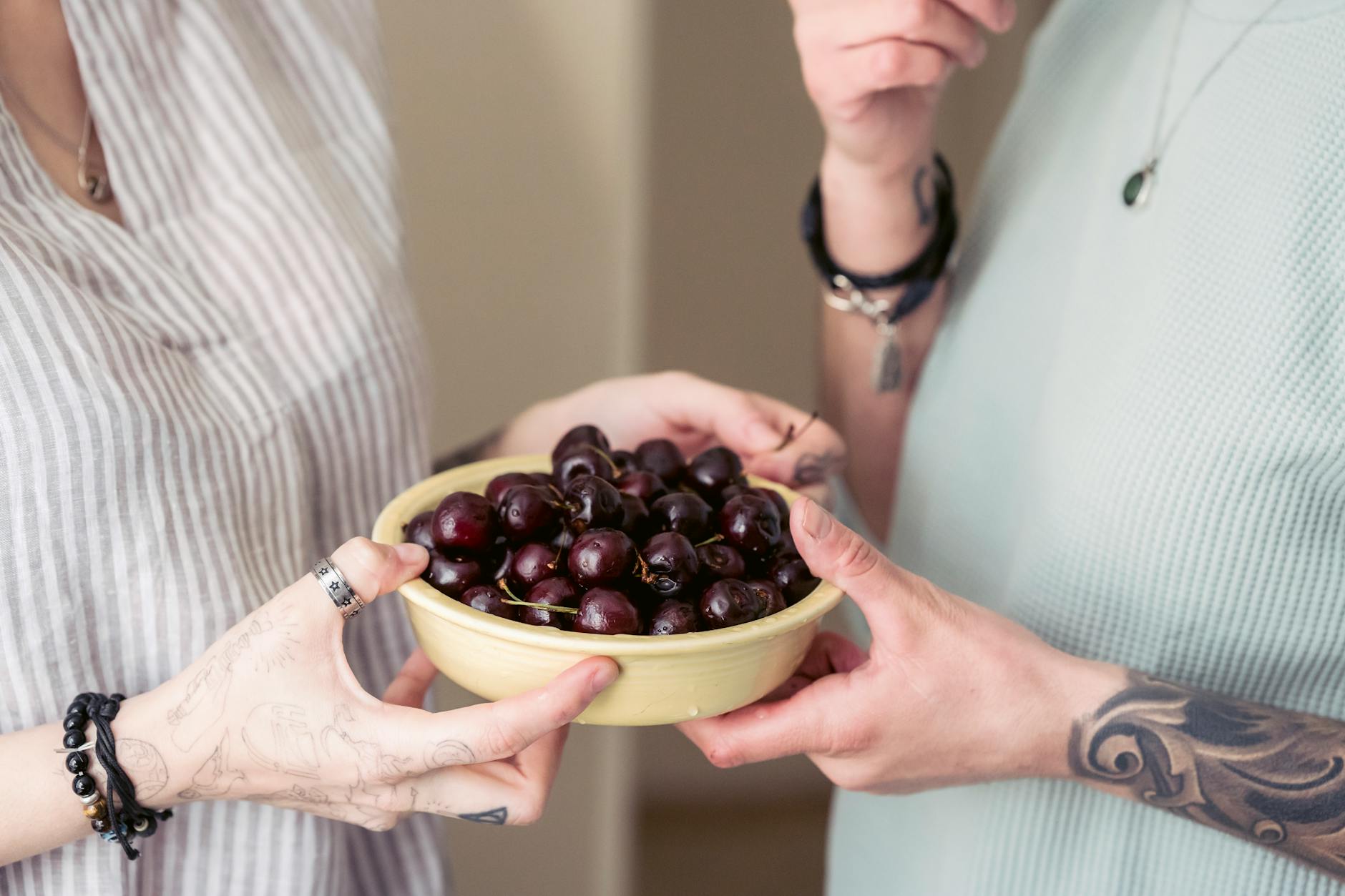
Photo by Sarah Chai on Pexels.com

IMAGINE your very first boyfriend or girlfriend, remember what they were like to be with and then write about what attracted you to them, what you admired. Now, write about their flaws.

Take a break. Maybe wait an hour or a day. Then imagine yourself with that person and what your life would be like. The third part to this writing assignment is to first think about what you would tell that person, if you had the opportunity, write them something—a letter, an essay, a poem—whatever genre form you choose. Do you have things you’d like to apologize about, or explain, or share?

Maybe this exercise will give you an idea for a story. Maybe not, but I guarantee you’ll learn something about yourself.

THANK YOU for reading. If you haven’t already signed up (it’s free!), please follow me on WordPress. Medium or Substack and visit my website Nadjamaril.com to read more of my work.

Nadja Maril is an award winning writer and poet who has been published in dozens of online and print literary journals and anthologies including: Lunch Ticket, Spry Literary Journal, Invisible City Literary Review, Instant Noodles and The Journal of Compressed Creative Arts. She is the author of Recipes From My Garden, published by Old Scratch Press (September 2024), a Midwest Review California Book Watch Reviewer’s Choice. An Anne Arundel County Arts Council Literary Arts Award winner, her work has been nominated for the Pushcart Prize and The Best of the Net. She has an MFA in creative writing from Stonecoast at USM. 
The Ugly Duckling: Lessons in Creative Rejection

by Nadja Maril, a Founding Member of the Old Scratch Press Short Form and Poetry Collective

I got a rejection this morning. I received the standard form rejection for a piece of creative writing: We appreciate the chance to read it. Unfortunately, the piece is not for us.

I get rejected all the time. It doesn’t matter how many times my work has been published, I’m not famous and editors have a multitude of tastes. What was interesting to me was the poem in question had already been published and well received.  This time I’d entered it into a contest that was also considering previously published work. Maybe they didn’t think it was prizeworthy, but I felt like they didn’t like the poem at all. This made me sad.

Then I thought of The Ugly Duckling, http://hca.gilead.org.il/ugly_duc.html by Hans Christian Anderson, one of my favorite fairy tales. The bird that emerges from a hatched egg is not at all like the other ducklings in the farmyard. He endures all kinds of painful ridicule until he discovers his true identity as a swan.

“He now felt glad at having suffered sorrow and trouble, because it enabled him to enjoy so much better all the pleasure and happiness around him; for the great swans swam round the new-comer, and stroked his neck with their beaks, as a welcome.

Photo by Ezgi Kaya on Pexels.com

Into the garden presently came some little children, and threw bread and cake into the water.”

I share this little story to remind all writers, particularly anyone just starting their journey, that it can take months or even years to find your audience. Yes, it could be you just don’t have the talent needed to “make it” as a writer, but tastes on what is good and worth publishing vary tremendously. An ugly duckling may also be a graceful swan.

We all have probably had the experience of seeing a movie or reading a book that got great reviews, but we found to be boring. We may have attended a party in someone’s home and overheard guests raving about a gorgeous painting or a rug that we secretly think is hideous.

People have different tastes. Where we grew up, where we’ve traveled, what our parents taught us, all influence what we value and how we judge things. The quest for diversity, when I wear an editor’s hat, is my desire to try to open my mind to a multitude of ways to see the world. But we tend to gravitate to the familiar because it’s comfortable.

A big word among editors is resonate. If a piece of writing resonates with the reader, it affects them emotionally and they may continue to think about that story or poem for days. That type of connection is something a writer longs to achieve.  But it’s unlikely to happen with every reader. We all have different histories. We’re all slightly different so what affects one reader may not necessarily affect another.

It may be that something you wrote is not ready for publication and needs more revision. On the other hand, it could be really good, but needs to find the right audience.

I can’t emphasize enough, writing groups and reading groups to gain different perspectives. A writer toils alone, but feedback is important.  I can’t emphasize enough the importance of beta readers, fellow writers with whom you can exchange work.

Fellow collective member Ellis Elliot wrote about writing groups back in January and you can read her blog here.  https://oldscratchpress.com/tag/writing-community/  and member Virginia Watts posted a blog in April that focused on critique groups  you can read here. https://oldscratchpress.com/author/virginiawatts/

Do not write in a vacuum. Find the approach that works best for you, but don’t give up on something you feel in your bones is important. If you’ve written something you’d like to share with the world, keep submitting. A rejection is a badge of honor. 

 It shows you’re out there swinging the bat and you’re still in the game.

About the author:

Nadja Maril is the author of Recipes from My Garden, Old Scratch Press, September 2024. Nadja Maril’s short stories, poems and essays have been published in dozens of small online and print literary journals and anthologies including: Lunch Ticket, Spry Literary Journal, Invisible City Literary Review, and The Journal of Compressed Creative Arts.She has an MFA in creative writing from Stonecoast at USM. A former newspaper columnist and magazine editor, she writes a weekly blog and you can visit her website at www.Nadjamaril.com.

Thank you for reading. Please sign up to follow us here on WordPress and on Facebook.

Exploring Horror Writing: A Q&A with R. David Fulcher

We learn from asking questions, and what better way to explore the craft of writing than through an engaging Q&A with an author! This month the author I’m interviewing is R. David Fulcher who happens to be a member of the Old Scratch Press Poetry and Short Form Collective.

R. David Fulcher is a talented author with multiple books to his name. His most recent work, a captivating short story collection titled THE PUMPKIN KING AND OTHER TALES OF TERROR, showcases his passion for storytelling. A writer of both poetry and prose, he deeply loves speculative fiction, particularly science fiction and horror. You can explore more of his work on his blog at Rdavidfulcher.com.

This is the perfect month—the season of ghosts and goblins—to delve into the exciting craft of writing horror. Most of my questions in this post will focus on the intriguing insights from THE PUMPKIN KING AND OTHER TALES OF TERROR. Let’s celebrate the art of writing together!

Q: Question

R: Response

R. David Fulcher

Q: As a writer, what is your primary goal when interacting with your readers?

R: As a horror writer, I have two primary goals: 1) Establish an “eerie” atmosphere; and 2) Elicit a physical response in the reader. Yes, I hope to stimulate the readers’ minds as well, but I primarily want to elicit fear – a racing pulse, the small hairs standing up on the back of your neck, a shiver in your spine – only good horror tales have this effect.

Q: Was there a specific moment you remember, perhaps an experience that spurred you on to want to write this particular book?

R: The Pumpkin King and Other Tales of Terror (and the follow-up volume “Asteroid 6 and Other Tales of Cosmic Horror”) is sort of a “greatest hits” collection of my short stories, so unlike a traditional novel the stories were developed over many years and inspired by many moments and experiences throughout my life.

To give a sense of the age of some of the stories, the title story “The Pumpkin King” first appeared in a small press magazine entitled Mausoleum back in 2001!  Of course, all the stories have been heavily revised in the new book.

To provide an experience that spurred me to write a particular story, “Castle Marienburg” was inspired by a tour of that very castle during a visit to Germany in college.

Q: As both a horror writer and a poet, how has Edgar Allen Poe influenced your work?

R: In a way, Edgar Allen Poe led me to my genre. My high school English teacher taught a semester on Poe, and I was hooked.  I started writing dark, gothic short stories that day after school and submitting them to small press magazines shortly thereafter.

Q: Writing poetry and writing prose, how has the two different types of genres influenced each other in your writing?

R: My love for both poetry and prose has caused me to experiment with inserting sequences of poetry into my fiction.  Some examples of my stories that include embedded poems are “A Night Out with Mr. Bones”, “The Faerie Lights”, and “All Across the Mountain”.

Q: Did you work alone or did you rely on some feedback from others?

R: I initially write on my own, but I really enjoy it when people close to me review my work and give feedback on it.  For example, my brother Dale helped proofread the manuscript for The Pumpkin King and Other Tales of Terror, and after reading my short story “Asteroid 6” my wife Lisa was really impressed with the tale, so I was inspired to title my second volume coming out this Fall as “Asteroid 6 and Other Tales of Cosmic Horror”.

Of course, my publishers David and Dianne are also tremendous editors and their feedback has been essential to my work.

Q:Do you imagine you are writing for a specific person or a certain audience?

R: No specific audience. I will say that my writing is almost always in the realm of the fantastic, so fans of my work must be able to “suspend their disbelief” and just go along for the ride, trusting me to take them to a magical, almost unbelievable ending, even if all the facts don’t line up with reality. I think fans of hard science-fiction (Isaac Asimov, etc.) will have a hard time enjoying my work.

Q: How do you approach revision?

R:This goes back to things I’d tell my former self.  I used to put down the pen (yes, I write my stories out long-hand!) after a long, intense burst of writing (sometimes an entire story in a single sitting), push the manuscript back on the desk with a smile, and say “Perfect!”

I would then immediately submit the tale for publication, only to receive rejection after rejection, never understanding why.

I’ve finally learned that being a professional writer means spending almost twice the amount of time revising your work as you spent writing it in the first place.  So I approach it like work. I allocate time for editing/proofreading, I set deadlines, and I hold myself to them. The difference between my original manuscript written after a burst of artistic inspiration and the manuscript after several rounds of revision is often night and day.

Q: If you could give advice to your younger self, what would you want to tell them?

R: I’d remind my younger self that the success of a book is up to me. I used to self-publish with AuthorHouse (formerly 1st Books) and believed that getting my book on Amazon and buying the publisher’s “marketing kit” would instantly propel me to fame and the bestseller’s list.  I have learned the hard way over the years this is not the case. Publishing the book is just Step 1.  The real work is in the marking and promotion.

Q: How did you find your publisher or did they find you?

R: David and Dianne of Devil’s Party Press (now Current Words Publishing) met at the Indie Lit Fest at Frostburg State University in Frostburg, MD.  At the time they were accepting submissions for one of their Halloween Party anthologies and provided me with the information.  I submitted and was accepted. The rest as they say is history! 

Q: Do you have a specific horror story favorite you’ve read?

R: Several novels by modern horror writers have had a tremendous influence on my writing.  They include “Something Wicked This Way Comes” by Ray Bradbury, “The Tommyknockers” by Stephen King, and “HIdeaway” by Dean Koontz.

In your own portfolio, a story you are particularly proud of?

R: I have a few favorites among my stories that don’t always correlate to fan favorites.  The first is “Castle Marienburg”, which was originally titled “Eyes in the Night”. A horror editor in the small press called it one of the best horror stories he had ever read, which was very satisfying. Others include “Spectra’s Masterpiece”, a science fiction story about AI published back in the early 2000’s well before AI became a commonplace topic, and “The Land Spider” in the way that it incorporates native American mythology.

Q: Do you have a “day job” to help pay for your writing habit, and it so, has it impacted in any way your writing?

R: During my day job I work as an IT Contractor.  My work with computers has spilled into my fiction with my stories “ELECTRIC”, where a boy becomes one with his home computer, and “The Witch Toaster,” where a group of programmers within an IT Department must battle supernatural forces.

Thank you for reading and visit the Old Scratch Press Website to learn more about our authors and upcoming publications.