APRIL is National Poetry Month. Time to Start Celebrating and Sharing Our Favorite Poems!

April is almost here, time for National Poetry Month, an entire month to celebrate poetry. Do you have a favorite poem or poet? Let us know and we’ll try to post a story about the poet or the poem on the Old Scratch Press website.

National Poetry Month was launched in 1996 by the Academy of American Poets as a way to promote educational events that encourage students to interact with poets and poetry.

Photo by Andrea Piacquadio on Pexels.com

One of these programs sponsored by the Academy of American Poets is called Dear Poet. Designed for students in grades five through twelve, participating students can write letters in response to poems this year ( 2024)  read online by Patricia Smith, Ed Roberston, Mara Pastor, John James, Nikky Finney, Nicole Cecillia Delgado, Marilyn Chin, and Chen Chen.The submission period for Dear Poet 2024 is now open until April 22, 2024.

If asked, who is my favorite poet it really very much depends on the time of year, time of day, and my mood because I was lucky to have grown up in a household filled with poetry books.

My mom was an English major and she enjoyed reading me her favorites. At a young age I listened to Gerald Manley Hopkins, T.S. Elliot, Robert Frost and Emily DIckinson.

Children love repetition, and when they discover a favorite story they like to have it read to them over and over again. Many Many times I’d ask to be read my two favorite poetry books in pre-school: A.A. Milne’s When We Were Very Young and Robert Louis Stevenson’s, A Child’s Garden  of Verses.

I remember reading to myself “The Swing” at age eight.

The Swing

Photo by Ksenia Chernaya on Pexels.com

By Robert Louis Stevenson (1850-1894)

How do you like to go up in a swing,

             Up in the air so blue?

Oh, I do think it the pleasantest thing

             Ever a child can do!

Up in the air and over the wall,

             Till I can see so wide,

River and trees and cattle and all

             Over the countryside—

Till I look down on the garden green,

              Down on the roof so brown—

Up in the air I go flying again,

              Up in the air and down!

I found all the poems in When We Were Very Young to be irresistible, but my constant favorite was the one about that difficult girl named Mary Jane.

Rice Pudding

By A.A. Milne ( 1882-1956)

What is the matter with Mary Jane?
She’s crying with all her might and main,
And she won’t eat her dinner – rice pudding again –
What is the matter with Mary Jane?

What is the matter with Mary Jane?
I’ve promised her dolls and a daisy-chain,
And a book about animals – all in vain –
What is the matter with Mary Jane?

What is the matter with Mary Jane?
She’s perfectly well, and she hasn’t a pain;
But, look at her, now she’s beginning again! –
What is the matter with Mary Jane?

What is the matter with Mary Jane?
I’ve promised her sweets and a ride in the train,
And I’ve begged her to stop for a bit and explain –
What is the matter with Mary Jane?

What is the matter with Mary Jane?
She’s perfectly well and she hasn’t a pain,
And it’s lovely rice pudding for dinner again!
What is the matter with Mary Jane?

If you have school children, don’t forget to check out all the poetry programs this month and whatever your age make a point of reading a poem a day. The Old Scratch Press is trying to make new poetry more available by publishing several chapbooks each year, so check out what’s in our catalogue and what is about to be released by following us here as well as following our Facebook page. Thank you for reading.

The Song of North Mountain by Morgan Golladay features Poetry and Art

Old Scratch Press is pleased to announce the upcoming release of The Song of North Mountain, by Morgan Golladay. Slated for May release, the book includes original artwork by the author to accompany her poems. The collection is now available for pre-order.

Founded in 2023, Old Scratch Press is a cooperative of poets and short-form authors who have come together to promote the publication and appreciation of poetry and short-form writing. The Song of North Mountain will be the third chapbook, published by the small independent press.

Break in the Field by Ellis Elliot was their first book, nominated for the National Book Award, followed by avante-garde wordsmith and artist Robert Fleming’s poetry collection, White Noir.

The Song of North Mountain, says Morgan, “is about my relationship with this Earth, focusing on one small mountain in one small chain, in one small part of this vast world.

This book is about a connection – my personal experience sitting in stillness on this mountain, as well as many other mountains. North Mountain is, for me, a symbol of my relationship with this Earth. The permanence of the land, regardless of how it changes; the cycles of life, the quiet continuation of change. It has been a long time since I personally was able to sit quietly and listen to the tree branches and leaves speak to each other. I cannot scale the trails as I once did. But the magic of place is still in my memory, whether it’s the rocks in the rivers, the trails on the mountain tops, or the joy of sharing ripe wild berries.

“…my personal experience sitting in stillness on this mountain, as well as many other mountains. North Mountain is, for me, a symbol of my relationship with this Earth.”

Morgan Golladay

The cover design, an original painting, and the 10 black and white interior illustrations were created specifically for the book. Pre-order availability on Amazon and on the Old Scratch catalogue page will be coming soon.

To keep up with the latest news, please follow our blog here for free and also follow us on Facebook. Later this year look for more chapbooks penned by Gabby Gilliam, Alan Bern, and Nadja Maril. Thank you for reading. Special note: the deadline for Instant Noodles LIterary Magazine submissions has been extended to the end of the month.

Poems to Read to Your Toddler

Looking for recommendations for what to read to your toddler? Poet, writer and former Children’s Librarian Alan Bern has a favorite:

“The Owl and the Pussycat” by Edward Lear, illustrated by James Marshall ; afterword by Maurice Sendak.

By Alan Bern

Edward Lear’s “classic love ballad, “The Owl and the Pussycat,” was voted the most popular British childhood poem in 2014, and has been set to music by everyone from Stravinsky to Laurie Anderson.” (”The Sense Beneath Edward Lear’s Nonsense” by Adam Gopnik, The New Yorker, April 16, 2018) If not as popular in the United States, “The Owl and the Pussycat” has spawned a number of illustrated picture books here. Of the many illustrated picture books of this absolutely brilliant poem for very young listeners and readers by Edward Lear, “The Owl and the Pussycat,” my top choice is the version by James Marshall. Next to Lear’s own illustrations for his poem, James Marshall’s illustrations, although he died before fully finishing them, are my favorites. Marshall creates wonderful characters that match so perfectly the sounds and voices of Lear’s poem. It is a nonsense poem, but it’s always made perfect sense to me and to so many. Young children will love the poem and the book; so will elementary school kids when they need to feel just a bit regressed. Heck, adults will love it, too. As I do.

Nonsense Suggesting Sense

As Gopnik explains later in his essay: “This gift for creating pathos without sacrificing absurdity is what makes “The Owl and the Pussycat” one of the greatest poems in the language… In “The Owl and the Pussycat,” meanings rush in:

They dined on mince, and slices of quince,

Which they ate with a runcible spoon…

Not even Humpty Dumpty could explain what a runcible spoon is. We know it by its verbal vibration, by its presence, by its sheer runcibleness… This gift for making something felt without having first to make it familiar is one that we later admire in Beckett. Nonsense suggesting sense is a familiar pattern. Nonsense suggesting the numinous is not.”

Artist/illustrator James Marshall

Personal Connections

And here’s a personal story to go with the poem. As a children’s librarian for many years, I was honored to serve on the American Library Association’s Caldecott Committee in 1992, and I suggested Marshall’s illustrations for this book as a finalist. It was not chosen, most probably because Marshall never quite finished the illustrations. I continued to love the book anyway, and I always wondered why the poem always spoke to me… when I read it or when I listened to another read it. Shortly after my Mom died, I found out why. One day while going through some letters, from my Mom to my Aunt, letters that my Aunt had kept from the early 1950s. My parents were on sabbatical leave (my Dad was a young professor) in Cambridge, England, and I was almost two. In one letter, my Mom wrote: ‘It’s wonderful to be here, Howard and I are having such a good time, and we love having our little boy with us; however, he does drive us crazy and asks over and over and over that we read “The Owl and the Pussycat” to him.’ That brought such a wide smile to my face: of course, I don’t remember it, but it now explains, in part, my continuing love for the poem. Thanks, Mom and Dad, and thank you very kindly, Mr. Edward Lear! And now I shall reach for my runcible spoon.

Thank you for reading . Remember, only a few days remain before the submission window for the spring issue of the literary magazine, curated by members of the Old Scratch Press Collective closes. Submit here –https://duotrope.com/duosuma/submit/instant-noodles-O0jFm

If you haven’t done so already, please follow our blog here for free and also follow us on Facebook.And coming soon is our newest chapbook release, The Song of North Mountain, by Morgan Golladay followed by chapbooks penned by Gabby Gilliam, Alan Bern, and Nadja Maril.

By the Time You Read This, You May Be Cooking Dinner

a photo of black radishes with a posterize filter from photoshop on them and a utensil crock behind them.
A photo I took, and then photoshopped a bit, of black radishes. I haven’t tried them yet. They’re as large as beets. Have you tried them?

As a human perhaps the toughest task I face is what the heck to feed me, and the spouse and child, each day for dinner. Breakfast everyone is on their own. Daughter, who has a light appetite, has a protein shake. Spouse, who has a sweet tooth, has some sort of flaky thing and coffee. I have several coffeeeeeees, and, well, I never know. Could be beans on toast. Coudl be leftover takeout. Could be tomatoes and olives in a bowl. Could be yogurt. Might be soup. Seldom is eggs.

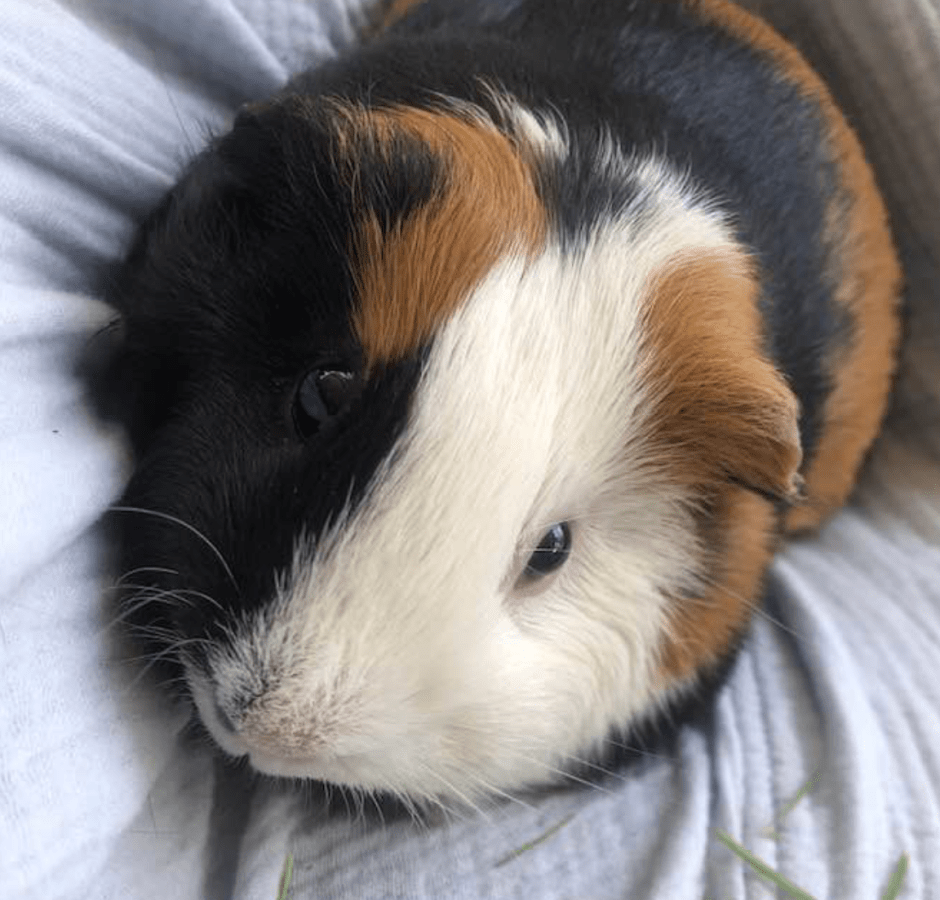
Lunch… do people eat lunch? I don’t always. The meals seem to run into each other, and usually lunch is the loser for me, because there is not time to have breakfast, do all the morning things, then do the work things, and fit in lunch too, before it’s time for dinner. But I love lunch. I love lentils and tuna, salads of any kind, rice and tofu, possibly more yogurt. Daughter eats the same meal every day, packed in a lunch bag, Annie’s Organic Star Pasta. We put it in a thermos, and, for about four years now, she eats it…. every. single. day. Dedication. Spouse eats, most likely, more sweet and flaky things. But me, I am most apt to have more coffee, and maybe chomp on some lettuce as I am adding some to the guinea pig cage.

Dinner. Dinner ie exasperating. You know it is! There are, if your life is anything like mine, too many people (and we are only three) who like too disparate things, and have crazy schedules, and it can be downright tough to get everything ready on time for everyone’s schedule, but the toughest of all is thinking WHAT?? what to feed everyone.

Enter poetry, short memoir, short short stories, and art, to save the day, as usual!

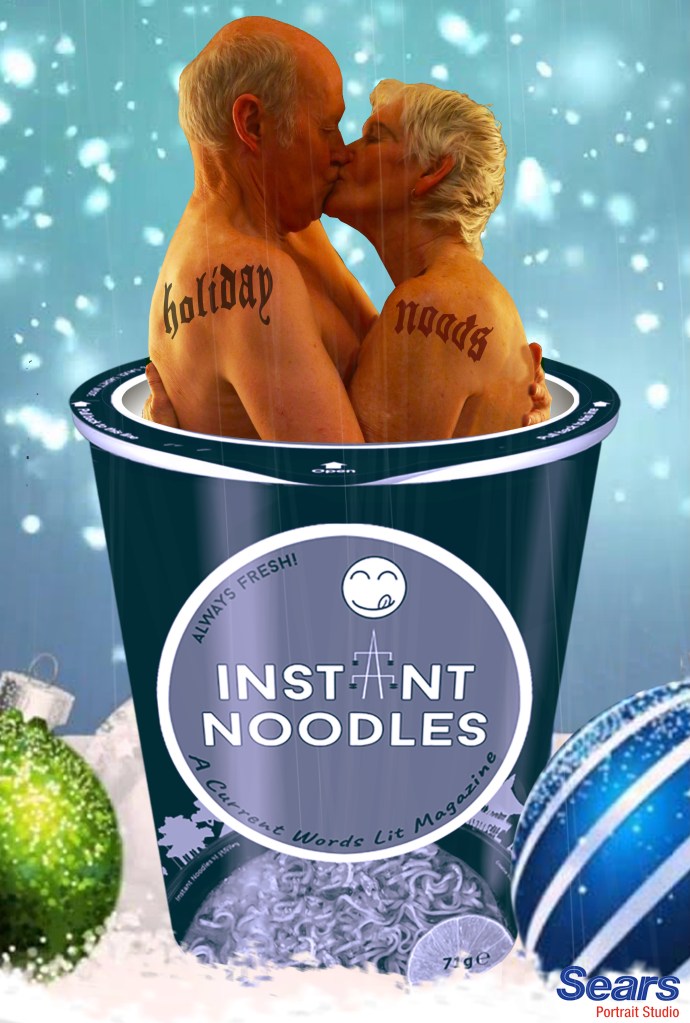
As you may know, if you have read this blog before. I started a lit mag, Instant Noodles (gee, named after food. Obsessed? Maybe…..), and now Old Scratch Press is running it. Up until this year I was the only one choosing the pieces, and, often I was moved to choose pieces about food. And I have to say, on a side note, getting to read so many wonderful entries has been nothing but a pleasure. I love Instant Noodles, and I have really enjoyed all the pieces, and all the art too. But, yes, it may be possible to make the assumption that I am slightly food… centric? Motivated? Obsessed? And I have often been charmed by pieces that relate to food in some way, even if it is only in my mind.

And so, in this post, I want to direct you to take a look at a few of them.

The first is the memory piece by John Johnson, “Moss Soup and Manicotti,” where he remembers his grandmother’s cooking, “For love in this family was measured by the number of courses served and the temperature in the kitchen….”

“If Only,” by Bethany A. Beeler, is a wonderful painting that looks, to me, like my dearest love, a steaming mug of coffee:

My second favorite edible may be butter… True!

“…the wood cylinder moans,
the paddles slow,
the moon is full,
the butter comes.”

Writes Cynthia Gallaher in her poem “Butter Eaters.”

I have long loved, “This Is Just to Say,” by William Carlos Williams, the famous short piece about plums. I also love “Stolen Plums,” by Benjiman B. White:

“…In a lonely field

Full of future and autumn

And a windblown harvest

                        Forced by growth

To thump against gravity

And hunger….”

And, finally, if you cannot wait a second longer to eat, you can meet me and Willie Schatz in “Molly’s Magic Kitchen,”

“Shit! I forgot to buy the fucking fresh tomatoes. But we have sun-dried. I’ll work around it.”

     Of course she will, as she did two days prior when she forgot the dough needed 24 hours to rise and recovered by scrubbing the pizza for pasta primavera or five days earlier when she left her cherished butter lettuce at the grocery and could atone for the evil deed only with a luscious chopped salad or two weeks ago when she entered her realm crowing about the terrific tuna casserole we were going to enjoy only to realize she had bought sardines and would have to settle for a salad Niçoise (that of course was not chopped liver).

So, for dinner tonight, I fell back on a childhood meal that both my mother and my father used to make from time-to-time when magic and inspiration failed them: leftover meat in gravy ladled over extra cripsy toast. I like to eat mine with hot cherry peppers, and each bite will have, if I’m lucky, meat, bread, gravy, a smidgeon of some sort of potato (I made scalloped), a little scrap of veg., and a small bit of hot cherry pepper, to cut through all that thick buttery gravy and make the moutful pop.

It’s pouring down cold buckets of icy rain where I am.

Wherever you are, may you be full of something nice and warm.

What’s for dinner at your place?

Old Scratch Press Co-Founder Anthony Doyle Needs Your Vote for Story of the Year!

Hi All… Dianne here.

Anthony Doyle’s narrative has been nominated for the SPILLWORDS story of the year!

unfolds a poignant tale of father and son, delving into the essence of masculinity and the relentless quest for validation.

For those familiar with my blog, you’ll recall that Anthony penned the novel HIBERNACULUM, a personal favorite of mine. The decision to publish it was driven by the sheer brilliance of his storytelling, which continues to captivate me.

Anthony is a dedicated independent writer striving to carve his niche, and recognition like this makes a significant impact. Therefore, I urge you, to cast a vote in support of Anthony!

I also nominated him as a write-in candidate for SPILLWORDS Author of the Year. Your backing would mean a great deal to him.

So please, if you have a moment, give Anthony a vote!

Does Winter Have a Sound? Writing Prompts and Publishing News

This week We are starting off our blog by sharing links for three new magazines on the scene that provide publishing opportunities for poets. Two of the publications, Only Poems and SWIMM Every Day, are on the publishing platform Substack. The third, New Verse News, is on Blogspot. Take note that Swwimm only publishes work by women. Although these magazines will try to entice you to support them by becoming a paid subscriber, you don’t have to subscribe to submit. But do read them, do decide whether they might be a good home for your work. Here are their links. Check them out.

Only Poems

SWIMM Every Day

New Verse News

Writing Prompt

It’s snowing, freezing in many places around the USA and around the world. I take a walk in my neighborhood and notice sound is different in a snowstorm. I hear the crunch of my footsteps, the thud of a snow clump falling from a tree branch, the scraping of a snow shovel. No car engines. No beeping construction trucks today. The morning is quiet.  

Sound, one of the six senses, is a powerful writing tool. This winter week in January, think about the following seven ways to integrate sound into your poetry and prose and then put them to use.

Rhyme

The matching of identical or similar word endings was once a requirement, in some poems. Now public opinion has swayed in the opposite direction, and some publications specifically will not publish rhyming poetry. It all depends, which way your mind bends. Rhyme can add emphasis and shading to both poetry and prose and can also elicit humor.  

Rhythm

The manipulation of syllabic patterns in a passage, can add intensity and create suspense. A line of poetry or prose, rhythmically pleasing is a joy to read. Writing prose, sentence by sentence, experiment with how different words and word sequences with varying syllable length can change the impact of your writing.

Consonance

The name sounds like consonants and its meaning refers to repetition of consonants — specifically, those at the ends of words: The injured steed stayed on the ground and I stroked his head.

Onomatopoeia

 A long fancy sounding term,onomatopoeia refers to words that are sound effects.  Can you find words that concurrently indicate meaning while also mimicking a sound? Here are two examples: The cock-a-doodle doo of the rooster woke me up at six. The clanging pots annoyed everyone.

Repetition

Repetition is the repeating of a word or phrase. When used adeptly it will create a structure or pattern that adds emphasis to the desired meaning of a passage. Remember “The Raven” by Edgar Allen Poe? The first stanza goes:

Once upon a midnight dreary, while I pondered, weak and weary,

Over many a quaint and curious volume of forgotten lore—

    While I nodded, nearly napping, suddenly there came a tapping,

As of some one gently rapping, rapping at my chamber door.

“’Tis some visitor,” I muttered, “tapping at my chamber door—

            Only this and nothing more.”

Alliteration

Alliteration, two or more words within a phrase or sentence that begin with the same sound, can add shading, emphasis and lyricism. Alliteration can be delivered two ways: consecutively delivered as with deep and daring or spread out within a sentence, promises can be painful and keeping up with party invitations practical.

Assonance

Assonance as with Consonance relies on repetition of a letter in the alphabet. In this case, instead of a consonant it is a vowel. The use of repetitive vowel sounds can be powerful in both a phrase or an entire paragraph. We who must not see the bees hiding in the trees look on bended knee for the lost honey.

We close with a winter poem by William Carlos Williams.

Blizzard

BY WILLIAM CARLOS WILLIAMS

1883-1963

Snow:

years of anger following

hours that float idly down —

the blizzard

drifts its weight

deeper and deeper for three days

or sixty years, eh? Then

the sun! a clutter of

yellow and blue flakes —

Hairy looking trees stand out

in long alleys

over a wild solitude.

The man turns and there —

his solitary track stretched out

upon the world.

Thank you for reading our bog. Follow us on Facebook and visit the Old Scratch Press page at Devils Party Press

Available now: Robert Fleming’s white noir. An eclectic, visual collection you won’t want to miss.

Political Poetry, New Year’s Resolutions & Publishing Opportunities

Writing poetry is a personal, introspective experience, a way to communicate our innermost feelings as art.

Enter politics. Around the United States, around the globe humans are in conflict. It doesn’t matter which side you agree with, we all have our opinions, even if our opinion is to try and ignore the chatter.

Poetry, for centuries, has been a way for artists to convey their opinions. Attend a political rally and you’ll hear speeches, chants, songs. A number of poems have become beloved “classics” and they just might inspire you to write a few of your own.

If We Must Die

By Claude McKay

Claude McKay, 1889-1948 was born in Jamaica who later moved to the U.S. and lived abroad for a number of years., was a key figure in the Harlem Renaissance, a prominent literary movement of the 1920s. His published work included poetry, essays, a short story collection and several novels.

If we must die, let it not be like hogs

Hunted and penned in an inglorious spot,

While round us bark the mad and hungry dogs,

Making their mock at our accursèd lot.

If we must die, O let us nobly die,

So that our precious blood may not be shed

In vain; then even the monsters we defy

Shall be constrained to honor us though dead!

O kinsmen! we must meet the common foe!

Though far outnumbered let us show us brave,

And for their thousand blows deal one death-blow!

What though before us lies the open grave?

Like men we’ll face the murderous, cowardly pack,

Pressed to the wall, dying, but fighting back!

*

Beat! Beat! Drums!

By Walt Whitman

Walt Whitman,1819-1892, is regarded as one of America’s important 19th century poets. During the Civil War, while working as a desk clerk in Washington D.C., he visited wounded soldiers in his spare time.

Beat! beat! drums!—blow! bugles! blow!

Through the windows—through doors—burst like a ruthless force,

Into the solemn church, and scatter the congregation,

Into the school where the scholar is studying,

Leave not the bridegroom quiet—no happiness must he have now with his bride,

Nor the peaceful farmer any peace, ploughing his field or gathering his grain,

So fierce you whirr and pound you drums—so shrill you bugles blow.

*

Beat! beat! drums!—blow! bugles! blow!

Over the traffic of cities—over the rumble of wheels in the streets;

Are beds prepared for sleepers at night in the houses? no sleepers must sleep in those beds,

No bargainers’ bargains by day—no brokers or speculators—would they continue?

Would the talkers be talking? would the singer attempt to sing?

Would the lawyer rise in the court to state his case before the judge?

Then rattle quicker, heavier drums—you bugles wilder blow.

*

Beat! beat! drums!—blow! bugles! blow!

Make no parley—stop for no expostulation,

Mind not the timid—mind not the weeper or prayer,

Mind not the old man beseeching the young man,

Let not the child’s voice be heard, nor the mother’s entreaties,

Make even the trestles to shake the dead where they lie awaiting the hearses,

So strong you thump O terrible drums—so loud you bugles blow.

London

By William Blake

William Blake, 1792-1827, was an English visionary painter, engraver and poet of modest means who lived in London. In June 1780, Blake found himself in the midst of a riot calling for an end to the war on the American colonies. Often in his work, he questioned the status quo of the traditional order of society.

 I wander thro’ each charter’d street,

Near where the charter’d Thames does flow. 

And mark in every face I meet

Marks of weakness, marks of woe.

*

In every cry of every Man,

In every Infants cry of fear,

In every voice: in every ban,

The mind-forg’d manacles I hear 

*

How the Chimney-sweepers cry

Every blackning Church appalls, 

And the hapless Soldiers sigh

Runs in blood down Palace walls 

*

But most thro’ midnight streets I hear

How the youthful Harlots curse

Blasts the new-born Infants tear 

And blights with plagues the Marriage hearse 

If one of your resolutions for 2024 was to write more poetry, there’s never a better time than now.

Maybe wake up a little earlier, take a mid-day break, any time of the day will do, but just write a first draft without censoring your thoughts. For tips on revisions and the submission process, click here.

And to get you a little more hyped, here are a few places that are open for submissions this month, January 2024.

Opportunities for Poets in January

Rock Paper Poem

https://rockpaperpoem.com/submit.html?fbclid=IwAR3hbef037kzvt0BbN3r64V2EDIZXtOrloRXAcvrIM8nkDR66_s0BOw7cSE

Poem Alone

https://poemalone.blogspot.com/?fbclid=IwAR2njw45cL46szMDrDeBWN9qv0UnZgEJT8bNLeicL-5stZdVv3_KqWKyMps

Beakful

https://beakful.blogspot.com/?fbclid=IwAR2dqEQh7rE2bq_StnfndCKnfSN4YmwoXQnCSeVdSLXbvmR-PhMJTqEU3xQ

Raven Poem Competition

Strix.  (no simultaneous submissions)

https://www.strixleeds.com/submit

Black Iris

https://www.blackirispoetry.com/new-page

Lascaux  Review

Acumen

https://acumen-poetry.co.uk/submissions-guide/

Allegro Poetry Magazine

https://www.allegropoetry.org/p/submit.html

Thank You for reading our blog. Don’t forget to sign up to follow us on Facebook and here on wordpress.

And She Makes Art Too!

cover of solstice featuring a chalk drawing of a farmhouse

WELCOME SOLSTICE! A NEW ANTHOLOGY

SOLSTICE
[Solstice: A  Winter Anthology Series Volume 3]
Curated by Terri Clifton; illustrated by Morgan Golladay

The seasonal anthology from Devil’s Party Press returns with an all-new volume of original works by the most unique voices in writing. Renowned author Terri Clifton (A Random Soldier) has assembled a unique collection of stories and poems that will delight even the toughest of critics. The collection includes twelve beautifully rendered, full-page images (including a full-color wraparound cover) by award-winning illustrator Morgan Golladay. Morgan is an Old Scratch Press founding member, and her poetry collection will be out from Old Scratch press in the coming months. This is a wonderful opportunity to view Morgan’s evocative art! Congratulations Morgan!

The book also features writing by Morgan, as well as writing by OSP founders Anthony Doyle and Ellis Elliot!

HAVE YOU BEEN TO THE BEWILDERNESS?

Bewilderness Writing is the brainchild of Old Scratch member Ellis Elliot. Ellis offers so many things for writers on her website. I look forward to the newsletter too, for all its tips and tricks. Check out her site. You’re going to love it!