Poems to Read With Your Kids

By Gabby Gilliam

So many people think poetry is serious and difficult to understand. But language can also be fun. There are so many poets that use words to delight readers with something unexpected. Most people are familiar with Shel Silverstein, whose poems are light-hearted, but there are so many poems out there that both you and your kids will love for their silliness.

Many know Judith Viorst for Alexander and the No Good, Horrible, Very Bad Day, but she also wrote this fun poem about a mom who really doesn’t want a pet.

Photo by Lum3n on Pexels.com

Mother Doesn’t Want a Dog

by Judith Viorst

Mother doesn’t want a dog.
Mother says they smell,
And never sit when you say sit,
Or even when you yell.
And when you come home late at night
And there is ice and snow,
You have to go back out because
The dumb dog has to go.

Mother doesn’t want a dog.
Mother says they shed,
And always let the strangers in
And bark at friends instead,
And do disgraceful things on rugs,
And track mud on the floor,
And flop upon your bed at night
And snore their doggy snore.

Mother doesn’t want a dog.
She’s making a mistake.
Because, more than a dog, I think
She will not want this snake.

https://poets.org/poem/mother-doesnt-want-dog

One of the first books I ever remember buying for myself was The New Kid on the Block by Jack Prelutsky, so it’s no surprise that a poem by him makes this list. I was in elementary school, and must have used birthday money. I was so excited about getting the book that I started reading it in the car on the way to a different store. While I loved the poems, I also discovered reading makes me extremely carsick. It was not a pleasant birthday lesson, but I treasured the book anyway. Here’s a great example of the fun poems in that book.

Photo by Ksenia Chernaya on Pexels.com

Be Glad Your Nose is on Your Face

by Jack Prelutsky

Be glad your nose is on your face,
not pasted on some other place,
for if it were where it is not,
you might dislike your nose a lot.

Imagine if your precious nose
were sandwiched in between your toes,
that clearly would not be a treat,
for you’d be forced to smell your feet.

Your nose would be a source of dread
were it attached atop your head,
it soon would drive you to despair,
forever tickled by your hair.

Within your ear, your nose would be
an absolute catastrophe,
for when you were obliged to sneeze,
your brain would rattle from the breeze.

Your nose, instead, through thick and thin,
remains between your eyes and chin,
not pasted on some other place—
be glad your nose is on your face!

https://poets.org/poem/be-glad-your-nose-your-face

My son’s friend introduced me to the next poet. Chris Harris plays with words in a way that will delight both adults and kids alike. He claims he’s not very good at writing poems, but I think his I’m Just No Good at Rhyming books are delightful. I even used one as an example when we discussed humorous poetry in the Teen Poetry Workshop I facilitate at my local library.

By Chris Harris

We all seem to have an ingrained fear of the dark and what might be prowling in it. In this poem, Innarenko takes the reader on a fun adventure as multiple scenarios are conjured to explain where a strange noise might be coming from. The epiphany at the end is a delightful finale.

Home Alone

© Innarenko

Published by Family Friend Poems on 02/12/2020

My family’s gone; there’s no one home.
It’s only me who’s home alone.
I shouldn’t hear a single squeak.
There shouldn’t even be a creak,

So what’s that thumping that I hear?
It must mean one thing: death is near.
“You’re an adult, you’ll be just fine.”
I tell myself as I dial “nine”…

Was that a knock upon the door?
My heart beats faster than before
I know it’s closed; I’ve checked the lock.
At least my killer knows to knock?

I cannot sleep, though I’m in bed.
I’ve made amends with God instead.
If He decides that it’s my time,
Then this will be my very last rhyme.

I hear a bang and then a break.
My head shoots up; there’s no mistake!
I turn my music volume high
So I won’t hear the way I die.

I run upstairs, desk lamp in hand.
Over my head, ready to land,
And right before it did just that…
I remembered – I have a cat.

Those who aren’t familiar with Brian Bilson’s work are in for a treat. I will caution that some of his poems, though very fun, may not be suitable to read with children. This visual poem, though, is spatially interesting and shows poetry can do unexpected things. It makes me smile every time I come across it. If you enjoy this poem, I recommend checking out more of his work. Click below on the word “needles”.

Thank you for reading. Which poems are your favorite children’s poems. We’d like to know. We welcome guest posts. Please follow Old Scratch Press by subscribing to this blog for FREE and following us on Facebook. Learn more about Collective member Gabby Gilliam by visiting her website.

What Books Are You Reading? Author Gabby Gilliam Shares Five of Her Favorites

By Gabby Gilliam

Author of Drumming for the Dead, Black Hare Press and founding member of Old Scratch Press

Every year, I set a goal of reading 52 books before the year ends. In 2023, I went well above my goal, and read 74 books. I’ve made it a personal goal to read more collections of poetry, and I think that helped boost my number.

One of my top reads for the year was a collection of poems, Unshuttered, by Patricia Smith. An ekphrastic anthology of poems inspired by vintage photographs of Black men, women, and children the author collected, Smith’s poems give the photographs’ subjects a voice. The collection is powerful. I highly recommend it.

 The remaining books in my top five are fiction, and have at least a taste of magic in them.

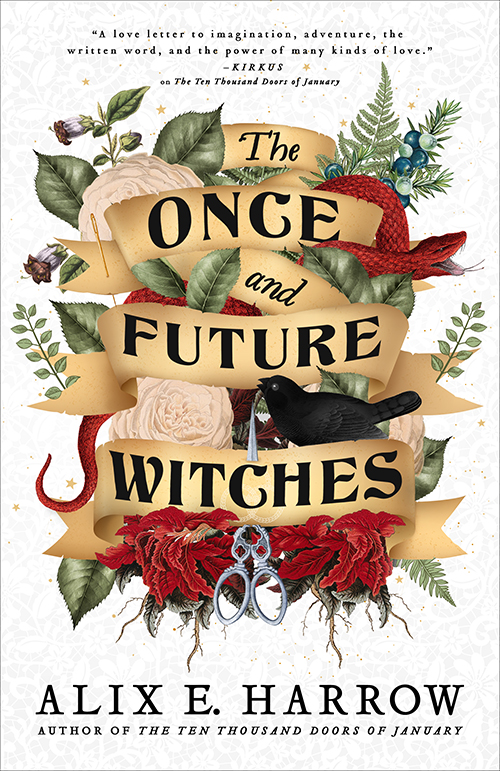
When I was younger, one of my favorite Disney films was The Sword in the Stone. In high school, I read The Once and Future King by E.B. White as an assigned novel for English class. So, when I came across The Once and Future Witches by Alix E. Harrow, I borrowed it from my local library.

I wasn’t disappointed. There’s magic and wit and the tangled storylines of three sisters that slowly converge. The youngest sister, Juniper reminds me of Granny Weatherwax from Terry Pratchett’s books (who is one of my favorite witches of all time). In Once and Future Witches, Harrow gives us a feminist adventure story full of magic, and I devoured every page of it.

I only picked up Nettle & Bone by T. Kingfisher because I was trying to read all of the Hugo Award nominees. I didn’t expect much since it’s such a short read. The heroine of the novella is given three impossible tasks and, through stubborn determination, begins to make her way through them. What I liked about this fairy tale is that the princess didn’t wait to be saved by anyone. She didn’t even want to marry a prince. Instead, she does her best to kill one.

I’m more than a little late to the party, but I started the Wheel of Time series by Robert Jordan last year. I decided to give the first book a try after watching the first season of the television series. The show left me with some questions that I hoped the book would answer. I was right. And the book was so good that I decided to dive into the rest of the series, even though I suspect it will be a few years before I make it through them all since the hold list for the audiobooks is rather long.

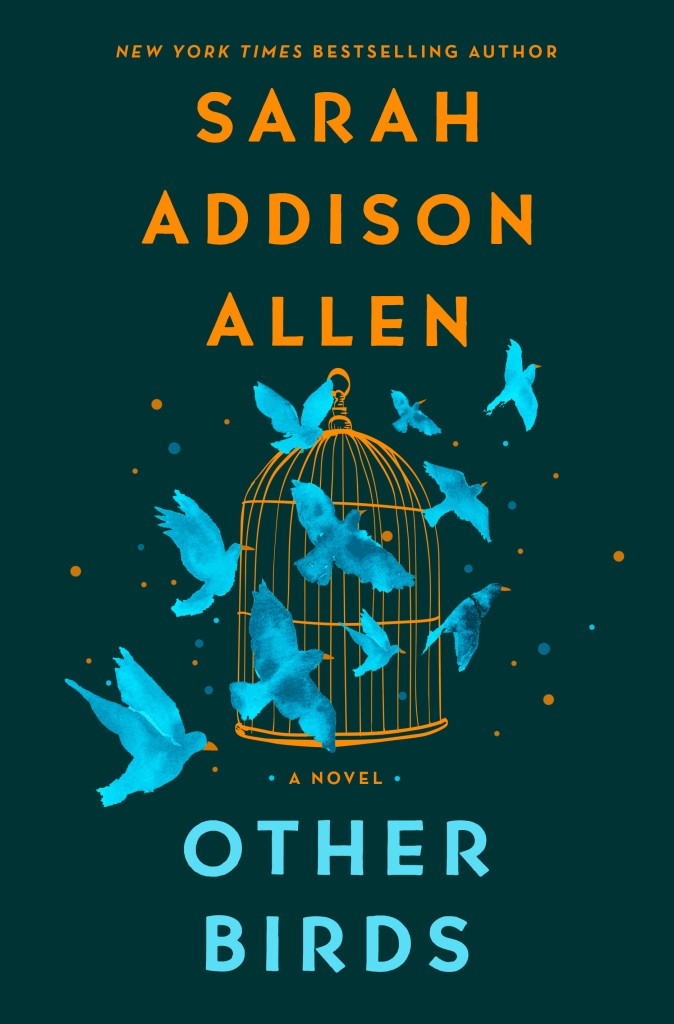
My favorite read of the year came from one of my favorite authors, Sarah Addison Allen. Allen is a master of magical realism. While her novel, Other Birds, wasn’t my all-time best-loved book of hers (that honor belongs to Garden Spells), I still loved this story of complicated grief and the bond formed between found family.

I’ve set a goal of 52 books again for 2024. I’m off to a slow start, but I really enjoyed Fourth Wing by Rebecca Yarros (I recommend the Graphic Audio version. A full cast really enhances the experience.).

The year is still young, and I’m looking forward to chipping away at my growing to-be-read list. What was the last great book you read? I’d love to add it to my list! Please leave a comment on this post on the Old Scratch website or on our Old Scratch Facebook page.

Instant Noodles with a Side of Love for Valentine’s Day

Instant Noodles is an online lit magazine formerly curated by me, alone, and now curated by Old Scratch Press.

For Valentine’s Day, here are a few of my favorite poems about love from the magazine, pieces that I chose for publication.

FIRST MORNING AFTER MOVING ~ Greg Hill

My bureaus and dressers,
all crossed with blue tape,
a sea of cubed cardboard
spilling out into the hallway
and into all the other rooms.

Where is my bedside table?
Why does the morning smell
like fresh coats of paint, 
and why a sound
like a parade of identical cars?

My muscles still burn
from the hours of unpacking
from yesterday’s move.

Where is my toothbrush? My comb?

Then I see you,
tranquil and sleeping
and I know
I am home.

Greg’s poem, so sweet, simple about the things that are not fireworks about love, but make us exceedingly happy all the same.

MUTUAL INTERDIGITATION ~ R. Gerry Fabian

We were linked long before we met.
We have been down the same wrong path
at different times with the same rancid rogues.
When we met, I was coming out the wrong side;
you were still there floundering hopelessly.
At first, I didn’t pay you much notice at all.
The death of a dear mutual friend
brought us together at the freshly dug gravesite.
We are good, now, together, walking that tightrope
of ‘fall off the wagon at any time’ good
that depends so much on breathing love’s balance.

Gerry’s poem, about all the ways that love connects us, adds wholeness to our lives, even as we get past the frenzy of youth.

THE BARBARIANS HAD ACTED REGRETTABLY ~ Colin James

My son found the dragon’s tooth amongst
some rocks and fine white sand. He washed
it clean in a tidal pool. A Hermit crab stole it,
scraping the tip then sucking the remnant root.
The boy threw some sand and stole it back.
He climbed up on the rocks with me to sit.
We examined the hard fire, inner blackened.
Easily sold to tourists later, paying us much more
to guarantee their safe return passage .

Colin’s poem I always took to be about parental love: how our children absolutely make us filled and absorbed and imaginative and plain old grateful to be in their magical world.

UNDER KEEL ON LITTLE DOE LAKE ~ Robert Fleming

moon over wooden hull
us under birch wood
left hand forward 4 ur bow
thwarted by ur stern pry stroke
back stroke 2 ur gunnel
seeking ur back sweep stroke
u j-stroke away
non-swimming clothes on
prefer clothes off
cross draw stroke 2 ur dock
u eskimo roll out
ur knee on deck
solo under skin
draw stroke my wood

Robert, a member of Old Scratch Press, may correct me, but I always took this to be a poem at the beginning, heady stage of love, and so much about the abandonment that I always feel in the time of transition from spring to early summer.

WISTFUL DREAM ~ Bethany A. Beeler

Betahany’s poem always seemed like lust to me, which is beefy and delicious, in my view, like biting into a huge strawberry covered in dark, dark chocolate, and certainly an important part of romantic love.

Lastly, on this hopefully gentle day that comes to you with a hug, or, perhaps a kiss, another from Greg Hill, possibly my favorite poem submitted to Instant Noodles to date. Happy Valentine’s Day. May you find love, or love find you!

SATURDAY ~ Greg Hill

the day
starts in bed 

we make

coffee and 
something from milk

flour eggs
water

in the shower
warming us together

after breakfast

you brush 
a dollop of shampoo

on my nose
as I rinse my hair

even the nothing
you do

is something
to me

Robert Fleming’s Valentine’s Day Advice

By Robert Fleming

On Valentine’s Day, write a sonnet. A sonnet is for love. In the 13th-century, the sonnet was invented by Giacomo da Lentini, a member of the Italian Court of the Holy Roman Emperor Frederick II in Palermo, Sicily.

William Shakespeare popularized the sonnet. William lived 1564–1616 in Stratford-upon-Avon, Warwickshire, England.

The original sonnet is a fourteen-line poem in iambic pentameter with endline rhyme with the sequence: ABAB CDCD EFEF GG. The last two lines, GG, are a change, called a Volta. I still confuse iambic pentameter with the Olympic Pentameter event where a shepherd guides lambs over hurdles.

Perhaps, William’s most famous sonnet is #18: Shall I compare thee to a summer’s day?

Shall I compare thee to a summer’s day?

Thou art more lovely and more temperate:

Rough winds do shake the darling buds of May,

And summer’s lease hath all too short a date;

Sometime too hot the eye of heaven shines,

And often is his gold complexion dimm’d;

And every fair from fair sometime declines,

By chance or nature’s changing course untrimm’d;

But thy eternal summer shall not fade,

Nor lose possession of that fair thou ow’st;

Nor shall death brag thou wander’st in his shade,

When in eternal lines to time thou grow’st:

                So long as men can breathe or eyes can see,

                So long lives this, and this gives life to thee.

Where is William’s poetry title? Don’t poems have to have a title? Some poets don’t give titles and when published the publisher makes the first line the title.

As a poet for fifty years, I have written many sonnets and teach a two-hour workshop on how to write a sonnet. I am proud, at the end of my workshop, many participants write a first draft and complain they are exhausted. Beware of the sonnet sweat.

My writing which responds to William’s sonnet #18:

William does this frock make me look fat?

Why should I compare you?
Shall my rating do good?
Will it make me want

you more than what I had,

nor worse than what I can’t get?
Your score will be my score.

Shall there come a day when you won’t ask?
Oh no, no, not that frock, take it off!

Robert, your poem does have a title, but only nine lines. It is not a sonnet. As a tribute to Cole Porter, who composed Anything Goes in 1934, the less taxing American sonnet was invented which is a fourteen-line poem that does not demand iambic pentameter nor endline rhymes. If the American sonnet’s fourteen lines is still too sweaty for you, write a monostich-1 line poem: I Love You.

The author, Robert Fleming is a founding/contributing editor of Old Scratch Press (OSP). To read more of Robert’s work:

What I Learned from Poet and Essayist Artress Bethany White

By Virginia Watts

Artress Bethany White is a poet and essayist I met during a summer writing conference at Rosemont College. I was fortunate enough to attend her poetry workshop where I learned so much about the craft and art of poetry. Artress is the author of the essay collection Survivor’s Guilt: Essays on Race and American Identity (New Rivers Press, 2020) and My Afmerica: Poems (Trio House Press, 2019). Her work is unique and unflinching. She is forging new ground. It is at one turn poetry that leaves you dead in your tracks and in another historical documentation. She is an unfailingly brave writer willing to wade into the complex racial dilemma of our country. She is the kind of writer that can make a difference. Read one of her poems or essays and you will want to read them all. Then you will never forget them.

Her personal story adds another layer of interest to her work. She herself is descended from one of the largest slaveholding families in America and she is raising her own transracial family. What I remember about her most is how encouraging she was to her students, fledging poets. She had a way of making us believe in ourselves and that we too had something importantly human to say.

Pancakes Keep Coming to Mind: A Sestina Commemorating the Demise of Aunt Jemima on the Pancake Box 

BY ARTRESS BETHANY WHITE

June 2020

I invoke my great-great-grandmother’s name on exhaled breath,

the vowels arranging themselves in shorts and longs,

syntax and semantics duking it out.

Mima, that could have been birthed from an African tongue.

Enee, meenemimamo, respectable marriage of village,

continent, and town, without a diabolic Je like a pendulum swing

to the scarlet kerchief blooming in my brain, pancakes on my tongue,

unwilling to utter that name over black families now living out

their American dream. Like reinvention, how the heart longs

to reconcile past and present, within a village

raising a newer child clawing out of epicureal stink to swing

free from stereotypes, auction block, and Aunt Jemima’s mealy breath.

Instead, pancakes every time my forebears’ syllabics touch my tongue.

Mima sans  Je, not Meema, or Mi’ma[e], coy notes stepping out

of a history where grits and flapjacks were birthed in a village

to skirt my teeth or strut ’cross my lips on exhaled breath,

that ample bosom and backside mocking me, she who longs

to rear up and bark Breakfast! and Brunch! on a revolving door swing.

You are not my Auntie or Aunt pronounced like the creature crawling out

over cadavers of supermarket boxes choking my breath

on a collapsed lung of shady marketing to keep bodies bound in a village-

cum-ghetto of stranger than strange imagined black things, girl-on-a-swing

dreams culled from western imaginings of what that colored gal longs

to do over a hot stove, flipping and flapping ’cause the griddle got her tongue.

Names as revenue monikers on revue, line dancing on a hip swing.

Oh, how daring to cogitate on destiny, each syllable a village

of preferred ubiquity, once the Ghanaian name Afua translated out

to first girl child born on a Friday, sonic genealogy on the tongue,

but changed to post-baptismal Mary, a rigid catechism of colonial breath

blowing across centuries of arid longing.

Food me, fooled me, sold me, told me, held me, bled me, tongue

afire with dreams of love, life, and freedom a profusion of days swinging

between something and more. My village compound, my village

quarters, my village a city block, each century censuring my breath.

What I seek is what I speak, not handed a script of nostalgic longing.

Jemima wrenched from shelves, but a litany in my brain still playing out.

Ain’t nothing but a jonesing to tweak culinary history so my village

knows my branches are thick, swaying and swinging with longing and breath,

rolling descendancy off my tongue, blessing consumption out. 

Source: Poetry (May 2021)

Thank you for reading this week’s blog post from Old Scratch Press, written by collective member VIrginia Watts. Her collection of short stories Echoes From the Hocker House just won the Bronze Feathered Quill Book award fro Best Anthology. You can purchase a copy here.

Bam, Crack, Klunk: Why Sound Matters in Poetry

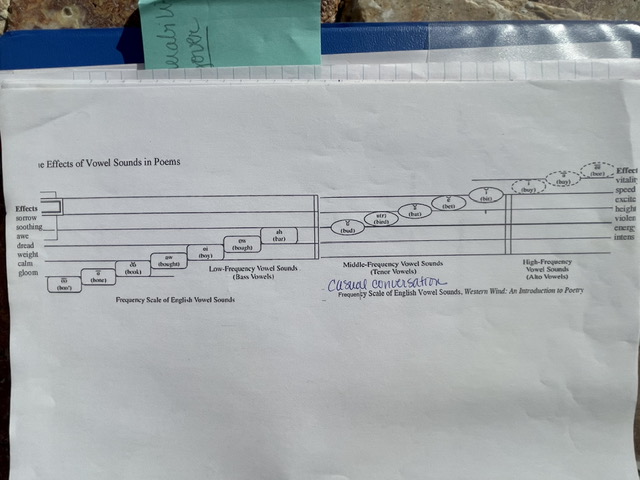
“Bam!”, “Crrraack!”, “Klunk!” are just a few on the list of words used in the 1960’s TV show Batman, usually held within a colorful cartoon bubble. We immediately conjure what is trying to be conveyed, and part of that understanding is because of the sounds of these particular words. In any writing, the sounds of words can produce not only feelings, but physical effects on the body. In poetry specifically, sounds become even more important because words must be carefully chosen in order to “say the most with the least”. We must pay attention to the vowels, consonants, stresses, etc. in the words we choose dependent on the idea or tone we are trying to convey.

Take a look at the information about vowel and consonant sounds pictured above, courtesy of Cathy Smith Bowers, Queens University., (excuse my notes and shadow!)Then, look at these two examples below. Read them aloud and ask yourself if it feels like flow and glide, or stop and start? Is there an emotion or physical reaction you can sense as you read?

I caught this morning morning’s minion, king-

            dom of daylight’s dauphin, dapple-dawn-drawn Falcon, in his

            riding.

                                                -from The Windhover,by Gerard Manley Hopkins

We real cool. We

Left school. We

Lurk late. We

Strike straight.

                                                –from We Real Cool by Gwendolyn Brooks

That was pretty easy, huh? Now, go to one of your favorite poems and see if you can see how the word choices the poet made regarding sound serve the tone, subject matter, and larger themes of the poem. Then, look at one of your own.

Sound is just one of the many devices poets use, and it is a powerful one. A poem that uses short lines with high-frequency vowel sounds will sound very different than one with long lines using low-frequency sounds. And remember, the importance comes from not just the reaction to the words in your ears, but also the subsequent emotion or felt reaction in the body, and there is music to be found in all of them.

Thank you for reading. Don’t forget to sign up to follow our blog as well as follow us on facebook.

Ellis is author of the National Book Award nominee poetry collection Break in the Field published by Old Scratch Press.

Old Scratch Press Co-Founder Anthony Doyle Needs Your Vote for Story of the Year!

Hi All… Dianne here.

Anthony Doyle’s narrative has been nominated for the SPILLWORDS story of the year!

unfolds a poignant tale of father and son, delving into the essence of masculinity and the relentless quest for validation.

For those familiar with my blog, you’ll recall that Anthony penned the novel HIBERNACULUM, a personal favorite of mine. The decision to publish it was driven by the sheer brilliance of his storytelling, which continues to captivate me.

Anthony is a dedicated independent writer striving to carve his niche, and recognition like this makes a significant impact. Therefore, I urge you, to cast a vote in support of Anthony!

I also nominated him as a write-in candidate for SPILLWORDS Author of the Year. Your backing would mean a great deal to him.

So please, if you have a moment, give Anthony a vote!

Does Winter Have a Sound? Writing Prompts and Publishing News

This week We are starting off our blog by sharing links for three new magazines on the scene that provide publishing opportunities for poets. Two of the publications, Only Poems and SWIMM Every Day, are on the publishing platform Substack. The third, New Verse News, is on Blogspot. Take note that Swwimm only publishes work by women. Although these magazines will try to entice you to support them by becoming a paid subscriber, you don’t have to subscribe to submit. But do read them, do decide whether they might be a good home for your work. Here are their links. Check them out.

Only Poems

SWIMM Every Day

New Verse News

Writing Prompt

It’s snowing, freezing in many places around the USA and around the world. I take a walk in my neighborhood and notice sound is different in a snowstorm. I hear the crunch of my footsteps, the thud of a snow clump falling from a tree branch, the scraping of a snow shovel. No car engines. No beeping construction trucks today. The morning is quiet.  

Sound, one of the six senses, is a powerful writing tool. This winter week in January, think about the following seven ways to integrate sound into your poetry and prose and then put them to use.

Rhyme

The matching of identical or similar word endings was once a requirement, in some poems. Now public opinion has swayed in the opposite direction, and some publications specifically will not publish rhyming poetry. It all depends, which way your mind bends. Rhyme can add emphasis and shading to both poetry and prose and can also elicit humor.  

Rhythm

The manipulation of syllabic patterns in a passage, can add intensity and create suspense. A line of poetry or prose, rhythmically pleasing is a joy to read. Writing prose, sentence by sentence, experiment with how different words and word sequences with varying syllable length can change the impact of your writing.

Consonance

The name sounds like consonants and its meaning refers to repetition of consonants — specifically, those at the ends of words: The injured steed stayed on the ground and I stroked his head.

Onomatopoeia

 A long fancy sounding term,onomatopoeia refers to words that are sound effects.  Can you find words that concurrently indicate meaning while also mimicking a sound? Here are two examples: The cock-a-doodle doo of the rooster woke me up at six. The clanging pots annoyed everyone.

Repetition

Repetition is the repeating of a word or phrase. When used adeptly it will create a structure or pattern that adds emphasis to the desired meaning of a passage. Remember “The Raven” by Edgar Allen Poe? The first stanza goes:

Once upon a midnight dreary, while I pondered, weak and weary,

Over many a quaint and curious volume of forgotten lore—

    While I nodded, nearly napping, suddenly there came a tapping,

As of some one gently rapping, rapping at my chamber door.

“’Tis some visitor,” I muttered, “tapping at my chamber door—

            Only this and nothing more.”

Alliteration

Alliteration, two or more words within a phrase or sentence that begin with the same sound, can add shading, emphasis and lyricism. Alliteration can be delivered two ways: consecutively delivered as with deep and daring or spread out within a sentence, promises can be painful and keeping up with party invitations practical.

Assonance

Assonance as with Consonance relies on repetition of a letter in the alphabet. In this case, instead of a consonant it is a vowel. The use of repetitive vowel sounds can be powerful in both a phrase or an entire paragraph. We who must not see the bees hiding in the trees look on bended knee for the lost honey.

We close with a winter poem by William Carlos Williams.

Blizzard

BY WILLIAM CARLOS WILLIAMS

1883-1963

Snow:

years of anger following

hours that float idly down —

the blizzard

drifts its weight

deeper and deeper for three days

or sixty years, eh? Then

the sun! a clutter of

yellow and blue flakes —

Hairy looking trees stand out

in long alleys

over a wild solitude.

The man turns and there —

his solitary track stretched out

upon the world.

Thank you for reading our bog. Follow us on Facebook and visit the Old Scratch Press page at Devils Party Press

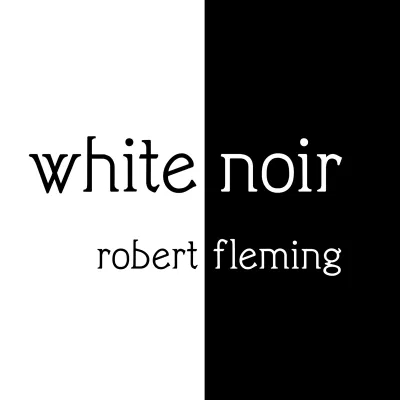
Available now: Robert Fleming’s white noir. An eclectic, visual collection you won’t want to miss.

Political Poetry, New Year’s Resolutions & Publishing Opportunities

Writing poetry is a personal, introspective experience, a way to communicate our innermost feelings as art.

Enter politics. Around the United States, around the globe humans are in conflict. It doesn’t matter which side you agree with, we all have our opinions, even if our opinion is to try and ignore the chatter.

Poetry, for centuries, has been a way for artists to convey their opinions. Attend a political rally and you’ll hear speeches, chants, songs. A number of poems have become beloved “classics” and they just might inspire you to write a few of your own.

If We Must Die

By Claude McKay

Claude McKay, 1889-1948 was born in Jamaica who later moved to the U.S. and lived abroad for a number of years., was a key figure in the Harlem Renaissance, a prominent literary movement of the 1920s. His published work included poetry, essays, a short story collection and several novels.

If we must die, let it not be like hogs

Hunted and penned in an inglorious spot,

While round us bark the mad and hungry dogs,

Making their mock at our accursèd lot.

If we must die, O let us nobly die,

So that our precious blood may not be shed

In vain; then even the monsters we defy

Shall be constrained to honor us though dead!

O kinsmen! we must meet the common foe!

Though far outnumbered let us show us brave,

And for their thousand blows deal one death-blow!

What though before us lies the open grave?

Like men we’ll face the murderous, cowardly pack,

Pressed to the wall, dying, but fighting back!

*

Beat! Beat! Drums!

By Walt Whitman

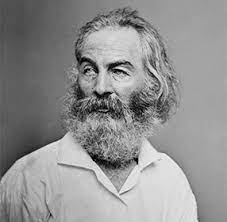
Walt Whitman,1819-1892, is regarded as one of America’s important 19th century poets. During the Civil War, while working as a desk clerk in Washington D.C., he visited wounded soldiers in his spare time.

Beat! beat! drums!—blow! bugles! blow!

Through the windows—through doors—burst like a ruthless force,

Into the solemn church, and scatter the congregation,

Into the school where the scholar is studying,

Leave not the bridegroom quiet—no happiness must he have now with his bride,

Nor the peaceful farmer any peace, ploughing his field or gathering his grain,

So fierce you whirr and pound you drums—so shrill you bugles blow.

*

Beat! beat! drums!—blow! bugles! blow!

Over the traffic of cities—over the rumble of wheels in the streets;

Are beds prepared for sleepers at night in the houses? no sleepers must sleep in those beds,

No bargainers’ bargains by day—no brokers or speculators—would they continue?

Would the talkers be talking? would the singer attempt to sing?

Would the lawyer rise in the court to state his case before the judge?

Then rattle quicker, heavier drums—you bugles wilder blow.

*

Beat! beat! drums!—blow! bugles! blow!

Make no parley—stop for no expostulation,

Mind not the timid—mind not the weeper or prayer,

Mind not the old man beseeching the young man,

Let not the child’s voice be heard, nor the mother’s entreaties,

Make even the trestles to shake the dead where they lie awaiting the hearses,

So strong you thump O terrible drums—so loud you bugles blow.

London

By William Blake

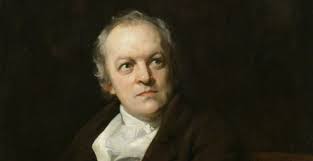
William Blake, 1792-1827, was an English visionary painter, engraver and poet of modest means who lived in London. In June 1780, Blake found himself in the midst of a riot calling for an end to the war on the American colonies. Often in his work, he questioned the status quo of the traditional order of society.

 I wander thro’ each charter’d street,

Near where the charter’d Thames does flow. 

And mark in every face I meet

Marks of weakness, marks of woe.

*

In every cry of every Man,

In every Infants cry of fear,

In every voice: in every ban,

The mind-forg’d manacles I hear 

*

How the Chimney-sweepers cry

Every blackning Church appalls, 

And the hapless Soldiers sigh

Runs in blood down Palace walls 

*

But most thro’ midnight streets I hear

How the youthful Harlots curse

Blasts the new-born Infants tear 

And blights with plagues the Marriage hearse 

If one of your resolutions for 2024 was to write more poetry, there’s never a better time than now.

Maybe wake up a little earlier, take a mid-day break, any time of the day will do, but just write a first draft without censoring your thoughts. For tips on revisions and the submission process, click here.

And to get you a little more hyped, here are a few places that are open for submissions this month, January 2024.

Opportunities for Poets in January

Rock Paper Poem

https://rockpaperpoem.com/submit.html?fbclid=IwAR3hbef037kzvt0BbN3r64V2EDIZXtOrloRXAcvrIM8nkDR66_s0BOw7cSE

Poem Alone

https://poemalone.blogspot.com/?fbclid=IwAR2njw45cL46szMDrDeBWN9qv0UnZgEJT8bNLeicL-5stZdVv3_KqWKyMps

Beakful

https://beakful.blogspot.com/?fbclid=IwAR2dqEQh7rE2bq_StnfndCKnfSN4YmwoXQnCSeVdSLXbvmR-PhMJTqEU3xQ

Raven Poem Competition

Strix.  (no simultaneous submissions)

https://www.strixleeds.com/submit

Black Iris

https://www.blackirispoetry.com/new-page

Lascaux  Review

Acumen

https://acumen-poetry.co.uk/submissions-guide/

Allegro Poetry Magazine

https://www.allegropoetry.org/p/submit.html

Thank You for reading our blog. Don’t forget to sign up to follow us on Facebook and here on wordpress.

And She Makes Art Too!

cover of solstice featuring a chalk drawing of a farmhouse

WELCOME SOLSTICE! A NEW ANTHOLOGY

SOLSTICE
[Solstice: A  Winter Anthology Series Volume 3]
Curated by Terri Clifton; illustrated by Morgan Golladay

The seasonal anthology from Devil’s Party Press returns with an all-new volume of original works by the most unique voices in writing. Renowned author Terri Clifton (A Random Soldier) has assembled a unique collection of stories and poems that will delight even the toughest of critics. The collection includes twelve beautifully rendered, full-page images (including a full-color wraparound cover) by award-winning illustrator Morgan Golladay. Morgan is an Old Scratch Press founding member, and her poetry collection will be out from Old Scratch press in the coming months. This is a wonderful opportunity to view Morgan’s evocative art! Congratulations Morgan!

The book also features writing by Morgan, as well as writing by OSP founders Anthony Doyle and Ellis Elliot!