Words with Dual Meanings: A Writer’s Playground

by Nadja Maril

Words. They fascinate me, the way some words like dust can have two very different meanings. You dust the house, removing small particles of dirt and cobwebs. You dust the cake with confectioner’s sugar making it sweet.

The word weather has two opposite meanings as a verb. The new wood shingles on the house will look better when they weather and turn a soft natural gray. Or used differently you could write, When the next hurricane arrives, I’m not sure if we can weather the storm. As a noun, the meaning of weather is constant. The noun describes meteorological conditions.  Nice fall weather we’re having.

Applying Word Meanings to Getting Published

Every Monday when I read the updated lists of publishing opportunities in literary magazines, I read theme call-outs that generally consist of one word. Write to the theme, they ask, but sometimes that word can be open to wide interpretation.  However, that’s the job of a creative writer; to put our own perspective into our poems and stories.

Photo by Gaurav Ranjitkar on Pexels.com

I read the word dirt and I might picture a pile of soil or imagine filth within a house or think instead of scandalous information about a crooked politician. Playing in the dirt making mudpies can be a joyful experience for a child whereas cleaning away mounds of accumulated filth a tedious chore. The diverse interpretations of how we interpret words can be what makes a collection of writing interesting.

The diverse interpretations of how we interpret words can be what makes a collection of writing interesting.

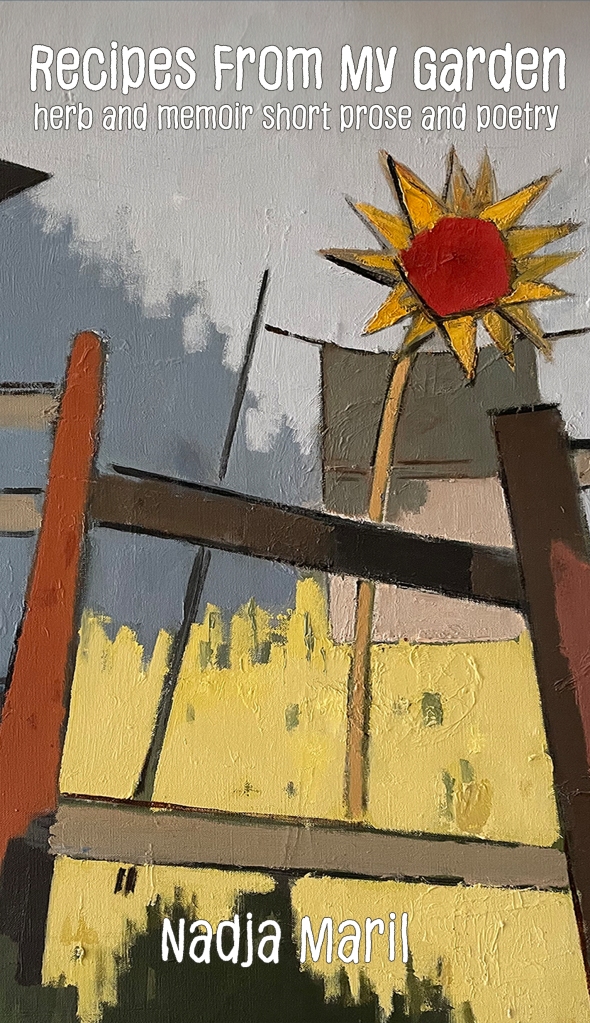
So, I was surprised when a friend told me their spouse had purchased my new book (Recipes From My Garden; herb and memoir short prose and poetry) and with the cold weather coming, they were planning on trying out some of my recipes.

i’d written a book of prose poems and memoir and my friend thought I’d just published a cookbook!

How Word Choice for Your Title Affects Marketing

Recipes. Yes, the word can mean instructions on food preparation, ie try my recipe for chicken soup, but it can also mean a way or approach to doing things. You might say I’ve got the recipe for a successful children’s birthday party, one adult for every child. Or on the opposite end of the spectrum, you might hear about a class trip to the amusement park with no parent chaperones and say, That’s a recipe for disaster.

I thought I was being clever when I chose the title to my little chapbook. I imagined that readers seeing the words memoir, prose, and poetry would understand the book’s double meaning. It does contain a few actual recipes and many references to food and kitchen gardens, but primarily I was thinking of the word recipe as a way or approach of doing things. As memoir, the usage becomes personal. As a poet, I’m sharing how I see the world, starting specifically with what is accessible to me: the sunflowers, tomatoes, a walk on the beach.

The good news for me is  if there is any doubt, the silver lining is people do talk about what they read and like. But if you are new to thie site and you are just reading about my chapbook for the very first time, I also have a book trailer. My talented publishers were able to use some of the video my husband took of our giant sunflowers along with old family photographs and more recent ones to create a wonderful book trailer. You can watch by clicking on the link: https://youtu.be/HxmwOx3-_QY

And going with the theme of the multiple meanings of words, here is a word WRITING PROMPT

To get you started I have chosen a few ambiguous words: long, cleave, bar, and duck. Select a word, choose a meaning, and start writing a scene. Take the word and use it with an alternate meaning. How many different ways can you use the same word and shade the meaning in different ways? Try using the word in a poem and play with the multiple meanings.  Have fun.

Thank You for reading! To read more of my work sign up for FREE to follow me on WordPress, Substack or Medium and visit my website at www.Nadjamaril.com.

Don’r forget to follow Old Scratch Press on Facebook and on WordPress.

Published by Nadja Maril

Nadja Maril’s prose and poetry has been published in literary magazines that include Change Seven, Lunch Ticket, Thin Air, and The Compressed Journal of Creative Arts. She is the author of Recipes From My Garden, a chapbook published by Old Scratch Press that includes both poetry and creative nonfiction prose. Author of two children’s books illustrated with paintings by her father Herman Maril, as well as Who IS Santa? for which she did her own illustrations, Nadja is also the author of two reference books on antique American Lighting, published by Schiffer. A former journalist and magazine editor, Nadja has an MFA in Creative Writing from the Stonecoast Program at the University of Southern Maine. To read more of her work and follow her weekly blog posts, visit Nadjamaril.com https://nadjamaril.com/ View more posts
The Art of Borrowing Characters: A Literary Debate

by Nadja Maril, a founding member of Old Scratch Press Collective

A few months ago, I read a book purely for escapism, a cozy mystery populated by Jane Austen Characters entitled The Murder of Mr. Wickham by Claudia Gray. I didn’t have to think too hard as I’d already met: Fitzwilliam and Elizabeth Darcy, Marianne and Colonel Brandon, Anne and Frederick Wentworth, and Fanny and Edmund Bertram. Already familiar with the English country homes so well described in my favorite Jane Austen Novels: Emma, Persuasion, Mansfield Park, Pride and Prejudice, Sense and Sensibility, Northanger Abbey, I merely had to get to know the two new characters Jonathan Darcy (son of Fitzwilliam and Elizabeth) and Juliet Tilney ( daughter of Northanger Abbey’s Catherine and Henry) who team up together to solve the murder.

Photo by Alexander Mass on Pexels.com

Combine characters created by other authors with AI (artificial intelligence) and we stand on shaky territory.

What is it that makes human writing truly unique ?

The novel started me thinking about where writers find inspiration, because certainly this particular set-up would theoretically be the perfect candidate for an AI (artificial intelligence) generated book. A good portion of the plot of The Murder of Mr. Wickham  relies on tropes and scenes frequently present in other Jane Austen books.

As to be anticipated, in this cross between an Agatha Christie whodonit and a Jane Austen novel, we have  a series of misunderstandings between couples, friends and romantic prospects as well as a grand ball, a visit by the gentry to the village where they are shunned, a church scene with more snubbing, and conflicts that center on income and social class. While I was curious to find out the identity of the murderer, with so many characters possessing motive, I found myself more interested in the potential for a romance to develop between Jonathan and Juliet.

Is picking up ready-made characters cheating? Certainly, the use of characters who have already proven themselves to be favorites among readers, give a writer an advantage when looking to find a publisher.  What is the difference from taking a character or storyline from the Bible or a popular fairytale vs. taking a fictional character such as Sherlock Holmes or Sir Lancelot casting them in the starring role of your next short story or novel.

Folktales and Myths provide plenty of ideas for new versions of old stories. Photo by RDNE Stock project on Pexels.com

One thing I’ve noticed is the different ways a popular character can be used. Minor characters in a well-known fairy tale, perhaps one of the step-sisters in Cinderella may have a very different take on why Cinderella was not allowed to go to the ball. The Genie locked inside a bottle could probably tell a series of funny stories about badly chosen wishes. In the Broadway hit musical “Wicked,” partially adapted from the 1995 Gregory Maguire novel Wicked: The Life and Times of the Wicked Witch of the West, Glinda is not the spotless white witch she purports herself to be when one hears the tale from Elphaba’s prospective.

Anything that spurs new ideas is fair game, as long as borrowing a character or a plot is not plagiarism. The plot or the characters must have evolved and changed. The characters themselves must be unique (not duplicates of another author) and not protected by copyright rules.

As a general rule, for works created after January 1, 1978, copyright protection lasts for the life of the author plus an additional 70 years.

Thus, favorite characters such as the Harry Potter gang, are relegated to fan fiction only, meaning the work is “unauthorized” and cannot be used for monetary return.

Taking inspiration from classics can be a creative endeavor if not taken up by computers. It can make a great writing prompt.

You can use this prompt to write short stories and poetry, material that would be appropriate for a chapbook as well as specialized literary magazines.

Maybe Goldilocks brings three bowls of Creme Brulee to the bears as a peace offering. Photo by Gerardo Manzano on Pexels.com

WRITING PROMPT

Think of a favorite folk/fairy tale such as The Three Bears. What if Goldilocks had the opportunity to apologize for her rude intrusion into the Bear’s Cottage. Imagine and write down what might happen. If the men who pretended to sell invisible cloth to the emperor were to tell the story of The Emperor’s New Clothes, would they tell it differently than the traditional fairy tale? Try different approaches. Have fun.

Thank you for reading. Please sign up to follow Old Scratch Press here on WordPress and on Facebook.

Nadja Maril is an award winning writer and poet who has been published in dozens of online and print literary journals and anthologies including: Lunch Ticket, Spry Literary Journal, Invisible City Literary Review, Instant Noodles and The Journal of Compressed Creative Arts. She is the author of Recipes From My Garden, published by Old Scratch Press (September 2024), a Midwest Review California Book Watch Reviewer's Choice. An Anne Arundel County Arts Council Literary Arts Award winner, her work has been nominated for the Pushcart Prize and The Best of the Net. She has an MFA in creative writing from Stonecoast at USM. 
Check out Nadja's chapbook of flash memoir and poetry below.

https://rb.gy/olqjwe.

The Ugly Duckling: Lessons in Creative Rejection

by Nadja Maril, a Founding Member of the Old Scratch Press Short Form and Poetry Collective

I got a rejection this morning. I received the standard form rejection for a piece of creative writing: We appreciate the chance to read it. Unfortunately, the piece is not for us.

I get rejected all the time. It doesn’t matter how many times my work has been published, I’m not famous and editors have a multitude of tastes. What was interesting to me was the poem in question had already been published and well received.  This time I’d entered it into a contest that was also considering previously published work. Maybe they didn’t think it was prizeworthy, but I felt like they didn’t like the poem at all. This made me sad.

Then I thought of The Ugly Duckling, http://hca.gilead.org.il/ugly_duc.html by Hans Christian Anderson, one of my favorite fairy tales. The bird that emerges from a hatched egg is not at all like the other ducklings in the farmyard. He endures all kinds of painful ridicule until he discovers his true identity as a swan.

“He now felt glad at having suffered sorrow and trouble, because it enabled him to enjoy so much better all the pleasure and happiness around him; for the great swans swam round the new-comer, and stroked his neck with their beaks, as a welcome.

Photo by Ezgi Kaya on Pexels.com

Into the garden presently came some little children, and threw bread and cake into the water.”

I share this little story to remind all writers, particularly anyone just starting their journey, that it can take months or even years to find your audience. Yes, it could be you just don’t have the talent needed to “make it” as a writer, but tastes on what is good and worth publishing vary tremendously. An ugly duckling may also be a graceful swan.

We all have probably had the experience of seeing a movie or reading a book that got great reviews, but we found to be boring. We may have attended a party in someone’s home and overheard guests raving about a gorgeous painting or a rug that we secretly think is hideous.

People have different tastes. Where we grew up, where we’ve traveled, what our parents taught us, all influence what we value and how we judge things. The quest for diversity, when I wear an editor’s hat, is my desire to try to open my mind to a multitude of ways to see the world. But we tend to gravitate to the familiar because it’s comfortable.

A big word among editors is resonate. If a piece of writing resonates with the reader, it affects them emotionally and they may continue to think about that story or poem for days. That type of connection is something a writer longs to achieve.  But it’s unlikely to happen with every reader. We all have different histories. We’re all slightly different so what affects one reader may not necessarily affect another.

It may be that something you wrote is not ready for publication and needs more revision. On the other hand, it could be really good, but needs to find the right audience.

I can’t emphasize enough, writing groups and reading groups to gain different perspectives. A writer toils alone, but feedback is important.  I can’t emphasize enough the importance of beta readers, fellow writers with whom you can exchange work.

Fellow collective member Ellis Elliot wrote about writing groups back in January and you can read her blog here.  https://oldscratchpress.com/tag/writing-community/  and member Virginia Watts posted a blog in April that focused on critique groups  you can read here. https://oldscratchpress.com/author/virginiawatts/

Do not write in a vacuum. Find the approach that works best for you, but don’t give up on something you feel in your bones is important. If you’ve written something you’d like to share with the world, keep submitting. A rejection is a badge of honor. 

 It shows you’re out there swinging the bat and you’re still in the game.

About the author:

Nadja Maril is the author of Recipes from My Garden, Old Scratch Press, September 2024. Nadja Maril’s short stories, poems and essays have been published in dozens of small online and print literary journals and anthologies including: Lunch Ticket, Spry Literary Journal, Invisible City Literary Review, and The Journal of Compressed Creative Arts.She has an MFA in creative writing from Stonecoast at USM. A former newspaper columnist and magazine editor, she writes a weekly blog and you can visit her website at www.Nadjamaril.com.

Thank you for reading. Please sign up to follow us here on WordPress and on Facebook.

From Onions to Tomatoes: A Writer’s Spring Garden

by Nadja Maril, a Founding Member of the Old Scratch Press Short Form and Poetry Collective

We’ve got onions, potatoes, and peas growing in our garden this year. The peas will be ready for harvest six weeks from now, according to my husband who planted the newly sprouting seeds.

In another part of the yard are the tomato plants, still very small. We got a late start. Perennial herbs: sage, oregano, rosemary, thyme, mint and dill made it through the winter. I’m waiting for my fresh basil and cilantro.

Dill,Thyme and Oregano

Each year the line-up of vegetables is different.  New vegetables. New challenges on how to best use these fresh ingredients. This year for 2025 we’ll be harvesting lettuces, spinach, beets, broccoli, peas, leeks, and peppers.

Always we must have tomatoes. They do well in Maryland and they are versatile both raw and cooked. Home prepared tomato sauce, gazpacho and tomatoes off the vine with fresh basil are the best.  

Nadja’s gazpacho

My chapbook,RECIPES FROM MY GARDEN, published by Old Scratch Press, is partially a tribute to herbs and vegetables. If curious about poems that are also recipes visit this link

At the end of March and start of April we were lucky enough to enjoy our own asparagus! Yes, you are supposed to wait until the third year after planting and this is only the second year, however, it looked good and tasted great! We only took a few stalks. The rest we are leaving to enable the plant to go through its cycle of developing leaves and establishing a good root system.

first season asparagus
Second Year Asparagus Crop.

So what is the best way to cook asparagus? I would suggest as minimally as possible. My mother and grandmother would put it in the pressure cooker until it became soft. Too much flavor is lost when asparagus  (Gus) is overcooked and the texture borders on mushy. Steaming a few minutes, or a coating of olive oil and a few minutes under the broiler or on the grill rotated half way through the process to keep the temperature even, are my favorite ways to enjoy Gus. You can also cut it up for use in a veggie stir fry or sauté with garlic, tomatoes and scallions to dress up a pasta.  Top with fresh grated parmesan.

Photo by Nati on Pexels.com

WRITING PROMPT:

You’ve been invited to a dinner. What are they serving? What do you notice on the table? How does it taste? How are the other guests reacting to what is being eaten and to what is being said? This can be fictional or it can be a memory, but select the details that clearly bring the scene into focus.  Write for fifteen minutes. Read back what you’ve written. Is there a sentence with power that pops? Take that sentence and start again maybe adding an action such as a glass is broken, there is a knock on the door ie something happens to change the scene slightly. Have fun with it and maybe you’ll develop it into a poem, story or essay.

Here is a piece of short prose inspired by the ingredients of an unusual stew. Enjoy.

Thank you for reading and if you haven’t already done so, please sign up for FREE to follow Old Scratch Press on Facebook and WordPress.

Exploring Creative Nonfiction: Truth Through Memory

By Nadja Maril, a Founding Member of the Old Scratch Short Form and Poetry Collective

How we portray ourselves and others, is something memoirists grapple with.

We call it “Creative Nonfiction” when a writer presents truth in a creative format that can take the form of anything from a lyrical essay to a crossword puzzle. A selection of word artifacts can weave an interesting narrative inviting the reader to fill in the blanks, anything from a grouping of letters, the transcription of a phone call, or a photograph with a caption.

The words in a game or puzzle can inspire a short work of creative nonfiction.

 In fiction, the writer shapes the story to create pacing and tension. In nonfiction, the writer selects and amplifies truth to produce a compelling piece they hope others will want to read.

The nonfiction writer often relies on memory. Memory and research. The research often draws on the memories and writings of others.

How accurate are those memories?  According to the work of late 19th century German scientist Hermann Ebbinghaus’s research, graphed as a forgetting curve, much of what people experience each day is quickly forgotten.  In the May 20th 2024 issue of The New Yorker, writer Jerome Groopman, discusses in a book review the recently released book Why We Remember by Charan Ranganath.

Ranganath is a neuropsychologist at U.C. Davis and in his book, he discusses memory and how we may be looking at memory the wrong way. Memory, he conjectures, more likely functions as an adaptive trait to keep humans alive.  Selectively we remember some things and forget others. Perhaps the forgetting is as important as the remembering.

Photos may help prompt our memories, but sometimes what others tell us about a photo my influence our recollection.

From a writer’s point of view, I find it fascinating to hear how people’s memories of the same event can be slightly different. What do those differences reveal about each person?

Folk tales and fairy tales clearly demonstrate how the same story can be adjusted to reflect the story teller’s preferences. In some versions of little Red Riding Hood, grandmother is locked in a closet in another she is swallowed by the wolf. In a family, one sister may remember beloved pet that was hit by a car and another may forget the pet because the memory is too painful.

Photo by Son Dang on Pexels.com

Prior to a trip to Ireland last year, I started reading the book, The Irish Assassins; Conspiracy, Revenge and the Phoenix Park Murders that Stunned England by Julie Kavanagh, to gain some understanding of Irish history. The three hundred plus page nonfiction narrative reads like a novel, but dialogue and descriptions are all based on meticulous research. The book has sixty pages of end notes and footnotes. 

But the sources themselves: diaries, letters, newspaper articles, trial transcriptions all have their bias—according to who wrote them. And Kavanagh reveals in many instances, the ulterior motives and prejudices some of the parties may have possessed in how they reacted to the events that took place.

Writing a short nonfiction piece, based on a personal experience can take the form of a letter, diary or puzzle. Part of the writing adventure is trying new things.

If we acknowledge our memories are always shapeshifting, I think it can give us a certain amount of freedom to experiment. Playing with episodic memory, using a trigger such as music, smell or taste, can provide a means to travel back to a previous episode in your life and re-examine it.

Photo by cottonbro studio on Pexels.com

WRITING PROMPT: A smell you love or a smell you hate. If you have the item around, use it as a trigger, if not try to remember it. What comes to mind. A person you were fond of? A party you attended? If you write something you like, put it away and revisit it the following week to review and edit. If the piece has power refine until it is ready and then if you want to share it, submit it to potential publishers.

About the author:

Nadja Maril is the author of Recipes from my Garden, Old Scratch Press, September 2024. Nadja Maril’s short stories, poems and essays have been published in dozens of small online and print literary journals and anthologies including: Lunch Ticket, Spry Literary Journal, Invisible City Literary Review, and The Journal of Compressed Creative Arts.She has an MFA in creative writing from Stonecoast at USM. A former newspaper columnist and magazine editor, she writes a weekly blog and you can visit her website at www.Nadjamaril.com.

Thank you for reading. Please sign up to follow us here on WordPress and on Facebook.

The Legacy of Edna St. Vincent Millay

By Nadja Maril

As a writer and a poet, I do a lot of reading. Sometimes I read a poem that resonates with me so strongly, I read it several times. Sometimes I commit a poem or favorite passage to memory to make it easier to revisit. One of those poems is

“Recuerdo”

by Edna St. Vincent Millay 

(February 22, 1892 – October 19, 1950)

It starts out

We were very tired, we were very merry—

We had gone back and forth all night on the ferry.

It was bare and bright, and smelled like a stable—

But we looked into a fire, we leaned across a table,

Composed of three stanzas, each containing three couplets, you can read the rest of the poem courtesy of the Poetry Foundation here.

Maybe it’s the rhythm, that mirrors for me the rocking of a ferry boat, the repetition of the line “We were very tired, we were very merry” that begins each stanza or the way she captures the exuberance of youth and the generous spirit of the poet and her companions, but I’ve always loved that particular poem.

Surprising, is how many people are unfamiliar with the name Edna St. Vincent Millay. The very first woman to win the Pulitzer Prize for poetry (1923), she was one of the most famous and successful American writers of the mid 20th century. Millay broke sales records and was a cultural celebrity who traveled across the United States giving captivating poetry readings to sold-out crowds.

A feminist, who openly loved both women and men, she was a prominent member of the literary community writing plays, publishing an opera libretto, as well as magazine articles under a pseudonym as well as publishing more than one dozen poetry collections. Her prize-winning poem “The Ballad of the Harp-Weaver” was dedicated to her mother. The poem tells a story of a penniless, self-sacrificing mother who spends Christmas Eve weaving for her son “wonderful things” on the strings of a harp, “the clothes of a king’s son.”

Raised in Maine by a single mother who elected to leave her husband during an era when divorce was not widely accepted, Millay was the eldest of three girls who largely had to take care of themselves while their mother would be absent from the house working as a homecare nurse. Surrounded by poetry, music and literature, Millay began writing her own poems at a young age.

WHERE TO LEARN MORE ABOUT EDNA ST. VINCENT MILLAY

To learn more about her complicated life, I highly recommend Nancy Milford’s biography, Savage Beauty; The Life of Edna St. Vincent Millay. Over 500 pages in length, it was comprehensively researched with the cooperation of Millay’s sister Norma, sole heir to the Edna St. Vincent Millay estate. and contains excerpts of Millay’s letters and poetry.

Here are two more poems to whet your appetite for Millay’s poetry.

“What lips my lips have kissed, and where, and why”

By Edna St. Vincent Millay

What lips my lips have kissed, and where, and why,

I have forgotten, and what arms have lain

Under my head till morning; but the rain

Is full of ghosts tonight, that tap and sigh

Upon the glass and listen for reply,

And in my heart there stirs a quiet pain

For unremembered lads that not again

Will turn to me at midnight with a cry.

Thus in the winter stands the lonely tree,

Nor knows what birds have vanished one by one,

Yet knows its boughs more silent than before:

I cannot say what loves have come and gone,

I only know that summer sang in me

A little while, that in me sings no more.

Vanity Fair 1920

“I shall go back again to the bleak shore”

By Edna St. Vincent Millay

I shall go back again to the bleak shore

And build a little shanty on the sand,

In such a way that the extremest band

Of brittle seaweed will escape my door

But by a yard or two; and nevermore

Shall I return to take you by the hand;

I shall be gone to what I understand,

And happier than I ever was before.

The love that stood a moment in your eyes,

The words that lay a moment on your tongue,

Are one with all that in a moment dies,

A little under-said and over-sung.

But I shall find the sullen rocks and skies

Unchanged from what they were when I was young.

To learn more about her life and times, information is available from the Edna St. Vincent Millay Society. https://millay.org/

The author of this blogpost, Nadja Maril, has been published in dozens of publications including, Defunkt Magazine), Lunch Ticket, The Compressed Journal of Creative Arts, BarBar and Across the Margin. A former journalist and magazine editor, Nadja has an MFA in Creative Writing from the Stonecoast Program at the University of Southern Maine. She recently published a collection of

poems and short essays: RECIPES FROM MY GARDEN– (Old Scratch Press Sept. 2024) a great gift to yourself and for friends at $8.95. To learn more about Nadja’s writing visit Nadjamaril.com

Mastering the Art of Writing: Sage Tips from Chuck Palahniuk and Steven King

By Nadja Maril, a member of the Old Scratch Poetry and Short Form Collective

Note: Everyone who writes has a different approach. This is a repost of a blog I wrote several years ago for my Nadjamaril.com website and since then I’ve gotten a whole lot of stuff published so it could be that some of this works.

I just started listening to Chuck Palahniuk’s Consider This: Moments in My Writing Life After Which Everything Was Different for the second time.  I wanted to remind myself again to put into practice some of many sage tips he gives to writers.  Tips that include: use multiple points of view, active verbs, short sentences, and nonverbal communication to  reduce dialogue.

Being read, being published is the end game, but it’s the act of writing which is for me most important. Before we write we read. It’s my love of reading that drew me to writing. What better charge is there than finding the perfect assemblage of words to create in someone else’s mind— a feeling, a scene, a story.  I’m addicted.

This is why I write. It’s the creative process I become emerged in that has me hooked. It’s an art form that evolves. And I always want to improve my craft. This means I’m always challenging myself to try different approaches and learn from other writers.

Each writer has different visions of what they’re striving to convey, but for me I’m seeking to find new ways to describe a scene and the inner thoughts and motivations of my characters. I listen to books on tape and also like to read words on paper. Helpful are a number of books on my shelf.  About fifteen years ago I picked up Steven King’s bible for writers, On Writing, published in 2000. I bought it on the remainder table for one dollar. I think initially “literary writers” were dubious that the king of pop fiction would have useful advice, but now in 2021 his book is a favorite. Open the book to the section entitled “Toolbox” and you’ll receive sound advice like, “Remember the basic rule of vocabulary is to use the first word that comes to your mind, if it is appropriate and colorful.” In his section entitled “On Writing” King explains that he gets his writing impetus not from imagining What if?. “ A strong enough situation renders the whole question of plot moot, which is fine with me. The most interesting situations can be expressed in the What-if question:

What is vampires invaded a small New England Village? ( Salem’s Lot)

What if a policeman in a remote Nevada town went berserk and started killing everyone in sight. (Desperation)

Both Palahniuk and King emphasize the importance of reading other writer’s work, one of the best books to guide you in this is Francine Prose’s Reading Like a Writer (2006).  The book covers all the craft elements so important for all creative writers: close reading, words, sentences, paragraphs, narration, character, dialogue, details, and gestures. What is most invaluable, in addition to all the books she cites throughout the text, is the reading list at the end. Yes, we may all be readers, but it is important to seek out unfamiliar authors who are masters of their craft. Best sellers come and go. Books fall in and out of favor and an important authors are forgotten. While many of the authors and books on her list I was familiar with, I got introduced to Elizabeth Bowen, Henry Green and Denis Johnson (Yes, Denis Johnson who I selected for my in depth research MFA research project) thanks to Francine Prose.

Try not to repetitively read the same authors you like. Discover old and new talent.

I’ve got a number of books on writing in my library, John Gardner’s The Art of Fiction,  Jon Franklin’s Writing for Story  and The Half-known World on Writing Fiction by Robert Boswell, but it seems that all these books are written by men. As more women and people of color take leadership roles in publishing, perhaps we’ll see books on writing from a more diverse group of authors. Meanwhile I will close with talking about one more favorite book, number four on my list. I’ve read Unless It Moves the Human Heart by Roger Rosenblatt (2011) several times.  Rosenblatt’s book shares the writing process from the teacher’s viewpoint as he interacts with his students at Stony Brook University. He taught classes in poetry, creative nonfiction, and fiction and what ensues is a thoughtful introspective dialogue that stimulates the reader to look at their own work with fresh eyes.

In closing I will repeat again for emphasis, read as well as write. You are never finished learning how to be a better writer. So what are you waiting for?  Have you written, revised, and re-revised some stories today?

Follow Nadja Maril on {“X” at SN Maril or read one of her pieces at Nadjamaril.com. Check out Nadja’s soon to be released chapbook, RECIPES FROM MY GARDEN here. Don’t forget to submit your brief piece or poems on the theme “Holiday Noods” to be considered for publication in the Winter issue of Instant Noodles here.