Compiling My Collection

Clearly the owner of that journal is not doing a good job of compiling her collection because on her journal is a slice of orange she is attempting to dry out, three crystals, and a paintbrush. The book is open and written in with a pencil, not good for preserving writing as (being a teacher for one-zillions years I can tell you) pencil smudges overtime to become indecipherable. She’s also got a pile of vintage mail (definitely older and already been mailed to her, to someone), which is deliciously tantalizing, and reading is much easier and more fun than writing.

Who is this mess of a woman? That’s a stock photo, but it could easily be my desk, with a few dozen highlighters and yesterday’s coffee added to the milieu.

It’s difficult for me to have a clean desk, no lie there. It’s difficult for me to spend time cleaning my desk, and not because I am not a neat person, but because I push my own things back. In fact, though I think of myself as a generally nice and “in a good mood” sort of person, I can get snappy when I feel tooo squeezed out.

I feel thin, sort of stretched, like butter scraped over too much bread.

JRR Tolkien, The Fellowship of the Ring (The Lord of the Rings, #1)

What a great bit of writing that is!

So I have made the bold assertion that I will publish my collection of poetry through Old Scratch Press in 2026. There. I said it to the group, and now I said it to you. I swear I’m gonna do it. I am going to occasionally clean my desk, and push in some room to get my collection together by pushing other things back (other things probably being sleep! Ha!). I just took on a new tutoring student, a few pro bono editing projects (my daughter’s school has a non-profit component to it, and I donated some editing to the auction, and it got bought!), a half dozen or so sample edits, in addition to the regular amount of edits, which is many hundreds of pages per month, and I signed up for a singing course with a friend, have a relative needing assistance for cancer treatments, a teen in need of a lot of “staying on track” help with school work and she is also involved in some theater projects her dad or I need to be the transportation for (and, in general, making sure she eats, remembers her glasses, etc.), and a business to run and a home and family, in addition to trying to squeeze in a daily run. I would love to run well enough to participate in a 5K, and I have been thinking of joining a thing in my neighborhood where I could get a running trainer. Of all of those things I am doing there is nothing I do not want to be doing, except for wishing my relative didn’t have cancer, of course. One friend had told me recently she was stepping back from a project, and I had anticipated it about four months earlier, actually, and I completely get it. My relative, who is staying with me this week and last for her treatments, woke up today and told me she is spending the last few days she needs to be local for her tests at a friend’s because she needs a change of scenery. I had expected that too, and I had prepared a to-go coffee for her before she woke up. However I have a HS friend on FB who is every bit as engaged in politics as I am, and worried about the general state of what we see as the slide into authoritarianism, and another HS classmate said to him, “We liked it better when you just wrote about your kids and scouting. You don’t have a lot of chapters (she actually wrote chapters!) left; don’t waste them on this.” and I could not agree less. Age, chapter of life, has nothing to do with wanting to accomplish things and caring about things outside of ourselves, so, no, I do not think he should stop fighting the good fight. Yet I feel that I do have an understanding that we literally cannot do it all, and don’t want to, and I respect it, and think it is a good thing, and I flatter myself that I am especially good at reading the room, and can see when change is coming. But, I’m not good at, “No.” I’m not good at giving up on something I’ve begun, even if it does not realize my own dream. It’s an obstacle because in order to publish one of my many projects, I assumed I would have to come up with a good, firm, “No.” And I simply can’t. So I have decided instead to come up with a good, slightly quavering, “Yes.” I’m outing myself that I am going to put my damn book out. I am saying it, and affirming it, and treating it, as much as possible, as a done deal. I think if I normalize it, the way I normalize all the other things, I will simply do it because it has a due-date, or a do-date. Both!

And so, here is my question to you:

If you have been writing short stories, short non-fiction, flash, poetry, for some time now (I’m not going to say I’ve been writing for decades, but at least since the synth-pop craze and the resurgence of skinny ties (the best kind of ties)), how do you choose what to include, and what to leave behind, resting, forever lost in a permanent dream state in the “my writing” file on your desktop? Though the synth-pop craze wasn’t what I would describe as a serious time in the world, I was a serious writer; I took myself very seriously, and I think that “me” has somehow stuck around, and I judge that writing to be more profound, when in reality for pretty much all of us our early writing is awful. I remember writing a poem laden with love and portent that was about a page long and contained only the word “baby” written over and over again in different combinations with possessive pronouns and a few sappy adjectives. Songs, when sung, can add meaning through cadence, tone, etc., but, with that “baby” experiment I learned that mere words on a page cannot do that. It was a piece of absolute dreck. I do not regret deleting it!

So, those old pieces hold special meaning for me, but most are not very good (I confess I still think some of them are genius!), and almost all are not even remotely relevant to who I am now. Though I am still a whiny liberal with a moral bent, and that still is there, even in the new pieces.

And this is it, my one chance to publish my poetry, to put it out there in the world. When I was in my MA and MFA programs I knew who the “it” poets were in the world of poets who published, and I wanted to join them, to earn their respect. And as I tried I very much felt borne farther away from them. Primarily by life circumstances and that inability to say no, that pushing back of my own things, more than anything else. And that very much was a tell (an inadvertent behavior or mannerism that betrays) that I didn’t belong among them. Writers who are successful (and success looks different for a poet than a novelist, or self-help book author, etc.) almost all have a modicum of selfishness that allows them to push things away that don’t serve them, and also leads them to self-preserve. They’re not going to be dumb enough to share their “baby” poem with their thesis advisor. Selfishness belongs on the seven deadly sins list, IMHO. But success almost needs it, like a plant needs water, to survive.

So, for better or for worse, committing a deadly sin or not, I am going to get this thing done as if it is not even my thing, so I will not be being selfish; I will simply be doing another job on the list.

But, again, I have this question: if you could put together a collection of your writing (or publish one of your novels, if you write long-form) how do you choose? How do you group? How do you look back over your body of work and say, “This goes; this doesn’t?” And if you could have your book published next year, what would you want on your cover, and why? While working with OSP one thing that has continually surprised me is that the authors seem to know what the cover needs to be. How in the heck….?

So, what about you? Would you know? I’m super curious to hear! Drop me a comment below!

🙂 Dianne

What Genre Scares You The Most?

By R. David Fulcher, Old Scratch Press Founding Member

While most authors have a preferred genre, many authors have dabbled in others. For example, while I am primarily a speculative fiction writer (horror, fantasy, and science fiction), I have also written historical fiction, drama, romance, and poetry.

However, I’ve always found one genre intimidating: Westerns.

I realize that author Louis L’Amour made a fine career out of writing Westerns, what he called “frontier stories,” but I haven’t been able to catch that particular spark. Perhaps it is simply that I’ve never invested the time to understand the difference between the gravy train or the chuck wagon, or when to precisely call in the calvary.

While I’ve enjoyed a few Western films such as Tombstone and True Grit, and appreciated the genre-blending Westerns such as Blazing Saddles, Cowboys & Aliens, and Firefly, I’d be lying if I said I were a true fan of Westerns.

Since every psychologist recommends facing your fears, I think I’ll give it a try.

So, without further ado, here is my flash fiction Western, “Down Goes the Rodeo Clown.”

Down Goes the Rodeo Clown

Roger Roy tightened his grip on the bridle. His horse, Mustang Sally, had a wild streak, and he didn’t intend to lose control while calf roping.

Suddenly the gate opened, and the crowd in the stands roared as a gate on the opposite side of the arena opened and a young black and white calf stumbled out.

Roger steered Sally towards the calf and reached for the lasso at his side to confirm it was there.  Staring ahead, Roger didn’t notice that one of the loops of the lasso had caught the trigger of his six gun.

Something seemed off with the calf, too; it stumbled around like it was drunk.

Roger had a job to do, drunk calf or not, and approached the poor creature.

He tugged on the lasso to remove it, and it seemed stuck on something. Roger tugged harder the second time and felt his pistol shift and the hammer cock.

A single shot reverberated through the air: bang!

The calf awkwardly fell to the dirt with a gut-wrenching cry of anguish. A red blossom of blood stained the black and white coat.

Roger leaped off his horse to help the poor creature, only to see a pair of cowboy boots sticking out from under the coat.

He threw back the coat, only to see the body of the rodeo clown shoot right through the heart. His painted face was twisted in pain and his orange hair fluttered in the light breeze.

The crowd began to point and scream. 

Roger Roy tipped his hat in their direction and said, “I guess that’s his last joke.  This one was on him.”

And with a jangle of spurs Roger swung into the saddle and trotted away.

So there it is – corny, unbelievable even, but my first Western nonetheless, and you, dear reader, were there to witness it.

The moral of this story is to confront your fears, try that genre that has always scared you the most, and you might strike pay dirt.

Or as an old miner forty-niner might say, “There’s gold in them thar’ hills!”

Happy Writing!

R.David Fulcher, Founding Member of Old Scratch Press 

Oldscratchpress.com

Rdavidfulcher.com

Like a blot from the blue: Are you reading your work?

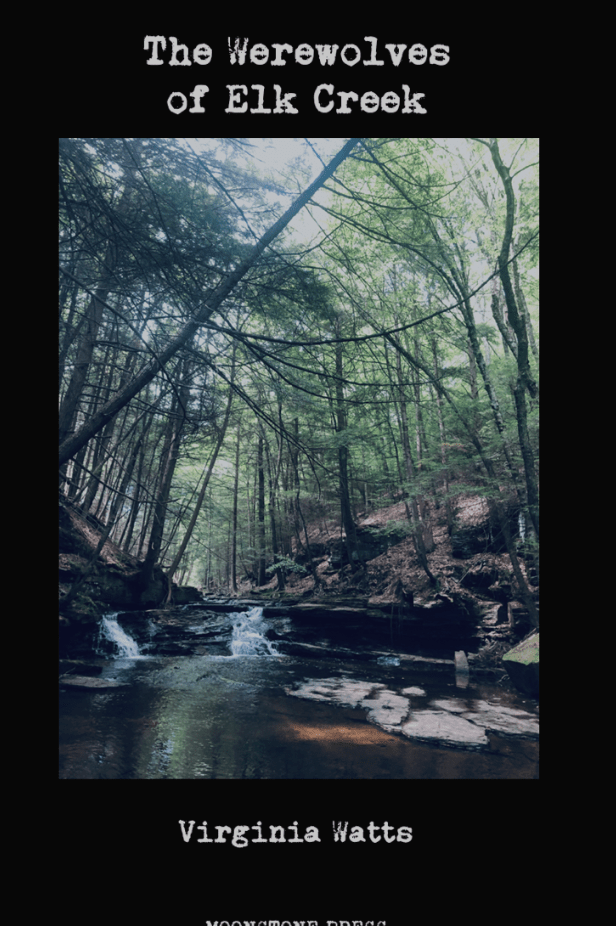
Recently Robert Fleming was nice enough to get Old Scratch Press booked on Like a blot from the blue. Robert Fleming, Gabby Gilliam, Anthony Doyle, Alan Bern, Virginia (Ginny) Watts, and I showed up. I gave a little information on Old Scratch Press; Gabby gave some information Instant Noodles, and Anthony and Ginny read from their new books. Being there and presenting to an international audience was a fantastic opportunity for us, and the folks there were great.

What I liked even more were the other people who showed up.

I’m going to guess that there were about 30 people who showed up who were not us, one of whom was Fin Hall, the blot-in-chief. It was clear that many of these folks had been attending regularly for quite some time. One at a time, in turn, based on when they signed up, Fin called on each person, and the author read 1-3 poems, depending on length.

When I was in my twenties and thirties, which, sadly, I am not any more, I used to read at LIP (live, in person) open mics all the time, and I would often have to hang in until midnight to get my chance. Usually these were held in bars in Philadelphia, or in West Chester, Pennsylvania. I did my best to dress as “punk rock” as possible, and my general aim, if I’m honest, was to get laid. It’s frankly shocking how few times that happened, when that was clearly my intent. I usually had on a mini skirt and was showing cleavage, but, in truth, people who knew me then told me then, and will reiterate the very same thing today, that me punked-out and showing cleavage was, somehow, still giving Julie Andrews when what I was going for was Grace Slick. Ah well.

In any case, the thrill of reading, and the thrill of possibly getting lucky, and the location (always bars) also meant that, in all likelihood, by the time they got to me on the sign-up list, I was hella drunk. I was a smoker (Benson and Hedges 100s back then), but because I was also a poser: at those events I came with a pack of Dunhill Blue.

Waaaay too expensive to smoke all the time, but on open mic nights I always stopped at the news agent’s (Philadelphia had news agents!) to get a pack beforehand.

A few times/year the venues would ask me to be the featured reader, and I think that was because I was also volunteering with a little Zine called Magic Bullet (run by Andrew Craig, wherever he is today), which I had quite a few publications in, and, who knows, maybe I was good.

I was working my way through an MA and then an MFA from my twenties into my thirties, and my professors seemed to think I was good, as well, and I won the student awards each year, so maybe. When I read at the school events I was not drunk, but neither was I nervous, perhaps because my professors made me feel gifted.

And then, sometime around the end of my last degree, life took a turn. My very long relationship went very south. Another relationship pooped too quickly, and flamed out just as fast, and I remember I felt, while I was still prolific as a poet, that I had somehow lost at life. I wanted, you see, to become a published poet and a professor, and a spouse, and a parent, and I wanted all four things to work out perfectly, and just none of them did.

My life, then, became a series of edits. If it didn’t work to have the man with the red hair, then cut him from the piece, and write in another man, one with cheap beer on his lips. It was so time-consuming to send out work, one poem here, and one there, through the mail, keeping track of where it went, and keeping a lookout for the SASE to bring it back, and seeing if it was in decent enough condition to be mailed back out again, and I remember for awhile I was printing on onion skin to save money (who knows what that is?), and digging up the two dollars or eight quarters to send the piece of onion skin back out, and waiting for the SASE again to return, and each time writing a letter of introduction, sometimes including letters of introduction from my professors who were consistently and kindly encouraging. I remember two of them, who seemed to think my writing was the bee’s knees, were flummoxed that my poems weren’t getting entry, but maybe the long narrative style went out with Wordsworth. And life became more about driving from 9-5 job to college job to relationship, to moving out, to moving over there, to trying again, to keep on trying, to being, frankly, trying.

Little by little, returned SASE by SASE, edited dream by edited dream, the writing dribbled to a stop. Drip, drip, dr—

It was so quiet in my head.

Well, in the poetry part of my head at least.

And a decade and a half ran through my fingers.

And then I started writing again. Not only poetry, and not the plays I wrote in my twenties, but fiction, and memoir, which is, I guess, what this is.

I found myself in a place where the place, the locale, was so small and local, it felt small enough that I dared to go to a reading again.

But over the intervening years something just awful seemed to have happened. When I showed up to read at the open mics, even when I went with friends, I could not make it through a single poem without devolving into tears. And maybe there’s a reason for this shocking behavior, and maybe there isn’t, but it seems as inevitable to me as hair going grey, and as unavoidable as the red dot from a sniper’s gun in one of those movies with snipers.

And yet, at the simple evening with Blot from the blue I felt encouraged. The readers were great, and seemed normal (for the most part… I mean, poets, right?), and kindly, and on Zoom my head is no bigger than a Cerignola olive, so I am going to say I felt safe. I think it would be quite okay to join in, and I asked him later, and Fin said yes, folks can join. And folks could mean me, or you.

So what the hell, let’s try it!

Find out about Blot here.

And use this email to express interest likeablotfromtheblue@gmail.com.

And if you show up, be a goooood listener first, and a good reader second.

I’m not much of a drinker these days, so if I show up it will probably be very sober, and there hasn’t been any nicotine in these lungs for a long spell. I will, however, be caffeinated. And that’s at least something. The poem I am thinking of reading has some sound effects in it, which is probably ill-advised. But after I read, and make whatever sort of a fool of myself I am destined to be, I can write a new poem: Pearce With Her Pants Fallen Down.

Nadja often finishes her posts with a writing prompt, so here is me, stealing that excellent idea:

Think of an “edit” you made in your own life, by choice or by force. How did it work out for you?

Or

Have you ever read at an open mic? Write a flash memoir piece describing your experience.

Thanks for reading!

Dianne

Final Two Meet and Greets for New Members

Are you a flash fiction, poetry, or short memoir writer with a finished manuscript—or one nearly ready to go? Old Scratch Press, a collaborative collective supported by Current Words Publishing, is now accepting applications for two new members to join us in 2026.

We’re a tight-knit, skill-sharing group that publishes each other’s books, runs the lit mag Instant Noodles, and supports each other with editing, design, marketing, and community.

We are hosting meet and greets on August 6th and August 13. To be invited you have to send a small sample. There are no fees to submit, and there are no fees to join, and there are no fees to publish your collection. There are no fees. Who else you gonna find to collaborate with who dedicates an entire issue of a literary magazine to that most magical of elixirs… gravy?
If you’re eager to grow as a writer and be part of something creative and weird and wonderful, we’d love to meet you.

👉 Apply with a sample here:
https://duotrope.com/duosuma/submit/form.aspx?id=6idG3Mj-O0jFm-15Y7r2p

Spots are limited. Let’s make good things together.

Poetry in the Scroll: How Social Media is Reimagining the Poem

Poetry has always moved with the times, and it is about time for me to drag myself along with it. From verses passed down orally to broadsides nailed to doors, from hand-sewn chapbooks to poems read over the radio, the form has never been fixed. Now, in the digital age, poetry has found a new home in the scroll.

And by scroll, I mean the swipe of a finger across a screen. On platforms like Instagram and TikTok, a younger generation is shaping how poetry is written, read, and shared. But this isn’t just for the under-30 crowd. If you insist on thinking this way, you may well get left behind. More and more poets of all ages are exploring these platforms—not to go viral, but to connect in quiet, and sometimes beautiful ways. And if you’re a poet who’s been writing for decades, or just starting out later in life, there’s a place for you in this unfolding form. (Even if that means asking your children, or grandchildren, for help—which they might then turn around and use for content on Instagram or TikTok later).

This is not about abandoning your favorite notebook or legal pad. It’s about discovering what the poem becomes when the “page” can move, speak, and shimmer.

What’s Happening in Poetry Right Now?

Social media poetry isn’t a trend—it’s a growing corner of the literary landscape. Here’s how the form is evolving, and why it might just inspire something new in you.

1. Short and striking poems are thriving

Poems written for screens are often brief—just a few lines that catch the eye and echo in the mind. In many ways, it’s a return to the epigram, the haiku, or the Dickinsonian lyric. These poems are intimate and distilled. Think of them as poems meant to be read in the space between moments—waiting in line, sipping coffee, catching your breath.

2. Poems paired with image and rhythm

Instagram poetry often appears one line at a time across a series of images, like flipping through a visual journal. Some use soft colors or textured backgrounds. Others feature the poet’s handwriting, scrawled on a napkin or journal page. On TikTok, many poets read their work aloud over quiet imagery—footsteps on a forest trail, candlelight flickering, steam rising from a teacup.

It’s not performative. It’s present. The screen becomes a small stage for the inner voice.

3. It’s not about perfection—it’s about presence

You don’t need to be tech-savvy or camera-ready (well, it helps, or, again, you can ask your kids) And, you don’t even need to post anything publicly. For many writers, playing with these tools becomes part of the creative process. Recording yourself reading a poem on your phone, overlaying it on a favorite photo, or sharing it with a few close friends—these are all meaningful ways to engage with your own voice.

How You Might Try It

Here are a few gentle ways to dip your toe into the scroll-space:

  • Take a short poem you love—or one of your own. Try formatting it so that each line stands on its own. How does it feel to see each phrase alone, framed by white space?
  • Record a reading. Use your phone’s voice memo app to record yourself reading your poem aloud. Don’t worry about background noise or perfect delivery. Sometimes the quiet rustle of real life is part of the music.
  • Use a free design tool. Sites like Canva.com let you pair text with images. Choose a background—an old photo, a sunset, a textured piece of fabric—and overlay your poem.
  • Share it—or don’t. You might post it on social media, email it to a friend, or simply keep it in a folder. The act of making something new is what matters.

As for me, let me just say I am a SLOW work in progress. Good luck to all of us over age 60 and remember to think of moving our creative work onto social media as just another way to flex our creative muscles, have fun, and play!

Ellis Elliott

Founding Member, Old Scratch Press
Bewilderness Writing
Bewildernesswriting.com

Poets and Punctuation

In his sonnets, Shakespeare would use end-stops rigorously, with most lines ending in commas, semi-colons, and colons. Sometimes he relied on enjambment or exclamations, but as far as possible, he seemed to save his full stops for the very last line. 

Take Sonnet 18,  “Shall I compare thee…”: six commas, four semi-colons, two colons, one question mark, and one full stop. 

Ezra Pound, on the other hand, would often refuse to use any end-stops at all. 

Take these lines from Canto LII:

The empress offers cocoons to the Son of Heaven

Then goes the Sun into Gemini

Virgo in mid heaven at sunset

indigo must not be cut

No wood burnt into charcoal

gates are all open, no tax on the booths.

No commas, no colons or semi-colons, “midheaven” is split for emphasis or for pause. There’s as little punctuation as possible, down to “gates are all open, no tax on the booths.”  That solitary comma functions almost as a speed bump near an intersection. 

According to Daniel Albright, W.B. Yeats had ‘punctuational quirks’ which he was happy to leave to his editors to sort out.  It was as if those technicalities were above or below the poet, who belonged to another realm of language.  

T.S. Eliot, like his mentor Pound, would sometimes drop punctuation altogether, but then he would go and stick in a full stop just to confound the reader:

On Margate Sands.

I can connect

Nothing with Nothing

(“The Waste Land,” lines 300–302)

Most people read those lines as “On Margate Sands, / I can connect / Nothing with Nothing.” So why the full stop? Some say it’s to heighten the sense of isolation and fragmentation, but it actually spoils the drama rather than intensify it. “I can connect / Nothing with Nothing” is no longer restricted to this moment, here-and-now, on Margate Sands. It steals some of the bombast. Perhaps that was the point, who knows? 

One thing that seems pretty clear is that punctuation plays by different—or fewer—rules in poetry. 

In “Un Coup de Dés,” Mallarmé throws punctuation out the window almost entirely, relying on spaces and font size to convey the necessary pauses and emphases. Punctuation becomes visual and spatial, and all the more effective for it.

Compare that with Sylvia Plath, who was a heavy punctuator:

Clownlike, happiest on your hands,

Feet to the stars, and moon-skulled,

Gilled like a fish. A common-sense

Thumbs-down on the dodo’s mode. 

(Opening lines of “You’re”) 

Apostrophes, hyphens, and commas in all the right places. 

So, the question is: does punctuation really matter in poetry? 

Perhaps it depends on whether it’s intended to be read aloud or read off the page. At a reading, intonation and cadence work magic that is sometimes hard to replicate in print, where that same impact disappears somewhere between too much and too little punctuation. 

I suppose we’ve all got our own punctuational foibles. I often neglect end-stops. I know I shouldn’t, but putting in a comma, semi-colon or colon just feels wrong at the end of some lines. Not all, just some. I could not actually say why. It’s not a rational thing. It’s pure feeling. 

So whether you’re partial to Elizabeth Bishop’s em-dashes or agree with Joyce that quotation marks “are an eyesore,” rules are strange visitors in poetry. You can choose whether to follow them, or which ones to follow, and no one can really complain—except the reader, who will have to read in all the end-stops and what-nots we choose to leave out.

Anthony Doyle is a founding member of Old Scratch Press. He is the author of the novel Hibernaculum and the recently-published Jonah’s Map of the Whale and Other Poems.

It’s Awkward

That’s a photo of my local Trader Joe’s, where I was yesterday buying dog treats and ice cream and flowers and frozen gnocchi. I like Trader Joes. I like it because it is small, and what I mean by small is there are limited choices. I can easily super-overload a cart because I am curious… Ooo, what’s that fruit? I should buy six of those! I like Trader Joe’s because it saves me from that. BUT, I hate checking out there. I HATE IT. Why? It challenges all the introvert things about me. Their checkers are trained? told? naturally? forced to be? chatty!

I am horrible at small talk. I am awkward, and dorky. And I am exhausted afterwards (mentally). I am more a fan of self-checkout, but I do feel like I’m taking someone’s job every time I use one. I long for the A&P days, where the checker was (usually) a woman, and she was too tired on her feet to talk, though she’d smile, and be efficient.

Yesterday the TJ’s was fairly empty, so there was no need for a bagger at my check-out, and I always will bag, but the extra person helps diffuse the awkwardness, because then there’s two people to make annoying small talk with. Usually I end up pulling out my phone to show them a photo of my dog, and they pretend to care. My dog is extra cute though, but I still know we’re all pretending.

Oliver… The Trader Joe’s display photo.

Yesterday the guy checking me out was trying to talk to me, and I was rapidly bagging (I bring huge bags, and try to organize by FREEZER, FRIDGE, PANTRY, but I’ll get desperate to keep up and be done talking, and just start chucking stuff in.). He was trying to talk, but his heart wasn’t in it, and neither was mine because, that checker, he kinda looked like this:

He looked quite a bit like that photo, which is a photo of my brother circa 1978 or so.

That TJs checker looked so much like my brother. A little taller, but otherwise spot on, and I have been checked out by him before, but yesterday it was the light or something, or the quiet between us. I know people not in California think TJs are tripping hazards here, and they’re not. They’re usually a good 20-40 minutes apart, so I kinda wish this guy would get another job. You know what I’m saying? Because there isn’t another TJs close by, and because that checker looks like my brother circa 1978.

My brother died in 2020, in June or July I don’t really want to remember the date. I found out he was dying hours before he did. He was up in a hospital in PA while I was two hours south in DE. Covid was raging, so they were not going to let us come see him. He didn’t have Covid, He had gangrene, probably from a bladder infection he had never fully recovered from, and he didn’t like doctors because they made him feel mortal and dumb, and he hadn’t gone to one for about five months while everything in his body was probably going bananas, and when Covid hit he was really afraid of dying from it, and probably feeling pretty sick most days anyway. My sister-in-law didn’t force him to do anything about it, probably because he was grumpy, and she is an avoider, and they both were potheads and pill heads and whatever when they could get it. They both had a tendency to approach family gatherings with something in their systems to take the edge off of my mother, and, I sometimes think, maybe that is the best way to approach her. Maybe I missed something great about coping there. Which makes me laugh to think of, and would have made my brother laugh his butt off.

My brother was very funny. He raised me to love George Carlin and The Three Stooges. One of the times he most liked in our history together was when he was visiting us in Los Angeles, and I got us all singing narcissistic songs. You take any song that is about romance/lust, etc. and you turn it into a song about yourself. So, Gladys Knight’s classic, “Best Thing That Ever Happened to Me” becomes [I’M the] “Best Thing That Every Happened to Me.” Divinyls’ “I Touch Myself” becomes [When I think about ME] “I Touch Myself.” Get it? We laughed our butts off, and he always talked about it, and we often tried to recreate it, but sometimes with humor the success is situational (you had to be there), and that perfect night was like that. And maybe he was a little high too, and I didn’t know it.

You can’t recreate those perfect moments in life, and trying often leaves you cold. My brother was a great practitioner of trying to recreate the things he loved, trying to hold onto vapor.

Here is his band in the early ’70s:

Bill is in the front right.

So cute. And here they are in the late 2010s:

Bill is in the front left.

Bill is gone, but the ones who are still here are still playing together at the bars local to Ridley Park, Pennsylvania. Most of those guys, living and dead, never got their shit quite all the way together. They could always play, and play well, but they were still partying like the Rolling Stones circa 1968. And maybe still being able to get out there and rock the house is a sort of having it together that’s just a bit different from how I would define it.

I miss my brother, and it’s awkward to have a checker at TJs remind me of him so completely that it renders me unable to make small talk or even flash the photo of my dog. My brother had a lope-y way of walking not unlike Shaggy in Scooby Doo, and this guy moves like that. It’s awkward because grief is awkward and comes casually loping up behind you at the most unexpected times. Someone told me grief is a metal ball in the glass jar of your life, and as you move away from the time of your loss the jar gets bigger, but the ball is permanently there, and rolls around, bumping up against everything, sometimes quietly, sometimes banging the glass hard enough that you think it will crack. Poetry is a very helpful receptacle for grief. I think poetry works well because it is often short, and emotional, and vague, not pinning grief down to a specific grief style or emotion or reason. Poetry might move the ball away from the glass, or give you a little breathing room when your lungs have constricted so much you feel like your ribs have laced up extra tight around them. My favorite brother poem has long been this one, and was so even before my brother winked so quickly out of existence.

But today I found another one. It loosens up the tight ribs too, if by loosening them you mean jabbing an ice pick in there. But ice pick or not, it does what it’s supposed to do, connects you directly to the pain, so you can feel it, instead of dodging it all the time. Then you can move on with your life, even as the brother you miss cannot move on with his, which feels supremely unfair to me, and I really value being fair, so there’s that. But for that day, that moment, at least, you can get back to what you were doing that you are doing because your life is still going. This poem is by William E. Stafford, and is called “Brother.”

We’re so lucky The Poetry Foundation exists, and has this database of poems just waiting to tend to our needs.

If someone gave you some paper, scissors, glue, rocks, crayons, clay, wire, papier-mâché, bowling balls, aluminum foil, fabric scraps, paint, sea glass, what would you create? What would your sculpture of grief look like? What medium would you use? What shape would you make? If you were only allowed eight words, one for each day in a week and one extra just in case, what words would you write? How would you arrange them? Would they be poetry, lyrics, a string of obscenities lobbed at the world, or a short burst of prose? Would they be quiet, loud, or snap, crackle, and pop? And would you want them to tighten up your ribs, or let them loose? Could you share it with the world or would it be too awkward for prime time?

Some of us come to that hard, clinking, lurking ball-bearing version of grief mercifully later in life than others. The less time you have to carry it the better: it means you had a longer shot at joy. But it finds us all eventually. I think that when we’re younger we grieve for ourselves: all the things we haven’t put into place yet that we long for, all the things we want to be that we just haven’t attained. As we get older, from any point in space because we all live at our own pace, we grieve more for others, and our missed opportunities to be with them. But Bill was. He lived. I had a brother.

Sometimes Being a Witness Is All You Can Do

Picture courtesy Eric Cruz Lopez

I live in Los Angeles, and it’s been a little bit unnerving to see what is on the news about us. 

When I first moved to Los Angeles I lived in Venice Beach, on the Westside, by the Pacific Ocean. Venice Beach is beautiful, and weird, and has been heavily gentrified even since I lived there, and is now almost evenly split between people living in three million dollar homes, and people living in tents. It’s a problem on both ends of that financial situation. Of course, can you imagine being homeless? You would pitch a tent in a minute if you could, and you would definitely want to be in a temperate climate where people were laid-back, and where there were a lot of other people just like you around, to make you feel less obvious, and safer. I watched a video just yesterday about people who have chosen to live in vehicles (cars, campers) not in Venice Beach, but in the USA, and how they (being very digital) will meet up and hang out in different free camping areas to have a community. And why would people without homes be any different?

Los Angeles has a homeless, or unhoused, people problem. 

Los Angeles, and all of Southern California, has a lot of immigrants. Many of them are legal immigrants, some are illegal. Some are only here for work. Many want to get enough money through work here to send home to family in order to eventually rejoin family. I have met many people with that plan from Asian countries and countries south of the USA. Those folks are not wanting to live here forever. They’re trying to make enough money that everyone can live well, back home. But there is no mechanism for that of any workable consequence here in the USA. The visas for work are not for waiters and day laborers. The visas for work are for IT people and doctors, that sort of person. In Los Angeles we know that the Uber driver, the waiter, the grass cutter, is probably not here legally, and not intending to stay. We get it, and I think, for the most part, we’re happy to have the low-cost help.

Then there are other people who want to stay: people who came here fleeing violence, people who came here as babies and have only known here, people who came here as students and experienced so much prosperity and freedom compared to life back home that they don’t want to go back. As Americans we cannot really understand how different life can be, especially for the very poor, and women in general, in other countries, even countries like China or India that we might see as very western. When we were in China (my husband Dave and I) to adopt our daughter in 2009 we met our daughter at our hotel, a huge, lovely hotel, about twenty floors or so, and absolutely where the wealthy and foreigners stayed. As soon as my daughter was placed in my arms I lost the ability to sleep, and so I spent the long nights in the hotel hanging out in the bathroom, so I didn’t wake up Dave and daughter, and it had a floor to ceiling glass window next to the shower, and I could see right down the main street of Nanchang. Next to us was another tall building, and each balcony had laundry and sausages hanging off of it. And if we were on flour fourteen of the hotel, it was probably floor eleven of the apartment building that was completely blown out. I don’t know what had happened there, but it was rubble like you might see in a Tom Cruise movie. And above it, and below it, the balconies had laundry and sausages hanging. Rain or dry, explosion, crumbled concrete or not, the balconies had laundry and sausages hanging. And on the streets, during the day, scores of people stood over lit barrels boiling eggs to sell, any kind of egg you could possibly want: quail, chicken, duck, and probably more I am too American to think of. The eggs came in all shapes and sizes, and the egg vendors huddled over the steamy pots trying to stay warm. 

When we went into Nanchang from the airport we started first driving (in the passenger van with the other parents) through marsh, wetlands, dark and stinky, Then the marsh started having bits of high and dry land, and as soon as those appeared, there were tents and carboard shacks on them: people were living there. And as we progressed on (it was a long drive from the airport) there were more shacks. As the land got more livable the shacks got a little bigger, and then there were small villages with tiny crumbling houses, and then towns, and finally cities, and Nanchang was a huge city with underpasses and overpasses and pedestrian tunnels due to there being too much traffic on the eight-lane streets for people to cross safely. And in Nanchang the people lived stacked up twenty stories high in little efficiency apartments where their clothes and their dinner hung outside in the high breeze all year long, hot, cold, wet, dry, frozen or not. In Nanchang the city was so full and so busy that even at three in the morning there was a constant cacophony of car horns blaring below me, way below, fourteen stories below, in the street. The noise was significant, even up as high as I was. It was bumper to bumper car lights all night long. The bathtub in my bathroom was deep, and the hot water was endless, and I could soak and secretly watch the entire world below, all night long as I worried I was going to suck as a parent.

The day after we got our daughter we took the van across the street. The street was so large and so busy we had to take the van to safely get across, and we went to the “adopt your child here” building, which was easily fifteen stories high itself. I remember my ears popping as we rode the elevator up. When we got to the “this is where you give the boxed ginseng from Pennsylvania and sign the forms” floor we got off. It was freezing cold on that floor, and there were no electric lights turned on, so it was fairly dim, on a rainy forty degrees day, as we dipped our thumbs in red ink and signed our papers severing our child from one nation and attaching her to another. Each clerk we dealt with was wearing a winter coat and gloves with the fingertips cut out, over their business suits. I felt, in all honesty, both so lucky, and also that I had saved my tiny daughter from a hard life.

Dave and I ate Chinese food (of course we did) eagerly and with relish the whole time we were there, but there was one afternoon where I had been dragging Dave and our baby daughter exploring around, that we were just tired, and we went to a McDonalds in an eight-story shopping mall. I remember it was elevators only, and people were always waiting, and they would literally leap over you to get in. I think we waited at least three times to get on. When we got off and made our way to the McDonalds the line was about two blocks from the restaurant door. It moved quickly, and as we went inside I saw that they had the tables McDonalds had had when I was a kid, like cafeteria tables with immovable swivel chairs attached. Each chair had three people sitting on it. Let that sink in. One small hard plastic swivel chair, and three butts. Yes, butts in China are very much smaller than in the USA, and that tells you something right there that has nothing to do with genetics.

I remember when all of us (all across the world) who had submitted our paperwork in March of 2005 were talking in a Yahoo group about everything China-adoption related. It was common for people from the same month to design a t-shirt to wear in China so that they could spot each other (as if white people with Asian babies wasn’t enough of a clue). And I remember a whole passel of American members got up in arms because our group wanted a rainbow on the shirt, and those up in arms didn’t because they did not want to be associated with anything “gay.” And I remember thinking, in that moment, as if a lightning bolt had hit me, You may have been able to check a box for a gender preference, but even that wasn’t a guarantee, and what if your child turns out gay? Are you not open to whoever your child turns out to be? It wasn’t the first or last time the adoption process has taught me lessons about how little control I have in life. But what really hit me then was how it made me view those parents-to-be both as dumb, and unkind. 

If you have not experienced life in a place with real poverty, you cannot imagine what people would do to get their families out of it.  Could you sit all day in the cold, trying to sell your steaming eggs alongside hundreds of other people steaming eggs, baby tied to your back, little dog on a newspaper on the ground, everyone trying to stay warm and have enough to eat?

Los Angeles is okay, folks. It’s fine today, and it was fine last week, even with the homeless and all the immigrants of varying status. It’s actually a place where, rich or impoverished, people are generally in a good mood and kind and a heck of a lot more pleasant than my Philly neighbors used to be. (No disrespect Philly; you’re a great town, and you have your reasons.) We’re not bothered by immigrants at all. We are bothered, in many different ways, by some homes costing three million and some homes being cardboard shacks like in the marsh in China. But the current administration is not helping us with either of those problems. And it is potentially creating a lot more that we don’t need or deserve simply because most of us in this county voted for the Black woman. 

But in this moment, what difference can I make? What can I do to help? 

It is another hard lesson to learn that sometimes the only thing to do is to witness, to see, and to report back, honestly, on what you saw. There are many things that feel out of control right now, and many that you, also, probably want to stop, even if your list isn’t the same as mine. Take a picture, with your phone, camera, or mind, and share it. Write it down, make a picture with your words. Share it, and accept other people’s experiences too. You’re not playing fair if yours are the only right ones. 

The reason I wrote this post is not because of what is happening in Los Angeles, actually. It is because my fellow member and friend Nadja shared The Gaza Poets Society Substack with me. When Hamas kidnapped those people from Israel it hit me in the heart. I’m of an age that indicates that I, and my fellow kids of the 70s and 80s, were raised on The Diary of Anne Frank as a big thing in school, and I went on, as a child, to order many other Holocaust-related books from the Scholastic catalogue. I read so many that I sometimes couldn’t sleep as I tried to plan how I would help my family escape from the Nazis (and I’m not Jewish by nationality or religion). And the first book I edited professionally was a Holocaust memoir. I just felt that Jewish people needed a place to be safe from the rest of us, and the kidnappings in 2023 underlined that. 

But in college I read an interview with Yassar Arafat that changed how I thought about Palestinians. Though I still felt that Jewish people needed a place to be safe, I began to see that Palestinians also needed a place. Since the kidnappings happened in 2023, it’s been hard to watch the fallout. But, like the administration sending Marines we don’t need to Los Angeles to try and break it, there doesn’t seem to be much I can do about what the kidnappings unleashed.

Still it is important to know, to witness, to not turn your eyes away from something because it’s intractable, no matter what you think or feel is truth. And so I wanted to find a way, in this post, to share that Substack with you. The poetry is both well-written and moving. And as all writers share the feeling of “writing into the void,” I think the one thing we could give them is eyes on the page. It doesn’t mean we turn our back on one group for another. It does mean we take a look at all that is going on in the world of poetry. People in the USA often say, in the years since 2016, that not everything is political. But that is not true by a long shot. There is a reason some people in China shiver in a cardboard house in a marsh and some shiver next to a pot of boiling eggs in an actual metropolis. There is a reason why some people died of Covid and others did not. And in the USA, where most of us in this group are, the people in the nation do not (as a sweeping generalization, of course: so many shades of grey) easily understand how dangerous and revolutionary poetry often is in the rest of the world. Revolutionary precisely because it is a way of witnessing. 

It seems not at all odd, to me, to hear that bombs are falling in Gaza, to see it on the news. Sadly it doesn’t shock me at all. But it does shock me to hear that there has been a mass shooting in Austria, and it does shock me to see that Marines are in downtown Los Angeles. It’s a matter of degree, of what narratives and images we are accustomed to versus those we are not. 

As for what you see on the news, that’s not what I’m experiencing here, though I can hear helicopters for twenty-four hours now. It would take me about an hour, in good traffic, to get to where the news is taking its pictures, and it’s important to understand there is no one photo that can give you a true picture of all of Los Angeles. Can you imagine that it might be the same in other parts of the country and the world too?

Keep your spirits up, however you can. My recipe is potato chips, coffee, crosswords, and walking the dog. Check out the poetry on The Gaza Poets Society Substack. And don’t stop witnessing.

Guess What’s on the CLMP Book List for June!

Please join OSP in congratulating Anthony on his wonderful collection of poetry and art!

Dive into the mythic in Jonah’s Map of the Whale and Other Poems, a daring and dazzling collection from Anthony Doyle (author of Hibernaculum). In the submerged world of Flounder— part everyman, part flatfish—shipwrecked longing, philosophical wit, and lyrical precision converge.

Doyle’s sea-born metaphors shimmer with heartbreak, absurdity, and revelation across the tide pools of memory and myth. From underwater boathouses to data-streamed cubicles, Doyle threads ancient voices through postmodern pulses. Featuring Flounder, Blundra, Alex Iden Gray, and more, this collection drifts between high poetry and sly humor, from trenches of despair to flickers of grace. Jonah’s Map of the Whale and Other Poems is a poetic deep-sea dive into the soul accessible to poetry and literature fans alike.

Get your copy here.

Read a review here.

PIck up one of Anthony’s other books, and follow him here.

Thanks for supporting indie writing!