I am recovering from major surgery nine weeks ago. I have been described by some who are nearest and dearest that I am not just an overachiever, but a classic type A personality. To which I say “Balderdash. Not in the least.” But one thing that has become all too apparent is that I love naps. At last one, if not more, a day. And while it feels like an enforced putting down of my will to write, and do, and create, and clear out, I don’t really care. My body has other plans. This is what my medical team refers to as “rest and recuperation.” Rest. Now there’s a thought.
I’m a writer – poetry, short stories, and an almost completed first novel. In all writing (and my reading) I find that the rest periods allow me, the reader, to think, to consider what I just read. One habit I recently developed is reading my poetry out loud, primarily to myself (unless there is a willing listener close by). This is not a new habit, just rediscovered, after a lapse of more than 50 years. I used to do this in college, for it helped me understand what the writer was trying to get across.
What I found in my personal poetry was timing. which phrases required slight stress, pauses, clear enunciation. And my habit of reading each one thee times allowed me to hear with different ears. The rhythm, the internal stresses, cadence, alliteration.
Poetry has always been a way of understanding the emotional frame of mind of both the poet and the listener. The oldest poetry we have records of shows that the stories and sagas were all oral, as well as aural. They transported the listener into another world, a world of magic, feeling, creation, alternate realities, explanations of heroic journeys.
And reading and hearing poetry aloud gives me a different perspective. I remember my grade school librarian reading stories to us. Magic. We could not get enough. It whetted an appetite for more, for it was a group activity led by an older and wiser person.
And the greatest value in my listening, was when she paused, created a resting spot, and then continued. I can imagine sitting around a night fire, listening to a traveling bard recite sagas. Just for me. It became personal, and valuable, and I was personally included in the vast story.
My current resting spot is in my recliner, head back, legs propped up. Napping away. I am not “shoulding” on myself as much. I am resting more, waiting for the next phrase, the next idea, the next thing I don’t have the energy to do. Resting is good, although it is contrary to my nature. But the recliner is so very comfortable!
It’s the “dog days of summer.” Where I live we’ve had only brief periods of respite from the extra hot days, and these sweaty days force me inside, where they, ostensibly, give me more time to write. And so I am thinking about all of that. And I’m wondering, those of you who write, have you ever considered taking classes, or have you taken classes, in writing? It occurs to me that while my daughter can play a few songs on the piano through trial and error, she is much better when she is actively taking lessons. She doesn’t take lessons because she wishes to be the next piano great, or even play professionally. She takes lessons because she enjoys playing the piano, and would like to be able to play it better. I pay for the lessons gladly, without a thought about it. Do we do that as writers, with writing?
When I went back to school to get my MA it was because I wanted to get better at writing. Yes, I had the hope of publishing, but mostly I just wanted to be better at writing my stories and poems. I signed on for my MFA primarily because the teachers in my MA program, who were not affiliated with the MFA schools, suggested that I had a spark, and could get it even sparkier with more training. And so I did it, the MFA, for me.
I am curious and would love to hear what you think about this. Have you ever done any “professional” training for writing? Something like lessons? Have you spent money on your development? Do you hope to move from hobbyist to pro? Or, perhaps, consider and reply to this by telling me about lessons that you have taken in something else, or paid for in order that a child or someone else in your life is able to take lessons. I would be very curious to hear what you think makes something a skill that you might need training in versus something you come fully equipped for, without training.
I’m laughing to myself now, sitting here, thinking about “the dog days of summer,” and how I once paid for dog training for my prior delightful pup, an out-of-control terrier who I’d adopted when he was still a puppy. I had named him Chad,
and he came after I lost the dog who preceded him, a very fancy little terrier named BeBe who walked beside me like a queen, and never needed a leash or a single command, from the moment I brought her home. Chad, on the other hand, chewed everything: my toes as I crossed the room, my ears as I sat on the sofa or lay in bed, my boyfriend’s brand new Nikes, huge holes in his blanket, and he pooped blue wool for a week after, half a wooden magazine rack while I was at work one day, scads of toilet paper rolls. He peed everywhere. There was a moment where I listened to him cry from behind the baby gate in the kitchen thinking, “One of us is not going to make it out of this relationship.” I found a dog trainer all right. I could not wait for her to get to my house! And I remember her like it was yesterday, though it was more likely 2001, when she arrived, and I let the beast loose on her, and she said to me, “Okay. I can see he has a lot of energy. Let’s start training you to be a better owner.” By the end of the session, several hours later, I admit, for I was a slow learner, I was fully trained, and Chad and I lived harmoniously from that moment on, for sixteen and a half years.
And just now, as I prepared to publish this post, I thought to myself, Maybe throw this post in Word and check the spelling, even though I know my writing does not need it! But I did, and I found four spelling errors, due to poor typing skills, which tells me that it seems that I am still, to this day, a stubborn and slow learner. 😉
So what about you? Do you train at writing at all? Are there other things you will use training for? Do you think of writing as something a person can improve at with training? I am curious to see if it is only me.
Reprinted by permission from one of his blog posts available at Davidfulcher.com
When I was young, before I had written a word of fiction, I believed that all writers lived a glamorous life. Ernest Hemingway in particular seemed to embody this image – traveling on safari, sport fishing in the Gulf of Mexico, drinking whiskey as if he were a fish himself – doing almost everything except writing.
The writer Ernest Hemingway in his later years.
Now that I am older and wiser, I know that Hemingway wrote for hours each day, making him one of the more disciplined writers of his time. But the larger-than-life Hemingway was a more appealing character to imagine, and therefore the one my younger self gravitated towards.
So, I am writing this post to the new breed of writers out there to let them know some of the disciplines they will find useful in their writing lives, and leaving the catching of Marlins to Salt Water Sportsman Magazine.
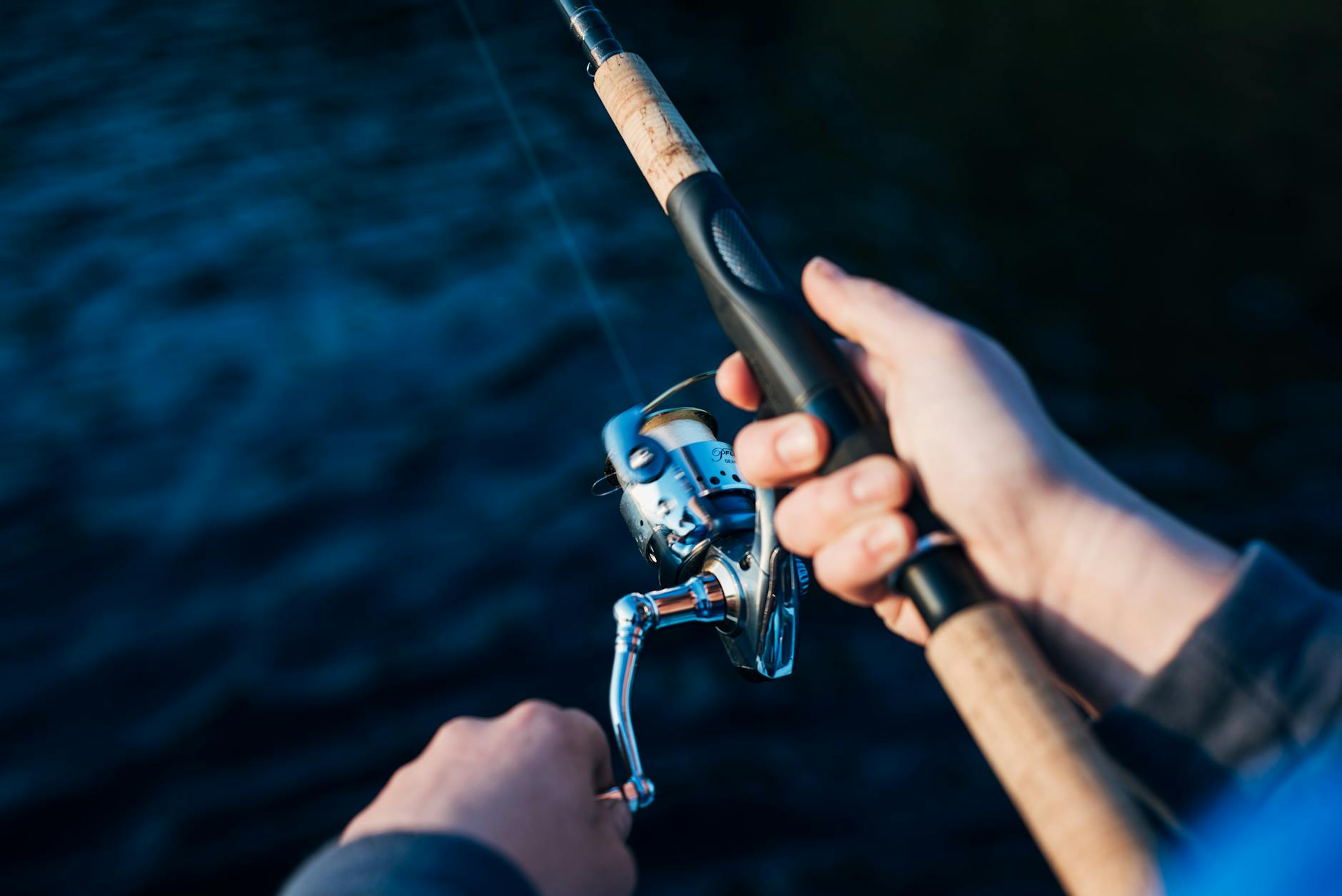
Bait the hook and try to catch something big. It’s more difficult than you think.
What Writing is Really Like…Computer Programming
Computer Programming is all about language and syntax, and so is writing. I know something of this as programming is my day job. I have often spent hours debugging some code, only to find that a misplaced semi-colon or comma was the culprit. Writers also will find themselves laboring over the usage and placement of punctuation, understanding that punctuation in the wrong place can change the entire meaning of a sentence.
What Writing is Really Like…Project Management
Project Managers track task and project status, in addition to schedule, budget and other project elements. As your writing career grows, you will quickly find yourself in need of a spreadsheet, database or other tool to know what you’ve submitted where, when to send a query letter, relevant contact information for publishers and publications, etc. You will also need to track readings, book fairs, online interviews, etc. on your Outlook or Google calendar. These demands will intensify as your writing becomes a fulltime occupation, and as you began to spend more time collaborating with others.
What Writing is Really Like…Marketing Executive
While the big publishing houses have marketing resources of their own, new writers trying to make a name for themselves in small independent presses will find themselves on their own to promote their work. You will be faced with questions like which social media channels reach the biggest (or more importantly, the most relevant) reading audiences, and does it make sense to subscribe to marketing service to promote your books. Additional considerations involve creating your own author’s website and blog, all of which may require you to acquire new skill sets. Your ability to effectively promote your work becomes even more critical if your work is self-published.
What Writing is Really Like…Accountant
While writing is an art and not a science, sooner or later you will be focused with financial decisionsand issues related to your writing. These may be simple decisions such as whether to enter a writing contest that charges a fee, or whether to hire an independent designer to design your author’s web site. Other more complicated issues will involve reporting any book sale royalties on your income taxes or tracking the sales tax to be submitted from cash sales at a book fair. And when you’re finally ready to take the leap and go fulltime, the big financial question: how much will I have to make on my writing to make a living?
What Writing is Really Like…Lawyer
Finally, you will be faced with legal issues during your writing career. I’ll give you a real-life example. Unbeknownst to me, a designer at one of the publishing companies used an image on my book cover that was copyrighted. Several years later, I was contacted by the copyright holder demanding a correction, and I referred him to my publisher. The publisher finally admitted the mistake, and at their expense, corrected the cover. Other examples include understanding reprint rights for your previously published stories and interpreting contractual agreements with publishers when you begin to get your first professional sales of your stories and novels.
So, there you have it – instead of being glamorous, the above disciplines can be tedious, if not downright boring. However, these skills will propel your writing career much further than your ability to bait a hook.
You can read more of David Fulcher’s posts and learn about his books here.
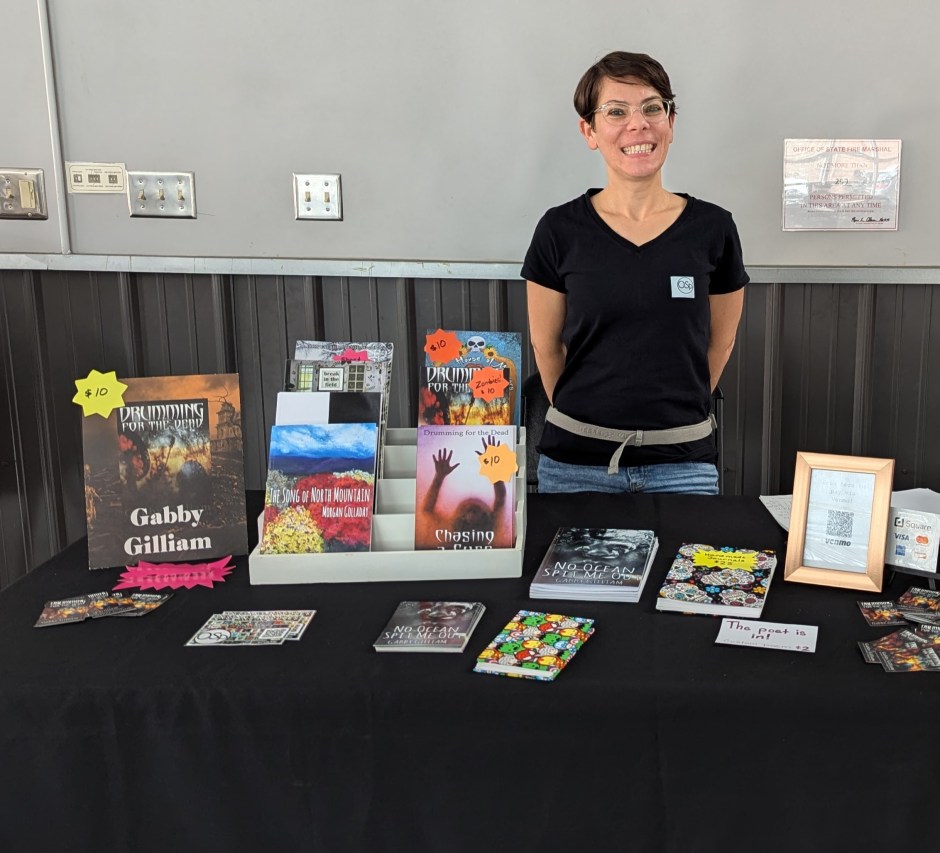
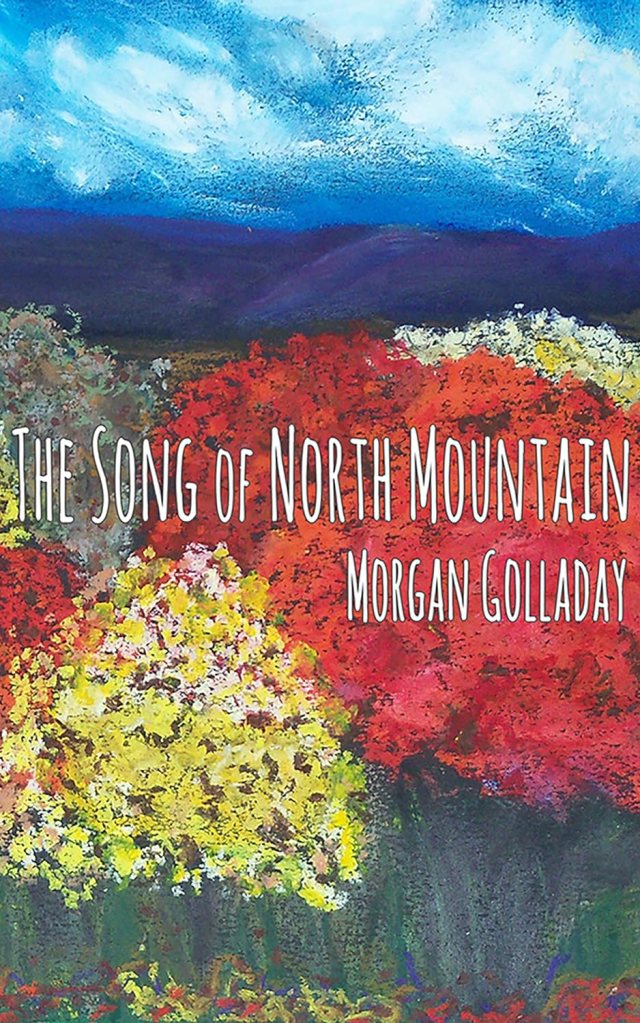
To learn more about the latest Old Scratch Press publications click here.The Song of North Mountain by prizewinning author Morgan Golladay is just one of several exciting new chapbooks! To learn more about Old Scratch Press and our poetry an short form collective follow us on WordPress at Oldscratchpress.comDav
Causey Mansion in Milford Delaware is a beautiful spot to meet and greet poet/artist Morgan Golladay, author of the Song of North Mountain. Learn more about the historic mansion here. The event will be held in the gardens from 1-3 p.m.. Purchase your copies in advance online or purchase one at the event. Either way, Morgan will be there to autograph! The location is 2 Causey Avenue, Milford Delaware 19463
Editorial praise is just beginning. Here are a few samples:
“Sometimes stark, but always beautiful, these free verse celebrations of North Mountain introduce a seasonal sense of environmental transitions to the observer and reader’s eye, with time’s passage changing everything and nothing…Aside from a personal visit to North Mountain, there is no better way of appreciating its beauty, impact, and presence over the eons than through The Song of North Mountain.” MIDWEST BOOK REVIEW
This book is a praise-song of poetry and art for Golladay’s beloved mountains. With an eye for detail and ease of language, her poems revere and embrace the elements and seasons of nature. Accompanying her poetry, her art further conjures the scenes we are taken to. From Vincents Wood to the Devils Throne, the writer takes us along, like all good poetry, until we feel as if we, too, have been there. I think I’d do well to heed what the writer says: Look too soon and you miss the mystery
Morgan Golladay’s The Song of North Mountain is a wonderful love song to where she grew up, “to the hills, rivers, and ridges of the Shenandoah Valley of Virginia.” And Golladay is the perfect guide for this voyage, perceptive, kind, and empathic. I urge you to purchase her fine book that also contains her own fine original artwork: sit back in a comfortable chair and travel with her to this most beautiful part of our country. As Golladay invites the reader to accompany her and writes in “Back in the Woods” (p. 69),
I experienced the magic and awe of a creation larger than I could imagine.
“Rest with us,” whispered the granite. “Breathe with us,” crooned the breeze. “Stay with us,” encouraged the trees.
Learn more about Morgan and her poetry here. And don’t forget to follow Old Scratch Press on Facebook. Thank you for reading.
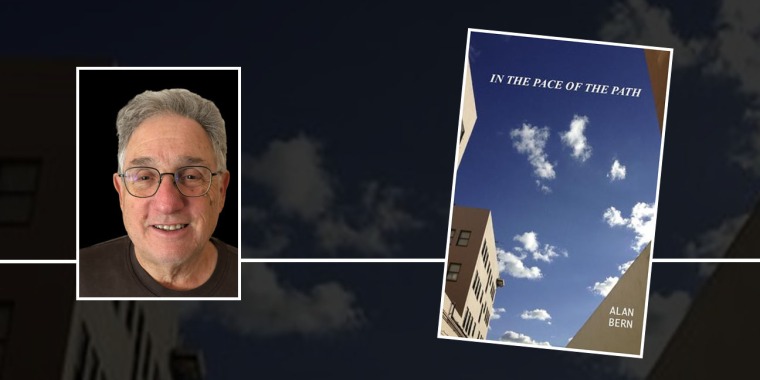
If you’re in the Berkely (California) area please join us at Pegasus Books Downtown on Thursday, June 27th for an evening of music, text, and storytelling with me, Alan Bern, Berkeley-based storyteller, performer, author of IN THE PACE OF THE PATH. Bern’s reading will beaccompanied by music from cellist Gael Alcock. Recently released by UnCollected Press, IN THE PACE OF THE PATHis a hybrid work of poetry, prose, and photos that charts my life in my hometown of Berkeley and my career at the Berkeley Public Library.
From 6:30-7pm, browse books and enjoy Bach’s Cello Suite #4 performed by Alcock, in memory of Larry Bensky, host of KPFA’s ‘Sunday Salon’ and ‘Piano’.” Reading and conversation with mewill follow, at 7pm. Copies of the book will be available for purchase and signing at the reading.
Alan Bern’s IN THE PACE OF THE PATH walks the border between poetry and prose, between the surreal and the realism where surrealism spawns, between the past and future which is the pace of the moment by moment of a life. I have learned from Bern’s clarity in poetry and prose to walk the edges of my homeland and step out into the unknown, while carrying the life I have lived within me. This is such an important work to read now and reread as we move through our lives.
—Rusty Morrison, Co-Publisher of Omnidawn—
Enjoy a video by L. Scott Jones of Wrapped in Ruins, a gallery piece and the most recent performance of PACES: dance & poetry fit to the space, a collaboration with other artists of dancer/choreographer Lucinda Weaver and me:
I will also present an art piece near the end of:
FREE LIVE EVENT: INSTANT NOODLES LAUNCH AND LIVE AUTHOR READING.
DATE: June 20, 2024 TIME: 4:30 PM PT | 7:30 PM ET Join us in celebrating the release of the newest issue of INSTANT NOODLES, the online literary magazine that features original poetry, art, and short fiction. Meet the authors and listen in as they perform their work live. This online event is open to the public. Click below to register.
Today we celebrated the launch of Gabby Gilliam’s book: NO OCEAN SPIT ME OUT with a reading on Zoom by Gabby and Robert and Alan.
I am going to guess that many of the guests were friends/family of the authors, and I am so grateful for their kindness as we navigated our first live event since 2020, in a different house, on different equipment, and on the opposite coast. I’m not going to say we were a well-oiled machine, but our hearts were in the right place. 😉
Within the coming week we will create a nice video of the event and post it here, as well as send it to the participants.
If you attended, or if you missed, please consider coming to future events. It meant so much to me to hear the authors read the books live that Dave and I often work on alone, in silence. I tend to read the books we publish a few times, but this is a whole different and rich experience.
So, if you were able to attend, I thank you for doing so, and being such a gracious guest.
If you were unable to attend, not to worry, as we will be posting the event here ASAP.
And don’t forget to visit the catalogue page and see what OSP books are available! The OSP authors keep 100% of their royalties, so help them earn a little coin at this writing game.
Also, next week, if you’re feeling game and supportive, join us again for the live reading of INSTANT NOODLES… VOLUME 4 (has it been 4 years???) ISSUE 1.
The writing for this issue, chosen by Gabby Gilliam, Anthony Doyle, Nadja Maril, and with visuals chosen by Robert Fleming and Alan Bern, is not to be missed!
I was thrilled today to have the privilege to mail three new Old Scratch Press books off to the National Book Awards! If you follow all of our doings around here you may have seen this post from last year, where I was lucky enough to do the same thing!
Gosh, you know, we’re going up against the big guys when we send our books in to the National Books Awards. Most of the other books being sent in are going to have been written by well-established poets with a long history of publication, or brand new poets being championed by their mentors who are the big guys in their fields, and those other books are also going to come from traditional (read as: large and monied) presses or university presses, which, like the big publishing houses, also have lots of disposable income and connections. I got my MFA; I know how that all works. And still, I don’t care about the competition. I care that we have wonderful poets. Morgan Golladay has been writing her poetry throughout most of her adult life, and salting it away for “someday,” and Nadja Maril and Gabby Gilliam have been submitting and getting small wins with their writing for years now, and why isn’t their writing as deserving as anyone else’s? It absolutely is! It gives me a total thrill to just think about getting them into this contest, where they get a chance to stand shoulder to shoulder with the “big guys.” And get this—Carolyn Forché is one of the judges this year! Carolyn Forché! It’s mind-blowing to think that a poet from our little collective is going to be read by her. I still remember how my teachers raved about Carolyn Forché’s book THE COUNTRY BETWEEN US back in the ’90s. We read it and discussed it over and over with reverence. The idea that she’ll be reading one of our books? It’s just wild.
So, lovely people following our progress as a collective and a press, please join me in crossing your fingers and blowing on one of these:
as we send Gabby, Nadja, and Morgan off to the National Book Awards to try their luck!
And hey, dear reader of this blog, why not snag a copy for yourself in a show of support?
Flash prose, poetry, and essays inspired by her kitchen, garden, and family memories; Nadja Maril’s chapbook, RECIPES FROM. MY GARDEN is a sensual feast for the soul. Drawing upon her life experiences as an artist’s daughter, antiques dealer, journalist, and author; Maril mines simple objects for meaning and creates a lavish buffet.
Editorial Praise for RECIPES FROM MY GARDEN
“Suffused with the tastes of cilantro, mint, and cucumber fresh from a garden, the smell of salt air from the ocean’s edge, the familiar scent of coffee and tobacco from a father’s hug, or the simple pleasure of the sounds of clicking insects through a backdoor screen, Nadja Maril’s lovely and sensitive RECIPES FROM MY GARDENis a feast for the senses and a balm for the spirit. While exploring personal memories that touch on abstract questions of identity and history, Maril also reminds us of the tiny yet profound comforts of earthly existence.” –Aaron Hamburger, author of HOTEL CUBA—
“In RECIPES FROM MY GARDEN, Nadja Maril casts a richly sensual literary spell. From the deft and resonant garden-inspired pieces that find the taste of ‘summer’ in basil and celebrate the ‘welcoming gaze of sunflowers,’ to the sharply observed portraits of small yet potent memories— buying a perfect dress with her mother; baking a cake ‘too beautiful to be cut’– Maril mines moral and spiritual meaning from everyday life. The promise Maril makes about a ‘chicken and rice’ recipe is true of this whole vibrant chapbook: ‘soul nutrition it will provide.’ ” –Elizabeth Searle, novelist and scriptwriter (A FourSided Bed; I’ll Show You Mine)–
“RECIPES FROM MY GARDENcelebrates the splendor of traversing a literary life and surviving the time of Covid. Nadja Maril’s first collection of poetic prose, flash memoir, and poetry introduces us to her family, her nurtured garden, and the myriad spaces she navigates to cope with our world. With true artistic excellence, Nadja’s words yearn for an understanding of what troubles us, inviting us into a landscape of riddles, questions and puzzles.” –Indigo Moor, author of Everybody’s Jonesin’ for Something—
“[RECIPES FROM MY GARDEN] is a treasure of small love stories: odes to beloved kitchens, and vegetable gardens, and the simple joys of a blooming sunflower. It is a book of memory and of pleasure that speaks of the love of family across many generations. The passed-down recipes inside the pages are themselves the most generous kind of love letter.” –Susan Conley, author of Landslide—
[In NO OCEAN SPIT ME OUT] Gabby Gilliam’s verse preserves the feel of the summer farm, contrasting its fertile brightness with the struggle between grief and the sudden absence of connection to family and place. Belonging and the struggle to continue remembering clash on the page, while the passion for life’s diverse and tactile experiences dazzle the reader with tantalizing gasps of zucchini, crab apples, and blackberry wine. Each poem gives the reader their own lingering taste of her ghosts. -Kim Malinowski-
NO OCEAN SPIT ME OUT is a captivating debut collection of poetry that delves deep into the intricate tapestry of family dynamics and personal evolution. Within its 30 poems, the collection embarks on a profound journey through the stages of coming of age, navigating the complexities of familial bonds, grappling with organized religion, and ultimately, embracing the essence of self-acceptance. Whether you’re seeking solace in the shared experiences of family relationships or searching for introspective insights into the nuances of identity and faith, this collection offers a profound and thought-provoking exploration of the human condition.
“Sometimes stark, but always beautiful, these free verse celebrations of North Mountain introduce a seasonal sense of environmental transitions to the observer and reader’s eye, with time’s passage changing everything and nothing…Aside from a personal visit to North Mountain, there is no better way of appreciating its beauty, impact, and presence over the eons than through THE SONG OF NORTH MOUNTAIN.” —MIDWEST BOOK REVIEW—
From the mighty pen of artist and author Morgan Golladay comes THE SONG OF NORTH MOUNTAIN, a transformative collection of poetry and art celebrating the famous and mystical North Mountain of Appalachia. North Mountain, a wildland in the George Washington and Jefferson National Forests of western Virginia, has been recognized by the Wilderness Society as a special place worthy of protection from logging and road construction. The Wilderness Society has designated the area as a “Mountain Treasure.” Morgan Golladay brings her readers to dwell in the reverence of this wonderful wilderness. Golladay is an award-winning author who was raised on North Mountain and lives in coastal Delaware as part of a thriving artist and author community. All words and art in this book are by Golladay.
Five major publishing companies pretty much cover the market for books. But it’s the indies that take more risks on new authors, like me and my fellow writers at Old Scratch Press (an imprint of Current Word Publishing {CWP}). We write because we have something to say, not necessarily for fame and fortune (although that certainly wouldn’t hurt).
If you find a book you like, ESPECIALLY if it’s from an indie publisher, give it a review on whatever national website for books that comes up. Just that small bit of verbal support that says “I like this book” means a great deal to the writer, and the publisher. And it doesn’t have to be my book (but it’d be great if it were!).
So let me tell you about my book. There are fifty-five poems, 8 black and white full-page sketches, several smaller sketches, and other material in the book. They are all original I hope you’ll buy it, either in Kindle or print form.
Hot Off the Press: The Song of North Mountain an Amazon Top 100 Bestseller 8/17/24
For those of you who don’t know me, there are a few things that are important. I am 77, and I have retired from two jobs. I started publishing only in late 2019, and this truly is my Very First Book that is by myveryownself. At times I feel like it’s awfully late to start a new career, but then again.
I live in a community where many people move to when they downsize into their own retirements. THIS part is important: there’s no reason to stop just because we’re retired, or older, or more physically limited than we were when we were 35. We still have the ability to create, whether with words, paint and brush, whisks and casserole dishes, pottery wheels, or needle and thread. There really is nothing we can’t do, just some things we may not do as well as when we were younger (like blacksmithing, or crawling under vehicles).
Available here for pre-order on Kindle with delivery May 1st, I hope you like The Song of North Mountain. https://www.amazon.com/dp/B0D1P64FHC soon to be available in softbound print as well.
Old Scratch Press is pleased to announce the upcoming release of The Song of North Mountain, by Morgan Golladay. Slated for May release, the book includes original artwork by the author to accompany her poems. The collection is now available for pre-order.
Founded in 2023, Old Scratch Press is a cooperative of poets and short-form authors who have come together to promote the publication and appreciation of poetry and short-form writing. The Song of North Mountain will be the third chapbook, published by the small independent press.
Break in the Field by Ellis Elliot was their first book, nominated for the National Book Award, followed by avante-garde wordsmith and artist Robert Fleming’s poetry collection, White Noir.
The Song of North Mountain, says Morgan, “is about my relationship with this Earth, focusing on one small mountain in one small chain, in one small part of this vast world.
This book is about a connection – my personal experience sitting in stillness on this mountain, as well as many other mountains. North Mountain is, for me, a symbol of my relationship with this Earth. The permanence of the land, regardless of how it changes; the cycles of life, the quiet continuation of change. It has been a long time since I personally was able to sit quietly and listen to the tree branches and leaves speak to each other. I cannot scale the trails as I once did. But the magic of place is still in my memory, whether it’s the rocks in the rivers, the trails on the mountain tops, or the joy of sharing ripe wild berries.
“…my personal experience sitting in stillness on this mountain, as well as many other mountains. North Mountain is, for me, a symbol of my relationship with this Earth.”
Morgan Golladay
The cover design, an original painting, and the 10 black and white interior illustrations were created specifically for the book. Pre-order availability on Amazon and on the Old Scratch catalogue page will be coming soon.
To keep up with the latest news, please follow our blog here for free and also follow us on Facebook. Later this year look for more chapbooks penned by Gabby Gilliam, Alan Bern, and Nadja Maril. Thank you for reading. Special note: the deadline for Instant Noodles LIterary Magazine submissions has been extended to the end of the month.
Looking for recommendations for what to read to your toddler? Poet, writer and former Children’s Librarian Alan Bern has a favorite:
“The Owl and the Pussycat” by Edward Lear, illustrated by James Marshall ; afterword by Maurice Sendak.
By Alan Bern
Edward Lear’s “classic love ballad, “The Owl and the Pussycat,” was voted the most popular British childhood poem in 2014, and has been set to music by everyone from Stravinsky to Laurie Anderson.” (”The Sense Beneath Edward Lear’s Nonsense” by Adam Gopnik, The New Yorker, April 16, 2018) If not as popular in the United States, “The Owl and the Pussycat” has spawned a number of illustrated picture books here. Of the many illustrated picture books of this absolutely brilliant poem for very young listeners and readers by Edward Lear, “The Owl and the Pussycat,” my top choice is the version by James Marshall. Next to Lear’s own illustrations for his poem, James Marshall’s illustrations, although he died before fully finishing them, are my favorites. Marshall creates wonderful characters that match so perfectly the sounds and voices of Lear’s poem. It is a nonsense poem, but it’s always made perfect sense to me and to so many. Young children will love the poem and the book; so will elementary school kids when they need to feel just a bit regressed. Heck, adults will love it, too. As I do.
Nonsense Suggesting Sense
As Gopnik explains later in his essay: “This gift for creating pathos without sacrificing absurdity is what makes “The Owl and the Pussycat” one of the greatest poems in the language… In “The Owl and the Pussycat,” meanings rush in:
They dined on mince, and slices of quince,
Which they ate with a runcible spoon…
Not even Humpty Dumpty could explain what a runcible spoon is. We know it by its verbal vibration, by its presence, by its sheer runcibleness… This gift for making something felt without having first to make it familiar is one that we later admire in Beckett. Nonsense suggesting sense is a familiar pattern. Nonsense suggesting the numinous is not.”
Artist/illustrator James Marshall
Personal Connections
And here’s a personal story to go with the poem. As a children’s librarian for many years, I was honored to serve on the American Library Association’s Caldecott Committee in 1992, and I suggested Marshall’s illustrations for this book as a finalist. It was not chosen, most probably because Marshall never quite finished the illustrations. I continued to love the book anyway, and I always wondered why the poem always spoke to me… when I read it or when I listened to another read it. Shortly after my Mom died, I found out why. One day while going through some letters, from my Mom to my Aunt, letters that my Aunt had kept from the early 1950s. My parents were on sabbatical leave (my Dad was a young professor) in Cambridge, England, and I was almost two. In one letter, my Mom wrote: ‘It’s wonderful to be here, Howard and I are having such a good time, and we love having our little boy with us; however, he does drive us crazy and asks over and over and over that we read “The Owl and the Pussycat” to him.’ That brought such a wide smile to my face: of course, I don’t remember it, but it now explains, in part, my continuing love for the poem. Thanks, Mom and Dad, and thank you very kindly, Mr. Edward Lear! And now I shall reach for my runcible spoon.
If you haven’t done so already, please follow our blog here for free and also follow us on Facebook.And coming soon is our newest chapbook release, The Song of North Mountain, by Morgan Golladay followed by chapbooks penned by Gabby Gilliam, Alan Bern, and Nadja Maril.