Submitters Beware

There has been much in the news within literary circles lately about literary journals with questionable practices, mostly focused upon submission fees and how these fees are used. No one should question the idea that it is expensive to run a literary magazine with such costs as editing and overhead, and most importantly, not everything about submission fees should be seen as negative. It is possible that when writers must pay a nominal fee to submit their work to literary magazines, they may be inspired to submit a more edited and stronger piece. However, it’s one thing to pay $3.00 to one journal to submit but let’s face it, most writers must submit the same piece to many magazines if they want to increase their chance of having it published. This is why submission fees can really add up. There is also the idea that if submission fees are charged, less submissions will come in and this will lead to faster publication decisions by editors. Like it or not, it does seem that submission fees are here to stay. If we accept that fact, then we must understand some realities about submission fees.

I am not going to name names here, but some well know literary journals have been engaging in practices that are shameful. It’s hard enough and expensive enough to be a writer trying to get work published in literary journals without these bad actors but, unfortunately, they do exist. One well known journal accepted submissions and charged for over a year but had already stopped reading and publishing new word. They later folded and changed their name. I have personally submitted to journals several times only to realize they had gone defunct. I was never able to get my submission fees back. Recently, several well-known journals held contests, charged the high submission fees customary in literary contests, and never announced any winners. Suffice it to say that just because something calls itself a literary journal doesn’t mean it should. 

So, what is a writer to do? How can we protect ourselves from unethical practices and scam journals? Here are some practical ideas to consider.

  1. Is the journal listed on reputable databases such as Poets and Writers, Submittable, NewPages.com, Clifford Gastang Literary Magazine Rankings, MLA International Bibliography, JSTOR
  2. Is the journal’s website polished, free of grammatical and spelling errors. Is it easy to navigate? Does is look professional? A poor website design might be a cause for concern.
  3. Do their publication terms comply with normal industry standards. Publication guidelines should always be clear and concise and include all requirements such as formatting parameters. 
  4. Be very concerned if a journal is asking for all rights to your work. They should be asking only for first serial rights. 
  5. RED FLAG: Is their submission fee unreasonably high? Are they charging $15.00 as an example when most journals are at $3.00. This should worry you.
  6. Do they explain why they are charging a submission fee of any amount?
  7. If they do charge submissions fees, do they also have yearly contests where they offer a monetary prize?
  8. It should never be difficult to find contact information on the journal’s website, and there should be some explanation of who the editors are and what their editorial process is. A journal should have a physical address and an email address.
  9. Look at their publication history. Have they been publishing consistently? Can you purchase copies of the journal on their website? Look at the most recent issue. Look at the quality.
  10. If the journal has a blog on their website, is it being maintained? 
  11. Does the journal submit work to contests such as Pushcart Prize or/and O. Henry Awards?
  12. Do they have a social media presence such as Facebook where they regularly promote the work they publish?
  13. Be aware of any unrealistic or boastful claims about readership. 
  14. If you are submitting to a contest, look to see if the list of winners from last year’s contest is listed on the journal’s website. It should be.
  15. Be aware if a journal repeatedly pushes back contest deadlines. 

I have been submitting to literary journals for many years and have been lucky to have some level of success. Be aware of where you are sending your writing, but don’t let a few bad apples dissuade you from submitting to literary journals!!! The overwhelming majority are ethical to a fault and the writing world would be lost without literary journals. They are an invaluable part of our art form. I read literary journals, subscribe to them, admire them immensely and thank them for all the wonderful writing they bring to the world. So, happy submitting to my fellow writers and the best of luck to you all!

~Ginny

Virginia Watts has been fortunate to have published nearly 100 pieces in literary magazines including CRAFT, The Florida Review, Reed Magazine, Pithead Chapel, Permafrost Magazine, Broadkill Review, Two Thirds North, Hawaii Pacific Review, Sky Island Journal, Eastern Iowa Review, Evening Star Review and Streetlight Magazine. Nominated four times for a Pushcart Prize and four times for Best of the Net, in 2019, Watts won The Florida Review Meek Award in nonfiction.

Virginia’s new book is now available from Old Scratch Press:

Her prior poetry chapbooks Shot Full of Holes and The Werewolves of Elk Creek 
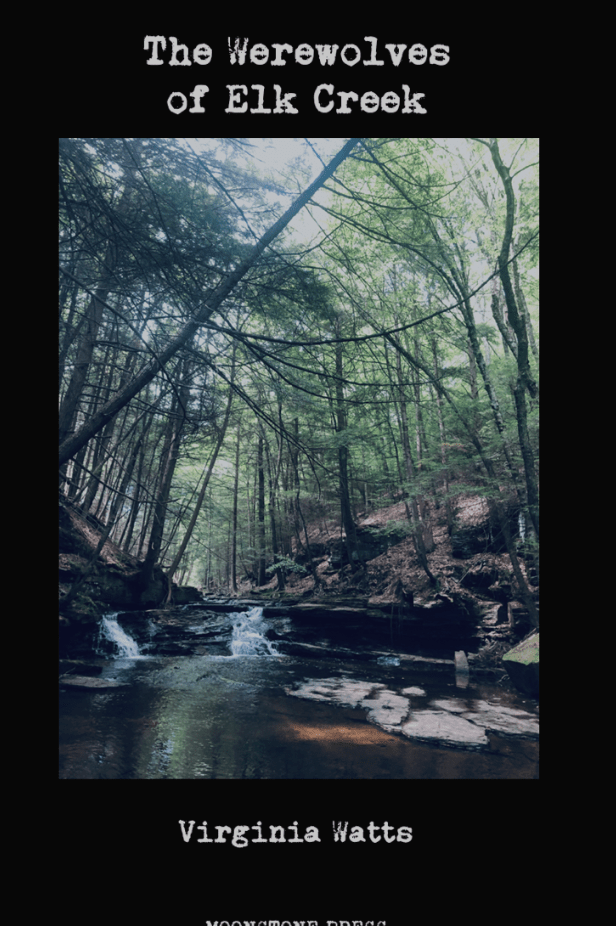
 are available from Moonstone Press. And her debut short story collection Echoes from the Hocker House is not to be missed!

How to Get the Most Out of Critique Groups

I have participated in quite a few of writing critique groups for many years now, and I can say that the feedback I have received from fellow writers has been critical to my success in publishing my work. It is true that if you remain with the same group over an extended period, there will be certain people that you will agree with more than others for suggestions for editing your work. There is nothing wrong with that. After all, everyone has different tastes and preferences. That being said, it is important to read and consider all comments you receive. Here are a few tips to guide you in getting the most from the process of critique. 

  1. Decide what you are honestly looking for before you submit a manuscript. If you just want to know if the story is worth working on at all, then submitting a very rough draft might make sense but I never do that. My approach is to put in all the time necessary to complete a short story or poem and make it the best I can. This means, for me, several months of writing and many edits. I probably edit a piece fifty times or more before I feel I have done all that I can for it. I prefer to circulate what I believe is “a finished story.” 
  • During the critique, just sit quietly and listen. In the groups I attend, I will receive written comment, so I don’t have to write notes during the oral critique. You can learn a lot by listening to colleagues discuss and debates questions or concerns they may have about your writing. Above all, don’t say anything as the writer. You aren’t there to explain your work and above all, you are not there to defend it. You don’t want people to feel that they cannot give you honest and open feedback. That’s what you are there for and as writers, that is what we all need. 
  • Try not to feel hurt about “negative” comments about your writing. At first, for most writers, we do feel hurt but in time, this goes away as you realize that critique is an honest exchange of creative suggestions meant only to help you decide what final edits you wish to make. We cannot read our own work in a way that will make it the best it can be. We don’t have the distance to be able to do this. In short, we need each other. Of course, the critique should be done in a constructive, professional way. I have always had good group leaders who have insisted upon this.
  • At the end of a critique, I always make sure to thank everyone for taking the time to read and critique my work. I know it takes time and effort, because when I read for others, I give it my all too. It is the greatest gift we can give to each other as writers.
  • So now that you have your critiques, it is very important to set everything aside for a minimum of a month before you return to make edits. Early on I made the mistake of making edits too quickly and they were knee jerk and not good. You need time to let things sink in and percolate. Give it a rest.
  • When I do edit, I go through each written critique and fix all mechanical edits first, such as spelling errors. While doing that, I keep a running list of more involved edits that I will look at more carefully to see if I agree with them. This might be things such as a section of unrealistic dialogue, an ending that needs less or more, a character that lacks some necessary background. 
  • I have never not changed a story or a poem based on professional feedback. Some more than others, but all have been edited because of ideas or suggestions or questions raised by writing colleagues and I can honestly say that my work has been improved immeasurably by the critique process. I am so grateful for my writing colleagues and friends. I do have one writing friend who I give my final edited pieces to for one final read. And another tip for writers. Seek out readers of all ages to critique your work. You will get different perspectives that will improve your final product. 
  • An important final comment about writing groups. Over the years. I have made such wonderful, close friendships with the people I have met in these groups. It’s funny how life works. You go looking for something and you come away with something so much more valuable than you expected.
  • Good luck with your writing and enjoy all of the process, including critique and editing in response to critique. I promise you that you will find it rewarding to not only give critique but also to receive it. It is part of our art form. 

Enjoy your group!  

~Ginny

Virginia Watts has been fortunate to have published nearly 100 pieces in literary magazines including CRAFT, The Florida Review, Reed Magazine, Pithead Chapel, Permafrost Magazine, Broadkill Review, Two Thirds North, Hawaii Pacific Review, Sky Island Journal, Eastern Iowa Review, Evening Star Review and Streetlight Magazine. Nominated four times for a Pushcart Prize and four times for Best of the Net, in 2019, Watts won The Florida Review Meek Award in nonfiction.

Her poetry chapbooks The Werewolves of Elk Creek 

and Shot Full of Holes are available from Moonstone Press. Her debut short story collection Echoes from the Hocker House is available on Amazon.

Secrets to a Publisher Relationship

by Robert Fleming

You’ve published three works. You have the acceptance rate of +-3%. Fed up with the time and submission costs of rejections? Resubmit to a magazine editor who published your work before. This may lead to a relationship with a magazine publisher/editor. Why would you want that? Aren’t editors grinches handing out rejection coal? Some editors are coal distributors, but other offer something you may want:

  • They publish books in your genre and may publish your book.
  • They repeat the same writers: either multiple works in the same or different issue. How can you figure this out? If your published work is digital (online), find an author you like, who was published in the magazine you were published in; type their name in “search.” Does the search results list only their current work or multiple works? If only one, try again with at least two different authors you like.
  • Nominates writers for awards (magazine award, Best of the Net, Pushcart)

How do you know if the editor is interested in a relationship with you?

  • They accept your work in three days or less from submission.
  • They locate your work in the first three pages of the issue.
  • They publish more than one of your works.
  • In the issue forward, they mention your name.
  • They ask you to publish previously submitted rejected work from their slush (reject) pile.
  • Nominate you for an award

The benefits of having +-10 magazines with repeat publications are

  • Create 120 works a year = 10 magazines * 4 submissions a year * 3 works per submission
  • Create enough work for a full-length book of +-70 pages
  • Be selected as a featured reader: Robert is a repeat writer for Oddball magazine, I want him to feature for me.
  • Be invited to be an associate first line editor of a magazine

Show appreciation for the editor/publisher:

  • Once your work is published, put a posting on your social media (Facebook, Instagram, TikTok), that announces your publication with links to the publisher’s magazine.
  • When you read work, say it was published by “editor name” in “magazine name” and announce the magazine’s next publication with their links.

Once you are a repeat writer for a magazine, submit quarterly.

Even yours truly, with over seven hundred publications, only has a +-33% acceptance rate with a new magazine. One of my publication strategies was to create and now maintain a relationship with +-10 magazine editors.

Yours Truly is:

Robert Fleming, a contributing editor of Old Scratch Press

OLD SCRATCH PRESS – a poetry/short-form collective | estd. 2023

who published an Amazon best seller visual poetry book: White Noir

white noir: Fleming, Robert: 9781957224183: Amazon.com: Books

an editor of the digital magazine Instant Noodles

About – INSTANT NOODLES

Exploring Horror Writing: A Q&A with R. David Fulcher

We learn from asking questions, and what better way to explore the craft of writing than through an engaging Q&A with an author! This month the author I’m interviewing is R. David Fulcher who happens to be a member of the Old Scratch Press Poetry and Short Form Collective.

R. David Fulcher is a talented author with multiple books to his name. His most recent work, a captivating short story collection titled THE PUMPKIN KING AND OTHER TALES OF TERROR, showcases his passion for storytelling. A writer of both poetry and prose, he deeply loves speculative fiction, particularly science fiction and horror. You can explore more of his work on his blog at Rdavidfulcher.com.

This is the perfect month—the season of ghosts and goblins—to delve into the exciting craft of writing horror. Most of my questions in this post will focus on the intriguing insights from THE PUMPKIN KING AND OTHER TALES OF TERROR. Let’s celebrate the art of writing together!

Q: Question

R: Response

R. David Fulcher

Q: As a writer, what is your primary goal when interacting with your readers?

R: As a horror writer, I have two primary goals: 1) Establish an “eerie” atmosphere; and 2) Elicit a physical response in the reader. Yes, I hope to stimulate the readers’ minds as well, but I primarily want to elicit fear – a racing pulse, the small hairs standing up on the back of your neck, a shiver in your spine – only good horror tales have this effect.

Q: Was there a specific moment you remember, perhaps an experience that spurred you on to want to write this particular book?

R: The Pumpkin King and Other Tales of Terror (and the follow-up volume “Asteroid 6 and Other Tales of Cosmic Horror”) is sort of a “greatest hits” collection of my short stories, so unlike a traditional novel the stories were developed over many years and inspired by many moments and experiences throughout my life.

To give a sense of the age of some of the stories, the title story “The Pumpkin King” first appeared in a small press magazine entitled Mausoleum back in 2001!  Of course, all the stories have been heavily revised in the new book.

To provide an experience that spurred me to write a particular story, “Castle Marienburg” was inspired by a tour of that very castle during a visit to Germany in college.

Q: As both a horror writer and a poet, how has Edgar Allen Poe influenced your work?

R: In a way, Edgar Allen Poe led me to my genre. My high school English teacher taught a semester on Poe, and I was hooked.  I started writing dark, gothic short stories that day after school and submitting them to small press magazines shortly thereafter.

Q: Writing poetry and writing prose, how has the two different types of genres influenced each other in your writing?

R: My love for both poetry and prose has caused me to experiment with inserting sequences of poetry into my fiction.  Some examples of my stories that include embedded poems are “A Night Out with Mr. Bones”, “The Faerie Lights”, and “All Across the Mountain”.

Q: Did you work alone or did you rely on some feedback from others?

R: I initially write on my own, but I really enjoy it when people close to me review my work and give feedback on it.  For example, my brother Dale helped proofread the manuscript for The Pumpkin King and Other Tales of Terror, and after reading my short story “Asteroid 6” my wife Lisa was really impressed with the tale, so I was inspired to title my second volume coming out this Fall as “Asteroid 6 and Other Tales of Cosmic Horror”.

Of course, my publishers David and Dianne are also tremendous editors and their feedback has been essential to my work.

Q:Do you imagine you are writing for a specific person or a certain audience?

R: No specific audience. I will say that my writing is almost always in the realm of the fantastic, so fans of my work must be able to “suspend their disbelief” and just go along for the ride, trusting me to take them to a magical, almost unbelievable ending, even if all the facts don’t line up with reality. I think fans of hard science-fiction (Isaac Asimov, etc.) will have a hard time enjoying my work.

Q: How do you approach revision?

R:This goes back to things I’d tell my former self.  I used to put down the pen (yes, I write my stories out long-hand!) after a long, intense burst of writing (sometimes an entire story in a single sitting), push the manuscript back on the desk with a smile, and say “Perfect!”

I would then immediately submit the tale for publication, only to receive rejection after rejection, never understanding why.

I’ve finally learned that being a professional writer means spending almost twice the amount of time revising your work as you spent writing it in the first place.  So I approach it like work. I allocate time for editing/proofreading, I set deadlines, and I hold myself to them. The difference between my original manuscript written after a burst of artistic inspiration and the manuscript after several rounds of revision is often night and day.

Q: If you could give advice to your younger self, what would you want to tell them?

R: I’d remind my younger self that the success of a book is up to me. I used to self-publish with AuthorHouse (formerly 1st Books) and believed that getting my book on Amazon and buying the publisher’s “marketing kit” would instantly propel me to fame and the bestseller’s list.  I have learned the hard way over the years this is not the case. Publishing the book is just Step 1.  The real work is in the marking and promotion.

Q: How did you find your publisher or did they find you?

R: David and Dianne of Devil’s Party Press (now Current Words Publishing) met at the Indie Lit Fest at Frostburg State University in Frostburg, MD.  At the time they were accepting submissions for one of their Halloween Party anthologies and provided me with the information.  I submitted and was accepted. The rest as they say is history! 

Q: Do you have a specific horror story favorite you’ve read?

R: Several novels by modern horror writers have had a tremendous influence on my writing.  They include “Something Wicked This Way Comes” by Ray Bradbury, “The Tommyknockers” by Stephen King, and “HIdeaway” by Dean Koontz.

In your own portfolio, a story you are particularly proud of?

R: I have a few favorites among my stories that don’t always correlate to fan favorites.  The first is “Castle Marienburg”, which was originally titled “Eyes in the Night”. A horror editor in the small press called it one of the best horror stories he had ever read, which was very satisfying. Others include “Spectra’s Masterpiece”, a science fiction story about AI published back in the early 2000’s well before AI became a commonplace topic, and “The Land Spider” in the way that it incorporates native American mythology.

Q: Do you have a “day job” to help pay for your writing habit, and it so, has it impacted in any way your writing?

R: During my day job I work as an IT Contractor.  My work with computers has spilled into my fiction with my stories “ELECTRIC”, where a boy becomes one with his home computer, and “The Witch Toaster,” where a group of programmers within an IT Department must battle supernatural forces.

Thank you for reading and visit the Old Scratch Press Website to learn more about our authors and upcoming publications.

Small Independent Presses Provide Opportunities for New Voices

By Morgan Golladay

Five major publishing companies pretty much cover the market for books. But it’s the indies that take more risks on new authors, like me and my fellow writers at Old Scratch Press (an imprint of Current Word Publishing {CWP}). We write because we have something to say, not necessarily for fame and fortune (although that certainly wouldn’t hurt).

If you find a book you like, ESPECIALLY if it’s from an indie publisher, give it a review on whatever national website for books that comes up. Just that small bit of verbal support that says “I like this book” means a great deal to the writer, and the publisher. And it doesn’t have to be my book (but it’d be great if it were!).

So let me tell you about my book. There are fifty-five poems, 8 black and white full-page sketches, several smaller sketches, and other material in the book. They are all original I hope you’ll buy it, either in Kindle or print form.

Hot Off the Press: The Song of North Mountain an Amazon Top 100 Bestseller 8/17/24

For those of you who don’t know me, there are a few things that are important. I am 77, and I have retired from two jobs. I started publishing only in late 2019, and this truly is my Very First Book that is by myveryownself. At times I feel like it’s awfully late to start a new career, but then again.

I live in a community where many people move to when they downsize into their own retirements. THIS part is important: there’s no reason to stop just because we’re retired, or older, or more physically limited than we were when we were 35. We still have the ability to create, whether with words, paint and brush, whisks and casserole dishes, pottery wheels, or needle and thread. There really is nothing we can’t do, just some things we may not do as well as when we were younger (like blacksmithing, or crawling under vehicles).

Available here for pre-order  on Kindle with delivery May 1st, I hope you like The Song of North Mountain. https://www.amazon.com/dp/B0D1P64FHC soon to be available in softbound print as well.

This post was adapted from an essay on Morgan’s own blog and you can read more of her words at https://morgangolladay.wordpress.com/ Don’t forget to follow this blog and our facebook page for the latest news.

Want to Get Published? Where & How to Submit Your Work

By Ellis Elliot

Sharing your work by submitting it for publication can be a daunting task in many ways, not only because it causes a vulnerability hangover, but also because it can be overwhelming and hard to figure out where to start. I’m hardly an expert, but I have submitted dozens of poems to literary journals and contests, and found a good bit of success, and this is what I’ve learned.

            First, begin by stalking online and print literary journals. Find some you like and respect. Consider the type of writing you want to submit. You would not submit your Southern Gothic short story to a literary journal for Christian Sci-Fi (yes, that’s a thing). Find the right kind of “fit”, as far as genre and theme, for your work. See if the journal resonates with you. And while it is never wrong to “shoot for the stars” and submit to the New Yorker or another of that ilk, it also makes sense to spread your net wide, over a variety of journals, big and small.

How do you even find these journals in the first place? Maybe your school has one, or you can broadly search online for ones in your genre, and then read some. Read to get a sense of specific journals, and what all is out there.

Also, there are numerous free and paid websites that have lists of journals, and some can even narrow it down for you based on your preferences.  A few I use are: Submittable, Duotrope, Poets and Writers magazine, Writer’s Digest, and Authors Publish. (See links below) These provide lists of publications, along with dates and details. Always check if there are fees involved, and choose wisely. I’m the first to admit, it is a lot of work to wade through the sea of lit journals in order to filter down to the ones you want, but once you find them, your list has begun, and from there you can only add to it. Plus, once those algorithms get in your computer, you’ll be getting all sorts of lit-related stuff, like it or not.

Once you’ve narrowed it down to the journals you want to send your work to, be sure to read the guidelines carefully. You don’t want your work tossed because you sent five poems when they asked for one, or sent a 500-word bio when they asked for 50.

Photo by Pixabay on Pexels.com

Be prepared with a good cover letter, short biography, and a photo. Your cover letter should be addressed to the editor of your genre in that publication. It should be brief and can include references to the journal you’re submitting to, like how you enjoyed their recent issue on butterfly migration, but don’t overdo. They are there to read your writing, not your cover letter. Be sure to thank them for their time and effort, because it does require a lot of both.

The bio should also be matter-of-fact, including salient facts, like where you live, what job you have, or family and pets. Include any writing-related experience you’ve had, whether it’s school, workshops, or clubs. If you’ve been previously published, be sure to include those titles. 

You can always throw in a little personality and add things like, “in my spare time I like to taxidermy butterflies and run on the beach.”

            Finally, the photo. I recently paid for a headshot, but that was only after years of using shots I made my husband take of me immediately after I got home from the hair salon. Just be sure you have something ready to go.

            Once you’ve sent your best work in the best way you can, you wait. Most lit journals get a boat-load of submissions and turn-over time can take months. When you get an inevitable rejection, know that the process is entirely subjective. If it is your best, then it is art, and no two people necessarily will see your art in the same way. If you get accepted, let that feeling cover you like syrup, do a happy dance, then get to work withdrawing from all the journals you sent that piece to. Most journals allow “simultaneous submissions” with the caveat that you alert them if it is accepted elsewhere. It’s a good problem, but necessary to maintain good

            I write all of the above only after having made every conceivable mistake and had innumerable rejections. But, I have learned a lot along the way.  Like anything, submitting is work, and a job unto itself. It is also well worth it when you have the satisfaction of seeing your work in print.

Ellis is one of our founding collective members. Her poetry collection, Break in the Field, is available for purchase here.

Below are some links to get you started on sending out your work.

https://www.submittable.com/

https://duotrope.com/

https://www.pw.org/