Poems Come in Many Forms. Let’s Look at Odes


            There are many types of formal poetry and for anyone who likes to write poetry, it’s worth your time getting to know these forms and trying a few as well. This teaches us all about meter and rhyme, how a poem should look on the page, and trying some of these is just plain fun. Here is a short run down of twenty different types of poetry. See how you do with some of these! You might surprise yourself, find a from you really like, and write a collection of them. 

Acrostic: first letter of each line spells something

Ballad: narrative like a folk story

Blank Verse: Unrhymed but has iambic pentameter

Cinquain: five-line poem with 2-4-6-8-2 syllables per line

Concrete: has a shape on the page like a tree

Elegy: a mourning to someone gone

Epic: long, narrative work like Hiawatha

Found: taking and reframing words from other sources like newspapers

Ghazal: couplets that share rhyme and refrain

Haiku: Japanese form of 5-7-5 syllable pattern 

Limerick: a humorous poem of 5 lines

Lyric: short poems of emotion

Narrative: a form of story telling

Ode: message to a subject, event or object

Pastural: Idealized environment, often rural life

Sestina: complex 39-line poem

Slam: Oral, competitive poetry

Sonnet: 14-line poem with specific rhyme scheme about love think Shakespeare

Villanelle: 19-line. 5 tercets followed by a quatrain with 2 repeating rhymes and 2 refrains

The Ode is a great form to try. Odes were developed in Ancient Greece. An ode then was a song or chant performed to celebrate athletic victories. Odes are praise using rich and clever description. Here’s a famous example of an ode poem. 

Ode to the Hotel Near the Children’s Hospital

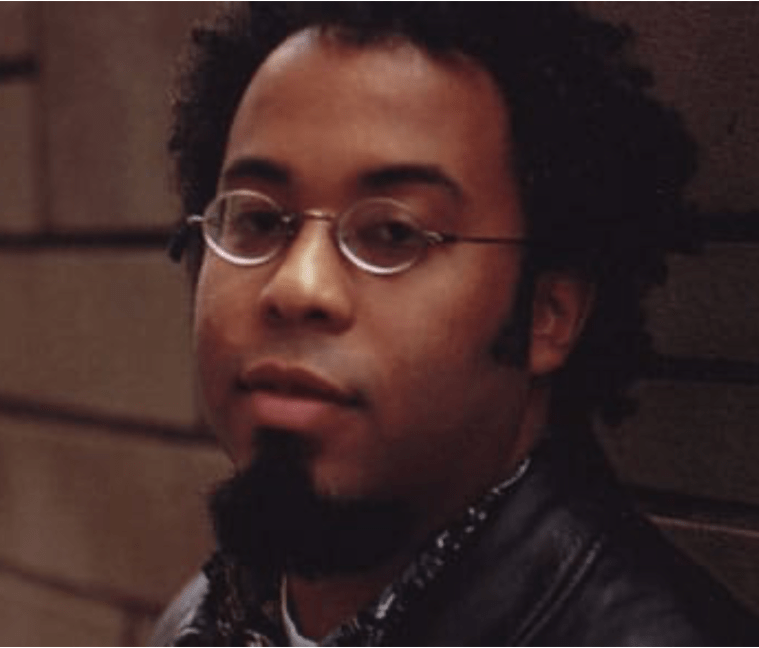
BY KEVIN YOUNG
Praise the restless beds

Praise the beds that do not adjust

     that won’t lift the head to feed

     or lower for shots

     or blood

     or raise to watch the tinny TV

Praise the hotel TV that won’t quit

      its murmur & holler

Praise the room service

      that doesn’t exist

      just the slow delivery to the front desk

      of cooling pizzas

      & brown bags leaky

      greasy & clear

Praise the vending machines

Praise the change

Praise the hot water

& the heat

       or the loud cool

       that helps the helpless sleep.

Praise the front desk

       who knows to wake

       Rm 120 when the hospital rings

Praise the silent phone

Praise the dark drawn

       by thick daytime curtains

       after long nights of waiting,

       awake.

Praise the waiting & then praise the nothing

       that’s better than bad news

Praise the wakeup call

       at 6 am

Praise the sleeping in

Praise the card hung on the door

       like a whisper

       lips pressed silent

Praise the stranger’s hands

       that change the sweat of sheets

Praise the checking out

Praise the going home

       to beds unmade

       for days

Beds that won’t resurrect

       or rise

that lie there like a child should

        sleeping, tubeless

Praise this mess

         that can be left


Virginia Watts is the author of poetry and stories found in The MacGuffin, Epiphany, CRAFT, The Florida Review, Reed Magazine, Pithead Chapel, Eclectica Magazine among others. She has been nominated four times for a Pushcart Prize. Her debut short story collection Echoes from the Hocker House was short listed for 2024 Eric Hoffer Grand Prize, selected as one of the Best Indie Books of 2023 by Kirkus Book Reviews, and won third place in the 2024 Feathered Quill Book Awards. Please visit her.

Virginia’s new book is now available from Old Scratch Press:

Her prior poetry chapbooks Shot Full of Holes and The Werewolves of Elk Creek 
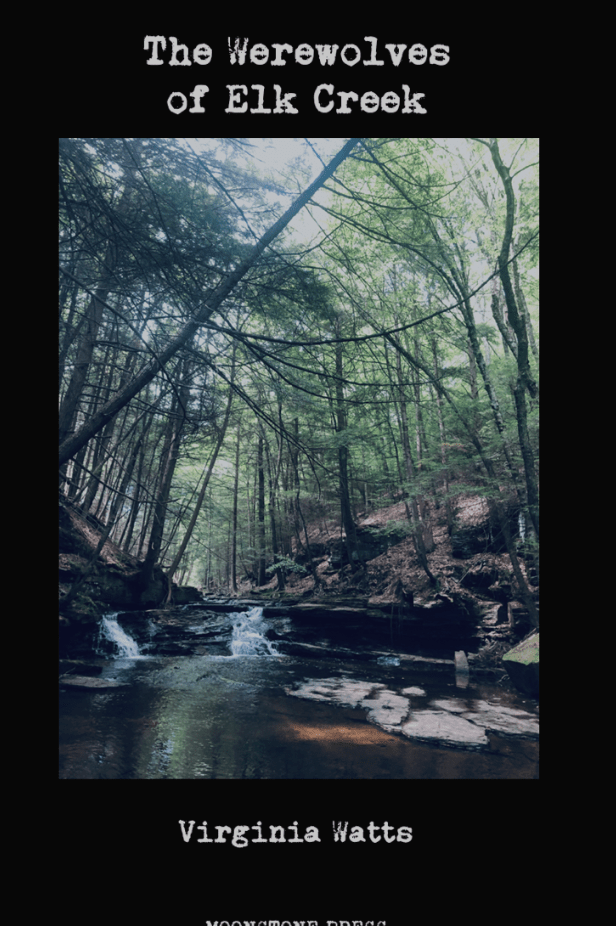
 are available from Moonstone Press. And her debut short story collection Echoes from the Hocker House is not to be missed!

Thank God I’ll Never Be Famous Enough for a Biography.

This week in the New York Times there is an article about Mark Oppenheimer writing Judy Blume’s biography. When he began the project, so he says, she liked him and gave him access to her life and her circle, etc. When he sent her the draft, she no longer liked him or the book he was writing about her. Apparently she sent him quite a big pile of notes, and contact ceased soon after that. He published the book anyway. He, and book’s narrator, Molly Ringwald, feel like Judy has to put up with his book, and that Mark did a fine job. According to the NYT article, Molly said, “There might be moments that Judy doesn’t like or agree with, but overall I think it’s a respectful treatment of her and her literary significance.” And, “If Mark didn’t show Judy’s flaws or humanity, it would be hard to feel invested.”

At what point does your life stop being your own? I might argue it’s when you become a parent. But, eventually they grow up, and you get to pivot back to yourself somewhat. Mark could have written the book with, or without, Judy’s help, and that’s the danger of being that level of author, but the fact that she gave him permission at first, and then was unhappy with what he made of her life, gives me pause. How much do we own our own life story?

The NYT made the main photo of the piece one of Mark sitting in a bunk bed. I don’t like this. He’s not at the age, or in life circumstances where he would actually be the person who sleeps in that bed. To me it is a ploy to make him look more innocent. I don’t think he is. I’m disappointed in Molly. For full disclosure, I read a bit of Judy Blume as a kid, from Margaret to some of the adult books, most of them for the sexy bits, honestly. Hey, I was in middle school. But, with apologies to Judy, I have seldom thought of her since. I tried reading Margaret to my daughter when she was in middle school, and we both found it didn’t age well. Plus, my daughter was not raised with the same religiosity I was. So there’s that for the longevity of the book in my life. And anybody can write a biography of anybody. The trick, like it is with our own books, is to get people to read it.

Still, do Mark, Molly, and his publishing company have the right to own Judy’s story, to make the truth of Judy’s life Mark’s version of the truth?

I say no. I say this is another woman losing agency over her own body, life, and body of work, to a man and a corporation. And it seems her only recourse might be for Judy to write her autobiography, to set the record straight. I cannot imagine anything as boring as writing out my own life story. And believe you me, I’ve had a fascinating life. Ha! Whether I have or I haven’t, I’m not ready to relive it all like I’ve had a near death experience. No, no no.

So, whose life is it anyway?

I would love to hear your thoughts.


Dianne Pearce is the chief editor and bottle washer at Current Words Publishing, and the half-cocked imaginer behind Old Scratch Press and Instant Noodles. Pearce loves helping writers realize the dream of having their work published. I mean she is really crazy about doing that for some reason. To that end, to join in the fray, to look at the thing from the other side, to stand in another’s shoes, and all of those things, she is fully expecting and promising to publish her first collection of poetry, In the Cancer Cafeteria, spring of 2026. Please don’t hold your breath. For very long. Happy 2026!

Google Doodle Celebrates Dorothy Miles

Click on photo to visit the Google Doodle page

Wonderful that Google has dedicated today’s Google Doodle (August 19, 2024) to Dorothy Miles.

Miles, as it says, was a pioneer of poetry in sign language. This is significant because poetry is often still widely considered to be an oral form of creative writing, written down, yes, but meant to be read aloud, or memorized and recited, performed. But can it be performed and not be spoken?

Here are a few performances by Ms. Miles, courtesy of YouTube:

There is no sound. Can you understand the poem?

And here is a third poem:

Do Miles’ poems speak to you, without use of the voice? In a medium that began as fully performative, how does it feel to have to attend to her movements with your eyes, more than her words, the sound of them, with your ears? Are the poems lost on you? Or do they move you? 

Approximately eleven million Americans are deaf, and many more have some form of hearing loss. When I watch Ms. Miles perform her poetry, one thing that struck me immediately was the feeling of being disconnected, because I could not hear her, though she looked to be speaking. Once I settled in I found the works engaging, and they really tapped into my emotions much more quickly than poetry usually does.

What makes a poem a poem? What does it mean to be a poet? Poetry has been one of the oldest and most consistently practiced form of creative writing, and it has also been some of the most exclusionary. Ms. Miles opened that door for people who could not use their ears to enjoy poetry, or their mouths to speak their poems aloud.

Ms. Miles’ career in poetry ended when her life did, after a fall from a window that was concluded to be self-inflicted due to mental health challenges she was experiencing. If you know someone experiencing a crisis please consider using the 988 helpline.

This, my friends, is why diversity is so important. Without an open system that welcomes diversity, without open hearts to give something different from the “norm,” “average,” what we’re used to, what’s traditional, or simply what we’ve come to expect, we close the door on beautiful experiences like poetry written and performed by Ms. Miles. When we celebrate poetry in all its forms, we invite more people to have the chance to share with us their creations. Not every creation is the right one for every person, but when you find the one that touches you, you will find yourself forever changed.

Thank you, Dorothy Miles, for your poetry.