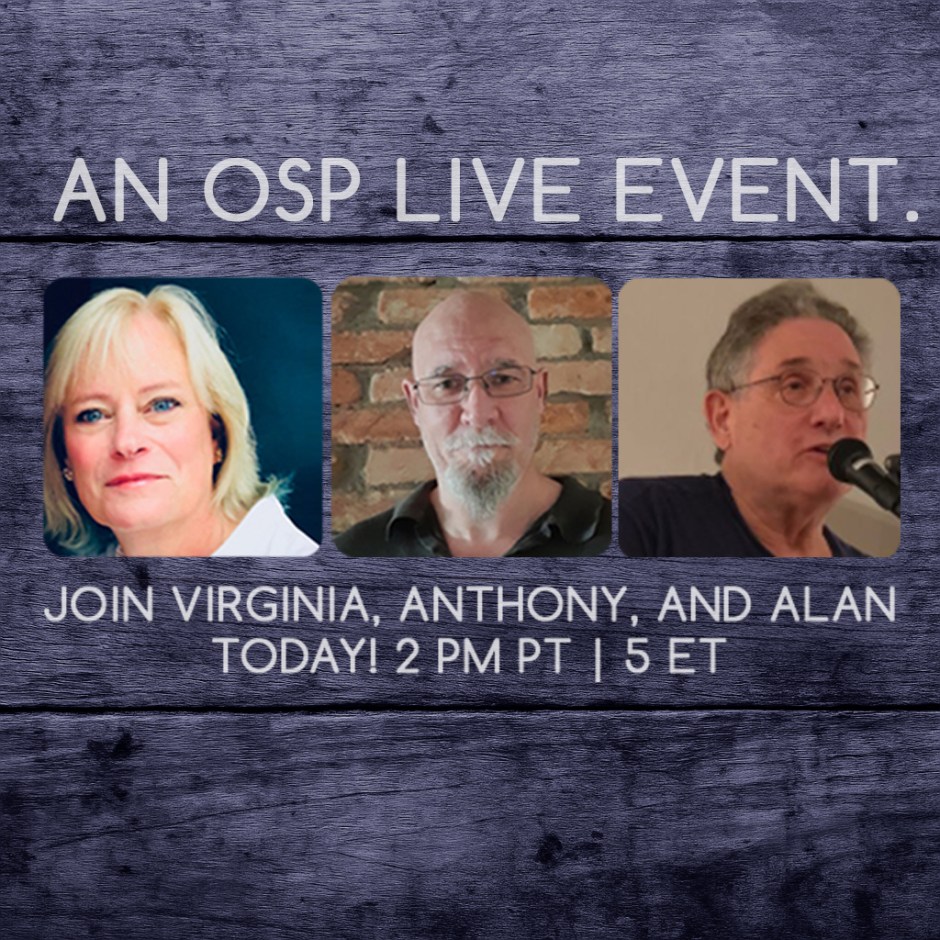
Join Us Today for Voices, Visions, and Poetry: A Live Reading & Book Launch

Join us today for a triple poetry book launch and live reading event taking place over Zoom.

This special online event will spotlight:

  • Alan Bern, Dreams of the Return
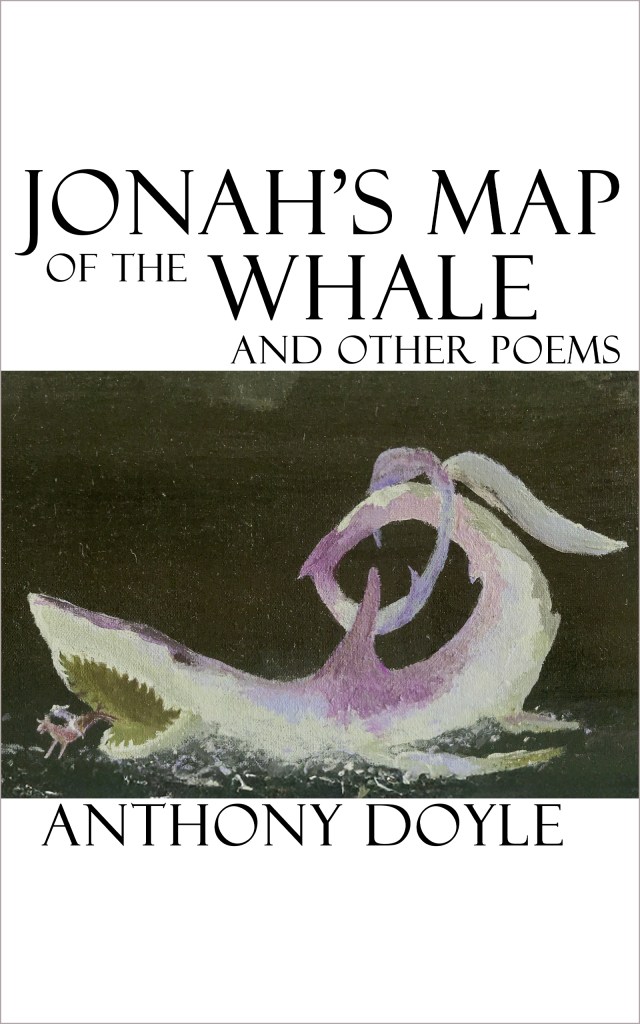
  • Anthony Doyle, Jonah’s Map of the Whale
  • Virginia Watts, Tracing Bodies

Each author will take the mic to share selections from their work, offering an intimate glimpse into the themes, rhythms, and stories behind their collections.

📅 Date: Saturday, October 25
Time: 2:00 PM PT | 5:00 PM ET
💻 Format: Virtual meeting (Zoom)

Preregistration has ended, but you can still attend by following the link below. Meeting will start promptly at 2 PM PT.

We can’t wait to see you there!


Meet the Authors

Alan Bern

Alan Bern is a poet, photographer, and retired children’s librarian whose creative work often explores themes of memory, migration, and belonging. His poetry pairs evocative imagery with emotional depth, reflecting on journeys both personal and collective. Alongside his writing, Bern’s photography provides a visual dialogue with the poetic world he creates, underscoring the interplay between text and image.

In Dreams of the Return, Bern reflects upon being a teenager in the mid-sixties, living in Napoli for a year with his family, and falling in love with it as if it were his true second home. His travels through Napoli and Southern Italy are expressed in poetry, prose, and photos, offering readers verse that moves fluidly between the outer landscapes of travel and the inner landscapes of longing.

“Bern captures nuances of disparate facets of Italian life with a flair for both drama and revelation.”
MIDWEST BOOK REVIEW


Anthony Doyle

Anthony Doyle is an Irish writer and translator whose work bridges cultures and languages. He has published fiction, nonfiction, and poetry, and his projects often weave together myth, history, and human experience in unexpected ways. As a translator, Doyle has brought the works of Brazilian writers to English-speaking audiences, deepening cultural exchange.

Hibernaculum, Doyle’s gripping speculative fiction tale of human hibernation, is a 2024 Next Generation Indie Book Awards Finalist in the SF category. His new poetry collection, Jonah’s Map of the Whale, charts vast emotional and imaginative territory, drawing on his keen ear for rhythm and layered meaning. Doyle’s poetry speaks with both intimacy and universality, inviting readers to journey through mythic depths and modern consciousness alike.

“A wonderfully inspiring read.”
MIDWEST BOOK REVIEW

Virginia Watts

Virginia Watts is a fiction writer and poet whose work has appeared in numerous literary journals and anthologies. Her writing frequently examines the intricacies of human connection, place, and memory, offering poignant and sharply observed narratives. With a background in both short fiction and poetry, Watts brings an attentive eye to detail and a lyrical sensibility to her storytelling.

Watts’ debut prose collection, Echoes From the Hocker House, IS a 2023 KIRKUS Best Indy Books selection and a 2024 Eric Hoffer Book Awards finalist.

Her latest collection, Tracing Bodies, reveals Watts’ skill at mapping emotional terrain—tracing the fragile lines between presence and absence, past and present. Her voice resonates with honesty and tenderness, leaving lasting impressions on her readers.

“A vulnerable, cleareyed portrait of humanity.”
KIRKUS

Voices, Visions, and Poetry: A Live Reading & Book Launch

Old Scratch Press invites you to an unforgettable evening of words, imagery, and discovery. On Saturday, October 25 at 2:00 PM PT (5:00 PM ET), we’ll gather virtually to celebrate the launch of three extraordinary new poetry collections—each bringing a unique voice and vision to the page.

This special online event will spotlight:

  • Alan Bern, Dreams of the Return
  • Anthony Doyle, Jonah’s Map of the Whale
  • Virginia Watts, Tracing Bodies

Each author will take the mic to share selections from their work, offering an intimate glimpse into the themes, rhythms, and stories behind their collections.

📅 Date: Saturday, October 25
Time: 2:00 PM PT | 5:00 PM ET
💻 Format: Virtual meeting (Zoom)

👉 Click here to register for free

This event is free and open to the public, but preregistration is recommended. Come celebrate the power of poetry with Old Scratch Press and three remarkable voices—we can’t wait to see you there!


Meet the Authors

Alan Bern

Alan Bern is a poet, photographer, and retired children’s librarian whose creative work often explores themes of memory, migration, and belonging. His poetry pairs evocative imagery with emotional depth, reflecting on journeys both personal and collective. Alongside his writing, Bern’s photography provides a visual dialogue with the poetic world he creates, underscoring the interplay between text and image.

In Dreams of the Return, Bern reflects upon being a teenager in the mid-sixties, living in Napoli for a year with his family, and falling in love with it as if it were his true second home. His travels through Napoli and Southern Italy are expressed in poetry, prose, and photos, offering readers verse that moves fluidly between the outer landscapes of travel and the inner landscapes of longing.

“Bern captures nuances of disparate facets of Italian life with a flair for both drama and revelation.”
MIDWEST BOOK REVIEW


Anthony Doyle

Anthony Doyle is an Irish writer and translator whose work bridges cultures and languages. He has published fiction, nonfiction, and poetry, and his projects often weave together myth, history, and human experience in unexpected ways. As a translator, Doyle has brought the works of Brazilian writers to English-speaking audiences, deepening cultural exchange.

Hibernaculum, Doyle’s gripping speculative fiction tale of human hibernation, is a 2024 Next Generation Indie Book Awards Finalist in the SF category. His new poetry collection, Jonah’s Map of the Whale, charts vast emotional and imaginative territory, drawing on his keen ear for rhythm and layered meaning. Doyle’s poetry speaks with both intimacy and universality, inviting readers to journey through mythic depths and modern consciousness alike.

“A wonderfully inspiring read.”
MIDWEST BOOK REVIEW


Virginia Watts

Virginia Watts is a fiction writer and poet whose work has appeared in numerous literary journals and anthologies. Her writing frequently examines the intricacies of human connection, place, and memory, offering poignant and sharply observed narratives. With a background in both short fiction and poetry, Watts brings an attentive eye to detail and a lyrical sensibility to her storytelling.

Watts’ debut prose collection, Echoes From the Hocker House, IS a 2023 KIRKUS Best Indy Books selection and a 2024 Eric Hoffer Book Awards finalist.

Her latest collection, Tracing Bodies, reveals Watts’ skill at mapping emotional terrain—tracing the fragile lines between presence and absence, past and present. Her voice resonates with honesty and tenderness, leaving lasting impressions on her readers.

“A vulnerable, cleareyed portrait of humanity.”
KIRKUS

Poets and Punctuation

In his sonnets, Shakespeare would use end-stops rigorously, with most lines ending in commas, semi-colons, and colons. Sometimes he relied on enjambment or exclamations, but as far as possible, he seemed to save his full stops for the very last line. 

Take Sonnet 18,  “Shall I compare thee…”: six commas, four semi-colons, two colons, one question mark, and one full stop. 

Ezra Pound, on the other hand, would often refuse to use any end-stops at all. 

Take these lines from Canto LII:

The empress offers cocoons to the Son of Heaven

Then goes the Sun into Gemini

Virgo in mid heaven at sunset

indigo must not be cut

No wood burnt into charcoal

gates are all open, no tax on the booths.

No commas, no colons or semi-colons, “midheaven” is split for emphasis or for pause. There’s as little punctuation as possible, down to “gates are all open, no tax on the booths.”  That solitary comma functions almost as a speed bump near an intersection. 

According to Daniel Albright, W.B. Yeats had ‘punctuational quirks’ which he was happy to leave to his editors to sort out.  It was as if those technicalities were above or below the poet, who belonged to another realm of language.  

T.S. Eliot, like his mentor Pound, would sometimes drop punctuation altogether, but then he would go and stick in a full stop just to confound the reader:

On Margate Sands.

I can connect

Nothing with Nothing

(“The Waste Land,” lines 300–302)

Most people read those lines as “On Margate Sands, / I can connect / Nothing with Nothing.” So why the full stop? Some say it’s to heighten the sense of isolation and fragmentation, but it actually spoils the drama rather than intensify it. “I can connect / Nothing with Nothing” is no longer restricted to this moment, here-and-now, on Margate Sands. It steals some of the bombast. Perhaps that was the point, who knows? 

One thing that seems pretty clear is that punctuation plays by different—or fewer—rules in poetry. 

In “Un Coup de Dés,” Mallarmé throws punctuation out the window almost entirely, relying on spaces and font size to convey the necessary pauses and emphases. Punctuation becomes visual and spatial, and all the more effective for it.

Compare that with Sylvia Plath, who was a heavy punctuator:

Clownlike, happiest on your hands,

Feet to the stars, and moon-skulled,

Gilled like a fish. A common-sense

Thumbs-down on the dodo’s mode. 

(Opening lines of “You’re”) 

Apostrophes, hyphens, and commas in all the right places. 

So, the question is: does punctuation really matter in poetry? 

Perhaps it depends on whether it’s intended to be read aloud or read off the page. At a reading, intonation and cadence work magic that is sometimes hard to replicate in print, where that same impact disappears somewhere between too much and too little punctuation. 

I suppose we’ve all got our own punctuational foibles. I often neglect end-stops. I know I shouldn’t, but putting in a comma, semi-colon or colon just feels wrong at the end of some lines. Not all, just some. I could not actually say why. It’s not a rational thing. It’s pure feeling. 

So whether you’re partial to Elizabeth Bishop’s em-dashes or agree with Joyce that quotation marks “are an eyesore,” rules are strange visitors in poetry. You can choose whether to follow them, or which ones to follow, and no one can really complain—except the reader, who will have to read in all the end-stops and what-nots we choose to leave out.

Anthony Doyle is a founding member of Old Scratch Press. He is the author of the novel Hibernaculum and the recently-published Jonah’s Map of the Whale and Other Poems.

Anthony Doyle’s New Release Earns #1 Spot!

Anthony, you hit a number one. Congratulations! Although Anthony’s poetry is written in English, not Spanish, it does seem that his adopted cultures are loving his work. To read any of Anthony’s work is to know he is an extremely talented author, and now Amazon agrees! I hope readers in the US and in his home country of Ireland agree, and that this will bring readers to Anthony’s work from all over the world, because I really am a fan. And, apprently, so is book reviewer Emma Lee who says:

Jonah’s Map of the Whale is an exploration of self, self-identity and how much personhood is formed by external circumstances, through three different characters. One is pushed along by external pressure and lacks agency. One has agency but fears she carries a hollowness. One is faced by a life-changing experience that he can sink or swim from. Each character feels fully-developed. Anthony Doyle has created a quirky look at a set of beings tackling very different philosophical and physical circumstances, prompting readings to consider who might survive, who might thrive and which one reflects the reader best. It’s a map worth reading.

See Emma Lee’s full review for more!

And don’t forget about Anthony’s dystopian novel, HIBERNACULUM!

If you don’t know him by now, it’s time to. Find Anthony Doyle

Chuffed!

Here I am with Linwood Jackson, President of the Delaware Press Association.

On May 1, I was awarded a Second Place in the Delaware Press Association Communications Awards for my book, The Song of North Mountain. This was my veryfirstever book released solely under my name, and the award presentation was exactly one year after the book hit publication.

I am quoting the judge, whose name I don’t know, in their comments regarding the award. “This is a beautifully crafted collection of poems that takes readers on a journey through nature, personal reflection, and the deep connection between the land and the human sprit. With vivid imagery and emotional insight, You (sic) capture the essence of the North Mountain landscape, blending personal growth, exploration, and the rhythms of life. The poems are rich with sensory details and metaphor, drawing readers into the natural world where every “rustle of leaves, shift of light, and breath of wind carries meaning.” I find that your writing, both introspective and outward-looking, intertwines the inner and outer worlds, exploring themes of solitude, contemplation, and the passage of time with tenderness and reverence, giving the collection a meditative quality.”

Many of us, particularly of my generation, suffer from imposter syndrome, that feeling that we’re really just pretending to be . . . smart, kind, good at what we do, talented, strong, etc. I’ve been writing since I was a teenager. Mostly doggerel, lines about angst, loss, imaginary friends, and wry observations. As I’ve aged and matured, so has my writing. I’ve discovered poets other than those I was raised on (Longfellow, Holmes, Browning) and many who write in rhymed and metered verse.

College introduced me to more complicated poetry – Ferlinghetti, Hopkins, Stevens, Auden, Eliot, Yeats. And then, foreign writers, like Rumi, whose ideas were so very different from those I had been immersed in.

So, I still wrote, but still privately, only sharing sparingly, for I still did not consider myself a “good” poet.

Well, I guess I am now. This anonymous judge really liked my work! The DPA, in their wisdom, selected judges that were not from Delaware. Delaware, being such a small state, is one where everyone knows everyone else, especially in communications and writing. So all I know about this anonymous judge is that he or she is not from around here. And, they liked my work.

Being a creator, whether in writing, arts, crafts, or just about anything, we have the angels and devils on our shoulders. One says, “Perfect. Absolutely PERFECT. Don’t change a thing!”

The other angel is the voice of the imposter. “Really? You expect anyone to like this? What balderdash! This is ROTTEN!” So we hide our creation away, or simply refuse to edit it.

I think we’ve all been there. The fact is, creating is a matter of taking risks. Making changes. Wondering if what we have written can be said better. And having the courage to play with it. Editing. Changing the recipe. Adding a stroke of color. 

I can certainly attest that every single poem and sketch in this book was analyzed, edited, and reworked (and rethought) at least 5 times.

Ghost Light, the poem I included in my last blog, was awarded a Second Place, also. This judge commented that “Your evocative, photographic-like details set the ghost-like mood and scene from the beginning. . . .” And, ‘the last stanza is particularly well-turned — “by chance or intent,/ catch the moment, . . . in a sudden shaft of dawnbreak.’”

The judge noticed. They noticed the internal rhyme, the alliteration, the combining of words to create a new meaning. These are ‘tools’ I labored over, hoping the reader would listen to these words and how they created an atmosphere, a feeling, a response.

We all too often hesitate to read out loud, to ourselves or to anyone else. But it is important. Whether we read to a child, or are read to, there is a chance for us to escape into the word picture created by the author. That’s what I try to do — create word pictures for you to explore.

You can find The Song of North Mountain on Amazon and other retailers, and my author page on Amazon. Follow me on social media at Facebook as Morgan Golladay, Writer and Artist, in Instagram as morgangi13, and please FOLLOW my blog too.

If you have a copy of The Song of North Mountain, please leave a review. Thank you! I appreciate it!

May 15, 2025

Pick up a copy!

Powell’s Books
Paperback
eBook

Audio (no subscription: download to your device)

Never Miss A Chance to Read Your Work!

I want to invite you all to come out and support PERISCOPE CITY: WHERE THE LONELY GO TO LIVE ALONE with our Valentine’s evening “Love Stinks!” reading and open mic.

Join Zoom Meeting
Meeting ID: 886 1135 6295
Passcode: 090540

Ben’s book is, “A captivating series of short stories, both dramatically and philosophically enthralling.”
KIRKUS

“Ben Talbot excels at depicting a world both alien and familiar at the same time.”
MIDWEST BOOK REVIEW

Welcome to Periscope City, a place where nothing is quite as it seems. Its citizens are those with no one to love, caught in a paradox of escaping loneliness while clinging to it. Here, human emotion is fleeting, and love is nothing more than a transaction.
Each story in this collection delves into the heights and depths of solitude through its characters: a writer torn between seeking validation from fleeting romances and finding comfort in the safety of isolation; a former college football star lost in nostalgia, unable to connect with the present; a young runaway scarred by her past, drawn to this desolate town inhabited by loners and serviced by robots.
Prepare for an emotional gut-punch as you enter a strange, unsettling place where the broken-hearted choose to stay broken and prefer to live in solitude. Talbot’s haunting, satirical, and often absurd interconnected tales explore themes of self-destruction and elusive redemption.
Periscope City will immerse you in a world where the boundary between reality and fantasy is constantly shifting.

Ben is going to read a little from his book, and then we will open it up for poems, flash fiction/non-fiction to give you a chance to add your voice to the conversation about love and loss and loneliness, and answer the age-old question, “What becomes of the broken-hearted?”

If you’re not a pro at reading, it is imperative that you come and try your luck! What better night? We can be awkward, clumsy, lonely, and literary together!

Meet me in Periscope City Friday night:

8P Eastern
7P Central
6P Mountain
5P Pacific.

Hope to see you there, and hear you read. We’ll be sad without you….

In the meantime, enjoy this excerpt from the book!

Periscope City

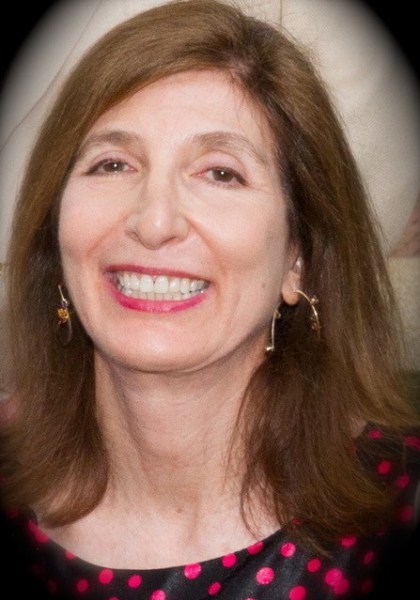
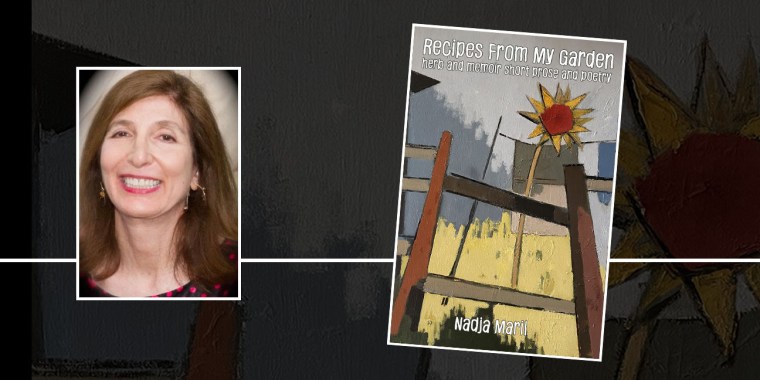
Authors Electric Interview with Nadja Maril

This week author Nadja Maril released her collection of flash prose, poetry, and essays inspired by her kitchen, garden, and family memories. I sat down with Nadja to ask her some questions about the book, and her process. It’s interesting to note that Nadja comes from an artistic background: her late father Herman Maril was an artist, and his painting is the cover of her book. I have enjoyed Nadja’s poetry and flash fiction for many years now, and I am very excited for her book!

Dianne Pearce (Dianne): What inspired you to combine poetry, short form, gardening, and cooking in one book? How did these different forms of expression come together?


Nadja Maril (Nadja): In January 2020 I’d just completed an MFA (masters in fine arts) in creative writing from the low residency Stonecoast Writing Program at the University of Southern Maine and was in the midst of moving into a 100-year-old house. My husband Peter and I were the General Contractors. Both the MFA and the house were two-year projects. I’d been laboring over a complicated literary novel told from multiple viewpoints, and my daughter (the youngest of my three children ) was about to get married. Peter and I were looking forward to having the wedding at our re-built house, with the festivities primarily outside. We scurried to move into the house, plant flowers and shrubs, and revitalize the lawn. Then the pandemic shut everything down. 

Want to read more? Pick up the remainder of the piece at AUTHORS ELECTRIC.