


We’ve got some free goodies to give away too! Hope to see you there!
REGISTER to attend.
🙂
Dianne

Have you ever considered a writing retreat? Most of them are (I think) outrageously expensive. How about a free one instead?
Consider applying to Yaddo.
Yaddo is one of the most respected artist residencies in the world, offering writers something increasingly rare: uninterrupted time and space to focus deeply on creative work. Founded in 1900, Yaddo was created with a singular purpose, to support artists by removing everyday distractions so they can fully engage with their craft. Located on a wooded estate in Saratoga Springs, New York, Yaddo has quietly supported generations of writers whose work has gone on to shape contemporary literature.
What makes Yaddo especially appealing to authors is its emphasis on creative freedom. There are no required workshops, classes, or public obligations. Writers are given room, board, and a private workspace, allowing them to set their own rhythm and priorities. Residencies typically range from two weeks to two months, offering enough time to make real progress on a project or to rediscover momentum that may have been lost to teaching, work, or daily responsibilities.
Selection is based on the strength of the work itself. There is no expectation that writers arrive with a polished or market ready manuscript, and no requirement to produce a finished piece by the end of the residency. This makes Yaddo an ideal space for experimentation, risk taking, and deep revision. Many writers find that the absence of pressure allows them to work more honestly and adventurously than they can elsewhere.
While solitude is central to the Yaddo experience, a quiet sense of community is also part of daily life. Communal meals and shared spaces offer opportunities for informal conversation with artists working across disciplines, including music, visual art, film, and theater. These interactions are optional but often enriching, providing fresh perspectives without overwhelming the creative focus.
For authors navigating a literary world that increasingly demands constant productivity and self promotion, Yaddo offers a rare and valuable gift. Time to write. Time to think. Time to reconnect with the work itself. For writers serious about their craft, applying to Yaddo is not just an opportunity. It is an investment in the long life of their creative practice.
DEADLINE:


Dianne Pearce is the chief editor and bottle washer at Current Words Publishing, and the half-cocked imaginer behind Old Scratch Press and Instant Noodles. Pearce loves helping writers realize the dream of having their work published. I mean she is really crazy about doing that for some reason. To that end, to join in the fray, to look at the thing from the other side, to stand in another’s shoes, and all of those things, she is fully expecting and promising to publish her first collection of poetry, In the Cancer Cafeteria, spring of 2026. Please don’t hold your breath. For very long. Happy Holidays!
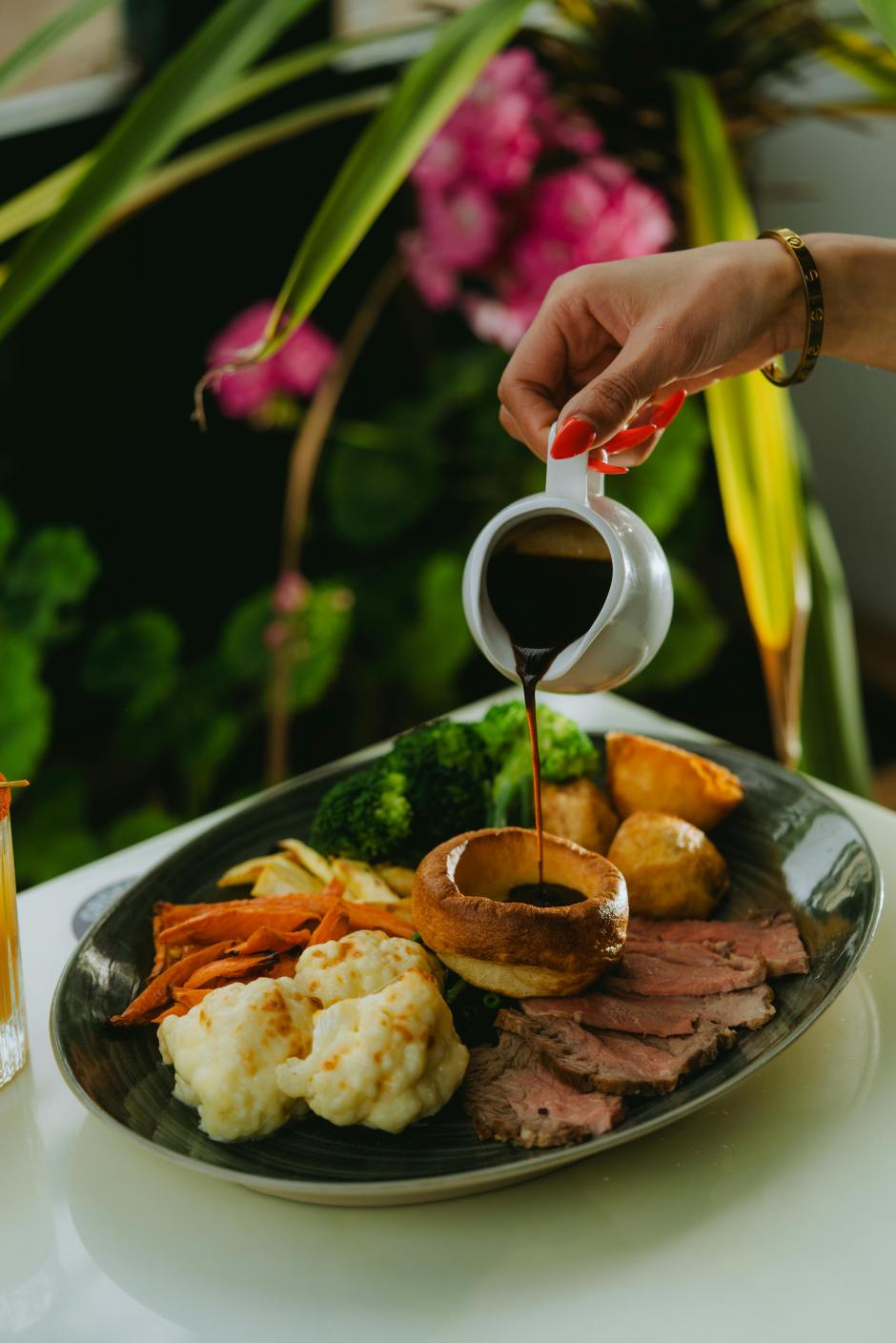

The holiday/end of year issue of INSTANT NOODLES, the issue where we always ask people to try for humor. Do you have what it takes to make us smile?
The Old Scratch Press team asks that all fiction/non-fiction pieces adhere to a word count of 1,000 words or less.
2025 Themes and Topics
GRAVY is our 2025 winter holiday theme. Give us your best holiday gravy fails, mishaps, ridiculous gravy encounters (any December holiday, from Hannukah, to Solstice, to NYE, etc.) or your best wry work about gravy, in general. The point of the end-of-year issue is always to be light-hearted to downright silly. Submissions for GRAVY are open through NOVEMBER 2, 2025; the issue will publish on DECEMBER 1, 2025. Please CLICK HERE to submit. We’re looking for short fiction, non-fiction, poetry, drama, art, and multi-media.
INSTANT NOODLES is always free to submit to, and free to read. We’re about to announce the pieces that were published that we’re submitting to BEST OF THE NET and PUSHCART, so stay tuned to this station!
Thanks for being an INSTANT NOODLES participant and/or fan! We appreciate you giving indie authors a place to get read!

On May 1, I was awarded a Second Place in the Delaware Press Association Communications Awards for my book, The Song of North Mountain. This was my veryfirstever book released solely under my name, and the award presentation was exactly one year after the book hit publication.
I am quoting the judge, whose name I don’t know, in their comments regarding the award. “This is a beautifully crafted collection of poems that takes readers on a journey through nature, personal reflection, and the deep connection between the land and the human sprit. With vivid imagery and emotional insight, You (sic) capture the essence of the North Mountain landscape, blending personal growth, exploration, and the rhythms of life. The poems are rich with sensory details and metaphor, drawing readers into the natural world where every “rustle of leaves, shift of light, and breath of wind carries meaning.” I find that your writing, both introspective and outward-looking, intertwines the inner and outer worlds, exploring themes of solitude, contemplation, and the passage of time with tenderness and reverence, giving the collection a meditative quality.”
Many of us, particularly of my generation, suffer from imposter syndrome, that feeling that we’re really just pretending to be . . . smart, kind, good at what we do, talented, strong, etc. I’ve been writing since I was a teenager. Mostly doggerel, lines about angst, loss, imaginary friends, and wry observations. As I’ve aged and matured, so has my writing. I’ve discovered poets other than those I was raised on (Longfellow, Holmes, Browning) and many who write in rhymed and metered verse.
College introduced me to more complicated poetry – Ferlinghetti, Hopkins, Stevens, Auden, Eliot, Yeats. And then, foreign writers, like Rumi, whose ideas were so very different from those I had been immersed in.
So, I still wrote, but still privately, only sharing sparingly, for I still did not consider myself a “good” poet.
Well, I guess I am now. This anonymous judge really liked my work! The DPA, in their wisdom, selected judges that were not from Delaware. Delaware, being such a small state, is one where everyone knows everyone else, especially in communications and writing. So all I know about this anonymous judge is that he or she is not from around here. And, they liked my work.
Being a creator, whether in writing, arts, crafts, or just about anything, we have the angels and devils on our shoulders. One says, “Perfect. Absolutely PERFECT. Don’t change a thing!”
The other angel is the voice of the imposter. “Really? You expect anyone to like this? What balderdash! This is ROTTEN!” So we hide our creation away, or simply refuse to edit it.
I think we’ve all been there. The fact is, creating is a matter of taking risks. Making changes. Wondering if what we have written can be said better. And having the courage to play with it. Editing. Changing the recipe. Adding a stroke of color.
I can certainly attest that every single poem and sketch in this book was analyzed, edited, and reworked (and rethought) at least 5 times.
Ghost Light, the poem I included in my last blog, was awarded a Second Place, also. This judge commented that “Your evocative, photographic-like details set the ghost-like mood and scene from the beginning. . . .” And, ‘the last stanza is particularly well-turned — “by chance or intent,/ catch the moment, . . . in a sudden shaft of dawnbreak.’”
The judge noticed. They noticed the internal rhyme, the alliteration, the combining of words to create a new meaning. These are ‘tools’ I labored over, hoping the reader would listen to these words and how they created an atmosphere, a feeling, a response.
We all too often hesitate to read out loud, to ourselves or to anyone else. But it is important. Whether we read to a child, or are read to, there is a chance for us to escape into the word picture created by the author. That’s what I try to do — create word pictures for you to explore.
You can find The Song of North Mountain on Amazon and other retailers, and my author page on Amazon. Follow me on social media at Facebook as Morgan Golladay, Writer and Artist, in Instagram as morgangi13, and please FOLLOW my blog too.
If you have a copy of The Song of North Mountain, please leave a review. Thank you! I appreciate it!
Pick up a copy!
Powell’s Books
Paperback
eBook
Audio (no subscription: download to your device)

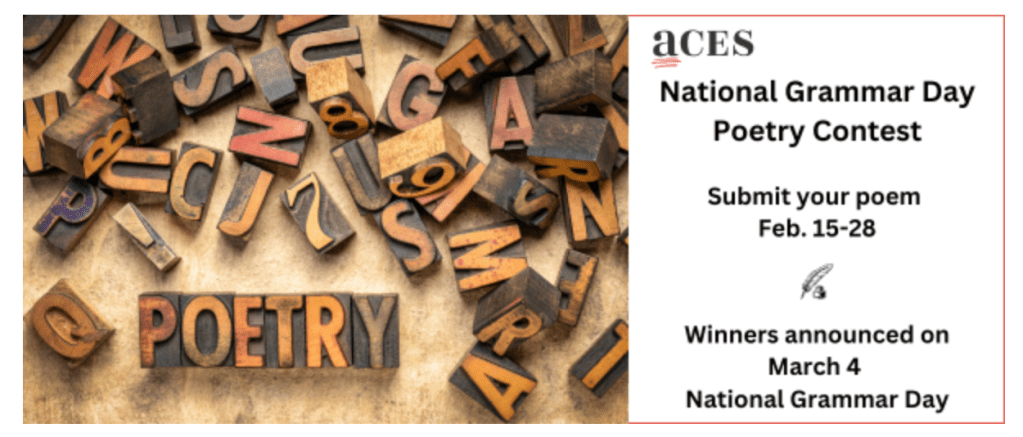
SUBMISSION PROCESS (copied from ACES)
Everyone is invited to participate. You do not need to be a member of ACES or work as an editor. The winning entry will be selected by a panel of judges that includes the previous year’s winner, along with language and poetry experts. ACES administers the award; it does not decide the winners.
In order to be considered by the judges, official entries must be submitted through the entry form.
Multiple submissions are welcomed.
That said, we encourage you to share your entries on your favorite social media platforms. If you tag #ACES and #GrammarDay we will be able to find you and reshare.
The submission form is open Feb. 15-28. The link will be available here during that window.
ACES will announce the winner on, naturally, March 4, in a post on its news channel and in its social media channels. The winning poem will be included in the story, along with the runner-up entries.
 OLD SCRATCH PRESS