How Spicy are You?

By R. David Fulcher, Old Scratch Press Founding Member

I love all things pumpkin, including pumpkin spice. However, I understand even fans of this seasonal gourd have their limits on just how much pumpkin spice is too much pumpkin spice.

Readers are the same way.

Even fans of scary stories have their own personal limits in terms of exactly how scary, how gory, or how unsettling a story they can bear.

Therefore, I’ve taken three of my pumpkin-related stories and rated them in spiciness, from the most mild to the most extreme.

Mild Spice: “Pumpkin Night at the Pinkstons”

In “Pumpkin Night at the Pinkstons”, from my book The Movies that Make You Scream!, a teenager discovers the secret behind his homecoming date. Full of gooey teenage love, this is the mildest of my pumpkin-themed stories, something like one of the Goosebumps tales by R.L. Stine.

I’ll call this the Pumpkin Spice Latte Level of story.

Here is an excerpt from “Pumpkin Night at the Pinkstons”:

I don’t know exactly how much time passed before realizing that something was very, very wrong. The texture of her kisses changed, becoming clumsy and pulpy in taste. Her smooth gums became loose and stringy, and when I tried to pull away, I realized she was attached to me like a barnacle adhered to the side of a boat’s hull. Long, pointed fingers now clenched my nose shut and I began to get dizzy as that sickening, fruity-vegetable stench began to overwhelm me.

But more horrible were the physical changes taking place to the body I embraced, a grotesque squishyness of the torso and organs like the skin of a rotting tomato.

Medium Spice: “Pumpkin Seed Spit”

In “Pumpkin Seed Spit”, from the Devil’s Party Press anthology Halloween Party 2019, three friends go trick-or-treating and make a horrible deal with an ancient spirit to ensure their survival. Although the protagonists are also teenagers in this story, the stakes are higher, and the final implications for humanity much darker.

I’ll call this the Pumpkin Muffin Level of story.

Here is an excerpt from “Pumpkin Seed Spit”:

Upon reaching the first house near a dead end, they knocked and said in unison, “Trick-or-Treat!” As fifty-year-old Henry Armitage opened the front door, Brian unearthed his bag. The middle-aged man frowned at the kids before starting to mutter something about the lateness of the hour. Armitage gazed into Brian’s bag of seeds and was immediately mesmerized. An orange energy tendril spiraled upward, carrying a single seed into Armitage’s mouth.

Brian, Matt, and Ria wanted to scream, but found it impossible. While their souls were wrenched into knots by the horror they witnessed, outwardly they stood emotionless, even tranquil, as layers of skin and flesh melted away until all that remained of Henry Armitage was a living skeleton.

When the transformation was complete, they advanced to the next house. Ria shared the seeds, and Asenath Waite, a young mother of two, was hideously transformed into a witch with boils, green teeth, and a trail of lesions across her forehead.

Matt was next to present The Pumpkin Tree’s offering to the world. Three seeds were received by a couple and their young baby. Within moments they became a trio of giant pale, eyeless larvae that oozed and squiggled out of their clothes.

Extra Spicy: “The Pumpkin King”

In “The Pumpkin King”, from my book The Pumpkin King and Other Tales of Terror, a man ignores the rules of Halloween to his own detriment. The protagonist is an adult, and this tale has the most shock value of the three.

I’ll call this the Pumpkin Imperial Pale Ale Level of story 

Here is an excerpt from “The Pumpkin King”:

I spun around and made for the door, half convinced I was hallucinating if not dreaming. I unlatched the deadbolt, but it clicked back into place as soon as I started to turn the latch. I turned back to the jack-o’-lantern.

“An easy trick, but effective,” the jack-o’-lantern said, its orange light flashing in time to the latch on the deadbolt as it clicked back and forth at will.

“What do you want?” I begged.

“I want you to think on this. There is but one expectation of you this time of year. One simple obligation: To carve pumpkins. To pay homage to the king.”

“What king?”

“Samhain, the King of the Dead.” Its demeanor began to change. Its voice deepened and the reddish-orange glow rose like an enraged fire.

“This is ridiculous!” Now I was beginning to lose my fear and was feeling pissed. This thing, whatever it was, was in my house. I turned to climb the stairs and grab a baseball bat so that I could smash the talkative piece of vegetation into a hundred juicy bits. I was an educated man, and I knew of the myth of Samhain, the Lord of the Dead who arrived every fall to put nature in balance with the deadly strokes of his sickle. I also knew it was pure bunk.

I had only reached the first step when I heard a sound far worse than the maddening click-clacking of the door latch: the metallic whisper of a kitchen knife being drawn from the butcher block.

I turned back to the pumpkin. “Okay. You’ve got my attention. What do you want?”

“I want to carve you,” it replied simply.

So whatever your personal threshold is for pumpkin spice, pay homage to the spirits of All Hallows Eve, and savor the spice before it’s gone!

Happy Writing!

R.David Fulcher, Founding Member of Old Scratch Press 

Oldscratchpress.com

Rdavidfulcher.com

When the Veil Thins, Tune In: The Lost Art of Intuition

In a world overflowing with information, it can feel almost impossible to hear the quiet murmur of our own inner voice. From the moment we wake, we are bombarded: endless news updates, social media scrolls, texts, and the constant hum of opinions vying for our attention. All of it fills the space where intuition—the whispering language of the subconscious—once thrived.

Yet, as writers, intuition is one of our greatest tools. It’s what allows us to leap into a story we don’t fully understand yet, to follow a surprising character down an unplanned path, or to trust an image or phrase that arrives out of nowhere. Without it, we risk writing only what we already know, instead of what wants to reveal itself.

Fall: The Season of Listening

October, with its crisp air and longer nights, brings a natural invitation to slow down and listen. Folklore tells us that in autumn, as the veil thins between the seen and unseen, intuition becomes easier to access. Shadows stretch differently, the wind carries voices, and we sense the tug of what lies just beyond.

This is the perfect time of year to tune in. The season itself seems to whisper: pay attention, the unseen is speaking.

Why We Lose Touch with Intuition

Intuition is quiet, subtle, and often inconvenient. It rarely announces itself in bold type. Instead, it flickers in images, hunches, gut feelings, or sudden questions that surface in stillness. When we drown our senses in constant input, we crowd out those fleeting signals. It’s like trying to hear an owl’s call on a windy night—you know it’s there, but the noise drowns it out.

Our culture rewards speed, productivity, and certainty. Intuition asks for slowness, stillness, and trust. It feels risky to follow because it rarely comes with a guarantee, but instead with a nudge: “this way, try this, pay attention.”

Reclaiming the Lost Art

The good news is intuition can be reawakened. Like any art, it thrives with practice:

  • Silence the noise. Even a few minutes of quiet each day—no phone, no media, just breath—can make space for inner knowing to rise.
  • Notice the body. Intuition often lives in the gut, the chest, the skin prickling on your arms. Writing down where and how you feel things can help you recognize its signals.
  • Follow the odd image. When a strange metaphor or unexpected detail shows up in your writing, resist the urge to explain it away. Let it lead you.
  • Trust the detours. If you sit down to write one thing but another insists on being written, follow that tug. Intuition often works sideways.

One of my favorite ways to access this hidden reservoir is through freewriting. When we put pen to paper without censoring, judging, or editing, we bypass the noisy critic in our head. Freewriting allows the subconscious to slip through, offering images, insights, and connections that often surprise us. It is a way of honoring the intuition that we so often ignore. In the flow of words that tumble out, we begin to recognize patterns, truths, and directions that were there all along, waiting to be heard.

Tuning in to our intuition is not about achieving perfection or following rules. It is about reclaiming an ancient art: the art of listening inwardly. As the veil thins, perhaps it is time to sit with the page, quiet the outside world, and let your own inner compass

Intuition as a Writer’s Compass

The deepest writing often doesn’t come from logic or planning alone—it comes from the subterranean river of memory, dream, and imagination. Intuition is the compass that guides us into that underground place. When we let it lead, we discover connections we couldn’t have forced, truths we didn’t know we were carrying, and stories that surprise even us.

This October, let the season itself be your reminder. As the veil thins and the shadows lengthen, practice listening for what arises in the quiet. Intuition is not a luxury—it is the thread that ties us to the mystery of creativity itself. To follow it is to reclaim a lost art, both in writing and in life.

(And if you are interested in learning about intuitively understanding your surroundings check out the books by writer Tristan Gooley, like The Nature Instinct or The Natural Navigator.)

Thank you for reading this post and visiting the Old Scratch Press Blog. Next Saturday October 25th at 5:00 p.m., three members of the Old Scratch Press Team are participating in a special online reading from their newly published books. FREE. Read more about it here. And follow us on Facebook.

Ellis Elliott, Founding Member, Old Scratch Press Collective, Author: Break in the Field and A Witch Awakens: A Fire Circle Mystery available on Amazon. Bewilderness Writing : http://bewildernesswriting.com/

Have you been folkloring?

By R. David Fulcher, Old Scratch Press Founding Member

Recently I had the honor of joining the Folkloring podcast. This podcast addresses how we can integrate folklore into our everyday lives, including our writing.

Preparing for this podcast prompted me to reflect upon the influence of folklore, myth and legend on my own writing and was surprised to discover the influence has been quite profound.

Below are some of categories of folklore I came up with in case they could be an inspiration for your writing.

1. Global folklore 

By this I mean folklore that originated from a specific geographic location hundreds of years ago, but now is so well known it is generally accepted. 

An example of this would be the legend of the vampire from Romania.  First something that was very localized, vampires are now so common they now appear on cereal boxes and television series.

I integrate the vampire myth into my writing in several stories in my book The Pumpkin King and Other Tales of Terror in such stories as “The Night Flyer” and “The Watchman’s Web”.

2. Urban Legends/Localized Folklore 

In this category would be legends still most popular in specific geographic regions, such as the legend of the New Jersey Devil that haunts the woods of New Jersey, or the infamous Bunny Man of Clifton, Virginia.

I draw upon the legend of The Boogeyman in my book Asteroid 6 and Other Tales of Cosmic Horror in my story “The Boogeyman, Part II”.

3. Native American Myths

The mythology of native Americans is extremely rich and strongly connected to the natural world. 

In my book The Cemetery of Hearts, I reference a native American myth from the American Southwest that claims that the majestic canyons and mesas were spun out of a gigantic spider.

In my story “The Land Spider”, a gigantic spider starts swallowing a small town in New Mexico building by building.

These are just a few ideas to get you started, but the world is full of legends and folklore, and weaving them into your writing will enrich your fiction and poetry.

You can learn more about the Folkloring podcast here

Happy Writing!

R.David Fulcher, Founding Member of Old Scratch Press 

Oldscratchpress.com

Rdavidfulcher.com

Some Odes to Autumn

By R. David Fulcher

Autumn has always held a special magic for me, a season in which the poet John Keats aptly described as “a season of mists and mellow fruitfulness.”

Indeed, if there is an hour for magic, it strikes in the crisp dawn of an early Fall day. And further, if magic has a language, surely its language is poetry.

So I find this an appropriate time to post some of my own verse (hopefully imbued with magic itself) for your reading pleasure.

The first poem is “Ode to the Night”, and it hints at the darker aspects of this time of year, a time when pumpkins cast you crooked smiles and ghosts and goblins are generally free to roam:

Ode to the Night

To the Night, the Night, the dark delight,

The children sleep soundly in gentle white,

Breathing in time with the Raven’s flight.

To the Night, the Night, the waxen moon,

Audience of one to the witches’ croon,

Driving the tides for the sailors’ doom.

To the Night, the Night, its starlit fires,

Which guide the ghosts from funeral pyres,

Which soften the Harpy to play the lyre.

I hope you enjoyed “Ode to the Night”, and at a minimum it puts you into the Halloween spirit!

My second poem is “Melinda”, a story of lost love, and although not directly a tribute to the season was nonetheless designed to evoke a haunted mood:

Melinda

Sometimes in the lonely hours

I would walk the hill

Leaving the clamor and din behind

For headstones gray and still,

As I neared the place where the dead did lie

I knelt and bowed my head

A fool is he who visits the graves

Without homage to the dead,

‘Melinda’ read the stone I sought

Melinda, my betrothed,

Only a thief as clever as Death

Could steal the health of Melinda, my love

Often I hear Melinda’s voice

Soft upon the breeze

I answer her call of eternal love

And grow hoarse among the trees.

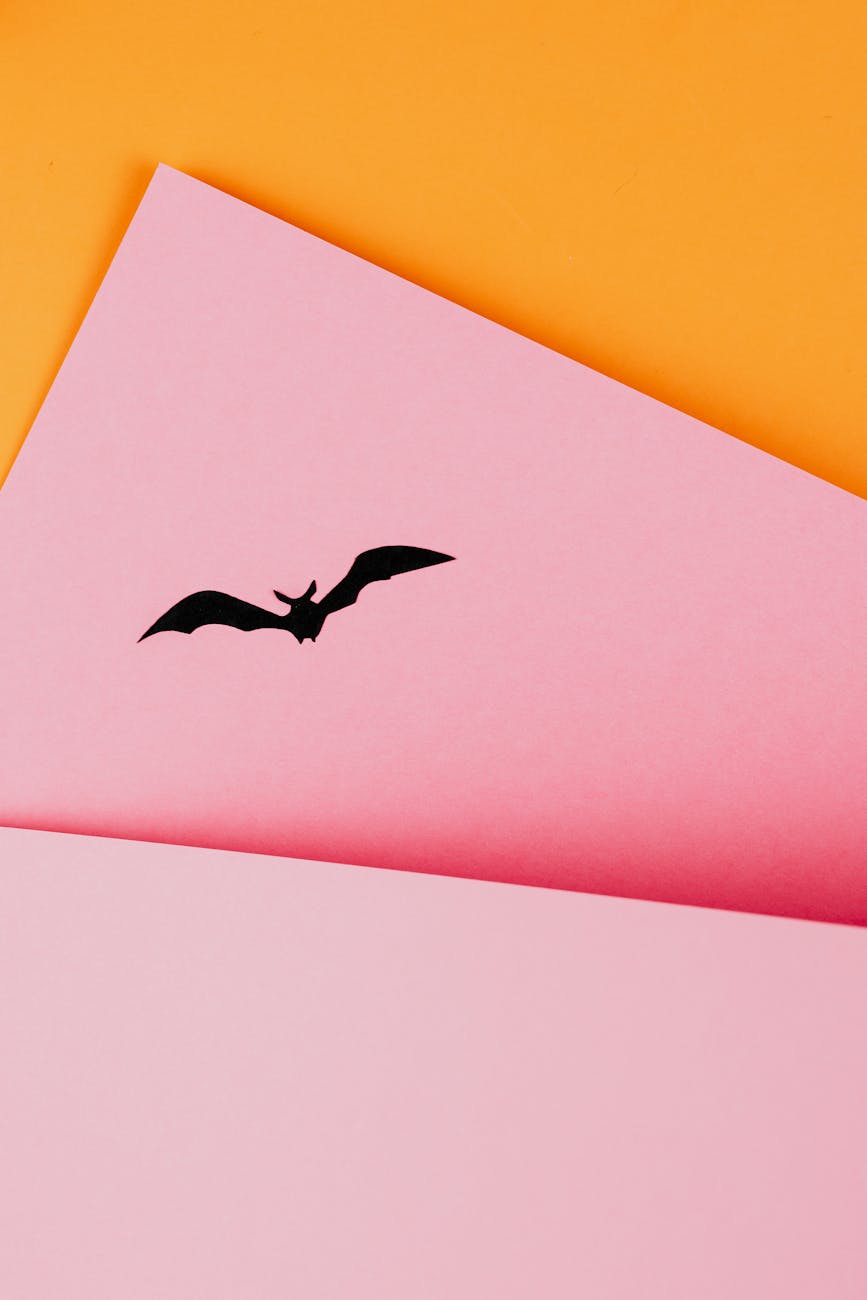
I hope you enjoyed “Melinda”! Last but not least is an ode to a much maligned creature, a symbol of the undead, but in reality a beautiful animal that sustains our ecosystem. This last poem is called “The Bat”:

Photo by Photo By: Kaboompics.com on Pexels.com

The Bat

Taking inverted Sabbath in the caverns of Carlsbad

I measure time in locust-breath and calcite drip,

My bird-chest rising and falling with the gentle tides

Of this black carpet of brotherhood.

Footsteps fill my dreams,

Sun-bleached tourists groping into the cavern’s belly

To enter the sublime,

Their voices like a million valves releasing pressure.

For an instant they will recognize the face of God in this hard darkness,

The stalactite points of his beard,

The cascading rock formations of his brow,

And that fraction of animal intellect will rush forth,

Freed from concept and equation,

To join our ranks as we veer through this Jerusalem darkness

Toward dusk and sustenance,

Toward the amphitheater where they wait for their own departure.

Thank you for reading! I hope you enjoyed these odes to the season and wish all of you a sublime Autumn.

-R. David Fulcher, Founding Member of Old Scratch Press

Hard Learned Lessons Regarding a Writer’s Glamorous Life

By R. David Fulcher

Collective member R. David Fulcher opines about Writing and “the Process”

Reprinted by permission from one of his blog posts available at Davidfulcher.com

When I was young, before I had written a word of fiction, I believed that all writers lived a glamorous life. Ernest Hemingway in particular seemed to embody this image – traveling on safari, sport fishing in the Gulf of Mexico, drinking whiskey as if he were a fish himself – doing almost everything except writing.

The writer Ernest Hemingway in his later years.

Now that I  am older and wiser, I know that Hemingway wrote for hours each day, making him one of the more disciplined writers of his time.  But the larger-than-life Hemingway was a more appealing character to imagine, and therefore the one my younger self gravitated towards.

So, I am writing this post to the new breed of writers out there to let them know some of the disciplines they will find useful in their writing lives, and leaving the catching of Marlins to Salt Water Sportsman Magazine.

Bait the hook and try to catch something big. It’s more difficult than you think.

What Writing is Really Like…Computer Programming

Computer Programming is all about language and syntax, and so is writing.  I know something of this as programming is my day job.  I have often spent hours debugging some code, only to find that a misplaced semi-colon or comma was the culprit.  Writers also will find themselves laboring over the usage and placement of punctuation, understanding that punctuation in the wrong place can change the entire meaning of a sentence.

What Writing is Really Like…Project Management

Project Managers track task and project status, in addition to schedule, budget and other project elements.  As your writing career grows, you will quickly find yourself in need of a spreadsheet, database or other tool to know what you’ve submitted where, when to send a query letter, relevant contact information for publishers and publications, etc.  You will also need to track readings, book fairs, online interviews, etc. on your Outlook or Google calendar.  These demands will intensify as your writing becomes a fulltime occupation, and as you began to spend more time collaborating with others.

What Writing is Really Like…Marketing Executive

While the big publishing houses have marketing resources of their own, new writers trying to make a name for themselves in small independent presses will find themselves on their own to promote their work.  You will be faced with questions like which social media channels reach the biggest (or more importantly, the most relevant) reading audiences, and does it make sense to subscribe to marketing service to promote your books.  Additional considerations involve creating your own author’s website and blog, all of which may require you to acquire new skill sets. Your ability to effectively promote your work becomes even more critical if your work is self-published.

What Writing is Really Like…Accountant

While writing is an art and not a science, sooner or later you will be focused with financial decisionsand issues related to your writing.  These may be simple decisions such as whether to enter a writing contest that charges a fee, or whether to hire an independent designer to design your author’s web site.  Other more complicated issues will involve reporting any book sale royalties on your income taxes or tracking the sales tax to be submitted from cash sales at a book fair.  And when you’re finally ready to take the leap and go fulltime, the big financial question:  how much will I have to make on my writing to make a living? 

What Writing is Really Like…Lawyer

Finally, you will be faced with legal issues during your writing career.  I’ll give you a real-life example.  Unbeknownst to me, a designer at one of the publishing companies used an image on my book cover that was copyrighted.  Several years later, I was contacted by the copyright holder demanding a correction, and I referred him to my publisher.  The publisher finally admitted the mistake, and at their expense, corrected the cover.  Other examples include understanding reprint rights for your previously published stories and interpreting contractual agreements with publishers when you begin to get your first professional sales of your stories and novels.

So, there you have it – instead of being glamorous, the above disciplines can be tedious, if not downright boring.  However, these skills will propel your writing career much further than your ability to bait a hook.

You can read more of David Fulcher’s posts and learn about his books here.

To learn more about the latest Old Scratch Press publications click here. The Song of North Mountain by prizewinning author Morgan Golladay is just one of several exciting new chapbooks! To learn more about Old Scratch Press and our poetry an short form collective follow us on WordPress at Oldscratchpress.comDav

New Poetry Collection by Gabby Gilliam; An Interview with the Author

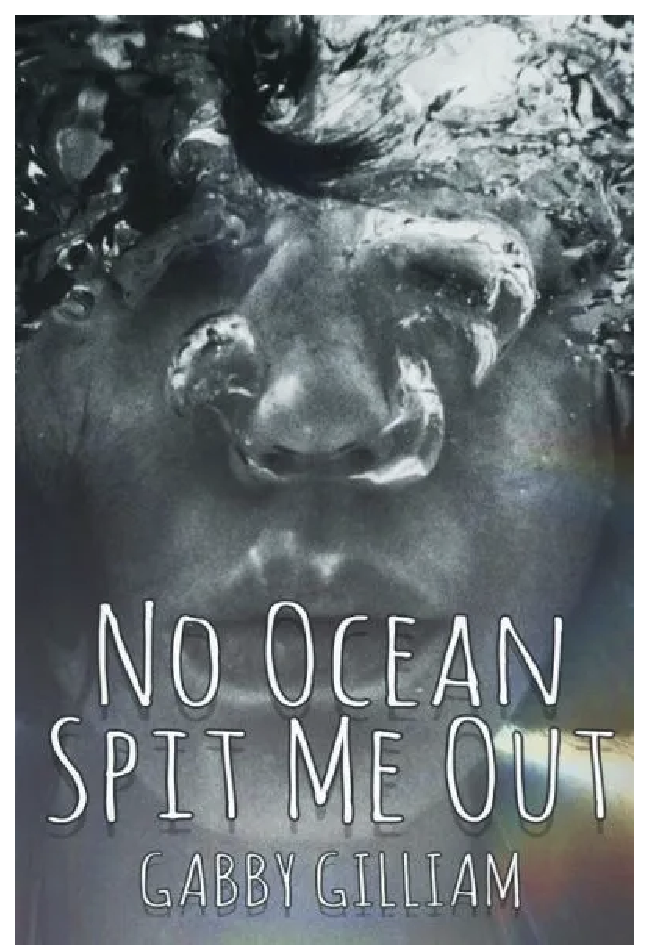
No Ocean Spit Me Out. Gabby Gilliam’s first chapbook of poems, published by Old Scratch Press, is now available for purchase. Shipments will begin on September 15th.  Recently I had the opportunity to ask Gabby a few questions about her work and her newest book.

The poems in Gabby Gilliam’s new book, No Ocean Spit Me Out, explore the dynamics and evolution of family relationships.

A live reading zoom event is coming up, JUNE 15tth and you can register to hear Gabby read from her new book as well as hear poets Alan Bern and Robert Fleming read from their work as well. To register click here.

 What do you like best about writing poetry?

I love that you can use poetry to describe things in new ways––to make the familiar fresh and universal at the same time. It’s one of the things I like best about reading poetry as well.

Which is your favorite poem in this collection and why?

I think my favorite poem might be the one that gives the book its title, No Ocean Spit Me Out. It’s a tribute to my dad. In this poem, I compare my dad to the god Zeus, and Zeus fails to measure up. Since my dad passed away, most of my poems about him are darker and focus more on my grief. I like this poem because it focuses on some of the things that made me love him so much.

What would you like readers to know about you in connection to your work?

Many of my poems focus on aspects of family connection. From dealing with addiction to witnessing my dad’s complicated relationship with his faith (which had an influence on my own struggle with religion and faith), the poems in this collection are a collage of my childhood and gradual self-acceptance. I hope readers can connect with my personal experiences by reflecting on the nuances of their own familial relationships and the impact they have on shaping our identities. I think the power of shared experiences is what make poetry so resonant, and I hope readers find that within the pages of this collection.

More about Gabby

Fellow collective member Gabby Gilliam is a writer, an aspiring teacher, and a mom. Gabby’s poetry has appeared in One Art, Anti-Heroin Chic, Plant-Human Quarterly, The Ekphrastic Review, Vermillion, Deep Overstock, and Spank the Carp.

Not only is she a poet, but Gabby pens the Drumming for the Cure series of novels. Two thus far, Trouble in Tomsk and Chasing the Cure have been published by Black Hare Press. She lives in the DC metro area with her husband and son.

To purchase your own copy of No Ocean Spit Me Out, click here. Please remember to leave a review if you like it because customer rankings count. And please follow Old Scratch Press on Facebook.

Echoes From the Hocker House Makes Short List

OSP Founding member Virgina Watts’ collection of short stories, ECHOES FROM THE HOCKER HOUSE has made the short list of finalists for the 2024 da Vinci Eye Award and also for the Eric Hoffer Book Award, which announces soon!

I worked as Virginia’s editor for this book, and I can tell you that you will find this book captivating. It will transport you to another time and place, and I bet you’ll want to read it straight through in one sitting because the stories are so engrossing.

Congratulations Virginia! Fingers crossed that you win it all!

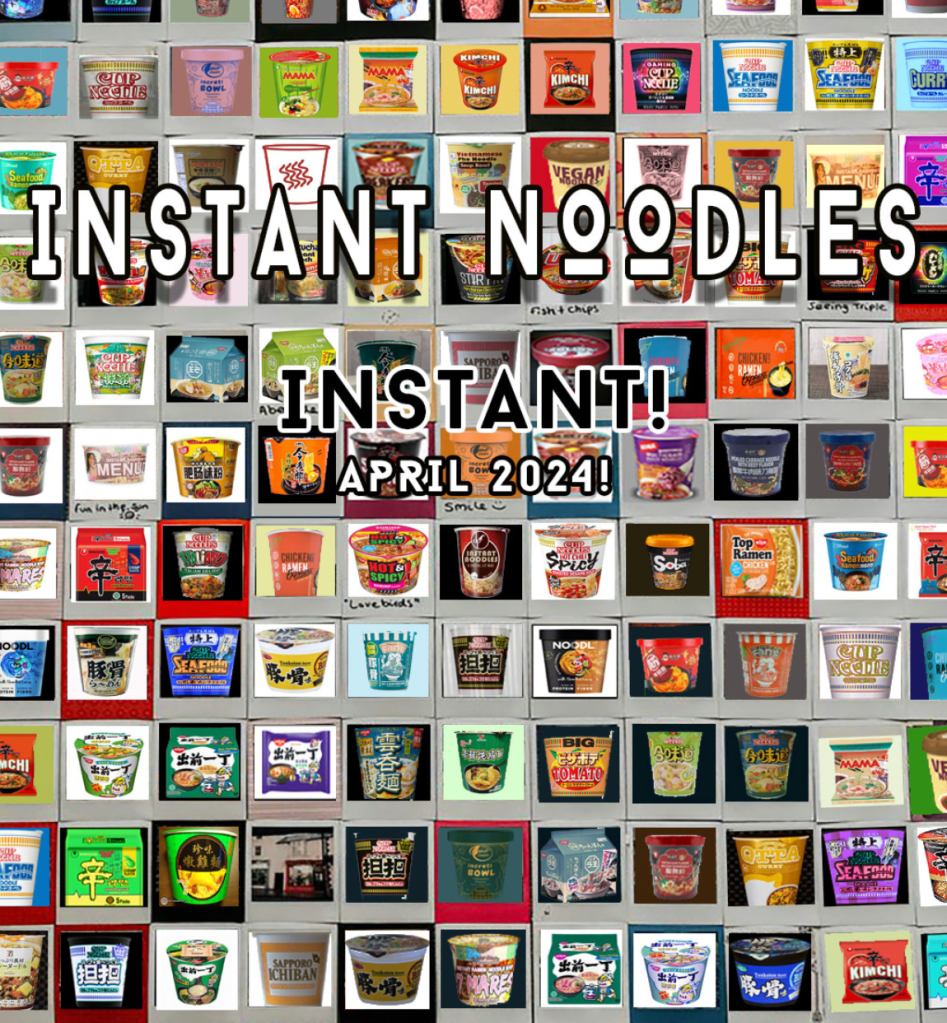
INSTANT NOODLES IS UP!

Check out the wonderful writing and art: curated by Old Scratch Press!
Lot’s of poetry for National Poetry Month plus other literary delights await you!

Just like a great lunch you can get it in an instant!

The Song of North Mountain by Morgan Golladay features Poetry and Art

Old Scratch Press is pleased to announce the upcoming release of The Song of North Mountain, by Morgan Golladay. Slated for May release, the book includes original artwork by the author to accompany her poems. The collection is now available for pre-order.

Founded in 2023, Old Scratch Press is a cooperative of poets and short-form authors who have come together to promote the publication and appreciation of poetry and short-form writing. The Song of North Mountain will be the third chapbook, published by the small independent press.

Break in the Field by Ellis Elliot was their first book, nominated for the National Book Award, followed by avante-garde wordsmith and artist Robert Fleming’s poetry collection, White Noir.

The Song of North Mountain, says Morgan, “is about my relationship with this Earth, focusing on one small mountain in one small chain, in one small part of this vast world.

This book is about a connection – my personal experience sitting in stillness on this mountain, as well as many other mountains. North Mountain is, for me, a symbol of my relationship with this Earth. The permanence of the land, regardless of how it changes; the cycles of life, the quiet continuation of change. It has been a long time since I personally was able to sit quietly and listen to the tree branches and leaves speak to each other. I cannot scale the trails as I once did. But the magic of place is still in my memory, whether it’s the rocks in the rivers, the trails on the mountain tops, or the joy of sharing ripe wild berries.

“…my personal experience sitting in stillness on this mountain, as well as many other mountains. North Mountain is, for me, a symbol of my relationship with this Earth.”

Morgan Golladay

The cover design, an original painting, and the 10 black and white interior illustrations were created specifically for the book. Pre-order availability on Amazon and on the Old Scratch catalogue page will be coming soon.

To keep up with the latest news, please follow our blog here for free and also follow us on Facebook. Later this year look for more chapbooks penned by Gabby Gilliam, Alan Bern, and Nadja Maril. Thank you for reading. Special note: the deadline for Instant Noodles LIterary Magazine submissions has been extended to the end of the month.

Instant Noodles with a Side of Love for Valentine’s Day

Instant Noodles is an online lit magazine formerly curated by me, alone, and now curated by Old Scratch Press.

For Valentine’s Day, here are a few of my favorite poems about love from the magazine, pieces that I chose for publication.

FIRST MORNING AFTER MOVING ~ Greg Hill

My bureaus and dressers,
all crossed with blue tape,
a sea of cubed cardboard
spilling out into the hallway
and into all the other rooms.

Where is my bedside table?
Why does the morning smell
like fresh coats of paint, 
and why a sound
like a parade of identical cars?

My muscles still burn
from the hours of unpacking
from yesterday’s move.

Where is my toothbrush? My comb?

Then I see you,
tranquil and sleeping
and I know
I am home.

Greg’s poem, so sweet, simple about the things that are not fireworks about love, but make us exceedingly happy all the same.

MUTUAL INTERDIGITATION ~ R. Gerry Fabian

We were linked long before we met.
We have been down the same wrong path
at different times with the same rancid rogues.
When we met, I was coming out the wrong side;
you were still there floundering hopelessly.
At first, I didn’t pay you much notice at all.
The death of a dear mutual friend
brought us together at the freshly dug gravesite.
We are good, now, together, walking that tightrope
of ‘fall off the wagon at any time’ good
that depends so much on breathing love’s balance.

Gerry’s poem, about all the ways that love connects us, adds wholeness to our lives, even as we get past the frenzy of youth.

THE BARBARIANS HAD ACTED REGRETTABLY ~ Colin James

My son found the dragon’s tooth amongst
some rocks and fine white sand. He washed
it clean in a tidal pool. A Hermit crab stole it,
scraping the tip then sucking the remnant root.
The boy threw some sand and stole it back.
He climbed up on the rocks with me to sit.
We examined the hard fire, inner blackened.
Easily sold to tourists later, paying us much more
to guarantee their safe return passage .

Colin’s poem I always took to be about parental love: how our children absolutely make us filled and absorbed and imaginative and plain old grateful to be in their magical world.

UNDER KEEL ON LITTLE DOE LAKE ~ Robert Fleming

moon over wooden hull
us under birch wood
left hand forward 4 ur bow
thwarted by ur stern pry stroke
back stroke 2 ur gunnel
seeking ur back sweep stroke
u j-stroke away
non-swimming clothes on
prefer clothes off
cross draw stroke 2 ur dock
u eskimo roll out
ur knee on deck
solo under skin
draw stroke my wood

Robert, a member of Old Scratch Press, may correct me, but I always took this to be a poem at the beginning, heady stage of love, and so much about the abandonment that I always feel in the time of transition from spring to early summer.

WISTFUL DREAM ~ Bethany A. Beeler

Betahany’s poem always seemed like lust to me, which is beefy and delicious, in my view, like biting into a huge strawberry covered in dark, dark chocolate, and certainly an important part of romantic love.

Lastly, on this hopefully gentle day that comes to you with a hug, or, perhaps a kiss, another from Greg Hill, possibly my favorite poem submitted to Instant Noodles to date. Happy Valentine’s Day. May you find love, or love find you!

SATURDAY ~ Greg Hill

the day
starts in bed 

we make

coffee and 
something from milk

flour eggs
water

in the shower
warming us together

after breakfast

you brush 
a dollop of shampoo

on my nose
as I rinse my hair

even the nothing
you do

is something
to me