Hurray for Dr. King~

Langston Hughes, Maya Angelou, Gwendolyn Brooks, Joy Harjo, Claudia Rankine, Ocean Vuong, Elizabeth Acevedo, Terrance Hayes, Frank O’Hara, Audre Lorde, Allen Ginsburg, all poets who have enhanced the canon of American writing with their writing and their diversity. Have you read any of them? Which ones have you tried? Which diverse poet is your favorite? What poem do you like that you can share with us?

Did you know that Dr. Martin Luther King Jr. believed deeply in the power of voices, especially voices that had been ignored, dismissed, or pushed aside? That belief matters just as much in literature as it does anywhere else.

The literary canon is not a fixed monument. It is a living body of work that grows stronger, more truthful, and more beautiful when it includes diverse authors and perspectives. American literature is incomplete without the poets and writers who reflect the full range of American experience. Reading these voices does not diminish the canon. It expands it, strengthens it, and makes it more honest.

It may seem as if diverse authors exist on the margins of literature, but they don’t. They are central to it. They shape language, challenge assumptions, and help us see both history and the present more clearly. I have enjoyed so many authors who are so different from me, especially when we count the wealth of male writers we read in school. They are all wonderful writers, and I am also glad school now includes more writers who look like me, as well as writers who look like my daughter and my friends.

So today, as we celebrate Dr. King, let’s also celebrate the voices that widen our understanding of who we are. Pick up a book. Read a poem. Listen closely to someone, anyone, different from you, or simply listen to someone in need. How can you share your light?

On a slightly off-topic note, I was visiting my sister this weekend, and we each chose a stand up special to watch that is a pretty new special. I chose Mohaned Elshieky’s special No Need to Address Me, and my sister chose Marcello Hernandez’s special American Boy. Both were incredibly funny. Comedy benefits from diversity too.

I am happy for this day. Hurray for Dr. King and his marvelous legacy. Hurray for all poets. And hurray for a literary world that makes room for all of us.

~Dianne


Dianne Pearce is the chief editor and bottle washer at Current Words Publishing, and the half-cocked imaginer behind Old Scratch Press and Instant Noodles. Pearce loves helping writers realize the dream of having their work published. I mean she is really crazy about doing that for some reason. To that end, to join in the fray, to look at the thing from the other side, to stand in another’s shoes, and all of those things, she is fully expecting and promising to publish her first collection of poetry, In the Cancer Cafeteria, spring of 2026. Please don’t hold your breath. For very long. Happy 2026!


“Pink Dress” from the Forthcoming ~ In the Cancer Cafeteria~


Happy Saturday everyone.

I’m working on bringing out my poetry collection this year, and I thought I’d share one of my poems with you.
For the past year I’ve been traveling with my little sister to her cancer appointments. Luckily I do not have cancer, but I am cancer-adjacent, and that has its own challenges. When I want to say worrying things, when I read case studies, which I do, when I am by myself as she naps through a treatment and I wait, when I drive in and out of West Hollywood alone, sometimes in the threes and fours in the morning depending on treatment time, and I ruminate, I try to put it on paper, rather than on my sister. I’m also a clothes lover and a people watcher from back in junior high with my then boyfriend and bestie Joe Perna. We called ourselves the fashion police in 7th grade, like we were such good dressers. Joe and I observed details, and made guesses based on what we saw. In general the thing I am most curious about is the lives of other people. I think I am (possibly) overly empathetic, and I imagine stories for strangers all day long. I also tend to notice the small things happening around me. As I sit and wait for my sister, or drive alone, or struggle to make small talk (as I do without cancer! I have never been good at it), my brain is humming away wondering about people, and making stories to go with them, and wondering if their cancer is curable and how it will all play out. Most people I see only once, even though we go the same time and day quite often. It is my curse to want to know everything, and to never be able to know, purely because I am a nosy so-and-so. When cancer comes to town your ability to be quiet in the never-knowing is mightily tested.

I also don’t want this to be a totally maudlin book about being upset about my sister. I don’t want it to be a book about my sister. Though I love her dearly, her story is hers, and I don’t want to steal it, which would add, in my view, insult to injury. It’s important when you write about real-live people who are not famous people that you be considerate and kind. I am not able to do that when talking if a joke comes to mind. If I think of something funny about something you’ve said or how you look, etc., it’s coming out unfiltered, that second, and I’m going to laugh. Yeah. Kind of a shitty trait, but what do they say, “At least all the trauma made me hysterical.” Yup. But when I write about anyone who I will see again, it is important to me to serve my needs while not disregarding theirs. There are compromises. My sister may not want me announcing she has cancer, for example, but she has told the people in her life, and I need to be able to discuss it too, so she loses that bit of control, just another thing cancer steals, privacy. For that she has to allow me the book as a coping mechanism. Sorry sis.

Another thing to note, as I assume most people who read this blog are authors: you have to be careful where you put your work before you publish your book. I am publishing my book through OSP, so I can put this poem here, and OSP will not disallow it from the book. If another publisher was publishing my book, they might not be happy for me to stick a poem out in public on a blog. They may or may not be happy for me to publish a poem somewhere in advance, because that anthology or lit mag where the poem is published may hold rights that conflict with the publishing company then using the poem when publishing my book. So there’s that. You have to be careful. You can always post a question here, and one of us will try to answer it. In fact, I’ll run a monthly post that offers a chance for you to ask questions, and reminds you that you can do it.

This book has a theme that runs through the whole book. Some collections do have a theme, but often the theme is that all the poems are written by the same person. The theme in my book is cancer, but, more drilled down, my reactions to cancer, my observations on the cancer experience, which I am holding together in the idea of the cafeteria at the clinic. People who are going through cancer as patients or support are often in the cafeteria as a place to stop being wrapped up in the cancer events and procedures. It’s the downtime place, and, because of that, people drop their masks a bit there. I am not telling anyone’s secrets as much as I am interpreting what I see, which changes the observation from what it is, to what I see. There is much intrusion from observers, so don’t worry that I am revealing anyone’s truths besides my own.

I have trouble tapping a poem with my scepter and declaring it complete. I expect many poets are the same. Sometimes a poem comes out almost fully-formed, but most still have growing and shrinking to do.

I write longer poems. I write narrative poems. I tend to write personal poems. Sometimes my poems are true, and sometimes they are true in the sense that they are true, for me. That doesn’t mean they would qualify as legally true. If the person was a brunette, and brunette doesn’t work, guess what, red hair is what I am going to write.

This poem, “Pink Dress,” is pretty much done. I will say it is an uncorrected proof here, as I may change it a bit before it hits the book galley. But it feels good to me as it is, and I was able to read it aloud to myself without having major anxiety, so I feel like it is okay.

The OSP group has become my friends as well as my colleagues, and, based on schedules and etc., we often ask each other to look at each other’s work. That’s part of the deal with this collective. So far I have shared some of my writing for this book with Robert, Anthony, Gabby, and Ginny. I cannot express how much I have appreciated them and their taking the time to give me really helpful, kind, and actionable feedback.

Here, without further ado, is one of the poems destined to be released later this year in the collection, In the Cancer Cafeteria.

Pink Dress

Her pink dress is too tight too short
the old sneakers don’t go
hair twisted up and split
two rolls of mussed-up teddy ears.

He is all belly 
under his big and tall polo 
up top tangled hair needs 
a brush run through
but beard is spun silk. 
He is the one who gets up
moves around
paces because he’s in the cancer cafeteria and who doesn’t pace?

She doesn’t.
She smiles at the screen in her hands.

Whenever he gets up 
he runs his finger down her bicep. 
Her chubby thighs
twitch back at him against the tight pink hem.
The dress is a mini
I can see her cotton crotch and I don’t tell her
because each time he slides his finger down her arm 
her smile goes wicked at the corners 
for a second
as her thighs twitch
call and response
and it’s not my song to sing.

I shut up I pretend I don’t see.

When he manages to sit 
his chair is up against instead of across from
his long tangled curls try to nestle under her neck
wheedle around her earlobes. 
I can’t tell for certain who is victim
who is victim support.
Some secrets are not for me to know.

He needs to move again 
gets up abrupt 
clumsy all the other chairs 
tables reach for his legs
stepping around best he can into the hall
gazing in confusion at the baby grand 
sitting there
playing “Wichita Lineman” by itself
from 1968 
a year him and his girl know only as a number, and not real.

He stares at the piano
rocks on his heels in his shoes as he has rocked since he was five years old 
knees bend out to the sides 
a boy just learning how legs work
walking through a day’s same endless agenda
treatment, wait, consultation, wait, scan, wait. 

Head nodding at Jimmy Webb’s F major D major
he tries to find his way to the tune
gives up, moves back to her
comes in for a landing 
finger trails down and up
bare meaty skin. 
She ripples in response. 
Appearing now on all her bare places
languishing goose pimples 
long only to be released 
to go home 
so two may unzip the tight pink dress together. 


Dianne Pearce is the chief editor and bottle washer at Current Words Publishing, and the half-cocked imaginer behind Old Scratch Press and Instant Noodles. Pearce loves helping writers realize the dream of having their work published. I mean she is really crazy about doing that for some reason. To that end, to join in the fray, to look at the thing from the other side, to stand in another’s shoes, and all of those things, she is fully expecting and promising to publish her first collection of poetry, In the Cancer Cafeteria, spring of 2026. Please don’t hold your breath. For very long. Happy 2026!

Submitters Beware

There has been much in the news within literary circles lately about literary journals with questionable practices, mostly focused upon submission fees and how these fees are used. No one should question the idea that it is expensive to run a literary magazine with such costs as editing and overhead, and most importantly, not everything about submission fees should be seen as negative. It is possible that when writers must pay a nominal fee to submit their work to literary magazines, they may be inspired to submit a more edited and stronger piece. However, it’s one thing to pay $3.00 to one journal to submit but let’s face it, most writers must submit the same piece to many magazines if they want to increase their chance of having it published. This is why submission fees can really add up. There is also the idea that if submission fees are charged, less submissions will come in and this will lead to faster publication decisions by editors. Like it or not, it does seem that submission fees are here to stay. If we accept that fact, then we must understand some realities about submission fees.

I am not going to name names here, but some well know literary journals have been engaging in practices that are shameful. It’s hard enough and expensive enough to be a writer trying to get work published in literary journals without these bad actors but, unfortunately, they do exist. One well known journal accepted submissions and charged for over a year but had already stopped reading and publishing new word. They later folded and changed their name. I have personally submitted to journals several times only to realize they had gone defunct. I was never able to get my submission fees back. Recently, several well-known journals held contests, charged the high submission fees customary in literary contests, and never announced any winners. Suffice it to say that just because something calls itself a literary journal doesn’t mean it should. 

So, what is a writer to do? How can we protect ourselves from unethical practices and scam journals? Here are some practical ideas to consider.

  1. Is the journal listed on reputable databases such as Poets and Writers, Submittable, NewPages.com, Clifford Gastang Literary Magazine Rankings, MLA International Bibliography, JSTOR
  2. Is the journal’s website polished, free of grammatical and spelling errors. Is it easy to navigate? Does is look professional? A poor website design might be a cause for concern.
  3. Do their publication terms comply with normal industry standards. Publication guidelines should always be clear and concise and include all requirements such as formatting parameters. 
  4. Be very concerned if a journal is asking for all rights to your work. They should be asking only for first serial rights. 
  5. RED FLAG: Is their submission fee unreasonably high? Are they charging $15.00 as an example when most journals are at $3.00. This should worry you.
  6. Do they explain why they are charging a submission fee of any amount?
  7. If they do charge submissions fees, do they also have yearly contests where they offer a monetary prize?
  8. It should never be difficult to find contact information on the journal’s website, and there should be some explanation of who the editors are and what their editorial process is. A journal should have a physical address and an email address.
  9. Look at their publication history. Have they been publishing consistently? Can you purchase copies of the journal on their website? Look at the most recent issue. Look at the quality.
  10. If the journal has a blog on their website, is it being maintained? 
  11. Does the journal submit work to contests such as Pushcart Prize or/and O. Henry Awards?
  12. Do they have a social media presence such as Facebook where they regularly promote the work they publish?
  13. Be aware of any unrealistic or boastful claims about readership. 
  14. If you are submitting to a contest, look to see if the list of winners from last year’s contest is listed on the journal’s website. It should be.
  15. Be aware if a journal repeatedly pushes back contest deadlines. 

I have been submitting to literary journals for many years and have been lucky to have some level of success. Be aware of where you are sending your writing, but don’t let a few bad apples dissuade you from submitting to literary journals!!! The overwhelming majority are ethical to a fault and the writing world would be lost without literary journals. They are an invaluable part of our art form. I read literary journals, subscribe to them, admire them immensely and thank them for all the wonderful writing they bring to the world. So, happy submitting to my fellow writers and the best of luck to you all!

~Ginny

Virginia Watts has been fortunate to have published nearly 100 pieces in literary magazines including CRAFT, The Florida Review, Reed Magazine, Pithead Chapel, Permafrost Magazine, Broadkill Review, Two Thirds North, Hawaii Pacific Review, Sky Island Journal, Eastern Iowa Review, Evening Star Review and Streetlight Magazine. Nominated four times for a Pushcart Prize and four times for Best of the Net, in 2019, Watts won The Florida Review Meek Award in nonfiction.

Virginia’s new book is now available from Old Scratch Press:

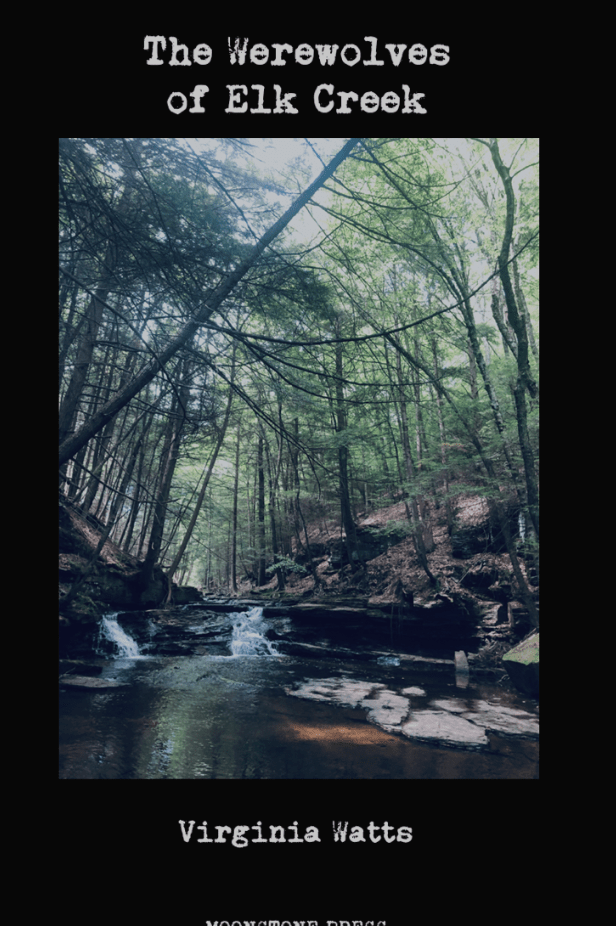
Her prior poetry chapbooks Shot Full of Holes and The Werewolves of Elk Creek 

 are available from Moonstone Press. And her debut short story collection Echoes from the Hocker House is not to be missed!

How to Get the Most Out of Critique Groups

I have participated in quite a few of writing critique groups for many years now, and I can say that the feedback I have received from fellow writers has been critical to my success in publishing my work. It is true that if you remain with the same group over an extended period, there will be certain people that you will agree with more than others for suggestions for editing your work. There is nothing wrong with that. After all, everyone has different tastes and preferences. That being said, it is important to read and consider all comments you receive. Here are a few tips to guide you in getting the most from the process of critique. 

  1. Decide what you are honestly looking for before you submit a manuscript. If you just want to know if the story is worth working on at all, then submitting a very rough draft might make sense but I never do that. My approach is to put in all the time necessary to complete a short story or poem and make it the best I can. This means, for me, several months of writing and many edits. I probably edit a piece fifty times or more before I feel I have done all that I can for it. I prefer to circulate what I believe is “a finished story.” 
  • During the critique, just sit quietly and listen. In the groups I attend, I will receive written comment, so I don’t have to write notes during the oral critique. You can learn a lot by listening to colleagues discuss and debates questions or concerns they may have about your writing. Above all, don’t say anything as the writer. You aren’t there to explain your work and above all, you are not there to defend it. You don’t want people to feel that they cannot give you honest and open feedback. That’s what you are there for and as writers, that is what we all need. 
  • Try not to feel hurt about “negative” comments about your writing. At first, for most writers, we do feel hurt but in time, this goes away as you realize that critique is an honest exchange of creative suggestions meant only to help you decide what final edits you wish to make. We cannot read our own work in a way that will make it the best it can be. We don’t have the distance to be able to do this. In short, we need each other. Of course, the critique should be done in a constructive, professional way. I have always had good group leaders who have insisted upon this.
  • At the end of a critique, I always make sure to thank everyone for taking the time to read and critique my work. I know it takes time and effort, because when I read for others, I give it my all too. It is the greatest gift we can give to each other as writers.
  • So now that you have your critiques, it is very important to set everything aside for a minimum of a month before you return to make edits. Early on I made the mistake of making edits too quickly and they were knee jerk and not good. You need time to let things sink in and percolate. Give it a rest.
  • When I do edit, I go through each written critique and fix all mechanical edits first, such as spelling errors. While doing that, I keep a running list of more involved edits that I will look at more carefully to see if I agree with them. This might be things such as a section of unrealistic dialogue, an ending that needs less or more, a character that lacks some necessary background. 
  • I have never not changed a story or a poem based on professional feedback. Some more than others, but all have been edited because of ideas or suggestions or questions raised by writing colleagues and I can honestly say that my work has been improved immeasurably by the critique process. I am so grateful for my writing colleagues and friends. I do have one writing friend who I give my final edited pieces to for one final read. And another tip for writers. Seek out readers of all ages to critique your work. You will get different perspectives that will improve your final product. 
  • An important final comment about writing groups. Over the years. I have made such wonderful, close friendships with the people I have met in these groups. It’s funny how life works. You go looking for something and you come away with something so much more valuable than you expected.
  • Good luck with your writing and enjoy all of the process, including critique and editing in response to critique. I promise you that you will find it rewarding to not only give critique but also to receive it. It is part of our art form. 

Enjoy your group!  

~Ginny

Virginia Watts has been fortunate to have published nearly 100 pieces in literary magazines including CRAFT, The Florida Review, Reed Magazine, Pithead Chapel, Permafrost Magazine, Broadkill Review, Two Thirds North, Hawaii Pacific Review, Sky Island Journal, Eastern Iowa Review, Evening Star Review and Streetlight Magazine. Nominated four times for a Pushcart Prize and four times for Best of the Net, in 2019, Watts won The Florida Review Meek Award in nonfiction.

Her poetry chapbooks The Werewolves of Elk Creek 

and Shot Full of Holes are available from Moonstone Press. Her debut short story collection Echoes from the Hocker House is available on Amazon.

Why Prose Writers Should Make Reading Poetry a Daily Habit

Many writers, including myself, write both prose and poetry. For me, it just depends on the subject matter as to which form I choose. Many writers begin with one form of writing and evolve to another. There are some writers who begin in one genre and stay there. In the end of the day, our paths are different, but we are all writers, and all writers want to tell a story. We want readers to feel something, experience something, remember something. We want them to leave us changed in some small way. Even if you don’t want to learn about the craft of poetry in a formal way, as in attending workshops, just reading a few poems a day will improve your prose writing in ways that will surprise you. 

Poetry as a form succeeds on bold, visual imagery, exact information from all the senses. This is how the reader enters the poem and lives inside it for a brief time. By reading lines of poetry, prose writers will also experience and come to understand why rhythm matters. There is great impact when rhythm is found in sentences and phrases.

One of the defining benefits of studying and writing poetry for me as a prose writer has been that in poetry more than any other genre, each and every word must do work, and I mean each and every word. Poets take time and great care choosing words and prose writers, if you want to be your best, you should be doing that as well, but it takes practice. Read Hemingway again to see why this matters. 

Poetry has the same elements as prose writing, such as characterization and narrative arc, but it contains more unexpected phrases, surprises and turns that send readers in directions they didn’t expect. This is often missing from prose writing, and it shouldn’t be. Additionally, poetry teaches us about pace. How long lines with no punctuation slow the reader down. How a short line placed just right can then really pack a punch. 

Prose writers can also use traditional poetry techniques to enhance their narratives such as assonance, linking words with similar vowel sounds. Using words in this way can produce a desired effect on the reader such as a calming effect as if listening to music. 

My greatest lesson and take away as a prose writer who reads poetry every single day is that endings are so incredibly important. When you read enough good poems, you’ll see what I mean. And stories, like poems, deserve the best endings possible. This is something to strive for. 

So, you want to be a good prose writer? Then read poetry. Simple as that. Poetry teaches us all how to use our language. Poetry teaches how to describe. Poetry demonstrates mood, voice, momentum in unexpected ways. We all want the same thing. To tell the story we want to tell in the best way we can. Reading poetry will help us learn to do that. 

There are many good online literary journals where you can read poems: Narrative Magazine, Agni, Carve, Rattle, 32 Poems, A Public Space, Apple Valley Review, Evergreen Review, The Cortland Review, Waxwing, Pigeon Pages, Cleaver Magazine, Able Muse. 

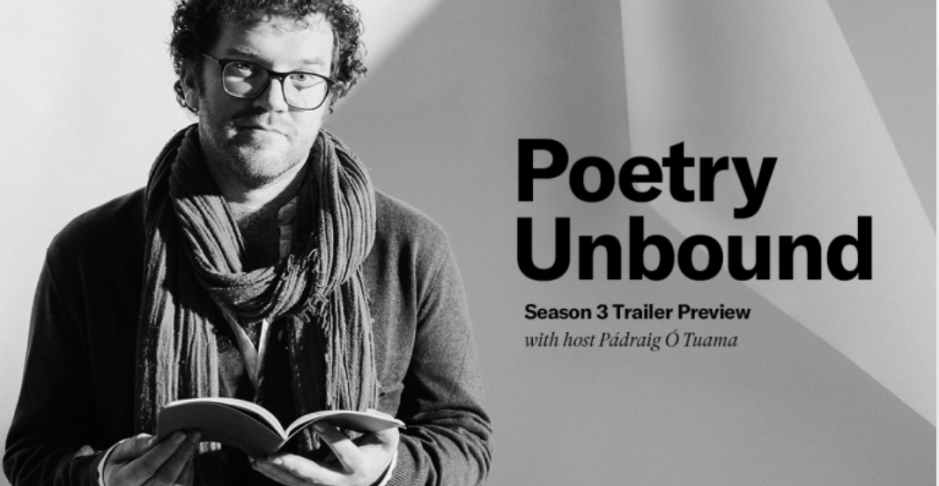
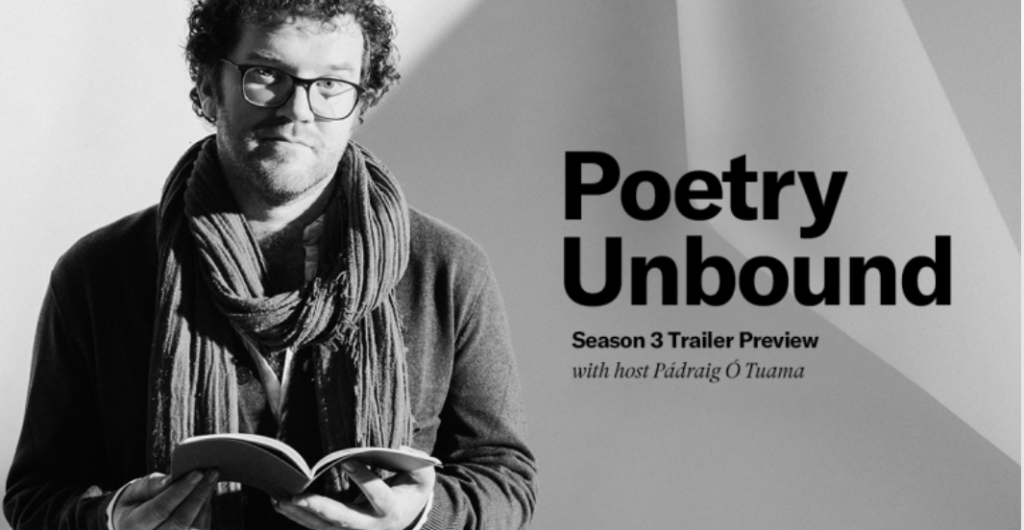
You can also sign up to receive daily poems from: Rattle, Your Daily Poem, Poem-a-Day, Poetry Daily, Poem of the Day. All these are free as is the wonderful podcast written and hosted by one of my favorite poets Padraig O Tuama: Poetry Unbound. I would also highly recommend Padraig’s wonderful book: 50 Poems to Open Your World.  

Happy Reading!  

~Ginny

Virginia Watts has been fortunate to have published nearly 100 pieces in literary magazines including CRAFT, The Florida Review, Reed Magazine, Pithead Chapel, Permafrost Magazine, Broadkill Review, Two Thirds North, Hawaii Pacific Review, Sky Island Journal, Eastern Iowa Review, Evening Star Review and Streetlight Magazine. Nominated four times for a Pushcart Prize and four times for Best of the Net, in 2019, Watts won The Florida Review Meek Award in nonfiction.

Her poetry chapbooks The Werewolves of Elk Creek 

and Shot Full of Holes are available from Moonstone Press. Her debut short story collection Echoes from the Hocker House is available on Amazon.