Writer’s Toolkit: 5 Techniques for Handling Emotional Intensity in Writing

By Ellis Elliot

As writers, we often draw from our own lives for inspiration, tapping into our memories and emotions. However, delving into difficult experiences or memories can be challenging. It’s important to use techniques, or “lifelines”, to navigate this process. For example, author Gillian Flynn separates herself from the intense emotions of her writing by enjoying her favorite Broadway show tunes for a few minutes after she finishes writing. Poet Ada Limón ensures she has a way out of the emotional intensity by reminding herself that writing is the outlet for her feelings.

“Memory takes a lot of poetic license. It omits some details; others are exaggerated, according to the emotional value of the articles it touches, for memory is seated predominantly in the heart. The interior is therefore rather dim and poetic.”

                                 -Tennessee Williams

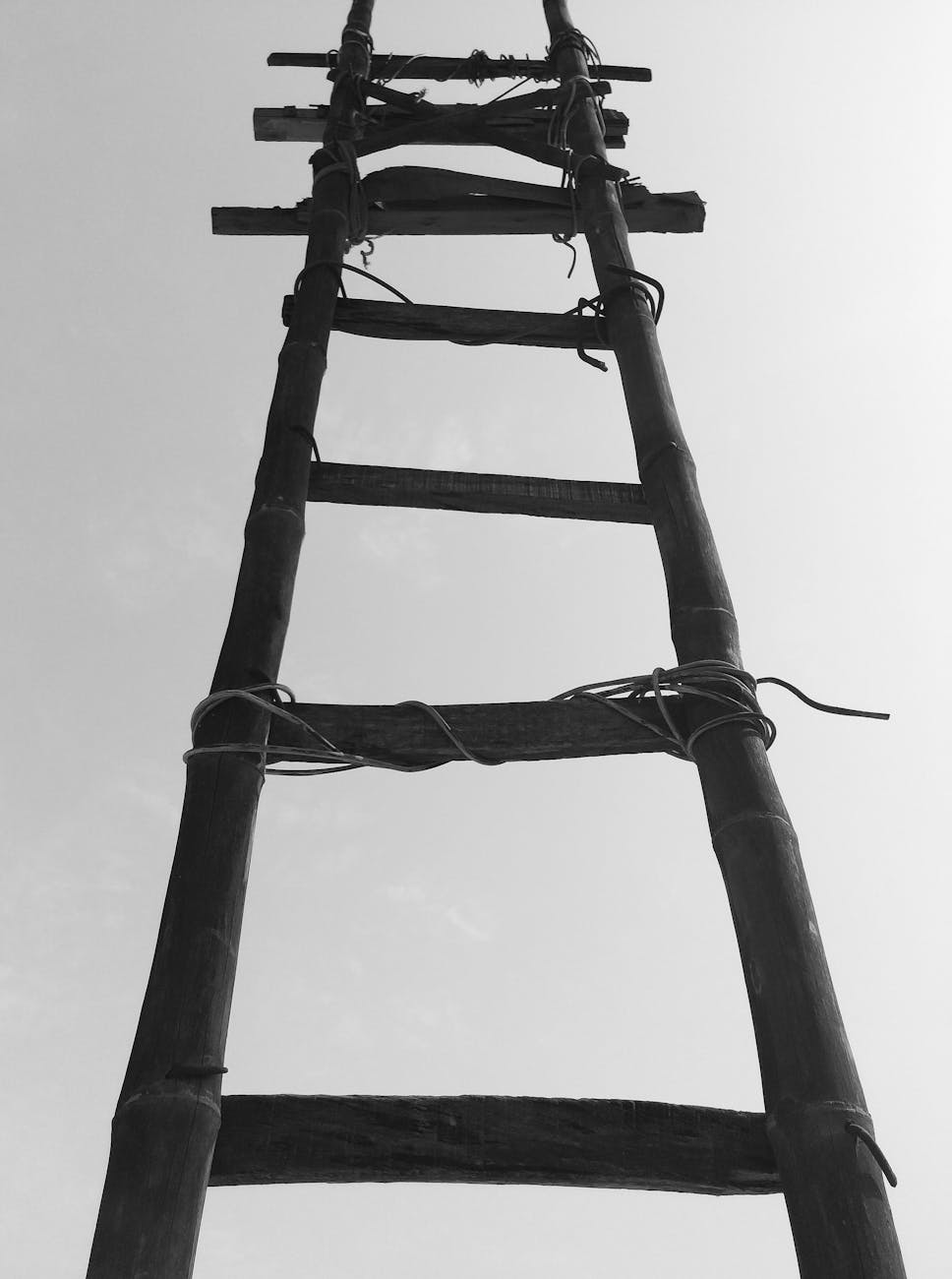
What does the “ladder out” look like? For me, the five techniques below are the rungs I use and find most helpful when the “going gets hard”:

Photo by Khimish Sharma on Pexels.com
  1. Method to Shift from Interior to Exterior- when I feel myself spiraling, I will tell myself to notice: 5 things I can see, 4 things you can hear, 3 things you can touch, 2 things you can smell, and 1 thing you can taste, OR NOTICE 3 things in the shape of a square, 3 things in the shape of a circle, and 3 things in the shape of a rectangle.(I thank my therapist for that one!)
  • Breath Work-Breath connects directly to the nervous system, hence, when our breath quickens with excitement/fear we can consciously slow it down to bring calm. There are a lot of different kinds of breath-work, but the method I use (because I can remember it) when on the high-dive is called “box breathing”. You simply inhale 4 counts, hold 4, exhale 4, hold 4. More info here: https://www.calm.com/blog/breathing-exercises-for-anxiety
  • Form Constraints-Choose a form, any form. Maybe it’s a sonnet, or as simple as making a list. Maybe it’s a haiku, or in the form of dialogue. Having a form helps switch the brain away from emotionally charged subject matter, and over to the more linear, logical side. Like swim-lane ropes, it helps give our work specific direction when it feels like we’re dog-paddling to nowhere.
  • Movement and/or Music-Take a walk. Sit in your chair, reach your arms out and upward as you breathe in, bring them down as you exhale. Roll your shoulders. Try some chair yoga. Turn on the music. Take a dance break. The mind/body connection is a strong and proven one. Get out of your head and into your body. Discharge that pent-up emotional energy with movement. Your writing, and your body, will thank you.
  • Decline the Invitation-“Going there” in your writing is up to you. Trust the wisdom of your body. If something comes up you don’t want to address, you can absolutely say, “no, thank you”, and shut the door behind it.

Maybe think of the above as the hard-hat and knee-pads for certain aspects of the hard work of writing. Find comfort in knowing that many are sharing the journey with you. If you’re lucky enough to have writer friends, talk about it. Many of us circle and circle around our truths, but never get there. Suit up and see where it can take your writing.

Thank you for reading. For more about the author Ellis Elliot visit. And check out her book.

Break in the Field

Delaware OSP Founding Members Honored With Multiple Awards

By Robert Fleming

Two OSP Founding Members, Morgan Golladay and yours truly Robert Fleming, won awards at the Delaware Press Association professional communications contest 5/1/2024 in Newark, DE. Escorting Morgan through the entrance, she answered my dress question: “my Old Scratch Press T-shirt is not fancy enough for a banquet, best black only.” I wore a tight shirt to accentuate my pecs, in-case there was anyone looking for a date. At a banquet, you must send the right signals.

Here is the low-down on who won which awards:

Morgan Galladay won first and second place in short stories: single story for “Under the Rhodendrons” published in Halloween Party ’23:
Halloween Party ’23: Keeten, Jeffrey, Heron, Robert Lewis, Goodridge, James, Golladay, Morgan, DeCicco, Kim, Dickerson, Marc, Howd, Eric Machan, Machan, Katharyn Howd, Paige, Michael, Cantu, Juan: 9781957224503: Amazon.com: Books

“Second Christmas” published in Solstice, volume 3:
Solstice: A Winter Anthology (The Solstice Winter Anthology Series): Pearce, Dianne, Doyle, Anthony, Golladay, Morgan, Watts, Virginia, Johnson, John, Fitzgerald, Christian, Aakaash, Buffy, Fulcher, R. David, Crandell, William F., Pearce, Dianne: 9781957224039: Amazon.com: Books
and honorable mention in creative verse: single poem for “March Wind” published in Instant Noodles: MARCH WIND – Morgan Golladay – INSTANT NOODLES (instantnoodleslitmag.com)

What’s next for Morgan: At the banquet Robert spilled ranch dressing on Morgan’s black skirt. Morgan screamed she will immediately send her suit to the dry cleaner. Robert agreed to pay for his stain. While Morgan is waiting to pick up her dry cleaning, she is promoting her upcoming book Song of North Mountain, published by Old Scratch Press:
DPP CATALOG – Devil’s Party Press, LLC (devilspartypress.com)


Robert Fleming won third place in creative verse: single poem for “Cheese Sonnet #263” published in Four Feathers Press: rhythms of Southern California


Honorable mention in Graphics and Design for “Timothy Gager is with Ellis Elliott at Boston Harbor with the Dire Literary Series.

DPP CATALOG – Devil’s Party Press, LLC (devilspartypress.com

Robert Fleming won third place in creative verse: single poem for “Cheese Sonnet #263” published in Four Feathers Press: rhythms of Southern California

honorable mention in Graphics and Design for “Timothy Gager is with Ellis Elliott at Boston Harbor with the Dire Literary Series.”

(2) Facebook

What’s next for Robert?

At my club house gym yesterday, a neighbor approached me to purchase my book White Noir:

After showering, I delivered my book to my neighbor who invited me inside and paid me, after I signed my book. That was the end of the neighborly encounter because the neighbor’s husband, watching tv on the couch, sneered at me. I promptly departed my neighbor’s house, as the husband rose and walked toward his pistol.

Unwounded, I created three graphic images for Four Feather’s Press upcoming publication: Landmarks of Southern California. Learn more about the author here: https://www.youtube.com/watch?v=FOAb33t1NFc

Small Independent Presses Provide Opportunities for New Voices

By Morgan Golladay

Five major publishing companies pretty much cover the market for books. But it’s the indies that take more risks on new authors, like me and my fellow writers at Old Scratch Press (an imprint of Current Word Publishing {CWP}). We write because we have something to say, not necessarily for fame and fortune (although that certainly wouldn’t hurt).

If you find a book you like, ESPECIALLY if it’s from an indie publisher, give it a review on whatever national website for books that comes up. Just that small bit of verbal support that says “I like this book” means a great deal to the writer, and the publisher. And it doesn’t have to be my book (but it’d be great if it were!).

So let me tell you about my book. There are fifty-five poems, 8 black and white full-page sketches, several smaller sketches, and other material in the book. They are all original I hope you’ll buy it, either in Kindle or print form.

Hot Off the Press: The Song of North Mountain an Amazon Top 100 Bestseller 8/17/24

For those of you who don’t know me, there are a few things that are important. I am 77, and I have retired from two jobs. I started publishing only in late 2019, and this truly is my Very First Book that is by myveryownself. At times I feel like it’s awfully late to start a new career, but then again.

I live in a community where many people move to when they downsize into their own retirements. THIS part is important: there’s no reason to stop just because we’re retired, or older, or more physically limited than we were when we were 35. We still have the ability to create, whether with words, paint and brush, whisks and casserole dishes, pottery wheels, or needle and thread. There really is nothing we can’t do, just some things we may not do as well as when we were younger (like blacksmithing, or crawling under vehicles).

Available here for pre-order  on Kindle with delivery May 1st, I hope you like The Song of North Mountain. https://www.amazon.com/dp/B0D1P64FHC soon to be available in softbound print as well.

This post was adapted from an essay on Morgan’s own blog and you can read more of her words at https://morgangolladay.wordpress.com/ Don’t forget to follow this blog and our facebook page for the latest news.

APRIL is National Poetry Month. Time to Start Celebrating and Sharing Our Favorite Poems!

April is almost here, time for National Poetry Month, an entire month to celebrate poetry. Do you have a favorite poem or poet? Let us know and we’ll try to post a story about the poet or the poem on the Old Scratch Press website.

National Poetry Month was launched in 1996 by the Academy of American Poets as a way to promote educational events that encourage students to interact with poets and poetry.

Photo by Andrea Piacquadio on Pexels.com

One of these programs sponsored by the Academy of American Poets is called Dear Poet. Designed for students in grades five through twelve, participating students can write letters in response to poems this year ( 2024)  read online by Patricia Smith, Ed Roberston, Mara Pastor, John James, Nikky Finney, Nicole Cecillia Delgado, Marilyn Chin, and Chen Chen.The submission period for Dear Poet 2024 is now open until April 22, 2024.

If asked, who is my favorite poet it really very much depends on the time of year, time of day, and my mood because I was lucky to have grown up in a household filled with poetry books.

My mom was an English major and she enjoyed reading me her favorites. At a young age I listened to Gerald Manley Hopkins, T.S. Elliot, Robert Frost and Emily DIckinson.

Children love repetition, and when they discover a favorite story they like to have it read to them over and over again. Many Many times I’d ask to be read my two favorite poetry books in pre-school: A.A. Milne’s When We Were Very Young and Robert Louis Stevenson’s, A Child’s Garden  of Verses.

I remember reading to myself “The Swing” at age eight.

The Swing

Photo by Ksenia Chernaya on Pexels.com

By Robert Louis Stevenson (1850-1894)

How do you like to go up in a swing,

             Up in the air so blue?

Oh, I do think it the pleasantest thing

             Ever a child can do!

Up in the air and over the wall,

             Till I can see so wide,

River and trees and cattle and all

             Over the countryside—

Till I look down on the garden green,

              Down on the roof so brown—

Up in the air I go flying again,

              Up in the air and down!

I found all the poems in When We Were Very Young to be irresistible, but my constant favorite was the one about that difficult girl named Mary Jane.

Rice Pudding

By A.A. Milne ( 1882-1956)

What is the matter with Mary Jane?
She’s crying with all her might and main,
And she won’t eat her dinner – rice pudding again –
What is the matter with Mary Jane?

What is the matter with Mary Jane?
I’ve promised her dolls and a daisy-chain,
And a book about animals – all in vain –
What is the matter with Mary Jane?

What is the matter with Mary Jane?
She’s perfectly well, and she hasn’t a pain;
But, look at her, now she’s beginning again! –
What is the matter with Mary Jane?

What is the matter with Mary Jane?
I’ve promised her sweets and a ride in the train,
And I’ve begged her to stop for a bit and explain –
What is the matter with Mary Jane?

What is the matter with Mary Jane?
She’s perfectly well and she hasn’t a pain,
And it’s lovely rice pudding for dinner again!
What is the matter with Mary Jane?

If you have school children, don’t forget to check out all the poetry programs this month and whatever your age make a point of reading a poem a day. The Old Scratch Press is trying to make new poetry more available by publishing several chapbooks each year, so check out what’s in our catalogue and what is about to be released by following us here as well as following our Facebook page. Thank you for reading.

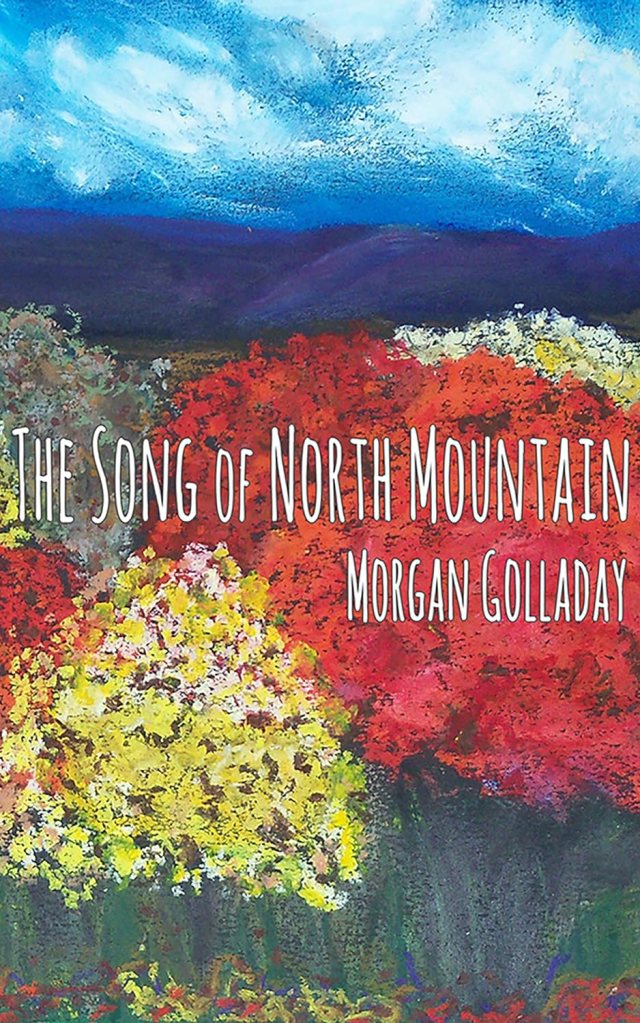
The Song of North Mountain by Morgan Golladay features Poetry and Art

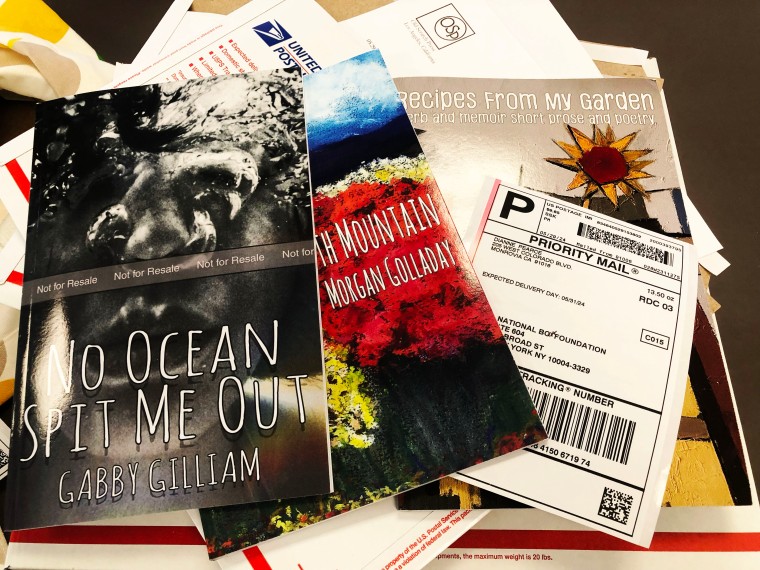
Old Scratch Press is pleased to announce the upcoming release of The Song of North Mountain, by Morgan Golladay. Slated for May release, the book includes original artwork by the author to accompany her poems. The collection is now available for pre-order.

Founded in 2023, Old Scratch Press is a cooperative of poets and short-form authors who have come together to promote the publication and appreciation of poetry and short-form writing. The Song of North Mountain will be the third chapbook, published by the small independent press.

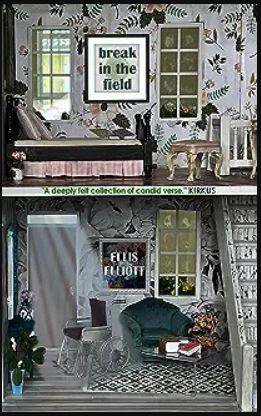
Break in the Field by Ellis Elliot was their first book, nominated for the National Book Award, followed by avante-garde wordsmith and artist Robert Fleming’s poetry collection, White Noir.

The Song of North Mountain, says Morgan, “is about my relationship with this Earth, focusing on one small mountain in one small chain, in one small part of this vast world.

This book is about a connection – my personal experience sitting in stillness on this mountain, as well as many other mountains. North Mountain is, for me, a symbol of my relationship with this Earth. The permanence of the land, regardless of how it changes; the cycles of life, the quiet continuation of change. It has been a long time since I personally was able to sit quietly and listen to the tree branches and leaves speak to each other. I cannot scale the trails as I once did. But the magic of place is still in my memory, whether it’s the rocks in the rivers, the trails on the mountain tops, or the joy of sharing ripe wild berries.

“…my personal experience sitting in stillness on this mountain, as well as many other mountains. North Mountain is, for me, a symbol of my relationship with this Earth.”

Morgan Golladay

The cover design, an original painting, and the 10 black and white interior illustrations were created specifically for the book. Pre-order availability on Amazon and on the Old Scratch catalogue page will be coming soon.

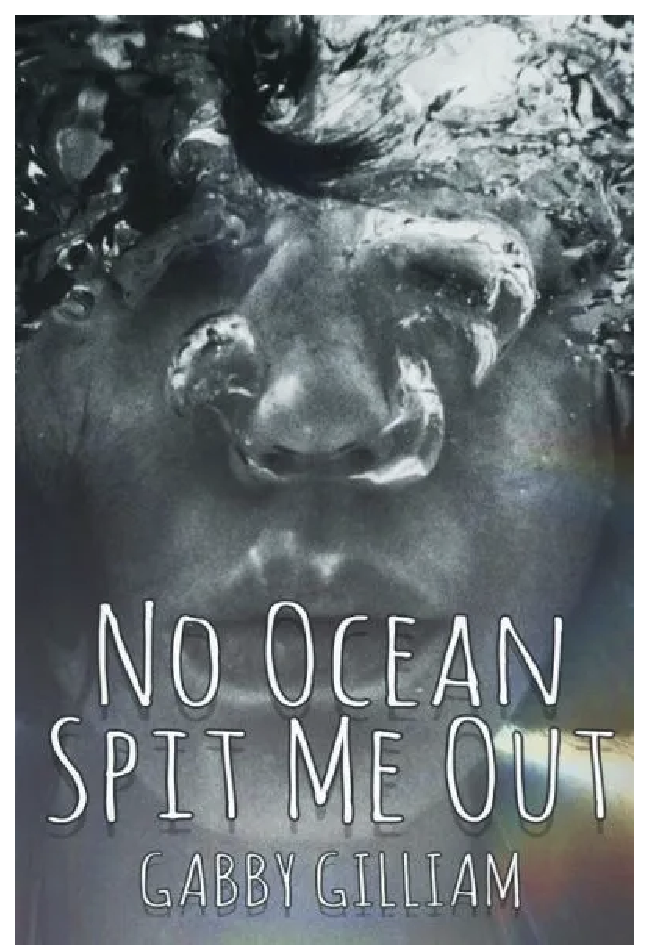
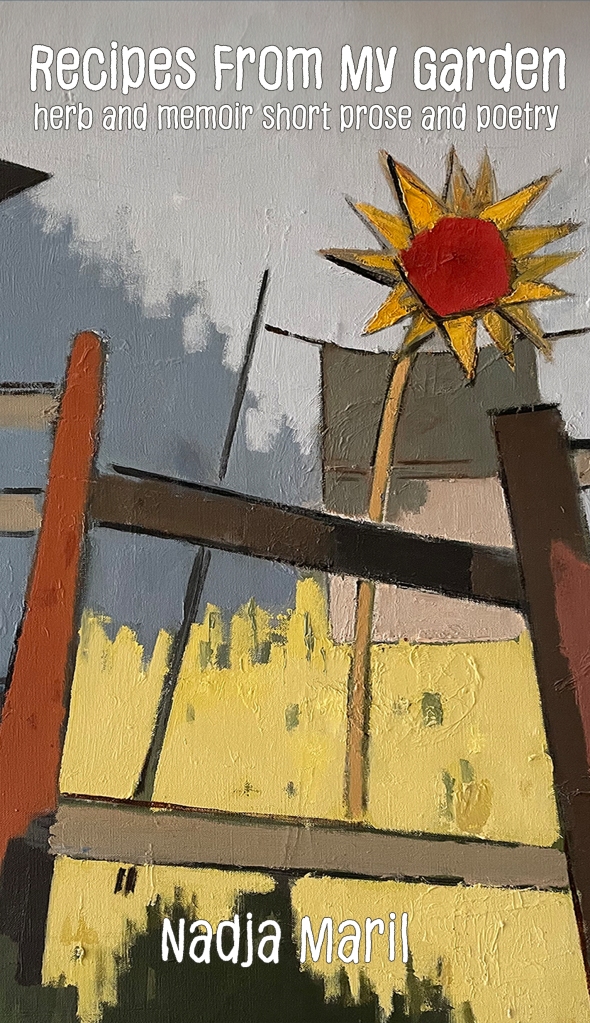
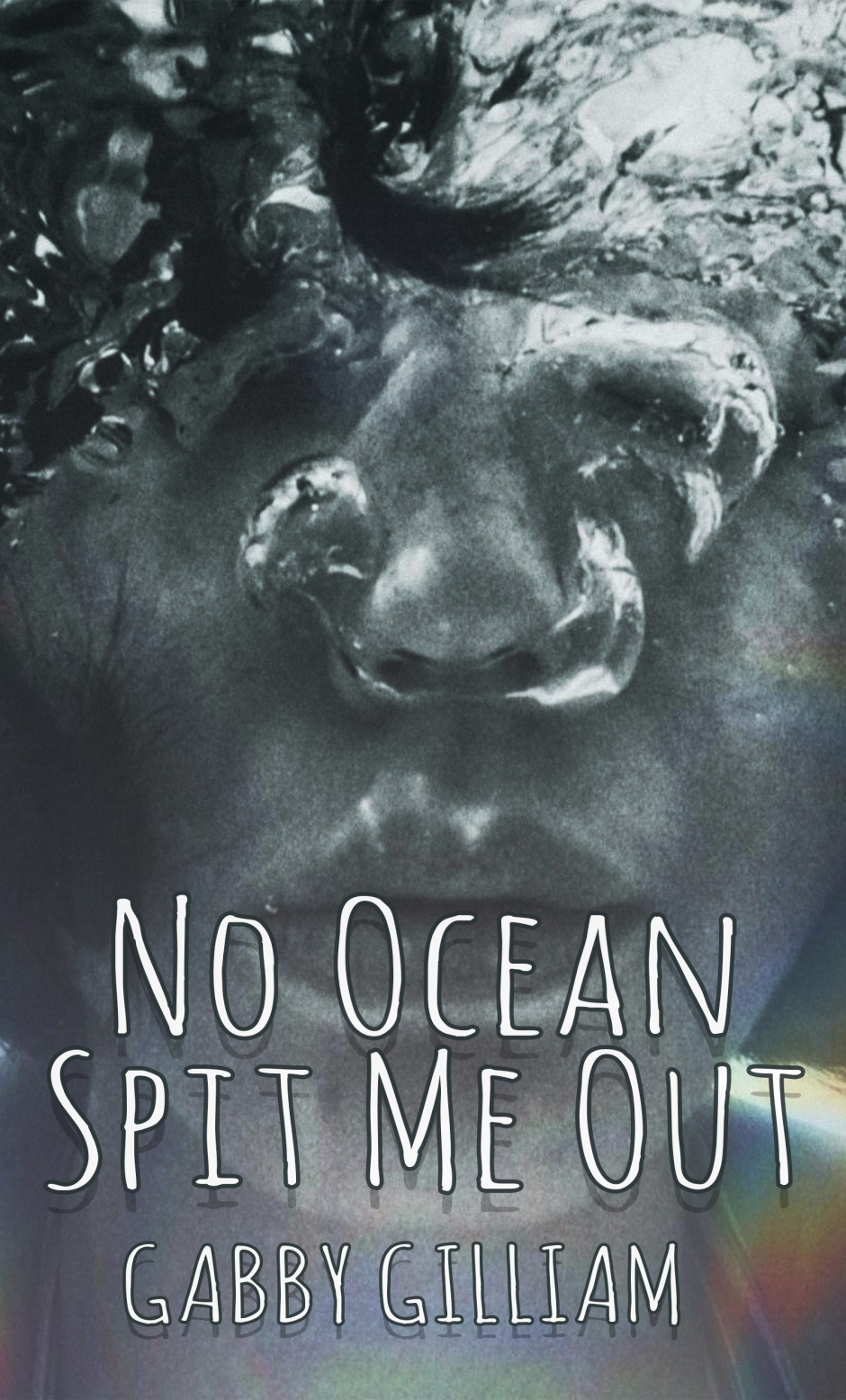
To keep up with the latest news, please follow our blog here for free and also follow us on Facebook. Later this year look for more chapbooks penned by Gabby Gilliam, Alan Bern, and Nadja Maril. Thank you for reading. Special note: the deadline for Instant Noodles LIterary Magazine submissions has been extended to the end of the month.

Poems to Read to Your Toddler

Looking for recommendations for what to read to your toddler? Poet, writer and former Children’s Librarian Alan Bern has a favorite:

“The Owl and the Pussycat” by Edward Lear, illustrated by James Marshall ; afterword by Maurice Sendak.

By Alan Bern

Edward Lear’s “classic love ballad, “The Owl and the Pussycat,” was voted the most popular British childhood poem in 2014, and has been set to music by everyone from Stravinsky to Laurie Anderson.” (”The Sense Beneath Edward Lear’s Nonsense” by Adam Gopnik, The New Yorker, April 16, 2018) If not as popular in the United States, “The Owl and the Pussycat” has spawned a number of illustrated picture books here. Of the many illustrated picture books of this absolutely brilliant poem for very young listeners and readers by Edward Lear, “The Owl and the Pussycat,” my top choice is the version by James Marshall. Next to Lear’s own illustrations for his poem, James Marshall’s illustrations, although he died before fully finishing them, are my favorites. Marshall creates wonderful characters that match so perfectly the sounds and voices of Lear’s poem. It is a nonsense poem, but it’s always made perfect sense to me and to so many. Young children will love the poem and the book; so will elementary school kids when they need to feel just a bit regressed. Heck, adults will love it, too. As I do.

Nonsense Suggesting Sense

As Gopnik explains later in his essay: “This gift for creating pathos without sacrificing absurdity is what makes “The Owl and the Pussycat” one of the greatest poems in the language… In “The Owl and the Pussycat,” meanings rush in:

They dined on mince, and slices of quince,

Which they ate with a runcible spoon…

Not even Humpty Dumpty could explain what a runcible spoon is. We know it by its verbal vibration, by its presence, by its sheer runcibleness… This gift for making something felt without having first to make it familiar is one that we later admire in Beckett. Nonsense suggesting sense is a familiar pattern. Nonsense suggesting the numinous is not.”

Artist/illustrator James Marshall

Personal Connections

And here’s a personal story to go with the poem. As a children’s librarian for many years, I was honored to serve on the American Library Association’s Caldecott Committee in 1992, and I suggested Marshall’s illustrations for this book as a finalist. It was not chosen, most probably because Marshall never quite finished the illustrations. I continued to love the book anyway, and I always wondered why the poem always spoke to me… when I read it or when I listened to another read it. Shortly after my Mom died, I found out why. One day while going through some letters, from my Mom to my Aunt, letters that my Aunt had kept from the early 1950s. My parents were on sabbatical leave (my Dad was a young professor) in Cambridge, England, and I was almost two. In one letter, my Mom wrote: ‘It’s wonderful to be here, Howard and I are having such a good time, and we love having our little boy with us; however, he does drive us crazy and asks over and over and over that we read “The Owl and the Pussycat” to him.’ That brought such a wide smile to my face: of course, I don’t remember it, but it now explains, in part, my continuing love for the poem. Thanks, Mom and Dad, and thank you very kindly, Mr. Edward Lear! And now I shall reach for my runcible spoon.

Thank you for reading . Remember, only a few days remain before the submission window for the spring issue of the literary magazine, curated by members of the Old Scratch Press Collective closes. Submit here –https://duotrope.com/duosuma/submit/instant-noodles-O0jFm

If you haven’t done so already, please follow our blog here for free and also follow us on Facebook.And coming soon is our newest chapbook release, The Song of North Mountain, by Morgan Golladay followed by chapbooks penned by Gabby Gilliam, Alan Bern, and Nadja Maril.

Poems to Read With Your Kids

By Gabby Gilliam

So many people think poetry is serious and difficult to understand. But language can also be fun. There are so many poets that use words to delight readers with something unexpected. Most people are familiar with Shel Silverstein, whose poems are light-hearted, but there are so many poems out there that both you and your kids will love for their silliness.

Many know Judith Viorst for Alexander and the No Good, Horrible, Very Bad Day, but she also wrote this fun poem about a mom who really doesn’t want a pet.

Photo by Lum3n on Pexels.com

Mother Doesn’t Want a Dog

by Judith Viorst

Mother doesn’t want a dog.
Mother says they smell,
And never sit when you say sit,
Or even when you yell.
And when you come home late at night
And there is ice and snow,
You have to go back out because
The dumb dog has to go.

Mother doesn’t want a dog.
Mother says they shed,
And always let the strangers in
And bark at friends instead,
And do disgraceful things on rugs,
And track mud on the floor,
And flop upon your bed at night
And snore their doggy snore.

Mother doesn’t want a dog.
She’s making a mistake.
Because, more than a dog, I think
She will not want this snake.

https://poets.org/poem/mother-doesnt-want-dog

One of the first books I ever remember buying for myself was The New Kid on the Block by Jack Prelutsky, so it’s no surprise that a poem by him makes this list. I was in elementary school, and must have used birthday money. I was so excited about getting the book that I started reading it in the car on the way to a different store. While I loved the poems, I also discovered reading makes me extremely carsick. It was not a pleasant birthday lesson, but I treasured the book anyway. Here’s a great example of the fun poems in that book.

Photo by Ksenia Chernaya on Pexels.com

Be Glad Your Nose is on Your Face

by Jack Prelutsky

Be glad your nose is on your face,
not pasted on some other place,
for if it were where it is not,
you might dislike your nose a lot.

Imagine if your precious nose
were sandwiched in between your toes,
that clearly would not be a treat,
for you’d be forced to smell your feet.

Your nose would be a source of dread
were it attached atop your head,
it soon would drive you to despair,
forever tickled by your hair.

Within your ear, your nose would be
an absolute catastrophe,
for when you were obliged to sneeze,
your brain would rattle from the breeze.

Your nose, instead, through thick and thin,
remains between your eyes and chin,
not pasted on some other place—
be glad your nose is on your face!

https://poets.org/poem/be-glad-your-nose-your-face

My son’s friend introduced me to the next poet. Chris Harris plays with words in a way that will delight both adults and kids alike. He claims he’s not very good at writing poems, but I think his I’m Just No Good at Rhyming books are delightful. I even used one as an example when we discussed humorous poetry in the Teen Poetry Workshop I facilitate at my local library.

By Chris Harris

We all seem to have an ingrained fear of the dark and what might be prowling in it. In this poem, Innarenko takes the reader on a fun adventure as multiple scenarios are conjured to explain where a strange noise might be coming from. The epiphany at the end is a delightful finale.

Home Alone

© Innarenko

Published by Family Friend Poems on 02/12/2020

My family’s gone; there’s no one home.
It’s only me who’s home alone.
I shouldn’t hear a single squeak.
There shouldn’t even be a creak,

So what’s that thumping that I hear?
It must mean one thing: death is near.
“You’re an adult, you’ll be just fine.”
I tell myself as I dial “nine”…

Was that a knock upon the door?
My heart beats faster than before
I know it’s closed; I’ve checked the lock.
At least my killer knows to knock?

I cannot sleep, though I’m in bed.
I’ve made amends with God instead.
If He decides that it’s my time,
Then this will be my very last rhyme.

I hear a bang and then a break.
My head shoots up; there’s no mistake!
I turn my music volume high
So I won’t hear the way I die.

I run upstairs, desk lamp in hand.
Over my head, ready to land,
And right before it did just that…
I remembered – I have a cat.

Those who aren’t familiar with Brian Bilson’s work are in for a treat. I will caution that some of his poems, though very fun, may not be suitable to read with children. This visual poem, though, is spatially interesting and shows poetry can do unexpected things. It makes me smile every time I come across it. If you enjoy this poem, I recommend checking out more of his work. Click below on the word “needles”.

Thank you for reading. Which poems are your favorite children’s poems. We’d like to know. We welcome guest posts. Please follow Old Scratch Press by subscribing to this blog for FREE and following us on Facebook. Learn more about Collective member Gabby Gilliam by visiting her website.

Instant Noodles with a Side of Love for Valentine’s Day

Instant Noodles is an online lit magazine formerly curated by me, alone, and now curated by Old Scratch Press.

For Valentine’s Day, here are a few of my favorite poems about love from the magazine, pieces that I chose for publication.

FIRST MORNING AFTER MOVING ~ Greg Hill

My bureaus and dressers,
all crossed with blue tape,
a sea of cubed cardboard
spilling out into the hallway
and into all the other rooms.

Where is my bedside table?
Why does the morning smell
like fresh coats of paint, 
and why a sound
like a parade of identical cars?

My muscles still burn
from the hours of unpacking
from yesterday’s move.

Where is my toothbrush? My comb?

Then I see you,
tranquil and sleeping
and I know
I am home.

Greg’s poem, so sweet, simple about the things that are not fireworks about love, but make us exceedingly happy all the same.

MUTUAL INTERDIGITATION ~ R. Gerry Fabian

We were linked long before we met.
We have been down the same wrong path
at different times with the same rancid rogues.
When we met, I was coming out the wrong side;
you were still there floundering hopelessly.
At first, I didn’t pay you much notice at all.
The death of a dear mutual friend
brought us together at the freshly dug gravesite.
We are good, now, together, walking that tightrope
of ‘fall off the wagon at any time’ good
that depends so much on breathing love’s balance.

Gerry’s poem, about all the ways that love connects us, adds wholeness to our lives, even as we get past the frenzy of youth.

THE BARBARIANS HAD ACTED REGRETTABLY ~ Colin James

My son found the dragon’s tooth amongst
some rocks and fine white sand. He washed
it clean in a tidal pool. A Hermit crab stole it,
scraping the tip then sucking the remnant root.
The boy threw some sand and stole it back.
He climbed up on the rocks with me to sit.
We examined the hard fire, inner blackened.
Easily sold to tourists later, paying us much more
to guarantee their safe return passage .

Colin’s poem I always took to be about parental love: how our children absolutely make us filled and absorbed and imaginative and plain old grateful to be in their magical world.

UNDER KEEL ON LITTLE DOE LAKE ~ Robert Fleming

moon over wooden hull
us under birch wood
left hand forward 4 ur bow
thwarted by ur stern pry stroke
back stroke 2 ur gunnel
seeking ur back sweep stroke
u j-stroke away
non-swimming clothes on
prefer clothes off
cross draw stroke 2 ur dock
u eskimo roll out
ur knee on deck
solo under skin
draw stroke my wood

Robert, a member of Old Scratch Press, may correct me, but I always took this to be a poem at the beginning, heady stage of love, and so much about the abandonment that I always feel in the time of transition from spring to early summer.

WISTFUL DREAM ~ Bethany A. Beeler

Betahany’s poem always seemed like lust to me, which is beefy and delicious, in my view, like biting into a huge strawberry covered in dark, dark chocolate, and certainly an important part of romantic love.

Lastly, on this hopefully gentle day that comes to you with a hug, or, perhaps a kiss, another from Greg Hill, possibly my favorite poem submitted to Instant Noodles to date. Happy Valentine’s Day. May you find love, or love find you!

SATURDAY ~ Greg Hill

the day
starts in bed 

we make

coffee and 
something from milk

flour eggs
water

in the shower
warming us together

after breakfast

you brush 
a dollop of shampoo

on my nose
as I rinse my hair

even the nothing
you do

is something
to me

Bam, Crack, Klunk: Why Sound Matters in Poetry

“Bam!”, “Crrraack!”, “Klunk!” are just a few on the list of words used in the 1960’s TV show Batman, usually held within a colorful cartoon bubble. We immediately conjure what is trying to be conveyed, and part of that understanding is because of the sounds of these particular words. In any writing, the sounds of words can produce not only feelings, but physical effects on the body. In poetry specifically, sounds become even more important because words must be carefully chosen in order to “say the most with the least”. We must pay attention to the vowels, consonants, stresses, etc. in the words we choose dependent on the idea or tone we are trying to convey.

Take a look at the information about vowel and consonant sounds pictured above, courtesy of Cathy Smith Bowers, Queens University., (excuse my notes and shadow!)Then, look at these two examples below. Read them aloud and ask yourself if it feels like flow and glide, or stop and start? Is there an emotion or physical reaction you can sense as you read?

I caught this morning morning’s minion, king-

            dom of daylight’s dauphin, dapple-dawn-drawn Falcon, in his

            riding.

                                                -from The Windhover,by Gerard Manley Hopkins

We real cool. We

Left school. We

Lurk late. We

Strike straight.

                                                –from We Real Cool by Gwendolyn Brooks

That was pretty easy, huh? Now, go to one of your favorite poems and see if you can see how the word choices the poet made regarding sound serve the tone, subject matter, and larger themes of the poem. Then, look at one of your own.

Sound is just one of the many devices poets use, and it is a powerful one. A poem that uses short lines with high-frequency vowel sounds will sound very different than one with long lines using low-frequency sounds. And remember, the importance comes from not just the reaction to the words in your ears, but also the subsequent emotion or felt reaction in the body, and there is music to be found in all of them.

Thank you for reading. Don’t forget to sign up to follow our blog as well as follow us on facebook.

Ellis is author of the National Book Award nominee poetry collection Break in the Field published by Old Scratch Press.

Old Scratch Press Co-Founder Anthony Doyle Needs Your Vote for Story of the Year!

Hi All… Dianne here.

Anthony Doyle’s narrative has been nominated for the SPILLWORDS story of the year!

unfolds a poignant tale of father and son, delving into the essence of masculinity and the relentless quest for validation.

For those familiar with my blog, you’ll recall that Anthony penned the novel HIBERNACULUM, a personal favorite of mine. The decision to publish it was driven by the sheer brilliance of his storytelling, which continues to captivate me.

Anthony is a dedicated independent writer striving to carve his niche, and recognition like this makes a significant impact. Therefore, I urge you, to cast a vote in support of Anthony!

I also nominated him as a write-in candidate for SPILLWORDS Author of the Year. Your backing would mean a great deal to him.

So please, if you have a moment, give Anthony a vote!