How Spicy are You?

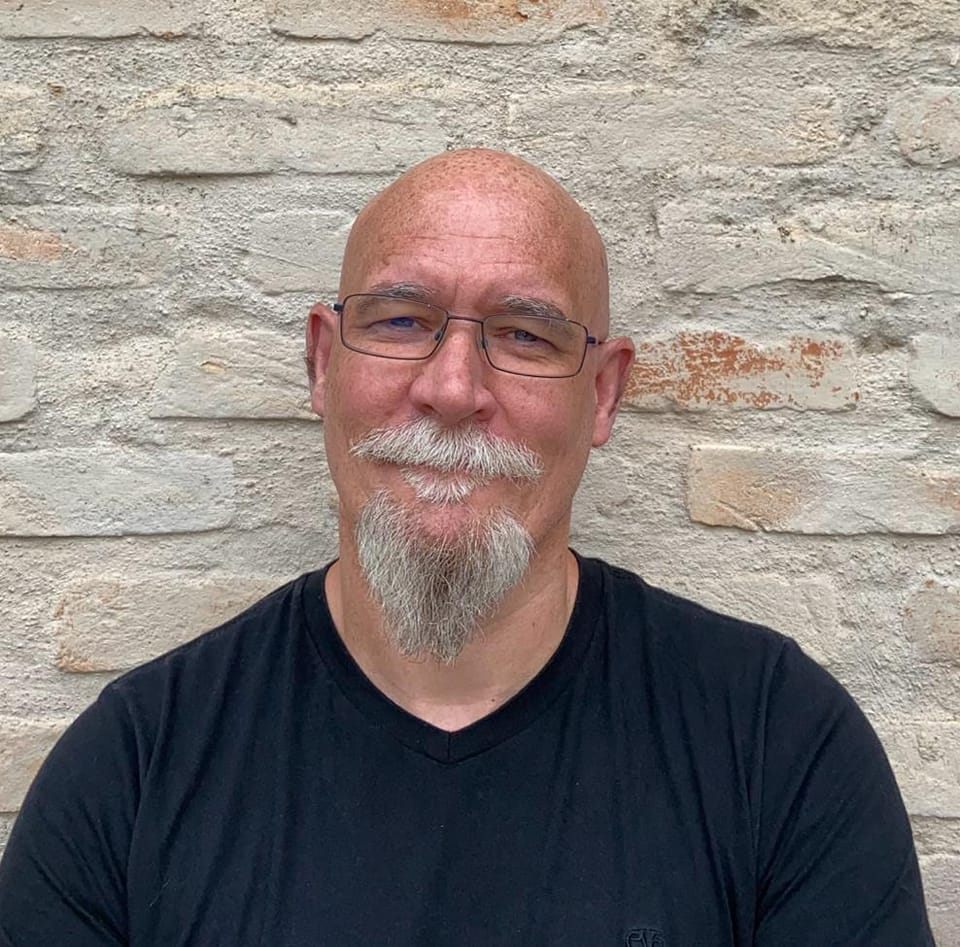
By R. David Fulcher, Old Scratch Press Founding Member

I love all things pumpkin, including pumpkin spice. However, I understand even fans of this seasonal gourd have their limits on just how much pumpkin spice is too much pumpkin spice.

Readers are the same way.

Even fans of scary stories have their own personal limits in terms of exactly how scary, how gory, or how unsettling a story they can bear.

Therefore, I’ve taken three of my pumpkin-related stories and rated them in spiciness, from the most mild to the most extreme.

Mild Spice: “Pumpkin Night at the Pinkstons”

In “Pumpkin Night at the Pinkstons”, from my book The Movies that Make You Scream!, a teenager discovers the secret behind his homecoming date. Full of gooey teenage love, this is the mildest of my pumpkin-themed stories, something like one of the Goosebumps tales by R.L. Stine.

I’ll call this the Pumpkin Spice Latte Level of story.

Here is an excerpt from “Pumpkin Night at the Pinkstons”:

I don’t know exactly how much time passed before realizing that something was very, very wrong. The texture of her kisses changed, becoming clumsy and pulpy in taste. Her smooth gums became loose and stringy, and when I tried to pull away, I realized she was attached to me like a barnacle adhered to the side of a boat’s hull. Long, pointed fingers now clenched my nose shut and I began to get dizzy as that sickening, fruity-vegetable stench began to overwhelm me.

But more horrible were the physical changes taking place to the body I embraced, a grotesque squishyness of the torso and organs like the skin of a rotting tomato.

Medium Spice: “Pumpkin Seed Spit”

In “Pumpkin Seed Spit”, from the Devil’s Party Press anthology Halloween Party 2019, three friends go trick-or-treating and make a horrible deal with an ancient spirit to ensure their survival. Although the protagonists are also teenagers in this story, the stakes are higher, and the final implications for humanity much darker.

I’ll call this the Pumpkin Muffin Level of story.

Here is an excerpt from “Pumpkin Seed Spit”:

Upon reaching the first house near a dead end, they knocked and said in unison, “Trick-or-Treat!” As fifty-year-old Henry Armitage opened the front door, Brian unearthed his bag. The middle-aged man frowned at the kids before starting to mutter something about the lateness of the hour. Armitage gazed into Brian’s bag of seeds and was immediately mesmerized. An orange energy tendril spiraled upward, carrying a single seed into Armitage’s mouth.

Brian, Matt, and Ria wanted to scream, but found it impossible. While their souls were wrenched into knots by the horror they witnessed, outwardly they stood emotionless, even tranquil, as layers of skin and flesh melted away until all that remained of Henry Armitage was a living skeleton.

When the transformation was complete, they advanced to the next house. Ria shared the seeds, and Asenath Waite, a young mother of two, was hideously transformed into a witch with boils, green teeth, and a trail of lesions across her forehead.

Matt was next to present The Pumpkin Tree’s offering to the world. Three seeds were received by a couple and their young baby. Within moments they became a trio of giant pale, eyeless larvae that oozed and squiggled out of their clothes.

Extra Spicy: “The Pumpkin King”

In “The Pumpkin King”, from my book The Pumpkin King and Other Tales of Terror, a man ignores the rules of Halloween to his own detriment. The protagonist is an adult, and this tale has the most shock value of the three.

I’ll call this the Pumpkin Imperial Pale Ale Level of story 

Here is an excerpt from “The Pumpkin King”:

I spun around and made for the door, half convinced I was hallucinating if not dreaming. I unlatched the deadbolt, but it clicked back into place as soon as I started to turn the latch. I turned back to the jack-o’-lantern.

“An easy trick, but effective,” the jack-o’-lantern said, its orange light flashing in time to the latch on the deadbolt as it clicked back and forth at will.

“What do you want?” I begged.

“I want you to think on this. There is but one expectation of you this time of year. One simple obligation: To carve pumpkins. To pay homage to the king.”

“What king?”

“Samhain, the King of the Dead.” Its demeanor began to change. Its voice deepened and the reddish-orange glow rose like an enraged fire.

“This is ridiculous!” Now I was beginning to lose my fear and was feeling pissed. This thing, whatever it was, was in my house. I turned to climb the stairs and grab a baseball bat so that I could smash the talkative piece of vegetation into a hundred juicy bits. I was an educated man, and I knew of the myth of Samhain, the Lord of the Dead who arrived every fall to put nature in balance with the deadly strokes of his sickle. I also knew it was pure bunk.

I had only reached the first step when I heard a sound far worse than the maddening click-clacking of the door latch: the metallic whisper of a kitchen knife being drawn from the butcher block.

I turned back to the pumpkin. “Okay. You’ve got my attention. What do you want?”

“I want to carve you,” it replied simply.

So whatever your personal threshold is for pumpkin spice, pay homage to the spirits of All Hallows Eve, and savor the spice before it’s gone!

Happy Writing!

R.David Fulcher, Founding Member of Old Scratch Press 

Oldscratchpress.com

Rdavidfulcher.com

The Writer’s Brain: Creativity and Neurodivergence

From my collage notebook

There’s a certain stereotype about writers: distracted, dreamy, maybe a little moody, often lost in their own heads. Then there are those of us whose third-grade teacher writes on her report card, “Ellis is very sensitive. She says she doesn’t feel good when she doesn’t want to participate and sometimes puts her hands over her ears.”

What we don’t always name is that many of us identify with something more specific—ADHD, anxiety, depression, OCD, autism, bipolar disorder. In other words, neurodivergence.

Far from being a barrier, these brain patterns often come hand-in-hand with creativity. Our ability to notice connections others overlook, to hyper-focus on a project for hours, or to sense language at a heightened level can all be part of what makes us writers. (Doesn’t everyone have a list of words they hate simply because the way the word feels in their mouth?)

The Double-Edged Sword

Of course, the same brain that gifts us with creative leaps can also work against us. ADHD can make finishing projects feel like climbing Everest. Anxiety can whisper that nothing we write is ever good enough. Depression can steal the life-force necessary to even begin. The very sensitivity that makes us attuned to metaphor and meaning can leave us overwhelmed by the noise of the world.

Reframing the Narrative

Instead of treating neurodivergence as something to battle, what if we reframed it as part of the writer’s toolkit?

  • Hyperfocus can become a superpower for deep revision. Or help you finish the book!
  • Restless energy can fuel bursts of freewriting that break past creative blocks. That, and dance breaks.
  • Heightened sensitivity can deepen character work, dialogue, and description. As long as you remember to take breaks.

The key is learning how to manage the edges—finding rest, support, and strategies so that the gift doesn’t become a burden.

Practical Ways to Support Your Creative Brain

  1. Chunk your writing time. Short, timed sessions (15–25 minutes) can harness focus without overwhelming you.
  2. Write rituals, not rules. A small ritual (lighting a candle, stretching, a playlist) helps train your brain to enter writing mode.
  3. Name the inner critic. Literally give it a name or persona so it loses power over you.
  4. Seek community. Writing groups, workshops, or even online spaces help balance the solitary nature of the work.
  5. Honor rest. Brains that run hot need recovery time. Pushing the pause-button isn’t failing—it’s part of the process.

Why It Matters

When we share openly about the link between writing and neurodivergence, we create permission for others. Permission to stop beating themselves up for struggling with deadlines. Permission to see their “quirks” as part of their artistry. Permission to make choices others might not understand. Permission to write anyway.


Do you identify as a neurodivergent writer? How does it show up in your creative process—both the gifts and the challenges?

Ellis Elliott

Founding member Old Scratch Press Poetry Collective

Author of Break in the Field poetry collection and A Witch Awakens: A Fire Circle Mystery.

https://a.co/d/eMSe9up

https://a.co/d/7J1ra9x

http://bewildernesswriting.com

Hard Learned Lessons Regarding a Writer’s Glamorous Life

By R. David Fulcher

Collective member R. David Fulcher opines about Writing and “the Process”

Reprinted by permission from one of his blog posts available at Davidfulcher.com

When I was young, before I had written a word of fiction, I believed that all writers lived a glamorous life. Ernest Hemingway in particular seemed to embody this image – traveling on safari, sport fishing in the Gulf of Mexico, drinking whiskey as if he were a fish himself – doing almost everything except writing.

The writer Ernest Hemingway in his later years.

Now that I  am older and wiser, I know that Hemingway wrote for hours each day, making him one of the more disciplined writers of his time.  But the larger-than-life Hemingway was a more appealing character to imagine, and therefore the one my younger self gravitated towards.

So, I am writing this post to the new breed of writers out there to let them know some of the disciplines they will find useful in their writing lives, and leaving the catching of Marlins to Salt Water Sportsman Magazine.

Bait the hook and try to catch something big. It’s more difficult than you think.

What Writing is Really Like…Computer Programming

Computer Programming is all about language and syntax, and so is writing.  I know something of this as programming is my day job.  I have often spent hours debugging some code, only to find that a misplaced semi-colon or comma was the culprit.  Writers also will find themselves laboring over the usage and placement of punctuation, understanding that punctuation in the wrong place can change the entire meaning of a sentence.

What Writing is Really Like…Project Management

Project Managers track task and project status, in addition to schedule, budget and other project elements.  As your writing career grows, you will quickly find yourself in need of a spreadsheet, database or other tool to know what you’ve submitted where, when to send a query letter, relevant contact information for publishers and publications, etc.  You will also need to track readings, book fairs, online interviews, etc. on your Outlook or Google calendar.  These demands will intensify as your writing becomes a fulltime occupation, and as you began to spend more time collaborating with others.

What Writing is Really Like…Marketing Executive

While the big publishing houses have marketing resources of their own, new writers trying to make a name for themselves in small independent presses will find themselves on their own to promote their work.  You will be faced with questions like which social media channels reach the biggest (or more importantly, the most relevant) reading audiences, and does it make sense to subscribe to marketing service to promote your books.  Additional considerations involve creating your own author’s website and blog, all of which may require you to acquire new skill sets. Your ability to effectively promote your work becomes even more critical if your work is self-published.

What Writing is Really Like…Accountant

While writing is an art and not a science, sooner or later you will be focused with financial decisionsand issues related to your writing.  These may be simple decisions such as whether to enter a writing contest that charges a fee, or whether to hire an independent designer to design your author’s web site.  Other more complicated issues will involve reporting any book sale royalties on your income taxes or tracking the sales tax to be submitted from cash sales at a book fair.  And when you’re finally ready to take the leap and go fulltime, the big financial question:  how much will I have to make on my writing to make a living? 

What Writing is Really Like…Lawyer

Finally, you will be faced with legal issues during your writing career.  I’ll give you a real-life example.  Unbeknownst to me, a designer at one of the publishing companies used an image on my book cover that was copyrighted.  Several years later, I was contacted by the copyright holder demanding a correction, and I referred him to my publisher.  The publisher finally admitted the mistake, and at their expense, corrected the cover.  Other examples include understanding reprint rights for your previously published stories and interpreting contractual agreements with publishers when you begin to get your first professional sales of your stories and novels.

So, there you have it – instead of being glamorous, the above disciplines can be tedious, if not downright boring.  However, these skills will propel your writing career much further than your ability to bait a hook.

You can read more of David Fulcher’s posts and learn about his books here.

To learn more about the latest Old Scratch Press publications click here. The Song of North Mountain by prizewinning author Morgan Golladay is just one of several exciting new chapbooks! To learn more about Old Scratch Press and our poetry an short form collective follow us on WordPress at Oldscratchpress.comDav

Away They Go!

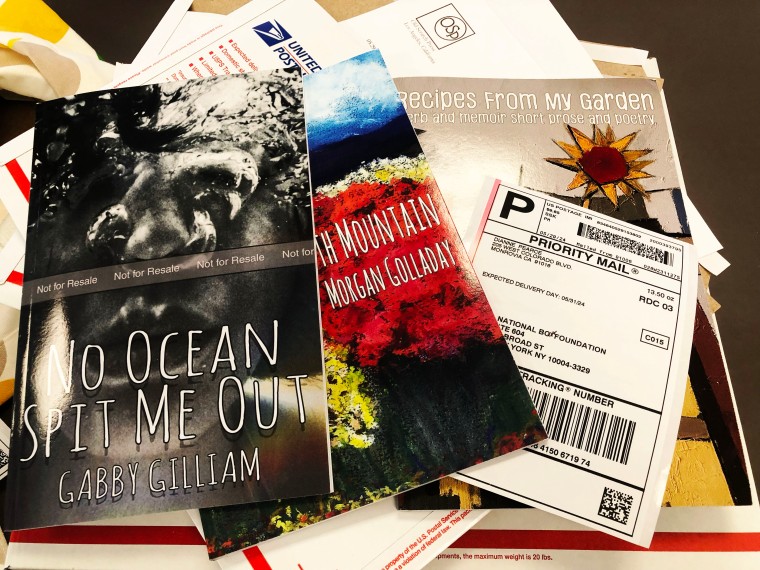
I was thrilled today to have the privilege to mail three new Old Scratch Press books off to the National Book Awards! If you follow all of our doings around here you may have seen this post from last year, where I was lucky enough to do the same thing!

Gosh, you know, we’re going up against the big guys when we send our books in to the National Books Awards. Most of the other books being sent in are going to have been written by well-established poets with a long history of publication, or brand new poets being championed by their mentors who are the big guys in their fields, and those other books are also going to come from traditional (read as: large and monied) presses or university presses, which, like the big publishing houses, also have lots of disposable income and connections. I got my MFA; I know how that all works. And still, I don’t care about the competition. I care that we have wonderful poets. Morgan Golladay has been writing her poetry throughout most of her adult life, and salting it away for “someday,” and Nadja Maril and Gabby Gilliam have been submitting and getting small wins with their writing for years now, and why isn’t their writing as deserving as anyone else’s? It absolutely is! It gives me a total thrill to just think about getting them into this contest, where they get a chance to stand shoulder to shoulder with the “big guys.” And get this—Carolyn Forché is one of the judges this year! Carolyn Forché! It’s mind-blowing to think that a poet from our little collective is going to be read by her. I still remember how my teachers raved about Carolyn Forché’s book THE COUNTRY BETWEEN US back in the ’90s. We read it and discussed it over and over with reverence. The idea that she’ll be reading one of our books? It’s just wild.

So, lovely people following our progress as a collective and a press, please join me in crossing your fingers and blowing on one of these:

Photo by Yassir Abbas

as we send Gabby, Nadja, and Morgan off to the National Book Awards to try their luck!

And hey, dear reader of this blog, why not snag a copy for yourself in a show of support?

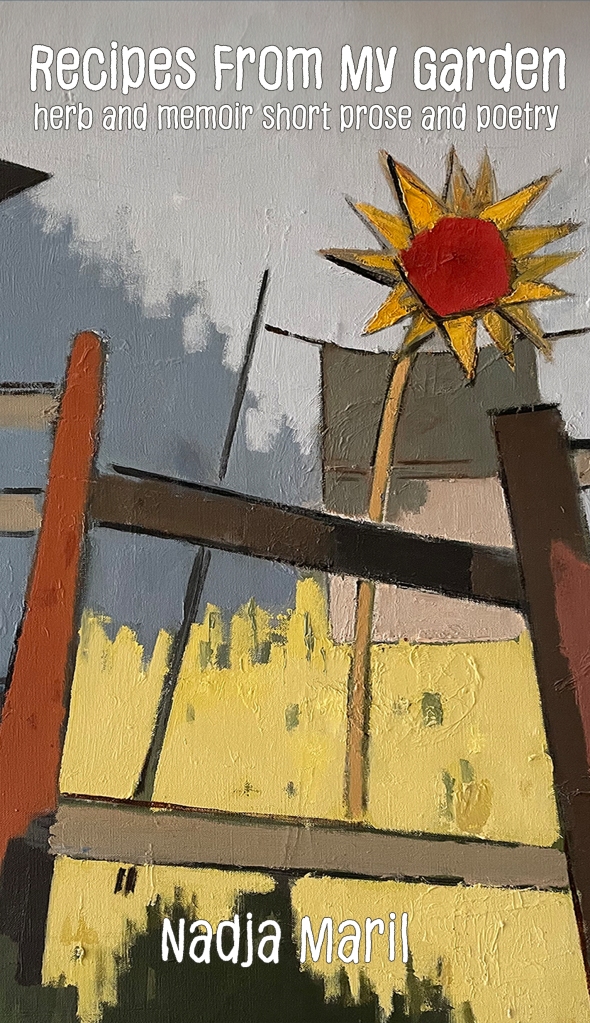
Flash prose, poetry, and essays inspired by her kitchen, garden, and family memories; Nadja Maril’s chapbook, RECIPES FROM. MY GARDEN is a sensual feast for the soul. Drawing upon her life experiences as an artist’s daughter, antiques dealer, journalist, and author; Maril mines simple objects for meaning and creates a lavish buffet.  

Editorial Praise for RECIPES FROM MY GARDEN

“Suffused with the tastes of cilantro, mint, and cucumber fresh from a garden, the smell of salt air from the ocean’s edge, the familiar scent of coffee and tobacco from a father’s hug, or the simple pleasure of the sounds of clicking insects through a backdoor screen, Nadja Maril’s lovely and sensitive RECIPES FROM MY GARDEN is a feast for the senses and a balm for the spirit. While exploring personal memories that touch on abstract questions of identity and history, Maril also reminds us of the tiny yet profound comforts of earthly existence.”
–Aaron Hamburger, author of HOTEL CUBA

“In RECIPES FROM MY GARDEN, Nadja Maril casts a richly sensual literary spell.  From the deft and resonant garden-inspired pieces that find the taste of ‘summer’ in basil and celebrate the ‘welcoming gaze of sunflowers,’ to the sharply observed portraits of small yet potent memories— buying a perfect dress with her mother; baking a cake ‘too beautiful to be cut’– Maril mines moral and spiritual meaning from everyday life.  The promise Maril makes about a ‘chicken and rice’ recipe is true of this whole vibrant chapbook: ‘soul nutrition it will provide.’ ”
–Elizabeth Searle, novelist and scriptwriter (A FourSided Bed; I’ll Show You Mine)–

RECIPES FROM MY GARDENcelebrates the splendor of traversing a literary life and surviving the time of Covid. Nadja Maril’s first collection of poetic prose, flash memoir, and poetry introduces us to her family, her nurtured garden, and the myriad spaces she navigates to cope with our world. With true artistic excellence, Nadja’s words yearn for an understanding of what troubles us, inviting us into a landscape of riddles, questions and puzzles.”
–Indigo Moor, author of Everybody’s Jonesin’ for Something

 “[RECIPES FROM MY GARDENis a treasure of small love stories: odes to beloved kitchens, and vegetable gardens, and the simple joys of a blooming sunflower. It is a book of memory and of pleasure that speaks of the love of family across many generations. The passed-down recipes inside the pages are themselves the most generous kind of love letter.”  
–Susan Conley, author of Landslide

Pre-order Paperback

Pre-order Kindle

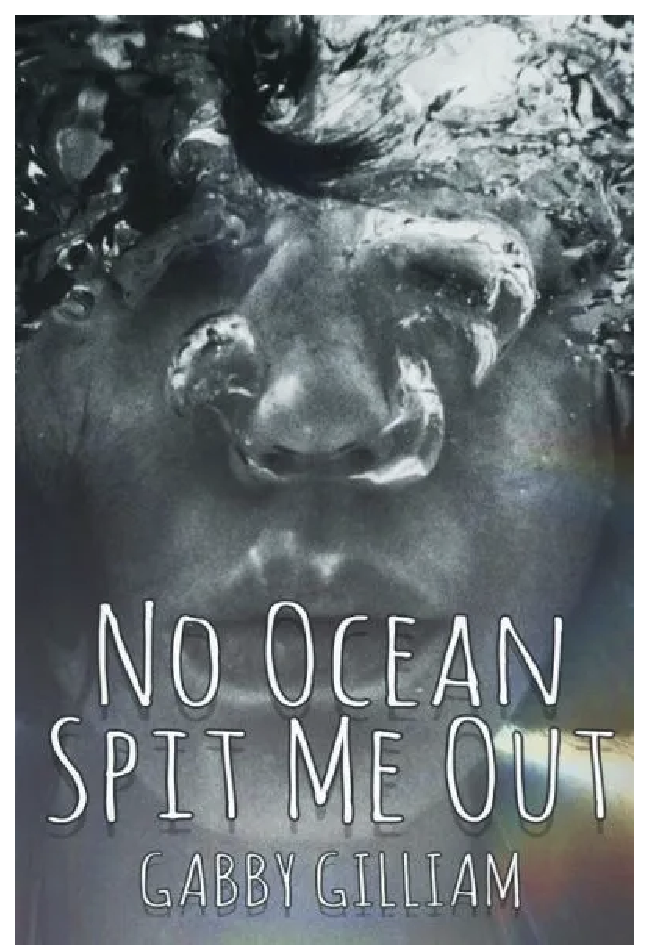
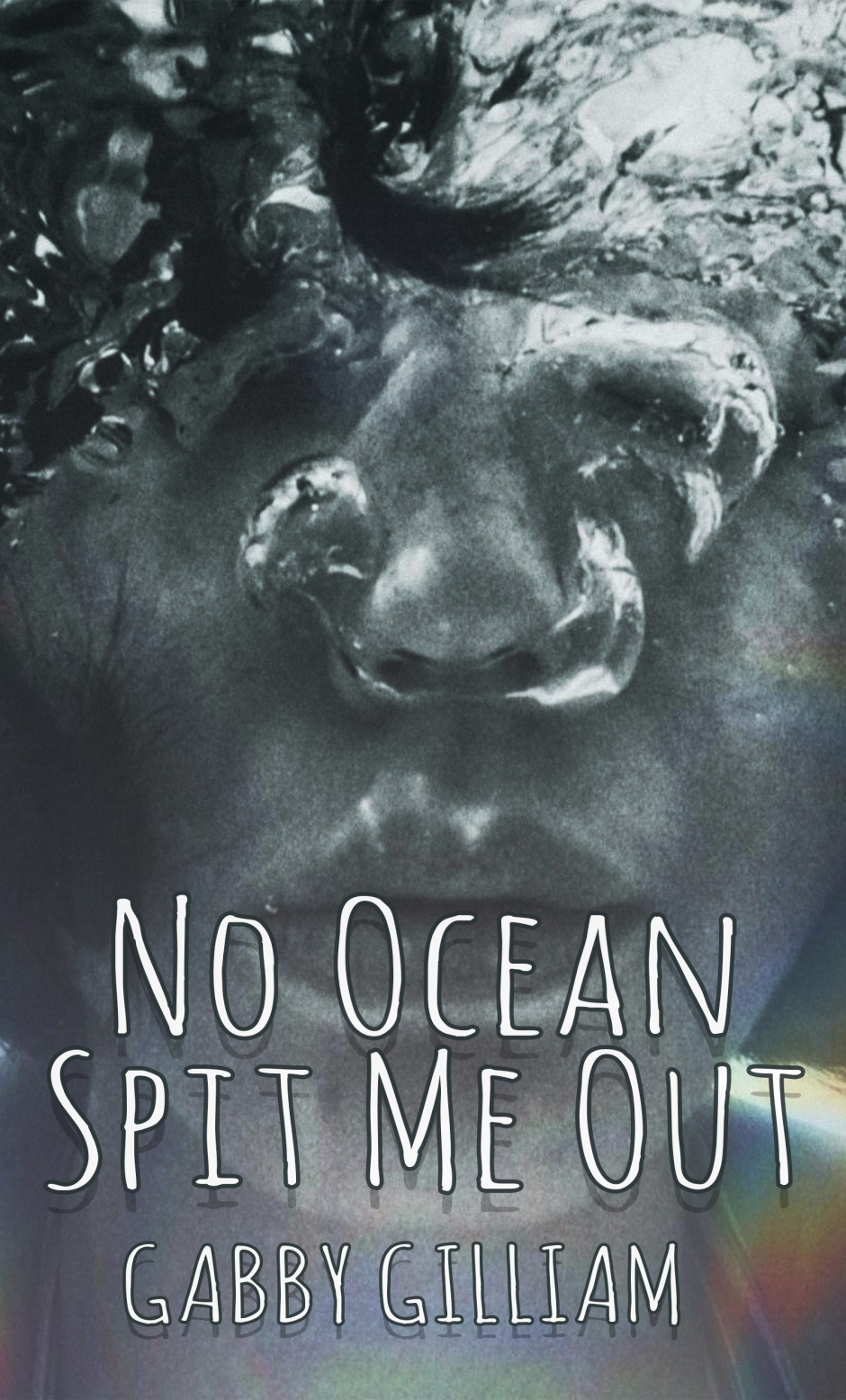
[In NO OCEAN SPIT ME OUT] Gabby Gilliam’s verse preserves the feel of the summer farm, contrasting its fertile brightness with the struggle between grief and the sudden absence of connection to family and place. Belonging and the struggle to continue remembering clash on the page, while the passion for life’s diverse and tactile experiences dazzle the reader with tantalizing gasps of zucchini, crab apples, and blackberry wine. Each poem gives the reader their own lingering taste of her ghosts. -Kim Malinowski-

NO OCEAN SPIT ME OUT is a captivating debut collection of poetry that delves deep into the intricate tapestry of family dynamics and personal evolution. Within its 30 poems, the collection embarks on a profound journey through the stages of coming of age, navigating the complexities of familial bonds, grappling with organized religion, and ultimately, embracing the essence of self-acceptance. Whether you’re seeking solace in the shared experiences of family relationships or searching for introspective insights into the nuances of identity and faith, this collection offers a profound and thought-provoking exploration of the human condition.

Pre-order Paperback

Pre-order Kindle

“Sometimes stark, but always beautiful, these free verse celebrations of North Mountain introduce a seasonal sense of environmental transitions to the observer and reader’s eye, with time’s passage changing everything and nothing…Aside from a personal visit to North Mountain, there is no better way of appreciating its beauty, impact, and presence over the eons than through THE SONG OF NORTH MOUNTAIN.”MIDWEST BOOK REVIEW

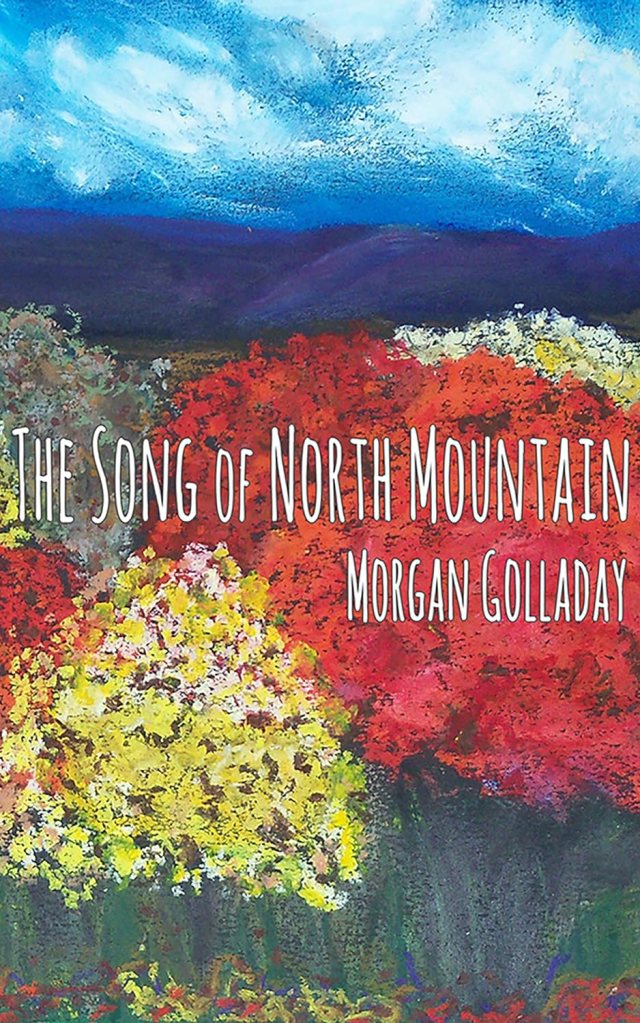
From the mighty pen of artist and author Morgan Golladay comes THE SONG OF NORTH MOUNTAIN, a transformative collection of poetry and art celebrating the famous and mystical North Mountain of Appalachia.
North Mountain, a wildland in the George Washington and Jefferson National Forests of western Virginia, has been recognized by the Wilderness Society as a special place worthy of protection from logging and road construction. The Wilderness Society has designated the area as a “Mountain Treasure.”
Morgan Golladay brings her readers to dwell in the reverence of this wonderful wilderness. Golladay is an award-winning author who was raised on North Mountain and lives in coastal Delaware as part of a thriving artist and author community. All words and art in this book are by Golladay.

Paperback (available now)

Kindle (available now)

Audiobook (available now, and Audible account not needed to buy or listen!)

Good luck women! May your wonderful books triumph!

No Ocean Spit Me Out Pre-order!

Dianne here, and I am so excited to tell you that, right now, Gabby Gilliam is brining us the fourth book from Old Scratch Press, NO OCEAN SPIT ME OUT.

Gabby Gilliam’s verse preserves the feel of the summer farm, contrasting its fertile brightness with the struggle between grief and the sudden absence of connection to family and place. Belonging and the struggle to continue remembering clash on the page, while the passion for life’s diverse and tactile experiences dazzle the reader with tantalizing gasps of zucchini, crab apples, and blackberry wine. Each poem gives the reader their own lingering taste of her ghosts. -Kim Malinowski

NO OCEAN SPIT ME OUT is a captivating debut collection of poetry that delves deep into the intricate tapestry of family dynamics and personal evolution. Within its 30 poems, the collection embarks on a profound journey through the stages of coming of age, navigating the complexities of familial bonds, grappling with organized religion, and ultimately, embracing the essence of self-acceptance.

Each poem in NO OCEAN SPIT ME OUT serves as a poignant reflection of the human experience, capturing moments of vulnerability, resilience, and growth with eloquence. Through lyrical prose and emotive imagery, Gilliam paints a vivid portrait of the joys and struggles inherent in the process of self-discovery.

Whether you’re seeking solace in the shared experiences of family relationships or searching for introspective insights into the nuances of identity and faith, this collection offers a profound and thought-provoking exploration of the human condition.

NO OCEAN SPIT ME OUT is National Book Award nominee!

Pre-order your copy now!

PAPERBACK

eBOOK

Does Winter Have a Sound? Writing Prompts and Publishing News

This week We are starting off our blog by sharing links for three new magazines on the scene that provide publishing opportunities for poets. Two of the publications, Only Poems and SWIMM Every Day, are on the publishing platform Substack. The third, New Verse News, is on Blogspot. Take note that Swwimm only publishes work by women. Although these magazines will try to entice you to support them by becoming a paid subscriber, you don’t have to subscribe to submit. But do read them, do decide whether they might be a good home for your work. Here are their links. Check them out.

Only Poems

SWIMM Every Day

New Verse News

Writing Prompt

It’s snowing, freezing in many places around the USA and around the world. I take a walk in my neighborhood and notice sound is different in a snowstorm. I hear the crunch of my footsteps, the thud of a snow clump falling from a tree branch, the scraping of a snow shovel. No car engines. No beeping construction trucks today. The morning is quiet.  

Sound, one of the six senses, is a powerful writing tool. This winter week in January, think about the following seven ways to integrate sound into your poetry and prose and then put them to use.

Rhyme

The matching of identical or similar word endings was once a requirement, in some poems. Now public opinion has swayed in the opposite direction, and some publications specifically will not publish rhyming poetry. It all depends, which way your mind bends. Rhyme can add emphasis and shading to both poetry and prose and can also elicit humor.  

Rhythm

The manipulation of syllabic patterns in a passage, can add intensity and create suspense. A line of poetry or prose, rhythmically pleasing is a joy to read. Writing prose, sentence by sentence, experiment with how different words and word sequences with varying syllable length can change the impact of your writing.

Consonance

The name sounds like consonants and its meaning refers to repetition of consonants — specifically, those at the ends of words: The injured steed stayed on the ground and I stroked his head.

Onomatopoeia

 A long fancy sounding term,onomatopoeia refers to words that are sound effects.  Can you find words that concurrently indicate meaning while also mimicking a sound? Here are two examples: The cock-a-doodle doo of the rooster woke me up at six. The clanging pots annoyed everyone.

Repetition

Repetition is the repeating of a word or phrase. When used adeptly it will create a structure or pattern that adds emphasis to the desired meaning of a passage. Remember “The Raven” by Edgar Allen Poe? The first stanza goes:

Once upon a midnight dreary, while I pondered, weak and weary,

Over many a quaint and curious volume of forgotten lore—

    While I nodded, nearly napping, suddenly there came a tapping,

As of some one gently rapping, rapping at my chamber door.

“’Tis some visitor,” I muttered, “tapping at my chamber door—

            Only this and nothing more.”

Alliteration

Alliteration, two or more words within a phrase or sentence that begin with the same sound, can add shading, emphasis and lyricism. Alliteration can be delivered two ways: consecutively delivered as with deep and daring or spread out within a sentence, promises can be painful and keeping up with party invitations practical.

Assonance

Assonance as with Consonance relies on repetition of a letter in the alphabet. In this case, instead of a consonant it is a vowel. The use of repetitive vowel sounds can be powerful in both a phrase or an entire paragraph. We who must not see the bees hiding in the trees look on bended knee for the lost honey.

We close with a winter poem by William Carlos Williams.

Blizzard

BY WILLIAM CARLOS WILLIAMS

1883-1963

Snow:

years of anger following

hours that float idly down —

the blizzard

drifts its weight

deeper and deeper for three days

or sixty years, eh? Then

the sun! a clutter of

yellow and blue flakes —

Hairy looking trees stand out

in long alleys

over a wild solitude.

The man turns and there —

his solitary track stretched out

upon the world.

Thank you for reading our bog. Follow us on Facebook and visit the Old Scratch Press page at Devils Party Press

Available now: Robert Fleming’s white noir. An eclectic, visual collection you won’t want to miss.

Submissions Still Open For Winter Issue & READ the Latest Issue of INSTANT NOODLES LITERARY Magazine

Hello fellow literary enthusiasts, We are thrilled to bring you the fall edition of the Instant Noodles Lit Mag! Get ready to dive into a world of literary delights: https://instantnoodleslitmag.com And for this issue celebrate the circle of life, the circle of the seasons as authors and artists interpret the theme: It Should Always Be Fall in the Cemetery.

✨ Original Short Stories: Discover captivating tales from emerging and established authors that will transport you to different worlds and leave you craving more.🖋️ Poetry: Immerse yourself in the evocative and thought-provoking verses of poets who paint with words.🗞️ Engaging creative non-fiction that resonates deeply.

🌟 Art and Illustrations: Telling wordless stories as a way to hit the theme… perfect!

And many of the authors read their pieces for you! For example: LIPSTICKS THE WITCHES WORE TO THE HALLOWEEN BALL ~ PAMELA BERKMAN 📣 Join Our Community 📣 We invite you to become a part of our literary community:✉️ Subscribe: Don’t miss a single issue of Instant Noodles Lit Mag! Sign up for our newsletter to receive updates, special content, and more directly in your inbox.📝 Submit Your Work: Are you a writer or artist looking for a platform to showcase your talent? We welcome submissions of fiction, poetry, essays, and artwork. Visit our website for submission guidelines. Next deadline in October 15th.🎉 Help Us Spread the Word 🎉 If you’re as excited as we are about Instant Noodles Lit Mag, please help us spread the word. Share our website and newsletter with your fellow bookworms, writers, and artists, and together, let’s create a vibrant literary community.🌐 Follow Us: Thank you for joining us on this literary adventure. We can’t wait to share our love for words and creativity with you. https://instantnoodleslitmag.com/
Visit our Facebook page for Old Scratch Press to keep up with the latest news. https://www.facebook.com/OLDSCRATCHPRESS/

Do Poets and Writers of Short Prose Need an MFA?

By Nadja Maril

Attend any writer’s conference or weekend of workshops and invariably a topic raised amongst the attendees, (those aspiring to be published writers), is a discussion on the value of an MFA.

Will an MFA is help me professionally?

Will graduate school provide me with useful introductions to members of the publishing industry?

Will the process of earning a Masters degree serve to teach me useful skills I couldn’t learn independently?

No simple answer exists, because every writer and their aspirations are different. And every MFA program is different.

Photo by Gu00fcl Iu015fu0131k on Pexels.com

I found pursuing an MFA  to be a rewarding intellectual experience, as an older adult. I received my MFA  from the Stonecoast  Low Residency Writing Program at in University of Southern Maine in literary fiction in January 2020.  

Low residency didn’t start up with the internet or the pandemic. For decades, many scholars have recognized that much of a graduate student’s work consists of independent study and research under the tutelage of a mentor. Low residency programs convene in person each semester for one or two weeks and the remainder of communication is done by email, snail mail and video conferencing.  The set-up enables students to continue with another professional career and family responsibilities.

While I wished I ‘d attended grad school in my twenties or thirties, sometimes you appreciate something more when you are forced to wait.

When I asked some of my colleagues at Old Scratch Press if they could share some of their thoughts  about MFA’s,  Collective  member Robert Fleming  told me about Mark Fishbein, who he met at the Poetry Academy of the District of Columbia poetry critique workshop. To join contact Mark at mark@poetwithguitar.com

To Mark Fishbein, Robert posed the following questions:

Why did you choose an MFA?:

M.F.: As retired, the purpose at the age of 74 means deciding to buy your container of milk before or after your nap. As a young man I thought to live the life of poet/academician, but got sidetracked and spent my life differently. But as a lifelong poet, I now give lectures in poetry workshops and I would like to teach it. In order to do so I must have, at minimum, an MFA.

Mark began in the Fall, 2023 an in-person MFA in creative writing: poetry at Columbia College in Chicago, IL. This is a traditional residential full-time program.

Why did you chose this specific school? :

M.F.: The program is well received; it’s walking distance from home, the price is more reasonable and the vibe less full of itself as I have experienced. It’s in the heart of downtown. No campus fraternities.

Mark is the chancellor of the Poetry Academy of the District of Columbia and most recently published Reflections in the Time of Trumpius Maximus, by Mark Fishbein | Atmosphere Press

So what is your thoughts on the topic? We’d be happy to hear from you.

Thank you for reading. Check out the latest submission call from Instant Noodles Literary Magazine here.

White Noir by Robert Fleming: A Darkly Captivating VIsual Poetry Journey

Old Scratch Press is pleased to announce the forthcoming release of Robert Fleming’s newest poetry chapbook, White Noir.

Are you ready to embark on an unforgettable journey through the depths of human existence? Look no further than WHITE NOIR, by Robert Fleming, a mesmerizing black and white visual poetry book that delves into the enigmatic tapestry of life, from birth to death and beyond. This book is not just a collection of verses; it’s a visual and emotional experience that will leave you spellbound.

Who Should Dive into WHITE NOIR?

  • Appreciators of Visual Poetry: If you’re someone who finds beauty in the fusion of words and images,WHITE NOIR is your treasure trove. Fleming’s mastery of visual poetry will leave you in awe.
  • Lovers of Graphic Arts: This book is a canvas of creativity, merging the artistry of words and visuals in a way that will captivate anyone with an appreciation for graphic arts.
  • Devotees of Dark Humor: WHITE NOIR thrives on dark humor, taking you on a rollercoaster ride of emotions that ultimately ends with a glimmer of hope. It’s a unique blend of wit and introspection.

What Awaits You in WHITE NOIR?

  • A Profound Human Journey: WHITE NOIR takes you on a journey that spans the entire lifespan of humanity. It explores the diverse facets of existence, from the raw and unfiltered to moments of humor and reflection.
  • Balance of Text and Images: The book strikes a perfect balance between text and visuals, creating a multi-sensory experience that will leave you immersed in its world.
  • Taboo Themes: Fleming fearlessly tackles taboo subjects, including religion, sex, politics, and gun violence, inviting readers to confront and contemplate these complex issues.
  • Experimental Poetry Forms: Get ready for a literary adventure as Fleming explores experimental poetry forms, such as phone texting, Alexa questions, and palindromes, pushing the boundaries of conventional poetry.

Why Will You Love WHITE NOIR?

  • A Petite Delectation: You can devour this thought-provoking journey in a single sitting, making it perfect for a cozy afternoon or an intellectual escape.
  • Original and Modern: “White Noir” is a testament to contemporary poetry, offering a fresh perspective on life’s most profound questions.
  • Perfect Gift: Looking for a unique gift for a friend or loved one? “White Noir” is a one-of-a-kind present that will leave a lasting impression.
  • Robert Fleming, the Doodleman, infuses his work with influences from literary giants like Robert Frost, Dr. Seuss, and the Beats, as well as the artistic visions of Salvador Dali and Andy Warhol. With over 400 works published internationally, Fleming’s talent is undeniable, earning him recognition and accolades from various literary circles.

Don’t miss the opportunity to explore the captivating world of “White Noir.” Order your copy today and join the ranks of those who have been moved and inspired by Robert Fleming’s unique vision of human existence. 

It’s not just a book; it’s an experience waiting to be embraced….

Scheduled for November 15th release, order your copy now.

The Not So Secret Lives of Poets! Fun Facts ABout Old Scratch Collective.

Looks can be deceiving. Can you guess who did what?

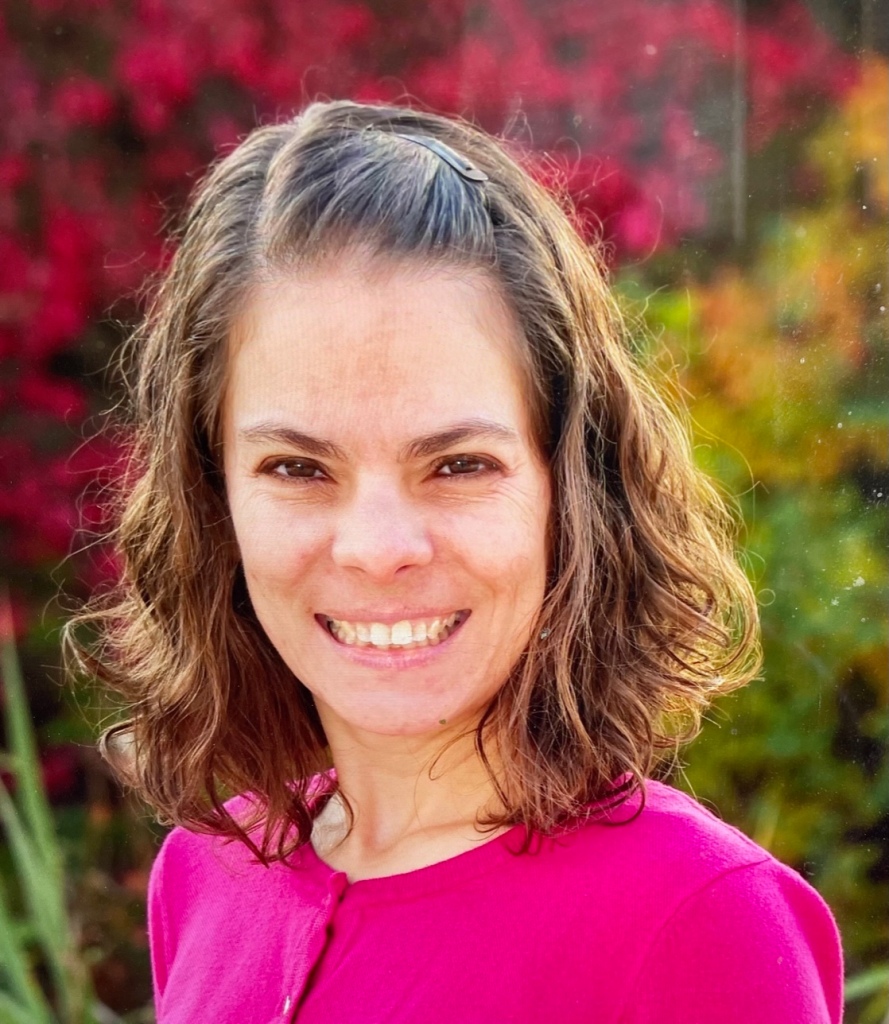
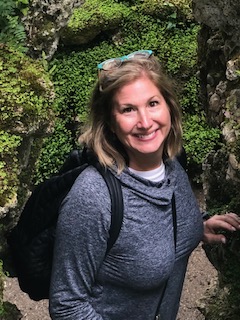
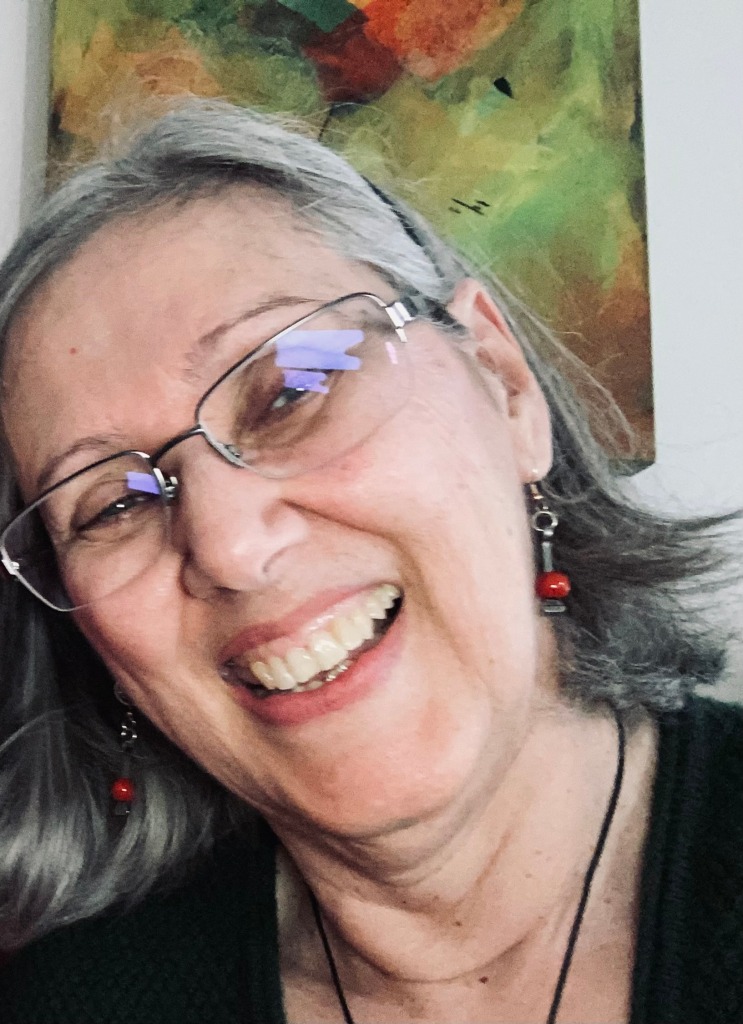
Can you match these poets: Alan Bern, Anthony Doyle, Ellis Elliot, Gabby Gilliam, Morgan Golloway, Nadja Maril, with the correct fun fact?

Alan Bern
Janet Uchendu

A. This writer/poet has a secret fantasy to be part of a singing flash mob.

B. This writer/poet was so afraid of sharks, they conquered their fears by participating in a White Shark Cage Dive.

C. At a Dallas Cowboy Cheerleader audition, this writer/poet taught the choreography.

D. In high school and college, this writer/poet had a following as a fortune teller. Their specialty was reading tarot cards.

E. This writer/poet was so embarrassed by their first attempt to bake an angel food cake, they buried the “cake” in their mother’s garden.

F. This writer/ poet fervently played the clarinet in their youth with hopes that the instruments vibrations would enhance the quality of their hair.

G. This writer/poet made a project of collecting all the dead ladybugs where they were working and lining them up on the top of their office cubicle walls.

AND THE ANSWERS ARE:

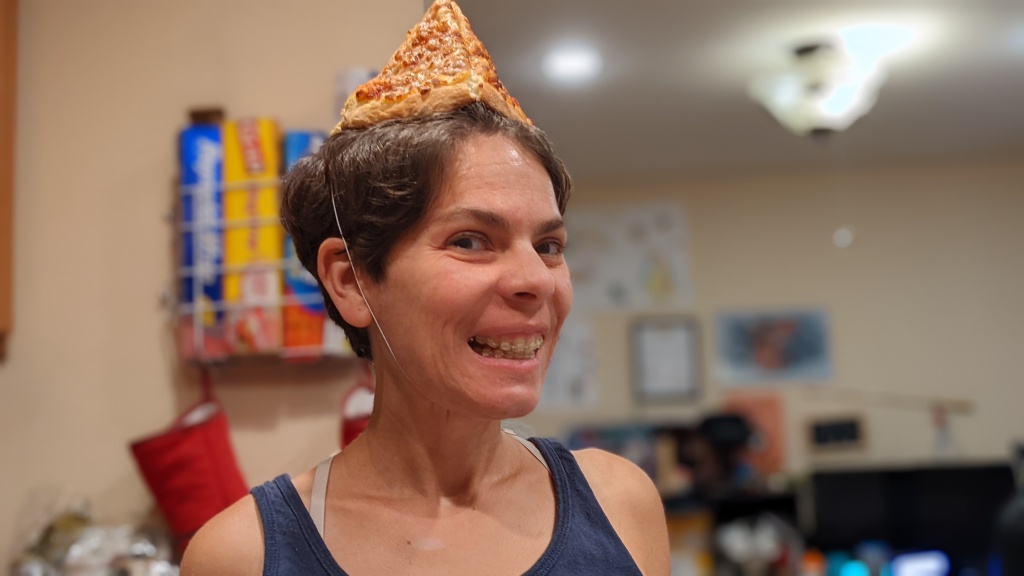
A. Gabby Gilliam secretly or not so secretly likes to be in the limelight. The many talented writer/ poet who by day works as a teacher, sometimes fantasizes about being part of a flash singing mob.

Poet and Writer Gabby Gilliam wearing what appears to be a pizza hat.

B. Poet and writer Anthony Doyle loves to swim. But he didn’t always feel safe in the water because he worried about being attacked by sharks. So in order to conquer his fears he allowed himself to be locked inside a protective cage and submerged in deep water, a White Shark Cage Dive in Gaansbai, South Africa, so he could confront his terror close up and now scuba dives as a hobby.

Photo by Jondave Libiran on Pexels.com

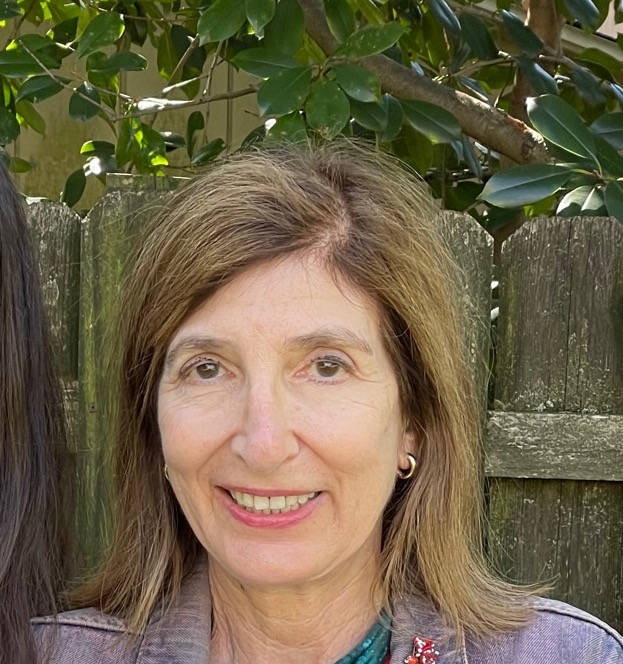
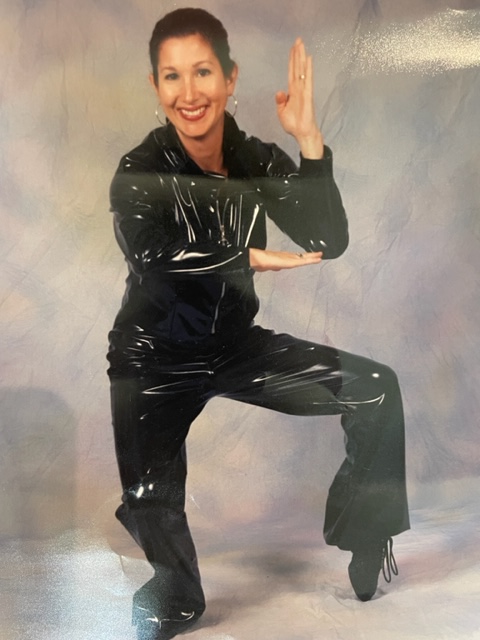
C. Poet/writer Ellis Elliot once taught ballet and was a dance choreographer too. So, once upon a time she taught choreography at a Dallas Cowboys cheerleader audition. Here’s a professional photo of her dancing.

Ellis Elliot, dancer and choreographer.

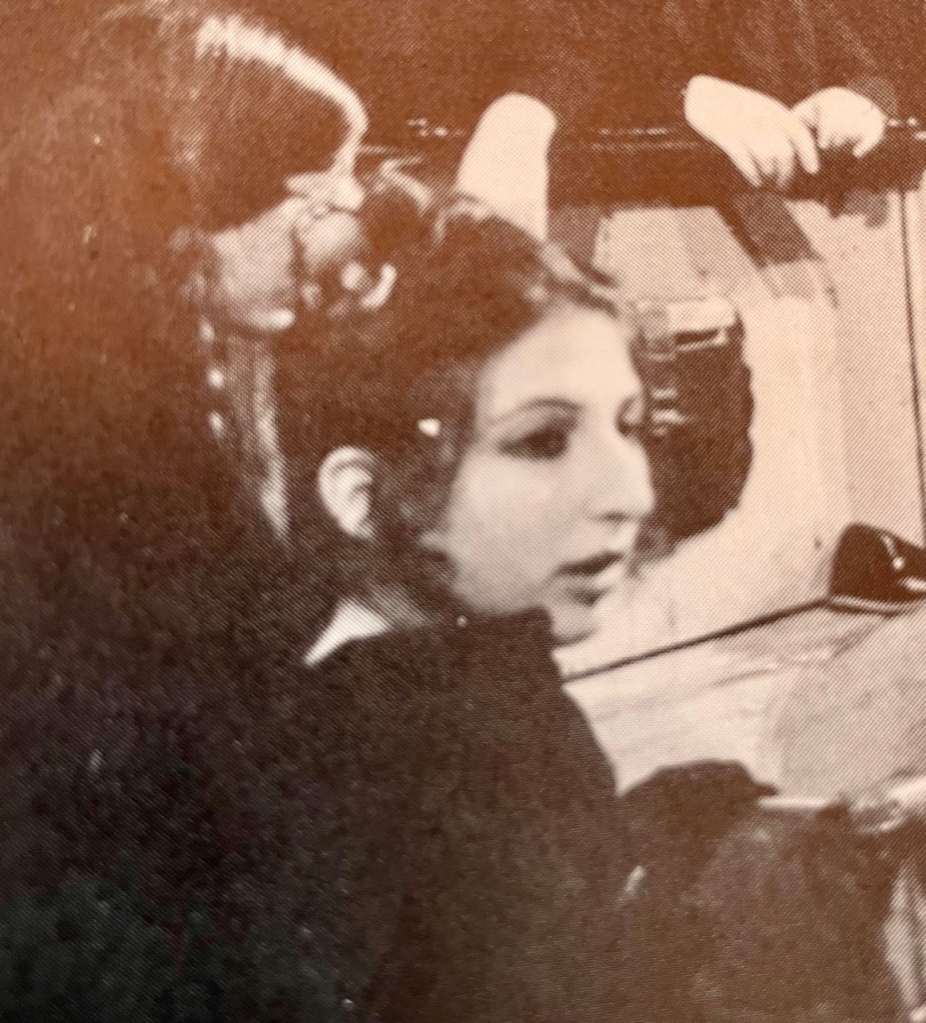
D. In High School, Nadja Maril was fascinated by the occult: astrology, numerology, time travel and fortune telling. Her talent to predict the future in college, with the aid of a battered deck of Tarot cards had fellow students lined up outside her dorm room door. Eventually, she packed the cards away. “While influences, opportunities and obstacles can be predicted,” she says, “We make our own destiny.”

A very young Nadja performing in a High School play.

E. Writer, poet and artist Morgan Golladay is not afraid to tell the world her first attempt at baking an Angel Food Cake was such an embarrassment, she hid the evidence by burying it in her mother’s garden. Often the work of creating something “just right” takes multiple tries.

F. Allan Bern shares this wonderful photo of him in his youth when long full hair was “a thing” and he was convinced, if he kept practicing his clarinet, the vibrations of his instrument would enhance his hair growth. “Here I am in Napoli in 1966, ” says Alan. “My friend Umberto and I played the Clarinet, and he claimed the practicing made your head vibrate and, perhaps, helped your hair grow like this.”

Alan Bern in 1966.

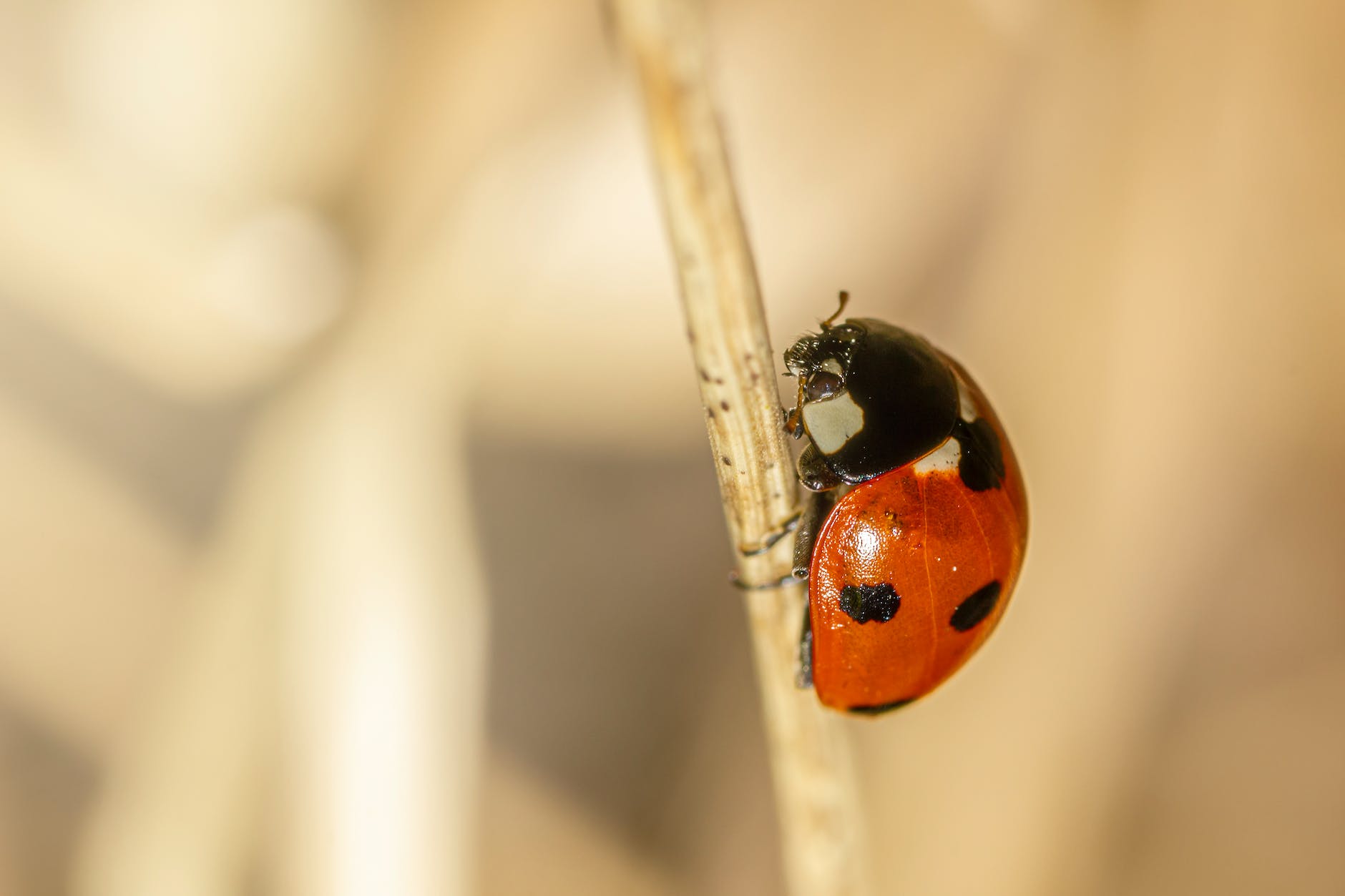
E. Writer/Poet Janet Uchendu thought it odd that an inordinate amount of ladybugs were turning up dead inside the office where she worked. Like most writers, she is a keen observer. Perhaps it was the end of their lifecycle, but why inside that particular office? So she stacked them up on the top edge. of her cubicle. But much to her surprise, no one else noticed.

Ladybug ladybug fly away home.

Thank you for playing the game. Don’t forget to follow this blog for news and announcements. It’s free. Just sign up. Coming up is the October 15th deadline to the Coold Turkey issue of Instant Noodles Literary Magazine. Prose submissions this time must be approximately less than 500 words and no more than two poems, if you are submitting in the poetry category.