


Join Us! You Know You Want To!
June is Pride Month! It’s a time to recognize and celebrate people in the LGBTQ+ community. Pride Month is about love, acceptance, and being proud of who you are. One great way to celebrate is by reading books that share LGBTQ+ voices and stories.
Books help us understand each other. For LGBTQ+ people, reading stories with characters like them can help them feel seen and accepted. For others, reading these stories builds empathy and helps us learn more about people who may be different from us.
Books can also teach us about LGBTQ+ history, struggles, and victories. Reading is a powerful way to show support during Pride Month, especially when you buy books written by LGBTQ+ authors.
If you’re looking to add some pride to your bookshelf, we have two authors at Old Scratch Press who recently published books of poetry that would be great additions to your to-be-read list!

On May 1, Morgan was awarded Second Place in the Delaware Press Association Communications Awards for her book, The Song of North Mountain which was released by Old Scratch Press in May 2024. Not only did Morgan write the poems in this collection, she also did the interior artwork and illustrated the book’s cover. North Mountain is part of a 55-mile mountain ridge in the northern Shenandoah Valley in Virginia. Morgan says her collection of poems is a love song to that ridge.
Here is her poem, Ghost Light, which won also won Second Place in the DPAC Awards in its category.
Ghost Light
Looking back along the ridge
a thin rib of light briefly
illuminates the forest floor
and silhouettes trees stark against winter sky.
Look too soon
and you miss the mystery
of Dillon’s Mountain’s brief farewell
to nightsky and stars and sweet Venus.
Look too late
and the slumbering giant
lumbers slowly
into its ordinary dayspring.
But if you should,
by chance or intent,
catch the moment,
you will see life
and hope
renewed
in a sudden shaft of dawnbreak.
You can follow Morgan on Facebook and Instagram or visit her website.

Robert Fleming is a gay man who writes and creates art about gay, transgender, and universal themes. After coming-out, he published in LGBTQ magazines. He says that when he” stopped obsessing about being gay”, he realized that his sexual orientation is only one part of who he is. This enabled him to write on universal human themes and crossover into publishing in straight magazines.
For pride, one his favorite poems is one he wrote, Passed Over , that was published in 2020 in Trees In A Garden Of Ashes by Local Gems Press. Robert is grateful to James Wagner, the editor of Local Gems Press, who published many of his gay and transgender works.

For pride 2025, Robert recommends to submit to publish in Oddball magazine that has categories in nonsexual orientation and pride (LGBTQ). You can find submission guidelines here.
Robert is the author of the Amazon best-selling visual poetry book, White Noir.
Here is a link to his visual artist profile.
Follow Robert at Facebook


Hi All~
We’re looking to add members to Old Scratch Press!
Here’s the deets:
Old Scratch Press (OSP), a poetry and short-form collective sponsored by Current Words Publishing, is seeking two new members to join us starting at the end of 2025. Your book would be slated for publication in 2026–2027, pending a successful trial period.
OSP is a collaborative, grassroots press focused on uplifting fresh, bold voices in poetry, flash fiction, and creative non-fiction. We publish three books per year, along with Instant Noodles Lit Mag (3 issues/year), which is curated and edited by our members. To learn more about our work, we invite you to explore past editions of Instant Noodles https://instantnoodleslitmag.com/ and OSP-published books https://oldscratchpress.com/catalog/.
As a member of OSP, you will:
Members who are kind, reliable, and team-oriented.
Writers with a completed or nearly completed manuscript ready for publication in 2026–2027.
People who can commit to at least two years of active participation.
Writers who reflect diversity in identity, perspective, or experience—including (but not limited to) people of color, LGBTQ+ writers, disabled writers, and others underrepresented in publishing.
Applicants who are not full-time creative writing faculty. We aim to support writers who do not already have institutional resources or access.
Writers who have a track record of publication (a few poems, flash pieces, essays, etc.), and a clear desire to communicate something meaningful through their work—someone we can respect as a fellow writer and collaborator.
New members will begin with a six-month trial period before we formally commit to publishing your book. This ensures a good fit and gives everyone time to build rapport, share work, and participate in OSP activities.
Please send the following:
Applications will be reviewed collectively by current OSP members. Finalists will be invited for a short conversation via Zoom.
If this sounds like your kind of creative home, we’d love to hear from you!
Apply, as usual, through Duotrope~
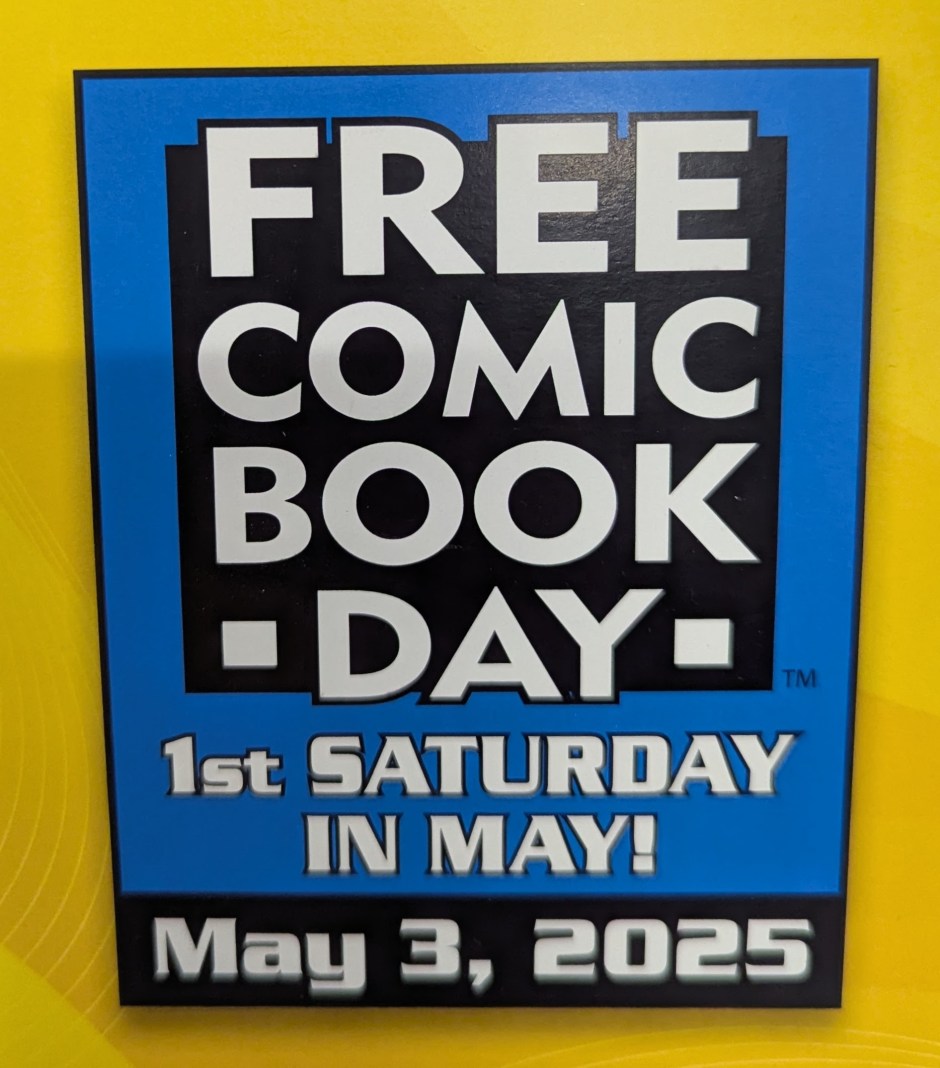

Every year on the first Saturday of May, comic shops across the country come alive with excitement, color, and creativity—because it’s Free Comic Book Day (FCBD)! Whether you’re a lifelong comic enthusiast, a casual reader, or someone looking to dive into the world of graphic storytelling for the first time, this day is all about celebrating comics, community, and the joy of reading.
Started in 2002, Free Comic Book Day is a promotional effort by the comic book industry to attract new readers. Participating comic book stores give away specially printed copies of free comics—completely free of charge. The event includes a wide variety of titles from major publishers like Marvel, DC, Dark Horse, Image, and smaller independent presses, offering something for every age group and interest.
The world could use more heroes and happy endings. Comics aren’t just about superheroes (though there’s plenty of that if you’re into it!). They span genres—from fantasy and horror to history, science, and slice-of-life stories. They’re also a powerful tool for literacy and education, helping readers of all levels improve comprehension, vocabulary, and visual literacy.
For younger readers especially, comics can be a gateway into the joy of reading. The mix of artwork and text makes stories more accessible and engaging, which is especially beneficial for reluctant readers or multilingual learners.
My local comic book store had a local graphic novelist as well as comic artists in the shop signing autographs. They also work with local food pantries and offer an extra free comic for each can of food donated to the store. I always come away with comics I’ve never heard of that I end up enjoying once I get home and read them.
While free books are always amazing, Free Comic Book Day is more than just picking up a stack of comics—it’s about celebrating imagination, storytelling, and the communities that form around them. Whether you’re 8 or 80, there’s a comic out there for you. So mark your calendar, grab your friends or family, and make your way to your local shop. You never know what new world you’ll step into!

April is National Poetry Month, which makes it a great time to enjoy the beauty and power of words! Whether you love poetry or are just starting to explore it, reading a poem each day is a wonderful way to celebrate the art of the poem.
Poetry helps us express feelings, tell stories, and learn new words. Reading one poem a day can:
If you’re not sure where to start, here are some poets you might enjoy:
National Poetry Month is the perfect time to enjoy poetry. Challenge yourself to read a poem each day, share your favorites, or even try writing your own! Celebrate the power of poetry—one poem at a time.
What’s your favorite poem? Share it in the comments below!


There are so many groups centered around the craft of writing, and book groups can be found at every local library, but what about those who enjoy poetry? Groups centered around poetry can help us tune out the digital noise of this fast-paced world and focus on the beauty and wonder that can be captured in a poem. Adult reading groups (even those that don’t focus on poetry!) provide a meaningful space for connection, reflection, and creativity, which can be hard to find these days.
I recently received an invitation to be a guest speaker at a local poetry gathering. The meeting coordinator asked that I share not just my writing process, but what inspired each piece. We had a conversation between each poem where group members shared how the poem resonated with them and personal experiences they saw reflected in the poem. It was an open, engaging conversation that I’ve never experienced at other readings I’ve done. This group is accustomed to sharing poems with each other and closely reading them together (though often they aren’t poems written by any members of the group). I’m hoping to join more meetings in the future to participate in the discussions they have about other poets’ work.
Poetry has a unique ability to distill deep emotions and complex ideas into a few powerful lines. Unlike traditional book clubs that focus on lengthy narratives, poetry groups embrace the power of brevity and rhythm, allowing for rich discussions within a short span of time. Reading a poem is less of a time commitment than an entire novel. Whether exploring classic poets like Emily Dickinson and Rumi or contemporary voices such as Amanda Gorman and Ocean Vuong, these groups celebrate the diverse perspectives poetry offers. Close readings of poetry can also allow us to focus on the beauty of the language itself.
Poetry allows people to express their feelings and thoughts. Reading and talking about poems in a group helps members open up, relate to each other, and feel supported.
Being part of a poetry group can inspire people to write their own poems. Whether they try writing on their own or share their work with the group, they get a chance to be creative and hear helpful feedback. However, the creative spark might extend beyond writing. One of the group members today brought up that she is a painter and is sometimes inspired to make art. Ekphrastic poems are inspired by visual art, but that inspiration can go both ways!
Poetry can be deep and full of hidden meanings. When people read poetry together, they practice listening carefully and thinking about different interpretations, helping them see new perspectives.
Sharing poetry helps people feel connected. Whether meeting in person or online, poetry groups provide a friendly and welcoming space where people can relax, share ideas, and enjoy meaningful conversations.
Poetry reading groups offer more than just literary discussion—they provide a space for connection, inspiration, and personal growth. Whether you’re an avid poetry lover or a newcomer to verse, joining a poetry group can open new doors to creative expression and meaningful relationships.
Do you participate in a poetry reading group? Share your experiences or favorite poems in the comments below!
Here is a link for one of my favorite poems submitted last year to Instant Noodles. We liked it so much, we nominated it for an award. THINGS THAT SOUND LIKE GUNSHOTS ~ Michelle Meyer

Words have power. In times of injustice, oppression, and uncertainty, words become more than just ink on a page—they become weapons, shields, and bridges. They can challenge unfair systems, inspire people to take action, and bring communities together. Writing and reading for the resistance means using stories, poems, and books to fight injustice and create a better future. Throughout history, people have used words to stand up against oppression—and today, we can do the same.
Writing can be a powerful tool in the fight for justice. To write is to document, to bear witness, and to refuse erasure. The act of storytelling itself can be a radical act, especially when it amplifies the voices of those who are silenced. It allows people to share their truths, educate others, and imagine a better world. Writing for the resistance can include:
Reading isn’t just about learning—it can be a way to resist oppression. What we read shapes how we see the world, so choosing books wisely is important. Some ways reading can be an act of resistance include:
If you want to use reading and writing to create change, here are some ways to start:
Resistance is an ongoing effort, and literature—whether through reading or writing—has always been a vital part of that struggle. Words have changed the world before, and they can do it again. By reading and writing with purpose, we can stand up against injustice and help create a better future.
What books have inspired you to take action? What stories still need to be told? Share your thoughts and let’s keep the conversation going!

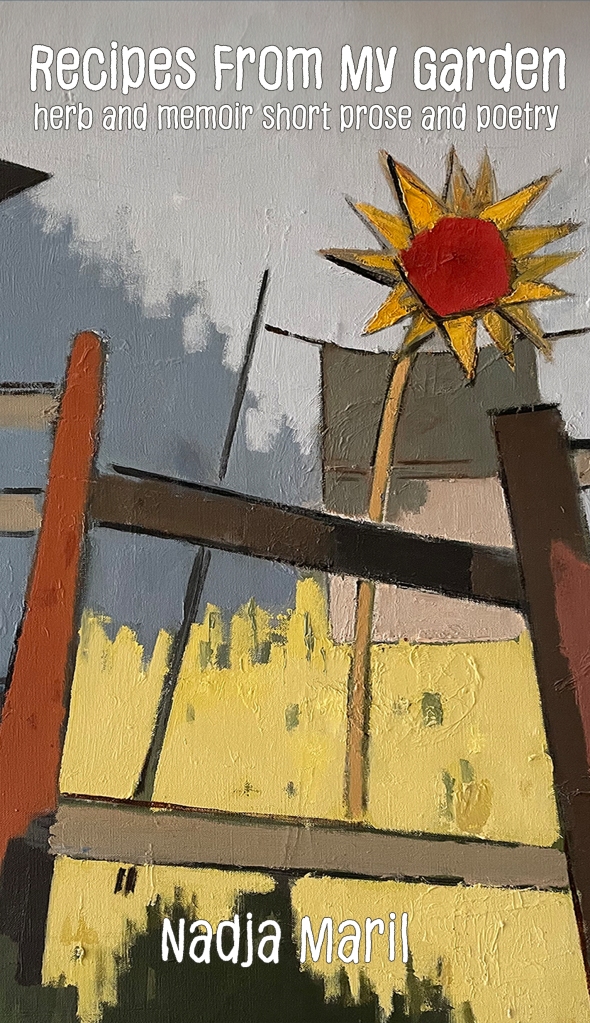
Nadja Maril, author of RECIPES FROM MY GARDEN, is one of the founders of Old Scratch Press
The Editors of Instant Noodles Literary Review, published three times a year, have announced the themes for 2025: Current, Sanctuary and Gravy.
Edited by members of the Old Scratch Short Form Collective who have volunteered their time, submissions are free. The Instant Noodles submission box which you can access through Duotrope is filling up fast.

While artists and writers selected for publication receive no financial renumeration, the publishers and editors do their utmost to promote the work in each issue. Instant Noodles nominates for industry prizes, Best of the Net and the Pushcart Prize. One of the magazine’s promotions is a zoom reading, giving contributors around the world a chance to meet.
Published three times a year, the magazine is posted online for everyone to read. One of the biggest reasons work gets rejected, is that writers don’t follow submission guidelines and familiarize themselves with the publication.
In addition to Visual Art and Multimedia Creations, the magazine publishes Prose & Poetry

Instant Noodles focuses on SHORT pieces. Short work 500 and 750 words in length can be powerful. If you are submitting prose, whether is it hybrid, nonfiction, or fiction, the word limit is 1000 words or less.
All work must be original and must belong to the author. Works that have been previously published will not be considered. Stories must be complete and self-contained (i.e., do not submit chapters of a larger work).
NOTE: Accepted works will be published as submitted without editing; as such, in addition to the originality of the work itself, we are looking for manuscripts that are clean and press ready. Be sure to review your grammar, spelling, tenses, proper punctuation, and other general rules of the written word before hitting “Send.” Work should be submitted through Duotrope as a Microsoft Word file (when it is poetry, drama, NF or fiction) as 12-point New Times Roman, double-spaced (single-spaced for poetry submissions). All other types of work have details as to their file types on the Duotrope page.
Connect to the Theme
The Editors request that submissions should have a connection to one of the themes for which they were submitted: Current, Sanctuary and Gravy—and labelled as such.
They are looking for more submissions in the categories of creative nonfiction, drama, multimedia and visual art.
“When I’m reading poetry submissions for Instant Noodles,” Says contributing Poetry Editor Gabby Gilliam, “I’m looking for poems that concisely fit our theme and resonate. I want lines that linger in my mind long after I’m finished reading.
As a contributing editor, I suggest it is never too early to start contemplating ideas associated with our spring theme, current, as well as the subsequent themes that follow. What ideas does the word current evoke for you? Are you thinking about being hip, cool and up on “current” events or are you traveling on an air “current.” Where does the word take you?
Try writing a story about yourself, something you observed, or something entirely imaginary. Create a video, a picture, combine two mediums.
Work should be publication ready
Do not submit until your piece is ready. Have you read your piece out loud and checked for misspellings and grammar mistakes? Does it fit the theme and are you ready to share it with the world?
The deadline for the spring issue with the theme Current is March 16th. We look forward to reading your work!
Nadja Maril is the author of Recipes from my Garden, Old Scratch Press, September 2024.
Thank you for reading. Please sign up to follow us here on WordPress and on Facebook.


One of the things I like best about poetry is its ability to capture the beauty of a single moment, even if it’s not something that would normally be seen as beautiful. At its heart, poetry is emotional storytelling. A moment becomes significant when it is infused with feeling—joy, sorrow, nostalgia, or wonder
Last year, I edited an issue of Instant Noodles with the theme of ‘instant.’ I was looking for poems that captured that exact essence of poetry that appeals so much to me. I wanted the beauty of the grief or the joy of a single moment captured in a poem. It’s probably my favorite issue of Instant Noodles that I’ve edited to date. I think the poems we published in that issue were the kind that will resonate long after reading them because every reader shares that moment with the poet.
That issue of Instant Noodles can be read for free here . I highly recommend giving it a look.
Life is filled with fleeting moments—those golden, mundane, or bittersweet slices of time that often pass unnoticed. But poetry has the unique ability to crystallize these moments, transforming them into something timeless and profound. Capturing moments in poetry is about taking the ephemeral and making it eternal.
Here’s a poem of mine that captures the moment when I held my son for the first time. It appeared in the Instant issue of Instant Noodles.
Contraction
After hours of flesh seizing
muscles finally relaxed
and I cradled a fresh universe
in my arms, puckered face
already rooting for food.
My world imploded, contracting
until nothing existed but this
one tiny fist raised at the audacity
of the air to be so dry
the lights so bright
the scream that replaced the rhythm
of my familiar heartbeat
and I traced constellations
across freckled skin as I eased
into a new center of gravity.
Great poetry thrives on specificity. Think of a single red leaf falling on a crisp autumn afternoon or the smell of fresh bread wafting through an open window. These details evoke emotions and anchor the reader in the poet’s world. Poetry doesn’t need grand metaphors to capture the essence of a moment. Sometimes, a simple, honest line is more powerful than elaborate language.
Because life is poetry, everyone is a poet. You can write about your own moments and shape your memories into poems. Then, you’re sharing that moment with others. Your words let them feel what you felt and maybe even remind them of their own special memories.
Poetry helps us slow down and notice what’s around us. It takes the little things that we might normally ignore and makes them important. So grab a notebook, start noticing the world, and turn your moments into poems that last forever.


Happy Holidays for sure when you check out the new issue of INSTANT NOODLES curated by Old Scratch Press. It’s a fun one ’cause we’re in the nood!
 OLD SCRATCH PRESS