The Sounds of Home: A Writer’s Connection to the Beach

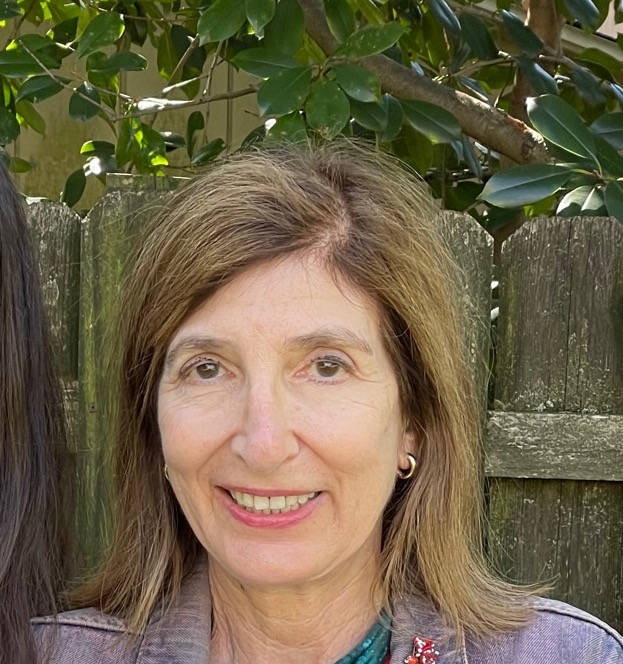
By Nadja Maril, a Founding member of Old Scratch Writing Collective

The dog is digging a hole in the sand. After chasing and fetching her ball numerous times, she has decided to bury it. It’s a game of make it disappear and find it again, a game she can play all by herself while I sit and listen to the waves slapping against the shore. I love this sound. It doesn’t matter where I am, if I’m near water coastline I’ll find a beach. The sounds of water soothe me. And I’m not alone in craving water sounds. A babbling brook, the torrent of a waterfall, the crash of ocean waves: are sounds that both inspire and invigorate.

Of the five senses—sight, smell, touch, sound, taste— one of the five will often be more prominently experienced than the other four. And this can change, depending on the situation. I find, when I tap into my memory bank, that sound is most frequently my touchstone. I think of a scene and I hear it. The rise and fall of the voices, crickets chirping, the sputter of an outboard motor, heavy breathing.

WRITING PROMPT

A classic writing exercise is to describe the place you call home.  If you are truly honest with yourself, the exercise will force you to select the place you long for, if you’re not already living there.  In order to describe it, you’ll be choosing the details that pop out in your mind.  The exercise provides a short cut, so to speak, to grasp what you value most.

Flash Fiction writers, you can use this prompt to channel you directly into the characters you create. Where do they feel most secure? It can tell you a lot about a person.

For me, home is the beach. It’s a happy place where I can walk for miles, build sand castles, swim in the waves and float on my back with the sun in my face. During childhood it was the Provincetown beach at the end of Kendall Lane. Today it is Cornhill beach in Truro a few miles away. The first glimpse of water and sand, the sound of the waves pushing into the shore, the smells of salt and seaweed, the wind against my face; I am home. From both beaches, if I look eastward I see the very tip of the Cape Cod peninsula curving around, creating a sheltered harbor. Out across the bay is Long Point Light Station.

When following a writing prompt or exercise, allow your thoughts to freely flow. Do not self-censor while writing. Once, you’re finished you can cut words, sentences or entire paragraphs. But if you analyze every word you select, you won’t get very far.

The subsequent step after spending twenty to thirty minutes writing a description of “home” is to read what you’ve written and look for patterns. Does one sense, such as smell, dominate the prose. Are there duplications of the same idea that cloud the focus? Challenge yourself to deepen the scene by adding action or dialogue.

Whenever I’m “stuck” and looking for a fresh something to write about. I challenge myself by creating a prompt or borrowing a prompt idea from another writer. The ideas are out there, you just need to make the time and have fun with what you create.

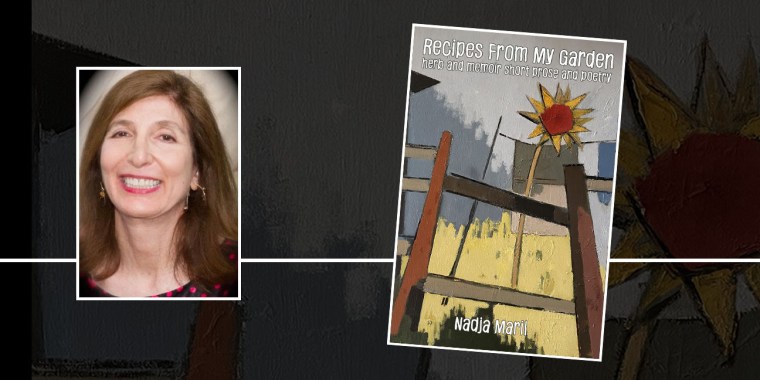
THANK YOU for reading. Have fun. And please, if you like my writing, you can support my efforts by buying a copy of my chapbook RECIPES FROM MY GARDEN– Poetry, Flash CNF and Short Essays (Old Scratch Press Sept. 2024) a great gift to yourself and for friends at $8.95. My chapbook is just one of the many fine books published by the imprint Old Scratch Press.

The Legacy of Edna St. Vincent Millay

By Nadja Maril

As a writer and a poet, I do a lot of reading. Sometimes I read a poem that resonates with me so strongly, I read it several times. Sometimes I commit a poem or favorite passage to memory to make it easier to revisit. One of those poems is

“Recuerdo”

by Edna St. Vincent Millay 

(February 22, 1892 – October 19, 1950)

It starts out

We were very tired, we were very merry—

We had gone back and forth all night on the ferry.

It was bare and bright, and smelled like a stable—

But we looked into a fire, we leaned across a table,

Composed of three stanzas, each containing three couplets, you can read the rest of the poem courtesy of the Poetry Foundation here.

Maybe it’s the rhythm, that mirrors for me the rocking of a ferry boat, the repetition of the line “We were very tired, we were very merry” that begins each stanza or the way she captures the exuberance of youth and the generous spirit of the poet and her companions, but I’ve always loved that particular poem.

Surprising, is how many people are unfamiliar with the name Edna St. Vincent Millay. The very first woman to win the Pulitzer Prize for poetry (1923), she was one of the most famous and successful American writers of the mid 20th century. Millay broke sales records and was a cultural celebrity who traveled across the United States giving captivating poetry readings to sold-out crowds.

A feminist, who openly loved both women and men, she was a prominent member of the literary community writing plays, publishing an opera libretto, as well as magazine articles under a pseudonym as well as publishing more than one dozen poetry collections. Her prize-winning poem “The Ballad of the Harp-Weaver” was dedicated to her mother. The poem tells a story of a penniless, self-sacrificing mother who spends Christmas Eve weaving for her son “wonderful things” on the strings of a harp, “the clothes of a king’s son.”

Raised in Maine by a single mother who elected to leave her husband during an era when divorce was not widely accepted, Millay was the eldest of three girls who largely had to take care of themselves while their mother would be absent from the house working as a homecare nurse. Surrounded by poetry, music and literature, Millay began writing her own poems at a young age.

WHERE TO LEARN MORE ABOUT EDNA ST. VINCENT MILLAY

To learn more about her complicated life, I highly recommend Nancy Milford’s biography, Savage Beauty; The Life of Edna St. Vincent Millay. Over 500 pages in length, it was comprehensively researched with the cooperation of Millay’s sister Norma, sole heir to the Edna St. Vincent Millay estate. and contains excerpts of Millay’s letters and poetry.

Here are two more poems to whet your appetite for Millay’s poetry.

“What lips my lips have kissed, and where, and why”

By Edna St. Vincent Millay

What lips my lips have kissed, and where, and why,

I have forgotten, and what arms have lain

Under my head till morning; but the rain

Is full of ghosts tonight, that tap and sigh

Upon the glass and listen for reply,

And in my heart there stirs a quiet pain

For unremembered lads that not again

Will turn to me at midnight with a cry.

Thus in the winter stands the lonely tree,

Nor knows what birds have vanished one by one,

Yet knows its boughs more silent than before:

I cannot say what loves have come and gone,

I only know that summer sang in me

A little while, that in me sings no more.

Vanity Fair 1920

“I shall go back again to the bleak shore”

By Edna St. Vincent Millay

I shall go back again to the bleak shore

And build a little shanty on the sand,

In such a way that the extremest band

Of brittle seaweed will escape my door

But by a yard or two; and nevermore

Shall I return to take you by the hand;

I shall be gone to what I understand,

And happier than I ever was before.

The love that stood a moment in your eyes,

The words that lay a moment on your tongue,

Are one with all that in a moment dies,

A little under-said and over-sung.

But I shall find the sullen rocks and skies

Unchanged from what they were when I was young.

To learn more about her life and times, information is available from the Edna St. Vincent Millay Society. https://millay.org/

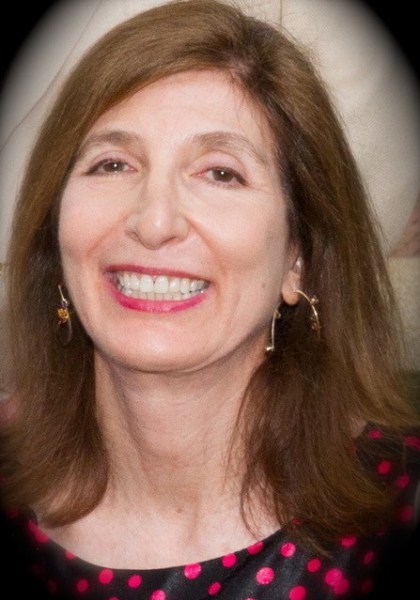
The author of this blogpost, Nadja Maril, has been published in dozens of publications including, Defunkt Magazine), Lunch Ticket, The Compressed Journal of Creative Arts, BarBar and Across the Margin. A former journalist and magazine editor, Nadja has an MFA in Creative Writing from the Stonecoast Program at the University of Southern Maine. She recently published a collection of

poems and short essays: RECIPES FROM MY GARDEN– (Old Scratch Press Sept. 2024) a great gift to yourself and for friends at $8.95. To learn more about Nadja’s writing visit Nadjamaril.com

Exploring Horror Writing: A Q&A with R. David Fulcher

We learn from asking questions, and what better way to explore the craft of writing than through an engaging Q&A with an author! This month the author I’m interviewing is R. David Fulcher who happens to be a member of the Old Scratch Press Poetry and Short Form Collective.

R. David Fulcher is a talented author with multiple books to his name. His most recent work, a captivating short story collection titled THE PUMPKIN KING AND OTHER TALES OF TERROR, showcases his passion for storytelling. A writer of both poetry and prose, he deeply loves speculative fiction, particularly science fiction and horror. You can explore more of his work on his blog at Rdavidfulcher.com.

This is the perfect month—the season of ghosts and goblins—to delve into the exciting craft of writing horror. Most of my questions in this post will focus on the intriguing insights from THE PUMPKIN KING AND OTHER TALES OF TERROR. Let’s celebrate the art of writing together!

Q: Question

R: Response

R. David Fulcher

Q: As a writer, what is your primary goal when interacting with your readers?

R: As a horror writer, I have two primary goals: 1) Establish an “eerie” atmosphere; and 2) Elicit a physical response in the reader. Yes, I hope to stimulate the readers’ minds as well, but I primarily want to elicit fear – a racing pulse, the small hairs standing up on the back of your neck, a shiver in your spine – only good horror tales have this effect.

Q: Was there a specific moment you remember, perhaps an experience that spurred you on to want to write this particular book?

R: The Pumpkin King and Other Tales of Terror (and the follow-up volume “Asteroid 6 and Other Tales of Cosmic Horror”) is sort of a “greatest hits” collection of my short stories, so unlike a traditional novel the stories were developed over many years and inspired by many moments and experiences throughout my life.

To give a sense of the age of some of the stories, the title story “The Pumpkin King” first appeared in a small press magazine entitled Mausoleum back in 2001!  Of course, all the stories have been heavily revised in the new book.

To provide an experience that spurred me to write a particular story, “Castle Marienburg” was inspired by a tour of that very castle during a visit to Germany in college.

Q: As both a horror writer and a poet, how has Edgar Allen Poe influenced your work?

R: In a way, Edgar Allen Poe led me to my genre. My high school English teacher taught a semester on Poe, and I was hooked.  I started writing dark, gothic short stories that day after school and submitting them to small press magazines shortly thereafter.

Q: Writing poetry and writing prose, how has the two different types of genres influenced each other in your writing?

R: My love for both poetry and prose has caused me to experiment with inserting sequences of poetry into my fiction.  Some examples of my stories that include embedded poems are “A Night Out with Mr. Bones”, “The Faerie Lights”, and “All Across the Mountain”.

Q: Did you work alone or did you rely on some feedback from others?

R: I initially write on my own, but I really enjoy it when people close to me review my work and give feedback on it.  For example, my brother Dale helped proofread the manuscript for The Pumpkin King and Other Tales of Terror, and after reading my short story “Asteroid 6” my wife Lisa was really impressed with the tale, so I was inspired to title my second volume coming out this Fall as “Asteroid 6 and Other Tales of Cosmic Horror”.

Of course, my publishers David and Dianne are also tremendous editors and their feedback has been essential to my work.

Q:Do you imagine you are writing for a specific person or a certain audience?

R: No specific audience. I will say that my writing is almost always in the realm of the fantastic, so fans of my work must be able to “suspend their disbelief” and just go along for the ride, trusting me to take them to a magical, almost unbelievable ending, even if all the facts don’t line up with reality. I think fans of hard science-fiction (Isaac Asimov, etc.) will have a hard time enjoying my work.

Q: How do you approach revision?

R:This goes back to things I’d tell my former self.  I used to put down the pen (yes, I write my stories out long-hand!) after a long, intense burst of writing (sometimes an entire story in a single sitting), push the manuscript back on the desk with a smile, and say “Perfect!”

I would then immediately submit the tale for publication, only to receive rejection after rejection, never understanding why.

I’ve finally learned that being a professional writer means spending almost twice the amount of time revising your work as you spent writing it in the first place.  So I approach it like work. I allocate time for editing/proofreading, I set deadlines, and I hold myself to them. The difference between my original manuscript written after a burst of artistic inspiration and the manuscript after several rounds of revision is often night and day.

Q: If you could give advice to your younger self, what would you want to tell them?

R: I’d remind my younger self that the success of a book is up to me. I used to self-publish with AuthorHouse (formerly 1st Books) and believed that getting my book on Amazon and buying the publisher’s “marketing kit” would instantly propel me to fame and the bestseller’s list.  I have learned the hard way over the years this is not the case. Publishing the book is just Step 1.  The real work is in the marking and promotion.

Q: How did you find your publisher or did they find you?

R: David and Dianne of Devil’s Party Press (now Current Words Publishing) met at the Indie Lit Fest at Frostburg State University in Frostburg, MD.  At the time they were accepting submissions for one of their Halloween Party anthologies and provided me with the information.  I submitted and was accepted. The rest as they say is history! 

Q: Do you have a specific horror story favorite you’ve read?

R: Several novels by modern horror writers have had a tremendous influence on my writing.  They include “Something Wicked This Way Comes” by Ray Bradbury, “The Tommyknockers” by Stephen King, and “HIdeaway” by Dean Koontz.

In your own portfolio, a story you are particularly proud of?

R: I have a few favorites among my stories that don’t always correlate to fan favorites.  The first is “Castle Marienburg”, which was originally titled “Eyes in the Night”. A horror editor in the small press called it one of the best horror stories he had ever read, which was very satisfying. Others include “Spectra’s Masterpiece”, a science fiction story about AI published back in the early 2000’s well before AI became a commonplace topic, and “The Land Spider” in the way that it incorporates native American mythology.

Q: Do you have a “day job” to help pay for your writing habit, and it so, has it impacted in any way your writing?

R: During my day job I work as an IT Contractor.  My work with computers has spilled into my fiction with my stories “ELECTRIC”, where a boy becomes one with his home computer, and “The Witch Toaster,” where a group of programmers within an IT Department must battle supernatural forces.

Thank you for reading and visit the Old Scratch Press Website to learn more about our authors and upcoming publications.

Authors Electric Interview with Nadja Maril

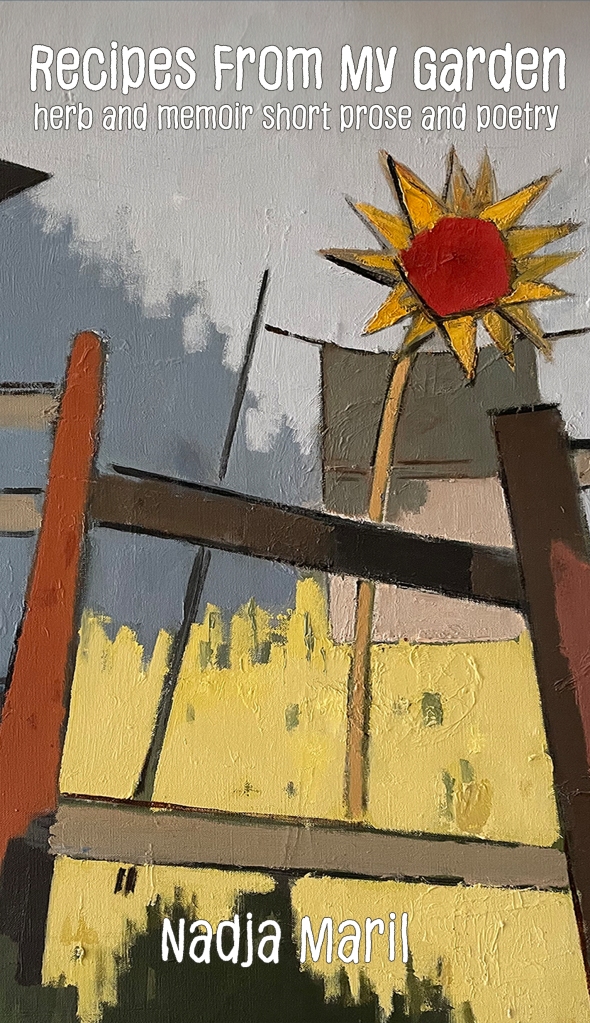
This week author Nadja Maril released her collection of flash prose, poetry, and essays inspired by her kitchen, garden, and family memories. I sat down with Nadja to ask her some questions about the book, and her process. It’s interesting to note that Nadja comes from an artistic background: her late father Herman Maril was an artist, and his painting is the cover of her book. I have enjoyed Nadja’s poetry and flash fiction for many years now, and I am very excited for her book!

Dianne Pearce (Dianne): What inspired you to combine poetry, short form, gardening, and cooking in one book? How did these different forms of expression come together?


Nadja Maril (Nadja): In January 2020 I’d just completed an MFA (masters in fine arts) in creative writing from the low residency Stonecoast Writing Program at the University of Southern Maine and was in the midst of moving into a 100-year-old house. My husband Peter and I were the General Contractors. Both the MFA and the house were two-year projects. I’d been laboring over a complicated literary novel told from multiple viewpoints, and my daughter (the youngest of my three children ) was about to get married. Peter and I were looking forward to having the wedding at our re-built house, with the festivities primarily outside. We scurried to move into the house, plant flowers and shrubs, and revitalize the lawn. Then the pandemic shut everything down. 

Want to read more? Pick up the remainder of the piece at AUTHORS ELECTRIC.

Mastering the Art of Writing: Sage Tips from Chuck Palahniuk and Steven King

By Nadja Maril, a member of the Old Scratch Poetry and Short Form Collective

Note: Everyone who writes has a different approach. This is a repost of a blog I wrote several years ago for my Nadjamaril.com website and since then I’ve gotten a whole lot of stuff published so it could be that some of this works.

I just started listening to Chuck Palahniuk’s Consider This: Moments in My Writing Life After Which Everything Was Different for the second time.  I wanted to remind myself again to put into practice some of many sage tips he gives to writers.  Tips that include: use multiple points of view, active verbs, short sentences, and nonverbal communication to  reduce dialogue.

Being read, being published is the end game, but it’s the act of writing which is for me most important. Before we write we read. It’s my love of reading that drew me to writing. What better charge is there than finding the perfect assemblage of words to create in someone else’s mind— a feeling, a scene, a story.  I’m addicted.

This is why I write. It’s the creative process I become emerged in that has me hooked. It’s an art form that evolves. And I always want to improve my craft. This means I’m always challenging myself to try different approaches and learn from other writers.

Each writer has different visions of what they’re striving to convey, but for me I’m seeking to find new ways to describe a scene and the inner thoughts and motivations of my characters. I listen to books on tape and also like to read words on paper. Helpful are a number of books on my shelf.  About fifteen years ago I picked up Steven King’s bible for writers, On Writing, published in 2000. I bought it on the remainder table for one dollar. I think initially “literary writers” were dubious that the king of pop fiction would have useful advice, but now in 2021 his book is a favorite. Open the book to the section entitled “Toolbox” and you’ll receive sound advice like, “Remember the basic rule of vocabulary is to use the first word that comes to your mind, if it is appropriate and colorful.” In his section entitled “On Writing” King explains that he gets his writing impetus not from imagining What if?. “ A strong enough situation renders the whole question of plot moot, which is fine with me. The most interesting situations can be expressed in the What-if question:

What is vampires invaded a small New England Village? ( Salem’s Lot)

What if a policeman in a remote Nevada town went berserk and started killing everyone in sight. (Desperation)

Both Palahniuk and King emphasize the importance of reading other writer’s work, one of the best books to guide you in this is Francine Prose’s Reading Like a Writer (2006).  The book covers all the craft elements so important for all creative writers: close reading, words, sentences, paragraphs, narration, character, dialogue, details, and gestures. What is most invaluable, in addition to all the books she cites throughout the text, is the reading list at the end. Yes, we may all be readers, but it is important to seek out unfamiliar authors who are masters of their craft. Best sellers come and go. Books fall in and out of favor and an important authors are forgotten. While many of the authors and books on her list I was familiar with, I got introduced to Elizabeth Bowen, Henry Green and Denis Johnson (Yes, Denis Johnson who I selected for my in depth research MFA research project) thanks to Francine Prose.

Try not to repetitively read the same authors you like. Discover old and new talent.

I’ve got a number of books on writing in my library, John Gardner’s The Art of Fiction,  Jon Franklin’s Writing for Story  and The Half-known World on Writing Fiction by Robert Boswell, but it seems that all these books are written by men. As more women and people of color take leadership roles in publishing, perhaps we’ll see books on writing from a more diverse group of authors. Meanwhile I will close with talking about one more favorite book, number four on my list. I’ve read Unless It Moves the Human Heart by Roger Rosenblatt (2011) several times.  Rosenblatt’s book shares the writing process from the teacher’s viewpoint as he interacts with his students at Stony Brook University. He taught classes in poetry, creative nonfiction, and fiction and what ensues is a thoughtful introspective dialogue that stimulates the reader to look at their own work with fresh eyes.

In closing I will repeat again for emphasis, read as well as write. You are never finished learning how to be a better writer. So what are you waiting for?  Have you written, revised, and re-revised some stories today?

Follow Nadja Maril on {“X” at SN Maril or read one of her pieces at Nadjamaril.com. Check out Nadja’s soon to be released chapbook, RECIPES FROM MY GARDEN here. Don’t forget to submit your brief piece or poems on the theme “Holiday Noods” to be considered for publication in the Winter issue of Instant Noodles here.

Meet Poet Morgan Golladay at Causey Mansion | Milford Delaware Event

Causey Mansion where Morgan Golladay reading/ booksigning will be held.

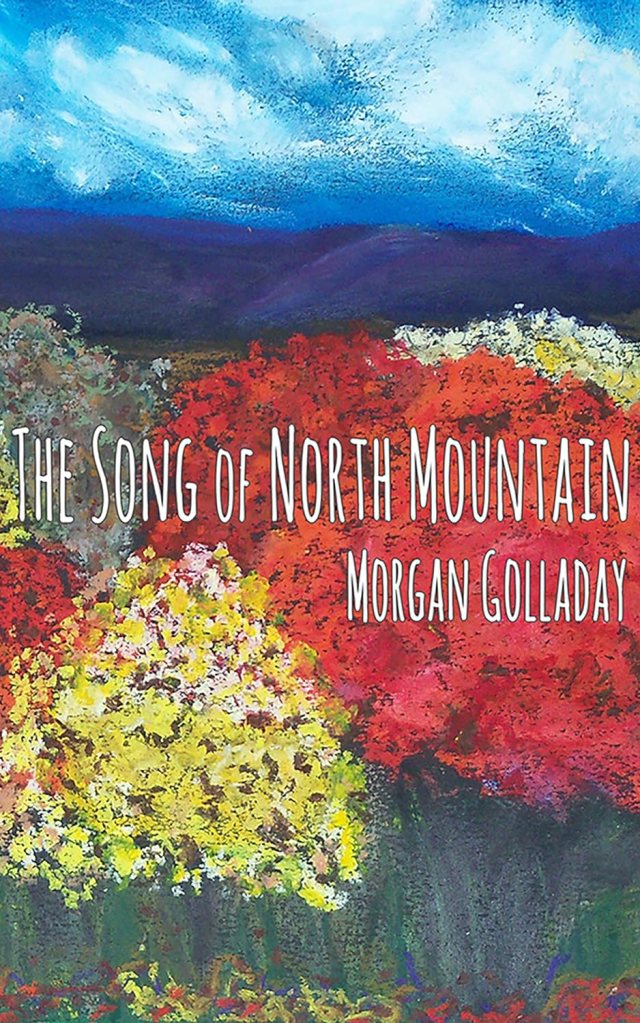
Causey Mansion in Milford Delaware is a beautiful spot to meet and greet poet/artist Morgan Golladay, author of the Song of North Mountain. Learn more about the historic mansion here. The event will be held in the gardens from 1-3 p.m.. Purchase your copies in advance online or purchase one at the event. Either way, Morgan will be there to autograph! The location is 2 Causey Avenue, Milford Delaware 19463

Editorial praise is just beginning. Here are a few samples:

“Sometimes stark, but always beautiful, these free verse celebrations of North Mountain introduce a seasonal sense of environmental transitions to the observer and reader’s eye, with time’s passage changing everything and nothing…Aside from a personal visit to North Mountain, there is no better way of appreciating its beauty, impact, and presence over the eons than through The Song of North Mountain.”
MIDWEST BOOK REVIEW

Ellis Elliott

5.0 out of 5 stars Mountain Mary OliverReviewed in the United States on May 28, 2024

Verified Purchase

This book is a praise-song of poetry and art for Golladay’s beloved mountains. With an eye for detail and ease of language, her poems revere and embrace the elements and seasons of nature. Accompanying her poetry, her art further conjures the scenes we are taken to. From Vincents Wood to the Devils Throne, the writer takes us along, like all good poetry, until we feel as if we, too, have been there. I think I’d do well to heed what the writer says:
Look too soon
and you miss the mystery

Alan Bern

5.0 out of 5 stars A wonderful poetic love song to where she grew up, “the Shenandoah Valley of Virginia.”Reviewed in the United States on May 7, 2024

Morgan Golladay’s The Song of North Mountain is a wonderful love song to where she grew up, “to the hills, rivers, and ridges of the Shenandoah Valley of Virginia.” And Golladay is the perfect guide for this voyage, perceptive, kind, and empathic. I urge you to purchase her fine book that also contains her own fine original artwork: sit back in a comfortable chair and travel with her to this most beautiful part of our country. As Golladay invites the reader to accompany her and writes in “Back in the Woods” (p. 69),

I experienced the magic and awe of
a creation larger than I could imagine.

“Rest with us,” whispered the granite.
“Breathe with us,” crooned the breeze.
“Stay with us,” encouraged the trees.

Learn more about Morgan and her poetry here. And don’t forget to follow Old Scratch Press on Facebook. Thank you for reading.

New Poetry Collection by Gabby Gilliam; An Interview with the Author

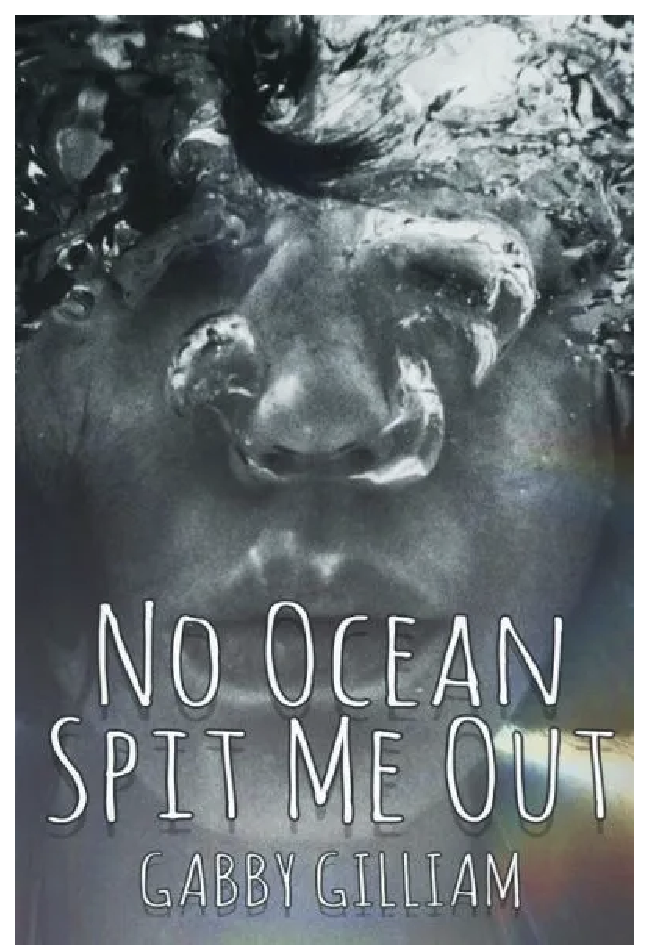
No Ocean Spit Me Out. Gabby Gilliam’s first chapbook of poems, published by Old Scratch Press, is now available for purchase. Shipments will begin on September 15th.  Recently I had the opportunity to ask Gabby a few questions about her work and her newest book.

The poems in Gabby Gilliam’s new book, No Ocean Spit Me Out, explore the dynamics and evolution of family relationships.

A live reading zoom event is coming up, JUNE 15tth and you can register to hear Gabby read from her new book as well as hear poets Alan Bern and Robert Fleming read from their work as well. To register click here.

 What do you like best about writing poetry?

I love that you can use poetry to describe things in new ways––to make the familiar fresh and universal at the same time. It’s one of the things I like best about reading poetry as well.

Which is your favorite poem in this collection and why?

I think my favorite poem might be the one that gives the book its title, No Ocean Spit Me Out. It’s a tribute to my dad. In this poem, I compare my dad to the god Zeus, and Zeus fails to measure up. Since my dad passed away, most of my poems about him are darker and focus more on my grief. I like this poem because it focuses on some of the things that made me love him so much.

What would you like readers to know about you in connection to your work?

Many of my poems focus on aspects of family connection. From dealing with addiction to witnessing my dad’s complicated relationship with his faith (which had an influence on my own struggle with religion and faith), the poems in this collection are a collage of my childhood and gradual self-acceptance. I hope readers can connect with my personal experiences by reflecting on the nuances of their own familial relationships and the impact they have on shaping our identities. I think the power of shared experiences is what make poetry so resonant, and I hope readers find that within the pages of this collection.

More about Gabby

Fellow collective member Gabby Gilliam is a writer, an aspiring teacher, and a mom. Gabby’s poetry has appeared in One Art, Anti-Heroin Chic, Plant-Human Quarterly, The Ekphrastic Review, Vermillion, Deep Overstock, and Spank the Carp.

Not only is she a poet, but Gabby pens the Drumming for the Cure series of novels. Two thus far, Trouble in Tomsk and Chasing the Cure have been published by Black Hare Press. She lives in the DC metro area with her husband and son.

To purchase your own copy of No Ocean Spit Me Out, click here. Please remember to leave a review if you like it because customer rankings count. And please follow Old Scratch Press on Facebook.
Away They Go!

I was thrilled today to have the privilege to mail three new Old Scratch Press books off to the National Book Awards! If you follow all of our doings around here you may have seen this post from last year, where I was lucky enough to do the same thing!

Gosh, you know, we’re going up against the big guys when we send our books in to the National Books Awards. Most of the other books being sent in are going to have been written by well-established poets with a long history of publication, or brand new poets being championed by their mentors who are the big guys in their fields, and those other books are also going to come from traditional (read as: large and monied) presses or university presses, which, like the big publishing houses, also have lots of disposable income and connections. I got my MFA; I know how that all works. And still, I don’t care about the competition. I care that we have wonderful poets. Morgan Golladay has been writing her poetry throughout most of her adult life, and salting it away for “someday,” and Nadja Maril and Gabby Gilliam have been submitting and getting small wins with their writing for years now, and why isn’t their writing as deserving as anyone else’s? It absolutely is! It gives me a total thrill to just think about getting them into this contest, where they get a chance to stand shoulder to shoulder with the “big guys.” And get this—Carolyn Forché is one of the judges this year! Carolyn Forché! It’s mind-blowing to think that a poet from our little collective is going to be read by her. I still remember how my teachers raved about Carolyn Forché’s book THE COUNTRY BETWEEN US back in the ’90s. We read it and discussed it over and over with reverence. The idea that she’ll be reading one of our books? It’s just wild.

So, lovely people following our progress as a collective and a press, please join me in crossing your fingers and blowing on one of these:

Photo by Yassir Abbas

as we send Gabby, Nadja, and Morgan off to the National Book Awards to try their luck!

And hey, dear reader of this blog, why not snag a copy for yourself in a show of support?

Flash prose, poetry, and essays inspired by her kitchen, garden, and family memories; Nadja Maril’s chapbook, RECIPES FROM. MY GARDEN is a sensual feast for the soul. Drawing upon her life experiences as an artist’s daughter, antiques dealer, journalist, and author; Maril mines simple objects for meaning and creates a lavish buffet.  

Editorial Praise for RECIPES FROM MY GARDEN

“Suffused with the tastes of cilantro, mint, and cucumber fresh from a garden, the smell of salt air from the ocean’s edge, the familiar scent of coffee and tobacco from a father’s hug, or the simple pleasure of the sounds of clicking insects through a backdoor screen, Nadja Maril’s lovely and sensitive RECIPES FROM MY GARDEN is a feast for the senses and a balm for the spirit. While exploring personal memories that touch on abstract questions of identity and history, Maril also reminds us of the tiny yet profound comforts of earthly existence.”
–Aaron Hamburger, author of HOTEL CUBA

“In RECIPES FROM MY GARDEN, Nadja Maril casts a richly sensual literary spell.  From the deft and resonant garden-inspired pieces that find the taste of ‘summer’ in basil and celebrate the ‘welcoming gaze of sunflowers,’ to the sharply observed portraits of small yet potent memories— buying a perfect dress with her mother; baking a cake ‘too beautiful to be cut’– Maril mines moral and spiritual meaning from everyday life.  The promise Maril makes about a ‘chicken and rice’ recipe is true of this whole vibrant chapbook: ‘soul nutrition it will provide.’ ”
–Elizabeth Searle, novelist and scriptwriter (A FourSided Bed; I’ll Show You Mine)–

RECIPES FROM MY GARDENcelebrates the splendor of traversing a literary life and surviving the time of Covid. Nadja Maril’s first collection of poetic prose, flash memoir, and poetry introduces us to her family, her nurtured garden, and the myriad spaces she navigates to cope with our world. With true artistic excellence, Nadja’s words yearn for an understanding of what troubles us, inviting us into a landscape of riddles, questions and puzzles.”
–Indigo Moor, author of Everybody’s Jonesin’ for Something

 “[RECIPES FROM MY GARDENis a treasure of small love stories: odes to beloved kitchens, and vegetable gardens, and the simple joys of a blooming sunflower. It is a book of memory and of pleasure that speaks of the love of family across many generations. The passed-down recipes inside the pages are themselves the most generous kind of love letter.”  
–Susan Conley, author of Landslide

Pre-order Paperback

Pre-order Kindle

[In NO OCEAN SPIT ME OUT] Gabby Gilliam’s verse preserves the feel of the summer farm, contrasting its fertile brightness with the struggle between grief and the sudden absence of connection to family and place. Belonging and the struggle to continue remembering clash on the page, while the passion for life’s diverse and tactile experiences dazzle the reader with tantalizing gasps of zucchini, crab apples, and blackberry wine. Each poem gives the reader their own lingering taste of her ghosts. -Kim Malinowski-

NO OCEAN SPIT ME OUT is a captivating debut collection of poetry that delves deep into the intricate tapestry of family dynamics and personal evolution. Within its 30 poems, the collection embarks on a profound journey through the stages of coming of age, navigating the complexities of familial bonds, grappling with organized religion, and ultimately, embracing the essence of self-acceptance. Whether you’re seeking solace in the shared experiences of family relationships or searching for introspective insights into the nuances of identity and faith, this collection offers a profound and thought-provoking exploration of the human condition.

Pre-order Paperback

Pre-order Kindle

“Sometimes stark, but always beautiful, these free verse celebrations of North Mountain introduce a seasonal sense of environmental transitions to the observer and reader’s eye, with time’s passage changing everything and nothing…Aside from a personal visit to North Mountain, there is no better way of appreciating its beauty, impact, and presence over the eons than through THE SONG OF NORTH MOUNTAIN.”MIDWEST BOOK REVIEW

From the mighty pen of artist and author Morgan Golladay comes THE SONG OF NORTH MOUNTAIN, a transformative collection of poetry and art celebrating the famous and mystical North Mountain of Appalachia.
North Mountain, a wildland in the George Washington and Jefferson National Forests of western Virginia, has been recognized by the Wilderness Society as a special place worthy of protection from logging and road construction. The Wilderness Society has designated the area as a “Mountain Treasure.”
Morgan Golladay brings her readers to dwell in the reverence of this wonderful wilderness. Golladay is an award-winning author who was raised on North Mountain and lives in coastal Delaware as part of a thriving artist and author community. All words and art in this book are by Golladay.

Paperback (available now)

Kindle (available now)

Audiobook (available now, and Audible account not needed to buy or listen!)

Good luck women! May your wonderful books triumph!

No Ocean Spit Me Out Pre-order!

Dianne here, and I am so excited to tell you that, right now, Gabby Gilliam is brining us the fourth book from Old Scratch Press, NO OCEAN SPIT ME OUT.

Gabby Gilliam’s verse preserves the feel of the summer farm, contrasting its fertile brightness with the struggle between grief and the sudden absence of connection to family and place. Belonging and the struggle to continue remembering clash on the page, while the passion for life’s diverse and tactile experiences dazzle the reader with tantalizing gasps of zucchini, crab apples, and blackberry wine. Each poem gives the reader their own lingering taste of her ghosts. -Kim Malinowski

NO OCEAN SPIT ME OUT is a captivating debut collection of poetry that delves deep into the intricate tapestry of family dynamics and personal evolution. Within its 30 poems, the collection embarks on a profound journey through the stages of coming of age, navigating the complexities of familial bonds, grappling with organized religion, and ultimately, embracing the essence of self-acceptance.

Each poem in NO OCEAN SPIT ME OUT serves as a poignant reflection of the human experience, capturing moments of vulnerability, resilience, and growth with eloquence. Through lyrical prose and emotive imagery, Gilliam paints a vivid portrait of the joys and struggles inherent in the process of self-discovery.

Whether you’re seeking solace in the shared experiences of family relationships or searching for introspective insights into the nuances of identity and faith, this collection offers a profound and thought-provoking exploration of the human condition.

NO OCEAN SPIT ME OUT is National Book Award nominee!

Pre-order your copy now!

PAPERBACK

eBOOK