Romance vs Reality in the Writing Life: 9 Tips to Help Tackle Reality

I have a trove of old New Yorker cartoons I’ve saved in a folder since forever. The premise of this one (from the fabulous cartoonist Roz Chast) is the romanticized version of Thoreau’s life vs. the reality. My argument was always “of course he can simplify. He has no kids, no partner, and his mom does his laundry.”

I think we also can hold that same romanticized ideal for writing.

“I WON’T BE COMING IN TODAY.
I’M JUST NOT FEELING IT”

…was the text my friend received, canceling their appointment together 15 minutes before it was to start. What bravado, I thought. What mixture of honesty, courage, chutzpah, and downright rudeness is this?

And how many times have I felt like saying the exact same thing? Especially when it came to staying motivated to finish, organize, edit, submit separate poems, and find a publisher for my poetry collection. Not today. I’m just not feelin’ it.

The option is to feel it. Even when you really, really don’t want to. There are so many other demands on our time, and I am easily overwhelmed if I only look at the long game. I have to break it all down into bite-size “feelable” pieces.

What that looks like for me is:

1.    I can sit here for 10 minutes and freewrite with one of the 500 prompts I find and keep and never do anything with. 

2.    I can spend 10 minutes on the website Duotrope to find 5 more places to submit my poems. 

3.    I can print out all these poems, spread them out on the bed, and figure out how they make sense together. 

4.    I can spend 5 minutes on an email to “make the ask” of a trusted someone to read my work. 

5.    I can take a break from it all and not beat myself up about it.

6.    I can “manage the myth” that my work is valuable and someone, somewhere will love it, until it becomes the truth. 

7.    I can submit the poetry collection to contests of all shapes and sizes.

8.    I can make an effort to forge connections in the writing world. I can join writing groups, create writing groups, take classes and workshops, reach out for help, or join a collective. You never know when you might meet the right person that could lead to your book publication (like I did!). 

9.    I can endure countless rejections, knowing the subjectiveness inherent in the game, and know to never take anything personally. 

10.  Do it again and again. Hang in there, until what’s foreign becomes familiar and the stars align, because you kept at it. And as for the end result, sometimes knowing whatever you have done is enough.

And what a divine feeling that is, indeed.

By Ellis Elliott—Thanks for Reading! Join me at https://bewildernesswriting.com/ Find my poetry collection, Break in the Field, from Old Scratch Press, on Amazon. My new cozy mystery fiction novel, Fire Circle Mysteries: A Witch Awakens will be available in Spring 2025.

Making Moments Count

One of the things I like best about poetry is its ability to capture the beauty of a single moment, even if it’s not something that would normally be seen as beautiful. At its heart, poetry is emotional storytelling. A moment becomes significant when it is infused with feeling—joy, sorrow, nostalgia, or wonder

Last year, I edited an issue of Instant Noodles with the theme of ‘instant.’ I was looking for poems that captured that exact essence of poetry that appeals so much to me. I wanted the beauty of the grief or the joy of a single moment captured in a poem. It’s probably my favorite issue of Instant Noodles that I’ve edited to date. I think the poems we published in that issue were the kind that will resonate long after reading them because every reader shares that moment with the poet.

That issue of Instant Noodles can be read for free here . I highly recommend giving it a look.

Life is filled with fleeting moments—those golden, mundane, or bittersweet slices of time that often pass unnoticed. But poetry has the unique ability to crystallize these moments, transforming them into something timeless and profound. Capturing moments in poetry is about taking the ephemeral and making it eternal.

Here’s a poem of mine that captures the moment when I held my son for the first time. It appeared in the Instant issue of Instant Noodles.

Contraction

After hours of flesh seizing 
muscles finally relaxed 
and I cradled a fresh universe 
in my arms, puckered face 
already rooting for food. 

My world imploded, contracting 
until nothing existed but this 
one tiny fist raised at the audacity 

of the air to be so dry 
the lights so bright 
the scream that replaced the rhythm 
of my familiar heartbeat 

and I traced constellations 
across freckled skin as I eased
into a new center of gravity.

The Power of Specificity

Great poetry thrives on specificity. Think of a single red leaf falling on a crisp autumn afternoon or the smell of fresh bread wafting through an open window. These details evoke emotions and anchor the reader in the poet’s world. Poetry doesn’t need grand metaphors to capture the essence of a moment. Sometimes, a simple, honest line is more powerful than elaborate language.

Share Your Moments

Because life is poetry, everyone is a poet. You can write about your own moments and shape your memories into poems. Then, you’re sharing that moment with others. Your words let them feel what you felt and maybe even remind them of their own special memories.

Poetry helps us slow down and notice what’s around us. It takes the little things that we might normally ignore and makes them important. So grab a notebook, start noticing the world, and turn your moments into poems that last forever.

Secrets to Publishing Your First Creative Work

Founding member Robert Fleming share his insights on How to be successful at publishing your first creative writing work

You’ve put it on your bucket list to be a published author. Well done. Who are you doing this for: yourself, others, or both?

Yours truly, without even knowing, wanted to be published. In 1973, at age ten, I published text on the bathroom brick wall of Roslyn Elementary School in Westmount, Montreal, Quebec. My work looked like the work following but also had curse words and genitalia graffiti.

Bathroom Wall Poem

This talented toilet author made choices: what topic to write about (poo poo), what language to use (English), where to publish (on the bathroom on brick), who the publisher is (self), what genre (poetry), what poetry devices to use (rhyme, humor, 5-lines), and to not disclose the author name (anonymous).

Where you target your publication is guided by your confidence (courageous or timidity) about having other human see and judge your work. If you are feeling timid like the Cowardly Lion, publish your writing in your personal diary. Be sure to select a diary with a lock and attach the key to your necklace that you wear even when you shower.

Cowardly Lion from movie Wizard of Oz

If you get a little courage, self-publish your work on social media (Facebook), like I did in the following work.
On Facebook, other humans will see your work, but you will not experience the review/selection of a judge who accepts or rejects your work.

https://fourfeatherspress.blogspot.com/2024/09/40-poets-being-published-in-doors-of.html

If you find the courage of Joan of Arc, send your work to a publication where work is selected by an editor.

Joan of Arc

Tips for setting yourself up for your best chance of publication acceptance
• For your first publication, select a publication that has a fifty-percent or greater acceptance rate like vanity press where you will have to buy a book that could cost $50, an organization newsletter like a religious one you are a member of or a school you are an alumni of.
• Read the target publication and only submit to them if they publish work similar to yours (genre: poetry, theme: love)
• Read the submission directions and follow them: sometimes there is a theme like love. When there is a theme only submit work that is the theme requested.

Ready? Take a bid breath in, hold three seconds, exhale. What is your publication confidence: timid or courageous. Go forth.


Yours Truly is:

Robert Fleming, a contributing editor of Old Scratch Press.

Who published an Amazon best seller visual poetry book: White Noir.

an editor of the digital magazine Instant Noodles

and the creator of an upcoming magazine cover for Tell-Tale Inklings #7, to be released Autumn, 2024. Visit Tell-Tale Chapbooks on Facebook.

Exploring the Intersection of Sports and Poetry

October is a sports lover’s dream. Most of the major leagues are in full swing, from the NBA, NFL to the NHL. There are college football games every weekend, and even the crisp Fall air makes it feel like football weather.

So what does this have to do with poetry?

There are some cases, perhaps uncommon, where sports and poetry intersect. While in school, I was introduced to the excellent baseball-related poem “Casey at the Bat” by the poet Ernest Lawrence Thayer. From the roar of the crowd to the “Strike!” being called by the umpire, Thayer does a remarkable job of transporting the reader to that fateful match in Mudville. The poem culminates with perhaps its most famous line: “But there is no joy in Mudville—mighty Casey has struck out.”

In college my friends and I would play pickup basketball on the courts on campus. These were disorganized gatherings with teams hastily assembled at the last moment, but these were some of my favorite memories from my college years.

My poem below is an attempt to recapture some of those moments. Unlike “Casey at the Bat”, there was much joy to be found in College Park during those amateur games.

This was written during my college years, and I don’t know if I could write this today, or even should write something like this today, as this poem is full of rough edges and not overflowing with beautiful language.

However, that is what I think I love about it. Much like our simple attempts at basketball all those years ago, the poem is pure and raw, even somewhat unfinished. Ah, the folly of youth!

Photo by Pixabay on Pexels.com

So without further introduction, I hope you enjoy my poem “Hoops”.

Hoops

It wasn’t the easy, fluid style of play you see on TV,
It was the jerky, nervous style of amateurs
played on asphalt several feet away from where I was sitting.
My shorts had ripped horrendously down the back during the last game,
but that really didn’t matter in the big scheme of things,
and besides, the jocky guy Chris would have never
picked me to play after screwing up the last game so badly.
An observer watched the game from the other side of the court, grinning to himself secretly.
Perhaps he was happy to see the different bodies working so well together, Van, the Vietnamese guy; Joy, the Indian; Greg the African American and Danny the Anglo; or perhaps that was just what I wanted to see.

Chris the jock made a three-pointer, and murmurs of approval such as, “Good shot, man” or “Nice one, Chris” fill the air, replacing the sound of the tennis shoes against the pavement.
I never questioned Chris’ basketball prowess.
It was his attitude that puzzled me.
I wanted to shake him and say, “Hey, Chris! Listen to what I’m saying, man! You’re just a pebble in the stream, man! Just a lowly grain of salt! This shot won’t change the world, dig?”
But you can’t tell a guy like Chris something that big.
He would just laugh it off and call you a stinkin’ liberal hippie, and go about his business of shooting politically correct jump shots, while I would go about my business of trying to change the things that couldn’t be changed.

-R. David Fulcher, OSP Founding Member

The Healing Power of Poetry

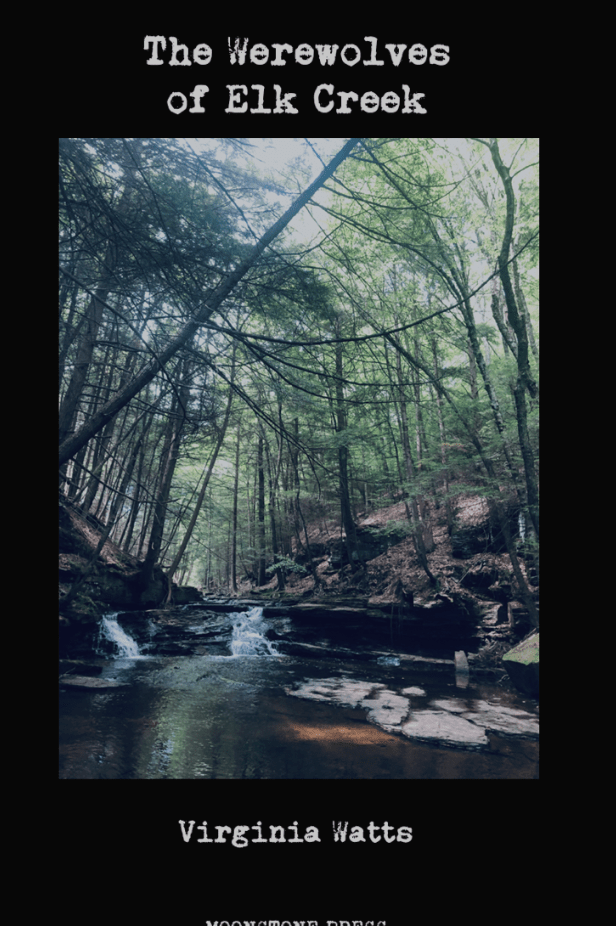
By Virginia Watts

Poetry is an old art form dating back to ancient Greece. Why has it been with mankind so long? For one thing, writing and reading poetry is good for us. It allows us to manage our emotions which in today’s complicated and divided world can be an overwhelming task. During the recent pandemic many literary journals called for submissions about their experiences during the pandemic. Many poets answered the call, and no doubt felt better for it.

During the months of lockdown, people all over the world lost many things. We were suffering. Some of us lost loved ones, some of us were very ill ourselves. We all lost our normal sense of community, isolated as we were. Humans aren’t meant for isolation. Many people were lonely. Things we enjoyed such as travel, comradery in an office or school setting, had to be put on hold. Writing poetry and sharing poems created a bond among people when it was sorely needed.

 As it turns out, poetry can be a powerful healer. Rhythmic language is soothing. Think of a lullaby. Poetry also helps us contemplate and reflect our lives back to us. Through poetry, we learn about different cultures and histories which helps us to stop focusing on ourselves and leads to a better understanding among peoples.

 Through poetry we can stop to appreciate and experience what is beautiful in our world or share a poet’s experience with something we are also struggling with. This improves our mood. Poetry is often read to hospitalized children to reduce their fears and worries. Additionally, reading poetry out loud has been shown to slow breathing and help a person relax.

            So, three cheers for all the healthy things poetry does for the human body and spirit. During the pandemic I remember reading this famous poem by Maggie Smith. It has stayed with me.

Maggie Smith, poet

Good Bones

By Maggie Smith

Life is short, though I keep this from my children.

Life is short, and I’ve shortened mine

in a thousand delicious, ill-advised ways,

a thousand deliciously ill-advised ways

I’ll keep from my children. The world is at least

fifty percent terrible, and that’s a conservative

estimate, though I keep this from my children.

For every bird there is a stone thrown at a bird.

For every loved child, a child broken, bagged,

sunk in a lake. Life is short and the world

is at least half terrible, and for every kind

stranger, there is one who would break you,

though I keep this from my children. I am trying

to sell them the world. Any decent realtor,

walking you through a real shithole, chirps on

about good bones: This place could be beautiful,

right? You could make this place beautiful.

Copyright Credit:
Maggie Smith, “Good Bones” from Waxwing.  Copyright © 2016 by Maggie Smith.  Reprinted by permission of Waxwing magazine
 

Source: Waxwing magazine (Issue IX, Summer 2016) (2016)

To learn more about the writer/poet Virginia Watts, check out her short story collection https://www.amazon.com/Echoes-Hocker-House-Virginia-Watts/dp/1957224177/

Some Odes to Autumn

By R. David Fulcher

Autumn has always held a special magic for me, a season in which the poet John Keats aptly described as “a season of mists and mellow fruitfulness.”

Indeed, if there is an hour for magic, it strikes in the crisp dawn of an early Fall day. And further, if magic has a language, surely its language is poetry.

So I find this an appropriate time to post some of my own verse (hopefully imbued with magic itself) for your reading pleasure.

The first poem is “Ode to the Night”, and it hints at the darker aspects of this time of year, a time when pumpkins cast you crooked smiles and ghosts and goblins are generally free to roam:

Ode to the Night

To the Night, the Night, the dark delight,

The children sleep soundly in gentle white,

Breathing in time with the Raven’s flight.

To the Night, the Night, the waxen moon,

Audience of one to the witches’ croon,

Driving the tides for the sailors’ doom.

To the Night, the Night, its starlit fires,

Which guide the ghosts from funeral pyres,

Which soften the Harpy to play the lyre.

I hope you enjoyed “Ode to the Night”, and at a minimum it puts you into the Halloween spirit!

My second poem is “Melinda”, a story of lost love, and although not directly a tribute to the season was nonetheless designed to evoke a haunted mood:

Melinda

Sometimes in the lonely hours

I would walk the hill

Leaving the clamor and din behind

For headstones gray and still,

As I neared the place where the dead did lie

I knelt and bowed my head

A fool is he who visits the graves

Without homage to the dead,

‘Melinda’ read the stone I sought

Melinda, my betrothed,

Only a thief as clever as Death

Could steal the health of Melinda, my love

Often I hear Melinda’s voice

Soft upon the breeze

I answer her call of eternal love

And grow hoarse among the trees.

I hope you enjoyed “Melinda”! Last but not least is an ode to a much maligned creature, a symbol of the undead, but in reality a beautiful animal that sustains our ecosystem. This last poem is called “The Bat”:

Photo by Photo By: Kaboompics.com on Pexels.com

The Bat

Taking inverted Sabbath in the caverns of Carlsbad

I measure time in locust-breath and calcite drip,

My bird-chest rising and falling with the gentle tides

Of this black carpet of brotherhood.

Footsteps fill my dreams,

Sun-bleached tourists groping into the cavern’s belly

To enter the sublime,

Their voices like a million valves releasing pressure.

For an instant they will recognize the face of God in this hard darkness,

The stalactite points of his beard,

The cascading rock formations of his brow,

And that fraction of animal intellect will rush forth,

Freed from concept and equation,

To join our ranks as we veer through this Jerusalem darkness

Toward dusk and sustenance,

Toward the amphitheater where they wait for their own departure.

Thank you for reading! I hope you enjoyed these odes to the season and wish all of you a sublime Autumn.

-R. David Fulcher, Founding Member of Old Scratch Press

Play a Game With Us and Win a Prize!

It’s the spooky season! Let’s play Exquisite Corpse!

“What,” you may ask, “is Exquisite Corpse, and how do I engage in such an outlandishly named game?”

Before we all get the vapors…

Exquisite Corpse is a collaborative poetry game that traces its roots to the Parisian Surrealist Movement. Exquisite Corpse is played by several people, each of whom writes a word on a sheet of paper, folds the paper to conceal it, and passes it on to the next player for his or her contribution.
In order to write a poem, participants should agree on a sentence structure beforehand. For example, each sentence in the poem could be structured “Adjective, Noun, Verb, Adjective, Noun.” Articles and verb tenses may be added later or adjusted after the poem has been written. The game was also adapted to drawing, where one participant would draw thehead of a figure, the next the torso, etc. The name “Exquisite Corpse” comes from a line of poetry created using the technique: “The exquisite corpse will drink the young wine.”
https://poets.org/text/play-exquisite-corpse

While we cannot share a piece of paper, we can, all the same, play the game. Please join us!

The rules for this game are as follows”

SUBMIT: one line of “poetry”

FORM: The line must be arranged to have these elements in THIS ORDER ONLY as the main elements:

Adjective, Noun, Verb, Verb, Adjective or Adverb (one only), Adjective, Noun

Punctuate (or not) as you see fit.

YES! You can add conjunctions, articles, etc., as needed, but the main words must be Adjective, Noun, Verb, Verb, Adjective or Adverb (one only), Adjective, Noun

So, this would work:

Happy frogs jumped and swam quickly, green sparks

Happy(adjective) frogs(noun) jumped(verb) and swam(verb) quickly(adverb), green(adjective) sparks(noun).

And this would not:

Frogs jumped happily and swam quickly making green sparks

Got it?

You do!

Send it to dianne@currentwords.com between now and October 29th at midnight PT, for publication on Halloween!

Make the email subject: Exquisite Corpse.

ONE entry per person!

PRIZES:

SUBMIT and you will be given a free digital copy of the OSP book of your choice!

Three lucky people, chosen at random by Robert Fleming and his random number generator, will be given a print (paperback) copy of the OSP book of his/her/their choice!

One Lucky Person (not publishing with CWP) will win a free 5-page edit from me!

OSP members and other people CWP publishes are welcome to join in, and can claim a free Kindle of their choice from OSP, but are not going to get one of the three free print books or the edit (so sorry! Let’s give those to our guests!).

YES, everyone who enters will be subscribed to OSP news through Current Words newsletter, which is sent out to email addresses one time almost every month. At the bottom of your first newsletter (and all the rest of them) is an unsubscribe button, and if you really don’t want to stay on the list, that will get you right off (Mailchimp don’t play.).Honestly, we’re not trying to bother you; we’re out to have fun!

So, let’s have fun!

Ooooo, you can already start dreaming of the OSP book you’re going to choose for your prize! Take a look at your options:

Happy Fall, y’all, and Happy Halloween!

I cannot wait to read your exquisite corpse!

🙂 Dianne

Happy Birthday, Sylvia Plath

Alamy/BBC

The month of October (October 27) marks the birthday of Sylvia Plath, one of the most famous poets of the 20th century. Sylvia Plath is known for writing about deep feelings like sadness, frustration, and the search for who we really are. Her poems are powerful and still connect with readers today.

Who Was Sylvia Plath?

Even from a young age, Sylvia Plath loved to write. She was born in Boston, MA in 1932 and published her first poem when she was only eight years old. Major themes that appear in her poetry are how hard it can be to figure out who you are, mental illness, and what it’s like to be a woman in society.

She studied at Smith College and, later, Cambridge University in England. While at Cambridge, she met and married the poet Ted Hughes. Sylvia Plath faced many struggles in her personal life, and took her own life when she was only 30 years old. However, her writing has lived on, and she remains one of the most important poets of her time.

You can hear a brief interview with Sylvia Plath about her early influences here:

Sylvia Plath’s Powerful Poetry

I first read a poem by Sylvia Plath in high school for a Dual Enrollment English course. I’m fairly certain we read “Lady Lazarus” because I can recall discussing the pronunciation of the German words in the poem. I remember being amazed by her work and remember that it was the first time I really paid attention to the language in a poem. Her word choices were striking and she was the first poet whose work I sought to read outside of class. 

Plath’s poems often show strong emotions. She writes in a way that can feel personal and sometimes painful, but also very honest. She nearly lost her life multiple times before her death and discusses those experiences in one of her most famous poems, called “Lady Lazarus.” In this poem, Plath writes about feeling reborn, even after going through something difficult. Here’s a part of it:

“Out of the ash  
I rise with my red hair  
And I eat men like air.”

While most of the poem recounts her previous experiences with death, these lines show how strong and fierce she feels after going through those difficult times. She compares herself to a phoenix, a mythical bird that rises from the ashes.

Another well-known poem by Sylvia Plath is “Daddy.” In this poem, she talks about her feelings toward her father, who died when she was young. It’s full of anger and sadness. Here’s a line from that poem: 

“You stand at the blackboard, daddy,
In the picture I have of you,
A cleft in your chin instead of your foot
But no less a devil for that, no not
Any less the black man who

Bit my pretty red heart in two.
I was ten when they buried you.
At twenty I tried to die
And get back, back, back to you.
I thought even the bones would do.”

Plath uses intense language to talk about how hard it was to live in the shadow of her father, but also the complicated feelings she has about him now that he’s dead.

These lines are just a small sample of Sylvia Plath’s ability to use words to explore complex feelings like despair, identity, and the search for meaning. Each one is a powerful reminder of her unique voice in literature.

Sylvia Plath also wrote a novel called “The Bell Jar” and her prose is just as lyrical as her poetry. In “The Bell Jar,” she writes:

“I took a deep breath and listened to the old brag of my heart: I am, I am, I am.”

This quote is famous for capturing the feeling of simply being alive, despite the struggles that come with it. It’s a powerful reminder of existence itself, and, paired with her poem “Lady Lazarus,” shows you how much she needed to remind herself that she was still alive.

Why We Remember Sylvia Plath

On Sylvia Plath’s birthday, we honor her for the way she used her writing to express feelings that many people go through. She wasn’t afraid to write about things like sadness, anger, and the search for identity. Her work gives readers a window into the struggles of life, but also shows the beauty of using words to express those feelings. Her poetry continues to inspire people of all ages. Even though her life was short, her words continue to resonate with readers.

What do you think about Sylvia Plath’s poetry? Does it make you feel something special? Share your thoughts in the comments below!

Bettmann / Getty Images

Would Love To Hear From You

It’s the “dog days of summer.” Where I live we’ve had only brief periods of respite from the extra hot days, and these sweaty days force me inside, where they, ostensibly, give me more time to write.
And so I am thinking about all of that. And I’m wondering, those of you who write, have you ever considered taking classes, or have you taken classes, in writing? It occurs to me that while my daughter can play a few songs on the piano through trial and error, she is much better when she is actively taking lessons. She doesn’t take lessons because she wishes to be the next piano great, or even play professionally. She takes lessons because she enjoys playing the piano, and would like to be able to play it better. I pay for the lessons gladly, without a thought about it.
Do we do that as writers, with writing?

When I went back to school to get my MA it was because I wanted to get better at writing. Yes, I had the hope of publishing, but mostly I just wanted to be better at writing my stories and poems. I signed on for my MFA primarily because the teachers in my MA program, who were not affiliated with the MFA schools, suggested that I had a spark, and could get it even sparkier with more training. And so I did it, the MFA, for me.

When we had our book marketing webinar a week or so ago speaker Jared Kuritz suggested that if someone wants to be a published author that author must go from hobbyist to professional, and that would involve a dedication of time, and some allocation of funds.

I am curious and would love to hear what you think about this. Have you ever done any “professional” training for writing? Something like lessons? Have you spent money on your development? Do you hope to move from hobbyist to pro? Or, perhaps, consider and reply to this by telling me about lessons that you have taken in something else, or paid for in order that a child or someone else in your life is able to take lessons. I would be very curious to hear what you think makes something a skill that you might need training in versus something you come fully equipped for, without training.

I’m laughing to myself now, sitting here, thinking about “the dog days of summer,” and how I once paid for dog training for my prior delightful pup, an out-of-control terrier who I’d adopted when he was still a puppy. I had named him Chad,

and he came after I lost the dog who preceded him, a very fancy little terrier named BeBe who walked beside me like a queen, and never needed a leash or a single command, from the moment I brought her home. Chad, on the other hand, chewed everything: my toes as I crossed the room, my ears as I sat on the sofa or lay in bed, my boyfriend’s brand new Nikes, huge holes in his blanket, and he pooped blue wool for a week after, half a wooden magazine rack while I was at work one day, scads of toilet paper rolls. He peed everywhere. There was a moment where I listened to him cry from behind the baby gate in the kitchen thinking, “One of us is not going to make it out of this relationship.” I found a dog trainer all right. I could not wait for her to get to my house! And I remember her like it was yesterday, though it was more likely 2001, when she arrived, and I let the beast loose on her, and she said to me, “Okay. I can see he has a lot of energy. Let’s start training you to be a better owner.” 
By the end of the session, several hours later, I admit, for I was a slow learner, I was fully trained, and Chad and I lived harmoniously from that moment on, for sixteen and a half years.

And just now, as I prepared to publish this post, I thought to myself, Maybe throw this post in Word and check the spelling, even though I know my writing does not need it! But I did, and I found four spelling errors, due to poor typing skills, which tells me that it seems that I am still, to this day, a stubborn and slow learner. 😉

So what about you? Do you train at writing at all? Are there other things you will use training for? Do you think of writing as something a person can improve at with training? I am curious to see if it is only me.