For Halloween what are digital graphic artists doing? Yours truly, is making digital images of monsters. Oops! Oh NO, I came out as a digital graphics artist. I will show you how, to make monsters.
My inspiration for monsters is the novel Frankenstein by Mary Shelley first published 1/1/1818. Since Mary died 2/1/1851 and Frankenstein sells 40,000 copies a year, who is collecting Mary’s royalties? Hmm?
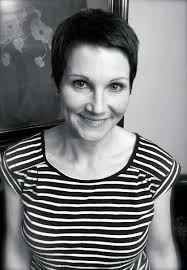
Mary Shelley’s beautiful neckline
Frankenstein, Mary’s first monster child
HOW TO MAKE YOUR OWN MONSTER
One of the computer software tools I use to create digital graphics is Canva which has a free and paid version. Home – Canva. To create a monster:
access a device with www access
choose your image which could be a photograph you took or an image which is free (in public domain) on the www
cut away the parts you don’t want by cropping the image which is like using an electronic scissors
if the image background has a border frame (like white) you don’t want, you can remove it by using computer software to remove background like Adobe Express Free Image Background Remover | Adobe Express
on the www go to Canva
in Canva create a Design
upload your image(s) into Canva (toolbar to the left of your image)
copy/move your uploaded image to your design page
click on the image
duplicate the image page (so you will have the original), toolbar on the top right of the image, click on the +
move your curser to the duplicate image
click on edit, toolbar above your image, left side
on left side of image, click on apps “see all”
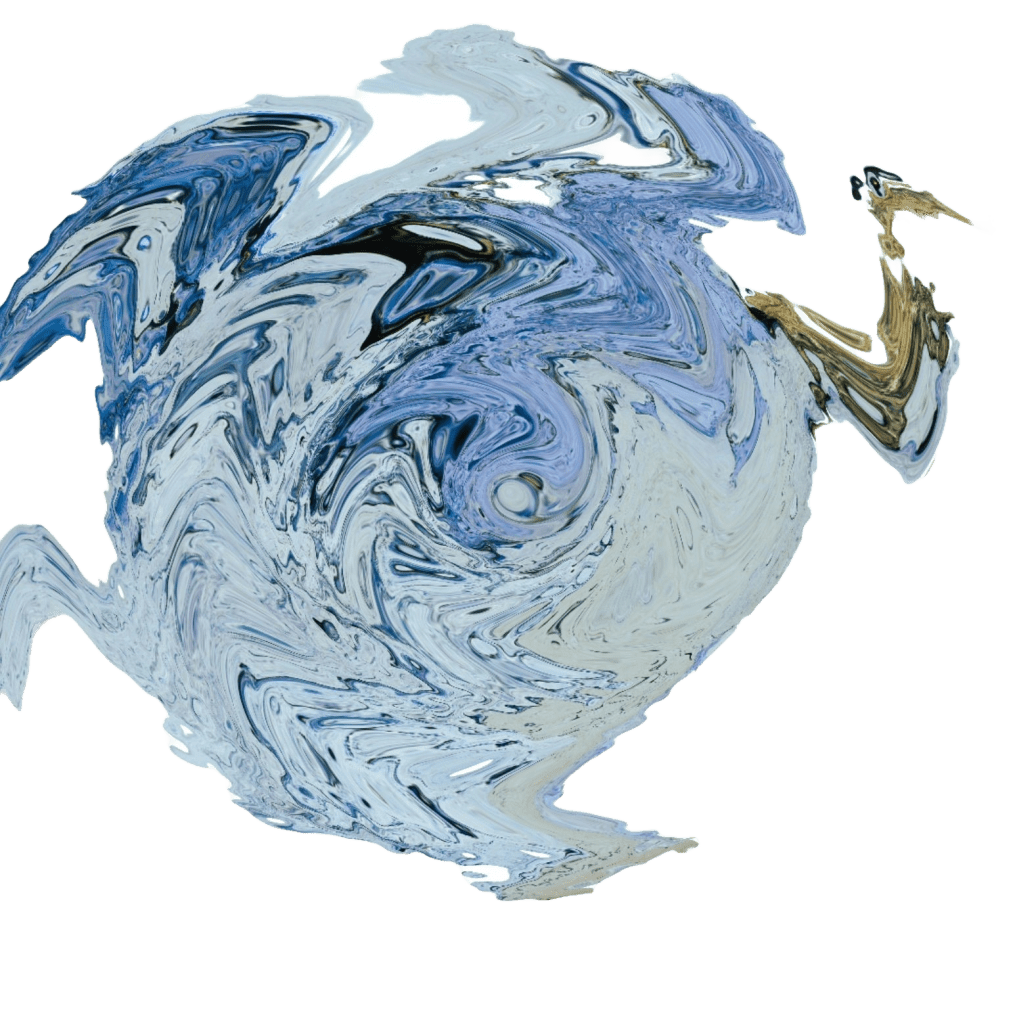
click on Liquify (4th row, far right)
click on Flow (2d row, far right)
set the flow options: melt amount 1 / melt scale 1/ woble amount 1 /woble scale 1
if you like the image, click on “save”
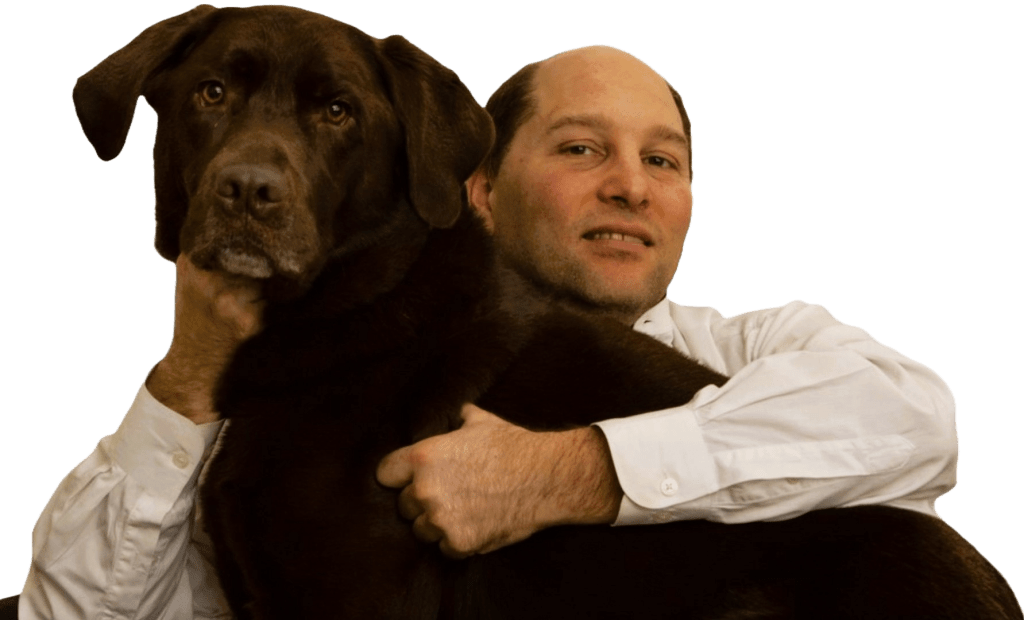
Original ImageEdited Monster Image
ADD COLOR
if you are confidant and feeling adventurous, then add color to the image click on the image
click on edit
click on the app ColorMix
click on the parakeet (2nd row, far right)
if you like the image, click on save
Monster image with different color.
Another example: Transforming a photograph using a funhouse technique.
Original Image edited monster image like mirror in fun house
DIRECTIONS
return to Liquify
Click on Melt (1st row, 2nd column)
set the melt options: melt amount .5 / melt scale .5
if you like the image, click save
I send you courage to make your own digital graphics monsters.
Yours Truly is:
Robert Fleming, a contributing editor of Old Scratch Press
Poetry is an old art form dating back to ancient Greece. Why has it been with mankind so long? For one thing, writing and reading poetry is good for us. It allows us to manage our emotions which in today’s complicated and divided world can be an overwhelming task. During the recent pandemic many literary journals called for submissions about their experiences during the pandemic. Many poets answered the call, and no doubt felt better for it.
During the months of lockdown, people all over the world lost many things. We were suffering. Some of us lost loved ones, some of us were very ill ourselves. We all lost our normal sense of community, isolated as we were. Humans aren’t meant for isolation. Many people were lonely. Things we enjoyed such as travel, comradery in an office or school setting, had to be put on hold. Writing poetry and sharing poems created a bond among people when it was sorely needed.
As it turns out, poetry can be a powerful healer. Rhythmic language is soothing. Think of a lullaby. Poetry also helps us contemplate and reflect our lives back to us. Through poetry, we learn about different cultures and histories which helps us to stop focusing on ourselves and leads to a better understanding among peoples.
Through poetry we can stop to appreciate and experience what is beautiful in our world or share a poet’s experience with something we are also struggling with. This improves our mood. Poetry is often read to hospitalized children to reduce their fears and worries. Additionally, reading poetry out loud has been shown to slow breathing and help a person relax.
So, three cheers for all the healthy things poetry does for the human body and spirit. During the pandemic I remember reading this famous poem by Maggie Smith. It has stayed with me.
Autumn has always held a special magic for me, a season in which the poet John Keats aptly described as “a season of mists and mellow fruitfulness.”
Indeed, if there is an hour for magic, it strikes in the crisp dawn of an early Fall day. And further, if magic has a language, surely its language is poetry.
So I find this an appropriate time to post some of my own verse (hopefully imbued with magic itself) for your reading pleasure.
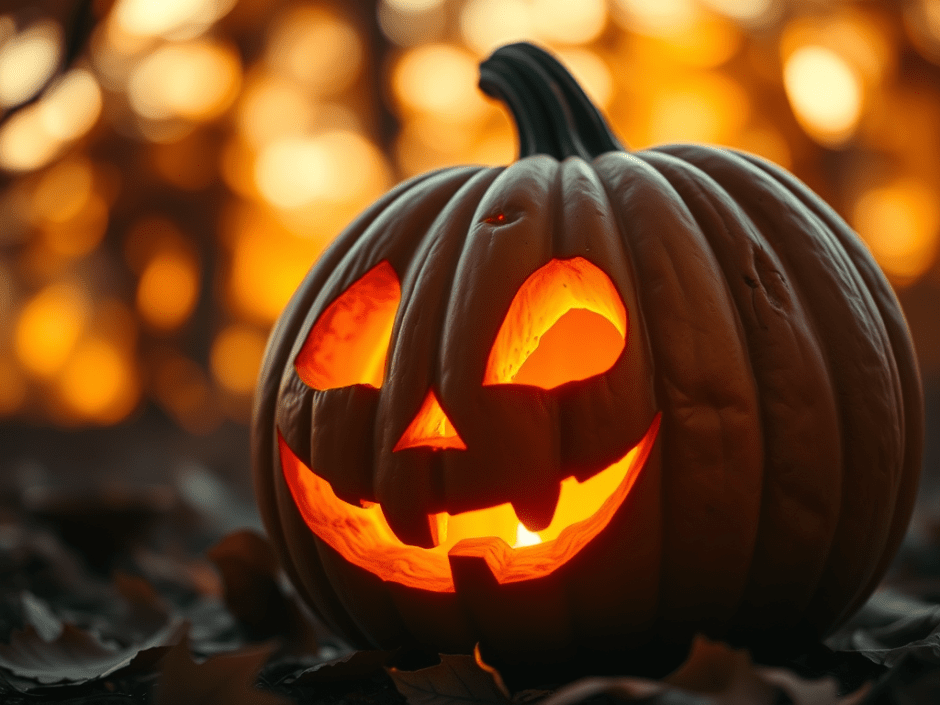
The first poem is “Ode to the Night”, and it hints at the darker aspects of this time of year, a time when pumpkins cast you crooked smiles and ghosts and goblins are generally free to roam:
Ode to the Night
To the Night, the Night, the dark delight,
The children sleep soundly in gentle white,
Breathing in time with the Raven’s flight.
To the Night, the Night, the waxen moon,
Audience of one to the witches’ croon,
Driving the tides for the sailors’ doom.
To the Night, the Night, its starlit fires,
Which guide the ghosts from funeral pyres,
Which soften the Harpy to play the lyre.
I hope you enjoyed “Ode to the Night”, and at a minimum it puts you into the Halloween spirit!
My second poem is “Melinda”, a story of lost love, and although not directly a tribute to the season was nonetheless designed to evoke a haunted mood:
Melinda
Sometimes in the lonely hours
I would walk the hill
Leaving the clamor and din behind
For headstones gray and still,
As I neared the place where the dead did lie
I knelt and bowed my head
A fool is he who visits the graves
Without homage to the dead,
‘Melinda’ read the stone I sought
Melinda, my betrothed,
Only a thief as clever as Death
Could steal the health of Melinda, my love
Often I hear Melinda’s voice
Soft upon the breeze
I answer her call of eternal love
And grow hoarse among the trees.
I hope you enjoyed “Melinda”! Last but not least is an ode to a much maligned creature, a symbol of the undead, but in reality a beautiful animal that sustains our ecosystem. This last poem is called “The Bat”:
I am recovering from major surgery nine weeks ago. I have been described by some who are nearest and dearest that I am not just an overachiever, but a classic type A personality. To which I say “Balderdash. Not in the least.” But one thing that has become all too apparent is that I love naps. At last one, if not more, a day. And while it feels like an enforced putting down of my will to write, and do, and create, and clear out, I don’t really care. My body has other plans. This is what my medical team refers to as “rest and recuperation.” Rest. Now there’s a thought.
I’m a writer – poetry, short stories, and an almost completed first novel. In all writing (and my reading) I find that the rest periods allow me, the reader, to think, to consider what I just read. One habit I recently developed is reading my poetry out loud, primarily to myself (unless there is a willing listener close by). This is not a new habit, just rediscovered, after a lapse of more than 50 years. I used to do this in college, for it helped me understand what the writer was trying to get across.
What I found in my personal poetry was timing. which phrases required slight stress, pauses, clear enunciation. And my habit of reading each one thee times allowed me to hear with different ears. The rhythm, the internal stresses, cadence, alliteration.
Poetry has always been a way of understanding the emotional frame of mind of both the poet and the listener. The oldest poetry we have records of shows that the stories and sagas were all oral, as well as aural. They transported the listener into another world, a world of magic, feeling, creation, alternate realities, explanations of heroic journeys.
And reading and hearing poetry aloud gives me a different perspective. I remember my grade school librarian reading stories to us. Magic. We could not get enough. It whetted an appetite for more, for it was a group activity led by an older and wiser person.
And the greatest value in my listening, was when she paused, created a resting spot, and then continued. I can imagine sitting around a night fire, listening to a traveling bard recite sagas. Just for me. It became personal, and valuable, and I was personally included in the vast story.
My current resting spot is in my recliner, head back, legs propped up. Napping away. I am not “shoulding” on myself as much. I am resting more, waiting for the next phrase, the next idea, the next thing I don’t have the energy to do. Resting is good, although it is contrary to my nature. But the recliner is so very comfortable!
It’s the spooky season! Let’s play Exquisite Corpse!
“What,” you may ask, “is Exquisite Corpse, and how do I engage in such an outlandishly named game?”
Before we all get the vapors…
Exquisite Corpse is a collaborative poetry game that traces its roots to the Parisian Surrealist Movement. Exquisite Corpse is played by several people, each of whom writes a word on a sheet of paper, folds the paper to conceal it, and passes it on to the next player for his or her contribution. In order to write a poem, participants should agree on a sentence structure beforehand. For example, each sentence in the poem could be structured “Adjective, Noun, Verb, Adjective, Noun.” Articles and verb tenses may be added later or adjusted after the poem has been written. The game was also adapted to drawing, where one participant would draw thehead of a figure, the next the torso, etc. The name “Exquisite Corpse” comes from a line of poetry created using the technique: “The exquisite corpse will drink the young wine.” https://poets.org/text/play-exquisite-corpse
While we cannot share a piece of paper, we can, all the same, play the game. Please join us!
The rules for this game are as follows”
SUBMIT: one line of “poetry”
FORM: The line must be arranged to have these elements in THIS ORDER ONLY as the main elements:
YES! You can add conjunctions, articles, etc., as needed, but the main words must be Adjective, Noun, Verb, Verb, Adjective or Adverb (one only), Adjective, Noun
So, this would work:
Happy frogs jumped and swam quickly, green sparks
Happy(adjective) frogs(noun) jumped(verb) and swam(verb) quickly(adverb), green(adjective) sparks(noun).
And this would not:
Frogs jumped happily and swam quickly making green sparks
Got it?
You do!
Send it to dianne@currentwords.com between now and October 29th at midnight PT, for publication on Halloween!
Make the email subject: Exquisite Corpse.
ONE entry per person!
PRIZES:
SUBMIT and you will be given a free digital copy of the OSP book of your choice!
Three lucky people, chosen at random by Robert Fleming and his random number generator, will be given a print (paperback) copy of the OSP book of his/her/their choice!
One Lucky Person (not publishing with CWP) will win a free 5-page edit from me!
OSP members and other people CWP publishes are welcome to join in, and can claim a free Kindle of their choice from OSP, but are not going to get one of the three free print books or the edit (so sorry! Let’s give those to our guests!).
YES, everyone who enters will be subscribed to OSP news through Current Words newsletter, which is sent out to email addresses one time almost every month. At the bottom of your first newsletter (and all the rest of them) is an unsubscribe button, and if you really don’t want to stay on the list, that will get you right off (Mailchimp don’t play.).Honestly, we’re not trying to bother you; we’re out to have fun!
So, let’s have fun!
Ooooo, you can already start dreaming of the OSP book you’re going to choose for your prize! Take a look at your options:
Where Art Meets Poetry: Fleming’s creative prowess knows no bounds. He’s a poet who wields images like a maestro conducts a symphony, infusing each verse with a visual narrative that ignites the imagination. Brace yourself for an electrifying literary experience that shatters the boundaries of storytelling.
A Feast for the Mind and the Eyes: white noir is more than poetry; it’s a a tapestry of emotions on paper. Featuring a striking cover designed by the author.
What They’re Saying:
“…you will see and think things you never did.” Matt Wall, publisher of Poetic Anarchy Press
“Robert Fleming is outrageous and original in word and image.” Michael Sindler, beat poet laureate of Colorado
“…a raw and curious visual journey through human history.” Crystal Heidel, author of Still Life in Blood Owner of Byzantium Sky Press
AND IF YOU WANT A FREE COPY… ALL YOU HAVE TO DO IS ASK. RIGHT HERE.
We learn from asking questions, and what better way to explore the craft of writing than through an engaging Q&A with an author! This month the author I’m interviewing is R. David Fulcher who happens to be a member of the Old Scratch Press Poetry and Short Form Collective.
R. David Fulcher is a talented author with multiple books to his name. His most recent work, a captivating short story collection titled THE PUMPKIN KING AND OTHER TALES OF TERROR, showcases his passion for storytelling. A writer of both poetry and prose, he deeply loves speculative fiction, particularly science fiction and horror. You can explore more of his work on his blog at Rdavidfulcher.com.
This is the perfect month—the season of ghosts and goblins—to delve into the exciting craft of writing horror. Most of my questions in this post will focus on the intriguing insights from THE PUMPKIN KING AND OTHER TALES OF TERROR. Let’s celebrate the art of writing together!
Q: Question
R: Response
R. David Fulcher
Q: As a writer, what is your primary goal when interacting with your readers?
R: As a horror writer, I have two primary goals: 1) Establish an “eerie” atmosphere; and 2) Elicit a physical response in the reader. Yes, I hope to stimulate the readers’ minds as well, but I primarily want to elicit fear – a racing pulse, the small hairs standing up on the back of your neck, a shiver in your spine – only good horror tales have this effect.
Q: Was there a specific moment you remember, perhaps an experience that spurred you on to want to write this particular book?
R: The Pumpkin King and Other Tales of Terror (and the follow-up volume “Asteroid 6 and Other Tales of Cosmic Horror”) is sort of a “greatest hits” collection of my short stories, so unlike a traditional novel the stories were developed over many years and inspired by many moments and experiences throughout my life.
To give a sense of the age of some of the stories, the title story “The Pumpkin King” first appeared in a small press magazine entitled Mausoleum back in 2001! Of course, all the stories have been heavily revised in the new book.
To provide an experience that spurred me to write a particular story, “Castle Marienburg” was inspired by a tour of that very castle during a visit to Germany in college.
Q: As both a horror writer and a poet, how has Edgar Allen Poe influenced your work?
R: In a way, Edgar Allen Poe led me to my genre. My high school English teacher taught a semester on Poe, and I was hooked. I started writing dark, gothic short stories that day after school and submitting them to small press magazines shortly thereafter.
Q: Writing poetry and writing prose, how has the two different types of genres influenced each other in your writing?
R: My love for both poetry and prose has caused me to experiment with inserting sequences of poetry into my fiction. Some examples of my stories that include embedded poems are “A Night Out with Mr. Bones”, “The Faerie Lights”, and “All Across the Mountain”.
Q: Did you work alone or did you rely on some feedback from others?
R: I initially write on my own, but I really enjoy it when people close to me review my work and give feedback on it. For example, my brother Dale helped proofread the manuscript for The Pumpkin King and Other Tales of Terror, and after reading my short story “Asteroid 6” my wife Lisa was really impressed with the tale, so I was inspired to title my second volume coming out this Fall as “Asteroid 6 and Other Tales of Cosmic Horror”.
Of course, my publishers David and Dianne are also tremendous editors and their feedback has been essential to my work.
Q:Do you imagine you are writing for a specific person or a certain audience?
R: No specific audience. I will say that my writing is almost always in the realm of the fantastic, so fans of my work must be able to “suspend their disbelief” and just go along for the ride, trusting me to take them to a magical, almost unbelievable ending, even if all the facts don’t line up with reality. I think fans of hard science-fiction (Isaac Asimov, etc.) will have a hard time enjoying my work.
Q: How do you approach revision?
R:This goes back to things I’d tell my former self. I used to put down the pen (yes, I write my stories out long-hand!) after a long, intense burst of writing (sometimes an entire story in a single sitting), push the manuscript back on the desk with a smile, and say “Perfect!”
I would then immediately submit the tale for publication, only to receive rejection after rejection, never understanding why.
I’ve finally learned that being a professional writer means spending almost twice the amount of time revising your work as you spent writing it in the first place. So I approach it like work. I allocate time for editing/proofreading, I set deadlines, and I hold myself to them. The difference between my original manuscript written after a burst of artistic inspiration and the manuscript after several rounds of revision is often night and day.
Q: If you could give advice to your younger self, what would you want to tell them?
R: I’d remind my younger self that the success of a book is up to me. I used to self-publish with AuthorHouse (formerly 1st Books) and believed that getting my book on Amazon and buying the publisher’s “marketing kit” would instantly propel me to fame and the bestseller’s list. I have learned the hard way over the years this is not the case. Publishing the book is just Step 1. The real work is in the marking and promotion.
Q: How did you find your publisher or did they find you?
R: David and Dianne of Devil’s Party Press (now Current Words Publishing) met at the Indie Lit Fest at Frostburg State University in Frostburg, MD. At the time they were accepting submissions for one of their Halloween Party anthologies and provided me with the information. I submitted and was accepted. The rest as they say is history!
Q: Do you have a specific horror story favorite you’ve read?
R: Several novels by modern horror writers have had a tremendous influence on my writing. They include “Something Wicked This Way Comes” by Ray Bradbury, “The Tommyknockers” by Stephen King, and “HIdeaway” by Dean Koontz.
In your own portfolio, a story you are particularly proud of?
R: I have a few favorites among my stories that don’t always correlate to fan favorites. The first is “Castle Marienburg”, which was originally titled “Eyes in the Night”. A horror editor in the small press called it one of the best horror stories he had ever read, which was very satisfying. Others include “Spectra’s Masterpiece”, a science fiction story about AI published back in the early 2000’s well before AI became a commonplace topic, and “The Land Spider” in the way that it incorporates native American mythology.
Q: Do you have a “day job” to help pay for your writing habit, and it so, has it impacted in any way your writing?
R: During my day job I work as an IT Contractor. My work with computers has spilled into my fiction with my stories “ELECTRIC”, where a boy becomes one with his home computer, and “The Witch Toaster,” where a group of programmers within an IT Department must battle supernatural forces.
Thank you for reading and visit the Old Scratch Press Website to learn more about our authors and upcoming publications.
Creative blocks can be frustrating, but they’re a normal part of the creative process. Here, I explore three common types of creative blocks that I experience on a regular basis, and share my strategies to overcome them and get back into my creative flow.
Common Types of Creative Blocks:
Self-Doubt: Feeling like your work isn’t good enough? That would be a hard yes for me, every single day. Self-doubt can paralyze creativity. Who am I to go to grad school in writing at my age? Who am I to publish a poetry book? Who am I to think I can even begin to write a mystery novel? Remember, while there are plenty of success stories out there, we won’t know our own abilities unless we give it a try. You might decide it’s not your thing, or get caught up in the process and ride the wave to the end. By all means, do not compare yourself to others, unless you think it’s really bad, in which case the thought should be, “I can do this, but better”. It really doesn’t matter what you think until you actually start something. Like the curling sticky note on my desk says: Begin.
Perfectionism: Waiting for the perfect idea or execution can stop you in your tracks. As will waiting for the perfect time, or the perfect desk chair, or external motivation. Embrace imperfection and focus on progress rather than perfection. It’s called a “shitty first draft” for a reason.
Burnout: Sometimes, the creative well runs dry. Recognize when you need rest and allow yourself to recharge (see below).
Strategies to Overcome Blocks:
Change of Scenery: Sometimes a change of scenery can spark new ideas. Go for a walk, visit a museum, or simply move to a different room. Move your body, listen to music, or anything to temporarily switch off the “I’m Stuck” reel playing in your head.
Experiment with PLAY: This is my favorite. Take a break from your current project and try something completely different—doodle, cook, or build with LEGOS. I like to cut and paste, myself. Play can reignite creativity.
Set Bite-Size Goals: Break down your project into manageable tasks, i.e. Write for 10 minutes. Completing small steps can build momentum and reduce overwhelm.
“Creative Reset”: Set a timer for 15 minutes and engage in a creative activity unrelated to your current project. The goal is to refresh your mind and relieve pressure, allowing creativity to flow more freely when you return to your work.
Finally, I once had a teacher who said there was no such thing as a creative block, and the problem was not that there was nothing to draw from, but that there was too much. Too much, or not enough? You decide.
Ellis Elliott is a published author and poet. Join her Bewilderness Writing Workshops and use free writing to find yourself and your voice on the page. Order her poetry collection Break in the Field and find out about her Work-in-Progress, a mystery novel set in the misty mountains of Appalachia.
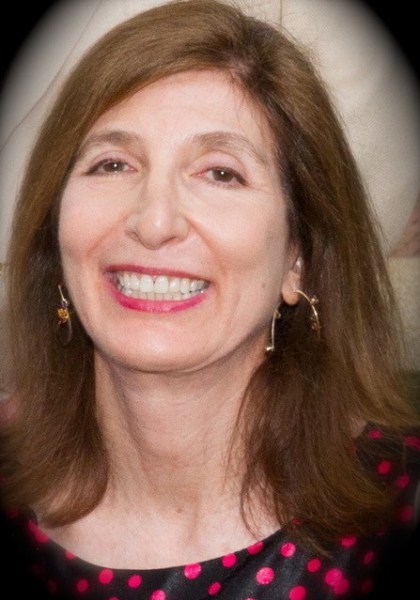
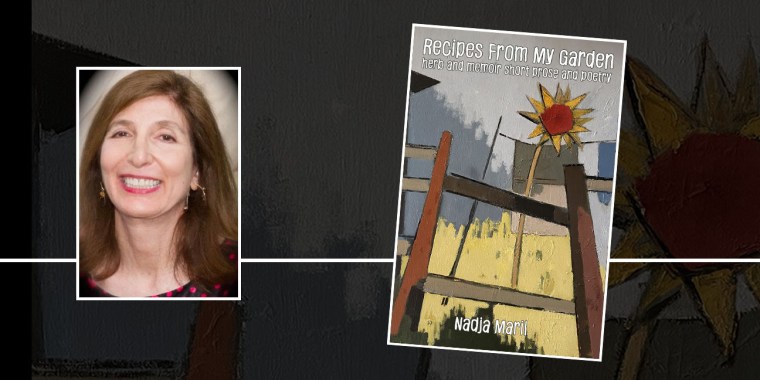
This week author Nadja Maril released her collection of flash prose, poetry, and essays inspired by her kitchen, garden, and family memories. I sat down with Nadja to ask her some questions about the book, and her process. It’s interesting to note that Nadja comes from an artistic background: her late father Herman Maril was an artist, and his painting is the cover of her book. I have enjoyed Nadja’s poetry and flash fiction for many years now, and I am very excited for her book!
Dianne Pearce (Dianne): What inspired you to combine poetry, short form, gardening, and cooking in one book? How did these different forms of expression come together?
Nadja Maril (Nadja): In January 2020 I’d just completed an MFA (masters in fine arts) in creative writing from the low residency Stonecoast Writing Program at the University of Southern Maine and was in the midst of moving into a 100-year-old house. My husband Peter and I were the General Contractors. Both the MFA and the house were two-year projects. I’d been laboring over a complicated literary novel told from multiple viewpoints, and my daughter (the youngest of my three children ) was about to get married. Peter and I were looking forward to having the wedding at our re-built house, with the festivities primarily outside. We scurried to move into the house, plant flowers and shrubs, and revitalize the lawn. Then the pandemic shut everything down.
Want to read more? Pick up the remainder of the piece at AUTHORS ELECTRIC.
Wonderful that Google has dedicated today’s Google Doodle (August 19, 2024) to Dorothy Miles.
Miles, as it says, was a pioneer of poetry in sign language. This is significant because poetry is often still widely considered to be an oral form of creative writing, written down, yes, but meant to be read aloud, or memorized and recited, performed. But can it be performed and not be spoken?
Here are a few performances by Ms. Miles, courtesy of YouTube:
There is no sound. Can you understand the poem?
And here is a third poem:
Do Miles’ poems speak to you, without use of the voice? In a medium that began as fully performative, how does it feel to have to attend to her movements with your eyes, more than her words, the sound of them, with your ears? Are the poems lost on you? Or do they move you?
Approximately eleven million Americans are deaf, and many more have some form of hearing loss. When I watch Ms. Miles perform her poetry, one thing that struck me immediately was the feeling of being disconnected, because I could not hear her, though she looked to be speaking. Once I settled in I found the works engaging, and they really tapped into my emotions much more quickly than poetry usually does.
What makes a poem a poem? What does it mean to be a poet? Poetry has been one of the oldest and most consistently practiced form of creative writing, and it has also been some of the most exclusionary. Ms. Miles opened that door for people who could not use their ears to enjoy poetry, or their mouths to speak their poems aloud.
Ms. Miles’ career in poetry ended when her life did, after a fall from a window that was concluded to be self-inflicted due to mental health challenges she was experiencing. If you know someone experiencing a crisis please consider using the 988 helpline.
This, my friends, is why diversity is so important. Without an open system that welcomes diversity, without open hearts to give something different from the “norm,” “average,” what we’re used to, what’s traditional, or simply what we’ve come to expect, we close the door on beautiful experiences like poetry written and performed by Ms. Miles. When we celebrate poetry in all its forms, we invite more people to have the chance to share with us their creations. Not every creation is the right one for every person, but when you find the one that touches you, you will find yourself forever changed.














 OLD SCRATCH PRESS