Join us today for a triple poetry book launch and live reading event taking place over Zoom.
This special online event will spotlight:
Alan Bern, Dreams of the Return
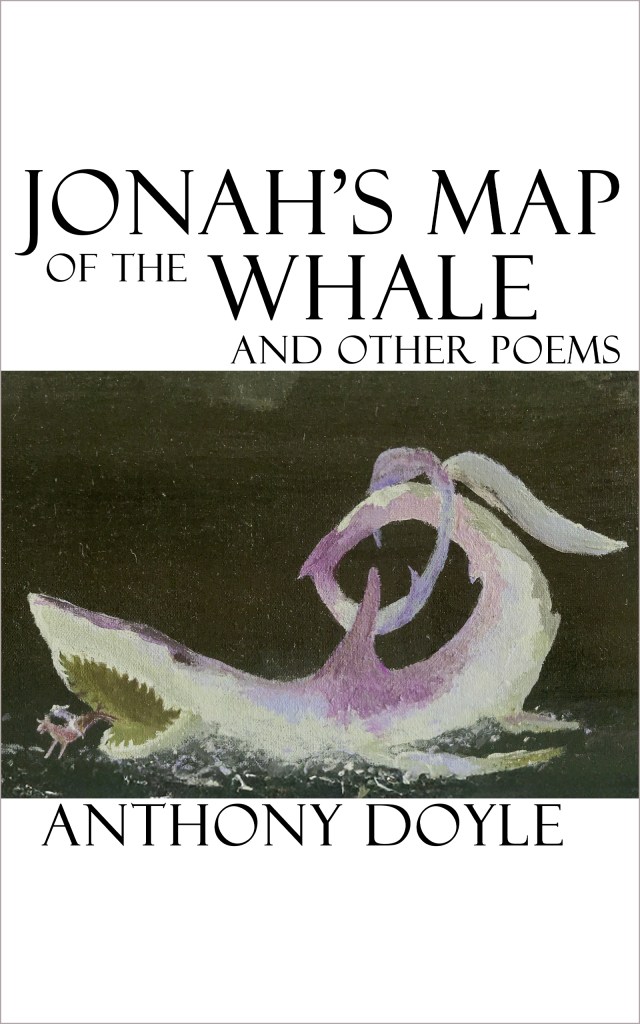
Anthony Doyle, Jonah’s Map of the Whale
Virginia Watts, Tracing Bodies
Each author will take the mic to share selections from their work, offering an intimate glimpse into the themes, rhythms, and stories behind their collections.
📅 Date: Saturday, October 25 ⏰ Time: 2:00 PM PT | 5:00 PM ET 💻 Format: Virtual meeting (Zoom)
Preregistration has ended, but you can still attend by following the link below. Meeting will start promptly at 2 PM PT.
Alan Bern is a poet, photographer, and retired children’s librarian whose creative work often explores themes of memory, migration, and belonging. His poetry pairs evocative imagery with emotional depth, reflecting on journeys both personal and collective. Alongside his writing, Bern’s photography provides a visual dialogue with the poetic world he creates, underscoring the interplay between text and image.
In Dreams of the Return, Bern reflects upon being a teenager in the mid-sixties, living in Napoli for a year with his family, and falling in love with it as if it were his true second home. His travels through Napoli and Southern Italy are expressed in poetry, prose, and photos, offering readers verse that moves fluidly between the outer landscapes of travel and the inner landscapes of longing.
“Bern captures nuances of disparate facets of Italian life with a flair for both drama and revelation.” MIDWEST BOOK REVIEW
Anthony Doyle
Anthony Doyle is an Irish writer and translator whose work bridges cultures and languages. He has published fiction, nonfiction, and poetry, and his projects often weave together myth, history, and human experience in unexpected ways. As a translator, Doyle has brought the works of Brazilian writers to English-speaking audiences, deepening cultural exchange.
Hibernaculum, Doyle’s gripping speculative fiction tale of human hibernation, is a 2024 Next Generation Indie Book Awards Finalist in the SF category. His new poetry collection, Jonah’s Map of the Whale, charts vast emotional and imaginative territory, drawing on his keen ear for rhythm and layered meaning. Doyle’s poetry speaks with both intimacy and universality, inviting readers to journey through mythic depths and modern consciousness alike.
“A wonderfully inspiring read.” MIDWEST BOOK REVIEW
Virginia Watts
Virginia Watts is a fiction writer and poet whose work has appeared in numerous literary journals and anthologies. Her writing frequently examines the intricacies of human connection, place, and memory, offering poignant and sharply observed narratives. With a background in both short fiction and poetry, Watts brings an attentive eye to detail and a lyrical sensibility to her storytelling.
Watts’ debut prose collection, Echoes From the Hocker House, IS a 2023 KIRKUS Best Indy Books selection and a 2024 Eric Hoffer Book Awards finalist.
Her latest collection, Tracing Bodies, reveals Watts’ skill at mapping emotional terrain—tracing the fragile lines between presence and absence, past and present. Her voice resonates with honesty and tenderness, leaving lasting impressions on her readers.
“A vulnerable, cleareyed portrait of humanity.” KIRKUS
Old Scratch Press invites you to an unforgettable evening of words, imagery, and discovery. On Saturday, October 25 at 2:00 PM PT (5:00 PM ET), we’ll gather virtually to celebrate the launch of three extraordinary new poetry collections—each bringing a unique voice and vision to the page.
This special online event will spotlight:
Alan Bern, Dreams of the Return
Anthony Doyle, Jonah’s Map of the Whale
Virginia Watts, Tracing Bodies
Each author will take the mic to share selections from their work, offering an intimate glimpse into the themes, rhythms, and stories behind their collections.
📅 Date: Saturday, October 25 ⏰ Time: 2:00 PM PT | 5:00 PM ET 💻 Format: Virtual meeting (Zoom)
This event is free and open to the public, but preregistration is recommended. Come celebrate the power of poetry with Old Scratch Press and three remarkable voices—we can’t wait to see you there!
Meet the Authors
Alan Bern
Alan Bern is a poet, photographer, and retired children’s librarian whose creative work often explores themes of memory, migration, and belonging. His poetry pairs evocative imagery with emotional depth, reflecting on journeys both personal and collective. Alongside his writing, Bern’s photography provides a visual dialogue with the poetic world he creates, underscoring the interplay between text and image.
In Dreams of the Return, Bern reflects upon being a teenager in the mid-sixties, living in Napoli for a year with his family, and falling in love with it as if it were his true second home. His travels through Napoli and Southern Italy are expressed in poetry, prose, and photos, offering readers verse that moves fluidly between the outer landscapes of travel and the inner landscapes of longing.
“Bern captures nuances of disparate facets of Italian life with a flair for both drama and revelation.” MIDWEST BOOK REVIEW
Anthony Doyle
Anthony Doyle is an Irish writer and translator whose work bridges cultures and languages. He has published fiction, nonfiction, and poetry, and his projects often weave together myth, history, and human experience in unexpected ways. As a translator, Doyle has brought the works of Brazilian writers to English-speaking audiences, deepening cultural exchange.
Hibernaculum, Doyle’s gripping speculative fiction tale of human hibernation, is a 2024 Next Generation Indie Book Awards Finalist in the SF category. His new poetry collection, Jonah’s Map of the Whale, charts vast emotional and imaginative territory, drawing on his keen ear for rhythm and layered meaning. Doyle’s poetry speaks with both intimacy and universality, inviting readers to journey through mythic depths and modern consciousness alike.
“A wonderfully inspiring read.” MIDWEST BOOK REVIEW
Virginia Watts
Virginia Watts is a fiction writer and poet whose work has appeared in numerous literary journals and anthologies. Her writing frequently examines the intricacies of human connection, place, and memory, offering poignant and sharply observed narratives. With a background in both short fiction and poetry, Watts brings an attentive eye to detail and a lyrical sensibility to her storytelling.
Watts’ debut prose collection, Echoes From the Hocker House, IS a 2023 KIRKUS Best Indy Books selection and a 2024 Eric Hoffer Book Awards finalist.
Her latest collection, Tracing Bodies, reveals Watts’ skill at mapping emotional terrain—tracing the fragile lines between presence and absence, past and present. Her voice resonates with honesty and tenderness, leaving lasting impressions on her readers.
“A vulnerable, cleareyed portrait of humanity.” KIRKUS
Recently Robert Fleming was nice enough to get Old Scratch Press booked on Like a blot from the blue. Robert Fleming, Gabby Gilliam, Anthony Doyle, Alan Bern, Virginia (Ginny) Watts, and I showed up. I gave a little information on Old Scratch Press; Gabby gave some information Instant Noodles, and Anthony and Ginny read from their new books. Being there and presenting to an international audience was a fantastic opportunity for us, and the folks there were great.
What I liked even more were the other people who showed up.
I’m going to guess that there were about 30 people who showed up who were not us, one of whom was Fin Hall, the blot-in-chief. It was clear that many of these folks had been attending regularly for quite some time. One at a time, in turn, based on when they signed up, Fin called on each person, and the author read 1-3 poems, depending on length.
When I was in my twenties and thirties, which, sadly, I am not any more, I used to read at LIP (live, in person) open mics all the time, and I would often have to hang in until midnight to get my chance. Usually these were held in bars in Philadelphia, or in West Chester, Pennsylvania. I did my best to dress as “punk rock” as possible, and my general aim, if I’m honest, was to get laid. It’s frankly shocking how few times that happened, when that was clearly my intent. I usually had on a mini skirt and was showing cleavage, but, in truth, people who knew me then told me then, and will reiterate the very same thing today, that me punked-out and showing cleavage was, somehow, still giving Julie Andrews when what I was going for was Grace Slick. Ah well.
In any case, the thrill of reading, and the thrill of possibly getting lucky, and the location (always bars) also meant that, in all likelihood, by the time they got to me on the sign-up list, I was hella drunk. I was a smoker (Benson and Hedges 100s back then), but because I was also a poser: at those events I came with a pack of Dunhill Blue.
Waaaay too expensive to smoke all the time, but on open mic nights I always stopped at the news agent’s (Philadelphia had news agents!) to get a pack beforehand.
A few times/year the venues would ask me to be the featured reader, and I think that was because I was also volunteering with a little Zine called Magic Bullet (run by Andrew Craig, wherever he is today), which I had quite a few publications in, and, who knows, maybe I was good.
I was working my way through an MA and then an MFA from my twenties into my thirties, and my professors seemed to think I was good, as well, and I won the student awards each year, so maybe. When I read at the school events I was not drunk, but neither was I nervous, perhaps because my professors made me feel gifted.
And then, sometime around the end of my last degree, life took a turn. My very long relationship went very south. Another relationship pooped too quickly, and flamed out just as fast, and I remember I felt, while I was still prolific as a poet, that I had somehow lost at life. I wanted, you see, to become a published poet and a professor, and a spouse, and a parent, and I wanted all four things to work out perfectly, and just none of them did.
My life, then, became a series of edits. If it didn’t work to have the man with the red hair, then cut him from the piece, and write in another man, one with cheap beer on his lips. It was so time-consuming to send out work, one poem here, and one there, through the mail, keeping track of where it went, and keeping a lookout for the SASE to bring it back, and seeing if it was in decent enough condition to be mailed back out again, and I remember for awhile I was printing on onion skin to save money (who knows what that is?), and digging up the two dollars or eight quarters to send the piece of onion skin back out, and waiting for the SASE again to return, and each time writing a letter of introduction, sometimes including letters of introduction from my professors who were consistently and kindly encouraging. I remember two of them, who seemed to think my writing was the bee’s knees, were flummoxed that my poems weren’t getting entry, but maybe the long narrative style went out with Wordsworth. And life became more about driving from 9-5 job to college job to relationship, to moving out, to moving over there, to trying again, to keep on trying, to being, frankly, trying.
Little by little, returned SASE by SASE, edited dream by edited dream, the writing dribbled to a stop. Drip, drip, dr—
It was so quiet in my head.
Well, in the poetry part of my head at least.
And a decade and a half ran through my fingers.
And then I started writing again. Not only poetry, and not the plays I wrote in my twenties, but fiction, and memoir, which is, I guess, what this is.
I found myself in a place where the place, the locale, was so small and local, it felt small enough that I dared to go to a reading again.
But over the intervening years something just awful seemed to have happened. When I showed up to read at the open mics, even when I went with friends, I could not make it through a single poem without devolving into tears. And maybe there’s a reason for this shocking behavior, and maybe there isn’t, but it seems as inevitable to me as hair going grey, and as unavoidable as the red dot from a sniper’s gun in one of those movies with snipers.
And yet, at the simple evening with Blot from the blue I felt encouraged. The readers were great, and seemed normal (for the most part… I mean, poets, right?), and kindly, and on Zoom my head is no bigger than a Cerignola olive, so I am going to say I felt safe. I think it would be quite okay to join in, and I asked him later, and Fin said yes, folks can join. And folks could mean me, or you.
And use this email to express interest likeablotfromtheblue@gmail.com.
And if you show up, be a goooood listener first, and a good reader second.
I’m not much of a drinker these days, so if I show up it will probably be very sober, and there hasn’t been any nicotine in these lungs for a long spell. I will, however, be caffeinated. And that’s at least something. The poem I am thinking of reading has some sound effects in it, which is probably ill-advised. But after I read, and make whatever sort of a fool of myself I am destined to be, I can write a new poem: Pearce With Her Pants Fallen Down.
Nadja often finishes her posts with a writing prompt, so here is me, stealing that excellent idea:
Think of an “edit” you made in your own life, by choice or by force. How did it work out for you?
Or
Have you ever read at an open mic? Write a flash memoir piece describing your experience.
Are you a flash fiction, poetry, or short memoir writer with a finished manuscript—or one nearly ready to go? Old Scratch Press, a collaborative collective supported by Current Words Publishing, is now accepting applications for two new members to join us in 2026.
We’re a tight-knit, skill-sharing group that publishes each other’s books, runs the lit mag Instant Noodles, and supports each other with editing, design, marketing, and community.
We are hosting meet and greets on August 6th and August 13. To be invited you have to send a small sample. There are no fees to submit, and there are no fees to join, and there are no fees to publish your collection. There are no fees. Who else you gonna find to collaborate with who dedicates an entire issue of a literary magazine to that most magical of elixirs… gravy? If you’re eager to grow as a writer and be part of something creative and weird and wonderful, we’d love to meet you.
By Virginia Watts, Founding Member of the Old Scratch Press Collective
Many people have heard of title The United States Poet Laureate, official title Poetry Laureate Consultant in Poetry, but they do not know much about this position. The Poet Laureate serves for an eight-month term running from October to May, elected by The Librarian of Congress. Traditionally a poet will hold this title for two terms. In choosing the recipient of this prestigious title, the Librarian consults with experts in the field of poetry as well as former Poet Laureates. Additionally, suggestions from the general public are accepted.
The Poet Laureate only has two officials duties they must perform, two readings at the beginning and end of their term. The idea is that each Poet Laureate should be given the space and freedom to decide for themselves how they can use their role to encourage people throughout the nation to read, write and develop an appreciation for the art of poetry. The Poet Laureate receives a stipend of $35,000 and $5000 for travel expenses. Prior the 1986, the Poet Laureates were known as Consultants in Poetry. The well known poets Robert Frost and Gwendolyn Brooks were Consultants. Since 1986, there have been 24 Poet Laureates, Louise Gluck and Ted Kooser among them.
So, what have some of our Poet Laureates done during their tenure to spread the love of poetry?
In 1997, Robert Pinsky, the 39th Poet Laureate, put out an open call for people to share their favorite poem. Many Americans sent poems. Poems came flooding in from all ages, all states, from people of diverse backgrounds and interests. Pinsky’s call set off a domino effect leading to reading of favorite poems in hundreds of cities and towns.
Gwendolyn Brooks is well known for her focus on elementary school students. Early learning about poetry and writing it is bound to foster a lifelong love of the art form.
Joseph Brodsky thought the best way to have people experience poetry is for them to find free samples of it in their everyday lives and places, such as airports and hotel rooms.
Billy Collins published an anthology inspired by his time serving as the United State Poet Laureate. “Poetry 180” makes it easy for high school students to read or hear one poem each day during their school year. Collins is often quoted as believing that poetry is a kind of social engagement, that a poem should feel like it reaches out and invites the reader inside.
Rita Dove brought writers with a focus on African diaspora together. Maxine Kumin focused on shining a light on the works of women writers and Joy Harjo, the 23rd United States Poet Laureate, was the first Native American to hold this honor.
Our current Poet Laureate is Ada Limon. She is from a Mexican American background and grew up in California. As part of her position, she penned a poem dedicated to NASA’s Europa Clipper Mission. Her poem is engraved in her handwriting on a metal plate aboard the Europa Clipper spacecraft. This spacecraft launched in 2024 and will enter the Juniper system in 2030. Here is Limon’s gorgeous piece. She is one of the must-read poets of our times, well deserving of the title of United States Poet Laureate.
“In Praise of Mystery” by Ada Limón was released at the Library of Congress on June 1, 2023, in celebration of the poem’s engraving on NASA’s Europa Clipper, scheduled to launch in October of 2024. Copyright Ada Limón, 2023. All rights reserved. The reproduction of this poem may in no way be used for financial gain.
About the author: Virginia Watts is the author of poetry and stories found in Epiphany, CRAFT, The Florida Review, Reed Magazine, Pithead Chapel, Words & Whispers, Sky Island Journal among others. She has been nominated four times for a Pushcart Prize and four times for Best of the Net. Her debut short story collection Echoes from The Hocker House won third place in the 2024 Feathered Quill Book Awards.
Virginia Watts grew up in Hershey, Pennsylvania and spent summer vacations in the Endless Mountains of Sullivan County with her Quaker grandparents. Many of her stories and poems revolve around small town life and rural roadways that are not always what they seem.
Thank you for reading. Please sign up to follow us on Facebook and to follow us here on WordPress to expand your knowledge about poetry and short form writing as well as to receive the latest news about publication opportunities.
Many people are familiar with the haiku, an unrhymed form of poetry that dates to 17th Century Japan. It consists of three lines and observes a strict five, seven, five syllable count. Traditionally this form of poetry was about nature, often seasonal change captured in a moment of time. Matsu Basho is considered the be the haiku master who brought haiku into its place as a serious poetic form.
Here is one of his well know poems.
An old silent pond . . .
A frog jumps into the pond,
splash! Silence again.
People may be less aware of Western or American haiku which is often not as strict in form but nevertheless mirrors the traditional haiku. The reason for a more relaxed rule on syllable count is that the syllables in Japanese don transfer smoothly to English. Some famous poets known for American haiku are Amy Lowell, Sonia Sanchez and Ezra Pound.
Jack Kerousc
Then there is Jack Kerouac who wrote thousands of haiku and often included them in his correspondence and novels. Kerouac was a serious Buddhist who credited composing haiku with sharpening his mind. He was drawn to the idea of keeping poetry simple without trickery. Here is Jack Kerouac reading some of his Western haiku: https://www.youtube.com/watch?v=WMwAtOom7CA
The allure of the haiku form rests in showing the beauty in the ordinary, in the belief that simple moments should be captured and preserved. It’s fun to draft haiku. People are often surprised by how much they enjoy it. Some tips: Keep a notebook with you to jot down observations, ideas, those little, unexpected life events that none of us can predict. When you have something you want to write about, do it. Don’t worry if your idea seems silly. Write about what inspires you and don’t look back or question the inspiration. For a first drafting session, try grouping words in a loose 5 -7-5 format. Don’t try to be perfect or overthink this part. Go for flow, rhyme secondary to an honest reflection of what inspired you. The next step is to put your draft on the back burner. This helps with all forms of writing. After drafting, put a temporary distance between you and your draft. As Jack says:
Nightfall—
too dark to read the page,
Too cold.
—Jack Kerouac
In a day or two return and rework as necessary. Look for awkward syllables or weak word choices. Most of all, trust your gut. If the haiku represents what you wanted to capture and keep then you’ve done it! Bravo! Drafting haiku is wonderfully addicting and rewarding. It’s like a bag of chips. You won’t stop at one.
Virginia Watts is a member of the Old Scratch Press Poetry and Short Form Collective and the author of Echoes from the Hocker House.
Poetry is an old art form dating back to ancient Greece. Why has it been with mankind so long? For one thing, writing and reading poetry is good for us. It allows us to manage our emotions which in today’s complicated and divided world can be an overwhelming task. During the recent pandemic many literary journals called for submissions about their experiences during the pandemic. Many poets answered the call, and no doubt felt better for it.
During the months of lockdown, people all over the world lost many things. We were suffering. Some of us lost loved ones, some of us were very ill ourselves. We all lost our normal sense of community, isolated as we were. Humans aren’t meant for isolation. Many people were lonely. Things we enjoyed such as travel, comradery in an office or school setting, had to be put on hold. Writing poetry and sharing poems created a bond among people when it was sorely needed.
As it turns out, poetry can be a powerful healer. Rhythmic language is soothing. Think of a lullaby. Poetry also helps us contemplate and reflect our lives back to us. Through poetry, we learn about different cultures and histories which helps us to stop focusing on ourselves and leads to a better understanding among peoples.
Through poetry we can stop to appreciate and experience what is beautiful in our world or share a poet’s experience with something we are also struggling with. This improves our mood. Poetry is often read to hospitalized children to reduce their fears and worries. Additionally, reading poetry out loud has been shown to slow breathing and help a person relax.
So, three cheers for all the healthy things poetry does for the human body and spirit. During the pandemic I remember reading this famous poem by Maggie Smith. It has stayed with me.
Artress Bethany White is a poet and essayist I met during a summer writing conference at Rosemont College. I was fortunate enough to attend her poetry workshop where I learned so much about the craft and art of poetry. Artress is the author of the essay collection Survivor’s Guilt: Essays on Race and American Identity (New Rivers Press, 2020) and My Afmerica: Poems (Trio House Press, 2019). Her work is unique and unflinching. She is forging new ground. It is at one turn poetry that leaves you dead in your tracks and in another historical documentation. She is an unfailingly brave writer willing to wade into the complex racial dilemma of our country. She is the kind of writer that can make a difference. Read one of her poems or essays and you will want to read them all. Then you will never forget them.
Her personal story adds another layer of interest to her work. She herself is descended from one of the largest slaveholding families in America and she is raising her own transracial family. What I remember about her most is how encouraging she was to her students, fledging poets. She had a way of making us believe in ourselves and that we too had something importantly human to say.
Pancakes Keep Coming to Mind: A Sestina Commemorating the Demise of Aunt Jemima on the Pancake Box
I invoke my great-great-grandmother’s name on exhaled breath,
the vowels arranging themselves in shorts and longs,
syntax and semantics duking it out.
Mima, that could have been birthed from an African tongue.
Enee, meene, mima, mo, respectable marriage of village,
continent, and town, without a diabolic Je like a pendulum swing
to the scarlet kerchief blooming in my brain, pancakes on my tongue,
unwilling to utter that name over black families now living out
their American dream. Like reinvention, how the heart longs
to reconcile past and present, within a village
raising a newer child clawing out of epicureal stink to swing
free from stereotypes, auction block, and Aunt Jemima’s mealy breath.
Instead, pancakes every time my forebears’ syllabics touch my tongue.
Mima sans Je, not Meema, or Mi’ma[e], coy notes stepping out
of a history where grits and flapjacks were birthed in a village
to skirt my teeth or strut ’cross my lips on exhaled breath,
that ample bosom and backside mocking me, she who longs
to rear up and bark Breakfast! and Brunch! on a revolving door swing.
You are not my Auntie or Aunt pronounced like the creature crawling out
over cadavers of supermarket boxes choking my breath
on a collapsed lung of shady marketing to keep bodies bound in a village-
cum-ghetto of stranger than strange imagined black things, girl-on-a-swing
dreams culled from western imaginings of what that colored gal longs
to do over a hot stove, flipping and flapping ’cause the griddle got her tongue.
Names as revenue monikers on revue, line dancing on a hip swing.
Oh, how daring to cogitate on destiny, each syllable a village
of preferred ubiquity, once the Ghanaian name Afua translated out
to first girl child born on a Friday, sonic genealogy on the tongue,
but changed to post-baptismal Mary, a rigid catechism of colonial breath
blowing across centuries of arid longing.
Food me, fooled me, sold me, told me, held me, bled me, tongue
afire with dreams of love, life, and freedom a profusion of days swinging
between something and more. My village compound, my village
quarters, my village a city block, each century censuring my breath.
What I seek is what I speak, not handed a script of nostalgic longing.
Jemima wrenched from shelves, but a litany in my brain still playing out.
Ain’t nothing but a jonesing to tweak culinary history so my village
knows my branches are thick, swaying and swinging with longing and breath,
rolling descendancy off my tongue, blessing consumption out.
Source: Poetry (May 2021)
Thank you for reading this week’s blog post from Old Scratch Press, written by collective member VIrginia Watts. Her collection of short stories Echoes From the Hocker House just won the Bronze Feathered Quill Book award fro Best Anthology. You can purchase a copy here.
As the kitchen slowly fills with acrid smoke, Hannah considers the details of last night’s dream. All her dreams are similar. They begin with the vultures from Disney’s movie The Jungle Book: Buzzie, Flaps, Ziggy, and Dizzy, those adorable guys with their shaggy haircuts and Liverpudlian accents. Hannah suspects she giggles in her sleep as the dream gets underway and the feathered quartet exchange their famous banter: Whatcha wanna do? I dunno. Okay, but whatcha wanna do?
This is when Hitchcock enters belly first, and just like that the mock-Beatles birds have blood red eyes, growl like wolves, sprout dripping talons, and hideous, dagger beaks. Hannah shivers just thinking of them. In the dreams, she searches for and locates herself far below, standing in the middle of a cornfield row. She is shading her eyes, looking skyward toward the row of birds, her body no bigger than a black ant on a picnic table. When the birds screech and launch, spears sailing earthward, Hannah starts sprinting.
Protected black vultures take center stage as the inaugural characters in Old Scratch Press member Virginia Watt’s captivating collection of short stories, ECHOES FROM THE HOCKER HOUSE. Much like the inhabitants of Watt’s literary world, these vultures malfunction, their settings turned unusually high. The reasons elude comprehension, shifting the focus toward adaptation and navigating life amid circumstances deemed fundamentally unendurable.
Resonating with the challenging yet beautiful landscape reminiscent of the middle of Penn’s woods (Pennsylvania), Watt’s tales unfold amidst mountains, trees, rocks, and coal. Attaining a ripe old age or seeking easier horizons are both exceptional occurrences. The hill country folk within these stories cherish their wooded towns, embrace the eccentricities of their neighbors, hold onto their faith, love their country, and confront their struggles head-on.
KIRKUS loves Watt’s book!
ECHOES FROM THE HOCKER HOUSE, a National Book Award nominee, is now available on Kindle, with the paperback set for release on 11/20/2023. Secure your copy at the pre-order price from Devil’s Party Press today!
When people hear that I try to write some poetry, I can tell they are thinking, formulating the common question. I stiffen and get ready for it. “Who is your favorite poet?” I used to respond with the complete truth, that I have many favorites. Sometimes I’d tick off a list of names they didn’t ask for and wouldn’t remember.
Now, I tell them first that a favorite poet is someone a reader returns to when they need them most. Your favorite poet is a companion, a friend’s voice in the dark. Poetry gives us laughter when we need it. Poetry comforts us when we are afraid, sad, lost. I tell people this because I hope they will search for a favorite poet of their own. I know once they find one, they’ll understand.
My favorite poet is Ted Kooser, a former United States Poet Laureate and winner of the Pulitzer Prize in 2005. He has published numerous books of poetry as well as children’s books and works of nonfiction. Kooser’s poems are drawn from midwestern landscape and everyday rural life. I read poetry often, as much as I can, but Kooser’s poems are the ones I return to like home’s fire to sit with again.
IT DOESN’T TAKE MUCH
BY TED KOOSER
Maybe an hour before sunrise, driving alone on the way to reach somewhere, seeing, set back from the highway, the dark shape of a farmhouse up against deeper darkness, a light in one window. Or farther along
into a gray, watery dawn, passing a McDonald’s, lighted bright as a city, and seeing one man, in ball cap, alone in a booth, not looking down at his table but ahead, over the empty booths. Or
maybe an hour farther, in full daylight, at a place where a bus stops, seeing a woman somewhere in her forties, dressed for cold, wearing white ear muffs, a red and white team jacket, blue jeans
and Muk Luks, one knit mitten holding a slack empty mitten, her bare hand extended, pinching a lit cigarette, dry leaves—the whole deck of a new day— fanned out face-down in the gutter, but
she’s not stooping to turn over a card, but instead watching a long ash grow even longer at the ends of her fingers. Just that much might be enough for one morning to make you feel part of it all.













 OLD SCRATCH PRESS