Steps Toward Your First Acceptance in a Literary Journal

Steps Toward Your First Acceptance in a Literary Journal

To my fellow writers out there, I began submitting prose and eventually poetry to literary magazines in 2014. Since that time, I have been published over a hundred times. How did I do it? I learned the ropes and never gave up. More importantly, I never wrote for the purpose of being published. It’s an honor, a wonderful feeling, to have a piece accepted, but in the end of the day, the real joy for me as it is for most writers, is the creative process. Publishing is a very small piece of this magical puzzle. Even so, as writers, most of us would like our work to be read so here are some tips I learned along the way.

  1. Present your best work always. If you have written something, set it aside for some time and return to it later for perspective. ALWAYS have feedback through a professional writing group. One or two friends reading your work will not do. You need professional critique and then you must listen and learn to edit accordingly. None of us can judge our own writing. We simply cannot. Don’t let your ego get in the way of your success.
  2. Prepare a third-person biography. Include information like your location, your publications if you have some, your social media handles and website. If you have not been published, simply say nothing about that or mention that this would be a debut publication. Don’t try to be funny or clever. Be professional.
  3. Prepare a cover letter and keep it simple and professional as well. Address the editor by name if you can. Start with something like: I appreciate the opportunity to submit my fiction story titled “Wind Warp” of 4900 words. Follow with your biography. End by thanking the editor for considering your work. That’s it.
  4. Make a list of journals where your work appears to be a fit as you prepare to submit your work. This will mean reading some of the work the journals have accepted in the past. Lucky for us, many journals are online now or have some excerpts online. Consult resources by Erika Krouse or Clifford Garstang for a ranking of literary journals. 
  5. At first, I tried to select mostly smaller, well-respected journals for the bulk of my submissions. Once I got some traction, I aimed higher. If you can find a local journal that limits submissions to local writers, even better.  One example of this is Philadelphia Stories, a journal that only publishes writers who are living in or originally from Pennsylvania, Delaware or New Jersey. A smaller pool helps your odds. There is nothing wrong with submitting to a new journal either. In fact, I recommend it. New journals need our support.
  6. I would send a piece to at least twenty journals to start with and see how it goes. 
  7. Use standard manuscript format 12-point font Times New Roman. Double Space prose. Single Space poetry. And don’t forget page numbers. 
  8. Be encouraged if editors write you a personal note about enjoying your work even though it was not accepted or asking you to submit more work in the future or telling you that you made it to the final cut. All of these are a very big deal so be happy!
  9. You will receive a lot of rejections. I submitted for about a year and a half before I received my first acceptance. Since then, I have had times where I have been “hot” and times of drought. Don’t give up and don’t get discouraged. There are many reasons a piece is not chosen that have nothing to do with the quality of the writing. You get used to the rejections. Promise me. The way I look at it is this writing that I am submitting is what I have to offer. I’ve got nothing else! This is me. I write what comes to me and what I want to write about. Above all, I just hope to tell a good story. I give every poem or story my all. There have been stories that I never placed, and I am okay with that. Some of these did get out in the world in later collections of mine alongside published stories. Be true to yourself and what your heart wants to write about and you will be fine.
  10. Do not follow up with inquiries about your work after it is submitted. If you don’t hear anything for a year, consider the piece unaccepted and move on.
  11. Make sure you keep a list of all the places you submit a piece so when you do have an acceptance, you can quickly withdraw it from other journals considering your piece.  
  12. Remember too that when submitting to always follow the guidelines such as whether the journal wants to read blind or not. 
  13. Set up a Submittable account because most journals use that now for submissions although some still have their own Submission System or they accept submissions via email only.
  14. Another good idea is to go out for dinner and some glasses of wine with fellow writers submitting their work to share your experiences. Laughter is the best medicine, and you can learn from each other. 
  15. I wish all of you the very best in your writing journey!

Virginia Watts is the author of poetry and stories found in The MacGuffin, Epiphany, CRAFT, The Florida Review, Reed Magazine, Pithead Chapel, Eclectica Magazine among others. She has been nominated four times for a Pushcart Prize. Her debut short story collection Echoes from the Hocker House was short listed for 2024 Eric Hoffer Grand Prize, selected as one of the Best Indie Books of 2023 by Kirkus Book Reviews, and won third place in the 2024 Feathered Quill Book Awards. Please visit her.

Virginia’s new book is now available from Old Scratch Press:

Her prior poetry chapbooks Shot Full of Holes and The Werewolves of Elk Creek 
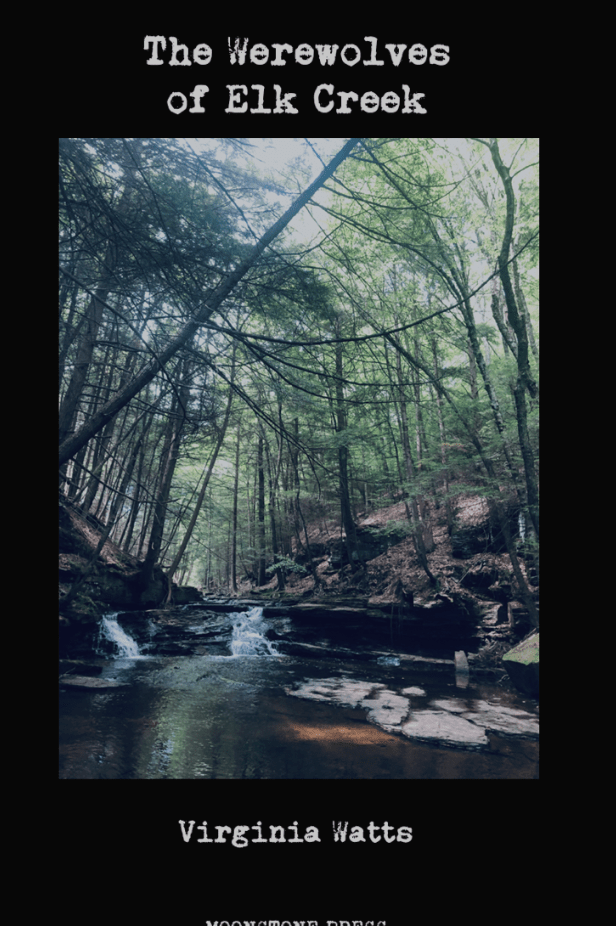
 are available from Moonstone Press. And her debut short story collection Echoes from the Hocker House is not to be missed!

In October OSP will present a live reading with Virginia, Anthony Doyle, and Alan Bern. Find more information here.

And it’s not too late to get into the last Instant Noodles issue for 2025!

Submitters Beware

There has been much in the news within literary circles lately about literary journals with questionable practices, mostly focused upon submission fees and how these fees are used. No one should question the idea that it is expensive to run a literary magazine with such costs as editing and overhead, and most importantly, not everything about submission fees should be seen as negative. It is possible that when writers must pay a nominal fee to submit their work to literary magazines, they may be inspired to submit a more edited and stronger piece. However, it’s one thing to pay $3.00 to one journal to submit but let’s face it, most writers must submit the same piece to many magazines if they want to increase their chance of having it published. This is why submission fees can really add up. There is also the idea that if submission fees are charged, less submissions will come in and this will lead to faster publication decisions by editors. Like it or not, it does seem that submission fees are here to stay. If we accept that fact, then we must understand some realities about submission fees.

I am not going to name names here, but some well know literary journals have been engaging in practices that are shameful. It’s hard enough and expensive enough to be a writer trying to get work published in literary journals without these bad actors but, unfortunately, they do exist. One well known journal accepted submissions and charged for over a year but had already stopped reading and publishing new word. They later folded and changed their name. I have personally submitted to journals several times only to realize they had gone defunct. I was never able to get my submission fees back. Recently, several well-known journals held contests, charged the high submission fees customary in literary contests, and never announced any winners. Suffice it to say that just because something calls itself a literary journal doesn’t mean it should. 

So, what is a writer to do? How can we protect ourselves from unethical practices and scam journals? Here are some practical ideas to consider.

  1. Is the journal listed on reputable databases such as Poets and Writers, Submittable, NewPages.com, Clifford Gastang Literary Magazine Rankings, MLA International Bibliography, JSTOR
  2. Is the journal’s website polished, free of grammatical and spelling errors. Is it easy to navigate? Does is look professional? A poor website design might be a cause for concern.
  3. Do their publication terms comply with normal industry standards. Publication guidelines should always be clear and concise and include all requirements such as formatting parameters. 
  4. Be very concerned if a journal is asking for all rights to your work. They should be asking only for first serial rights. 
  5. RED FLAG: Is their submission fee unreasonably high? Are they charging $15.00 as an example when most journals are at $3.00. This should worry you.
  6. Do they explain why they are charging a submission fee of any amount?
  7. If they do charge submissions fees, do they also have yearly contests where they offer a monetary prize?
  8. It should never be difficult to find contact information on the journal’s website, and there should be some explanation of who the editors are and what their editorial process is. A journal should have a physical address and an email address.
  9. Look at their publication history. Have they been publishing consistently? Can you purchase copies of the journal on their website? Look at the most recent issue. Look at the quality.
  10. If the journal has a blog on their website, is it being maintained? 
  11. Does the journal submit work to contests such as Pushcart Prize or/and O. Henry Awards?
  12. Do they have a social media presence such as Facebook where they regularly promote the work they publish?
  13. Be aware of any unrealistic or boastful claims about readership. 
  14. If you are submitting to a contest, look to see if the list of winners from last year’s contest is listed on the journal’s website. It should be.
  15. Be aware if a journal repeatedly pushes back contest deadlines. 

I have been submitting to literary journals for many years and have been lucky to have some level of success. Be aware of where you are sending your writing, but don’t let a few bad apples dissuade you from submitting to literary journals!!! The overwhelming majority are ethical to a fault and the writing world would be lost without literary journals. They are an invaluable part of our art form. I read literary journals, subscribe to them, admire them immensely and thank them for all the wonderful writing they bring to the world. So, happy submitting to my fellow writers and the best of luck to you all!

~Ginny

Virginia Watts has been fortunate to have published nearly 100 pieces in literary magazines including CRAFT, The Florida Review, Reed Magazine, Pithead Chapel, Permafrost Magazine, Broadkill Review, Two Thirds North, Hawaii Pacific Review, Sky Island Journal, Eastern Iowa Review, Evening Star Review and Streetlight Magazine. Nominated four times for a Pushcart Prize and four times for Best of the Net, in 2019, Watts won The Florida Review Meek Award in nonfiction.

Virginia’s new book is now available from Old Scratch Press:

Her prior poetry chapbooks Shot Full of Holes and The Werewolves of Elk Creek 

 are available from Moonstone Press. And her debut short story collection Echoes from the Hocker House is not to be missed!

INDIE PUBLISHER DEVIL PARTY PRESS LAUNCHES NEW IMPRINT

IN THE NEWS

Old Scratch Press will feature original chapbooks and short-form prose

For Immediate Release

June 15, 2023 – Los Angeles: Devil’s Party Press of Los Angeles announced the launch of a new publishing imprint, Old Scratch Press. This new imprint, based in southern Delaware, will produce quality chapbooks that feature poetry and short-form prose by leading authors.

Supporting this endeavor will be ten contributing editors, members of the Old Scratch Press Short-Form Prose and Poetry Collective: poets and writers Alan Bern, Anthony Doyle, Ellis Elliott, Robert Fleming. R. David Fulcher, Gabby Gilliam, Morgan Golladay, Nadja Maril, Dianne Pearce, Janet Holmes Uchendu, and Virginia Watts who will work together to help promote the love of poems and short form prose.

Old Scratch Press’ inaugural publication is Break in the Field, a collection of verse by award-winning poet, Ellis Elliott. Ms. Elliott is a contributing writer for the Southern Review of Books, an editor/workshop teacher for The Dewdrop, and facilitator of the Bewilderness Writing Workshops. Her publishing credits include Signal Mountain Review, Ignation Literary Magazine, and Literary Mama.

Break in the Field addresses how human perception can change, depending on the vantage point. “I am a perennial student of nature, inner realms, and the wisdom of the body,” says Elliott, “and I write to bear witness and disentangle the world as I perceive it.” Break in the Field will be available in mid-July 2023.

November 2023 will see the publication of White Noir, a chapbook by Robert Fleming. White Noir is a black and white visual poetry exploration of human birth to death and beyond on Earth. A prize-winning poet who explores masculinity, sexual orientation, sin and virtue, and dystopia in words and graphics, Fleming is a self-described word-artist whose work has been published internationally in more than 95 print and online publications, and has appeared in art galleries and in online mic features. “The vibe is dark, Goethe, and dystopian, but I lighten it up by including humor, and it offers a hopeful ending,” notes Fleming of his upcoming collection.

Beginning in 2024, Old Scratch Press will produce three or more original titles per year, available in both print and Ebook formats. For more information visit oldscratchpress.com and devilspartypress.com.

About Devil’s Party Press
Devil’s Party Press, LLC, an independent publishing house located in Los Angeles, was founded in 2017 by Dianne Pearce, an award-winning author, editor, and publisher. The mission of Devil’s Party is to help showcase the work of unsung authors over 40 years of age. Devil’s Party publishes literary fiction while its four imprints are genre specific: Gravelight Press (horror), Hawkshaw Press (crime/cozy), Out-of-This-World Press (sci-fi), and Old Scratch Press (poetry). To date, Devil’s Party and its imprints have published over 200 authors internationally. In addition to print publications, Devil’s Party produces the award-winning online literary magazine, Instant Noodles

Introducing Collective Member Virginia Watts

“My prose and poetry is about daily human life, the small moments in the hometowns of contemporary America,” says writer and poet Virginia Watts. “Through my work, I hope to celebrate the unique characteristics of close-knit communities, shared family histories, local war heroes, larger-than-life characters.  I am interested in exploring the concept of home, whether that is a city, suburbia, rural life, the far future. Why does one person leave while another stays? Why do some people go back? What haunts those who never do?”

Ten dedicated writer poets comprise the Old Scratch Short Form Collective, with the goal of working with the Devil’s Party Press, a small independent publisher, to bring to fruition the concept of publishing chapbooks of poetry and short form prose under the imprint Old Scratch Press.

This week we are introducing Virginia Watts.

Virginia Watts is the author of poetry and stories found in CRAFT, The Florida Review, Reed Magazine, Pithead Chapel, Permafrost Magazine, Broadkill Review among others. Her poetry chapbooks are available from Moonstone Press. She has been nominated four times for a Pushcart Prize and Best of the Net. A short story collection is upcoming from The Devil’s Party Press.

On her website she introduces herself by stating, “I have always been drawn to creating with words. In fifth grade, I began staying inside during recess to write stories. I didn’t care about the taunts of “nerd,” because once my pencil hit the paper it never stopped flying until the bell rang. I wish I’d kept those notebooks. I do remember one entry was entitled “Peanut Butter and Peas.”

To enjoy Virginia’s poetry and prose, there are no shortage of opportunities available just by googling her name, but here are links to two notable poems you might enjoy. The first poem published by Two Hawks Quarterly is entitled “The News” and the second one, first place winner of the Joan Ramseyer Poetry contest, is entitled “Choose a Memory to Keep.”

If you’d like to learn more about Virginia’s writing practice and sources of inspiration, this link to her interview with Dark Lane Books will provide more insight.

And don’t forget to visit our Facebook Page and follow us on Twitter to find out what our contributors are up to and the latest poetry news. Thank You as always for your support.

INTRODUCING COLLECTIVE MEMBER ROBERT FLEMING

Ten dedicated writer poets comprise the Old Scratch Short Form Collective, with the goal of working with the Devil’s Party Press, a small independent publisher, to bring to fruition the concept of publishing chapbooks of poetry and short form prose under the imprint Old Scratch Press.

This week we are introducing Robert Fleming. His chapbook White Noir will be published in the fall of 2023.  Don’t forget to subscribe to our blog, as we’ll be introducing the contributing editors, member of the collective, one by one each week. You’ll also learn about poetry events, publishing opportunities, and new ways of approaching the genre of short form.

MEET ROBERT FLEMING

Robert Fleming is a word-artist born in Montreal, Quebec, Canada who emigrated to Lewes, Delaware, United States. Robert follows his mother as a visual artist and his grandfather as a poet. In his work, Fleming explores masculinity, sexual orientation, sin and virtue, and dystopia in words and graphics on earth and beyond.

Since 2017, more than 400 of his works were published internationally in more than 95 print and online publications, art galleries and online mic features. His style is influenced by the writers Robert Frost, Dr. Seuss, and the Beats and his graphics by surrealistic artists like Salvador Dali.  A Member of the Rehoboth Beach and Horror Writers Association, nominated twice for the Pushcart Award and twice for Best of the Net,  Robert Fleming’s is the winner of the  2022 San Gabriel Valley California Poetry Broadside Award and is in the 2021 Best of Mad Swirl.

Robert’s chapbook, White Noir, a Black and white visual poetry exploration of human birth to death and beyond on earth, is scheduled for publication in the November of 2023. He says about the book, the vibe is dark, goethe, and dystopian, but I lighten it up by including humor. And,” he adds, “ it offers a hopeful ending.”

Follow Robert on  https://www.facebook.com/robert.fleming.5030 .

Learn about the other writer/poets in our collective in the upcoming weeks, or click on their links here:

Alan Bern
Anthony Doyle

Ellis Elliot
Gabby Gilliam
Janet Holmes Uchendu
Morgan Golladay
Nadja Maril
R. David Fulcher
Robert Fleming
Virginia Watts

In just four more days April will be here, and you know what that means?… National Poetry Month!  If you have a favorite poem, we’d love to hear about it and possibly post it ( if it is in the public domain). Please use the comment space to get in touch, We’ll be sharing favorite poems and pieces we admire along with writing prompts, thoughts and musing about poetry, short form prose and other hybrid forms.

Old Scratch Press Logo

Do you have an idea for something you’d like to read about in this space? Let us know. Follow us on Facebook, Twitter, and Instagram.


WELCOME TO OLD SCRATCH PRESS

Hi~
Dianne from Devil’s Party Press (DPP) here.
Did you know I studied the writing of poetry when I was in college?
I love poetry, and there is a growing interest in it, but still not enough places to share it.
I reached out to some of the poets we’ve published at DPP, and asked them if they would like to do some volunteering to get a poetry imprint going, and, luckily, many of them said, “Yes!”
Poets are, by nature, generous people.
Together, I hope that we can publish good poetry. I hope that, over time, the poets will run the kitchen, cooking up new books, anthologies, opportunities, awards, who knows what all for poets!
My goal for this year is to put out a single author collection of poetry for three of the poets who are volunteering to create and run the press.
Our “poets” decided, to begin with, that poetry is as unique as the poets who create it. So they decided to make poetry include what we might consider to be a traditional poem, as well as more short-form works, mini memoirs, bits of story, and to include art, as it please the members to do so.
I think it’s going to be creative and exciting, and I cannot wait to see what they dream up.
Look for posts from the members here as we get underway on this project. I’m starting us off, but I hope they’ll soon eclipse me as they create something wonderful to which DPP becomes the helping hand.
The members of the group are:
Alan Bern
Anthony Doyle
Ellis Elliot
Gabby Gilliam
Janet Holmes Uchendu
Morgan Golladay
Nadja Maril
R. David Fulcher
Robert Fleming
Virginia Watts

And the first book from the group, A Break in the Field, by Ellis Elliot, is forthcoming from Old Scratch Press (OSP) this summer!

I wish all these wonderful authors a lot of luck with the OSP project!

And thanks to you for loving poetry, following this group, and maybe even buying a book!