So confused. Isn’t a voice linked to speaking, singing, and screaming? What does a voice have to do with writing? What the fu** Robert?
A “writing voice” refers to the unique style and personality a writer expresses through their writing, which is a combination of their vocabulary, tone, sentence structure, and perspective, essentially how their individual personality comes across on the page.
Most poetry magazine acceptance rates are about 2.4%. In order to increase your chance of publication acceptance success, create a writing voice and then target publications that have published work with your voice within the last two-years.
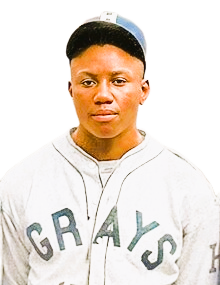
A writing acceptance rate is like a baseball player’s batting average (BA). Josh Gibson’s 1946 BA of 37.2% is the highest career Major League Baseball BA.
Josh Gibson
My poetry voice profile:
Style: experimental
Themes: masculinity, sexual orientation, sin/virtue, dystopia
Forms: visual poetry, free-verse, Japanese Haiku/Mondo, sonnet, and pantoum
Devices: sound (rhyme, alliteration, assonance), duality, homonyms, multiple-word-reversals, and end-titles
CREATING a WRITING VOICE
Oh NO Mr. Robert, an assignment is coming. Sir and madam, it is, I cannot lie.
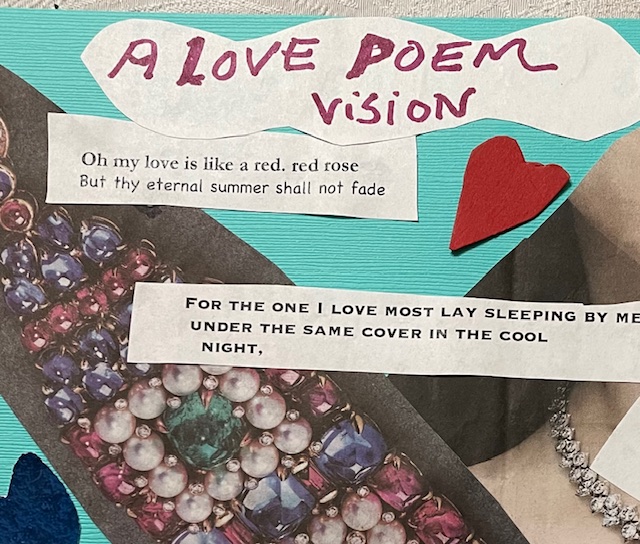
A sleepless night, 3/14/1996, yours truly obsessed compulsed, to translate four of his favorite poets to a gay style: Robert Frost, William Shakespeare, John Berryman, and Dorothy Parker.
What I did for each poet:
Select a favorite poem
Analyze and document what the poem is (theme, form, devices) and why you like it
Read the poem out loud
Make an audio recording of your reading
Handwrite the poem
Type the poem
Translate the poem to your style
Place the original poem and translation side by side
What was the outcome impact of yours truly doing this exercise:
In 1997, a follow-up creation of a visual poem that translates Dorothy Parker was included in art show in the District of Columbia
Self-discovery that my style is experimental and an integration of one of the poets studied: Robert Frost and another poet: Dr. Seuss
More Voice Discovery guidelines: make diverse selections
Select work written in different time eras: 50% 1,800 or earlier, 50% 1,900 and later
Gender: 50% men, 50% woman
Style (traditional vs experimental): at least 1 experimental
Discover your writing voice and use it!
Yours Truly is:
Robert Fleming, a contributing editor of Old Scratch Press
Thank you for reading. Please sign up to follow us on Facebook and to follow us here on WordPress to expand your knowledge about poetry and short form writing as well as to receive the latest news about publication opportunities.
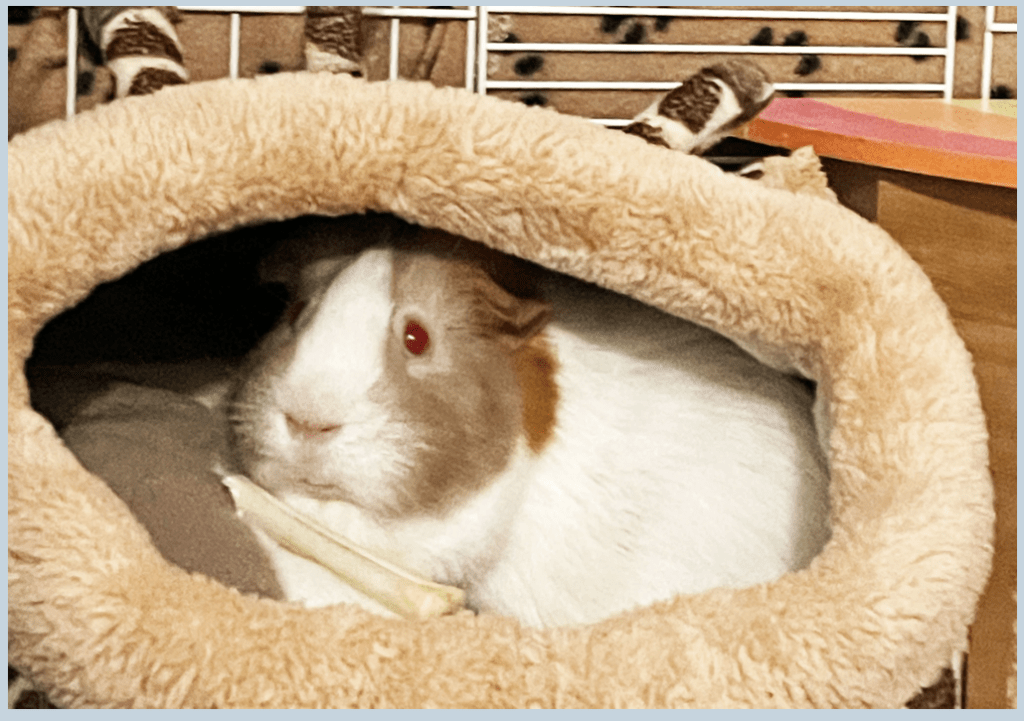
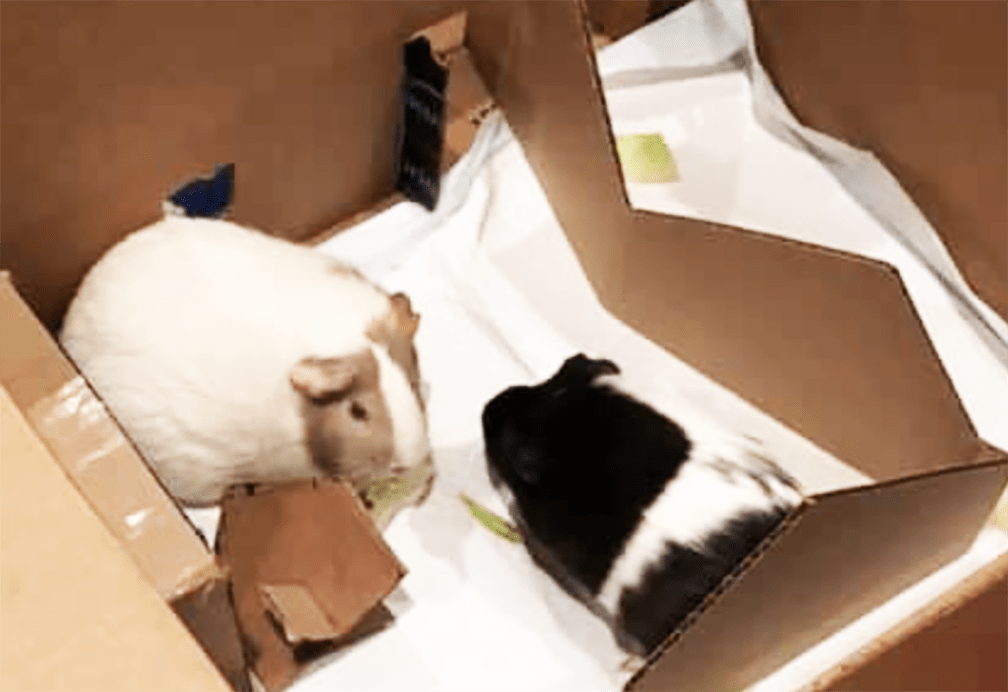
Just before the pandemic (the 2020s I feel the need to say for when we all are history), we were in search of a better situation for our daughter, and we moved her to a private school. She went from a class of 30 to a class of 12, and her academics improved immediately, though our finances did not! As a part of her classroom they had an animal student, the lovely Miss Addie pictured above lounging in her hidey with a tasty piece of bamboo. The school asked for a volunteer family to take her home over the Christmas break, and we volunteered. Addie and I bonded immediately (I am the pet-whisperer), and I must admit I delayed sending her back to school in January by almost a full week. When the school was shut down over Covid in March they asked me again if I would take her, and I eagerly said yes. She moved in with us, and by May the lovely school announced it was going out of business. Addie became family. During the stay-home days our daughter took courses on Outschool (highly recommend) where she learned female guinea pigs preferred to be in pairs. We then adopted Baby from a pet store. It turned out that Addie did not prefer to be in pairs, but eventually a tolerance developed.
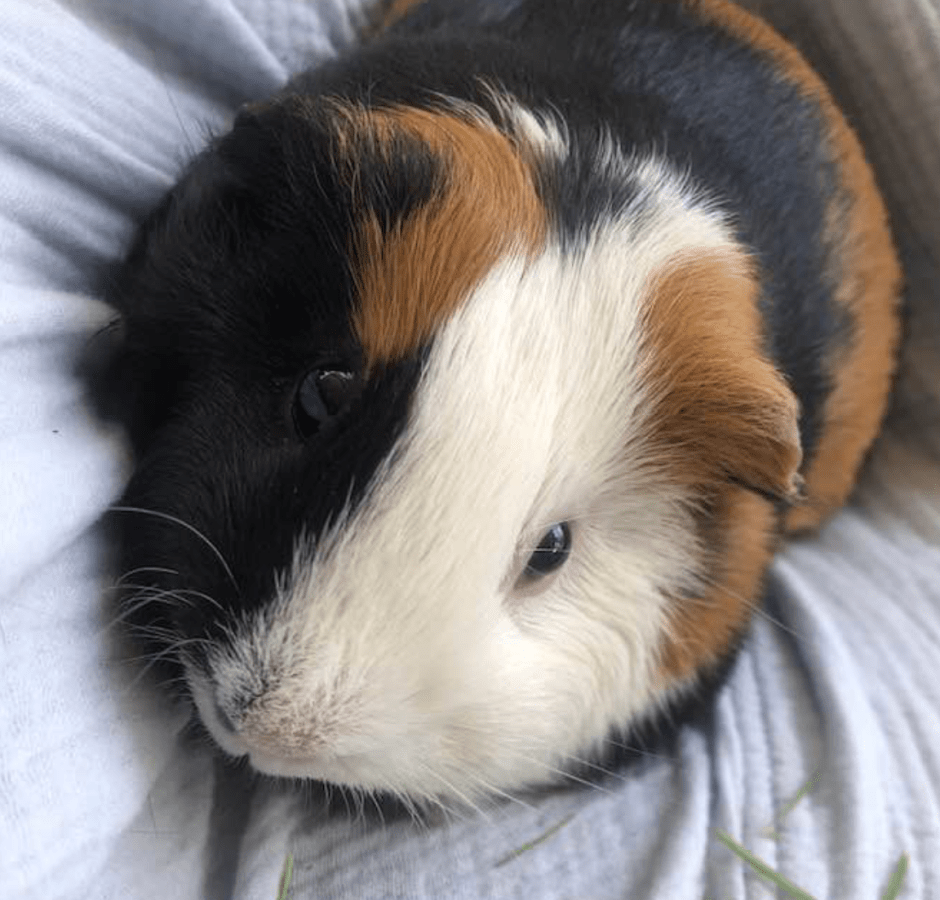
When we moved back to California, again for a better school experience for our daughter, we drove across with two cats, two guinea pigs, and one dog. About a year after we settled in, I woke up a few days before Christmas to find Addie had left us. Baby, it turned out, was desperate not to be alone, and went on a hunger strike. After a forcing some food into her for two days (guinea pigs must eat constantly or they die), we adopted Punky (who looks a bit like a pumpkin). This past summer Baby followed Addie to Valhalla, and I saw, stretched before me, a long line of guinea pig adoptions for the rest of my life. I waited with bated breath until, lo and behold, it seemed Punky took after Addie, bless her. She seemed very interested in checking out Baby’s viewing and memorial, but then she was fine to have all the snacks and seed balls and pigetti (corn silk) to herself. She moves, in her luxuriously large cage, from hidey to hidey during the day, alternatively napping and yapping. She has a lot to say to me, and we perform a call and response between us where I say, “Woooo, Punkus!” and she chirps away back at me, whooping louder and louder until I bring her some fantastic treat.
The guinea pigs, as much as I don’t want to have a long line of them stretching to the end of my life in front of me, are part of my life’s rituals, and I love the job, and someday I know I will mourn the loss of it, as I mourn both the beautiful, pink-eyed Addie, and Baby, who looked like a tiny Holstein. Every other morning, without fail, I awake before the sun and the rest of my family, chat away with Punky as I remove all her bedding (I use cloth bedding, nice fluffy fleece pads), and all her hay, and all her snacks and poops, and I clean out the cage. All the linens go into the washer for a hot wash and an extra rinse, and the cage is refitted with clean bedding from my ample supply. Then I top off the snack bin (hay rings, seed balls, vitamin C chews), put in fresh hay, and add in some salad (lettuce, peppers, fresh baby corn, that sort of thing) and set Punky up for her new day. It takes me about 40 minutes (not counting the laundry time) and during that time I do not have to think what move to make next, and my conversation (Wooo Punkus!) pretty much doesn’t change, and is not the most thought provoking. That gives me some early-morning time to freshen up my brain as I freshen up Punky’s cage. We both enjoy it. For me it is both calming, and nurturing as I nurture my little Punky, and there is a clear sense of accomplishment in looking at the “beautiful once again” cage.
Of course, you might think, that’s a lot of work, lady, for a kid’s pet, work that the kid should be doing. My daughter and I traded years ago because, when Addie first moved in, my daughter was too short to clean the cage, and not very quick or proficient at it. I offered to trade emptying the dishwasher (a chore I despise). She agreed. So now she’s stuck with it! And I get the meditative and soothing time with Punky.
I want to address this next paragraph to my fellow non-believers out there, or, perhaps, non-conventional believers is a better term. I was raised really immersed in a traditional Christian church, but, as long as I can remember, though I didn’t really balk against going until late into my HS years, it had no effect on me. I didn’t click into the whole thing. I often read the Bible in church from boredom during the long services, but it came across as fairy tale to me, and the emotions I saw people experience in church were not there for me. Even during my beloved grandmom’s funeral, who loved her church dearly, what I remember feeling, aside from loss, was that I would have preferred to be somewhere else, somewhere emotionally warm, to hold her in my thoughts. I have no doubt that my delight of a grandma is somewhere, in some form, still being a delight, but hooking it into her own religious beliefs is beyond me. So, there are two points I want to make here about that based on my experiences in life: ritual, which is done so well by churches/temples/mosques, and their like, is not owned by them. And life needs ritual for space to process and to get in touch with emotions. We are all different, and some of us need more ritual in life than others, and that ritual can be as simple as how we decorate for holidays, certain meals we make at certain times, celebrating our own birthdays (of course! I’m glad I was born!). Ritual is, really, meditation, and for me it is more profound when it is a natural thing in my life rather than what I would view as a forced, arbitrary movement. The guinea pigs are a delight too. Their personalities remind me of my chubby grandma in many ways. She often whooped, and loved eating too. There’s no reason they should not be connected in my heart and in my thoughts. I love the ritual that they are.
And during the “mundane chore” of cleaning the guinea pig cage I get a lot of writing done (in my mind, not on my computer!). It’s a reset for me as well. There’s no pressure for perfection, and the thoughts roll in and out like a calm tide.
Of course Princess Punky will not outlast me (I am optimistic enough to assume). And I want to just mention my second very early morning ritual that will ride with me to the bitter end. OHHHHHHH…….
All I want is a proper cup of coffee Made in a proper copper coffee pot I may be off my dot but I want a proper coffee In a proper copper pot Iron coffee pots and tin coffee pots They are no use to me If I can't have a proper cup of coffee In a proper copper coffee pot, I'll have a cup of tea!
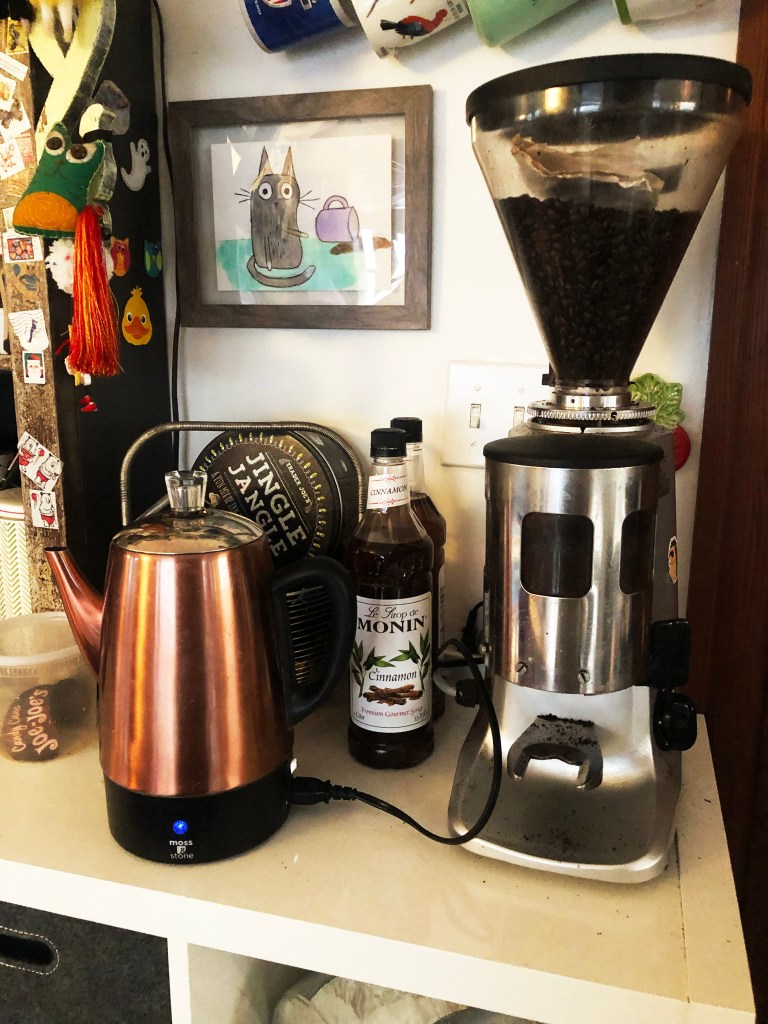
Gaze upon my magnificent second morning ritual… coffee made in a proper copper coffee percolator! A percolator has several ritual benefits: there are a few parts to take apart and clean; there is a prescribed way to put it back together, and when it is back together it moans suggestively and bubbles, and scents the air with perfume Chanel should be envious of. It is another opportunity for me to do labor that requires no brain power, that pleases me and affects me directly while also giving benefit to someone else (my spouse), and doing the “chore” brings about visible results that please me. It also offers me a hot cup to sip and enjoy as I slowly move from meditation to sitting down and writing out this post, or some other writing project.
Websters says that a blessing, as a noun, is grace (the thing said before meals), approval or encouragement, or a thing conducive to happiness or welfare (by which I take it Websters means well-being). Rituals are a blessing. And, for me, a lot of my blessings are my routines. I exhort you not to deny yourself of the blessing of your routines, even if they are “chores” (such a dirty word!). Slow them down a bit; use them to slow your thoughts, and plum the richness of repetition, a moment with no planning and no management needed, a moment on autopilot. There are so many writing gems to be found there, as well as quite a lot of balm for the nervous system. Enjoy that walk with your dog, scritches for kitty, a hot cup of coffee, or, if you can’t have a proper cup of coffee, a hot cup of tea. 😉 Whoop whoop!
By Nadja Maril, a Founding member of Old Scratch Writing Collective
The dog is digging a hole in the sand. After chasing and fetching her ball numerous times, she has decided to bury it. It’s a game of make it disappear and find it again, a game she can play all by herself while I sit and listen to the waves slapping against the shore. I love this sound. It doesn’t matter where I am, if I’m near water coastline I’ll find a beach. The sounds of water soothe me. And I’m not alone in craving water sounds. A babbling brook, the torrent of a waterfall, the crash of ocean waves: are sounds that both inspire and invigorate.
Of the five senses—sight, smell, touch, sound, taste— one of the five will often be more prominently experienced than the other four. And this can change, depending on the situation. I find, when I tap into my memory bank, that sound is most frequently my touchstone. I think of a scene and I hear it. The rise and fall of the voices, crickets chirping, the sputter of an outboard motor, heavy breathing.
WRITING PROMPT
A classic writing exercise is to describe the place you call home. If you are truly honest with yourself, the exercise will force you to select the place you long for, if you’re not already living there. In order to describe it, you’ll be choosing the details that pop out in your mind. The exercise provides a short cut, so to speak, to grasp what you value most.
Flash Fiction writers, you can use this prompt to channel you directly into the characters you create. Where do they feel most secure? It can tell you a lot about a person.
For me, home is the beach. It’s a happy place where I can walk for miles, build sand castles, swim in the waves and float on my back with the sun in my face. During childhood it was the Provincetown beach at the end of Kendall Lane. Today it is Cornhill beach in Truro a few miles away. The first glimpse of water and sand, the sound of the waves pushing into the shore, the smells of salt and seaweed, the wind against my face; I am home. From both beaches, if I look eastward I see the very tip of the Cape Cod peninsula curving around, creating a sheltered harbor. Out across the bay is Long Point Light Station.
When following a writing prompt or exercise, allow your thoughts to freely flow. Do not self-censor while writing. Once, you’re finished you can cut words, sentences or entire paragraphs. But if you analyze every word you select, you won’t get very far.
The subsequent step after spending twenty to thirty minutes writing a description of “home” is to read what you’ve written and look for patterns. Does one sense, such as smell, dominate the prose. Are there duplications of the same idea that cloud the focus? Challenge yourself to deepen the scene by adding action or dialogue.
Whenever I’m “stuck” and looking for a fresh something to write about. I challenge myself by creating a prompt or borrowing a prompt idea from another writer. The ideas are out there, you just need to make the time and have fun with what you create.
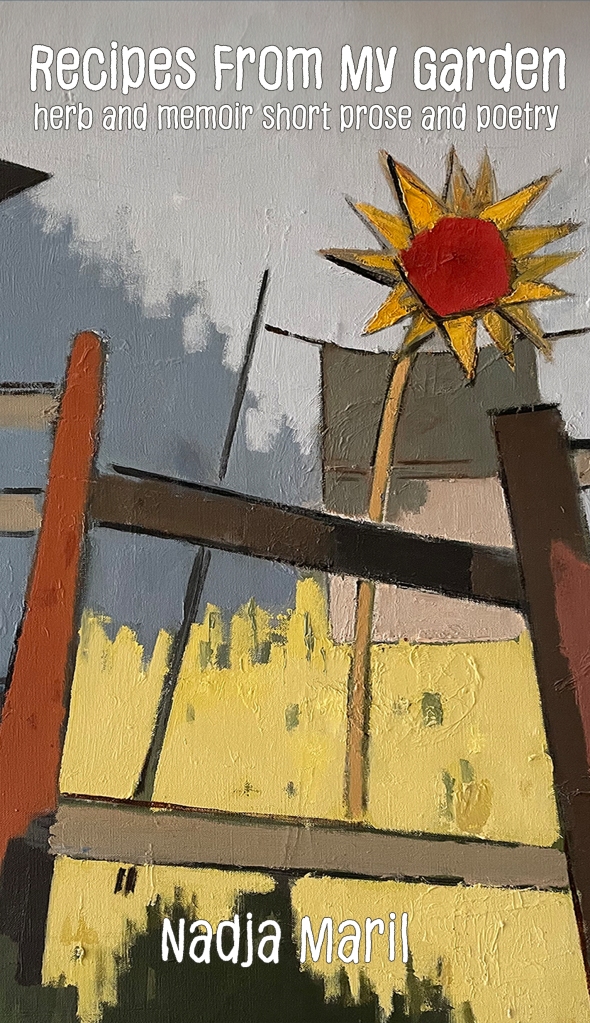
THANK YOU for reading. Have fun. And please, if you like my writing, you can support my efforts by buying a copy of my chapbook RECIPES FROM MY GARDEN– Poetry, Flash CNF and Short Essays (Old Scratch Press Sept. 2024) a great gift to yourself and for friends at $8.95. My chapbook is just one of the many fine books published by the imprint Old Scratch Press.
Founding member Robert Fleming share his insights on How to be successful at publishing your first creative writing work
You’ve put it on your bucket list to be a published author. Well done. Who are you doing this for: yourself, others, or both?
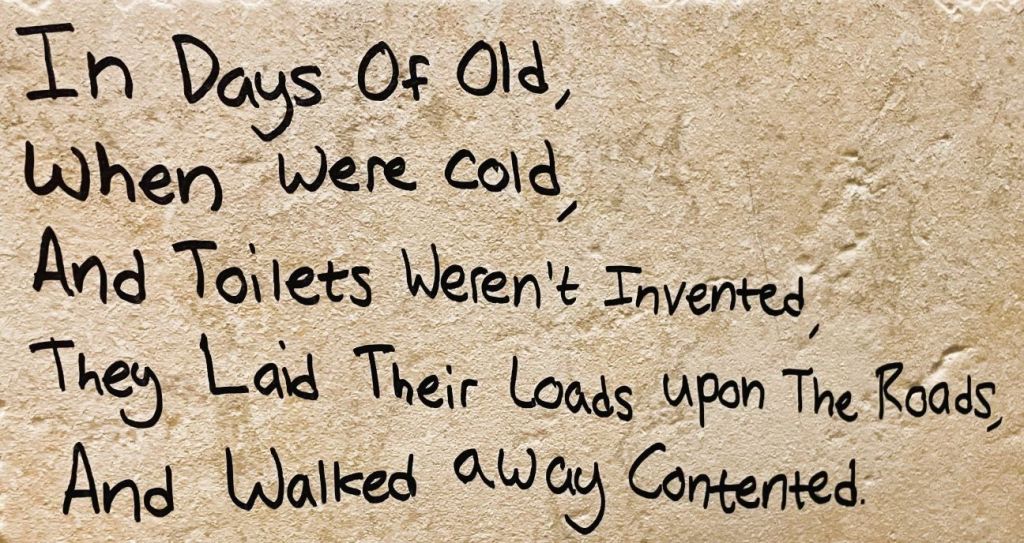
Yours truly, without even knowing, wanted to be published. In 1973, at age ten, I published text on the bathroom brick wall of Roslyn Elementary School in Westmount, Montreal, Quebec. My work looked like the work following but also had curse words and genitalia graffiti.
Bathroom Wall Poem
This talented toilet author made choices: what topic to write about (poo poo), what language to use (English), where to publish (on the bathroom on brick), who the publisher is (self), what genre (poetry), what poetry devices to use (rhyme, humor, 5-lines), and to not disclose the author name (anonymous).
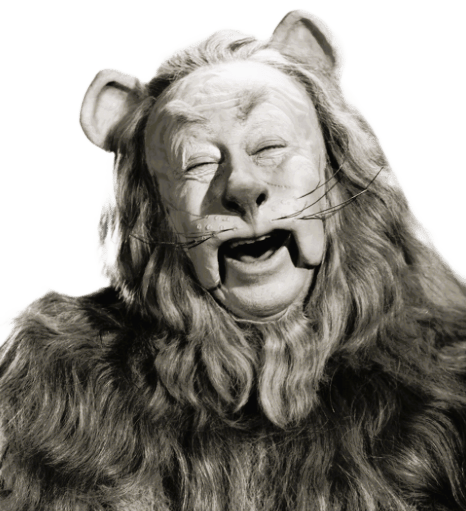
Where you target your publication is guided by your confidence (courageous or timidity) about having other human see and judge your work. If you are feeling timid like the Cowardly Lion, publish your writing in your personal diary. Be sure to select a diary with a lock and attach the key to your necklace that you wear even when you shower.
Cowardly Lion from movie Wizard of Oz
If you get a little courage, self-publish your work on social media (Facebook), like I did in the following work. On Facebook, other humans will see your work, but you will not experience the review/selection of a judge who accepts or rejects your work.
If you find the courage of Joan of Arc, send your work to a publication where work is selected by an editor.
Joan of Arc
Tips for setting yourself up for your best chance of publication acceptance • For your first publication, select a publication that has a fifty-percent or greater acceptance rate like vanity press where you will have to buy a book that could cost $50, an organization newsletter like a religious one you are a member of or a school you are an alumni of. • Read the target publication and only submit to them if they publish work similar to yours (genre: poetry, theme: love) • Read the submission directions and follow them: sometimes there is a theme like love. When there is a theme only submit work that is the theme requested.
Ready? Take a bid breath in, hold three seconds, exhale. What is your publication confidence: timid or courageous. Go forth.
Many people are familiar with the haiku, an unrhymed form of poetry that dates to 17th Century Japan. It consists of three lines and observes a strict five, seven, five syllable count. Traditionally this form of poetry was about nature, often seasonal change captured in a moment of time. Matsu Basho is considered the be the haiku master who brought haiku into its place as a serious poetic form.
Here is one of his well know poems.
An old silent pond . . .
A frog jumps into the pond,
splash! Silence again.
People may be less aware of Western or American haiku which is often not as strict in form but nevertheless mirrors the traditional haiku. The reason for a more relaxed rule on syllable count is that the syllables in Japanese don transfer smoothly to English. Some famous poets known for American haiku are Amy Lowell, Sonia Sanchez and Ezra Pound.
Jack Kerousc
Then there is Jack Kerouac who wrote thousands of haiku and often included them in his correspondence and novels. Kerouac was a serious Buddhist who credited composing haiku with sharpening his mind. He was drawn to the idea of keeping poetry simple without trickery. Here is Jack Kerouac reading some of his Western haiku: https://www.youtube.com/watch?v=WMwAtOom7CA
The allure of the haiku form rests in showing the beauty in the ordinary, in the belief that simple moments should be captured and preserved. It’s fun to draft haiku. People are often surprised by how much they enjoy it. Some tips: Keep a notebook with you to jot down observations, ideas, those little, unexpected life events that none of us can predict. When you have something you want to write about, do it. Don’t worry if your idea seems silly. Write about what inspires you and don’t look back or question the inspiration. For a first drafting session, try grouping words in a loose 5 -7-5 format. Don’t try to be perfect or overthink this part. Go for flow, rhyme secondary to an honest reflection of what inspired you. The next step is to put your draft on the back burner. This helps with all forms of writing. After drafting, put a temporary distance between you and your draft. As Jack says:
Nightfall—
too dark to read the page,
Too cold.
—Jack Kerouac
In a day or two return and rework as necessary. Look for awkward syllables or weak word choices. Most of all, trust your gut. If the haiku represents what you wanted to capture and keep then you’ve done it! Bravo! Drafting haiku is wonderfully addicting and rewarding. It’s like a bag of chips. You won’t stop at one.
Virginia Watts is a member of the Old Scratch Press Poetry and Short Form Collective and the author of Echoes from the Hocker House.
We learn from asking questions, and what better way to explore the craft of writing than through an engaging Q&A with an author! This month the author I’m interviewing is R. David Fulcher who happens to be a member of the Old Scratch Press Poetry and Short Form Collective.
R. David Fulcher is a talented author with multiple books to his name. His most recent work, a captivating short story collection titled THE PUMPKIN KING AND OTHER TALES OF TERROR, showcases his passion for storytelling. A writer of both poetry and prose, he deeply loves speculative fiction, particularly science fiction and horror. You can explore more of his work on his blog at Rdavidfulcher.com.
This is the perfect month—the season of ghosts and goblins—to delve into the exciting craft of writing horror. Most of my questions in this post will focus on the intriguing insights from THE PUMPKIN KING AND OTHER TALES OF TERROR. Let’s celebrate the art of writing together!
Q: Question
R: Response
R. David Fulcher
Q: As a writer, what is your primary goal when interacting with your readers?
R: As a horror writer, I have two primary goals: 1) Establish an “eerie” atmosphere; and 2) Elicit a physical response in the reader. Yes, I hope to stimulate the readers’ minds as well, but I primarily want to elicit fear – a racing pulse, the small hairs standing up on the back of your neck, a shiver in your spine – only good horror tales have this effect.
Q: Was there a specific moment you remember, perhaps an experience that spurred you on to want to write this particular book?
R: The Pumpkin King and Other Tales of Terror (and the follow-up volume “Asteroid 6 and Other Tales of Cosmic Horror”) is sort of a “greatest hits” collection of my short stories, so unlike a traditional novel the stories were developed over many years and inspired by many moments and experiences throughout my life.
To give a sense of the age of some of the stories, the title story “The Pumpkin King” first appeared in a small press magazine entitled Mausoleum back in 2001! Of course, all the stories have been heavily revised in the new book.
To provide an experience that spurred me to write a particular story, “Castle Marienburg” was inspired by a tour of that very castle during a visit to Germany in college.
Q: As both a horror writer and a poet, how has Edgar Allen Poe influenced your work?
R: In a way, Edgar Allen Poe led me to my genre. My high school English teacher taught a semester on Poe, and I was hooked. I started writing dark, gothic short stories that day after school and submitting them to small press magazines shortly thereafter.
Q: Writing poetry and writing prose, how has the two different types of genres influenced each other in your writing?
R: My love for both poetry and prose has caused me to experiment with inserting sequences of poetry into my fiction. Some examples of my stories that include embedded poems are “A Night Out with Mr. Bones”, “The Faerie Lights”, and “All Across the Mountain”.
Q: Did you work alone or did you rely on some feedback from others?
R: I initially write on my own, but I really enjoy it when people close to me review my work and give feedback on it. For example, my brother Dale helped proofread the manuscript for The Pumpkin King and Other Tales of Terror, and after reading my short story “Asteroid 6” my wife Lisa was really impressed with the tale, so I was inspired to title my second volume coming out this Fall as “Asteroid 6 and Other Tales of Cosmic Horror”.
Of course, my publishers David and Dianne are also tremendous editors and their feedback has been essential to my work.
Q:Do you imagine you are writing for a specific person or a certain audience?
R: No specific audience. I will say that my writing is almost always in the realm of the fantastic, so fans of my work must be able to “suspend their disbelief” and just go along for the ride, trusting me to take them to a magical, almost unbelievable ending, even if all the facts don’t line up with reality. I think fans of hard science-fiction (Isaac Asimov, etc.) will have a hard time enjoying my work.
Q: How do you approach revision?
R:This goes back to things I’d tell my former self. I used to put down the pen (yes, I write my stories out long-hand!) after a long, intense burst of writing (sometimes an entire story in a single sitting), push the manuscript back on the desk with a smile, and say “Perfect!”
I would then immediately submit the tale for publication, only to receive rejection after rejection, never understanding why.
I’ve finally learned that being a professional writer means spending almost twice the amount of time revising your work as you spent writing it in the first place. So I approach it like work. I allocate time for editing/proofreading, I set deadlines, and I hold myself to them. The difference between my original manuscript written after a burst of artistic inspiration and the manuscript after several rounds of revision is often night and day.
Q: If you could give advice to your younger self, what would you want to tell them?
R: I’d remind my younger self that the success of a book is up to me. I used to self-publish with AuthorHouse (formerly 1st Books) and believed that getting my book on Amazon and buying the publisher’s “marketing kit” would instantly propel me to fame and the bestseller’s list. I have learned the hard way over the years this is not the case. Publishing the book is just Step 1. The real work is in the marking and promotion.
Q: How did you find your publisher or did they find you?
R: David and Dianne of Devil’s Party Press (now Current Words Publishing) met at the Indie Lit Fest at Frostburg State University in Frostburg, MD. At the time they were accepting submissions for one of their Halloween Party anthologies and provided me with the information. I submitted and was accepted. The rest as they say is history!
Q: Do you have a specific horror story favorite you’ve read?
R: Several novels by modern horror writers have had a tremendous influence on my writing. They include “Something Wicked This Way Comes” by Ray Bradbury, “The Tommyknockers” by Stephen King, and “HIdeaway” by Dean Koontz.
In your own portfolio, a story you are particularly proud of?
R: I have a few favorites among my stories that don’t always correlate to fan favorites. The first is “Castle Marienburg”, which was originally titled “Eyes in the Night”. A horror editor in the small press called it one of the best horror stories he had ever read, which was very satisfying. Others include “Spectra’s Masterpiece”, a science fiction story about AI published back in the early 2000’s well before AI became a commonplace topic, and “The Land Spider” in the way that it incorporates native American mythology.
Q: Do you have a “day job” to help pay for your writing habit, and it so, has it impacted in any way your writing?
R: During my day job I work as an IT Contractor. My work with computers has spilled into my fiction with my stories “ELECTRIC”, where a boy becomes one with his home computer, and “The Witch Toaster,” where a group of programmers within an IT Department must battle supernatural forces.
Thank you for reading and visit the Old Scratch Press Website to learn more about our authors and upcoming publications.
By Nadja Maril, a member of the Old Scratch Poetry and Short Form Collective
Note: Everyone who writes has a different approach. This is a repost of a blog I wrote several years ago for my Nadjamaril.com website and since then I’ve gotten a whole lot of stuff published so it could be that some of this works.
I just started listening to Chuck Palahniuk’s Consider This: Moments in My Writing Life After Which Everything Was Different for the second time. I wanted to remind myself again to put into practice some of many sage tips he gives to writers. Tips that include: use multiple points of view, active verbs, short sentences, and nonverbal communication to reduce dialogue.
Being read, being published is the end game, but it’s the act of writing which is for me most important. Before we write we read. It’s my love of reading that drew me to writing. What better charge is there than finding the perfect assemblage of words to create in someone else’s mind— a feeling, a scene, a story. I’m addicted.
This is why I write. It’s the creative process I become emerged in that has me hooked. It’s an art form that evolves. And I always want to improve my craft. This means I’m always challenging myself to try different approaches and learn from other writers.
Each writer has different visions of what they’re striving to convey, but for me I’m seeking to find new ways to describe a scene and the inner thoughts and motivations of my characters. I listen to books on tape and also like to read words on paper. Helpful are a number of books on my shelf. About fifteen years ago I picked up Steven King’s bible for writers, On Writing, published in 2000. I bought it on the remainder table for one dollar. I think initially “literary writers” were dubious that the king of pop fiction would have useful advice, but now in 2021 his book is a favorite. Open the book to the section entitled “Toolbox” and you’ll receive sound advice like, “Remember the basic rule of vocabulary is to use the first word that comes to your mind, if it is appropriate and colorful.” In his section entitled “On Writing” King explains that he gets his writing impetus not from imagining What if?. “ A strong enough situation renders the whole question of plot moot, which is fine with me. The most interesting situations can be expressed in the What-if question:
What is vampires invaded a small New England Village? ( Salem’s Lot)
What if a policeman in a remote Nevada town went berserk and started killing everyone in sight. (Desperation)
Both Palahniuk and King emphasize the importance of reading other writer’s work, one of the best books to guide you in this is Francine Prose’s Reading Like a Writer (2006). The book covers all the craft elements so important for all creative writers: close reading, words, sentences, paragraphs, narration, character, dialogue, details, and gestures. What is most invaluable, in addition to all the books she cites throughout the text, is the reading list at the end. Yes, we may all be readers, but it is important to seek out unfamiliar authors who are masters of their craft. Best sellers come and go. Books fall in and out of favor and an important authors are forgotten. While many of the authors and books on her list I was familiar with, I got introduced to Elizabeth Bowen, Henry Green and Denis Johnson (Yes, Denis Johnson who I selected for my in depth research MFA research project) thanks to Francine Prose.
Try not to repetitively read the same authors you like. Discover old and new talent.
I’ve got a number of books on writing in my library, John Gardner’s The Art of Fiction, Jon Franklin’s Writing for Story and The Half-known World on Writing Fiction by Robert Boswell, but it seems that all these books are written by men. As more women and people of color take leadership roles in publishing, perhaps we’ll see books on writing from a more diverse group of authors. Meanwhile I will close with talking about one more favorite book, number four on my list. I’ve read Unless It Moves the Human Heart by Roger Rosenblatt (2011) several times. Rosenblatt’s book shares the writing process from the teacher’s viewpoint as he interacts with his students at Stony Brook University. He taught classes in poetry, creative nonfiction, and fiction and what ensues is a thoughtful introspective dialogue that stimulates the reader to look at their own work with fresh eyes.
In closing I will repeat again for emphasis, read as well as write. You are never finished learning how to be a better writer. So what are you waiting for? Have you written, revised, and re-revised some stories today?
Follow Nadja Maril on {“X” at SN Maril or read one of her pieces at Nadjamaril.com. Check out Nadja’s soon to be released chapbook, RECIPES FROM MY GARDEN here. Don’t forget to submit your brief piece or poems on the theme “Holiday Noods” to be considered for publication in the Winter issue of Instant Noodles here.
It’s the “dog days of summer.” Where I live we’ve had only brief periods of respite from the extra hot days, and these sweaty days force me inside, where they, ostensibly, give me more time to write. And so I am thinking about all of that. And I’m wondering, those of you who write, have you ever considered taking classes, or have you taken classes, in writing? It occurs to me that while my daughter can play a few songs on the piano through trial and error, she is much better when she is actively taking lessons. She doesn’t take lessons because she wishes to be the next piano great, or even play professionally. She takes lessons because she enjoys playing the piano, and would like to be able to play it better. I pay for the lessons gladly, without a thought about it. Do we do that as writers, with writing?
When I went back to school to get my MA it was because I wanted to get better at writing. Yes, I had the hope of publishing, but mostly I just wanted to be better at writing my stories and poems. I signed on for my MFA primarily because the teachers in my MA program, who were not affiliated with the MFA schools, suggested that I had a spark, and could get it even sparkier with more training. And so I did it, the MFA, for me.
I am curious and would love to hear what you think about this. Have you ever done any “professional” training for writing? Something like lessons? Have you spent money on your development? Do you hope to move from hobbyist to pro? Or, perhaps, consider and reply to this by telling me about lessons that you have taken in something else, or paid for in order that a child or someone else in your life is able to take lessons. I would be very curious to hear what you think makes something a skill that you might need training in versus something you come fully equipped for, without training.
I’m laughing to myself now, sitting here, thinking about “the dog days of summer,” and how I once paid for dog training for my prior delightful pup, an out-of-control terrier who I’d adopted when he was still a puppy. I had named him Chad,
and he came after I lost the dog who preceded him, a very fancy little terrier named BeBe who walked beside me like a queen, and never needed a leash or a single command, from the moment I brought her home. Chad, on the other hand, chewed everything: my toes as I crossed the room, my ears as I sat on the sofa or lay in bed, my boyfriend’s brand new Nikes, huge holes in his blanket, and he pooped blue wool for a week after, half a wooden magazine rack while I was at work one day, scads of toilet paper rolls. He peed everywhere. There was a moment where I listened to him cry from behind the baby gate in the kitchen thinking, “One of us is not going to make it out of this relationship.” I found a dog trainer all right. I could not wait for her to get to my house! And I remember her like it was yesterday, though it was more likely 2001, when she arrived, and I let the beast loose on her, and she said to me, “Okay. I can see he has a lot of energy. Let’s start training you to be a better owner.” By the end of the session, several hours later, I admit, for I was a slow learner, I was fully trained, and Chad and I lived harmoniously from that moment on, for sixteen and a half years.
And just now, as I prepared to publish this post, I thought to myself, Maybe throw this post in Word and check the spelling, even though I know my writing does not need it! But I did, and I found four spelling errors, due to poor typing skills, which tells me that it seems that I am still, to this day, a stubborn and slow learner. 😉
So what about you? Do you train at writing at all? Are there other things you will use training for? Do you think of writing as something a person can improve at with training? I am curious to see if it is only me.
Reprinted by permission from one of his blog posts available at Davidfulcher.com
When I was young, before I had written a word of fiction, I believed that all writers lived a glamorous life. Ernest Hemingway in particular seemed to embody this image – traveling on safari, sport fishing in the Gulf of Mexico, drinking whiskey as if he were a fish himself – doing almost everything except writing.
The writer Ernest Hemingway in his later years.
Now that I am older and wiser, I know that Hemingway wrote for hours each day, making him one of the more disciplined writers of his time. But the larger-than-life Hemingway was a more appealing character to imagine, and therefore the one my younger self gravitated towards.
So, I am writing this post to the new breed of writers out there to let them know some of the disciplines they will find useful in their writing lives, and leaving the catching of Marlins to Salt Water Sportsman Magazine.
Bait the hook and try to catch something big. It’s more difficult than you think.
What Writing is Really Like…Computer Programming
Computer Programming is all about language and syntax, and so is writing. I know something of this as programming is my day job. I have often spent hours debugging some code, only to find that a misplaced semi-colon or comma was the culprit. Writers also will find themselves laboring over the usage and placement of punctuation, understanding that punctuation in the wrong place can change the entire meaning of a sentence.
What Writing is Really Like…Project Management
Project Managers track task and project status, in addition to schedule, budget and other project elements. As your writing career grows, you will quickly find yourself in need of a spreadsheet, database or other tool to know what you’ve submitted where, when to send a query letter, relevant contact information for publishers and publications, etc. You will also need to track readings, book fairs, online interviews, etc. on your Outlook or Google calendar. These demands will intensify as your writing becomes a fulltime occupation, and as you began to spend more time collaborating with others.
What Writing is Really Like…Marketing Executive
While the big publishing houses have marketing resources of their own, new writers trying to make a name for themselves in small independent presses will find themselves on their own to promote their work. You will be faced with questions like which social media channels reach the biggest (or more importantly, the most relevant) reading audiences, and does it make sense to subscribe to marketing service to promote your books. Additional considerations involve creating your own author’s website and blog, all of which may require you to acquire new skill sets. Your ability to effectively promote your work becomes even more critical if your work is self-published.
What Writing is Really Like…Accountant
While writing is an art and not a science, sooner or later you will be focused with financial decisionsand issues related to your writing. These may be simple decisions such as whether to enter a writing contest that charges a fee, or whether to hire an independent designer to design your author’s web site. Other more complicated issues will involve reporting any book sale royalties on your income taxes or tracking the sales tax to be submitted from cash sales at a book fair. And when you’re finally ready to take the leap and go fulltime, the big financial question: how much will I have to make on my writing to make a living?
What Writing is Really Like…Lawyer
Finally, you will be faced with legal issues during your writing career. I’ll give you a real-life example. Unbeknownst to me, a designer at one of the publishing companies used an image on my book cover that was copyrighted. Several years later, I was contacted by the copyright holder demanding a correction, and I referred him to my publisher. The publisher finally admitted the mistake, and at their expense, corrected the cover. Other examples include understanding reprint rights for your previously published stories and interpreting contractual agreements with publishers when you begin to get your first professional sales of your stories and novels.
So, there you have it – instead of being glamorous, the above disciplines can be tedious, if not downright boring. However, these skills will propel your writing career much further than your ability to bait a hook.
You can read more of David Fulcher’s posts and learn about his books here.
To learn more about the latest Old Scratch Press publications click here.The Song of North Mountain by prizewinning author Morgan Golladay is just one of several exciting new chapbooks! To learn more about Old Scratch Press and our poetry an short form collective follow us on WordPress at Oldscratchpress.comDav