Where Art Meets Poetry: Fleming’s creative prowess knows no bounds. He’s a poet who wields images like a maestro conducts a symphony, infusing each verse with a visual narrative that ignites the imagination. Brace yourself for an electrifying literary experience that shatters the boundaries of storytelling.
A Feast for the Mind and the Eyes: white noir is more than poetry; it’s a a tapestry of emotions on paper. Featuring a striking cover designed by the author.
What They’re Saying:
“…you will see and think things you never did.” Matt Wall, publisher of Poetic Anarchy Press
“Robert Fleming is outrageous and original in word and image.” Michael Sindler, beat poet laureate of Colorado
“…a raw and curious visual journey through human history.” Crystal Heidel, author of Still Life in Blood Owner of Byzantium Sky Press
AND IF YOU WANT A FREE COPY… ALL YOU HAVE TO DO IS ASK. RIGHT HERE.
We learn from asking questions, and what better way to explore the craft of writing than through an engaging Q&A with an author! This month the author I’m interviewing is R. David Fulcher who happens to be a member of the Old Scratch Press Poetry and Short Form Collective.
R. David Fulcher is a talented author with multiple books to his name. His most recent work, a captivating short story collection titled THE PUMPKIN KING AND OTHER TALES OF TERROR, showcases his passion for storytelling. A writer of both poetry and prose, he deeply loves speculative fiction, particularly science fiction and horror. You can explore more of his work on his blog at Rdavidfulcher.com.
This is the perfect month—the season of ghosts and goblins—to delve into the exciting craft of writing horror. Most of my questions in this post will focus on the intriguing insights from THE PUMPKIN KING AND OTHER TALES OF TERROR. Let’s celebrate the art of writing together!
Q: Question
R: Response
R. David Fulcher
Q: As a writer, what is your primary goal when interacting with your readers?
R: As a horror writer, I have two primary goals: 1) Establish an “eerie” atmosphere; and 2) Elicit a physical response in the reader. Yes, I hope to stimulate the readers’ minds as well, but I primarily want to elicit fear – a racing pulse, the small hairs standing up on the back of your neck, a shiver in your spine – only good horror tales have this effect.
Q: Was there a specific moment you remember, perhaps an experience that spurred you on to want to write this particular book?
R: The Pumpkin King and Other Tales of Terror (and the follow-up volume “Asteroid 6 and Other Tales of Cosmic Horror”) is sort of a “greatest hits” collection of my short stories, so unlike a traditional novel the stories were developed over many years and inspired by many moments and experiences throughout my life.
To give a sense of the age of some of the stories, the title story “The Pumpkin King” first appeared in a small press magazine entitled Mausoleum back in 2001! Of course, all the stories have been heavily revised in the new book.
To provide an experience that spurred me to write a particular story, “Castle Marienburg” was inspired by a tour of that very castle during a visit to Germany in college.
Q: As both a horror writer and a poet, how has Edgar Allen Poe influenced your work?
R: In a way, Edgar Allen Poe led me to my genre. My high school English teacher taught a semester on Poe, and I was hooked. I started writing dark, gothic short stories that day after school and submitting them to small press magazines shortly thereafter.
Q: Writing poetry and writing prose, how has the two different types of genres influenced each other in your writing?
R: My love for both poetry and prose has caused me to experiment with inserting sequences of poetry into my fiction. Some examples of my stories that include embedded poems are “A Night Out with Mr. Bones”, “The Faerie Lights”, and “All Across the Mountain”.
Q: Did you work alone or did you rely on some feedback from others?
R: I initially write on my own, but I really enjoy it when people close to me review my work and give feedback on it. For example, my brother Dale helped proofread the manuscript for The Pumpkin King and Other Tales of Terror, and after reading my short story “Asteroid 6” my wife Lisa was really impressed with the tale, so I was inspired to title my second volume coming out this Fall as “Asteroid 6 and Other Tales of Cosmic Horror”.
Of course, my publishers David and Dianne are also tremendous editors and their feedback has been essential to my work.
Q:Do you imagine you are writing for a specific person or a certain audience?
R: No specific audience. I will say that my writing is almost always in the realm of the fantastic, so fans of my work must be able to “suspend their disbelief” and just go along for the ride, trusting me to take them to a magical, almost unbelievable ending, even if all the facts don’t line up with reality. I think fans of hard science-fiction (Isaac Asimov, etc.) will have a hard time enjoying my work.
Q: How do you approach revision?
R:This goes back to things I’d tell my former self. I used to put down the pen (yes, I write my stories out long-hand!) after a long, intense burst of writing (sometimes an entire story in a single sitting), push the manuscript back on the desk with a smile, and say “Perfect!”
I would then immediately submit the tale for publication, only to receive rejection after rejection, never understanding why.
I’ve finally learned that being a professional writer means spending almost twice the amount of time revising your work as you spent writing it in the first place. So I approach it like work. I allocate time for editing/proofreading, I set deadlines, and I hold myself to them. The difference between my original manuscript written after a burst of artistic inspiration and the manuscript after several rounds of revision is often night and day.
Q: If you could give advice to your younger self, what would you want to tell them?
R: I’d remind my younger self that the success of a book is up to me. I used to self-publish with AuthorHouse (formerly 1st Books) and believed that getting my book on Amazon and buying the publisher’s “marketing kit” would instantly propel me to fame and the bestseller’s list. I have learned the hard way over the years this is not the case. Publishing the book is just Step 1. The real work is in the marking and promotion.
Q: How did you find your publisher or did they find you?
R: David and Dianne of Devil’s Party Press (now Current Words Publishing) met at the Indie Lit Fest at Frostburg State University in Frostburg, MD. At the time they were accepting submissions for one of their Halloween Party anthologies and provided me with the information. I submitted and was accepted. The rest as they say is history!
Q: Do you have a specific horror story favorite you’ve read?
R: Several novels by modern horror writers have had a tremendous influence on my writing. They include “Something Wicked This Way Comes” by Ray Bradbury, “The Tommyknockers” by Stephen King, and “HIdeaway” by Dean Koontz.
In your own portfolio, a story you are particularly proud of?
R: I have a few favorites among my stories that don’t always correlate to fan favorites. The first is “Castle Marienburg”, which was originally titled “Eyes in the Night”. A horror editor in the small press called it one of the best horror stories he had ever read, which was very satisfying. Others include “Spectra’s Masterpiece”, a science fiction story about AI published back in the early 2000’s well before AI became a commonplace topic, and “The Land Spider” in the way that it incorporates native American mythology.
Q: Do you have a “day job” to help pay for your writing habit, and it so, has it impacted in any way your writing?
R: During my day job I work as an IT Contractor. My work with computers has spilled into my fiction with my stories “ELECTRIC”, where a boy becomes one with his home computer, and “The Witch Toaster,” where a group of programmers within an IT Department must battle supernatural forces.
Thank you for reading and visit the Old Scratch Press Website to learn more about our authors and upcoming publications.
Wonderful that Google has dedicated today’s Google Doodle (August 19, 2024) to Dorothy Miles.
Miles, as it says, was a pioneer of poetry in sign language. This is significant because poetry is often still widely considered to be an oral form of creative writing, written down, yes, but meant to be read aloud, or memorized and recited, performed. But can it be performed and not be spoken?
Here are a few performances by Ms. Miles, courtesy of YouTube:
There is no sound. Can you understand the poem?
And here is a third poem:
Do Miles’ poems speak to you, without use of the voice? In a medium that began as fully performative, how does it feel to have to attend to her movements with your eyes, more than her words, the sound of them, with your ears? Are the poems lost on you? Or do they move you?
Approximately eleven million Americans are deaf, and many more have some form of hearing loss. When I watch Ms. Miles perform her poetry, one thing that struck me immediately was the feeling of being disconnected, because I could not hear her, though she looked to be speaking. Once I settled in I found the works engaging, and they really tapped into my emotions much more quickly than poetry usually does.
What makes a poem a poem? What does it mean to be a poet? Poetry has been one of the oldest and most consistently practiced form of creative writing, and it has also been some of the most exclusionary. Ms. Miles opened that door for people who could not use their ears to enjoy poetry, or their mouths to speak their poems aloud.
Ms. Miles’ career in poetry ended when her life did, after a fall from a window that was concluded to be self-inflicted due to mental health challenges she was experiencing. If you know someone experiencing a crisis please consider using the 988 helpline.
This, my friends, is why diversity is so important. Without an open system that welcomes diversity, without open hearts to give something different from the “norm,” “average,” what we’re used to, what’s traditional, or simply what we’ve come to expect, we close the door on beautiful experiences like poetry written and performed by Ms. Miles. When we celebrate poetry in all its forms, we invite more people to have the chance to share with us their creations. Not every creation is the right one for every person, but when you find the one that touches you, you will find yourself forever changed.
By Nadja Maril, a member of the Old Scratch Poetry and Short Form Collective
Note: Everyone who writes has a different approach. This is a repost of a blog I wrote several years ago for my Nadjamaril.com website and since then I’ve gotten a whole lot of stuff published so it could be that some of this works.
I just started listening to Chuck Palahniuk’s Consider This: Moments in My Writing Life After Which Everything Was Different for the second time. I wanted to remind myself again to put into practice some of many sage tips he gives to writers. Tips that include: use multiple points of view, active verbs, short sentences, and nonverbal communication to reduce dialogue.
Being read, being published is the end game, but it’s the act of writing which is for me most important. Before we write we read. It’s my love of reading that drew me to writing. What better charge is there than finding the perfect assemblage of words to create in someone else’s mind— a feeling, a scene, a story. I’m addicted.
This is why I write. It’s the creative process I become emerged in that has me hooked. It’s an art form that evolves. And I always want to improve my craft. This means I’m always challenging myself to try different approaches and learn from other writers.
Each writer has different visions of what they’re striving to convey, but for me I’m seeking to find new ways to describe a scene and the inner thoughts and motivations of my characters. I listen to books on tape and also like to read words on paper. Helpful are a number of books on my shelf. About fifteen years ago I picked up Steven King’s bible for writers, On Writing, published in 2000. I bought it on the remainder table for one dollar. I think initially “literary writers” were dubious that the king of pop fiction would have useful advice, but now in 2021 his book is a favorite. Open the book to the section entitled “Toolbox” and you’ll receive sound advice like, “Remember the basic rule of vocabulary is to use the first word that comes to your mind, if it is appropriate and colorful.” In his section entitled “On Writing” King explains that he gets his writing impetus not from imagining What if?. “ A strong enough situation renders the whole question of plot moot, which is fine with me. The most interesting situations can be expressed in the What-if question:
What is vampires invaded a small New England Village? ( Salem’s Lot)
What if a policeman in a remote Nevada town went berserk and started killing everyone in sight. (Desperation)
Both Palahniuk and King emphasize the importance of reading other writer’s work, one of the best books to guide you in this is Francine Prose’s Reading Like a Writer (2006). The book covers all the craft elements so important for all creative writers: close reading, words, sentences, paragraphs, narration, character, dialogue, details, and gestures. What is most invaluable, in addition to all the books she cites throughout the text, is the reading list at the end. Yes, we may all be readers, but it is important to seek out unfamiliar authors who are masters of their craft. Best sellers come and go. Books fall in and out of favor and an important authors are forgotten. While many of the authors and books on her list I was familiar with, I got introduced to Elizabeth Bowen, Henry Green and Denis Johnson (Yes, Denis Johnson who I selected for my in depth research MFA research project) thanks to Francine Prose.
Try not to repetitively read the same authors you like. Discover old and new talent.
I’ve got a number of books on writing in my library, John Gardner’s The Art of Fiction, Jon Franklin’s Writing for Story and The Half-known World on Writing Fiction by Robert Boswell, but it seems that all these books are written by men. As more women and people of color take leadership roles in publishing, perhaps we’ll see books on writing from a more diverse group of authors. Meanwhile I will close with talking about one more favorite book, number four on my list. I’ve read Unless It Moves the Human Heart by Roger Rosenblatt (2011) several times. Rosenblatt’s book shares the writing process from the teacher’s viewpoint as he interacts with his students at Stony Brook University. He taught classes in poetry, creative nonfiction, and fiction and what ensues is a thoughtful introspective dialogue that stimulates the reader to look at their own work with fresh eyes.
In closing I will repeat again for emphasis, read as well as write. You are never finished learning how to be a better writer. So what are you waiting for? Have you written, revised, and re-revised some stories today?
Follow Nadja Maril on {“X” at SN Maril or read one of her pieces at Nadjamaril.com. Check out Nadja’s soon to be released chapbook, RECIPES FROM MY GARDEN here. Don’t forget to submit your brief piece or poems on the theme “Holiday Noods” to be considered for publication in the Winter issue of Instant Noodles here.
It’s the “dog days of summer.” Where I live we’ve had only brief periods of respite from the extra hot days, and these sweaty days force me inside, where they, ostensibly, give me more time to write. And so I am thinking about all of that. And I’m wondering, those of you who write, have you ever considered taking classes, or have you taken classes, in writing? It occurs to me that while my daughter can play a few songs on the piano through trial and error, she is much better when she is actively taking lessons. She doesn’t take lessons because she wishes to be the next piano great, or even play professionally. She takes lessons because she enjoys playing the piano, and would like to be able to play it better. I pay for the lessons gladly, without a thought about it. Do we do that as writers, with writing?
When I went back to school to get my MA it was because I wanted to get better at writing. Yes, I had the hope of publishing, but mostly I just wanted to be better at writing my stories and poems. I signed on for my MFA primarily because the teachers in my MA program, who were not affiliated with the MFA schools, suggested that I had a spark, and could get it even sparkier with more training. And so I did it, the MFA, for me.
I am curious and would love to hear what you think about this. Have you ever done any “professional” training for writing? Something like lessons? Have you spent money on your development? Do you hope to move from hobbyist to pro? Or, perhaps, consider and reply to this by telling me about lessons that you have taken in something else, or paid for in order that a child or someone else in your life is able to take lessons. I would be very curious to hear what you think makes something a skill that you might need training in versus something you come fully equipped for, without training.
I’m laughing to myself now, sitting here, thinking about “the dog days of summer,” and how I once paid for dog training for my prior delightful pup, an out-of-control terrier who I’d adopted when he was still a puppy. I had named him Chad,
and he came after I lost the dog who preceded him, a very fancy little terrier named BeBe who walked beside me like a queen, and never needed a leash or a single command, from the moment I brought her home. Chad, on the other hand, chewed everything: my toes as I crossed the room, my ears as I sat on the sofa or lay in bed, my boyfriend’s brand new Nikes, huge holes in his blanket, and he pooped blue wool for a week after, half a wooden magazine rack while I was at work one day, scads of toilet paper rolls. He peed everywhere. There was a moment where I listened to him cry from behind the baby gate in the kitchen thinking, “One of us is not going to make it out of this relationship.” I found a dog trainer all right. I could not wait for her to get to my house! And I remember her like it was yesterday, though it was more likely 2001, when she arrived, and I let the beast loose on her, and she said to me, “Okay. I can see he has a lot of energy. Let’s start training you to be a better owner.” By the end of the session, several hours later, I admit, for I was a slow learner, I was fully trained, and Chad and I lived harmoniously from that moment on, for sixteen and a half years.
And just now, as I prepared to publish this post, I thought to myself, Maybe throw this post in Word and check the spelling, even though I know my writing does not need it! But I did, and I found four spelling errors, due to poor typing skills, which tells me that it seems that I am still, to this day, a stubborn and slow learner. 😉
So what about you? Do you train at writing at all? Are there other things you will use training for? Do you think of writing as something a person can improve at with training? I am curious to see if it is only me.
Reprinted by permission from one of his blog posts available at Davidfulcher.com
When I was young, before I had written a word of fiction, I believed that all writers lived a glamorous life. Ernest Hemingway in particular seemed to embody this image – traveling on safari, sport fishing in the Gulf of Mexico, drinking whiskey as if he were a fish himself – doing almost everything except writing.
The writer Ernest Hemingway in his later years.
Now that I am older and wiser, I know that Hemingway wrote for hours each day, making him one of the more disciplined writers of his time. But the larger-than-life Hemingway was a more appealing character to imagine, and therefore the one my younger self gravitated towards.
So, I am writing this post to the new breed of writers out there to let them know some of the disciplines they will find useful in their writing lives, and leaving the catching of Marlins to Salt Water Sportsman Magazine.
Bait the hook and try to catch something big. It’s more difficult than you think.
What Writing is Really Like…Computer Programming
Computer Programming is all about language and syntax, and so is writing. I know something of this as programming is my day job. I have often spent hours debugging some code, only to find that a misplaced semi-colon or comma was the culprit. Writers also will find themselves laboring over the usage and placement of punctuation, understanding that punctuation in the wrong place can change the entire meaning of a sentence.
What Writing is Really Like…Project Management
Project Managers track task and project status, in addition to schedule, budget and other project elements. As your writing career grows, you will quickly find yourself in need of a spreadsheet, database or other tool to know what you’ve submitted where, when to send a query letter, relevant contact information for publishers and publications, etc. You will also need to track readings, book fairs, online interviews, etc. on your Outlook or Google calendar. These demands will intensify as your writing becomes a fulltime occupation, and as you began to spend more time collaborating with others.
What Writing is Really Like…Marketing Executive
While the big publishing houses have marketing resources of their own, new writers trying to make a name for themselves in small independent presses will find themselves on their own to promote their work. You will be faced with questions like which social media channels reach the biggest (or more importantly, the most relevant) reading audiences, and does it make sense to subscribe to marketing service to promote your books. Additional considerations involve creating your own author’s website and blog, all of which may require you to acquire new skill sets. Your ability to effectively promote your work becomes even more critical if your work is self-published.
What Writing is Really Like…Accountant
While writing is an art and not a science, sooner or later you will be focused with financial decisionsand issues related to your writing. These may be simple decisions such as whether to enter a writing contest that charges a fee, or whether to hire an independent designer to design your author’s web site. Other more complicated issues will involve reporting any book sale royalties on your income taxes or tracking the sales tax to be submitted from cash sales at a book fair. And when you’re finally ready to take the leap and go fulltime, the big financial question: how much will I have to make on my writing to make a living?
What Writing is Really Like…Lawyer
Finally, you will be faced with legal issues during your writing career. I’ll give you a real-life example. Unbeknownst to me, a designer at one of the publishing companies used an image on my book cover that was copyrighted. Several years later, I was contacted by the copyright holder demanding a correction, and I referred him to my publisher. The publisher finally admitted the mistake, and at their expense, corrected the cover. Other examples include understanding reprint rights for your previously published stories and interpreting contractual agreements with publishers when you begin to get your first professional sales of your stories and novels.
So, there you have it – instead of being glamorous, the above disciplines can be tedious, if not downright boring. However, these skills will propel your writing career much further than your ability to bait a hook.
You can read more of David Fulcher’s posts and learn about his books here.
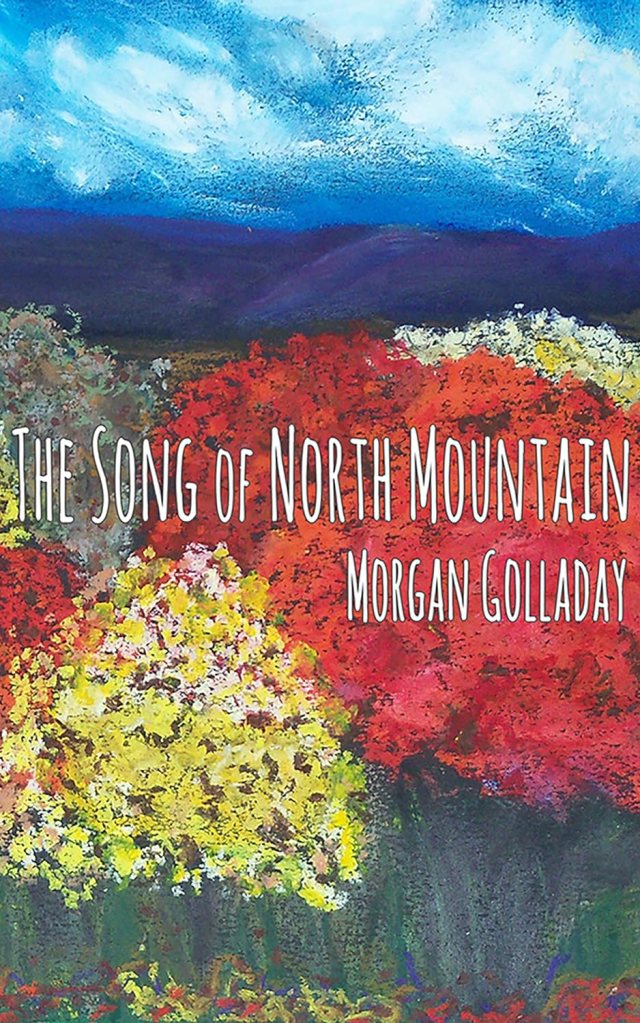
To learn more about the latest Old Scratch Press publications click here.The Song of North Mountain by prizewinning author Morgan Golladay is just one of several exciting new chapbooks! To learn more about Old Scratch Press and our poetry an short form collective follow us on WordPress at Oldscratchpress.comDav
Causey Mansion in Milford Delaware is a beautiful spot to meet and greet poet/artist Morgan Golladay, author of the Song of North Mountain. Learn more about the historic mansion here. The event will be held in the gardens from 1-3 p.m.. Purchase your copies in advance online or purchase one at the event. Either way, Morgan will be there to autograph! The location is 2 Causey Avenue, Milford Delaware 19463
Editorial praise is just beginning. Here are a few samples:
“Sometimes stark, but always beautiful, these free verse celebrations of North Mountain introduce a seasonal sense of environmental transitions to the observer and reader’s eye, with time’s passage changing everything and nothing…Aside from a personal visit to North Mountain, there is no better way of appreciating its beauty, impact, and presence over the eons than through The Song of North Mountain.” MIDWEST BOOK REVIEW
This book is a praise-song of poetry and art for Golladay’s beloved mountains. With an eye for detail and ease of language, her poems revere and embrace the elements and seasons of nature. Accompanying her poetry, her art further conjures the scenes we are taken to. From Vincents Wood to the Devils Throne, the writer takes us along, like all good poetry, until we feel as if we, too, have been there. I think I’d do well to heed what the writer says: Look too soon and you miss the mystery
Morgan Golladay’s The Song of North Mountain is a wonderful love song to where she grew up, “to the hills, rivers, and ridges of the Shenandoah Valley of Virginia.” And Golladay is the perfect guide for this voyage, perceptive, kind, and empathic. I urge you to purchase her fine book that also contains her own fine original artwork: sit back in a comfortable chair and travel with her to this most beautiful part of our country. As Golladay invites the reader to accompany her and writes in “Back in the Woods” (p. 69),
I experienced the magic and awe of a creation larger than I could imagine.
“Rest with us,” whispered the granite. “Breathe with us,” crooned the breeze. “Stay with us,” encouraged the trees.
Learn more about Morgan and her poetry here. And don’t forget to follow Old Scratch Press on Facebook. Thank you for reading.
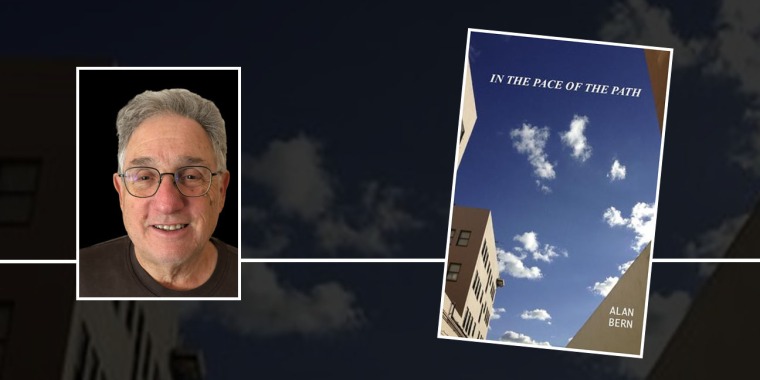
If you’re in the Berkely (California) area please join us at Pegasus Books Downtown on Thursday, June 27th for an evening of music, text, and storytelling with me, Alan Bern, Berkeley-based storyteller, performer, author of IN THE PACE OF THE PATH. Bern’s reading will beaccompanied by music from cellist Gael Alcock. Recently released by UnCollected Press, IN THE PACE OF THE PATHis a hybrid work of poetry, prose, and photos that charts my life in my hometown of Berkeley and my career at the Berkeley Public Library.
From 6:30-7pm, browse books and enjoy Bach’s Cello Suite #4 performed by Alcock, in memory of Larry Bensky, host of KPFA’s ‘Sunday Salon’ and ‘Piano’.” Reading and conversation with mewill follow, at 7pm. Copies of the book will be available for purchase and signing at the reading.
Alan Bern’s IN THE PACE OF THE PATH walks the border between poetry and prose, between the surreal and the realism where surrealism spawns, between the past and future which is the pace of the moment by moment of a life. I have learned from Bern’s clarity in poetry and prose to walk the edges of my homeland and step out into the unknown, while carrying the life I have lived within me. This is such an important work to read now and reread as we move through our lives.
—Rusty Morrison, Co-Publisher of Omnidawn—
Enjoy a video by L. Scott Jones of Wrapped in Ruins, a gallery piece and the most recent performance of PACES: dance & poetry fit to the space, a collaboration with other artists of dancer/choreographer Lucinda Weaver and me:
I will also present an art piece near the end of:
FREE LIVE EVENT: INSTANT NOODLES LAUNCH AND LIVE AUTHOR READING.
DATE: June 20, 2024 TIME: 4:30 PM PT | 7:30 PM ET Join us in celebrating the release of the newest issue of INSTANT NOODLES, the online literary magazine that features original poetry, art, and short fiction. Meet the authors and listen in as they perform their work live. This online event is open to the public. Click below to register.













 OLD SCRATCH PRESS