The holiday/end of year issue of INSTANT NOODLES, the issue where we always ask people to try for humor. Do you have what it takes to make us smile?
Submissions for 2025 are open through November 2, 2025.
The Old Scratch Press team asks that all fiction/non-fiction pieces adhere to a word count of 1,000 words or less.
2025 Themes and Topics
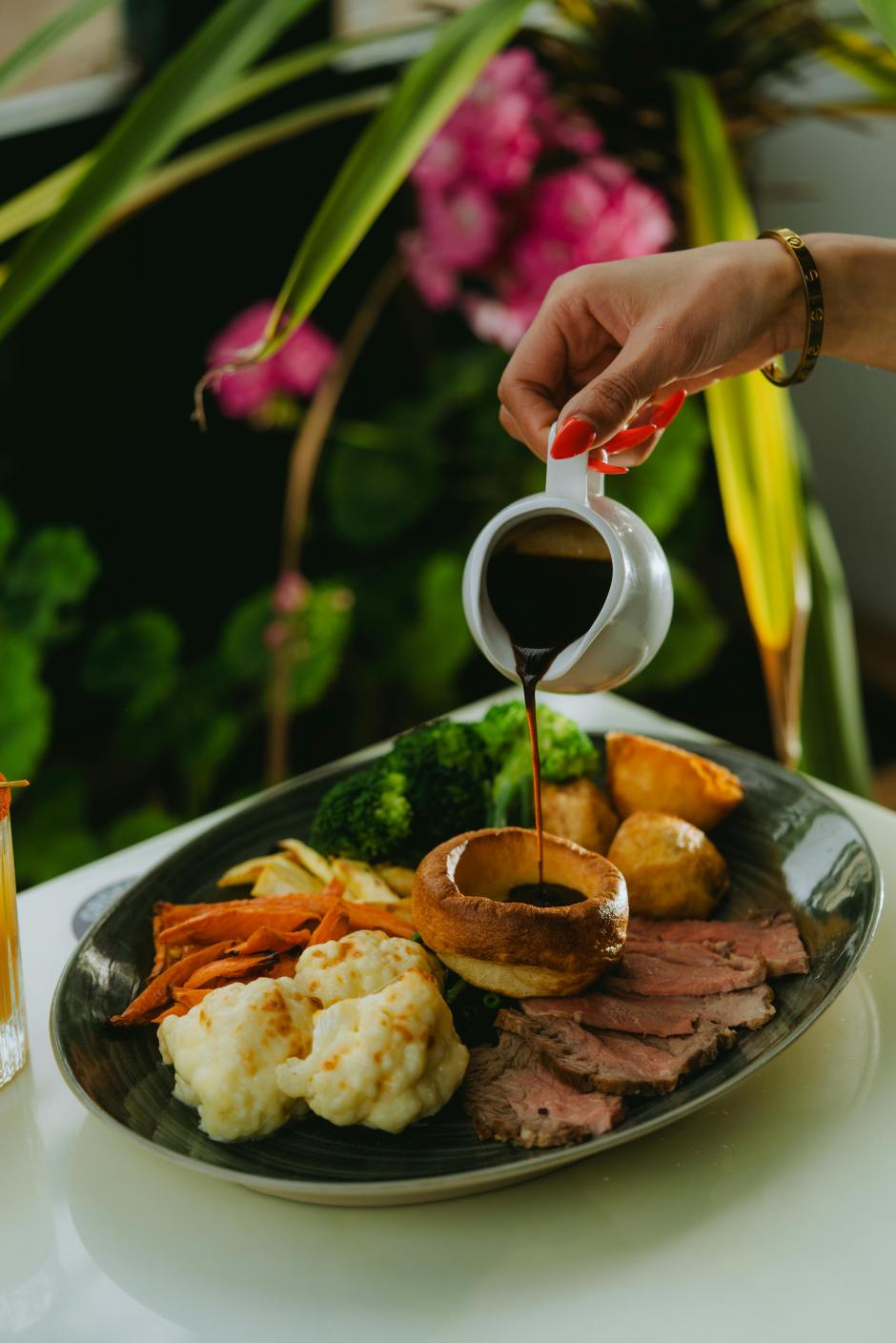
GRAVY is our 2025 winter holiday theme. Give us your best holiday gravy fails, mishaps, ridiculous gravy encounters (any December holiday, from Hannukah, to Solstice, to NYE, etc.) or your best wry work about gravy, in general. The point of the end-of-year issue is always to be light-hearted to downright silly. Submissions for GRAVY are open through NOVEMBER 2, 2025; the issue will publish on DECEMBER 1, 2025.Please CLICK HERE to submit. We’re looking for short fiction, non-fiction, poetry, drama, art, and multi-media.
INSTANT NOODLES is always free to submit to, and free to read. We’re about to announce the pieces that were published that we’re submitting to BEST OF THE NET and PUSHCART, so stay tuned to this station!
Thanks for being an INSTANT NOODLES participant and/or fan! We appreciate you giving indie authors a place to get read!
It’s always a great time to immerse yourself in the literary world, but September seems to be an especially busy month if you want to celebrate books. Get ready to mark your calendar because whether you want to find a new read from an indie author, or you want to collect a signature from a well-known author, September gives you multiple chances to grab some new books for your TBR pile.
Organized by the Library of Congress, the National Book Festival in Washington, D.C. brings together a wide range of authors, journalists, and intellectuals to discuss literature and current affairs. With free events and a large roster of authors, this festival is a must-attend for book lovers.
Highlights:
Diverse Program: From fiction and memoirs to history and science, there’s something for everyone.
Author Signings: Meet bestselling authors and get your books signed.
Free Admission: All events are free to attend, making it accessible to everyone.
Panels & Discussions: Topics range from politics to personal stories and more.
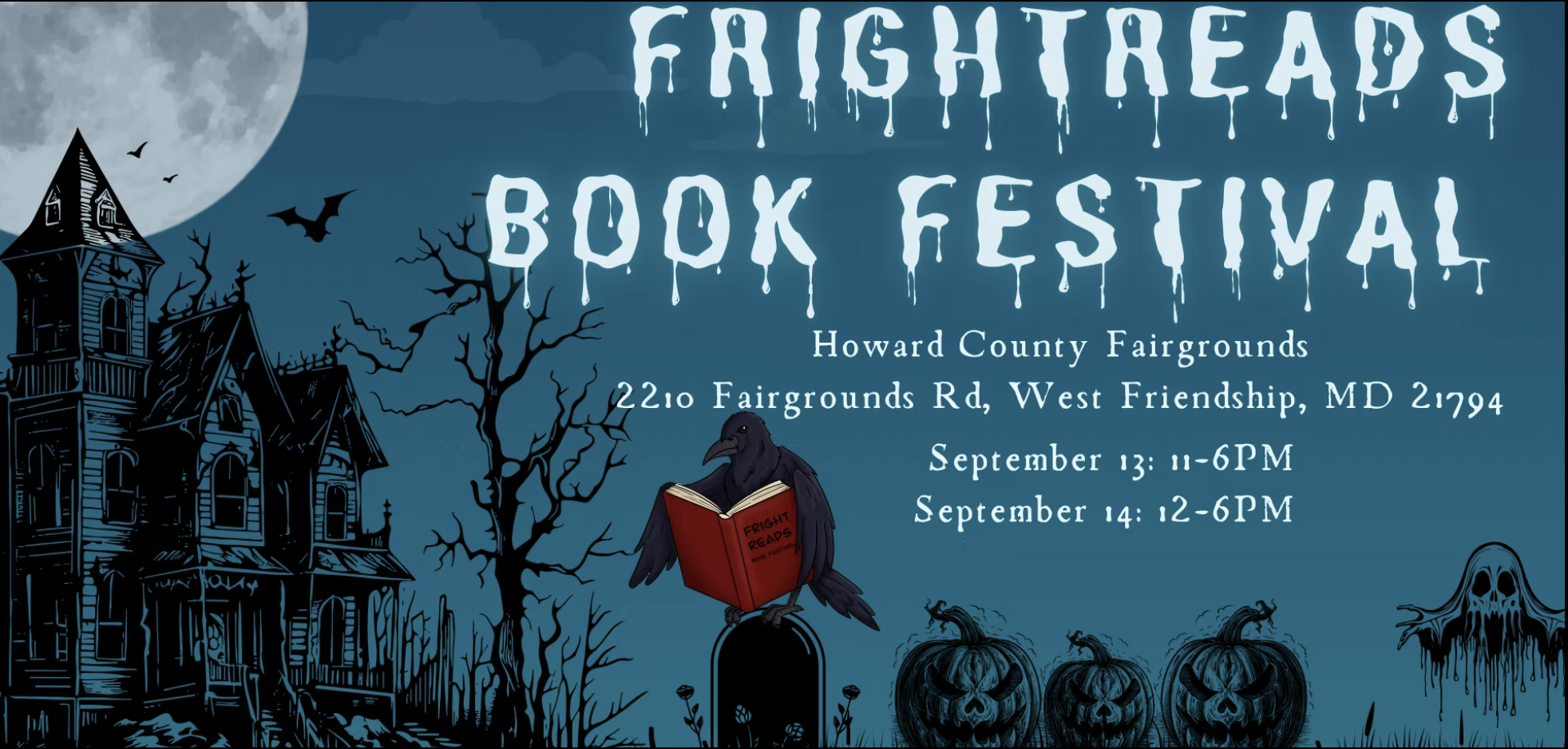
FrightReads Book Festival is an all-ages event, dedicated to horror, sci-fi, mystery, paranormal and thriller books in Maryland! Featuring Celebrities, guest authors and tons to do! Old Scratch Press member Gabby Gilliam will be selling books at this event!
Free & Open to the Public: Kids 12 and under are free. Adult tickets need to be purchased.
Highlights:
Panels & Discussions: Topics cover everything from contemporary fiction to publishing trends.
Costume Contest: Categories for both children and adults.
Special Guests: Cosplayers, celebrities and more.
Film Festival: Screening 4 spooky films all afternoon.
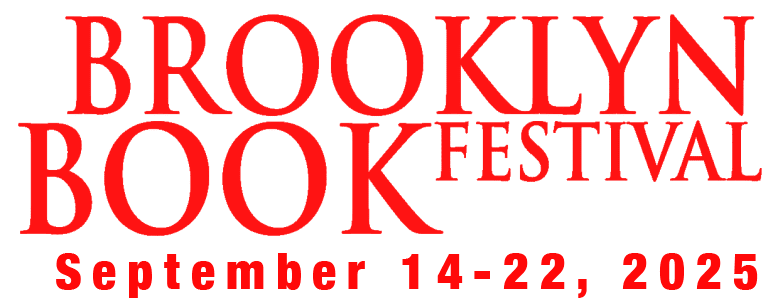
One of the largest and most anticipated literary events in New York, the Brooklyn Book Festival offers nine days filled with book signings, panels, and performances. It’s a wonderful opportunity to explore the literary scene in the heart of Brooklyn. The Brooklyn Book Festival is celebrating its 20th anniversary this year! BKBF is dedicated to celebrating diversity in literature, so they aim to develop original programming that is hip, smart, diverse, and inclusive. They also present free, literary, cultural events at the BKBF Day & Literary Marketplace, Virtual Festival Day, and the family friendly Children’s Day. Additionally, BKBF presents Bookend events in venues across NYC and on-line, which are overwhelmingly presented free to the public.
Highlights:
Children’s Day: September 20 is all about young readers.
Diverse Program: From fiction and memoirs to history and science, there’s something for everyone.
Panel Discussions: Topics on writing, editing, and publishing.
This event, hosted by the Frostburg University Center for Literary Arts, brings together editors and publishers with writers and educators of the local community. This event celebrates the writers, publishers, and readers of small press and independent publishing. The weekend features a poetry slam, readings, roundtable discussions, practical “how to” sessions, and a small press book fair in Frostburg, Maryland. Two Old Scratch Press members (David Fulcher and Gabby Gilliam) will be reading and selling books at this event!
Highlights:
Free & Open to the Public: Many of the events are free, making it an accessible event for all.
Friday 9/26: Indie Lit Kickoff Reading featuring Lee Horikoshi Roripaugh at Main Street Books (2 E. Main St.), 7 PM
Followed by rock and roll with The Downstrokes at the Deep End (16 W. Main St.)
Saturday 9/27: Panels, workshops, and readings in City Place (14 S. Water St), Mountain City Traditional Arts (25 E. Main St.) and the Frostburg Public Library (65 E. Main St.), 11-5
Poetry Slam: Thursday night @7, sponsored by Savage Mountain Punk Arts.
Book Signings & Readings: Hear authors read from their works and engage in discussions.
Workshops and Panels for Readers and Writers: Learn the ins and outs of writing and publishing.
Poetry & Fiction: Events covering a wide range of genres and literary styles.
Don’t see anything local to you? Bookreporter has a calendar with even more upcoming festivals.
These festivals offer fantastic opportunities to hear from both bestselling authors and indie authors, attend workshops, and get involved in the global literary community. Mark your calendars for these exciting events, and let me know which ones you’re most excited to attend!
Anthony, you hit a number one. Congratulations! Although Anthony’s poetry is written in English, not Spanish, it does seem that his adopted cultures are loving his work. To read any of Anthony’s work is to know he is an extremely talented author, and now Amazon agrees! I hope readers in the US and in his home country of Ireland agree, and that this will bring readers to Anthony’s work from all over the world, because I really am a fan. And, apprently, so is book reviewer Emma Lee who says:
Jonah’s Map of the Whale is an exploration of self, self-identity and how much personhood is formed by external circumstances, through three different characters. One is pushed along by external pressure and lacks agency. One has agency but fears she carries a hollowness. One is faced by a life-changing experience that he can sink or swim from. Each character feels fully-developed. Anthony Doyle has created a quirky look at a set of beings tackling very different philosophical and physical circumstances, prompting readings to consider who might survive, who might thrive and which one reflects the reader best. It’s a map worth reading.
by Nadja Maril, a Founding Member of the Old Scratch Press Short Form and Poetry Collective
I got a rejection this morning. I received the standard form rejection for a piece of creative writing: We appreciate the chance to read it. Unfortunately, the piece is not for us.
I get rejected all the time. It doesn’t matter how many times my work has been published, I’m not famous and editors have a multitude of tastes. What was interesting to me was the poem in question had already been published and well received. This time I’d entered it into a contest that was also considering previously published work. Maybe they didn’t think it was prizeworthy, but I felt like they didn’t like the poem at all. This made me sad.
Then I thought of The Ugly Duckling, http://hca.gilead.org.il/ugly_duc.html by Hans Christian Anderson, one of my favorite fairy tales. The bird that emerges from a hatched egg is not at all like the other ducklings in the farmyard. He endures all kinds of painful ridicule until he discovers his true identity as a swan.
“He now felt glad at having suffered sorrow and trouble, because it enabled him to enjoy so much better all the pleasure and happiness around him; for the great swans swam round the new-comer, and stroked his neck with their beaks, as a welcome.
Into the garden presently came some little children, and threw bread and cake into the water.”
I share this little story to remind all writers, particularly anyone just starting their journey, that it can take months or even years to find your audience. Yes, it could be you just don’t have the talent needed to “make it” as a writer, but tastes on what is good and worth publishing vary tremendously. An ugly duckling may also be a graceful swan.
We all have probably had the experience of seeing a movie or reading a book that got great reviews, but we found to be boring. We may have attended a party in someone’s home and overheard guests raving about a gorgeous painting or a rug that we secretly think is hideous.
People have different tastes. Where we grew up, where we’ve traveled, what our parents taught us, all influence what we value and how we judge things. The quest for diversity, when I wear an editor’s hat, is my desire to try to open my mind to a multitude of ways to see the world. But we tend to gravitate to the familiar because it’s comfortable.
A big word among editors is resonate. If a piece of writing resonates with the reader, it affects them emotionally and they may continue to think about that story or poem for days. That type of connection is something a writer longs to achieve. But it’s unlikely to happen with every reader. We all have different histories. We’re all slightly different so what affects one reader may not necessarily affect another.
It may be that something you wrote is not ready for publication and needs more revision. On the other hand, it could be really good, but needs to find the right audience.
I can’t emphasize enough, writing groups and reading groups to gain different perspectives. A writer toils alone, but feedback is important. I can’t emphasize enough the importance of beta readers, fellow writers with whom you can exchange work.
Do not write in a vacuum. Find the approach that works best for you, but don’t give up on something you feel in your bones is important. If you’ve written something you’d like to share with the world, keep submitting. A rejection is a badge of honor.
It shows you’re out there swinging the bat and you’re still in the game.
About the author:
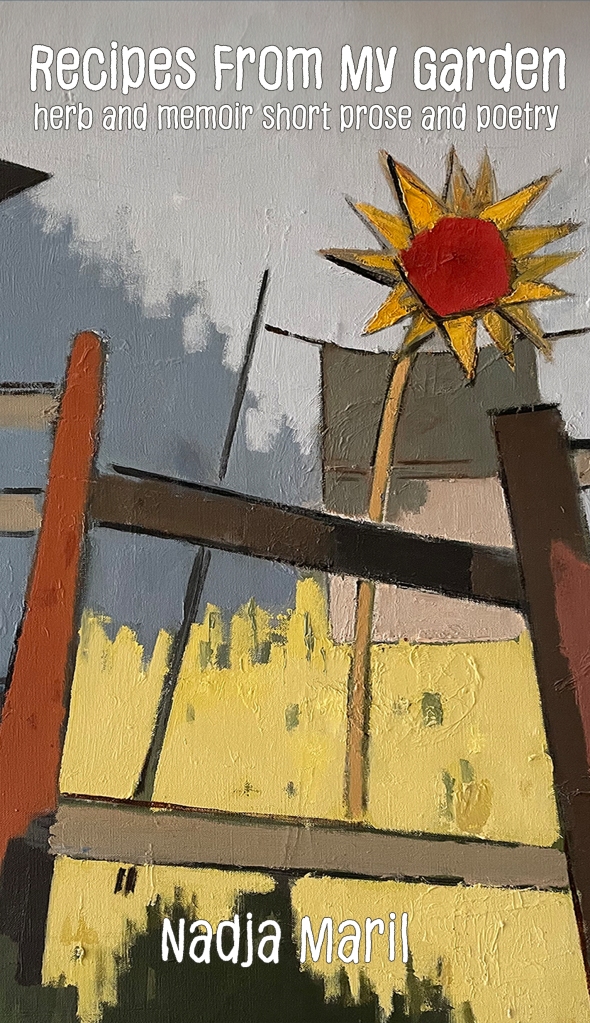
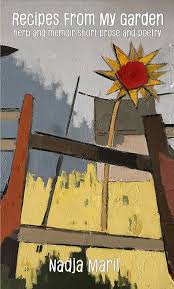
Nadja Maril is the author of Recipes from My Garden, Old Scratch Press, September 2024. Nadja Maril’s short stories, poems and essays have been published in dozens of small online and print literary journals and anthologies including: Lunch Ticket, Spry Literary Journal, Invisible City Literary Review,and The Journal of Compressed Creative Arts.She has an MFA in creative writing from Stonecoast at USM. A former newspaper columnist and magazine editor, she writes a weekly blog and you can visit her website at www.Nadjamaril.com.
Thank you for reading. Please sign up to follow us here on WordPress and on Facebook.
I love words and sentences, writing them. I also love reading something really good. So, part of my day circles around writing and revising. Another part is reserved for reading.
If your desire is that each piece of writing you create is superior to its predecessor, then it’s a good idea to read other writer’s creations. We learn what we like and what we don’t like by reading the work of others. Experiencing through someone else’s words can give us the opportunity to learn new ways of approaching an essay, poem, or story.
Those five little earrings could represent the various framents of the essay that focuses on what we hear or don’t.
First thing this morning, I clicked on a link provided by the literary magazine, Sweet. A Literary Confection that was titled “In My Head: Tinnitus” by Marcia Aldrich which the editors have nominated for the 2023 “Best of the Net.” I liked the way Aldrich broke the essay into very short sections. This type of CNF essay is called a fragmented essay, specifically in this case, a narrative mosaic because all the sections were directly linked to the topic of Tinnitus, but all approached the word/ the subject/ the experience from different vantage points. Here is the link if you’d like to read it.
Next I read the under 250 word CNF essay from Riverteeth’s weekly newsletter Beautiful Things titled “Sugar in the Evening” by Jennifer Anderson. Deceptively simple. it resonates. I don’t necessarily like every weekly Beautiful Things selection, but this one is truly a gem. To read it click here.
Finally, to round out the morning, before I started revising a story of my own, I clicked to read some poems in Sunlight Press capturing a sense of nostalgia and the delight of movement by Alfred Fournier. You can click to read them here.
Evenings and Sunday afternoons are for “hard copy.” I love a book that pulls me in and keeps me guessing. I never want to be able to confidently predict where the plot is heading. So I’d like to recommend The Great Circle, published in 2021 by Maggie Shipstead, a Booker Prize finalist.
A very long novel (655 pages) I was lucky enough to pick up in one of the several Little Free Libraries in my neighborhood, it is both entertaining and instructive to fellow novelists in approach and structure. I try very hard not to read multiple books by the same author in an effort to “meet on the page” more writers and I’d already read Seating Arrangements, but I am so happy I did make an exception and grab that almost new paperback. This novel is far superior to Shipstead’s previous work in that it adds multiple layers of time, place and setting to a compelling storyline.
Comprised of two narrative arcs, The Great Circle tells the story of a pioneering female aviator, Marian Graves, born in 1914, who wants to be the first to circumnavigate the globe by flying over both the North and South Poles. The second storyline focuses on actress Hadley Baxter who is chosen to play the role of Marian in a Hollywood movie produced in 2014.
The 20th century narrative is told in third person, and while it primarily focuses on Marian’s life it also tells the story of her twin brother Jamie, and the role women aviators played in World War II. The 2lst century narrative is told in the first-person voice of Hadley.
As to what happens, I’ll leave it to you the reader to discover first-hand. Enjoy and keep reading, whether it is long or short, on paper or on your phone. And yes, I listen to stories as well. My most recent listen was Companion Piece by Ali Smith, a melding of reality and splendid storytelling.
How we portray ourselves and others, is something memoirists grapple with.
We call it “Creative Nonfiction” when a writer presents truth in a creative format that can take the form of anything from a lyrical essay to a crossword puzzle. A selection of word artifacts can weave an interesting narrative inviting the reader to fill in the blanks, anything from a grouping of letters, the transcription of a phone call, or a photograph with a caption.
The words in a game or puzzle can inspire a short work of creative nonfiction.
In fiction, the writer shapes the story to create pacing and tension. In nonfiction, the writer selects and amplifies truth to produce a compelling piece they hope others will want to read.
The nonfiction writer often relies on memory. Memory and research. The research often draws on the memories and writings of others.
How accurate are those memories? According to the work of late 19th century German scientist Hermann Ebbinghaus’s research, graphed as a forgetting curve, much of what people experience each day is quickly forgotten. In the May 20th 2024 issue of The New Yorker, writer Jerome Groopman, discusses in a book review the recently released book Why We Remember by Charan Ranganath.
Ranganath is a neuropsychologist at U.C. Davis and in his book, he discusses memory and how we may be looking at memory the wrong way. Memory, he conjectures, more likely functions as an adaptive trait to keep humans alive. Selectively we remember some things and forget others. Perhaps the forgetting is as important as the remembering.
Photos may help prompt our memories, but sometimes what others tell us about a photo my influence our recollection.
From a writer’s point of view, I find it fascinating to hear how people’s memories of the same event can be slightly different. What do those differences reveal about each person?
Folk tales and fairy tales clearly demonstrate how the same story can be adjusted to reflect the story teller’s preferences. In some versions of little Red Riding Hood, grandmother is locked in a closet in another she is swallowed by the wolf. In a family, one sister may remember beloved pet that was hit by a car and another may forget the pet because the memory is too painful.
But the sources themselves: diaries, letters, newspaper articles, trial transcriptions all have their bias—according to who wrote them. And Kavanagh reveals in many instances, the ulterior motives and prejudices some of the parties may have possessed in how they reacted to the events that took place.
Writing a short nonfiction piece, based on a personal experience can take the form of a letter, diary or puzzle. Part of the writing adventure is trying new things.
If we acknowledge our memories are always shapeshifting, I think it can give us a certain amount of freedom to experiment. Playing with episodic memory, using a trigger such as music, smell or taste, can provide a means to travel back to a previous episode in your life and re-examine it.
WRITING PROMPT: A smell you love or a smell you hate. If you have the item around, use it as a trigger, if not try to remember it. What comes to mind. A person you were fond of? A party you attended? If you write something you like, put it away and revisit it the following week to review and edit. If the piece has power refine until it is ready and then if you want to share it, submit it to potential publishers.
About the author:
Nadja Maril is the author of Recipes from my Garden, Old Scratch Press, September 2024. Nadja Maril’s short stories, poems and essays have been published in dozens of small online and print literary journals and anthologies including: Lunch Ticket, Spry Literary Journal, Invisible City Literary Review,and The Journal of Compressed Creative Arts.She has an MFA in creative writing from Stonecoast at USM. A former newspaper columnist and magazine editor, she writes a weekly blog and you can visit her website at www.Nadjamaril.com.
Thank you for reading. Please sign up to follow us here on WordPress and on Facebook.
Many writers, including myself, write both prose and poetry. For me, it just depends on the subject matter as to which form I choose. Many writers begin with one form of writing and evolve to another. There are some writers who begin in one genre and stay there. In the end of the day, our paths are different, but we are all writers, and all writers want to tell a story. We want readers to feel something, experience something, remember something. We want them to leave us changed in some small way. Even if you don’t want to learn about the craft of poetry in a formal way, as in attending workshops, just reading a few poems a day will improve your prose writing in ways that will surprise you.
Poetry as a form succeeds on bold, visual imagery, exact information from all the senses. This is how the reader enters the poem and lives inside it for a brief time. By reading lines of poetry, prose writers will also experience and come to understand why rhythm matters. There is great impact when rhythm is found in sentences and phrases.
One of the defining benefits of studying and writing poetry for me as a prose writer has been that in poetry more than any other genre, each and every word must do work, and I mean each and every word. Poets take time and great care choosing words and prose writers, if you want to be your best, you should be doing that as well, but it takes practice. Read Hemingway again to see why this matters.
Poetry has the same elements as prose writing, such as characterization and narrative arc, but it contains more unexpected phrases, surprises and turns that send readers in directions they didn’t expect. This is often missing from prose writing, and it shouldn’t be. Additionally, poetry teaches us about pace. How long lines with no punctuation slow the reader down. How a short line placed just right can then really pack a punch.
Prose writers can also use traditional poetry techniques to enhance their narratives such as assonance, linking words with similar vowel sounds. Using words in this way can produce a desired effect on the reader such as a calming effect as if listening to music.
My greatest lesson and take away as a prose writer who reads poetry every single day is that endings are so incredibly important. When you read enough good poems, you’ll see what I mean. And stories, like poems, deserve the best endings possible. This is something to strive for.
So, you want to be a good prose writer? Then read poetry. Simple as that. Poetry teaches us all how to use our language. Poetry teaches how to describe. Poetry demonstrates mood, voice, momentum in unexpected ways. We all want the same thing. To tell the story we want to tell in the best way we can. Reading poetry will help us learn to do that.
There are many good online literary journals where you can read poems: Narrative Magazine, Agni, Carve, Rattle, 32 Poems, A Public Space, Apple Valley Review, Evergreen Review, The Cortland Review, Waxwing, Pigeon Pages, Cleaver Magazine, Able Muse.
You can also sign up to receive daily poems from: Rattle, Your Daily Poem, Poem-a-Day, Poetry Daily, Poem of the Day. All these are free as is the wonderful podcast written and hosted by one of my favorite poets Padraig O Tuama: Poetry Unbound. I would also highly recommend Padraig’s wonderful book: 50 Poems to Open Your World.
Happy Reading!
~Ginny
Virginia Watts has been fortunate to have published nearly 100 pieces in literary magazines including CRAFT, The Florida Review, Reed Magazine, Pithead Chapel, Permafrost Magazine, Broadkill Review, Two Thirds North, Hawaii Pacific Review, Sky Island Journal, Eastern Iowa Review, Evening Star Review and Streetlight Magazine. Nominated four times for a Pushcart Prize and four times for Best of the Net, in 2019, Watts won The Florida Review Meek Award in nonfiction.
Ben’s book is, “A captivating series of short stories, both dramatically and philosophically enthralling.” KIRKUS
“Ben Talbot excels at depicting a world both alien and familiar at the same time.” MIDWEST BOOK REVIEW
Welcome to Periscope City, a place where nothing is quite as it seems. Its citizens are those with no one to love, caught in a paradox of escaping loneliness while clinging to it. Here, human emotion is fleeting, and love is nothing more than a transaction. Each story in this collection delves into the heights and depths of solitude through its characters: a writer torn between seeking validation from fleeting romances and finding comfort in the safety of isolation; a former college football star lost in nostalgia, unable to connect with the present; a young runaway scarred by her past, drawn to this desolate town inhabited by loners and serviced by robots. Prepare for an emotional gut-punch as you enter a strange, unsettling place where the broken-hearted choose to stay broken and prefer to live in solitude. Talbot’s haunting, satirical, and often absurd interconnected tales explore themes of self-destruction and elusive redemption. Periscope City will immerse you in a world where the boundary between reality and fantasy is constantly shifting.
Ben is going to read a little from his book, and then we will open it up for poems, flash fiction/non-fiction to give you a chance to add your voice to the conversation about love and loss and loneliness, and answer the age-old question, “What becomes of the broken-hearted?”
If you’re not a pro at reading, it is imperative that you come and try your luck! What better night? We can be awkward, clumsy, lonely, and literary together!
Hope to see you there, and hear you read. We’ll be sad without you….
In the meantime, enjoy this excerpt from the book!
Periscope City
A sign greeted me at the border: Periscope City: Where the Lonely Go to Live Alone.
It spoke my language, so I crossed in by foot, to the nearest place it took me to. That place was a one-story house with a long driveway called the Institute. There, they asked me dozens of questions about my immediate past and made me take a personality exam. I told them the truth: that I was a thirty-four-year-old loner whose friends had deserted him for marriage or death. They set me up in the Cramden Hotel.
During the first week, I interacted with only housekeeping and the concierge. They were all robots. It was the best the town could do to live up to its tagline.
—
Although I loved loneliness, I was still lonely as hell. After months of wallowing about my life situation, sinking into the lack of fellow humans, there was nothing I wanted more than to mix it up. I thought being lonely among robots was a different lonely as being lonely among humans. The scratch needed to be itched.
The concierge suggested a dating app called Loner, and the concierge said it had the best reputation for keeping the lonesome lonely. I filled out a profile and submitted it to the AI gods for review. It matched me with Raylene, a blonde Puerto Rican who stood over six feet. Her profile said very little about her beyond the fact that she’d moved from Buffalo, New York, and loved pets over people. In her picture, she sat on a snowy park bench and wore a fleece jacket. A French bulldog sat in her lap, and it wore a black-and-white dog poncho. It looked like a staged photo, like something in an L.L. Bean catalog, but where L.L. Bean was trying to pull off cozy, it was a cold, plastic, disconnected photo. I assumed her entire profile was an attempt at sarcasm.
Do you want to meet or not? she wrote.
Because of my lust for tall women, I wrote her back: Yes.
I have tickets to The Late Show, she wrote. Meet me at Geraldine Park at eight. I’ll be at the corner of Alaska and Winter Bear. And don’t be awkward.
—
When I showed up, Raylene was sitting on a snowy park bench in the same jacket as her photo, with her service bulldog in her lap. The dog even wore a black-and-white poncho. Raylene’s smile was all the picture was missing.
“Joe?” she asked.
Her perfume was cedar, or maybe it was the trees. Whatever the case, the scent had found its way to me, and it smelled lovely. The Loner profile was missing a smell.
“Raylene?”
“No,” she said. “Of course it is. How would I know your name was Joe?”
The bulldog barked at me.
“Sheepshead, knock it off,” she said.
Sheepshead? After Raylene fed her a pill, the dog calmed down. The pill must’ve been a fast-acting depressant, which they sold over the counter here in Periscope City. I know because of my own dog, but he didn’t need medication like me.
“You look different from your picture,” she said.
Ditto. Not only did she frown but her hair wasn’t blonde. It was purple. “How so?” I said.
“I thought you were taller,” she said.
I ignored her comment (let’s call it an insult), already being my tallest.
“Ask me something,” she said.
She was testing me, but then I remembered how sarcastic her profile had been attempting to be. The memory of it made me sweat a little with anxiety because I tried to think of something witty to say quickly, so I used a cliché. “If you could have dinner with anyone, who would it be?”
“Come on, dude,” she said. “Ask me something else.”
I gestured out to the surrounding park with my hands as if that were the explanation. “It was all I could think of,” I said.
“I told you, don’t be awkward,” she said. “What about you? Who would you have dinner with?”
I hated the question, too.
“Abraham Lincoln,” I said, and the words tasted like tinned fish.
“Why?”
“He was the first person who came to mind,” I said.
“Lame,” she said. “Now ask me a good question.”
“Okay,” I said. “Why did you name your dog Sheepshead?”
“Sheepshead Bay was the last place where I went with my husband,” she said.
“Did you separate?” I said.
She pressed her beanie down to her eyebrows, and I did the same with my trapper hat. We shared an awkward silence. It was what I got for asking a good question.
So confused. Isn’t a voice linked to speaking, singing, and screaming? What does a voice have to do with writing? What the fu** Robert?
A “writing voice” refers to the unique style and personality a writer expresses through their writing, which is a combination of their vocabulary, tone, sentence structure, and perspective, essentially how their individual personality comes across on the page.
Most poetry magazine acceptance rates are about 2.4%. In order to increase your chance of publication acceptance success, create a writing voice and then target publications that have published work with your voice within the last two-years.
A writing acceptance rate is like a baseball player’s batting average (BA). Josh Gibson’s 1946 BA of 37.2% is the highest career Major League Baseball BA.
Josh Gibson
My poetry voice profile:
Style: experimental
Themes: masculinity, sexual orientation, sin/virtue, dystopia
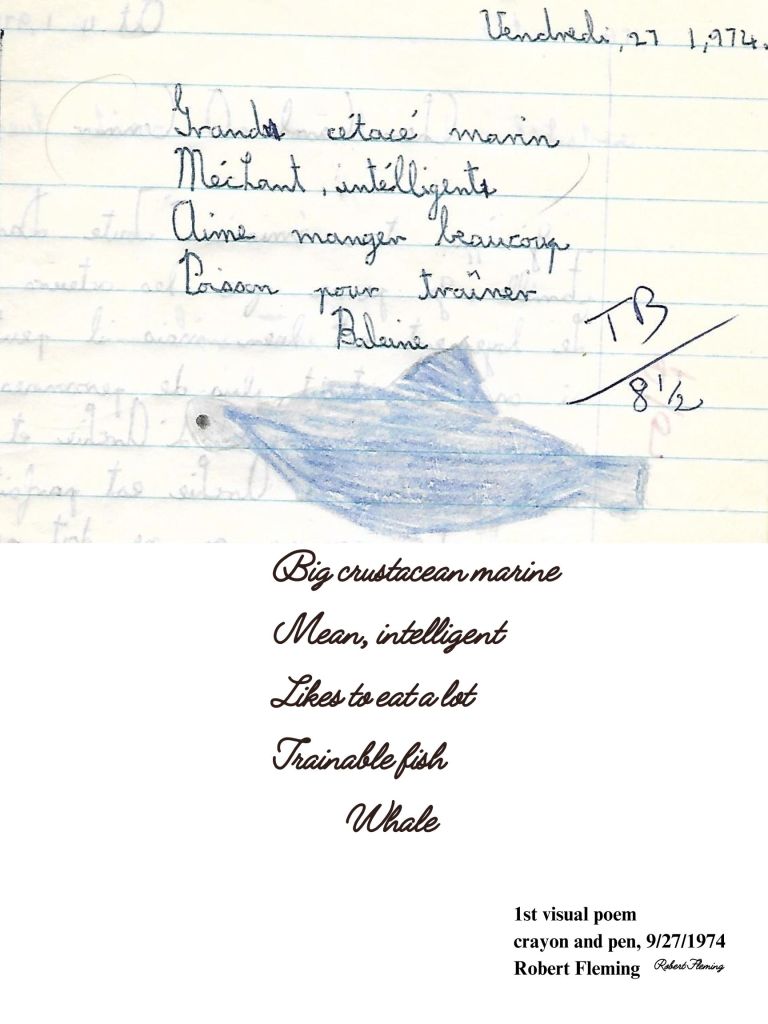
Forms: visual poetry, free-verse, Japanese Haiku/Mondo, sonnet, and pantoum
Devices: sound (rhyme, alliteration, assonance), duality, homonyms, multiple-word-reversals, and end-titles
CREATING a WRITING VOICE
Oh NO Mr. Robert, an assignment is coming. Sir and madam, it is, I cannot lie.
A sleepless night, 3/14/1996, yours truly obsessed compulsed, to translate four of his favorite poets to a gay style: Robert Frost, William Shakespeare, John Berryman, and Dorothy Parker.
What I did for each poet:
Select a favorite poem
Analyze and document what the poem is (theme, form, devices) and why you like it
Read the poem out loud
Make an audio recording of your reading
Handwrite the poem
Type the poem
Translate the poem to your style
Place the original poem and translation side by side
What was the outcome impact of yours truly doing this exercise:
In 1997, a follow-up creation of a visual poem that translates Dorothy Parker was included in art show in the District of Columbia
Self-discovery that my style is experimental and an integration of one of the poets studied: Robert Frost and another poet: Dr. Seuss
More Voice Discovery guidelines: make diverse selections
Select work written in different time eras: 50% 1,800 or earlier, 50% 1,900 and later
Gender: 50% men, 50% woman
Style (traditional vs experimental): at least 1 experimental
Discover your writing voice and use it!
Yours Truly is:
Robert Fleming, a contributing editor of Old Scratch Press
Thank you for reading. Please sign up to follow us on Facebook and to follow us here on WordPress to expand your knowledge about poetry and short form writing as well as to receive the latest news about publication opportunities.