Dreams of the Return

dreams of the return

Alan Bern is more than just the author of DREAMS OF THE RETURN—he’s also one of the founding voices of Old Scratch Press, a collective born from a group of terrific writers with a deep love of traditional and hybrid poetry, prose, and art. As a retired children’s librarian and cofounder (with Robert Woods) of the fine-press publisher Lines & Faces, Alan has long pursued the merging of word, image, and place.

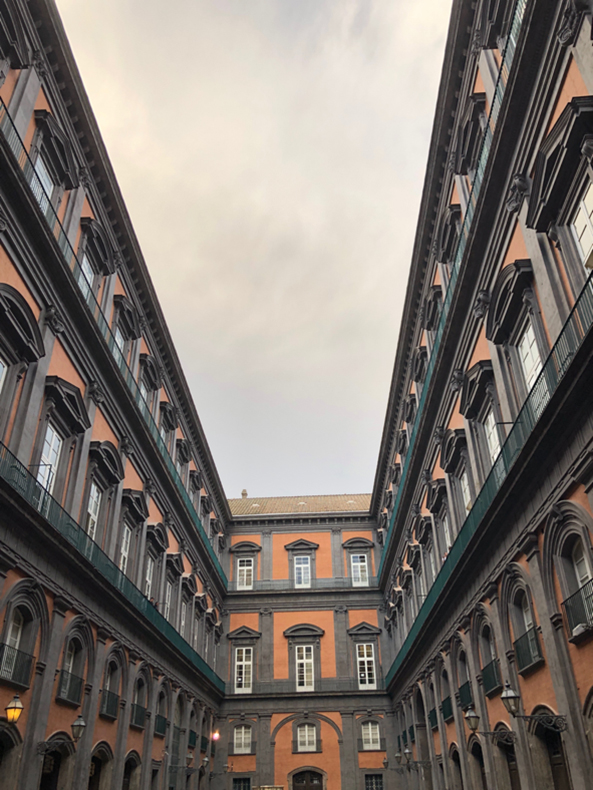
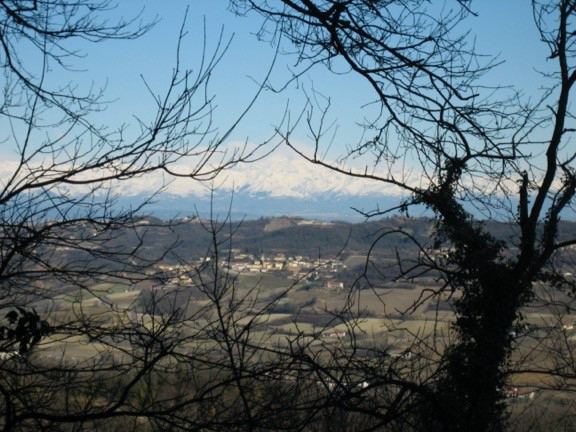
In DREAMS OF THE RETURN, he turns his lens to Italy—in particular the South—bringing to life landscapes both storied and luminous through his own photographs and through classic Italian poetry, delivered both in its original form and in his own translations. The journey is lyrical, immersive: it’s not merely a travel guide, but a portrait of longing, place, memory, and beauty.

And that’s something Alan does beautifully—his artistry weaves together what he’s done throughout his life: poetry, prose, photography, memoir, all fueled by a love for Italy. Within the OSP community, he is known for “photo-poems,” a daily practice in which images and language overlap, inviting the reader to travel with him across geographies and inward, into self.

In addition to poems and photographs, DREAMS OF THE RETURN also includes intimate personal essays that layer history, memory, and lived experience. In “The Good One,” for example, Alan recounts a walk through Naples’ Quartieri Spagnoli with his friend Marco. What begins as a conversation about Jewish philosopher Don Isaac Abravanel and the sacred geography of southern Italy turns into a heartbreaking encounter with a community altar for “o’ Bono”—a young man accidentally killed during a New Year’s Eve celebration. Through this story, Alan reveals how place, tragedy, resilience, and human connection are intertwined in ways both profound and ordinary.

A true perfectionist, Alan (pictured left) worked closely with his good friend, Peter Truskier, to ensure that the photos selected would sparkle in the book just like the locations did in real life.

DREAMS OF THE RETURN is, in effect, another way Alan invites us to travel: through light and verse, through time and place. It’s a book to savor—start with a wind-soft sun, ruins, olive trees and history; consume it slowly with pizza margherita and red wine; linger into the evening with the sweetness of roccoco napoletani and an espresso kissed with Sambuca. You can order a copy of your own here:

By the Time You Read This, You May Be Cooking Dinner

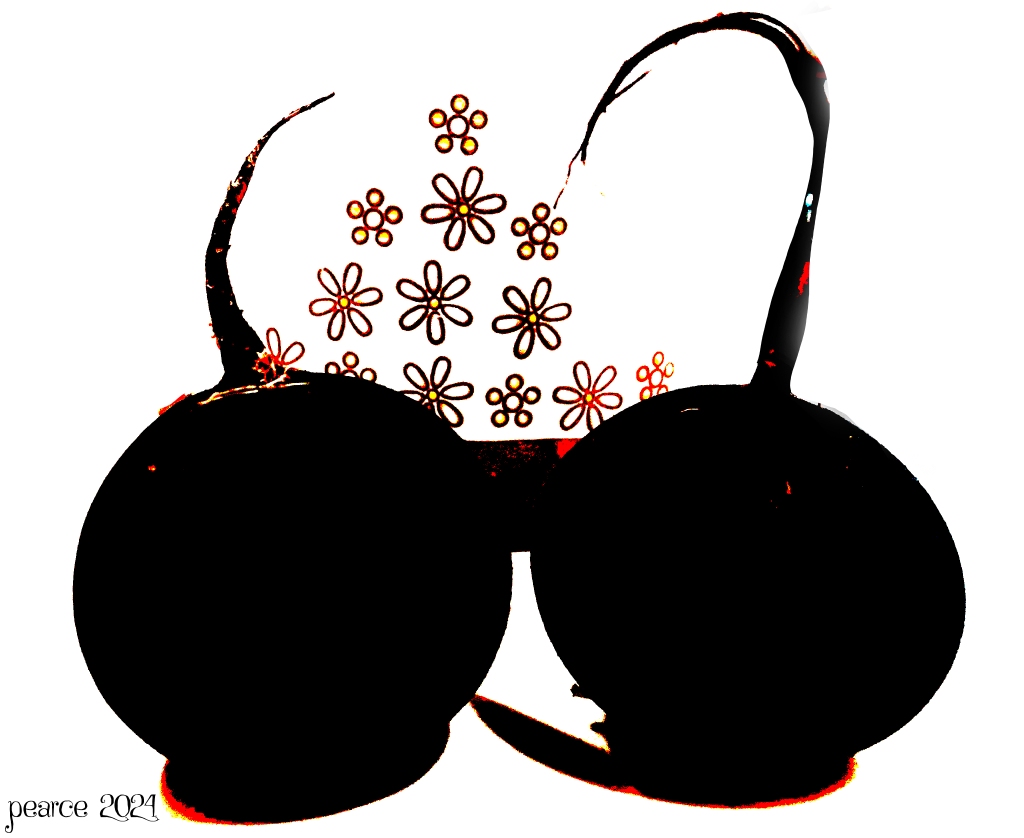
a photo of black radishes with a posterize filter from photoshop on them and a utensil crock behind them.
A photo I took, and then photoshopped a bit, of black radishes. I haven’t tried them yet. They’re as large as beets. Have you tried them?

As a human perhaps the toughest task I face is what the heck to feed me, and the spouse and child, each day for dinner. Breakfast everyone is on their own. Daughter, who has a light appetite, has a protein shake. Spouse, who has a sweet tooth, has some sort of flaky thing and coffee. I have several coffeeeeeees, and, well, I never know. Could be beans on toast. Coudl be leftover takeout. Could be tomatoes and olives in a bowl. Could be yogurt. Might be soup. Seldom is eggs.

Lunch… do people eat lunch? I don’t always. The meals seem to run into each other, and usually lunch is the loser for me, because there is not time to have breakfast, do all the morning things, then do the work things, and fit in lunch too, before it’s time for dinner. But I love lunch. I love lentils and tuna, salads of any kind, rice and tofu, possibly more yogurt. Daughter eats the same meal every day, packed in a lunch bag, Annie’s Organic Star Pasta. We put it in a thermos, and, for about four years now, she eats it…. every. single. day. Dedication. Spouse eats, most likely, more sweet and flaky things. But me, I am most apt to have more coffee, and maybe chomp on some lettuce as I am adding some to the guinea pig cage.

Dinner. Dinner ie exasperating. You know it is! There are, if your life is anything like mine, too many people (and we are only three) who like too disparate things, and have crazy schedules, and it can be downright tough to get everything ready on time for everyone’s schedule, but the toughest of all is thinking WHAT?? what to feed everyone.

Enter poetry, short memoir, short short stories, and art, to save the day, as usual!

As you may know, if you have read this blog before. I started a lit mag, Instant Noodles (gee, named after food. Obsessed? Maybe…..), and now Old Scratch Press is running it. Up until this year I was the only one choosing the pieces, and, often I was moved to choose pieces about food. And I have to say, on a side note, getting to read so many wonderful entries has been nothing but a pleasure. I love Instant Noodles, and I have really enjoyed all the pieces, and all the art too. But, yes, it may be possible to make the assumption that I am slightly food… centric? Motivated? Obsessed? And I have often been charmed by pieces that relate to food in some way, even if it is only in my mind.

And so, in this post, I want to direct you to take a look at a few of them.

The first is the memory piece by John Johnson, “Moss Soup and Manicotti,” where he remembers his grandmother’s cooking, “For love in this family was measured by the number of courses served and the temperature in the kitchen….”

“If Only,” by Bethany A. Beeler, is a wonderful painting that looks, to me, like my dearest love, a steaming mug of coffee:

My second favorite edible may be butter… True!

“…the wood cylinder moans,
the paddles slow,
the moon is full,
the butter comes.”

Writes Cynthia Gallaher in her poem “Butter Eaters.”

I have long loved, “This Is Just to Say,” by William Carlos Williams, the famous short piece about plums. I also love “Stolen Plums,” by Benjiman B. White:

“…In a lonely field

Full of future and autumn

And a windblown harvest

                        Forced by growth

To thump against gravity

And hunger….”

And, finally, if you cannot wait a second longer to eat, you can meet me and Willie Schatz in “Molly’s Magic Kitchen,”

“Shit! I forgot to buy the fucking fresh tomatoes. But we have sun-dried. I’ll work around it.”

     Of course she will, as she did two days prior when she forgot the dough needed 24 hours to rise and recovered by scrubbing the pizza for pasta primavera or five days earlier when she left her cherished butter lettuce at the grocery and could atone for the evil deed only with a luscious chopped salad or two weeks ago when she entered her realm crowing about the terrific tuna casserole we were going to enjoy only to realize she had bought sardines and would have to settle for a salad Niçoise (that of course was not chopped liver).

So, for dinner tonight, I fell back on a childhood meal that both my mother and my father used to make from time-to-time when magic and inspiration failed them: leftover meat in gravy ladled over extra cripsy toast. I like to eat mine with hot cherry peppers, and each bite will have, if I’m lucky, meat, bread, gravy, a smidgeon of some sort of potato (I made scalloped), a little scrap of veg., and a small bit of hot cherry pepper, to cut through all that thick buttery gravy and make the moutful pop.

It’s pouring down cold buckets of icy rain where I am.

Wherever you are, may you be full of something nice and warm.

What’s for dinner at your place?

How One Poem Can Touch Our Lives

Philip Levine, courtesy of the National Poetry Foundation

When Nadja Maril, who manages the posts of OSP, asked us each to write about our favorite poem, this was the one that came to my mind, immediately, as it so often does whenever I want to teach anyone about poetry, or whenever I think of a poem that I love.

What’s Your Favorite Poem?

Philip Levine is a very famous and celebrated poet, and he was also Jewish, which is why it matters, in this poem that the speaker’s brother is using his talent as an opera singer to sing operas by Wagner, who was loved by Hitler.

And so Levine uses this poem to tease out the thorniness of family connections.

And though I have spent the majority of my adult life college-educated and in jobs that would be called white collar, they have almost universally been shitty jobs, which means the pay was low, the hours long, the expectations high: over-supervised, under-appreciated, crap work. And my non-degree-requiring jobs were pretty shitty too: the restaurant owner was a drunk when I was a waitress, the lamp store owner liked to see me crawling on the floor, picking staples out of the thickly-woven carpet to save the upright vacuum cleaner, and the mall store manager wouldn’t let us leave until every item on his list was checked, even though it meant I missed the last trolly, and had to walk the tracks home alone and late at night. Crap jobs abound in my history.

The men who people Levine’s poem also do crap jobs. The brother, at least, is trying to wring some joy from his life, but he does it through singing Wagner, which confounds and hurts his brother.

What I like about this is how it is a pretty good example of the “what” of poetry. What is poetry trying to do?

Levine could simply write it out: I love my brother but his choice of loves, recreation, music, confounds me and upsets me.

We’d all say, “I hear you man,” and we’d all go on with our lives, having heard him, but not “felt” him, or understood.

Better to put us in the rain, shifting foot to foot, to understand that the brother loves singing opera so much that he will slog through the shitty job for it, the humiliation of being told there is no work, the dependence, the lack of agency, all to be able to sing.

The speaker is standing in the rain, getting flooded, and feeling hopeless, and then he is flooded by the love he feels for his brother, a love which he feels from, perhaps, at last understanding how much singing means to his bother, and how much his brother, and the happiness of his brother, means to him: enough that he will do what it takes to love a brother who loves:

Wagner, the opera you hate most,
the worst music ever invented.

And how long has it been since he held his brother and told him he loved him? And how infinite do we all think life is?

My brother died suddenly and unexpectedly during lockdown, and I was not able to see him for all of the eight or so hours I knew he was dying, and I don’t know that I’ll ever get over it. Our time together is not infinite; my love for my brother was, but he tried that bond many times and in many ways, and don’t we all do that to our siblings?

Levine writes in free verse, and uses enjambment frequently, and so do I. I like the closeness and intimacy of free verse, and I like the way enjambment will not let you walk away: it pulls you to the next line. I like how simple Levine is too: this is a poem almost everyone can understand and be moved by. That is Democracy in action right there. That is inclusiveness. We can all get in on this poem. We can all find a little hand-hold.

And mostly I like how this poem, long before my brother was even ill, always flooded me with love for him, and my sister, every time I read it, and made me consider the ways in which we are like cacti for hugging with our family, when we may be like cashmere with everyone else. And if you don’t know this, and you haven’t done the work to hug the cacti anyway,

then you

don’t know

what work is.

Thanks for enjoying Phil with me~

Dianne Pearce

HORROR POETRY ANYONE? NATIONAL “ALL KINDS OF POETRY” MONTH

Wanna submit to the Horror Writers Association (HWA) for their horror book of poetry? If you are published in HALLOWEEN PARTY, you can. Gravelight Press is part of the Old Scratch Press family, and we pay every author in HALLOWEEN PARTY $25 (and give each author a free copy of the anthology), and that $25 check is enough to qualify for membership in the HWA.

The HWA is currently soliciting for a volume of poetry. Why not submit?

Here’s a little horror ditty (I’m not saying it’s very pretty…).

Little Bo Weep (by D.Pearce)

Now I lay me down to sleep
and thinking ’bout dismembering sheep.
No hooves to leap
no baaaaahs to bleep
just nightmares in the meadow’s deep.
Like a tea with too much steep
the blood into the wool will seep.
I chopping chopping as she weeps
that simpering whimpering
dopey BoPeep.
Then I round the herd will creep
for bones and fuzz and tails to sweep
And when the sheep are in a heap
what will be the reap I reap?
At lastly long and blissful sleep.

Horror poetry. See? It’s easy. 😉

And fun!

C’mon, write a horror poem and submit!


WELCOME TO OLD SCRATCH PRESS

Hi~
Dianne from Devil’s Party Press (DPP) here.
Did you know I studied the writing of poetry when I was in college?
I love poetry, and there is a growing interest in it, but still not enough places to share it.
I reached out to some of the poets we’ve published at DPP, and asked them if they would like to do some volunteering to get a poetry imprint going, and, luckily, many of them said, “Yes!”
Poets are, by nature, generous people.
Together, I hope that we can publish good poetry. I hope that, over time, the poets will run the kitchen, cooking up new books, anthologies, opportunities, awards, who knows what all for poets!
My goal for this year is to put out a single author collection of poetry for three of the poets who are volunteering to create and run the press.
Our “poets” decided, to begin with, that poetry is as unique as the poets who create it. So they decided to make poetry include what we might consider to be a traditional poem, as well as more short-form works, mini memoirs, bits of story, and to include art, as it please the members to do so.
I think it’s going to be creative and exciting, and I cannot wait to see what they dream up.
Look for posts from the members here as we get underway on this project. I’m starting us off, but I hope they’ll soon eclipse me as they create something wonderful to which DPP becomes the helping hand.
The members of the group are:
Alan Bern
Anthony Doyle
Ellis Elliot
Gabby Gilliam
Janet Holmes Uchendu
Morgan Golladay
Nadja Maril
R. David Fulcher
Robert Fleming
Virginia Watts

And the first book from the group, A Break in the Field, by Ellis Elliot, is forthcoming from Old Scratch Press (OSP) this summer!

I wish all these wonderful authors a lot of luck with the OSP project!

And thanks to you for loving poetry, following this group, and maybe even buying a book!