Steps Toward Your First Acceptance in a Literary Journal

Steps Toward Your First Acceptance in a Literary Journal

To my fellow writers out there, I began submitting prose and eventually poetry to literary magazines in 2014. Since that time, I have been published over a hundred times. How did I do it? I learned the ropes and never gave up. More importantly, I never wrote for the purpose of being published. It’s an honor, a wonderful feeling, to have a piece accepted, but in the end of the day, the real joy for me as it is for most writers, is the creative process. Publishing is a very small piece of this magical puzzle. Even so, as writers, most of us would like our work to be read so here are some tips I learned along the way.

  1. Present your best work always. If you have written something, set it aside for some time and return to it later for perspective. ALWAYS have feedback through a professional writing group. One or two friends reading your work will not do. You need professional critique and then you must listen and learn to edit accordingly. None of us can judge our own writing. We simply cannot. Don’t let your ego get in the way of your success.
  2. Prepare a third-person biography. Include information like your location, your publications if you have some, your social media handles and website. If you have not been published, simply say nothing about that or mention that this would be a debut publication. Don’t try to be funny or clever. Be professional.
  3. Prepare a cover letter and keep it simple and professional as well. Address the editor by name if you can. Start with something like: I appreciate the opportunity to submit my fiction story titled “Wind Warp” of 4900 words. Follow with your biography. End by thanking the editor for considering your work. That’s it.
  4. Make a list of journals where your work appears to be a fit as you prepare to submit your work. This will mean reading some of the work the journals have accepted in the past. Lucky for us, many journals are online now or have some excerpts online. Consult resources by Erika Krouse or Clifford Garstang for a ranking of literary journals. 
  5. At first, I tried to select mostly smaller, well-respected journals for the bulk of my submissions. Once I got some traction, I aimed higher. If you can find a local journal that limits submissions to local writers, even better.  One example of this is Philadelphia Stories, a journal that only publishes writers who are living in or originally from Pennsylvania, Delaware or New Jersey. A smaller pool helps your odds. There is nothing wrong with submitting to a new journal either. In fact, I recommend it. New journals need our support.
  6. I would send a piece to at least twenty journals to start with and see how it goes. 
  7. Use standard manuscript format 12-point font Times New Roman. Double Space prose. Single Space poetry. And don’t forget page numbers. 
  8. Be encouraged if editors write you a personal note about enjoying your work even though it was not accepted or asking you to submit more work in the future or telling you that you made it to the final cut. All of these are a very big deal so be happy!
  9. You will receive a lot of rejections. I submitted for about a year and a half before I received my first acceptance. Since then, I have had times where I have been “hot” and times of drought. Don’t give up and don’t get discouraged. There are many reasons a piece is not chosen that have nothing to do with the quality of the writing. You get used to the rejections. Promise me. The way I look at it is this writing that I am submitting is what I have to offer. I’ve got nothing else! This is me. I write what comes to me and what I want to write about. Above all, I just hope to tell a good story. I give every poem or story my all. There have been stories that I never placed, and I am okay with that. Some of these did get out in the world in later collections of mine alongside published stories. Be true to yourself and what your heart wants to write about and you will be fine.
  10. Do not follow up with inquiries about your work after it is submitted. If you don’t hear anything for a year, consider the piece unaccepted and move on.
  11. Make sure you keep a list of all the places you submit a piece so when you do have an acceptance, you can quickly withdraw it from other journals considering your piece.  
  12. Remember too that when submitting to always follow the guidelines such as whether the journal wants to read blind or not. 
  13. Set up a Submittable account because most journals use that now for submissions although some still have their own Submission System or they accept submissions via email only.
  14. Another good idea is to go out for dinner and some glasses of wine with fellow writers submitting their work to share your experiences. Laughter is the best medicine, and you can learn from each other. 
  15. I wish all of you the very best in your writing journey!

Virginia Watts is the author of poetry and stories found in The MacGuffin, Epiphany, CRAFT, The Florida Review, Reed Magazine, Pithead Chapel, Eclectica Magazine among others. She has been nominated four times for a Pushcart Prize. Her debut short story collection Echoes from the Hocker House was short listed for 2024 Eric Hoffer Grand Prize, selected as one of the Best Indie Books of 2023 by Kirkus Book Reviews, and won third place in the 2024 Feathered Quill Book Awards. Please visit her.

Virginia’s new book is now available from Old Scratch Press:

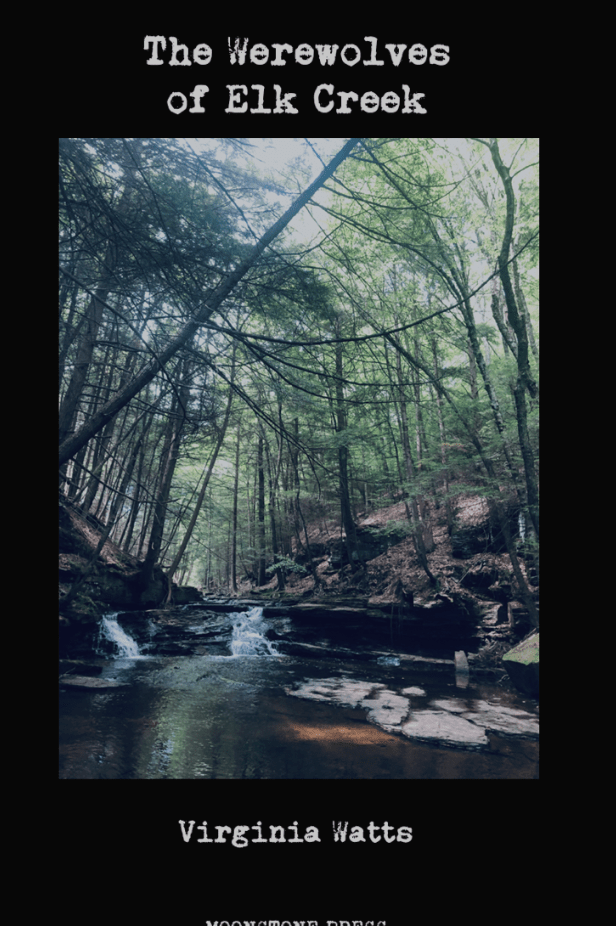
Her prior poetry chapbooks Shot Full of Holes and The Werewolves of Elk Creek 

 are available from Moonstone Press. And her debut short story collection Echoes from the Hocker House is not to be missed!

In October OSP will present a live reading with Virginia, Anthony Doyle, and Alan Bern. Find more information here.

And it’s not too late to get into the last Instant Noodles issue for 2025!

Dreams of the Return

dreams of the return

Alan Bern is more than just the author of DREAMS OF THE RETURN—he’s also one of the founding voices of Old Scratch Press, a collective born from a group of terrific writers with a deep love of traditional and hybrid poetry, prose, and art. As a retired children’s librarian and cofounder (with Robert Woods) of the fine-press publisher Lines & Faces, Alan has long pursued the merging of word, image, and place.

In DREAMS OF THE RETURN, he turns his lens to Italy—in particular the South—bringing to life landscapes both storied and luminous through his own photographs and through classic Italian poetry, delivered both in its original form and in his own translations. The journey is lyrical, immersive: it’s not merely a travel guide, but a portrait of longing, place, memory, and beauty.

And that’s something Alan does beautifully—his artistry weaves together what he’s done throughout his life: poetry, prose, photography, memoir, all fueled by a love for Italy. Within the OSP community, he is known for “photo-poems,” a daily practice in which images and language overlap, inviting the reader to travel with him across geographies and inward, into self.

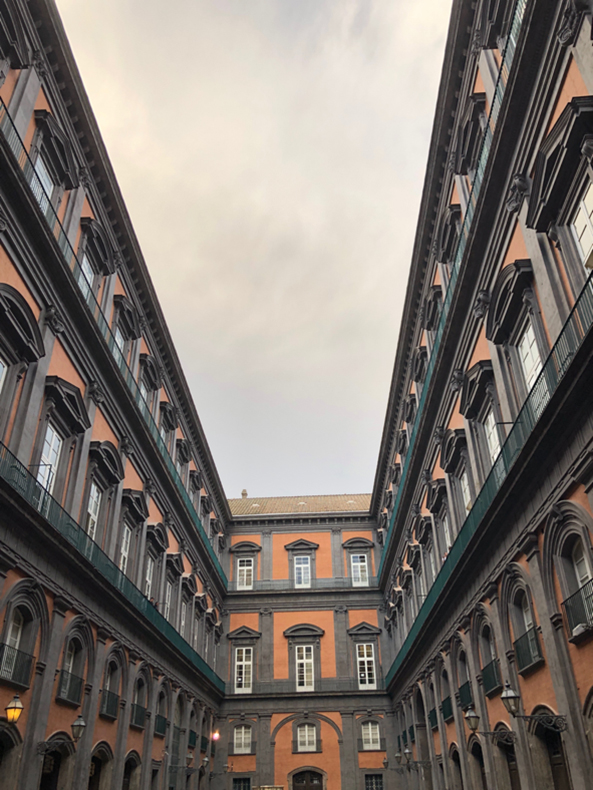
In addition to poems and photographs, DREAMS OF THE RETURN also includes intimate personal essays that layer history, memory, and lived experience. In “The Good One,” for example, Alan recounts a walk through Naples’ Quartieri Spagnoli with his friend Marco. What begins as a conversation about Jewish philosopher Don Isaac Abravanel and the sacred geography of southern Italy turns into a heartbreaking encounter with a community altar for “o’ Bono”—a young man accidentally killed during a New Year’s Eve celebration. Through this story, Alan reveals how place, tragedy, resilience, and human connection are intertwined in ways both profound and ordinary.

A true perfectionist, Alan (pictured left) worked closely with his good friend, Peter Truskier, to ensure that the photos selected would sparkle in the book just like the locations did in real life.

DREAMS OF THE RETURN is, in effect, another way Alan invites us to travel: through light and verse, through time and place. It’s a book to savor—start with a wind-soft sun, ruins, olive trees and history; consume it slowly with pizza margherita and red wine; linger into the evening with the sweetness of roccoco napoletani and an espresso kissed with Sambuca. You can order a copy of your own here:

Compiling My Collection

Clearly the owner of that journal is not doing a good job of compiling her collection because on her journal is a slice of orange she is attempting to dry out, three crystals, and a paintbrush. The book is open and written in with a pencil, not good for preserving writing as (being a teacher for one-zillions years I can tell you) pencil smudges overtime to become indecipherable. She’s also got a pile of vintage mail (definitely older and already been mailed to her, to someone), which is deliciously tantalizing, and reading is much easier and more fun than writing.

Who is this mess of a woman? That’s a stock photo, but it could easily be my desk, with a few dozen highlighters and yesterday’s coffee added to the milieu.

It’s difficult for me to have a clean desk, no lie there. It’s difficult for me to spend time cleaning my desk, and not because I am not a neat person, but because I push my own things back. In fact, though I think of myself as a generally nice and “in a good mood” sort of person, I can get snappy when I feel tooo squeezed out.

I feel thin, sort of stretched, like butter scraped over too much bread.

JRR Tolkien, The Fellowship of the Ring (The Lord of the Rings, #1)

What a great bit of writing that is!

So I have made the bold assertion that I will publish my collection of poetry through Old Scratch Press in 2026. There. I said it to the group, and now I said it to you. I swear I’m gonna do it. I am going to occasionally clean my desk, and push in some room to get my collection together by pushing other things back (other things probably being sleep! Ha!). I just took on a new tutoring student, a few pro bono editing projects (my daughter’s school has a non-profit component to it, and I donated some editing to the auction, and it got bought!), a half dozen or so sample edits, in addition to the regular amount of edits, which is many hundreds of pages per month, and I signed up for a singing course with a friend, have a relative needing assistance for cancer treatments, a teen in need of a lot of “staying on track” help with school work and she is also involved in some theater projects her dad or I need to be the transportation for (and, in general, making sure she eats, remembers her glasses, etc.), and a business to run and a home and family, in addition to trying to squeeze in a daily run. I would love to run well enough to participate in a 5K, and I have been thinking of joining a thing in my neighborhood where I could get a running trainer. Of all of those things I am doing there is nothing I do not want to be doing, except for wishing my relative didn’t have cancer, of course. One friend had told me recently she was stepping back from a project, and I had anticipated it about four months earlier, actually, and I completely get it. My relative, who is staying with me this week and last for her treatments, woke up today and told me she is spending the last few days she needs to be local for her tests at a friend’s because she needs a change of scenery. I had expected that too, and I had prepared a to-go coffee for her before she woke up. However I have a HS friend on FB who is every bit as engaged in politics as I am, and worried about the general state of what we see as the slide into authoritarianism, and another HS classmate said to him, “We liked it better when you just wrote about your kids and scouting. You don’t have a lot of chapters (she actually wrote chapters!) left; don’t waste them on this.” and I could not agree less. Age, chapter of life, has nothing to do with wanting to accomplish things and caring about things outside of ourselves, so, no, I do not think he should stop fighting the good fight. Yet I feel that I do have an understanding that we literally cannot do it all, and don’t want to, and I respect it, and think it is a good thing, and I flatter myself that I am especially good at reading the room, and can see when change is coming. But, I’m not good at, “No.” I’m not good at giving up on something I’ve begun, even if it does not realize my own dream. It’s an obstacle because in order to publish one of my many projects, I assumed I would have to come up with a good, firm, “No.” And I simply can’t. So I have decided instead to come up with a good, slightly quavering, “Yes.” I’m outing myself that I am going to put my damn book out. I am saying it, and affirming it, and treating it, as much as possible, as a done deal. I think if I normalize it, the way I normalize all the other things, I will simply do it because it has a due-date, or a do-date. Both!

And so, here is my question to you:

If you have been writing short stories, short non-fiction, flash, poetry, for some time now (I’m not going to say I’ve been writing for decades, but at least since the synth-pop craze and the resurgence of skinny ties (the best kind of ties)), how do you choose what to include, and what to leave behind, resting, forever lost in a permanent dream state in the “my writing” file on your desktop? Though the synth-pop craze wasn’t what I would describe as a serious time in the world, I was a serious writer; I took myself very seriously, and I think that “me” has somehow stuck around, and I judge that writing to be more profound, when in reality for pretty much all of us our early writing is awful. I remember writing a poem laden with love and portent that was about a page long and contained only the word “baby” written over and over again in different combinations with possessive pronouns and a few sappy adjectives. Songs, when sung, can add meaning through cadence, tone, etc., but, with that “baby” experiment I learned that mere words on a page cannot do that. It was a piece of absolute dreck. I do not regret deleting it!

So, those old pieces hold special meaning for me, but most are not very good (I confess I still think some of them are genius!), and almost all are not even remotely relevant to who I am now. Though I am still a whiny liberal with a moral bent, and that still is there, even in the new pieces.

And this is it, my one chance to publish my poetry, to put it out there in the world. When I was in my MA and MFA programs I knew who the “it” poets were in the world of poets who published, and I wanted to join them, to earn their respect. And as I tried I very much felt borne farther away from them. Primarily by life circumstances and that inability to say no, that pushing back of my own things, more than anything else. And that very much was a tell (an inadvertent behavior or mannerism that betrays) that I didn’t belong among them. Writers who are successful (and success looks different for a poet than a novelist, or self-help book author, etc.) almost all have a modicum of selfishness that allows them to push things away that don’t serve them, and also leads them to self-preserve. They’re not going to be dumb enough to share their “baby” poem with their thesis advisor. Selfishness belongs on the seven deadly sins list, IMHO. But success almost needs it, like a plant needs water, to survive.

So, for better or for worse, committing a deadly sin or not, I am going to get this thing done as if it is not even my thing, so I will not be being selfish; I will simply be doing another job on the list.

But, again, I have this question: if you could put together a collection of your writing (or publish one of your novels, if you write long-form) how do you choose? How do you group? How do you look back over your body of work and say, “This goes; this doesn’t?” And if you could have your book published next year, what would you want on your cover, and why? While working with OSP one thing that has continually surprised me is that the authors seem to know what the cover needs to be. How in the heck….?

So, what about you? Would you know? I’m super curious to hear! Drop me a comment below!

🙂 Dianne

Look Over Here!

Sitting on a bench sharing a coffee with old friends in a little northern Pennsylvania village, I saw it for myself. How much poetry in public places matters, even there, in remote mountains, where only about a hundred people reside year-round. Dangling from the willing arms of trees, laminated cards with phrases from poems or short poems that captivated both young and old. Children read them to each other aloud. Adults stopped on their morning walk to pause, read, reflect, nod, sigh or smile. Even some hard to please teenagers stopped their bike tires to read. What I didn’t expect to feel is how much it meant to them and to me. Poetry matters, folks. It matters big time. All writing matters. The Arts make all the difference in the world. 

            This little town is reflecting other larger movements to display poetry in outdoor places from around the world. Many people have heard of the Poetry in Motion initiative launched 1992 by the NYC Metropolitan Transportation Authority and the Poetry Society of America to bring poetry to millions of harried and stressed commuters. Poetry was displayed is subway cars and digital screens in stations. Each poem was accompanied by artwork. By 2002, 150 poems had been shared from all over the world, spanning the centuries. The poems reached out and met people in their own busy lives and enriched them. Readers reported looking forward to a new poem. They would snap pictures and send them to their friends. The world was different, changed and better.

            The Poetry in Motion Initiative was relaunched in 2012 under MTA Arts and Design. You can visit their website to read poems and learn of upcoming programs. Over 30 other US cities launched similar initiatives in the wake of Poetry in Motion including Philadelphia, LA, Nashville, San Francisco and Providence. Public poetry has popped up in many other places such as cafes, libraries, playgrounds and picnic tables in seven national parks thanks to Ada Limon our 24th Poet Laureate who championed the idea of transforming picnic tables into public art by including a historic poem with some connection to the park. 

            There is also a Facebook page “The Poetry in Public Places Project” that encourages everyone, you and me, to display poetry outdoors. You can visit this page to enjoy creative and inspiring ideas. For example, from Hoboken, NJ, a photo of a box of poetry where people are invited to TAKE ONE, yard signs from the Mercer County Library System, a poem painted on a breakwater in Milwaukee. 

             I wondered what poems went first in the NYC Poetry in Motion. There were four of them. “Crossing Brooklyn Ferry” by Walt Whitman, “When You Are Old” by William Butler Yeats, “Let There Be New Flowering” by Lucille Clinton and one of my favorites. Enjoy this poem and cheers to more poetry in the open air and hope!

—Ginny


“Hope” is the thing with feathers

“Hope” is the thing with feathers –
That perches in the soul –
And sings the tune without the words –
And never stops – at all –
And sweetest – in the Gale – is heard –
And sore must be the storm –
That could abash the little Bird
That kept so many warm –
I’ve heard it in the chillest land –
And on the strangest Sea –
Yet – never – in Extremity,
It asked a crumb – of me.

                                                                Emily Dickinson


If the New York Subway System asked you for a poem, what would you write?


Virginia Watts has been fortunate to have published nearly 100 pieces in literary magazines including CRAFT, The Florida Review, Reed Magazine, Pithead Chapel, Permafrost Magazine, Broadkill Review, Two Thirds North, Hawaii Pacific Review, Sky Island Journal, Eastern Iowa Review, Evening Star Review and Streetlight Magazine. Nominated four times for a Pushcart Prize and four times for Best of the Net, in 2019, Watts won The Florida Review Meek Award in nonfiction.

Virginia’s new book is now available from Old Scratch Press:

Her prior poetry chapbooks Shot Full of Holes and The Werewolves of Elk Creek 

 are available from Moonstone Press. And her debut short story collection Echoes from the Hocker House is not to be missed!

Final Two Meet and Greets for New Members

Are you a flash fiction, poetry, or short memoir writer with a finished manuscript—or one nearly ready to go? Old Scratch Press, a collaborative collective supported by Current Words Publishing, is now accepting applications for two new members to join us in 2026.

We’re a tight-knit, skill-sharing group that publishes each other’s books, runs the lit mag Instant Noodles, and supports each other with editing, design, marketing, and community.

We are hosting meet and greets on August 6th and August 13. To be invited you have to send a small sample. There are no fees to submit, and there are no fees to join, and there are no fees to publish your collection. There are no fees. Who else you gonna find to collaborate with who dedicates an entire issue of a literary magazine to that most magical of elixirs… gravy?
If you’re eager to grow as a writer and be part of something creative and weird and wonderful, we’d love to meet you.

👉 Apply with a sample here:
https://duotrope.com/duosuma/submit/form.aspx?id=6idG3Mj-O0jFm-15Y7r2p

Spots are limited. Let’s make good things together.