Gabby and Morgan are part of the featured selections from the Community of Literary Magazines and Presses for Women’s History Month!
Check it out here:
And pick up a copy of these great books!
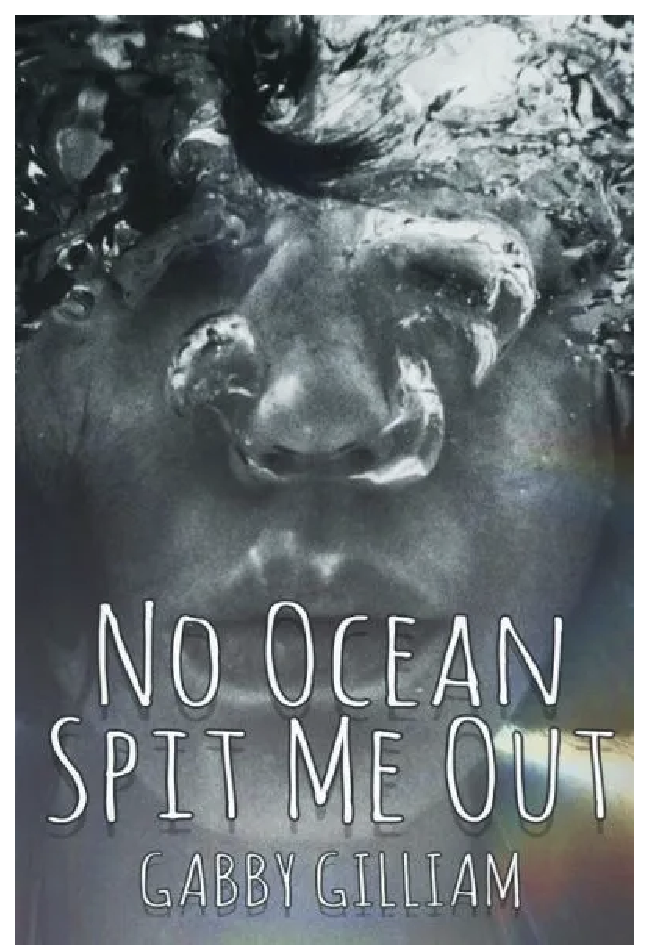
NO OCEAN SPIT ME OUT is a captivating debut collection of poetry by Gabby Gilliam that delves deep into the intricate tapestry of family dynamics and personal evolution. Within its 30 poems, the collection embarks on a profound journey through the stages of coming of age, navigating the complexities of familial bonds, grappling with organized religion, and ultimately, embracing the essence of self-acceptance.
Each poem in NO OCEAN SPIT ME OUT serves as a poignant reflection of the human experience, capturing moments of vulnerability, resilience, and growth with eloquence. Through lyrical prose and emotive imagery, Gilliam paints a vivid portrait of the joys and struggles inherent in the process of self-discovery.
Whether you’re seeking solace in the shared experiences of family relationships or searching for introspective insights into the nuances of identity and faith, Gilliam’s collection offers a profound and thought-provoking exploration of the human condition.
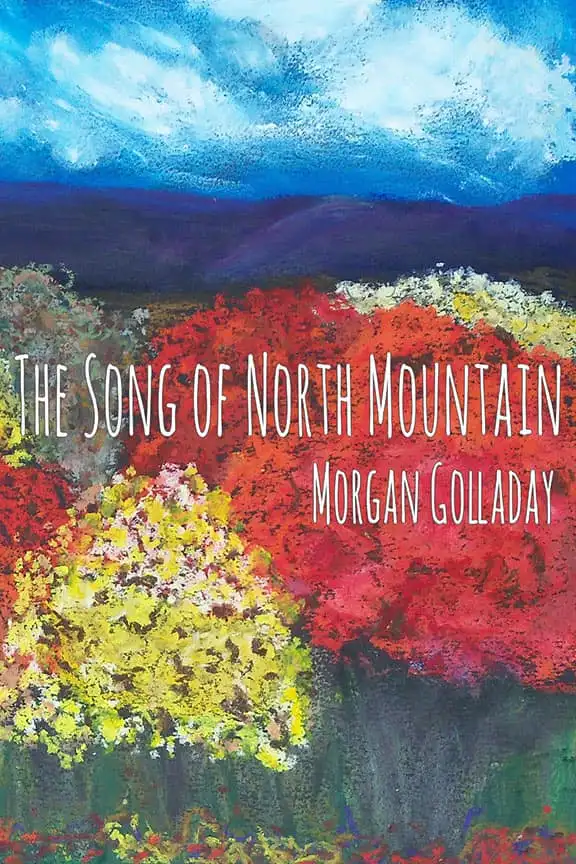
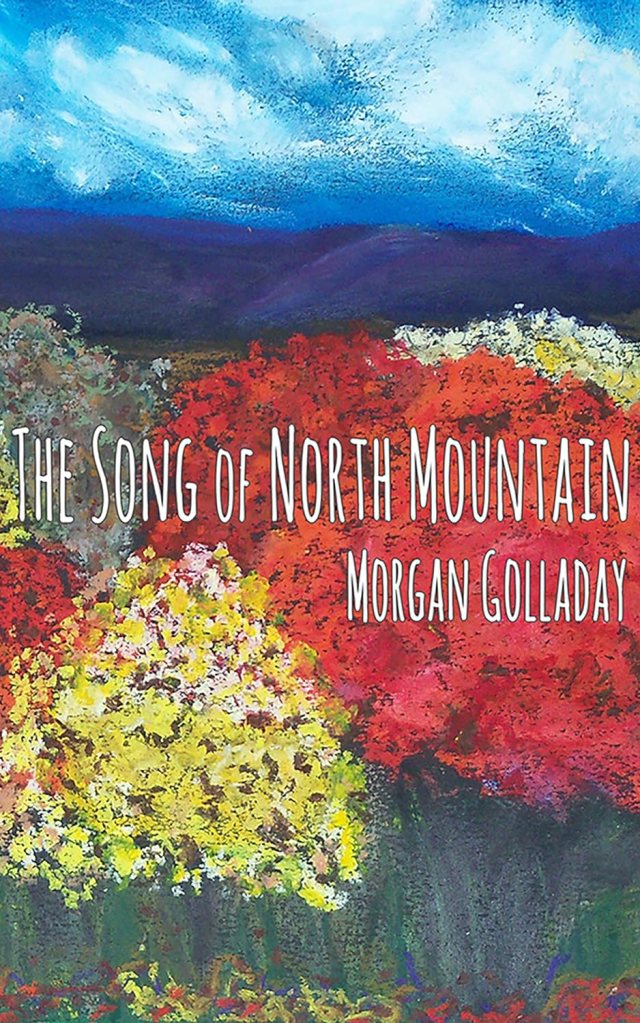
From the mighty pen of artist and author Morgan Golladay comes The Song of North Mountain, a transformative collection of poetry and art celebrating the famous and mystical North Mountain of Appalachia.
North Mountain, a wildland in the George Washington and Jefferson National Forests of western Virginia, has been recognized by the Wilderness Society as a special place worthy of protection from logging and road construction. The Wilderness Society has designated the area as a “Mountain Treasure.”
Morgan Golladay brings her readers to dwell in the reverence of this wonderful wilderness.
Golladay is an award-winning author who was raised on North Mountain and lives in coastal Delaware as part of a thriving artist and author community. All words and art in this book are by Golladay.
The Song of North Mountain is National Book Award nominee!
This week I listened to a webinar from a bit back on what you can and cannot use from others’ work in your work… spoiler alert, nope. nope, nope, you cannot use those Taylor Swift lyrics, no matter how perfect they are for your piece. Why? Because Taylor wrote them, for her piece. Cry me a small stream (see what I did there?) but you gotta write your own!
One form the webinar really did not recommend was Cento. And from the looks of my very unscientific Google search, there are a lot of them:
Well, why not?
As in the Taylor Swift example, those poets wrote those lines in their poems, to express their thoughts, and that doesn’t mean you can co-opt them, even though it is a fun writing exercise to try to knit them together. They also recommend against publishing Golden Shovels.
The webinar, for CLMP members, was helmed by Jeffrey Levine (a lawyer and Publisher of Tupelo Press) and Fred Courtright (President of The Permissions Company). And I was shocked to find out how many instances there are where authors should be getting permission, but maybe aren’t.
Copyright is, very basically, attached to intellectual property, so something we cannot touch with our fingers, even if those ideas are pressed into an LP, or printed in a book, or applied to watercolor paper. It’s the imaginings, the wordplay, the artistic or editorial or even advertising verbiage, or the design, creation, work of another artist. And we can’t use what isn’t ours without permission from its creator, or, and maybe more likely, its rights holder. Frankly, and this is where some writers disagree with me, this makes perfect sense to me if I think about someone taking my work, and using it in their own piece, and it also makes sense to me as an artist. I want so badly to use the lyrics to songs that I imbue with this meaning and emotion that only they can have, and it’s tougher to come up with my own “pretend” song, but I really need to push my writing to the next level, and do it. You don’t have to register your work with US Copyright to be protected, but we do copyright all books we publish as a matter of course.
What does copyright leave out? It does not apply to material that is not truly original, to anything already in the public domain, or to broad concepts such as ideas, systems, processes, or methods. Those belong more to patent and trademark, which overlap only in small ways that I’m not expert enough on to explain, so investigate. Copyright also does not cover names, titles, slogans, or very short phrases. In literary settings, though, it is usually safer to treat even brief lines as if they might be protected, simply to avoid trouble. How long does copyright protection remain in place? In most cases it lasts for the lifetime of the author plus an additional seventy years. For anonymous work or work created as a work for hire, the term is different. It lasts either ninety five years from the date it was first published or one hundred twenty years from the date it was created, and it ends when the earlier of those two periods runs out.
The publisher never takes copyright. The copyright remains with the author. The publisher only licenses the copyright, meaning the publisher has the right to print (or otherwise make available) or produce the work for some (limited) period of time. But if you publish a poem, for example, with a publisher, and you sign a contract, that poem may “belong” to the publisher for the duration of the contract. We’ve never held back an author from taking a work back or using it somewhere else, but I cannot speak for all publishers, so, though it should not be a problem to include in your chapbook a poem you published somewhere else, you may have to obtain permission to reprint it in another place. Do you have time to do that?
Another really interesting point the webinar brought up was that if a work is in the public domain, you do not need permission to use it. Fair use is a grey area, and so I would never recommend deciding on your own that something is fair use. I would suggest you contact Fred.
If you want to use an old poem in its original language, a piece that is long out of copyright, you can quote it freely. But if you want to use a modern translation of that same piece, the translation is probably under copyright. If you want to use something that is still in copyright, you might need permission from the copyright holder and also the holder of the copyright of the translation, and suddenly you’re in the weeds. And a lot of this costs money, to track down the copyright, and to pay for use. The webinar recommended the Watch File at the Harry Ransom Center as a good place to start. One person on the call said she often would ask bands directly, on their social media, if she could use their music or lyrics, but the presenters pointed out that while the band may (may, important distinction) hold copyright, someone else may hold the rights, and those folks could have very good “bots” looking for it on the internet, and show up with a big bill for you.
Even internet memes, tweets, etc., could belong to the person who posted them, and there could be consequences (of the financial kind is what we’re talking here) for you if you use them. And I liked that they made it clear that attribution (taken from “Friend of the Devil” by the Grateful Dead) does not give you permission: you can still find yourself on the hook for a lot of money. Yikes! And just because the author of a poem holds the copyright this doesn’t mean they’re not in a publishing deal where the publisher might own the reprint rights. You have to check it out to be sure.
The advice out there can differ greatly, and even The Poetry Foundation may have advice about fair use that the federal courts would not agree with, so the webinar strongly recommended that you either get permission, using someone like Fred, or skip it.
What do you think? Have you been playing with licensing fire? I am always encouraging authors to start an editing and publishing fund, but you may need a violation fund too! I hope not!
So friends I hope that you can sees
"fair use" doesn't grow like leaves
and poets and other fools like me
as much as you would like it free
accept that permission has a fee
and you can't pick from another's tree.
Dianne Pearce is the chief editor and bottle washer at Current Words Publishing, and the half-cocked imaginer behind Old Scratch Press and Instant Noodles. Pearce loves helping writers realize the dream of having their work published. I mean she is really crazy about doing that for some reason. To that end, to join in the fray, to look at the thing from the other side, to stand in another’s shoes, and all of those things, she is fully expecting and promising to publish her first collection of poetry, In the Cancer Cafeteria, spring of 2026. Please don’t hold your breath. For very long. Happy Holidays!
Clearly the owner of that journal is not doing a good job of compiling her collection because on her journal is a slice of orange she is attempting to dry out, three crystals, and a paintbrush. The book is open and written in with a pencil, not good for preserving writing as (being a teacher for one-zillions years I can tell you) pencil smudges overtime to become indecipherable. She’s also got a pile of vintage mail (definitely older and already been mailed to her, to someone), which is deliciously tantalizing, and reading is much easier and more fun than writing.
Who is this mess of a woman? That’s a stock photo, but it could easily be my desk, with a few dozen highlighters and yesterday’s coffee added to the milieu.
It’s difficult for me to have a clean desk, no lie there. It’s difficult for me to spend time cleaning my desk, and not because I am not a neat person, but because I push my own things back. In fact, though I think of myself as a generally nice and “in a good mood” sort of person, I can get snappy when I feel tooo squeezed out.
I feel thin, sort of stretched, like butter scraped over too much bread.
JRR Tolkien, The Fellowship of the Ring (The Lord of the Rings, #1)
What a great bit of writing that is!
So I have made the bold assertion that I will publish my collection of poetry through Old Scratch Press in 2026. There. I said it to the group, and now I said it to you. I swear I’m gonna do it. I am going to occasionally clean my desk, and push in some room to get my collection together by pushing other things back (other things probably being sleep! Ha!). I just took on a new tutoring student, a few pro bono editing projects (my daughter’s school has a non-profit component to it, and I donated some editing to the auction, and it got bought!), a half dozen or so sample edits, in addition to the regular amount of edits, which is many hundreds of pages per month, and I signed up for a singing course with a friend, have a relative needing assistance for cancer treatments, a teen in need of a lot of “staying on track” help with school work and she is also involved in some theater projects her dad or I need to be the transportation for (and, in general, making sure she eats, remembers her glasses, etc.), and a business to run and a home and family, in addition to trying to squeeze in a daily run. I would love to run well enough to participate in a 5K, and I have been thinking of joining a thing in my neighborhood where I could get a running trainer. Of all of those things I am doing there is nothing I do not want to be doing, except for wishing my relative didn’t have cancer, of course. One friend had told me recently she was stepping back from a project, and I had anticipated it about four months earlier, actually, and I completely get it. My relative, who is staying with me this week and last for her treatments, woke up today and told me she is spending the last few days she needs to be local for her tests at a friend’s because she needs a change of scenery. I had expected that too, and I had prepared a to-go coffee for her before she woke up. However I have a HS friend on FB who is every bit as engaged in politics as I am, and worried about the general state of what we see as the slide into authoritarianism, and another HS classmate said to him, “We liked it better when you just wrote about your kids and scouting. You don’t have a lot of chapters (she actually wrote chapters!) left; don’t waste them on this.” and I could not agree less. Age, chapter of life, has nothing to do with wanting to accomplish things and caring about things outside of ourselves, so, no, I do not think he should stop fighting the good fight. Yet I feel that I do have an understanding that we literally cannot do it all, and don’t want to, and I respect it, and think it is a good thing, and I flatter myself that I am especially good at reading the room, and can see when change is coming. But, I’m not good at, “No.” I’m not good at giving up on something I’ve begun, even if it does not realize my own dream. It’s an obstacle because in order to publish one of my many projects, I assumed I would have to come up with a good, firm, “No.” And I simply can’t. So I have decided instead to come up with a good, slightly quavering, “Yes.” I’m outing myself that I am going to put my damn book out. I am saying it, and affirming it, and treating it, as much as possible, as a done deal. I think if I normalize it, the way I normalize all the other things, I will simply do it because it has a due-date, or a do-date. Both!
And so, here is my question to you:
If you have been writing short stories, short non-fiction, flash, poetry, for some time now (I’m not going to say I’ve been writing for decades, but at least since the synth-pop craze and the resurgence of skinny ties (the best kind of ties)), how do you choose what to include, and what to leave behind, resting, forever lost in a permanent dream state in the “my writing” file on your desktop? Though the synth-pop craze wasn’t what I would describe as a serious time in the world, I was a serious writer; I took myself very seriously, and I think that “me” has somehow stuck around, and I judge that writing to be more profound, when in reality for pretty much all of us our early writing is awful. I remember writing a poem laden with love and portent that was about a page long and contained only the word “baby” written over and over again in different combinations with possessive pronouns and a few sappy adjectives. Songs, when sung, can add meaning through cadence, tone, etc., but, with that “baby” experiment I learned that mere words on a page cannot do that. It was a piece of absolute dreck. I do not regret deleting it!
So, those old pieces hold special meaning for me, but most are not very good (I confess I still think some of them are genius!), and almost all are not even remotely relevant to who I am now. Though I am still a whiny liberal with a moral bent, and that still is there, even in the new pieces.
And this is it, my one chance to publish my poetry, to put it out there in the world. When I was in my MA and MFA programs I knew who the “it” poets were in the world of poets who published, and I wanted to join them, to earn their respect. And as I tried I very much felt borne farther away from them. Primarily by life circumstances and that inability to say no, that pushing back of my own things, more than anything else. And that very much was a tell (an inadvertent behavior or mannerism that betrays) that I didn’t belong among them. Writers who are successful (and success looks different for a poet than a novelist, or self-help book author, etc.) almost all have a modicum of selfishness that allows them to push things away that don’t serve them, and also leads them to self-preserve. They’re not going to be dumb enough to share their “baby” poem with their thesis advisor. Selfishness belongs on the seven deadly sins list, IMHO. But success almost needs it, like a plant needs water, to survive.
So, for better or for worse, committing a deadly sin or not, I am going to get this thing done as if it is not even my thing, so I will not be being selfish; I will simply be doing another job on the list.
But, again, I have this question: if you could put together a collection of your writing (or publish one of your novels, if you write long-form) how do you choose? How do you group? How do you look back over your body of work and say, “This goes; this doesn’t?” And if you could have your book published next year, what would you want on your cover, and why? While working with OSP one thing that has continually surprised me is that the authors seem to know what the cover needs to be. How in the heck….?
So, what about you? Would you know? I’m super curious to hear! Drop me a comment below!
Sitting on a bench sharing a coffee with old friends in a little northern Pennsylvania village, I saw it for myself. How much poetry in public places matters, even there, in remote mountains, where only about a hundred people reside year-round. Dangling from the willing arms of trees, laminated cards with phrases from poems or short poems that captivated both young and old. Children read them to each other aloud. Adults stopped on their morning walk to pause, read, reflect, nod, sigh or smile. Even some hard to please teenagers stopped their bike tires to read. What I didn’t expect to feel is how much it meant to them and to me. Poetry matters, folks. It matters big time. All writing matters. The Arts make all the difference in the world.
This little town is reflecting other larger movements to display poetry in outdoor places from around the world. Many people have heard of the Poetry in Motion initiative launched 1992 by the NYC Metropolitan Transportation Authority and the Poetry Society of America to bring poetry to millions of harried and stressed commuters. Poetry was displayed is subway cars and digital screens in stations. Each poem was accompanied by artwork. By 2002, 150 poems had been shared from all over the world, spanning the centuries. The poems reached out and met people in their own busy lives and enriched them. Readers reported looking forward to a new poem. They would snap pictures and send them to their friends. The world was different, changed and better.
The Poetry in Motion Initiative was relaunched in 2012 under MTA Arts and Design. You can visit their website to read poems and learn of upcoming programs. Over 30 other US cities launched similar initiatives in the wake of Poetry in Motion including Philadelphia, LA, Nashville, San Francisco and Providence. Public poetry has popped up in many other places such as cafes, libraries, playgrounds and picnic tables in seven national parks thanks to Ada Limon our 24th Poet Laureate who championed the idea of transforming picnic tables into public art by including a historic poem with some connection to the park.
There is also a Facebook page “The Poetry in Public Places Project” that encourages everyone, you and me, to display poetry outdoors. You can visit this page to enjoy creative and inspiring ideas. For example, from Hoboken, NJ, a photo of a box of poetry where people are invited to TAKE ONE, yard signs from the Mercer County Library System, a poem painted on a breakwater in Milwaukee.
I wondered what poems went first in the NYC Poetry in Motion. There were four of them. “Crossing Brooklyn Ferry” by Walt Whitman, “When You Are Old” by William Butler Yeats, “Let There Be New Flowering” by Lucille Clinton and one of my favorites. Enjoy this poem and cheers to more poetry in the open air and hope!
—Ginny
“Hope” is the thing with feathers
“Hope” is the thing with feathers – That perches in the soul – And sings the tune without the words – And never stops – at all – And sweetest – in the Gale – is heard – And sore must be the storm – That could abash the little Bird That kept so many warm – I’ve heard it in the chillest land – And on the strangest Sea – Yet – never – in Extremity, It asked a crumb – of me.
Emily Dickinson
If the New York Subway System asked you for a poem, what would you write?
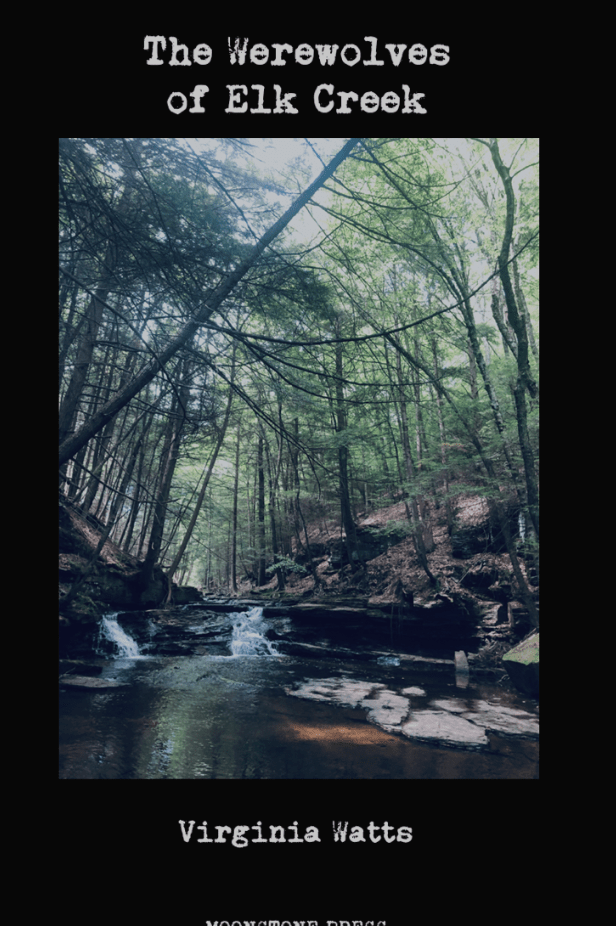
Virginia Watts has been fortunate to have published nearly 100 pieces in literary magazines including CRAFT, The Florida Review, Reed Magazine, Pithead Chapel, Permafrost Magazine, Broadkill Review, Two Thirds North, Hawaii Pacific Review, Sky Island Journal, Eastern Iowa Review, Evening Star Review and Streetlight Magazine. Nominated four times for a Pushcart Prize and four times for Best of the Net, in 2019, Watts won The Florida Review Meek Award in nonfiction.
Virginia’s new book is now available from Old Scratch Press:
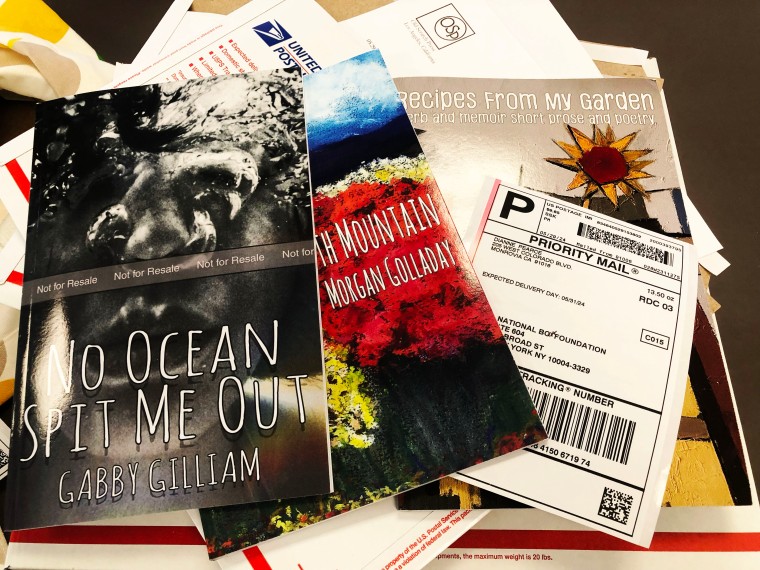
I was thrilled today to have the privilege to mail three new Old Scratch Press books off to the National Book Awards! If you follow all of our doings around here you may have seen this post from last year, where I was lucky enough to do the same thing!
Gosh, you know, we’re going up against the big guys when we send our books in to the National Books Awards. Most of the other books being sent in are going to have been written by well-established poets with a long history of publication, or brand new poets being championed by their mentors who are the big guys in their fields, and those other books are also going to come from traditional (read as: large and monied) presses or university presses, which, like the big publishing houses, also have lots of disposable income and connections. I got my MFA; I know how that all works. And still, I don’t care about the competition. I care that we have wonderful poets. Morgan Golladay has been writing her poetry throughout most of her adult life, and salting it away for “someday,” and Nadja Maril and Gabby Gilliam have been submitting and getting small wins with their writing for years now, and why isn’t their writing as deserving as anyone else’s? It absolutely is! It gives me a total thrill to just think about getting them into this contest, where they get a chance to stand shoulder to shoulder with the “big guys.” And get this—Carolyn Forché is one of the judges this year! Carolyn Forché! It’s mind-blowing to think that a poet from our little collective is going to be read by her. I still remember how my teachers raved about Carolyn Forché’s book THE COUNTRY BETWEEN US back in the ’90s. We read it and discussed it over and over with reverence. The idea that she’ll be reading one of our books? It’s just wild.
So, lovely people following our progress as a collective and a press, please join me in crossing your fingers and blowing on one of these:
as we send Gabby, Nadja, and Morgan off to the National Book Awards to try their luck!
And hey, dear reader of this blog, why not snag a copy for yourself in a show of support?
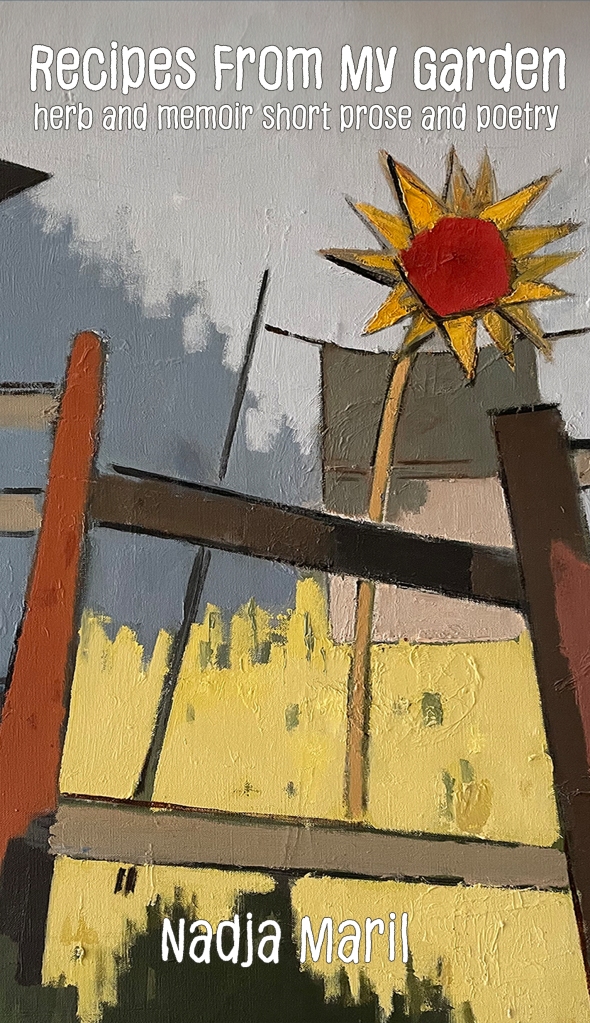
Flash prose, poetry, and essays inspired by her kitchen, garden, and family memories; Nadja Maril’s chapbook, RECIPES FROM. MY GARDEN is a sensual feast for the soul. Drawing upon her life experiences as an artist’s daughter, antiques dealer, journalist, and author; Maril mines simple objects for meaning and creates a lavish buffet.
Editorial Praise for RECIPES FROM MY GARDEN
“Suffused with the tastes of cilantro, mint, and cucumber fresh from a garden, the smell of salt air from the ocean’s edge, the familiar scent of coffee and tobacco from a father’s hug, or the simple pleasure of the sounds of clicking insects through a backdoor screen, Nadja Maril’s lovely and sensitive RECIPES FROM MY GARDENis a feast for the senses and a balm for the spirit. While exploring personal memories that touch on abstract questions of identity and history, Maril also reminds us of the tiny yet profound comforts of earthly existence.” –Aaron Hamburger, author of HOTEL CUBA—
“In RECIPES FROM MY GARDEN, Nadja Maril casts a richly sensual literary spell. From the deft and resonant garden-inspired pieces that find the taste of ‘summer’ in basil and celebrate the ‘welcoming gaze of sunflowers,’ to the sharply observed portraits of small yet potent memories— buying a perfect dress with her mother; baking a cake ‘too beautiful to be cut’– Maril mines moral and spiritual meaning from everyday life. The promise Maril makes about a ‘chicken and rice’ recipe is true of this whole vibrant chapbook: ‘soul nutrition it will provide.’ ” –Elizabeth Searle, novelist and scriptwriter (A FourSided Bed; I’ll Show You Mine)–
“RECIPES FROM MY GARDENcelebrates the splendor of traversing a literary life and surviving the time of Covid. Nadja Maril’s first collection of poetic prose, flash memoir, and poetry introduces us to her family, her nurtured garden, and the myriad spaces she navigates to cope with our world. With true artistic excellence, Nadja’s words yearn for an understanding of what troubles us, inviting us into a landscape of riddles, questions and puzzles.” –Indigo Moor, author of Everybody’s Jonesin’ for Something—
“[RECIPES FROM MY GARDEN] is a treasure of small love stories: odes to beloved kitchens, and vegetable gardens, and the simple joys of a blooming sunflower. It is a book of memory and of pleasure that speaks of the love of family across many generations. The passed-down recipes inside the pages are themselves the most generous kind of love letter.” –Susan Conley, author of Landslide—
[In NO OCEAN SPIT ME OUT] Gabby Gilliam’s verse preserves the feel of the summer farm, contrasting its fertile brightness with the struggle between grief and the sudden absence of connection to family and place. Belonging and the struggle to continue remembering clash on the page, while the passion for life’s diverse and tactile experiences dazzle the reader with tantalizing gasps of zucchini, crab apples, and blackberry wine. Each poem gives the reader their own lingering taste of her ghosts. -Kim Malinowski-
NO OCEAN SPIT ME OUT is a captivating debut collection of poetry that delves deep into the intricate tapestry of family dynamics and personal evolution. Within its 30 poems, the collection embarks on a profound journey through the stages of coming of age, navigating the complexities of familial bonds, grappling with organized religion, and ultimately, embracing the essence of self-acceptance. Whether you’re seeking solace in the shared experiences of family relationships or searching for introspective insights into the nuances of identity and faith, this collection offers a profound and thought-provoking exploration of the human condition.
“Sometimes stark, but always beautiful, these free verse celebrations of North Mountain introduce a seasonal sense of environmental transitions to the observer and reader’s eye, with time’s passage changing everything and nothing…Aside from a personal visit to North Mountain, there is no better way of appreciating its beauty, impact, and presence over the eons than through THE SONG OF NORTH MOUNTAIN.” —MIDWEST BOOK REVIEW—
From the mighty pen of artist and author Morgan Golladay comes THE SONG OF NORTH MOUNTAIN, a transformative collection of poetry and art celebrating the famous and mystical North Mountain of Appalachia. North Mountain, a wildland in the George Washington and Jefferson National Forests of western Virginia, has been recognized by the Wilderness Society as a special place worthy of protection from logging and road construction. The Wilderness Society has designated the area as a “Mountain Treasure.” Morgan Golladay brings her readers to dwell in the reverence of this wonderful wilderness. Golladay is an award-winning author who was raised on North Mountain and lives in coastal Delaware as part of a thriving artist and author community. All words and art in this book are by Golladay.
Participate in the Reclaiming Mni Sota Indigenous Writers Grant 24-Hour Fundraiser!
Join us for a dynamic online event: the Reclaiming Mni Sota Indigenous Writers Grant 24-Hour Live Fundraiser, starting on Friday, Nov 3, at 7pm (Central Daylight Time). This event is dedicated to supporting and elevating Indigenous writers in Mni Sota (Minnesota).
Over the course of 24 hours, we’ll host a series of captivating interviews featuring distinguished guests from the writing, editing, and publishing realms. You’ll have the opportunity to connect with accomplished writers, delve into their experiences, and gain insights into their creative processes.
By participating in this fundraiser, you’ll be making a meaningful contribution to the Reclaiming Mni Sota Indigenous Writers Grant, an initiative promoting literary diversity by aiming to raise $10,000 for a Minnesota-based Indigenous writer. Your support can have a significant impact on nurturing Indigenous voices and storytelling.
Make a note on your calendar and be part of this extraordinary event. Together, let’s celebrate and pay tribute to Indigenous writers, their narratives, and their invaluable contributions to our communities.
The silent auction, featuring numerous exclusive prizes, begins on Tuesday, October 10, and concludes on Saturday, November 4, just an hour before the 24-hour live fundraiser ends. The winners of the silent auction items will be announced during the final hour of the event. All proceeds from the auction will directly benefit the Reclaiming Mni Sota Indigenous Writers Grant. To view and place bids on the items, visit this link: https://historythroughfiction.betterworld.org/auctions/reclaiming-mni-sota
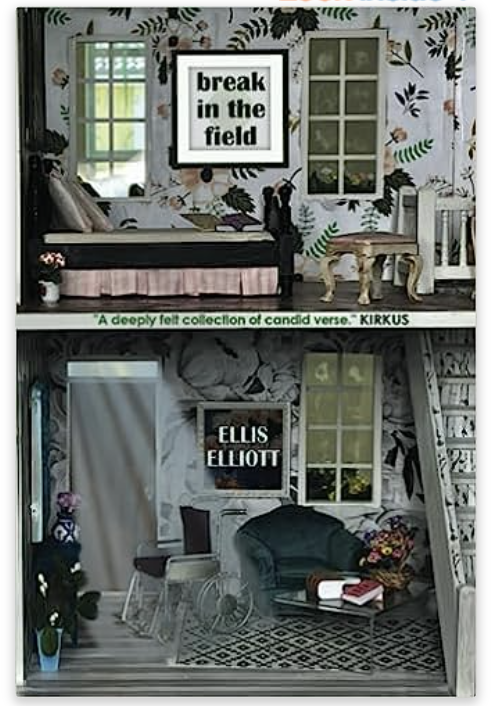
In a world overflowing with books, it’s not easy to choose what to read next. But if you’re looking for a captivating journey that promises to inspire, enlighten, and entertain, look no further than Break in the Field by Ellis Elliott. Why would you add this book to your reading list?
A Fresh Perspective on Life:Break in the Field offers refreshing insights into resilience, determination, and the pursuit of meaningful family life. Elliott’s storytelling has a unique ability to make you see your own life in a new way.
Relatable Stories: All poems are also stories, and stories in Break in the Field are relatable and well-developed. You’ll find yourself emotionally invested in this engaging and immersive read.
Inspirational Themes: One of the standout qualities of Break in the Field is its ability to tackle complex and thought-provoking themes like the nature and limitations of parenting, and the importance of community and self-discovery, weaving a rich tapestry of ideas and experiences that, while very intimate, will resonate with readers from all walks of life. Elliott’s writing style is both elegant and accessible. The book flows effortlessly, making it easy to immerse yourself in the poems. Whether you’re a seasoned reader or new to literature, you’ll appreciate the skillful storytelling and vivid descriptions found within the pages of this book.
“This gripping, heart wrenching exploration of her inner most thoughts and feelings while caring for her extreme needs stepson, “[whose] brain vessels shattered at birth into a million stars,” are so raw, so deeply forthright, from a place of such compassion, tenderness, and introspection that I found myself tearful many times.” KARI GUNTER-SEYMOUR Ohio Poet Laureate and author of ALONE IN THE HOUSE OF MY HEART
Support for a Talented Author: By purchasing Break in the Field you’re supporting a talented poet on her literary journey. Discovering and promoting new voices in literature is essential to the vibrant world of storytelling, and your purchase contributes to this endeavor.
Break in the Field, by Ellis Elliott, is more than just a collection of poetry; it’s an immersive experience that will challenge, inspire, and move you. With relatable characters, unexpected twists, and a narrative that delves deep into the human experience, this book is a valuable addition to any rlibrary. Purchase your copy here and embark on an unforgettable literary adventure.










 OLD SCRATCH PRESS