Welcome Beatriz Fernandez: Newest Member of Old Scratch Press

Old Scratch Press Short Form and Poetry Collective is pleased to announce that Beatriz Fernandez has recently become our newest member.  “I am thrilled and honored, “she says, “to join an online community of fellow writers from around the globe who support each other’s work, provide feedback and share our various skills and strengths.”

Although she didn’t try to get published until she was in her late forties, Beatriz has been writing all her life. 

“I write in both form and free verse, both mainstream and genre, and have recently begun to write flash and short fiction. In poetry, I favor historical persona poems written in the voices of women, whether historical, mythological, or fictional figures. I also write speculative poetry and short fiction. I try to include my love of robots, androids, or time travel in most of my stories.” 

Over the past ten years, Beatriz Fernandez’s work has been nominated for the Pushcart prize four times, and has been published in anthologies and journals as various as Label Me Latina/o, Prime Number Magazine, Strange Horizons, and Whale Road Review.  She’s authored three poetry chapbooks: the most recent, Simultaneous States, (Bainbridge Island Press, 2025) included some poetry set in Puerto Rico and some speculative poems.  Her eco-science fiction flash fiction piece, “Flow Time” was published this summer in a special Florida themed anthology by Gaslamp Pulp, a division of Nat 1 Publishing.  That publisher also just accepted her Puerto Rican Frog Prince adaptation titled “The Coquí Captain” for a children’s anthology of reimagined fairy tales.

Beatriz grew up in Philadelphia, Spain, and mostly Puerto Rico and then came to Florida to attend college.  During her junior year she established her Florida residency, met her husband, and began working in libraries.  “I fell in love with all three,” she says, “and subsequently found no reason to leave any of them!”

Describing herself as a late bloomer in both her library and writing careers; she became a professional librarian in her mid 30s.  On the way, she obtained an M.A. in English literature but found herself to be too much of a generalist to focus on a dissertation topic. 

“During this time,” she says, “I seemed to be under the impression I was a budding novelist while the reality was that I was writing more poetry than anything else.  My lightbulb moment came when I won a Writer’s Digest poetry contest that I entered on the very last day.  That stroke of luck seemed to finally put me on the right road and actively seeking to improve my poetry style.  I embarked on a long-distance phone tutorial with poet Andrea Hollander, who is a brilliant teacher and mentor, for several years; she helped me find my true voice. “

“Many writing classes, confabs and workshops later,” she says, “I’ve published almost every poem I’ve ever written! Now I feel I have come full circle—after starting out my writing career with long-distance tutorials, I’ve joined an online community of fellow writers.”

To learn more about Beatriz and to hear her radio interview on “Here and Now,” you can visit her website here

Thank you for reading this post and visiting the Old Scratch Press Blog. Next Saturday October 25th at 5:00 p.m., three members of the Old Scratch Press Team are participating in a special online reading from their newly published books. FREE. Read more about it here. And follow us on Facebook.

The Writer’s Brain: Creativity and Neurodivergence

From my collage notebook

There’s a certain stereotype about writers: distracted, dreamy, maybe a little moody, often lost in their own heads. Then there are those of us whose third-grade teacher writes on her report card, “Ellis is very sensitive. She says she doesn’t feel good when she doesn’t want to participate and sometimes puts her hands over her ears.”

What we don’t always name is that many of us identify with something more specific—ADHD, anxiety, depression, OCD, autism, bipolar disorder. In other words, neurodivergence.

Far from being a barrier, these brain patterns often come hand-in-hand with creativity. Our ability to notice connections others overlook, to hyper-focus on a project for hours, or to sense language at a heightened level can all be part of what makes us writers. (Doesn’t everyone have a list of words they hate simply because the way the word feels in their mouth?)

The Double-Edged Sword

Of course, the same brain that gifts us with creative leaps can also work against us. ADHD can make finishing projects feel like climbing Everest. Anxiety can whisper that nothing we write is ever good enough. Depression can steal the life-force necessary to even begin. The very sensitivity that makes us attuned to metaphor and meaning can leave us overwhelmed by the noise of the world.

Reframing the Narrative

Instead of treating neurodivergence as something to battle, what if we reframed it as part of the writer’s toolkit?

  • Hyperfocus can become a superpower for deep revision. Or help you finish the book!
  • Restless energy can fuel bursts of freewriting that break past creative blocks. That, and dance breaks.
  • Heightened sensitivity can deepen character work, dialogue, and description. As long as you remember to take breaks.

The key is learning how to manage the edges—finding rest, support, and strategies so that the gift doesn’t become a burden.

Practical Ways to Support Your Creative Brain

  1. Chunk your writing time. Short, timed sessions (15–25 minutes) can harness focus without overwhelming you.
  2. Write rituals, not rules. A small ritual (lighting a candle, stretching, a playlist) helps train your brain to enter writing mode.
  3. Name the inner critic. Literally give it a name or persona so it loses power over you.
  4. Seek community. Writing groups, workshops, or even online spaces help balance the solitary nature of the work.
  5. Honor rest. Brains that run hot need recovery time. Pushing the pause-button isn’t failing—it’s part of the process.

Why It Matters

When we share openly about the link between writing and neurodivergence, we create permission for others. Permission to stop beating themselves up for struggling with deadlines. Permission to see their “quirks” as part of their artistry. Permission to make choices others might not understand. Permission to write anyway.


Do you identify as a neurodivergent writer? How does it show up in your creative process—both the gifts and the challenges?

Ellis Elliott

Founding member Old Scratch Press Poetry Collective

Author of Break in the Field poetry collection and A Witch Awakens: A Fire Circle Mystery.

https://a.co/d/eMSe9up

https://a.co/d/7J1ra9x

http://bewildernesswriting.com

Submitters Beware

There has been much in the news within literary circles lately about literary journals with questionable practices, mostly focused upon submission fees and how these fees are used. No one should question the idea that it is expensive to run a literary magazine with such costs as editing and overhead, and most importantly, not everything about submission fees should be seen as negative. It is possible that when writers must pay a nominal fee to submit their work to literary magazines, they may be inspired to submit a more edited and stronger piece. However, it’s one thing to pay $3.00 to one journal to submit but let’s face it, most writers must submit the same piece to many magazines if they want to increase their chance of having it published. This is why submission fees can really add up. There is also the idea that if submission fees are charged, less submissions will come in and this will lead to faster publication decisions by editors. Like it or not, it does seem that submission fees are here to stay. If we accept that fact, then we must understand some realities about submission fees.

I am not going to name names here, but some well know literary journals have been engaging in practices that are shameful. It’s hard enough and expensive enough to be a writer trying to get work published in literary journals without these bad actors but, unfortunately, they do exist. One well known journal accepted submissions and charged for over a year but had already stopped reading and publishing new word. They later folded and changed their name. I have personally submitted to journals several times only to realize they had gone defunct. I was never able to get my submission fees back. Recently, several well-known journals held contests, charged the high submission fees customary in literary contests, and never announced any winners. Suffice it to say that just because something calls itself a literary journal doesn’t mean it should. 

So, what is a writer to do? How can we protect ourselves from unethical practices and scam journals? Here are some practical ideas to consider.

  1. Is the journal listed on reputable databases such as Poets and Writers, Submittable, NewPages.com, Clifford Gastang Literary Magazine Rankings, MLA International Bibliography, JSTOR
  2. Is the journal’s website polished, free of grammatical and spelling errors. Is it easy to navigate? Does is look professional? A poor website design might be a cause for concern.
  3. Do their publication terms comply with normal industry standards. Publication guidelines should always be clear and concise and include all requirements such as formatting parameters. 
  4. Be very concerned if a journal is asking for all rights to your work. They should be asking only for first serial rights. 
  5. RED FLAG: Is their submission fee unreasonably high? Are they charging $15.00 as an example when most journals are at $3.00. This should worry you.
  6. Do they explain why they are charging a submission fee of any amount?
  7. If they do charge submissions fees, do they also have yearly contests where they offer a monetary prize?
  8. It should never be difficult to find contact information on the journal’s website, and there should be some explanation of who the editors are and what their editorial process is. A journal should have a physical address and an email address.
  9. Look at their publication history. Have they been publishing consistently? Can you purchase copies of the journal on their website? Look at the most recent issue. Look at the quality.
  10. If the journal has a blog on their website, is it being maintained? 
  11. Does the journal submit work to contests such as Pushcart Prize or/and O. Henry Awards?
  12. Do they have a social media presence such as Facebook where they regularly promote the work they publish?
  13. Be aware of any unrealistic or boastful claims about readership. 
  14. If you are submitting to a contest, look to see if the list of winners from last year’s contest is listed on the journal’s website. It should be.
  15. Be aware if a journal repeatedly pushes back contest deadlines. 

I have been submitting to literary journals for many years and have been lucky to have some level of success. Be aware of where you are sending your writing, but don’t let a few bad apples dissuade you from submitting to literary journals!!! The overwhelming majority are ethical to a fault and the writing world would be lost without literary journals. They are an invaluable part of our art form. I read literary journals, subscribe to them, admire them immensely and thank them for all the wonderful writing they bring to the world. So, happy submitting to my fellow writers and the best of luck to you all!

~Ginny

Virginia Watts has been fortunate to have published nearly 100 pieces in literary magazines including CRAFT, The Florida Review, Reed Magazine, Pithead Chapel, Permafrost Magazine, Broadkill Review, Two Thirds North, Hawaii Pacific Review, Sky Island Journal, Eastern Iowa Review, Evening Star Review and Streetlight Magazine. Nominated four times for a Pushcart Prize and four times for Best of the Net, in 2019, Watts won The Florida Review Meek Award in nonfiction.

Virginia’s new book is now available from Old Scratch Press:

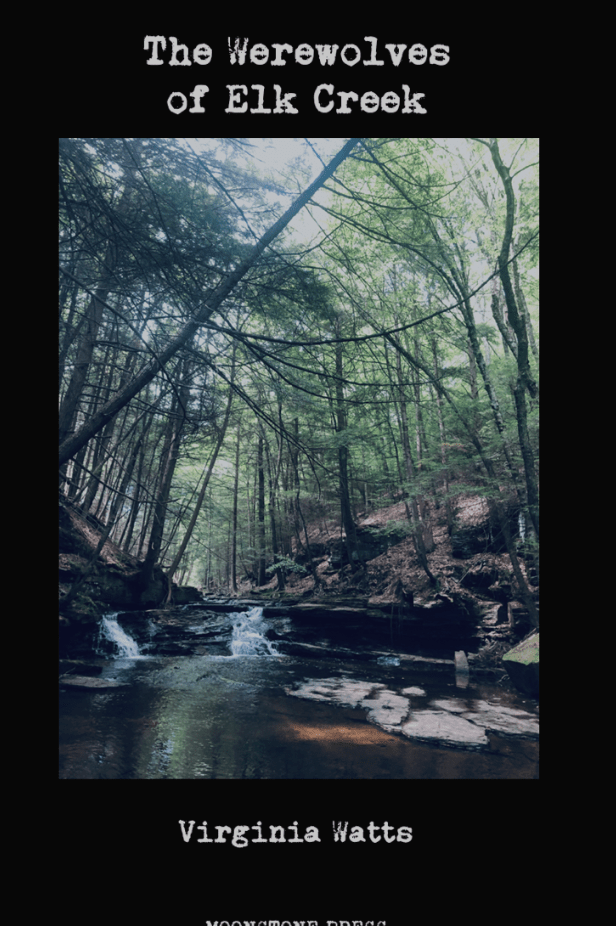
Her prior poetry chapbooks Shot Full of Holes and The Werewolves of Elk Creek 

 are available from Moonstone Press. And her debut short story collection Echoes from the Hocker House is not to be missed!

Anthony Doyle’s New Release Earns #1 Spot!

Anthony, you hit a number one. Congratulations! Although Anthony’s poetry is written in English, not Spanish, it does seem that his adopted cultures are loving his work. To read any of Anthony’s work is to know he is an extremely talented author, and now Amazon agrees! I hope readers in the US and in his home country of Ireland agree, and that this will bring readers to Anthony’s work from all over the world, because I really am a fan. And, apprently, so is book reviewer Emma Lee who says:

Jonah’s Map of the Whale is an exploration of self, self-identity and how much personhood is formed by external circumstances, through three different characters. One is pushed along by external pressure and lacks agency. One has agency but fears she carries a hollowness. One is faced by a life-changing experience that he can sink or swim from. Each character feels fully-developed. Anthony Doyle has created a quirky look at a set of beings tackling very different philosophical and physical circumstances, prompting readings to consider who might survive, who might thrive and which one reflects the reader best. It’s a map worth reading.

See Emma Lee’s full review for more!

And don’t forget about Anthony’s dystopian novel, HIBERNACULUM!

If you don’t know him by now, it’s time to. Find Anthony Doyle

The Ugly Duckling: Lessons in Creative Rejection

by Nadja Maril, a Founding Member of the Old Scratch Press Short Form and Poetry Collective

I got a rejection this morning. I received the standard form rejection for a piece of creative writing: We appreciate the chance to read it. Unfortunately, the piece is not for us.

I get rejected all the time. It doesn’t matter how many times my work has been published, I’m not famous and editors have a multitude of tastes. What was interesting to me was the poem in question had already been published and well received.  This time I’d entered it into a contest that was also considering previously published work. Maybe they didn’t think it was prizeworthy, but I felt like they didn’t like the poem at all. This made me sad.

Then I thought of The Ugly Duckling, http://hca.gilead.org.il/ugly_duc.html by Hans Christian Anderson, one of my favorite fairy tales. The bird that emerges from a hatched egg is not at all like the other ducklings in the farmyard. He endures all kinds of painful ridicule until he discovers his true identity as a swan.

“He now felt glad at having suffered sorrow and trouble, because it enabled him to enjoy so much better all the pleasure and happiness around him; for the great swans swam round the new-comer, and stroked his neck with their beaks, as a welcome.

Photo by Ezgi Kaya on Pexels.com

Into the garden presently came some little children, and threw bread and cake into the water.”

I share this little story to remind all writers, particularly anyone just starting their journey, that it can take months or even years to find your audience. Yes, it could be you just don’t have the talent needed to “make it” as a writer, but tastes on what is good and worth publishing vary tremendously. An ugly duckling may also be a graceful swan.

We all have probably had the experience of seeing a movie or reading a book that got great reviews, but we found to be boring. We may have attended a party in someone’s home and overheard guests raving about a gorgeous painting or a rug that we secretly think is hideous.

People have different tastes. Where we grew up, where we’ve traveled, what our parents taught us, all influence what we value and how we judge things. The quest for diversity, when I wear an editor’s hat, is my desire to try to open my mind to a multitude of ways to see the world. But we tend to gravitate to the familiar because it’s comfortable.

A big word among editors is resonate. If a piece of writing resonates with the reader, it affects them emotionally and they may continue to think about that story or poem for days. That type of connection is something a writer longs to achieve.  But it’s unlikely to happen with every reader. We all have different histories. We’re all slightly different so what affects one reader may not necessarily affect another.

It may be that something you wrote is not ready for publication and needs more revision. On the other hand, it could be really good, but needs to find the right audience.

I can’t emphasize enough, writing groups and reading groups to gain different perspectives. A writer toils alone, but feedback is important.  I can’t emphasize enough the importance of beta readers, fellow writers with whom you can exchange work.

Fellow collective member Ellis Elliot wrote about writing groups back in January and you can read her blog here.  https://oldscratchpress.com/tag/writing-community/  and member Virginia Watts posted a blog in April that focused on critique groups  you can read here. https://oldscratchpress.com/author/virginiawatts/

Do not write in a vacuum. Find the approach that works best for you, but don’t give up on something you feel in your bones is important. If you’ve written something you’d like to share with the world, keep submitting. A rejection is a badge of honor. 

 It shows you’re out there swinging the bat and you’re still in the game.

About the author:

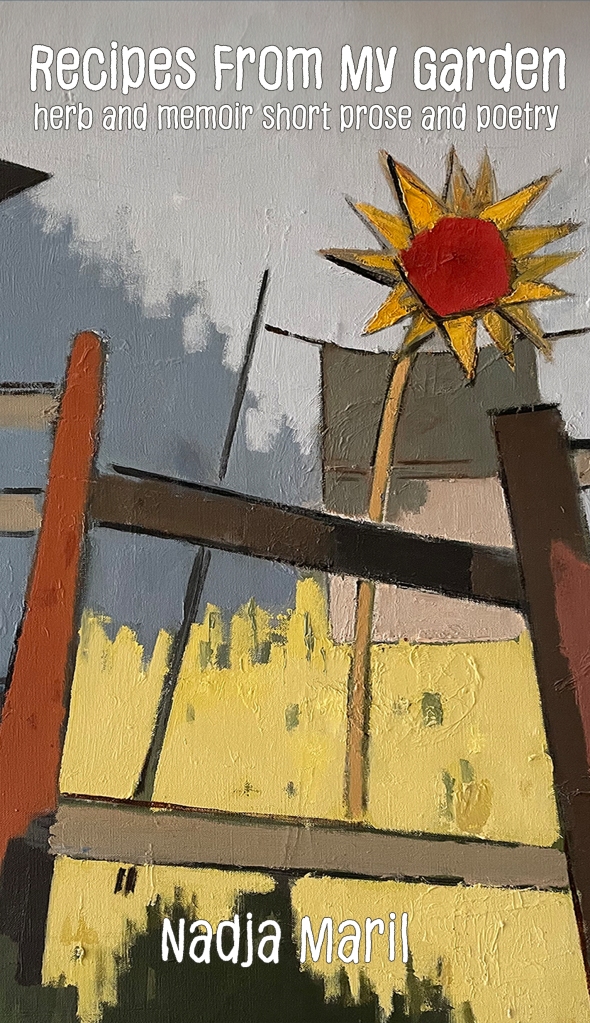
Nadja Maril is the author of Recipes from My Garden, Old Scratch Press, September 2024. Nadja Maril’s short stories, poems and essays have been published in dozens of small online and print literary journals and anthologies including: Lunch Ticket, Spry Literary Journal, Invisible City Literary Review, and The Journal of Compressed Creative Arts.She has an MFA in creative writing from Stonecoast at USM. A former newspaper columnist and magazine editor, she writes a weekly blog and you can visit her website at www.Nadjamaril.com.

Thank you for reading. Please sign up to follow us here on WordPress and on Facebook.

Chuffed!

Here I am with Linwood Jackson, President of the Delaware Press Association.

On May 1, I was awarded a Second Place in the Delaware Press Association Communications Awards for my book, The Song of North Mountain. This was my veryfirstever book released solely under my name, and the award presentation was exactly one year after the book hit publication.

I am quoting the judge, whose name I don’t know, in their comments regarding the award. “This is a beautifully crafted collection of poems that takes readers on a journey through nature, personal reflection, and the deep connection between the land and the human sprit. With vivid imagery and emotional insight, You (sic) capture the essence of the North Mountain landscape, blending personal growth, exploration, and the rhythms of life. The poems are rich with sensory details and metaphor, drawing readers into the natural world where every “rustle of leaves, shift of light, and breath of wind carries meaning.” I find that your writing, both introspective and outward-looking, intertwines the inner and outer worlds, exploring themes of solitude, contemplation, and the passage of time with tenderness and reverence, giving the collection a meditative quality.”

Many of us, particularly of my generation, suffer from imposter syndrome, that feeling that we’re really just pretending to be . . . smart, kind, good at what we do, talented, strong, etc. I’ve been writing since I was a teenager. Mostly doggerel, lines about angst, loss, imaginary friends, and wry observations. As I’ve aged and matured, so has my writing. I’ve discovered poets other than those I was raised on (Longfellow, Holmes, Browning) and many who write in rhymed and metered verse.

College introduced me to more complicated poetry – Ferlinghetti, Hopkins, Stevens, Auden, Eliot, Yeats. And then, foreign writers, like Rumi, whose ideas were so very different from those I had been immersed in.

So, I still wrote, but still privately, only sharing sparingly, for I still did not consider myself a “good” poet.

Well, I guess I am now. This anonymous judge really liked my work! The DPA, in their wisdom, selected judges that were not from Delaware. Delaware, being such a small state, is one where everyone knows everyone else, especially in communications and writing. So all I know about this anonymous judge is that he or she is not from around here. And, they liked my work.

Being a creator, whether in writing, arts, crafts, or just about anything, we have the angels and devils on our shoulders. One says, “Perfect. Absolutely PERFECT. Don’t change a thing!”

The other angel is the voice of the imposter. “Really? You expect anyone to like this? What balderdash! This is ROTTEN!” So we hide our creation away, or simply refuse to edit it.

I think we’ve all been there. The fact is, creating is a matter of taking risks. Making changes. Wondering if what we have written can be said better. And having the courage to play with it. Editing. Changing the recipe. Adding a stroke of color. 

I can certainly attest that every single poem and sketch in this book was analyzed, edited, and reworked (and rethought) at least 5 times.

Ghost Light, the poem I included in my last blog, was awarded a Second Place, also. This judge commented that “Your evocative, photographic-like details set the ghost-like mood and scene from the beginning. . . .” And, ‘the last stanza is particularly well-turned — “by chance or intent,/ catch the moment, . . . in a sudden shaft of dawnbreak.’”

The judge noticed. They noticed the internal rhyme, the alliteration, the combining of words to create a new meaning. These are ‘tools’ I labored over, hoping the reader would listen to these words and how they created an atmosphere, a feeling, a response.

We all too often hesitate to read out loud, to ourselves or to anyone else. But it is important. Whether we read to a child, or are read to, there is a chance for us to escape into the word picture created by the author. That’s what I try to do — create word pictures for you to explore.

You can find The Song of North Mountain on Amazon and other retailers, and my author page on Amazon. Follow me on social media at Facebook as Morgan Golladay, Writer and Artist, in Instagram as morgangi13, and please FOLLOW my blog too.

If you have a copy of The Song of North Mountain, please leave a review. Thank you! I appreciate it!

May 15, 2025

Pick up a copy!

Powell’s Books
Paperback
eBook

Audio (no subscription: download to your device)

From Onions to Tomatoes: A Writer’s Spring Garden

by Nadja Maril, a Founding Member of the Old Scratch Press Short Form and Poetry Collective

We’ve got onions, potatoes, and peas growing in our garden this year. The peas will be ready for harvest six weeks from now, according to my husband who planted the newly sprouting seeds.

In another part of the yard are the tomato plants, still very small. We got a late start. Perennial herbs: sage, oregano, rosemary, thyme, mint and dill made it through the winter. I’m waiting for my fresh basil and cilantro.

Dill,Thyme and Oregano

Each year the line-up of vegetables is different.  New vegetables. New challenges on how to best use these fresh ingredients. This year for 2025 we’ll be harvesting lettuces, spinach, beets, broccoli, peas, leeks, and peppers.

Always we must have tomatoes. They do well in Maryland and they are versatile both raw and cooked. Home prepared tomato sauce, gazpacho and tomatoes off the vine with fresh basil are the best.  

Nadja’s gazpacho

My chapbook,RECIPES FROM MY GARDEN, published by Old Scratch Press, is partially a tribute to herbs and vegetables. If curious about poems that are also recipes visit this link

At the end of March and start of April we were lucky enough to enjoy our own asparagus! Yes, you are supposed to wait until the third year after planting and this is only the second year, however, it looked good and tasted great! We only took a few stalks. The rest we are leaving to enable the plant to go through its cycle of developing leaves and establishing a good root system.

first season asparagus
Second Year Asparagus Crop.

So what is the best way to cook asparagus? I would suggest as minimally as possible. My mother and grandmother would put it in the pressure cooker until it became soft. Too much flavor is lost when asparagus  (Gus) is overcooked and the texture borders on mushy. Steaming a few minutes, or a coating of olive oil and a few minutes under the broiler or on the grill rotated half way through the process to keep the temperature even, are my favorite ways to enjoy Gus. You can also cut it up for use in a veggie stir fry or sauté with garlic, tomatoes and scallions to dress up a pasta.  Top with fresh grated parmesan.

Photo by Nati on Pexels.com

WRITING PROMPT:

You’ve been invited to a dinner. What are they serving? What do you notice on the table? How does it taste? How are the other guests reacting to what is being eaten and to what is being said? This can be fictional or it can be a memory, but select the details that clearly bring the scene into focus.  Write for fifteen minutes. Read back what you’ve written. Is there a sentence with power that pops? Take that sentence and start again maybe adding an action such as a glass is broken, there is a knock on the door ie something happens to change the scene slightly. Have fun with it and maybe you’ll develop it into a poem, story or essay.

Here is a piece of short prose inspired by the ingredients of an unusual stew. Enjoy.

Thank you for reading and if you haven’t already done so, please sign up for FREE to follow Old Scratch Press on Facebook and WordPress.

How to Get the Most Out of Critique Groups

I have participated in quite a few of writing critique groups for many years now, and I can say that the feedback I have received from fellow writers has been critical to my success in publishing my work. It is true that if you remain with the same group over an extended period, there will be certain people that you will agree with more than others for suggestions for editing your work. There is nothing wrong with that. After all, everyone has different tastes and preferences. That being said, it is important to read and consider all comments you receive. Here are a few tips to guide you in getting the most from the process of critique. 

  1. Decide what you are honestly looking for before you submit a manuscript. If you just want to know if the story is worth working on at all, then submitting a very rough draft might make sense but I never do that. My approach is to put in all the time necessary to complete a short story or poem and make it the best I can. This means, for me, several months of writing and many edits. I probably edit a piece fifty times or more before I feel I have done all that I can for it. I prefer to circulate what I believe is “a finished story.” 
  • During the critique, just sit quietly and listen. In the groups I attend, I will receive written comment, so I don’t have to write notes during the oral critique. You can learn a lot by listening to colleagues discuss and debates questions or concerns they may have about your writing. Above all, don’t say anything as the writer. You aren’t there to explain your work and above all, you are not there to defend it. You don’t want people to feel that they cannot give you honest and open feedback. That’s what you are there for and as writers, that is what we all need. 
  • Try not to feel hurt about “negative” comments about your writing. At first, for most writers, we do feel hurt but in time, this goes away as you realize that critique is an honest exchange of creative suggestions meant only to help you decide what final edits you wish to make. We cannot read our own work in a way that will make it the best it can be. We don’t have the distance to be able to do this. In short, we need each other. Of course, the critique should be done in a constructive, professional way. I have always had good group leaders who have insisted upon this.
  • At the end of a critique, I always make sure to thank everyone for taking the time to read and critique my work. I know it takes time and effort, because when I read for others, I give it my all too. It is the greatest gift we can give to each other as writers.
  • So now that you have your critiques, it is very important to set everything aside for a minimum of a month before you return to make edits. Early on I made the mistake of making edits too quickly and they were knee jerk and not good. You need time to let things sink in and percolate. Give it a rest.
  • When I do edit, I go through each written critique and fix all mechanical edits first, such as spelling errors. While doing that, I keep a running list of more involved edits that I will look at more carefully to see if I agree with them. This might be things such as a section of unrealistic dialogue, an ending that needs less or more, a character that lacks some necessary background. 
  • I have never not changed a story or a poem based on professional feedback. Some more than others, but all have been edited because of ideas or suggestions or questions raised by writing colleagues and I can honestly say that my work has been improved immeasurably by the critique process. I am so grateful for my writing colleagues and friends. I do have one writing friend who I give my final edited pieces to for one final read. And another tip for writers. Seek out readers of all ages to critique your work. You will get different perspectives that will improve your final product. 
  • An important final comment about writing groups. Over the years. I have made such wonderful, close friendships with the people I have met in these groups. It’s funny how life works. You go looking for something and you come away with something so much more valuable than you expected.
  • Good luck with your writing and enjoy all of the process, including critique and editing in response to critique. I promise you that you will find it rewarding to not only give critique but also to receive it. It is part of our art form. 

Enjoy your group!  

~Ginny

Virginia Watts has been fortunate to have published nearly 100 pieces in literary magazines including CRAFT, The Florida Review, Reed Magazine, Pithead Chapel, Permafrost Magazine, Broadkill Review, Two Thirds North, Hawaii Pacific Review, Sky Island Journal, Eastern Iowa Review, Evening Star Review and Streetlight Magazine. Nominated four times for a Pushcart Prize and four times for Best of the Net, in 2019, Watts won The Florida Review Meek Award in nonfiction.

Her poetry chapbooks The Werewolves of Elk Creek 

and Shot Full of Holes are available from Moonstone Press. Her debut short story collection Echoes from the Hocker House is available on Amazon.

The Joy of Writing and Reading: A Personal Reflection

By Old Scratch Collective member Nadja Maril

I love words and sentences, writing them. I also love reading something really good. So, part of my day circles around writing and revising. Another part is reserved for reading.

If your desire is that each piece of writing you create is superior to its predecessor, then it’s a good idea to read other writer’s creations. We learn what we like and what we don’t like by reading the work of others. Experiencing through someone else’s words can give us the opportunity to learn new ways of approaching an essay, poem, or story.

Reading to write because writers are part of human expression.
Those five little earrings could represent the various framents of the essay that focuses on what we hear or don’t.

First thing this morning, I clicked on a link provided by the literary magazine, Sweet. A Literary Confection that was titled “In My Head: Tinnitus” by Marcia Aldrich which the editors have nominated for the 2023 “Best of the Net.” I liked the way Aldrich broke the essay into very short sections. This type of CNF essay is called a fragmented essay, specifically in this case, a narrative mosaic because all the sections were directly linked to the topic of Tinnitus, but all approached the word/ the subject/ the experience from different vantage points. Here is the link if you’d like to read it.

Next I read the under 250 word CNF essay  from Riverteeth’s weekly newsletter Beautiful Things titled  “Sugar in the Evening” by Jennifer Anderson. Deceptively simple. it resonates. I don’t necessarily like every weekly Beautiful Things selection, but this one is truly a gem. To read it click here.

Finally, to round out the morning, before I started revising a story of my own, I clicked to read some poems in Sunlight Press capturing a sense of nostalgia and the delight of movement by Alfred Fournier. You can click to read them here.

Evenings and Sunday afternoons are for “hard copy.” I love a book that pulls me in and keeps me guessing. I never want to be able to confidently predict where the plot is heading. So I’d like to recommend The Great Circle, published in 2021 by Maggie Shipstead, a Booker Prize finalist.

A very long novel (655 pages) I was lucky enough to pick up in one of the several Little Free Libraries in my neighborhood, it is both entertaining and instructive to fellow novelists in approach and structure. I try very hard not to read multiple books by the same author in an effort to “meet on the page” more writers and I’d already read Seating Arrangements, but I am so happy I did make an exception and grab that almost new paperback.  This novel is far superior to Shipstead’s previous work in that it adds multiple layers of time, place and setting to a compelling storyline.

Comprised of two narrative arcs, The Great Circle tells the story of a pioneering female aviator, Marian Graves, born in 1914, who wants to be the first to circumnavigate the globe by flying over both the North and South Poles.  The second storyline focuses on actress Hadley Baxter who is chosen to play the role of Marian in a Hollywood movie produced in 2014.

The 20th century narrative is told in third person, and while it primarily focuses on Marian’s life it also tells the story of her twin brother Jamie, and the role women aviators played in World War II. The 2lst century narrative is told in the first-person voice of Hadley.

As to what happens, I’ll leave it to you the reader to discover first-hand. Enjoy and keep reading, whether it is long or short, on paper or on your phone.  And yes, I listen to stories as well. My most recent listen was Companion Piece by Ali Smith, a melding of reality and splendid storytelling.

Here is CNF piece written and read by me nominated for “Best of the Net” ,”REBOOT” in Instant Noodles. While you are on the site, you might as well enjoy the rest of the issue– some great Spring inspired stories and poems. The next theme “word” for the autumn issue is Sanctuary followed for the Holiday 2025/26 issue by Gravy.

Thank you for reading and don’t forget to sign up to follow us on Facebook.

Why Prose Writers Should Make Reading Poetry a Daily Habit

Many writers, including myself, write both prose and poetry. For me, it just depends on the subject matter as to which form I choose. Many writers begin with one form of writing and evolve to another. There are some writers who begin in one genre and stay there. In the end of the day, our paths are different, but we are all writers, and all writers want to tell a story. We want readers to feel something, experience something, remember something. We want them to leave us changed in some small way. Even if you don’t want to learn about the craft of poetry in a formal way, as in attending workshops, just reading a few poems a day will improve your prose writing in ways that will surprise you. 

Poetry as a form succeeds on bold, visual imagery, exact information from all the senses. This is how the reader enters the poem and lives inside it for a brief time. By reading lines of poetry, prose writers will also experience and come to understand why rhythm matters. There is great impact when rhythm is found in sentences and phrases.

One of the defining benefits of studying and writing poetry for me as a prose writer has been that in poetry more than any other genre, each and every word must do work, and I mean each and every word. Poets take time and great care choosing words and prose writers, if you want to be your best, you should be doing that as well, but it takes practice. Read Hemingway again to see why this matters. 

Poetry has the same elements as prose writing, such as characterization and narrative arc, but it contains more unexpected phrases, surprises and turns that send readers in directions they didn’t expect. This is often missing from prose writing, and it shouldn’t be. Additionally, poetry teaches us about pace. How long lines with no punctuation slow the reader down. How a short line placed just right can then really pack a punch. 

Prose writers can also use traditional poetry techniques to enhance their narratives such as assonance, linking words with similar vowel sounds. Using words in this way can produce a desired effect on the reader such as a calming effect as if listening to music. 

My greatest lesson and take away as a prose writer who reads poetry every single day is that endings are so incredibly important. When you read enough good poems, you’ll see what I mean. And stories, like poems, deserve the best endings possible. This is something to strive for. 

So, you want to be a good prose writer? Then read poetry. Simple as that. Poetry teaches us all how to use our language. Poetry teaches how to describe. Poetry demonstrates mood, voice, momentum in unexpected ways. We all want the same thing. To tell the story we want to tell in the best way we can. Reading poetry will help us learn to do that. 

There are many good online literary journals where you can read poems: Narrative Magazine, Agni, Carve, Rattle, 32 Poems, A Public Space, Apple Valley Review, Evergreen Review, The Cortland Review, Waxwing, Pigeon Pages, Cleaver Magazine, Able Muse. 

You can also sign up to receive daily poems from: Rattle, Your Daily Poem, Poem-a-Day, Poetry Daily, Poem of the Day. All these are free as is the wonderful podcast written and hosted by one of my favorite poets Padraig O Tuama: Poetry Unbound. I would also highly recommend Padraig’s wonderful book: 50 Poems to Open Your World.  

Happy Reading!  

~Ginny

Virginia Watts has been fortunate to have published nearly 100 pieces in literary magazines including CRAFT, The Florida Review, Reed Magazine, Pithead Chapel, Permafrost Magazine, Broadkill Review, Two Thirds North, Hawaii Pacific Review, Sky Island Journal, Eastern Iowa Review, Evening Star Review and Streetlight Magazine. Nominated four times for a Pushcart Prize and four times for Best of the Net, in 2019, Watts won The Florida Review Meek Award in nonfiction.

Her poetry chapbooks The Werewolves of Elk Creek 

and Shot Full of Holes are available from Moonstone Press. Her debut short story collection Echoes from the Hocker House is available on Amazon.