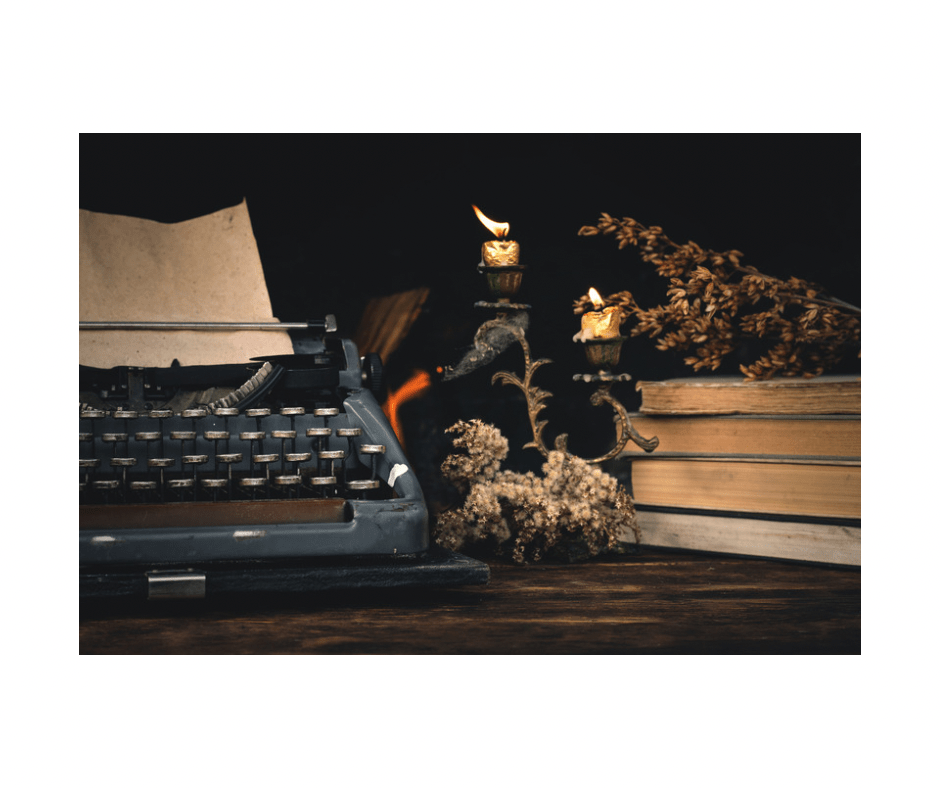
The Writer’s Brain: Creativity and Neurodivergence

From my collage notebook

There’s a certain stereotype about writers: distracted, dreamy, maybe a little moody, often lost in their own heads. Then there are those of us whose third-grade teacher writes on her report card, “Ellis is very sensitive. She says she doesn’t feel good when she doesn’t want to participate and sometimes puts her hands over her ears.”

What we don’t always name is that many of us identify with something more specific—ADHD, anxiety, depression, OCD, autism, bipolar disorder. In other words, neurodivergence.

Far from being a barrier, these brain patterns often come hand-in-hand with creativity. Our ability to notice connections others overlook, to hyper-focus on a project for hours, or to sense language at a heightened level can all be part of what makes us writers. (Doesn’t everyone have a list of words they hate simply because the way the word feels in their mouth?)

The Double-Edged Sword

Of course, the same brain that gifts us with creative leaps can also work against us. ADHD can make finishing projects feel like climbing Everest. Anxiety can whisper that nothing we write is ever good enough. Depression can steal the life-force necessary to even begin. The very sensitivity that makes us attuned to metaphor and meaning can leave us overwhelmed by the noise of the world.

Reframing the Narrative

Instead of treating neurodivergence as something to battle, what if we reframed it as part of the writer’s toolkit?

  • Hyperfocus can become a superpower for deep revision. Or help you finish the book!
  • Restless energy can fuel bursts of freewriting that break past creative blocks. That, and dance breaks.
  • Heightened sensitivity can deepen character work, dialogue, and description. As long as you remember to take breaks.

The key is learning how to manage the edges—finding rest, support, and strategies so that the gift doesn’t become a burden.

Practical Ways to Support Your Creative Brain

  1. Chunk your writing time. Short, timed sessions (15–25 minutes) can harness focus without overwhelming you.
  2. Write rituals, not rules. A small ritual (lighting a candle, stretching, a playlist) helps train your brain to enter writing mode.
  3. Name the inner critic. Literally give it a name or persona so it loses power over you.
  4. Seek community. Writing groups, workshops, or even online spaces help balance the solitary nature of the work.
  5. Honor rest. Brains that run hot need recovery time. Pushing the pause-button isn’t failing—it’s part of the process.

Why It Matters

When we share openly about the link between writing and neurodivergence, we create permission for others. Permission to stop beating themselves up for struggling with deadlines. Permission to see their “quirks” as part of their artistry. Permission to make choices others might not understand. Permission to write anyway.


Do you identify as a neurodivergent writer? How does it show up in your creative process—both the gifts and the challenges?

Ellis Elliott

Founding member Old Scratch Press Poetry Collective

Author of Break in the Field poetry collection and A Witch Awakens: A Fire Circle Mystery.

https://a.co/d/eMSe9up

https://a.co/d/7J1ra9x

http://bewildernesswriting.com

Steps Toward Your First Acceptance in a Literary Journal

Steps Toward Your First Acceptance in a Literary Journal

To my fellow writers out there, I began submitting prose and eventually poetry to literary magazines in 2014. Since that time, I have been published over a hundred times. How did I do it? I learned the ropes and never gave up. More importantly, I never wrote for the purpose of being published. It’s an honor, a wonderful feeling, to have a piece accepted, but in the end of the day, the real joy for me as it is for most writers, is the creative process. Publishing is a very small piece of this magical puzzle. Even so, as writers, most of us would like our work to be read so here are some tips I learned along the way.

  1. Present your best work always. If you have written something, set it aside for some time and return to it later for perspective. ALWAYS have feedback through a professional writing group. One or two friends reading your work will not do. You need professional critique and then you must listen and learn to edit accordingly. None of us can judge our own writing. We simply cannot. Don’t let your ego get in the way of your success.
  2. Prepare a third-person biography. Include information like your location, your publications if you have some, your social media handles and website. If you have not been published, simply say nothing about that or mention that this would be a debut publication. Don’t try to be funny or clever. Be professional.
  3. Prepare a cover letter and keep it simple and professional as well. Address the editor by name if you can. Start with something like: I appreciate the opportunity to submit my fiction story titled “Wind Warp” of 4900 words. Follow with your biography. End by thanking the editor for considering your work. That’s it.
  4. Make a list of journals where your work appears to be a fit as you prepare to submit your work. This will mean reading some of the work the journals have accepted in the past. Lucky for us, many journals are online now or have some excerpts online. Consult resources by Erika Krouse or Clifford Garstang for a ranking of literary journals. 
  5. At first, I tried to select mostly smaller, well-respected journals for the bulk of my submissions. Once I got some traction, I aimed higher. If you can find a local journal that limits submissions to local writers, even better.  One example of this is Philadelphia Stories, a journal that only publishes writers who are living in or originally from Pennsylvania, Delaware or New Jersey. A smaller pool helps your odds. There is nothing wrong with submitting to a new journal either. In fact, I recommend it. New journals need our support.
  6. I would send a piece to at least twenty journals to start with and see how it goes. 
  7. Use standard manuscript format 12-point font Times New Roman. Double Space prose. Single Space poetry. And don’t forget page numbers. 
  8. Be encouraged if editors write you a personal note about enjoying your work even though it was not accepted or asking you to submit more work in the future or telling you that you made it to the final cut. All of these are a very big deal so be happy!
  9. You will receive a lot of rejections. I submitted for about a year and a half before I received my first acceptance. Since then, I have had times where I have been “hot” and times of drought. Don’t give up and don’t get discouraged. There are many reasons a piece is not chosen that have nothing to do with the quality of the writing. You get used to the rejections. Promise me. The way I look at it is this writing that I am submitting is what I have to offer. I’ve got nothing else! This is me. I write what comes to me and what I want to write about. Above all, I just hope to tell a good story. I give every poem or story my all. There have been stories that I never placed, and I am okay with that. Some of these did get out in the world in later collections of mine alongside published stories. Be true to yourself and what your heart wants to write about and you will be fine.
  10. Do not follow up with inquiries about your work after it is submitted. If you don’t hear anything for a year, consider the piece unaccepted and move on.
  11. Make sure you keep a list of all the places you submit a piece so when you do have an acceptance, you can quickly withdraw it from other journals considering your piece.  
  12. Remember too that when submitting to always follow the guidelines such as whether the journal wants to read blind or not. 
  13. Set up a Submittable account because most journals use that now for submissions although some still have their own Submission System or they accept submissions via email only.
  14. Another good idea is to go out for dinner and some glasses of wine with fellow writers submitting their work to share your experiences. Laughter is the best medicine, and you can learn from each other. 
  15. I wish all of you the very best in your writing journey!

Virginia Watts is the author of poetry and stories found in The MacGuffin, Epiphany, CRAFT, The Florida Review, Reed Magazine, Pithead Chapel, Eclectica Magazine among others. She has been nominated four times for a Pushcart Prize. Her debut short story collection Echoes from the Hocker House was short listed for 2024 Eric Hoffer Grand Prize, selected as one of the Best Indie Books of 2023 by Kirkus Book Reviews, and won third place in the 2024 Feathered Quill Book Awards. Please visit her.

Virginia’s new book is now available from Old Scratch Press:

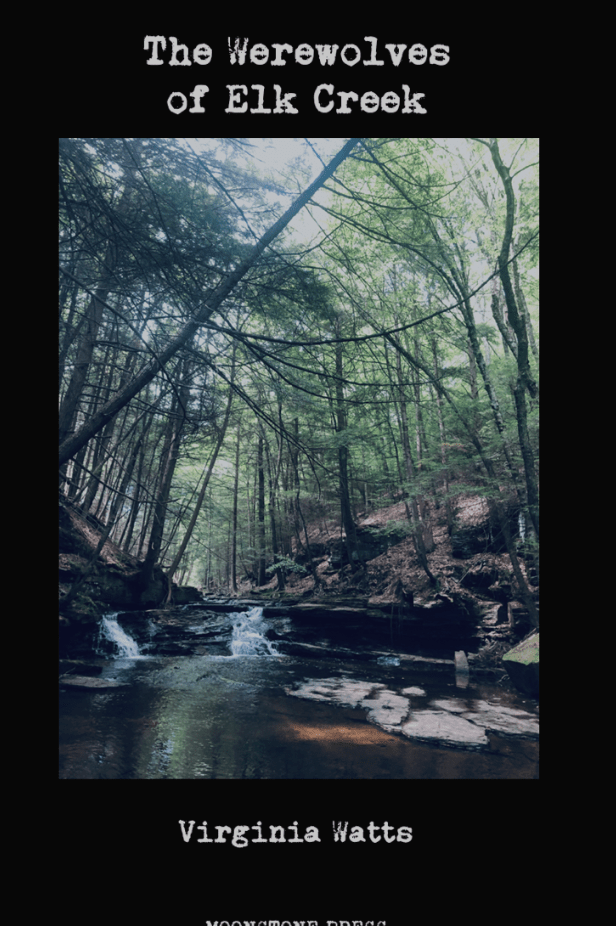
Her prior poetry chapbooks Shot Full of Holes and The Werewolves of Elk Creek 

 are available from Moonstone Press. And her debut short story collection Echoes from the Hocker House is not to be missed!

In October OSP will present a live reading with Virginia, Anthony Doyle, and Alan Bern. Find more information here.

And it’s not too late to get into the last Instant Noodles issue for 2025!

Dreams of the Return

dreams of the return

Alan Bern is more than just the author of DREAMS OF THE RETURN—he’s also one of the founding voices of Old Scratch Press, a collective born from a group of terrific writers with a deep love of traditional and hybrid poetry, prose, and art. As a retired children’s librarian and cofounder (with Robert Woods) of the fine-press publisher Lines & Faces, Alan has long pursued the merging of word, image, and place.

In DREAMS OF THE RETURN, he turns his lens to Italy—in particular the South—bringing to life landscapes both storied and luminous through his own photographs and through classic Italian poetry, delivered both in its original form and in his own translations. The journey is lyrical, immersive: it’s not merely a travel guide, but a portrait of longing, place, memory, and beauty.

And that’s something Alan does beautifully—his artistry weaves together what he’s done throughout his life: poetry, prose, photography, memoir, all fueled by a love for Italy. Within the OSP community, he is known for “photo-poems,” a daily practice in which images and language overlap, inviting the reader to travel with him across geographies and inward, into self.

In addition to poems and photographs, DREAMS OF THE RETURN also includes intimate personal essays that layer history, memory, and lived experience. In “The Good One,” for example, Alan recounts a walk through Naples’ Quartieri Spagnoli with his friend Marco. What begins as a conversation about Jewish philosopher Don Isaac Abravanel and the sacred geography of southern Italy turns into a heartbreaking encounter with a community altar for “o’ Bono”—a young man accidentally killed during a New Year’s Eve celebration. Through this story, Alan reveals how place, tragedy, resilience, and human connection are intertwined in ways both profound and ordinary.

A true perfectionist, Alan (pictured left) worked closely with his good friend, Peter Truskier, to ensure that the photos selected would sparkle in the book just like the locations did in real life.

DREAMS OF THE RETURN is, in effect, another way Alan invites us to travel: through light and verse, through time and place. It’s a book to savor—start with a wind-soft sun, ruins, olive trees and history; consume it slowly with pizza margherita and red wine; linger into the evening with the sweetness of roccoco napoletani and an espresso kissed with Sambuca. You can order a copy of your own here:

Unlocking Your Writing Through Movement

In high school I watched the clock in last period, because I knew as soon as the bell rang I was heading straight to dance class, and all the teen angst and hormonal folderal of the day would be disappear once I got there.

I’ve taught dance for over forty years now, and that was the beginning of a lifetime of learning how the mind/body connection affects my creativity and well-being.

We’re taught early on that writing is supposed to come from the neck up—brain first, fingers second. We believe the words live in our head. But I’ve come to understand this: the stories I care about—the ones that ache and sing—live in my body. And if I want to write them honestly, I have to move.

Movement Makes Space for Story

When I’m stuck on a line in a poem or in a scene, walking often is my default means to address it. It might just be a walk around the block that allows my shoulders to drop and my breath to even out.

There’s something about the gentle rhythm of walking—or swaying, or stretching—that stirs the sediment at the bottom of the creative well. It shakes loose a phrase, a memory, an emotion I hadn’t thought to name.

We say “I’m working it out,” and often we mean emotionally—but there’s a physical truth there, too.

“ But I do believe very strongly that the best poetry is rooted in bodily experience. We experience reality through our bodies and senses, and truth, to the extent that it is apprehensible.”      -Poet Rebecca Foust

The Dance Between Emotion and Motion

As someone who grew up dancing, I know I carry emotion in my body, and in order to gain access I have to move. In order for the reader to feel what I am writing about, I must first feel it myself, and that is not going to happen if I stay entirely in my head.

Movement helps me feel it. And when it’s a big feeling—grief, rage, shame, heartbreak—moving my body helps metabolize it. When we experience trauma or hold strong emotions, our bodies remember. They contract around those memories. Notice how we hold our breath or the body tenses up. If we don’t move them, we risk writing around the truth instead of into it. And I don’t have to run a marathon or take up kickboxing. I can simply take a deep breath, raise and lower my arms a few times, twist gently side to side–all in my deskchair.

Moving lets the emotion pass through me so it can move onto the page.
Otherwise, it stays stuck in the pipes.

Stillness Is Its Own Kind of Movement

Sometimes, the writing calls for the opposite.
Stillness. Not scrolling or skimming or daydreaming—but deliberate, open stillness.
The kind that invites something deeper in. The kind that looks like staring out the window.

This is the space where I can hear the quieter parts of my story—the voice of a child I’d forgotten to listen to, or the image I saw in a dream but brushed off. Lying still and staring at the ceiling can be just as powerful as dancing. For me, it is my meditation practice. It’s all part of the same body-based practice.

Final Thought: You Are the Instrument
Your body is not a machine that carries your brain to your desk.
I tell my students of both writing and dance that the body is an instrument that vibrates with memory, story, longing, and truth.
When you write from your whole body, your work carries a different kind of resonance.
So move.
Let the story or poem move with you.
And then write like your body remembers something your mind forgot.

Click this link for a quick 5-minute seated stretch to get the body moving and the words flowing: https://youtu.be/n0VlNd3nLFw


Ellis Elliott
Bewilderness Writing
https://bewildernesswriting.com/
Old Scratch Press Founding Member
https://oldscratchpress.com/
Author: Break in the Field poetry collection
and A Fire Circle Mystery: A Witch Awakens coming this May

Introverts Guide to Writing in Community

As we often hear, and know is true, writing is a solitary endeavor. Since I find long stretches of alone-time nourishing, I love that about it. But that doesn’t mean I want to go full-on-hermit. I need human interaction, even if it’s just Tina at the grocery store telling me about her cats.       

Specifically, since my need for human interaction is limited, I’ve sought to find ways to find or create a writing community that is a balance of the two. Here are a few things I’ve come up with that might seen outwardly mundane, but with an added introverted twist:

·      Online Writing Group: I created Bewilderness Writing, knowing that my role would be as guide, not teacher. Each week I read a poem, offer jump-off lines that folks can choose to use, or not, and then we free write for 10 minutes. Afterwards, each person reads what they’ve written and the group does not offer comment or critique. Sounds ridiculously simple, huh? It is. And what can’t be known beforehand is just how intimate and rich the writing can be within this container. Setting aside all the “writerly benefits”, it fills my need to see and hear others figuring out life using words on the page. There is great comfort there. And the tapestry of styles and voices enriches my own writing life.

https://bewildernesswriting.com/

Want Something Similar?

https://27powers.org/wild-writing-virtual/   Wild Writing, by my mentor Laurie Wagner, is wonderful!

There are many “writing alone, together” online opportunities without prompted writing, as well.

·      In-Person Writing Group: I created “Writers in Coffee Shops” a few years ago using the social networking website Meetup. I set it up with straightforward parameters from the get-go of “writing alone, together”. We would meet at a local coffee shop, spend a few minutes sharing what we were working on, then get to it. At the end of the hour, we could share about how or what we did for the hour. After that time, folks were welcome to share their work and invite comment or critique.

For awhile, especially in the beginning, I had people who did not get the memo and wanted to chat. With gentle reinforcement those folks either got used to our system or didn’t come back. Eventually, I found a small, committed group, and we came to know our coffee shop time as not only a standing-date commitment to our writing, but a place to commiserate on the writing life. We became friends.

Want something similar?

Shut Up and Write: https://www.shutupwrite.com/  While I might prefer my more “demure” group name, this is basically the same format and you can find them, with over 400 chapters all over the place

·      Collaborative Writing: Recently, I had a friend and former Bewilderness group member contact me after taking a poetry class that included “renku,” which is a Japanese collective poetry composition of collaborative linked verse. My friend asked if I wanted to give it a try together. She would send me a few lines and I would send a few back. Since we’re just starting this adventure, I can’t tell you the outcome, but I’m hopeful. It is just the right mix of connection and effort for me. It intrigues me to see what might come out of it. Think of your favorite writing form, enlist your favorite writing friend, combine the two, and see what you might come up with!

These writing groups are for messy, first-draft writing where the intention is to get “your butt in the chair” and ideas on the page. While these groups all lack the comment/critique component, I am a big believer in getting other eyes and trusted opinions on your work, and there are plenty of in-person and online opportunities for that. Whichever one is your preference, there is great benefit to having others along for the ride alongside you, and what that looks like is for you to choose.

Ellis Elliott, Writer and Writing Guide: https://bewildernesswriting.com/

Break in the Field poetry collection: https://www.amazon.com/Break-Field-Ellis-Elliott/dp/1957224126

My first mystery novel, A Fire Circle Mystery: A Witch Awakens, about an amateur sleuth discovering her lineage as an Appalachian Granny Witch, comes out in Spring 2025.

Google Doodle Celebrates Dorothy Miles

Click on photo to visit the Google Doodle page

Wonderful that Google has dedicated today’s Google Doodle (August 19, 2024) to Dorothy Miles.

Miles, as it says, was a pioneer of poetry in sign language. This is significant because poetry is often still widely considered to be an oral form of creative writing, written down, yes, but meant to be read aloud, or memorized and recited, performed. But can it be performed and not be spoken?

Here are a few performances by Ms. Miles, courtesy of YouTube:

There is no sound. Can you understand the poem?

And here is a third poem:

Do Miles’ poems speak to you, without use of the voice? In a medium that began as fully performative, how does it feel to have to attend to her movements with your eyes, more than her words, the sound of them, with your ears? Are the poems lost on you? Or do they move you? 

Approximately eleven million Americans are deaf, and many more have some form of hearing loss. When I watch Ms. Miles perform her poetry, one thing that struck me immediately was the feeling of being disconnected, because I could not hear her, though she looked to be speaking. Once I settled in I found the works engaging, and they really tapped into my emotions much more quickly than poetry usually does.

What makes a poem a poem? What does it mean to be a poet? Poetry has been one of the oldest and most consistently practiced form of creative writing, and it has also been some of the most exclusionary. Ms. Miles opened that door for people who could not use their ears to enjoy poetry, or their mouths to speak their poems aloud.

Ms. Miles’ career in poetry ended when her life did, after a fall from a window that was concluded to be self-inflicted due to mental health challenges she was experiencing. If you know someone experiencing a crisis please consider using the 988 helpline.

This, my friends, is why diversity is so important. Without an open system that welcomes diversity, without open hearts to give something different from the “norm,” “average,” what we’re used to, what’s traditional, or simply what we’ve come to expect, we close the door on beautiful experiences like poetry written and performed by Ms. Miles. When we celebrate poetry in all its forms, we invite more people to have the chance to share with us their creations. Not every creation is the right one for every person, but when you find the one that touches you, you will find yourself forever changed.

Thank you, Dorothy Miles, for your poetry.

WELCOME TO OLD SCRATCH PRESS

Hi~
Dianne from Devil’s Party Press (DPP) here.
Did you know I studied the writing of poetry when I was in college?
I love poetry, and there is a growing interest in it, but still not enough places to share it.
I reached out to some of the poets we’ve published at DPP, and asked them if they would like to do some volunteering to get a poetry imprint going, and, luckily, many of them said, “Yes!”
Poets are, by nature, generous people.
Together, I hope that we can publish good poetry. I hope that, over time, the poets will run the kitchen, cooking up new books, anthologies, opportunities, awards, who knows what all for poets!
My goal for this year is to put out a single author collection of poetry for three of the poets who are volunteering to create and run the press.
Our “poets” decided, to begin with, that poetry is as unique as the poets who create it. So they decided to make poetry include what we might consider to be a traditional poem, as well as more short-form works, mini memoirs, bits of story, and to include art, as it please the members to do so.
I think it’s going to be creative and exciting, and I cannot wait to see what they dream up.
Look for posts from the members here as we get underway on this project. I’m starting us off, but I hope they’ll soon eclipse me as they create something wonderful to which DPP becomes the helping hand.
The members of the group are:
Alan Bern
Anthony Doyle
Ellis Elliot
Gabby Gilliam
Janet Holmes Uchendu
Morgan Golladay
Nadja Maril
R. David Fulcher
Robert Fleming
Virginia Watts

And the first book from the group, A Break in the Field, by Ellis Elliot, is forthcoming from Old Scratch Press (OSP) this summer!

I wish all these wonderful authors a lot of luck with the OSP project!

And thanks to you for loving poetry, following this group, and maybe even buying a book!