How to Get the Most Out of Critique Groups

I have participated in quite a few of writing critique groups for many years now, and I can say that the feedback I have received from fellow writers has been critical to my success in publishing my work. It is true that if you remain with the same group over an extended period, there will be certain people that you will agree with more than others for suggestions for editing your work. There is nothing wrong with that. After all, everyone has different tastes and preferences. That being said, it is important to read and consider all comments you receive. Here are a few tips to guide you in getting the most from the process of critique. 

  1. Decide what you are honestly looking for before you submit a manuscript. If you just want to know if the story is worth working on at all, then submitting a very rough draft might make sense but I never do that. My approach is to put in all the time necessary to complete a short story or poem and make it the best I can. This means, for me, several months of writing and many edits. I probably edit a piece fifty times or more before I feel I have done all that I can for it. I prefer to circulate what I believe is “a finished story.” 
  • During the critique, just sit quietly and listen. In the groups I attend, I will receive written comment, so I don’t have to write notes during the oral critique. You can learn a lot by listening to colleagues discuss and debates questions or concerns they may have about your writing. Above all, don’t say anything as the writer. You aren’t there to explain your work and above all, you are not there to defend it. You don’t want people to feel that they cannot give you honest and open feedback. That’s what you are there for and as writers, that is what we all need. 
  • Try not to feel hurt about “negative” comments about your writing. At first, for most writers, we do feel hurt but in time, this goes away as you realize that critique is an honest exchange of creative suggestions meant only to help you decide what final edits you wish to make. We cannot read our own work in a way that will make it the best it can be. We don’t have the distance to be able to do this. In short, we need each other. Of course, the critique should be done in a constructive, professional way. I have always had good group leaders who have insisted upon this.
  • At the end of a critique, I always make sure to thank everyone for taking the time to read and critique my work. I know it takes time and effort, because when I read for others, I give it my all too. It is the greatest gift we can give to each other as writers.
  • So now that you have your critiques, it is very important to set everything aside for a minimum of a month before you return to make edits. Early on I made the mistake of making edits too quickly and they were knee jerk and not good. You need time to let things sink in and percolate. Give it a rest.
  • When I do edit, I go through each written critique and fix all mechanical edits first, such as spelling errors. While doing that, I keep a running list of more involved edits that I will look at more carefully to see if I agree with them. This might be things such as a section of unrealistic dialogue, an ending that needs less or more, a character that lacks some necessary background. 
  • I have never not changed a story or a poem based on professional feedback. Some more than others, but all have been edited because of ideas or suggestions or questions raised by writing colleagues and I can honestly say that my work has been improved immeasurably by the critique process. I am so grateful for my writing colleagues and friends. I do have one writing friend who I give my final edited pieces to for one final read. And another tip for writers. Seek out readers of all ages to critique your work. You will get different perspectives that will improve your final product. 
  • An important final comment about writing groups. Over the years. I have made such wonderful, close friendships with the people I have met in these groups. It’s funny how life works. You go looking for something and you come away with something so much more valuable than you expected.
  • Good luck with your writing and enjoy all of the process, including critique and editing in response to critique. I promise you that you will find it rewarding to not only give critique but also to receive it. It is part of our art form. 

Enjoy your group!  

~Ginny

Virginia Watts has been fortunate to have published nearly 100 pieces in literary magazines including CRAFT, The Florida Review, Reed Magazine, Pithead Chapel, Permafrost Magazine, Broadkill Review, Two Thirds North, Hawaii Pacific Review, Sky Island Journal, Eastern Iowa Review, Evening Star Review and Streetlight Magazine. Nominated four times for a Pushcart Prize and four times for Best of the Net, in 2019, Watts won The Florida Review Meek Award in nonfiction.

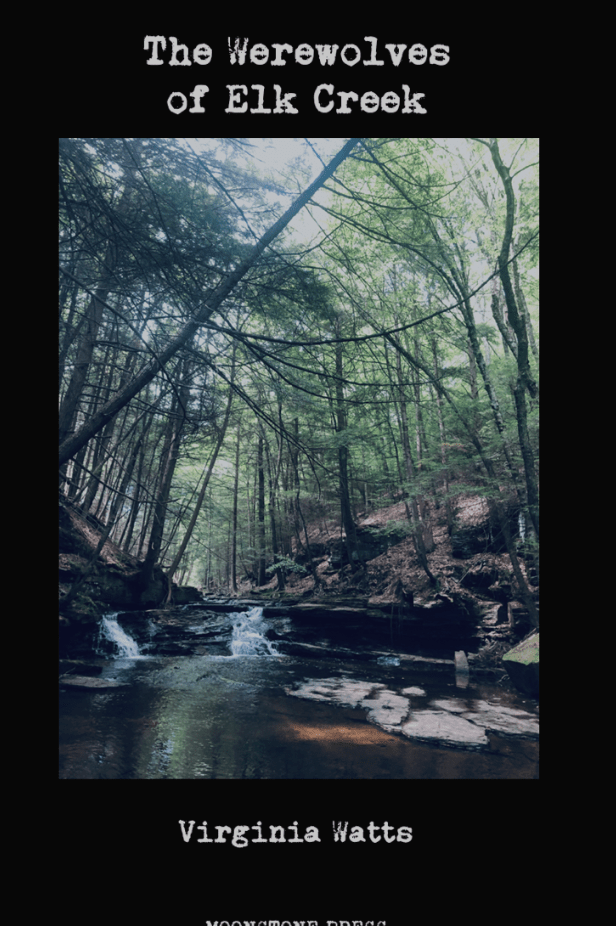
Her poetry chapbooks The Werewolves of Elk Creek 

and Shot Full of Holes are available from Moonstone Press. Her debut short story collection Echoes from the Hocker House is available on Amazon.

Where Oh Where Can Your Work Be Found?

Oh my goodness, I love The Kinks!

And I bring them up today because when I was thinking about writing this blog post, I was also thinking about all the other blog posts I had to write today, which has turned out to be at least 4, plus the social media to go with it. It reminded me of this Kinks’ classic:

Give it a listen because: The Kinks.

And so that you get the tune, which is important to this post.

My blogging and posting activity made me think of this song because it aligns with my thoughts: She posts it here; she posts it there: on Instagram, and everywhere! She will just keep posting ’till her fingertips go numb ’cause she’s a dedicated marketer of books. Oh yes she is! Oh yes she is! Oh yes she is! Oh yes she is!

Sing it with me.

Are you posting here, and there?

I hope you don’t mind if I remind you of the three Ps of posting: personality, process, and product. You want to sell your books, but you have to find people who know about your book: people in Poughkeepsie, Peoria, and Portland. Have you thought of it that way? Imagine a 25 mile readius (hah! Gotcha! Radius!) around you: that’s probably where people are going to know you enough to buy your book. Imagine your social tree: your family, your friends, friends of your family, and friends of your friends, your co-workers, and your fellow attendees at church or hobbies or etc. Of those people, how many will buy a book? Of the people who buy it, how many will read it? How good is your elevator pitch to tell people about it? How “clean” is your book in terms of proofreading, editing, font choice and size, plot holes? And if you do not live in Poughkeepsie, Peoria, or Portland, how will anyone who does find out about your book and become intersted in it?

With my deepest apologies, you have to post. You have to blog. You blog the most about you, the human, you blog next about the process and proceedures of you, the writer, and lastly you make an open, not subtle, appeal on your product: “You will enjoy this book because….”

Let’s imagine a 30 day grid.

Luckily, with most websites, and certainly with WordPress, you can post them all on the same day if you like, and schedule them to go out.

Friends, if you are unknown, there is no other way to get your book out there. There is no other way.

Most of us are doing the, “La la la la I can’t hear you!” thing when I say this. But, tell me, how else does that reader in Peoria find you?

I interacted with a young author the other day whose horror novel won some book award. I asked her, “Have you posted that on the FB horror reading groups?”

“No,” she replied to me in the women’s writers group. “Those groups are fake, so I don’t waste my time.”

They most certianly are not fake, and if you’re writing horror, you oughta be on them. If you’re writing poetry or short form, are you looking for groups where people are reading those books? And the people in the women’s writers group are not buying her book, because they want to sell their book, not buy hers, but all of them are pitching to the wrong damn audience.

I am so very sorry to need to be the one who tells you Santa ain’t real.

In my experience coaching and attempting to help so many authors, from the ones I taught in college to the ones in that womens’ group, to the ones I publish in Instant Noodles, and on up, authors spend their free time writing their next book or story or poem, and then work their jobs, interact with their families, have some down time, etc. But small business owners never stop. They ask you to buy their newest T-shirt, or their revolutionary toilet paper, or come into their small shop, every single day, and they work overtime if they need to, to get it done.

If you’re a hobbiest writer, enjoy! If you want to go pro… you need to put in the practice hours, which, for this, are posting.

So sing it with me!

I post it here; I post it there: on Instagram, and everywhere! I promise I’ll keep posting ’till my fingertips go numb ’cause I’m a dedicated author of my books. Oh yes I is! Oh yes I is! Oh yes I is! Oh yes I is! And nothing can stop me, and my blog will not go mum ’cause I’m a dedicted author of my books. ‘Cause I’m a dedicted author of my books. ‘Cause I’m a dedicted author of my books!!! Ba-da-da!

🙂

Keep posting! You can do it!

The Joy of Writing and Reading: A Personal Reflection

By Old Scratch Collective member Nadja Maril

I love words and sentences, writing them. I also love reading something really good. So, part of my day circles around writing and revising. Another part is reserved for reading.

If your desire is that each piece of writing you create is superior to its predecessor, then it’s a good idea to read other writer’s creations. We learn what we like and what we don’t like by reading the work of others. Experiencing through someone else’s words can give us the opportunity to learn new ways of approaching an essay, poem, or story.

Reading to write because writers are part of human expression.
Those five little earrings could represent the various framents of the essay that focuses on what we hear or don’t.

First thing this morning, I clicked on a link provided by the literary magazine, Sweet. A Literary Confection that was titled “In My Head: Tinnitus” by Marcia Aldrich which the editors have nominated for the 2023 “Best of the Net.” I liked the way Aldrich broke the essay into very short sections. This type of CNF essay is called a fragmented essay, specifically in this case, a narrative mosaic because all the sections were directly linked to the topic of Tinnitus, but all approached the word/ the subject/ the experience from different vantage points. Here is the link if you’d like to read it.

Next I read the under 250 word CNF essay  from Riverteeth’s weekly newsletter Beautiful Things titled  “Sugar in the Evening” by Jennifer Anderson. Deceptively simple. it resonates. I don’t necessarily like every weekly Beautiful Things selection, but this one is truly a gem. To read it click here.

Finally, to round out the morning, before I started revising a story of my own, I clicked to read some poems in Sunlight Press capturing a sense of nostalgia and the delight of movement by Alfred Fournier. You can click to read them here.

Evenings and Sunday afternoons are for “hard copy.” I love a book that pulls me in and keeps me guessing. I never want to be able to confidently predict where the plot is heading. So I’d like to recommend The Great Circle, published in 2021 by Maggie Shipstead, a Booker Prize finalist.

A very long novel (655 pages) I was lucky enough to pick up in one of the several Little Free Libraries in my neighborhood, it is both entertaining and instructive to fellow novelists in approach and structure. I try very hard not to read multiple books by the same author in an effort to “meet on the page” more writers and I’d already read Seating Arrangements, but I am so happy I did make an exception and grab that almost new paperback.  This novel is far superior to Shipstead’s previous work in that it adds multiple layers of time, place and setting to a compelling storyline.

Comprised of two narrative arcs, The Great Circle tells the story of a pioneering female aviator, Marian Graves, born in 1914, who wants to be the first to circumnavigate the globe by flying over both the North and South Poles.  The second storyline focuses on actress Hadley Baxter who is chosen to play the role of Marian in a Hollywood movie produced in 2014.

The 20th century narrative is told in third person, and while it primarily focuses on Marian’s life it also tells the story of her twin brother Jamie, and the role women aviators played in World War II. The 2lst century narrative is told in the first-person voice of Hadley.

As to what happens, I’ll leave it to you the reader to discover first-hand. Enjoy and keep reading, whether it is long or short, on paper or on your phone.  And yes, I listen to stories as well. My most recent listen was Companion Piece by Ali Smith, a melding of reality and splendid storytelling.

Here is CNF piece written and read by me nominated for “Best of the Net” ,”REBOOT” in Instant Noodles. While you are on the site, you might as well enjoy the rest of the issue– some great Spring inspired stories and poems. The next theme “word” for the autumn issue is Sanctuary followed for the Holiday 2025/26 issue by Gravy.

Thank you for reading and don’t forget to sign up to follow us on Facebook.

Why Prose Writers Should Make Reading Poetry a Daily Habit

Many writers, including myself, write both prose and poetry. For me, it just depends on the subject matter as to which form I choose. Many writers begin with one form of writing and evolve to another. There are some writers who begin in one genre and stay there. In the end of the day, our paths are different, but we are all writers, and all writers want to tell a story. We want readers to feel something, experience something, remember something. We want them to leave us changed in some small way. Even if you don’t want to learn about the craft of poetry in a formal way, as in attending workshops, just reading a few poems a day will improve your prose writing in ways that will surprise you. 

Poetry as a form succeeds on bold, visual imagery, exact information from all the senses. This is how the reader enters the poem and lives inside it for a brief time. By reading lines of poetry, prose writers will also experience and come to understand why rhythm matters. There is great impact when rhythm is found in sentences and phrases.

One of the defining benefits of studying and writing poetry for me as a prose writer has been that in poetry more than any other genre, each and every word must do work, and I mean each and every word. Poets take time and great care choosing words and prose writers, if you want to be your best, you should be doing that as well, but it takes practice. Read Hemingway again to see why this matters. 

Poetry has the same elements as prose writing, such as characterization and narrative arc, but it contains more unexpected phrases, surprises and turns that send readers in directions they didn’t expect. This is often missing from prose writing, and it shouldn’t be. Additionally, poetry teaches us about pace. How long lines with no punctuation slow the reader down. How a short line placed just right can then really pack a punch. 

Prose writers can also use traditional poetry techniques to enhance their narratives such as assonance, linking words with similar vowel sounds. Using words in this way can produce a desired effect on the reader such as a calming effect as if listening to music. 

My greatest lesson and take away as a prose writer who reads poetry every single day is that endings are so incredibly important. When you read enough good poems, you’ll see what I mean. And stories, like poems, deserve the best endings possible. This is something to strive for. 

So, you want to be a good prose writer? Then read poetry. Simple as that. Poetry teaches us all how to use our language. Poetry teaches how to describe. Poetry demonstrates mood, voice, momentum in unexpected ways. We all want the same thing. To tell the story we want to tell in the best way we can. Reading poetry will help us learn to do that. 

There are many good online literary journals where you can read poems: Narrative Magazine, Agni, Carve, Rattle, 32 Poems, A Public Space, Apple Valley Review, Evergreen Review, The Cortland Review, Waxwing, Pigeon Pages, Cleaver Magazine, Able Muse. 

You can also sign up to receive daily poems from: Rattle, Your Daily Poem, Poem-a-Day, Poetry Daily, Poem of the Day. All these are free as is the wonderful podcast written and hosted by one of my favorite poets Padraig O Tuama: Poetry Unbound. I would also highly recommend Padraig’s wonderful book: 50 Poems to Open Your World.  

Happy Reading!  

~Ginny

Virginia Watts has been fortunate to have published nearly 100 pieces in literary magazines including CRAFT, The Florida Review, Reed Magazine, Pithead Chapel, Permafrost Magazine, Broadkill Review, Two Thirds North, Hawaii Pacific Review, Sky Island Journal, Eastern Iowa Review, Evening Star Review and Streetlight Magazine. Nominated four times for a Pushcart Prize and four times for Best of the Net, in 2019, Watts won The Florida Review Meek Award in nonfiction.

Her poetry chapbooks The Werewolves of Elk Creek 

and Shot Full of Holes are available from Moonstone Press. Her debut short story collection Echoes from the Hocker House is available on Amazon.

National Grammar Day Poetry Contest

Don’t miss your chance to submit to the National Grammar Day Poetry Contest:

SUBMISSION PROCESS (copied from ACES)

Poem requirements

  • All poems submitted for consideration must be original, unpublished, and short. 
  • Short is key. No epics, please. 
  • Meter, rhyme, free verse? Haiku, limerick, quatrain, sonnet? The choice is yours. 
  • Entries should make a point about language: grammar, usage, typos, writing, editing — whatever inspires you think captures the spirit of National Grammar Day.  

Who can enter

Everyone is invited to participate. You do not need to be a member of ACES or work as an editor. The winning entry will be selected by a panel of judges that includes the previous year’s winner, along with language and poetry experts. ACES administers the award; it does not decide the winners. 

How to submit your entry

In order to be considered by the judges, official entries must be submitted through the entry form.
Multiple submissions are welcomed. 

ENTRY FORM

That said, we encourage you to share your entries on your favorite social media platforms. If you tag #ACES and #GrammarDay we will be able to find you and reshare. 

When to submit

The submission form is open Feb. 15-28. The link will be available here during that window.    

Learning the results

ACES will announce the winner on, naturally, March 4, in a post on its news channel and in its social media channels. The winning poem will be included in the story, along with the runner-up entries. 

Never Miss A Chance to Read Your Work!

I want to invite you all to come out and support PERISCOPE CITY: WHERE THE LONELY GO TO LIVE ALONE with our Valentine’s evening “Love Stinks!” reading and open mic.

Join Zoom Meeting
Meeting ID: 886 1135 6295
Passcode: 090540

Ben’s book is, “A captivating series of short stories, both dramatically and philosophically enthralling.”
KIRKUS

“Ben Talbot excels at depicting a world both alien and familiar at the same time.”
MIDWEST BOOK REVIEW

Welcome to Periscope City, a place where nothing is quite as it seems. Its citizens are those with no one to love, caught in a paradox of escaping loneliness while clinging to it. Here, human emotion is fleeting, and love is nothing more than a transaction.
Each story in this collection delves into the heights and depths of solitude through its characters: a writer torn between seeking validation from fleeting romances and finding comfort in the safety of isolation; a former college football star lost in nostalgia, unable to connect with the present; a young runaway scarred by her past, drawn to this desolate town inhabited by loners and serviced by robots.
Prepare for an emotional gut-punch as you enter a strange, unsettling place where the broken-hearted choose to stay broken and prefer to live in solitude. Talbot’s haunting, satirical, and often absurd interconnected tales explore themes of self-destruction and elusive redemption.
Periscope City will immerse you in a world where the boundary between reality and fantasy is constantly shifting.

Ben is going to read a little from his book, and then we will open it up for poems, flash fiction/non-fiction to give you a chance to add your voice to the conversation about love and loss and loneliness, and answer the age-old question, “What becomes of the broken-hearted?”

If you’re not a pro at reading, it is imperative that you come and try your luck! What better night? We can be awkward, clumsy, lonely, and literary together!

Meet me in Periscope City Friday night:

8P Eastern
7P Central
6P Mountain
5P Pacific.

Hope to see you there, and hear you read. We’ll be sad without you….

In the meantime, enjoy this excerpt from the book!

Periscope City

Creative Valentine’s Day Collage Poems

By Nadja Maril, a Founding Member of the Old Scratch Short Form and Poetry Collective

February is Valentine’s Day month. Instead of trying to send everyone Christmas and New Year’s cards, I like to surprise friends with Valentine’s Day cards. My handmade cards feature words as well as images. So why call them cards at all? They are actually Visual Poems. And because they are made from bits and pieces of collected words, colored paper and illustrations glued onto paper, they are also Collage Poems.

Try it. Once you created a few, you may become hooked. Many artists gravitate towards working in more than one medium. Visual art and poetry work well together. If you desire to be published, a market exists for creative work which combines the two mediums of visual art and words. I will providea list of publications at the end of this article. But first, let’s get started with a little inspiration.

Assembling the materials is part of the fun.

Valentine’s Day Origins

The name Valentine comes from Saint Valentine, and there are three men who are recognized as Saints by the Catholic Church. The most popular Valentine story, according to my research, is the one about the priest who performed secret marriages in opposition to Emperor Claudius II who ordered that all his soldiers remain single. Who the actual St. Valentine was is open to debate.  Maybe February 14th is the approximate date of one of the martyred  St. Valentines’ funerals, but it is remarkably close to the Roman fertility festival Lupercalia, once celebrated on the Ides of February ( February 15th).  In some Roman villages it is said that young men and women were matched up as lovers for a year in an effort to produce more children. A day that honored love and passion, in England and France February 14thwas the start of the birds’ mating season. 

The tradition of exchanging cards and love tokens is thought to begin in the middle of the 18th century. By the 19th century, the mass production of printed cards made Valentines’ cards even more popular. Gloves and handkerchiefs were two personal items lovers often gave to one another during the Victorian era. Flowers—pressed or fresh, as well as lines of verse given to our Valentine follow the romantic tradition of conveying ardor for those we adore. 

Collage Poem by Nadja Maril. This collage takes lines from several well-known poems and integrates them into a collage of images and shapes connected to love.

Collage

The word collage comes from the French verb coller, meaning to paste or glue. In visual art, a collage is comprised of pieces of paper, cloth or other gathered materials arranged and permanently attached to a surface. Old photos, advertising flyers, ticket stubs, magazine illustrations; are some typical collage materials. As a teenager I’d collect shells, dried seaweed, bits of sea glass to glue on to a flat piece of weathered wood; another type of collage. Whether you use buttons, lace, tissue paper, bits of colored plastic, feathers or fur- the possibilities really are infinite.

Now, think of a collage of words. Instead of collecting physical items collect words, phrases, entire articles that resonate with you. While modernist artists in the early 20th century were creating collages of shapes and colors, Avant-garde groups that included Surrealists and Dadaists took the form to another level by including language. Tristan Tzara famously advocated a “cut-up” method of composition, involving cutting out words from a newspaper and pulling them out of a hat to create a poem. Whether you take excerpts from a political speech, a nursery rhyme or a popular song, by incorporating a medley of sources you are creating a collage poem.

Take another step to combine a visual collage with a literary collage and you have a hybrid, a poem that provides a visual and verbal experience. Whether you want to call it a collage poem, a merging of two art forms or an awesome Valentine’s Day Card—that’s up to you.

Publications that Publish Work that Combine Images and Words

These are just a few to get you started.

A Velvet Giant

https://www.avelvetgiant.com/

ctrl +v

https://www.ctrlvjournal.com/

Diagram

https://thediagram.com/

Dream Pop Journal

https://www.dreampoppress.net/

Ghost Proposal

https://ghostproposal.com/

Instant Noodles Literary Review

The Offing

https://theoffingmag.com/

Timber

https://timberjournal.org/

If you need a different sort of Valentine’s Day gift, not the typical candy or flowers, considering purchasing a poetry chapbook and sending it to a friend. At Old Scratch Press we have published five chapbooks thus far, all under $9, with more to come.  Take some time out of your day for some quiet reflection and share the love. Whoever started the idea of a day celebrating our connection to one another, let’s try and keep it going.

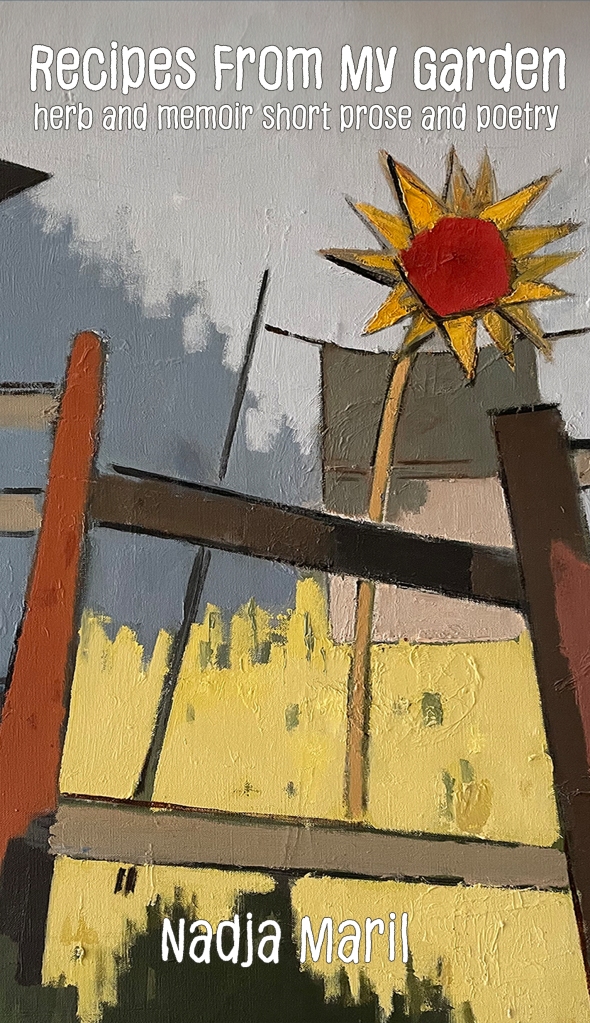
Nadja Maril is the author of Recipes from my Garden, Old Scratch Press, September 2024. Nadja Maril’s short stories, poems and essays have been published in dozens of small online and print literary journals and anthologies including: Lunch Ticket, Spry Literary Journal, Invisible City Literary Review, and The Journal of Compressed Creative Arts.She has an MFA in creative writing from Stonecoast at USM. A former newspaper columnist and magazine editor, she writes a weekly blog and you can visit her website at www.Nadjamaril.com.

Thank you for reading. Please sign up to follow us here on WordPress and on Facebook.

Exploring the Role of the U.S. Poet Laureate

By Virginia Watts, Founding Member of the Old Scratch Press Collective

Many people have heard of title The United States Poet Laureate, official title Poetry Laureate Consultant in Poetry, but they do not know much about this position. The Poet Laureate serves for an eight-month term running from October to May, elected by The Librarian of Congress. Traditionally a poet will hold this title for two terms. In choosing the recipient of this prestigious title, the Librarian consults with experts in the field of poetry as well as former Poet Laureates. Additionally, suggestions from the general public are accepted.

The Poet Laureate only has two officials duties they must perform, two readings at the beginning and end of their term. The idea is that each Poet Laureate should be given the space and freedom to decide for themselves how they can use their role to encourage people throughout the nation to read, write and develop an appreciation for the art of poetry. The Poet Laureate receives a stipend of $35,000 and $5000 for travel expenses. Prior the 1986, the Poet Laureates were known as Consultants in Poetry. The well known poets Robert Frost and Gwendolyn Brooks were Consultants. Since 1986, there have been 24 Poet Laureates, Louise Gluck and Ted Kooser among them.

So, what have some of our Poet Laureates done during their tenure to spread the love of poetry?

In 1997, Robert Pinsky, the 39th Poet Laureate, put out an open call for people to share their favorite poem. Many Americans sent poems. Poems came flooding in from all ages, all states, from people of diverse backgrounds and interests. Pinsky’s call set off a domino effect leading to reading of favorite poems in hundreds of cities and towns.

Gwendolyn Brooks is well known for her focus on elementary school students. Early learning about poetry and writing it is bound to foster a lifelong love of the art form.

 Joseph Brodsky thought the best way to have people experience poetry is for them to find free samples of it in their everyday lives and places, such as airports and hotel rooms.

Billy Collins published an anthology inspired by his time serving as the United State Poet Laureate. “Poetry 180” makes it easy for high school students to read or hear one poem each day during their school year. Collins is often quoted as believing that poetry is a kind of social engagement, that a poem should feel like it reaches out and invites the reader inside.

Rita Dove brought writers with a focus on African diaspora together. Maxine Kumin focused on shining a light on the works of women writers and Joy Harjo, the 23rd United States Poet Laureate, was the first Native American to hold this honor.

Our current Poet Laureate is Ada Limon. She is from a Mexican American background and grew up in California. As part of her position, she penned a poem dedicated to NASA’s Europa Clipper Mission. Her poem is engraved in her handwriting on a metal plate aboard the Europa Clipper spacecraft. This spacecraft launched in 2024 and will enter the Juniper system in 2030.  Here is Limon’s gorgeous piece. She is one of the must-read poets of our times, well deserving of the title of United States Poet Laureate.

In Praise of Mystery: A Poem for Europa

Ada Limón

1976 –

Arching under the night sky inky
with black expansiveness, we point
to the planets we know, we

pin quick wishes on stars. From earth,
we read the sky as if it is an unerring book
of the universe, expert and evident.

Still, there are mysteries below our sky:
the whale song, the songbird singing
its call in the bough of a wind-shaken tree.

We are creatures of constant awe,
curious at beauty, at leaf and blossom,
at grief and pleasure, sun and shadow.

And it is not darkness that unites us,
not the cold distance of space, but
the offering of water, each drop of rain,

each rivulet, each pulse, each vein.
O second moon, we, too, are made
of water, of vast and beckoning seas.

We, too, are made of wonders, of great
and ordinary loves, of small invisible worlds,
of a need to call out through the dark.

Photo by David Kopacz on Pexels.com

“In Praise of Mystery” by Ada Limón was released at the Library of Congress on June 1, 2023, in celebration of the poem’s engraving on NASA’s Europa Clipper, scheduled to launch in October of 2024. Copyright Ada Limón, 2023. All rights reserved. The reproduction of this poem may in no way be used for financial gain.

About the author: Virginia Watts is the author of poetry and stories found in Epiphany, CRAFT, The Florida Review, Reed Magazine, Pithead Chapel, Words & Whispers, Sky Island Journal among others. She has been nominated four times for a Pushcart Prize and four times for Best of the Net. Her debut short story collection Echoes from The Hocker House won third place in the 2024 Feathered Quill Book Awards.

Virginia Watts grew up in Hershey, Pennsylvania and spent summer vacations in the Endless Mountains of Sullivan County with her Quaker grandparents. Many of her stories and poems revolve around small town life and rural roadways that are not always what they seem.

Thank you for reading. Please sign up to follow us on Facebook and to follow us here on WordPress to expand your knowledge about poetry and short form writing as well as to receive the latest news about publication opportunities.

The Blessings of Ritual and Routine

My dearly departed guinea pig, Addie, in her warm fuzzy hidey. Addie was carmel and white and had lovely pink eyes. Really, pink.

Just before the pandemic (the 2020s I feel the need to say for when we all are history), we were in search of a better situation for our daughter, and we moved her to a private school. She went from a class of 30 to a class of 12, and her academics improved immediately, though our finances did not! As a part of her classroom they had an animal student, the lovely Miss Addie pictured above lounging in her hidey with a tasty piece of bamboo. The school asked for a volunteer family to take her home over the Christmas break, and we volunteered. Addie and I bonded immediately (I am the pet-whisperer), and I must admit I delayed sending her back to school in January by almost a full week. When the school was shut down over Covid in March they asked me again if I would take her, and I eagerly said yes. She moved in with us, and by May the lovely school announced it was going out of business. Addie became family. During the stay-home days our daughter took courses on Outschool (highly recommend) where she learned female guinea pigs preferred to be in pairs. We then adopted Baby from a pet store. It turned out that Addie did not prefer to be in pairs, but eventually a tolerance developed.

When we moved back to California, again for a better school experience for our daughter, we drove across with two cats, two guinea pigs, and one dog. About a year after we settled in, I woke up a few days before Christmas to find Addie had left us. Baby, it turned out, was desperate not to be alone, and went on a hunger strike. After a forcing some food into her for two days (guinea pigs must eat constantly or they die), we adopted Punky (who looks a bit like a pumpkin). This past summer Baby followed Addie to Valhalla, and I saw, stretched before me, a long line of guinea pig adoptions for the rest of my life. I waited with bated breath until, lo and behold, it seemed Punky took after Addie, bless her. She seemed very interested in checking out Baby’s viewing and memorial, but then she was fine to have all the snacks and seed balls and pigetti (corn silk) to herself. She moves, in her luxuriously large cage, from hidey to hidey during the day, alternatively napping and yapping. She has a lot to say to me, and we perform a call and response between us where I say, “Woooo, Punkus!” and she chirps away back at me, whooping louder and louder until I bring her some fantastic treat.

The guinea pigs, as much as I don’t want to have a long line of them stretching to the end of my life in front of me, are part of my life’s rituals, and I love the job, and someday I know I will mourn the loss of it, as I mourn both the beautiful, pink-eyed Addie, and Baby, who looked like a tiny Holstein. Every other morning, without fail, I awake before the sun and the rest of my family, chat away with Punky as I remove all her bedding (I use cloth bedding, nice fluffy fleece pads), and all her hay, and all her snacks and poops, and I clean out the cage. All the linens go into the washer for a hot wash and an extra rinse, and the cage is refitted with clean bedding from my ample supply. Then I top off the snack bin (hay rings, seed balls, vitamin C chews), put in fresh hay, and add in some salad (lettuce, peppers, fresh baby corn, that sort of thing) and set Punky up for her new day. It takes me about 40 minutes (not counting the laundry time) and during that time I do not have to think what move to make next, and my conversation (Wooo Punkus!) pretty much doesn’t change, and is not the most thought provoking. That gives me some early-morning time to freshen up my brain as I freshen up Punky’s cage. We both enjoy it. For me it is both calming, and nurturing as I nurture my little Punky, and there is a clear sense of accomplishment in looking at the “beautiful once again” cage. 

Of course, you might think, that’s a lot of work, lady, for a kid’s pet, work that the kid should be doing. My daughter and I traded years ago because, when Addie first moved in, my daughter was too short to clean the cage, and not very quick or proficient at it. I offered to trade emptying the dishwasher (a chore I despise). She agreed. So now she’s stuck with it! And I get the meditative and soothing time with Punky.

I want to address this next paragraph to my fellow non-believers out there, or, perhaps, non-conventional believers is a better term. I was raised really immersed in a traditional Christian church, but, as long as I can remember, though I didn’t really balk against going until late into my HS years, it had no effect on me. I didn’t click into the whole thing. I often read the Bible in church from boredom during the long services, but it came across as fairy tale to me, and the emotions I saw people experience in church were not there for me. Even during my beloved grandmom’s funeral, who loved her church dearly, what I remember feeling, aside from loss, was that I would have preferred to be somewhere else, somewhere emotionally warm, to hold her in my thoughts. I have no doubt that my delight of a grandma is somewhere, in some form, still being a delight, but hooking it into her own religious beliefs is beyond me. So, there are two points I want to make here about that based on my experiences in life: ritual, which is done so well by churches/temples/mosques, and their like, is not owned by them. And life needs ritual for space to process and to get in touch with emotions. We are all different, and some of us need more ritual in life than others, and that ritual can be as simple as how we decorate for holidays, certain meals we make at certain times, celebrating our own birthdays (of course! I’m glad I was born!). Ritual is, really, meditation, and for me it is more profound when it is a natural thing in my life rather than what I would view as a forced, arbitrary movement. The guinea pigs are a delight too. Their personalities remind me of my chubby grandma in many ways. She often whooped, and loved eating too. There’s no reason they should not be connected in my heart and in my thoughts. I love the ritual that they are.

And during the “mundane chore” of cleaning the guinea pig cage I get a lot of writing done (in my mind, not on my computer!). It’s a reset for me as well. There’s no pressure for perfection, and the thoughts roll in and out like a calm tide. 

Of course Princess Punky will not outlast me (I am optimistic enough to assume). And I want to just mention my second very early morning ritual that will ride with me to the bitter end. OHHHHHHH…….

All I want is a proper cup of coffee
Made in a proper copper coffee pot
I may be off my dot but I want a proper coffee
In a proper copper pot

Iron coffee pots and tin coffee pots
They are no use to me
If I can't have a proper cup of coffee
In a proper copper coffee pot, I'll have a cup of tea
!

Gaze upon my magnificent second morning ritual… coffee made in a proper copper coffee percolator! A percolator has several ritual benefits: there are a few parts to take apart and clean; there is a prescribed way to put it back together, and when it is back together it moans suggestively and bubbles, and scents the air with perfume Chanel should be envious of. It is another opportunity for me to do labor that requires no brain power, that pleases me and affects me directly while also giving benefit to someone else (my spouse), and doing the “chore” brings about visible results that please me. It also offers me a hot cup to sip and enjoy as I slowly move from meditation to sitting down and writing out this post, or some other writing project.

Websters says that a blessing, as a noun, is grace (the thing said before meals), approval or encouragement, or a thing conducive to happiness or welfare (by which I take it Websters means well-being). Rituals are a blessing. And, for me, a lot of my blessings are my routines. I exhort you not to deny yourself of the blessing of your routines, even if they are “chores” (such a dirty word!). Slow them down a bit; use them to slow your thoughts, and plum the richness of repetition, a moment with no planning and no management needed, a moment on autopilot. There are so many writing gems to be found there, as well as quite a lot of balm for the nervous system. Enjoy that walk with your dog, scritches for kitty, a hot cup of coffee, or, if you can’t have a proper cup of coffee, a hot cup of tea. 😉 Whoop whoop!

The Runaway Christmas Train

When I was a little boy, my father would assemble a huge train table in our living room next to the Christmas tree. The table was easily ten feet wide by ten feet long, and three feet high. In addition to the tiny figures of the villagers, quaint tiny homes and buildings, working street lights, fake trees and assorted trains that adorned the table, crepe paper in a red brick pattern was attached to all sides of the table. The paper ran from the sides of the table all the way down to the carpet, creating the illusion that the table was supported by brick walls all around.

Or from my point of view, the perfect fort wherein I could hide.

The strategy was to sneak underneath the table after my parents had gone to sleep and wait for Santa to place the presents under the tree. I actually made it to my secret hiding place each year, carefully separating the folds of the brick crepe paper back in place behind me so that nothing looked out of place.

And like clock work, every year I would promptly fall asleep before sighting Santa.

So that is the memory, suspended in time for more than forty years, like an image trapped within an icicle that never melts.

The reality is starkly different.

The old house was sold many years ago, the train table dismantled and perhaps rotting in some unknown wood pile, and the assorted engines, passenger cars, and cabooses stored away in bubble wrap for another generation.

Things are different with my wonderful parents as well. Mom passed away in 2022, and Dad is struggling every day in a memory care unit.

Despite all of these life changes, I still hold on to this memory, this specific icicle of time has not yet eluded my grasp.

My attempt to preserve this memory in poetry appears below. The poem is called “Christmas Eve from Under the Train Table” and first appeared in The Hot-Buttered Holidays Issue of Instant Noodles in 2021.

I hope you can find something special in my memory as well.

Happy Holidays,

-R. David Fulcher

CHRISTMAS EVE FROM UNDER THE TRAIN TABLE

There I was,
and there I would remain,
Expectant and curled-up beneath the great trains
which had whistles and steam and a radio tower that lit up.
The trains were sleeping, but my breath replaced their din,
Escaping my lips like an anxious child.

It is not the darkness I fear.
I fear that my mischievous breath will plume forth and collect Itself into a crystal ball,
and then roll out from under the brick-red crepe paper,
a great red marble full of my embarrassment.

The clock clangs midnight.
I can hear my parents through the walls,
their secret laughter like soft explosions
accompanied by the faint swish and whisper of wrapping paper.

Now I can their slippered arrival.
My heart pummels in my chest with incessant fluttering,
sick of this distant observation,
insane with the knowledge that all this espionage is for me.