Have you ever considered a writing retreat? Most of them are (I think) outrageously expensive. How about a free one instead? Consider applying to Yaddo.
Yaddo is one of the most respected artist residencies in the world, offering writers something increasingly rare: uninterrupted time and space to focus deeply on creative work. Founded in 1900, Yaddo was created with a singular purpose, to support artists by removing everyday distractions so they can fully engage with their craft. Located on a wooded estate in Saratoga Springs, New York, Yaddo has quietly supported generations of writers whose work has gone on to shape contemporary literature.
What makes Yaddo especially appealing to authors is its emphasis on creative freedom. There are no required workshops, classes, or public obligations. Writers are given room, board, and a private workspace, allowing them to set their own rhythm and priorities. Residencies typically range from two weeks to two months, offering enough time to make real progress on a project or to rediscover momentum that may have been lost to teaching, work, or daily responsibilities.
Selection is based on the strength of the work itself. There is no expectation that writers arrive with a polished or market ready manuscript, and no requirement to produce a finished piece by the end of the residency. This makes Yaddo an ideal space for experimentation, risk taking, and deep revision. Many writers find that the absence of pressure allows them to work more honestly and adventurously than they can elsewhere.
While solitude is central to the Yaddo experience, a quiet sense of community is also part of daily life. Communal meals and shared spaces offer opportunities for informal conversation with artists working across disciplines, including music, visual art, film, and theater. These interactions are optional but often enriching, providing fresh perspectives without overwhelming the creative focus.
For authors navigating a literary world that increasingly demands constant productivity and self promotion, Yaddo offers a rare and valuable gift. Time to write. Time to think. Time to reconnect with the work itself. For writers serious about their craft, applying to Yaddo is not just an opportunity. It is an investment in the long life of their creative practice.
DEADLINE:
Dianne Pearce is the chief editor and bottle washer at Current Words Publishing, and the half-cocked imaginer behind Old Scratch Press and Instant Noodles. Pearce loves helping writers realize the dream of having their work published. I mean she is really crazy about doing that for some reason. To that end, to join in the fray, to look at the thing from the other side, to stand in another’s shoes, and all of those things, she is fully expecting and promising to publish her first collection of poetry, In the Cancer Cafeteria, spring of 2026. Please don’t hold your breath. For very long. Happy Holidays!
Alan Bern is more than just the author of DREAMS OF THE RETURN—he’s also one of the founding voices of Old Scratch Press, a collective born from a group of terrific writers with a deep love of traditional and hybrid poetry, prose, and art. As a retired children’s librarian and cofounder (with Robert Woods) of the fine-press publisher Lines & Faces, Alan has long pursued the merging of word, image, and place.
In DREAMS OF THE RETURN, he turns his lens to Italy—in particular the South—bringing to life landscapes both storied and luminous through his own photographs and through classic Italian poetry, delivered both in its original form and in his own translations. The journey is lyrical, immersive: it’s not merely a travel guide, but a portrait of longing, place, memory, and beauty.
And that’s something Alan does beautifully—his artistry weaves together what he’s done throughout his life: poetry, prose, photography, memoir, all fueled by a love for Italy. Within the OSP community, he is known for “photo-poems,” a daily practice in which images and language overlap, inviting the reader to travel with him across geographies and inward, into self.
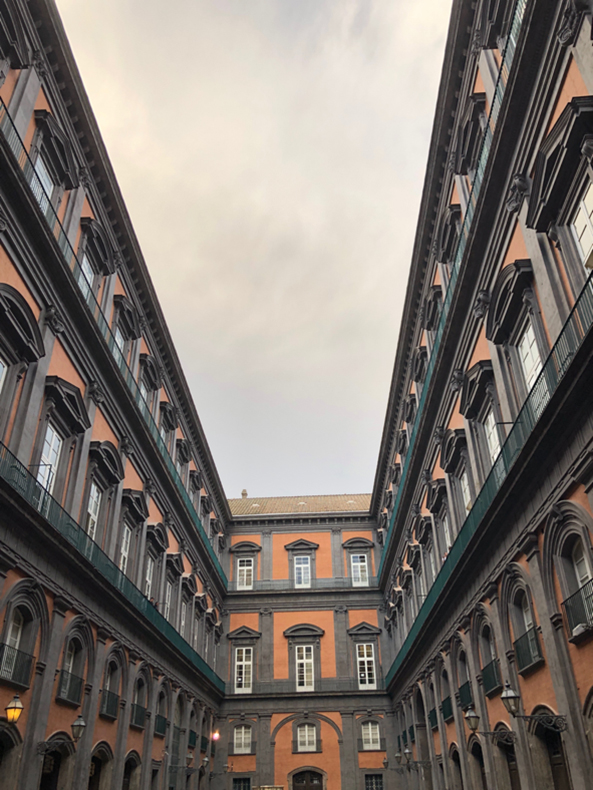
In addition to poems and photographs, DREAMS OF THE RETURN also includes intimate personal essays that layer history, memory, and lived experience. In “The Good One,” for example, Alan recounts a walk through Naples’ Quartieri Spagnoli with his friend Marco. What begins as a conversation about Jewish philosopher Don Isaac Abravanel and the sacred geography of southern Italy turns into a heartbreaking encounter with a community altar for “o’ Bono”—a young man accidentally killed during a New Year’s Eve celebration. Through this story, Alan reveals how place, tragedy, resilience, and human connection are intertwined in ways both profound and ordinary.
A true perfectionist, Alan (pictured left) worked closely with his good friend, Peter Truskier, to ensure that the photos selected would sparkle in the book just like the locations did in real life.
DREAMS OF THE RETURN is, in effect, another way Alan invites us to travel: through light and verse, through time and place. It’s a book to savor—start with a wind-soft sun, ruins, olive trees and history; consume it slowly with pizza margherita and red wine; linger into the evening with the sweetness of roccoco napoletani and an espresso kissed with Sambuca. You can order a copy of your own here:
Clearly the owner of that journal is not doing a good job of compiling her collection because on her journal is a slice of orange she is attempting to dry out, three crystals, and a paintbrush. The book is open and written in with a pencil, not good for preserving writing as (being a teacher for one-zillions years I can tell you) pencil smudges overtime to become indecipherable. She’s also got a pile of vintage mail (definitely older and already been mailed to her, to someone), which is deliciously tantalizing, and reading is much easier and more fun than writing.
Who is this mess of a woman? That’s a stock photo, but it could easily be my desk, with a few dozen highlighters and yesterday’s coffee added to the milieu.
It’s difficult for me to have a clean desk, no lie there. It’s difficult for me to spend time cleaning my desk, and not because I am not a neat person, but because I push my own things back. In fact, though I think of myself as a generally nice and “in a good mood” sort of person, I can get snappy when I feel tooo squeezed out.
I feel thin, sort of stretched, like butter scraped over too much bread.
JRR Tolkien, The Fellowship of the Ring (The Lord of the Rings, #1)
What a great bit of writing that is!
So I have made the bold assertion that I will publish my collection of poetry through Old Scratch Press in 2026. There. I said it to the group, and now I said it to you. I swear I’m gonna do it. I am going to occasionally clean my desk, and push in some room to get my collection together by pushing other things back (other things probably being sleep! Ha!). I just took on a new tutoring student, a few pro bono editing projects (my daughter’s school has a non-profit component to it, and I donated some editing to the auction, and it got bought!), a half dozen or so sample edits, in addition to the regular amount of edits, which is many hundreds of pages per month, and I signed up for a singing course with a friend, have a relative needing assistance for cancer treatments, a teen in need of a lot of “staying on track” help with school work and she is also involved in some theater projects her dad or I need to be the transportation for (and, in general, making sure she eats, remembers her glasses, etc.), and a business to run and a home and family, in addition to trying to squeeze in a daily run. I would love to run well enough to participate in a 5K, and I have been thinking of joining a thing in my neighborhood where I could get a running trainer. Of all of those things I am doing there is nothing I do not want to be doing, except for wishing my relative didn’t have cancer, of course. One friend had told me recently she was stepping back from a project, and I had anticipated it about four months earlier, actually, and I completely get it. My relative, who is staying with me this week and last for her treatments, woke up today and told me she is spending the last few days she needs to be local for her tests at a friend’s because she needs a change of scenery. I had expected that too, and I had prepared a to-go coffee for her before she woke up. However I have a HS friend on FB who is every bit as engaged in politics as I am, and worried about the general state of what we see as the slide into authoritarianism, and another HS classmate said to him, “We liked it better when you just wrote about your kids and scouting. You don’t have a lot of chapters (she actually wrote chapters!) left; don’t waste them on this.” and I could not agree less. Age, chapter of life, has nothing to do with wanting to accomplish things and caring about things outside of ourselves, so, no, I do not think he should stop fighting the good fight. Yet I feel that I do have an understanding that we literally cannot do it all, and don’t want to, and I respect it, and think it is a good thing, and I flatter myself that I am especially good at reading the room, and can see when change is coming. But, I’m not good at, “No.” I’m not good at giving up on something I’ve begun, even if it does not realize my own dream. It’s an obstacle because in order to publish one of my many projects, I assumed I would have to come up with a good, firm, “No.” And I simply can’t. So I have decided instead to come up with a good, slightly quavering, “Yes.” I’m outing myself that I am going to put my damn book out. I am saying it, and affirming it, and treating it, as much as possible, as a done deal. I think if I normalize it, the way I normalize all the other things, I will simply do it because it has a due-date, or a do-date. Both!
And so, here is my question to you:
If you have been writing short stories, short non-fiction, flash, poetry, for some time now (I’m not going to say I’ve been writing for decades, but at least since the synth-pop craze and the resurgence of skinny ties (the best kind of ties)), how do you choose what to include, and what to leave behind, resting, forever lost in a permanent dream state in the “my writing” file on your desktop? Though the synth-pop craze wasn’t what I would describe as a serious time in the world, I was a serious writer; I took myself very seriously, and I think that “me” has somehow stuck around, and I judge that writing to be more profound, when in reality for pretty much all of us our early writing is awful. I remember writing a poem laden with love and portent that was about a page long and contained only the word “baby” written over and over again in different combinations with possessive pronouns and a few sappy adjectives. Songs, when sung, can add meaning through cadence, tone, etc., but, with that “baby” experiment I learned that mere words on a page cannot do that. It was a piece of absolute dreck. I do not regret deleting it!
So, those old pieces hold special meaning for me, but most are not very good (I confess I still think some of them are genius!), and almost all are not even remotely relevant to who I am now. Though I am still a whiny liberal with a moral bent, and that still is there, even in the new pieces.
And this is it, my one chance to publish my poetry, to put it out there in the world. When I was in my MA and MFA programs I knew who the “it” poets were in the world of poets who published, and I wanted to join them, to earn their respect. And as I tried I very much felt borne farther away from them. Primarily by life circumstances and that inability to say no, that pushing back of my own things, more than anything else. And that very much was a tell (an inadvertent behavior or mannerism that betrays) that I didn’t belong among them. Writers who are successful (and success looks different for a poet than a novelist, or self-help book author, etc.) almost all have a modicum of selfishness that allows them to push things away that don’t serve them, and also leads them to self-preserve. They’re not going to be dumb enough to share their “baby” poem with their thesis advisor. Selfishness belongs on the seven deadly sins list, IMHO. But success almost needs it, like a plant needs water, to survive.
So, for better or for worse, committing a deadly sin or not, I am going to get this thing done as if it is not even my thing, so I will not be being selfish; I will simply be doing another job on the list.
But, again, I have this question: if you could put together a collection of your writing (or publish one of your novels, if you write long-form) how do you choose? How do you group? How do you look back over your body of work and say, “This goes; this doesn’t?” And if you could have your book published next year, what would you want on your cover, and why? While working with OSP one thing that has continually surprised me is that the authors seem to know what the cover needs to be. How in the heck….?
So, what about you? Would you know? I’m super curious to hear! Drop me a comment below!
Are you a flash fiction, poetry, or short memoir writer with a finished manuscript—or one nearly ready to go? Old Scratch Press, a collaborative collective supported by Current Words Publishing, is now accepting applications for two new members to join us in 2026.
We’re a tight-knit, skill-sharing group that publishes each other’s books, runs the lit mag Instant Noodles, and supports each other with editing, design, marketing, and community.
We are hosting meet and greets on August 6th and August 13. To be invited you have to send a small sample. There are no fees to submit, and there are no fees to join, and there are no fees to publish your collection. There are no fees. Who else you gonna find to collaborate with who dedicates an entire issue of a literary magazine to that most magical of elixirs… gravy? If you’re eager to grow as a writer and be part of something creative and weird and wonderful, we’d love to meet you.
We’re looking to add members to Old Scratch Press! Here’s the deets: Old Scratch Press (OSP), a poetry and short-form collective sponsored by Current Words Publishing, is seeking two new members to join us starting at the end of 2025. Your book would be slated for publication in 2026–2027, pending a successful trial period.
OSP is a collaborative, grassroots press focused on uplifting fresh, bold voices in poetry, flash fiction, and creative non-fiction. We publish three books per year, along with Instant Noodles Lit Mag (3 issues/year), which is curated and edited by our members. To learn more about our work, we invite you to explore past editions of Instant Noodleshttps://instantnoodleslitmag.com/ and OSP-published books https://oldscratchpress.com/catalog/.
As a member of OSP, you will:
Receive a free publication of your manuscript (poetry, short prose, hybrid, or a mix of writing and art).
Get 10 free copies of your book and keep 100% of your royalties.
Participate in monthly OSP meetings (except December and August).
Proofread and support fellow members’ books and contribute to blog and promo efforts.
Be invited to monthly marketing meetings hosted by Current Words Publishing.
Join a supportive community of working writers committed to mutual aid, creativity, and literary growth.
We’re looking for:
Members who are kind, reliable, and team-oriented.
Writers with a completed or nearly completed manuscript ready for publication in 2026–2027.
People who can commit to at least two years of active participation.
Writers who reflect diversity in identity, perspective, or experience—including (but not limited to) people of color, LGBTQ+ writers, disabled writers, and others underrepresented in publishing.
Applicants who are not full-time creative writing faculty. We aim to support writers who do not already have institutional resources or access.
Writers who have a track record of publication (a few poems, flash pieces, essays, etc.), and a clear desire to communicate something meaningful through their work—someone we can respect as a fellow writer and collaborator.
A note about our trial period:
New members will begin with a six-month trial period before we formally commit to publishing your book. This ensures a good fit and gives everyone time to build rapport, share work, and participate in OSP activities.
To apply:
Please send the following:
A brief cover letter introducing yourself, why you’re interested in joining OSP, and how you’d contribute to the group.
A short author bio (3–5 sentences).
A brief personal essay (500–750 words) about your writing journey. Feel free to include publication history (with links or footnotes) and anything you’d like to share about the manuscript you hope to publish.
A sample of your manuscript-in-progress (up to 10 pages).
Applications will be reviewed collectively by current OSP members. Finalists will be invited for a short conversation via Zoom.
If this sounds like your kind of creative home, we’d love to hear from you!
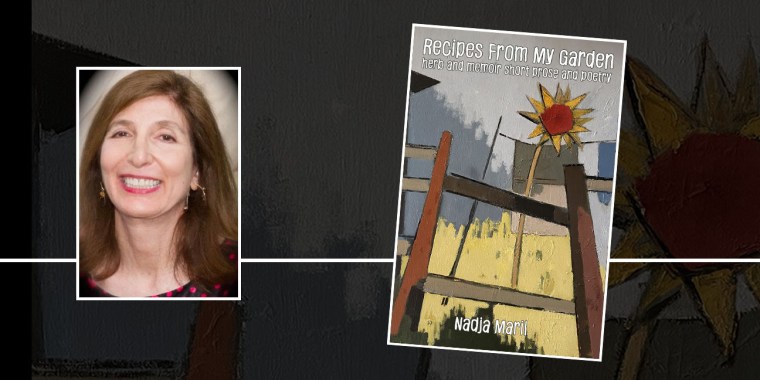
This week author Nadja Maril released her collection of flash prose, poetry, and essays inspired by her kitchen, garden, and family memories. I sat down with Nadja to ask her some questions about the book, and her process. It’s interesting to note that Nadja comes from an artistic background: her late father Herman Maril was an artist, and his painting is the cover of her book. I have enjoyed Nadja’s poetry and flash fiction for many years now, and I am very excited for her book!
Dianne Pearce (Dianne): What inspired you to combine poetry, short form, gardening, and cooking in one book? How did these different forms of expression come together?
Nadja Maril (Nadja): In January 2020 I’d just completed an MFA (masters in fine arts) in creative writing from the low residency Stonecoast Writing Program at the University of Southern Maine and was in the midst of moving into a 100-year-old house. My husband Peter and I were the General Contractors. Both the MFA and the house were two-year projects. I’d been laboring over a complicated literary novel told from multiple viewpoints, and my daughter (the youngest of my three children ) was about to get married. Peter and I were looking forward to having the wedding at our re-built house, with the festivities primarily outside. We scurried to move into the house, plant flowers and shrubs, and revitalize the lawn. Then the pandemic shut everything down.
Want to read more? Pick up the remainder of the piece at AUTHORS ELECTRIC.
It’s the “dog days of summer.” Where I live we’ve had only brief periods of respite from the extra hot days, and these sweaty days force me inside, where they, ostensibly, give me more time to write. And so I am thinking about all of that. And I’m wondering, those of you who write, have you ever considered taking classes, or have you taken classes, in writing? It occurs to me that while my daughter can play a few songs on the piano through trial and error, she is much better when she is actively taking lessons. She doesn’t take lessons because she wishes to be the next piano great, or even play professionally. She takes lessons because she enjoys playing the piano, and would like to be able to play it better. I pay for the lessons gladly, without a thought about it. Do we do that as writers, with writing?
When I went back to school to get my MA it was because I wanted to get better at writing. Yes, I had the hope of publishing, but mostly I just wanted to be better at writing my stories and poems. I signed on for my MFA primarily because the teachers in my MA program, who were not affiliated with the MFA schools, suggested that I had a spark, and could get it even sparkier with more training. And so I did it, the MFA, for me.
I am curious and would love to hear what you think about this. Have you ever done any “professional” training for writing? Something like lessons? Have you spent money on your development? Do you hope to move from hobbyist to pro? Or, perhaps, consider and reply to this by telling me about lessons that you have taken in something else, or paid for in order that a child or someone else in your life is able to take lessons. I would be very curious to hear what you think makes something a skill that you might need training in versus something you come fully equipped for, without training.
I’m laughing to myself now, sitting here, thinking about “the dog days of summer,” and how I once paid for dog training for my prior delightful pup, an out-of-control terrier who I’d adopted when he was still a puppy. I had named him Chad,
and he came after I lost the dog who preceded him, a very fancy little terrier named BeBe who walked beside me like a queen, and never needed a leash or a single command, from the moment I brought her home. Chad, on the other hand, chewed everything: my toes as I crossed the room, my ears as I sat on the sofa or lay in bed, my boyfriend’s brand new Nikes, huge holes in his blanket, and he pooped blue wool for a week after, half a wooden magazine rack while I was at work one day, scads of toilet paper rolls. He peed everywhere. There was a moment where I listened to him cry from behind the baby gate in the kitchen thinking, “One of us is not going to make it out of this relationship.” I found a dog trainer all right. I could not wait for her to get to my house! And I remember her like it was yesterday, though it was more likely 2001, when she arrived, and I let the beast loose on her, and she said to me, “Okay. I can see he has a lot of energy. Let’s start training you to be a better owner.” By the end of the session, several hours later, I admit, for I was a slow learner, I was fully trained, and Chad and I lived harmoniously from that moment on, for sixteen and a half years.
And just now, as I prepared to publish this post, I thought to myself, Maybe throw this post in Word and check the spelling, even though I know my writing does not need it! But I did, and I found four spelling errors, due to poor typing skills, which tells me that it seems that I am still, to this day, a stubborn and slow learner. 😉
So what about you? Do you train at writing at all? Are there other things you will use training for? Do you think of writing as something a person can improve at with training? I am curious to see if it is only me.










 OLD SCRATCH PRESS