June is Pride Month! It’s a time to recognize and celebrate people in the LGBTQ+ community. Pride Month is about love, acceptance, and being proud of who you are. One great way to celebrate is by reading books that share LGBTQ+ voices and stories.
Books help us understand each other. For LGBTQ+ people, reading stories with characters like them can help them feel seen and accepted. For others, reading these stories builds empathy and helps us learn more about people who may be different from us.
Books can also teach us about LGBTQ+ history, struggles, and victories. Reading is a powerful way to show support during Pride Month, especially when you buy books written by LGBTQ+ authors.
If you’re looking to add some pride to your bookshelf, we have two authors at Old Scratch Press who recently published books of poetry that would be great additions to your to-be-read list!
On May 1, Morgan was awarded Second Place in the Delaware Press Association Communications Awards for her book, The Song of North Mountain which was released by Old Scratch Press in May 2024. Not only did Morgan write the poems in this collection, she also did the interior artwork and illustrated the book’s cover. North Mountain is part of a 55-mile mountain ridge in the northern Shenandoah Valley in Virginia. Morgan says her collection of poems is a love song to that ridge.
Here is her poem, Ghost Light, which won also won Second Place in the DPAC Awards in its category.
Ghost Light
Looking back along the ridge a thin rib of light briefly illuminates the forest floor and silhouettes trees stark against winter sky. Look too soon and you miss the mystery of Dillon’s Mountain’s brief farewell to nightsky and stars and sweet Venus. Look too late and the slumbering giant lumbers slowly into its ordinary dayspring. But if you should, by chance or intent, catch the moment, you will see life and hope renewed in a sudden shaft of dawnbreak.
Robert Fleming is a gay man who writes and creates art about gay, transgender, and universal themes. After coming-out, he published in LGBTQ magazines. He says that when he” stopped obsessing about being gay”, he realized that his sexual orientation is only one part of who he is. This enabled him to write on universal human themes and crossover into publishing in straight magazines.
For pride, one his favorite poems is one he wrote, Passed Over , that was published in 2020 in Trees In A Garden Of Ashes by Local Gems Press. Robert is grateful to James Wagner, the editor of Local Gems Press, who published many of his gay and transgender works.
For pride 2025, Robert recommends to submit to publish in Oddball magazine that has categories in nonsexual orientation and pride (LGBTQ). You can find submission guidelines here.
Robert is the author of the Amazon best-selling visual poetry book, White Noir.
by Nadja Maril, a Founding Member of the Old Scratch Press Short Form and Poetry Collective
I got a rejection this morning. I received the standard form rejection for a piece of creative writing: We appreciate the chance to read it. Unfortunately, the piece is not for us.
I get rejected all the time. It doesn’t matter how many times my work has been published, I’m not famous and editors have a multitude of tastes. What was interesting to me was the poem in question had already been published and well received. This time I’d entered it into a contest that was also considering previously published work. Maybe they didn’t think it was prizeworthy, but I felt like they didn’t like the poem at all. This made me sad.
Then I thought of The Ugly Duckling, http://hca.gilead.org.il/ugly_duc.html by Hans Christian Anderson, one of my favorite fairy tales. The bird that emerges from a hatched egg is not at all like the other ducklings in the farmyard. He endures all kinds of painful ridicule until he discovers his true identity as a swan.
“He now felt glad at having suffered sorrow and trouble, because it enabled him to enjoy so much better all the pleasure and happiness around him; for the great swans swam round the new-comer, and stroked his neck with their beaks, as a welcome.
Into the garden presently came some little children, and threw bread and cake into the water.”
I share this little story to remind all writers, particularly anyone just starting their journey, that it can take months or even years to find your audience. Yes, it could be you just don’t have the talent needed to “make it” as a writer, but tastes on what is good and worth publishing vary tremendously. An ugly duckling may also be a graceful swan.
We all have probably had the experience of seeing a movie or reading a book that got great reviews, but we found to be boring. We may have attended a party in someone’s home and overheard guests raving about a gorgeous painting or a rug that we secretly think is hideous.
People have different tastes. Where we grew up, where we’ve traveled, what our parents taught us, all influence what we value and how we judge things. The quest for diversity, when I wear an editor’s hat, is my desire to try to open my mind to a multitude of ways to see the world. But we tend to gravitate to the familiar because it’s comfortable.
A big word among editors is resonate. If a piece of writing resonates with the reader, it affects them emotionally and they may continue to think about that story or poem for days. That type of connection is something a writer longs to achieve. But it’s unlikely to happen with every reader. We all have different histories. We’re all slightly different so what affects one reader may not necessarily affect another.
It may be that something you wrote is not ready for publication and needs more revision. On the other hand, it could be really good, but needs to find the right audience.
I can’t emphasize enough, writing groups and reading groups to gain different perspectives. A writer toils alone, but feedback is important. I can’t emphasize enough the importance of beta readers, fellow writers with whom you can exchange work.
Do not write in a vacuum. Find the approach that works best for you, but don’t give up on something you feel in your bones is important. If you’ve written something you’d like to share with the world, keep submitting. A rejection is a badge of honor.
It shows you’re out there swinging the bat and you’re still in the game.
About the author:
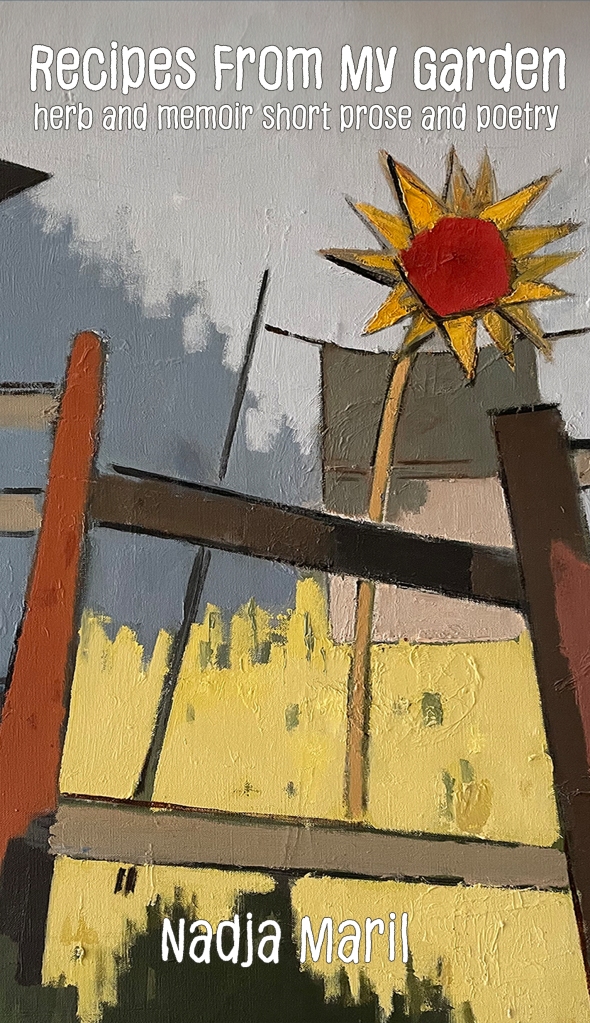
Nadja Maril is the author of Recipes from My Garden, Old Scratch Press, September 2024. Nadja Maril’s short stories, poems and essays have been published in dozens of small online and print literary journals and anthologies including: Lunch Ticket, Spry Literary Journal, Invisible City Literary Review,and The Journal of Compressed Creative Arts.She has an MFA in creative writing from Stonecoast at USM. A former newspaper columnist and magazine editor, she writes a weekly blog and you can visit her website at www.Nadjamaril.com.
Thank you for reading. Please sign up to follow us here on WordPress and on Facebook.
We’re looking to add members to Old Scratch Press! Here’s the deets: Old Scratch Press (OSP), a poetry and short-form collective sponsored by Current Words Publishing, is seeking two new members to join us starting at the end of 2025. Your book would be slated for publication in 2026–2027, pending a successful trial period.
OSP is a collaborative, grassroots press focused on uplifting fresh, bold voices in poetry, flash fiction, and creative non-fiction. We publish three books per year, along with Instant Noodles Lit Mag (3 issues/year), which is curated and edited by our members. To learn more about our work, we invite you to explore past editions of Instant Noodleshttps://instantnoodleslitmag.com/ and OSP-published books https://oldscratchpress.com/catalog/.
As a member of OSP, you will:
Receive a free publication of your manuscript (poetry, short prose, hybrid, or a mix of writing and art).
Get 10 free copies of your book and keep 100% of your royalties.
Participate in monthly OSP meetings (except December and August).
Proofread and support fellow members’ books and contribute to blog and promo efforts.
Be invited to monthly marketing meetings hosted by Current Words Publishing.
Join a supportive community of working writers committed to mutual aid, creativity, and literary growth.
We’re looking for:
Members who are kind, reliable, and team-oriented.
Writers with a completed or nearly completed manuscript ready for publication in 2026–2027.
People who can commit to at least two years of active participation.
Writers who reflect diversity in identity, perspective, or experience—including (but not limited to) people of color, LGBTQ+ writers, disabled writers, and others underrepresented in publishing.
Applicants who are not full-time creative writing faculty. We aim to support writers who do not already have institutional resources or access.
Writers who have a track record of publication (a few poems, flash pieces, essays, etc.), and a clear desire to communicate something meaningful through their work—someone we can respect as a fellow writer and collaborator.
A note about our trial period:
New members will begin with a six-month trial period before we formally commit to publishing your book. This ensures a good fit and gives everyone time to build rapport, share work, and participate in OSP activities.
To apply:
Please send the following:
A brief cover letter introducing yourself, why you’re interested in joining OSP, and how you’d contribute to the group.
A short author bio (3–5 sentences).
A brief personal essay (500–750 words) about your writing journey. Feel free to include publication history (with links or footnotes) and anything you’d like to share about the manuscript you hope to publish.
A sample of your manuscript-in-progress (up to 10 pages).
Applications will be reviewed collectively by current OSP members. Finalists will be invited for a short conversation via Zoom.
If this sounds like your kind of creative home, we’d love to hear from you!
Here I am with Linwood Jackson, President of the Delaware Press Association.
On May 1, I was awarded a Second Place in the Delaware Press Association Communications Awards for my book, The Song of North Mountain. This was my veryfirstever book released solely under my name, and the award presentation was exactly one year after the book hit publication.
I am quoting the judge, whose name I don’t know, in their comments regarding the award. “This is a beautifully crafted collection of poems that takes readers on a journey through nature, personal reflection, and the deep connection between the land and the human sprit. With vivid imagery and emotional insight, You (sic) capture the essence of the North Mountain landscape, blending personal growth, exploration, and the rhythms of life. The poems are rich with sensory details and metaphor, drawing readers into the natural world where every “rustle of leaves, shift of light, and breath of wind carries meaning.” I find that your writing, both introspective and outward-looking, intertwines the inner and outer worlds, exploring themes of solitude, contemplation, and the passage of time with tenderness and reverence, giving the collection a meditative quality.”
Many of us, particularly of my generation, suffer from imposter syndrome, that feeling that we’re really just pretending to be . . . smart, kind, good at what we do, talented, strong, etc. I’ve been writing since I was a teenager. Mostly doggerel, lines about angst, loss, imaginary friends, and wry observations. As I’ve aged and matured, so has my writing. I’ve discovered poets other than those I was raised on (Longfellow, Holmes, Browning) and many who write in rhymed and metered verse.
College introduced me to more complicated poetry – Ferlinghetti, Hopkins, Stevens, Auden, Eliot, Yeats. And then, foreign writers, like Rumi, whose ideas were so very different from those I had been immersed in.
So, I still wrote, but still privately, only sharing sparingly, for I still did not consider myself a “good” poet.
Well, I guess I am now. This anonymous judge really liked my work! The DPA, in their wisdom, selected judges that were not from Delaware. Delaware, being such a small state, is one where everyone knows everyone else, especially in communications and writing. So all I know about this anonymous judge is that he or she is not from around here. And, they liked my work.
Being a creator, whether in writing, arts, crafts, or just about anything, we have the angels and devils on our shoulders. One says, “Perfect. Absolutely PERFECT. Don’t change a thing!”
The other angel is the voice of the imposter. “Really? You expect anyone to like this? What balderdash! This is ROTTEN!” So we hide our creation away, or simply refuse to edit it.
I think we’ve all been there. The fact is, creating is a matter of taking risks. Making changes. Wondering if what we have written can be said better. And having the courage to play with it. Editing. Changing the recipe. Adding a stroke of color.
I can certainly attest that every single poem and sketch in this book was analyzed, edited, and reworked (and rethought) at least 5 times.
Ghost Light, the poem I included in my last blog, was awarded a Second Place, also. This judge commented that “Your evocative, photographic-like details set the ghost-like mood and scene from the beginning. . . .” And, ‘the last stanza is particularly well-turned — “by chance or intent,/ catch the moment, . . . in a sudden shaft of dawnbreak.’”
The judge noticed. They noticed the internal rhyme, the alliteration, the combining of words to create a new meaning. These are ‘tools’ I labored over, hoping the reader would listen to these words and how they created an atmosphere, a feeling, a response.
We all too often hesitate to read out loud, to ourselves or to anyone else. But it is important. Whether we read to a child, or are read to, there is a chance for us to escape into the word picture created by the author. That’s what I try to do — create word pictures for you to explore.
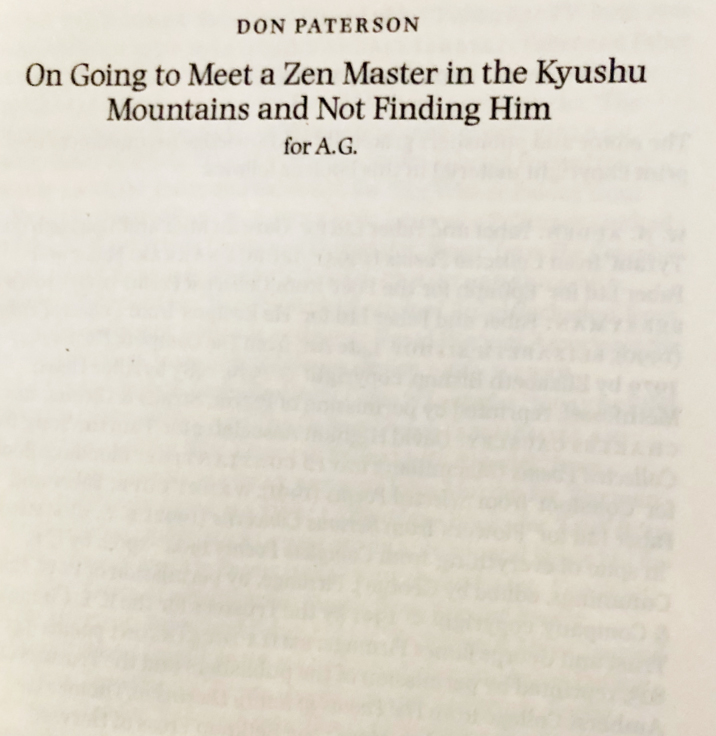
Above you see Don Paterson’s take on the titular poem, with a poem where the title is the whole poem.
A titular poem is a poem where the title is part of the poem, a line in it. In my own poetry I have really liked using this device, and often use my titles as the last line of the poem, the conclusion to the whole action of the poem. I have been described by my teachers as a narrative and magical realist poet. In my defense against these allegations I will let you know that I grew up listening to songs like “Jolene,” by Dolly Parton, “Ruby,” by Kenny Rodgers, “The Wreck of the Edmund Fitzgerald,” by Gordon Lightfoot, “Dark Lady” by Cher, and the oddest one of all, “Angie Baby,” by Helen Reddy. My formative years were two-to-three decades of songs with strange narratives in them. It isn’t my fault!
I have written many titular poems, some remarkably more successful than others, but I will share with you today one that is probably my personal favorite. This was written when I was in graduate school for my first writing degree. I had moved back in with my family. My house was helmed by two working parents, both too ready to have a drink, both too generous with money and not much else, and both not great at respecting boundaries. But I was able to go to school for my Master’s Degree and teach at the school part time, which pretty much took up 10 hours of each day, but made about one third of what a person needed for rent in those days, so, without my old room, I never could have done it. There were a lot of challenges though, one of which was a mother who was threatened by education, and really tried to impede it even as she envied it. My most repeated story, and least believed, was the one where I went up to my room to work on a paper due the next day that had to be twenty-five pages. My mother burst in to the room, my dad in tow, and began to lay out sheets of wallpaper over my (yes, I’m not kidding) word processor and desk. “We’re wallpapering the bathroom,” my mother announced. “What, now? Tonight? It’s seven,” I said in disbelief. “We have to do it now,” she said. “Right Vince?” My dad looked at me and shrugged. What could I do? I went downstairs, and waited. They finished a little after eleven, and I finished the paper a little after four the next morning. Yes, I should have probably written it sooner, but that aside, who competes with their kid with wallpaper? Sigh. No one I shared my graduation program with ever believed my stories. So, one day I wrote this poem to see if it could explain it to my fellow authors that my stories were true. As you read the poem remember… this is a titular poem, so see if you can understand how the title works as the title, and also as the last line of the poem. Yes, there are obscenities in the poem that some may find offensive. I’m a salty old girl, and, once, I was a salty young one.
A Few Dry Old Peas Rattling Around In A Waxed Paper Dixie Cup
Jesus fucking Christ goes through my mind as I sit here, trying to read the poems from my poetry workshop, and my brother, who doesn’t live here, appears suddenly at the front window like an unwelcome trio of Jehova’s Witnesses, causing my dog, who had just been whining at my leg for my bagel to bark loudly and repeatedly at the window as the phone rings, making me jump like a bean, and I answer it, all the while looking in exasperation at my beloved bother of a brother, who is unaware that I am here, and if he comes in the house will joke, as if he were the opening act for the Jerry Lewis Telethon, “Still in your pajamas? Ah you and that school racket,” while I say, “Hello” the the phone with my voice trying to sound pointed and pissed and my mother’s voice says, “Read me what the calendar says my dentist appointment is,” and says, “I know you’d like nothing better than to put my wash in the dryer—how ’bout it?” and says, “Don’t just sit around; do your windows,” and says, “You’re home todays so I won’t be home to let the dogs out,” although she wants to be ’cause she thinks I don’t do it right, and tells me again how to do it before she hangs up, but my brother has not come in, has disappeared, so I go back to reading for two seonds because here comes the dog again, whine whine bagel bagel scratch me, and I stamp at her; she looks at me—Big whoop—says her scroungy toothless expression, and I hear a loud banging, so I look up and a strange truck, a truck that would have turned up the noses of Sanford and Son and a man who obviously was designed with the truck in mind, are in the driveway, and he is pulling a gigundous lawnmower off the truck while I try to think and come up with Jesus, shit! Don’t unload that! Did I ask for that thing?! and Who the fuck is this toothless guy? and wonder for a scared second if he’s a relative I don’t recognize which is usual for me, when I see my brother coming ’round the side of the truck and I run upstairs thinking, What the hell is that guy here for? Bill is going to bring this strange man to see me in my pajamas, and the dog is lifting off the floor now in little hydraulic barks—I am thinking Christ Bill, now you’re going to wake Lee and I am giving up on reading poetry; I’ll write some instead, and I retreat to my room and start typing trying to ignore the barking of slamming truck parts and lawnmowers out front, but I am right, my brother does wake my sister, and when she gets up, by opening her door she releases another dog to bark, and it runs downstairs to join in, eager to catch up, while my sister walks into the bathroom and pees loudly with the door open, and does not flush, puts on striped spandex, and goes tour-de-fourcing down the stairs where, like a swift grifter, she switches out the tape in the VCR for an aerobics tape and turns it up up “Lift ’em up! That’s grrrreat! You can do it!” but I can’t do it because I can still hear my brother and Mister May-Be-A-Relative, so I am able to hear another voice added to theirs as my mother says, “Oh, I wondered if you’d be here. I just came home to let the dogs out,” and my friends wonder why I’m tense and why I never want to visit the zoo, and I think, Dad must be coming home any minute to tell us all the jokes he’s heard today, like, “Duck walks into a pharmacist, says gimmee a Chapstick and put it on my bill,” or the one about the Avon lady who farts in a elevator, after which he will laugh that long, wheeze, Lou Costello laugh “Hey Abbott” and somehow, in this rapidly escalating cacophony, a small sound, like a maraca gently shaken, is in my ears pulling me to it, causing me to think one final thought at the end of my morning study time, because, pricklingly familiar, I think I’ve heard that small hollow sound before, and I think I now know exactly what my brain is like.
Did you make it to the end? Could you see how the titular title ended the poem? I must admit I’ve always felt that the title must work as the title, of course, but should also resonate at the end of a poem, because our eyes, having reached the end, especially of a long poem, will zip back up to the top to refresh, remind us of what we were reading in the first place.
Have you ever written a titular poem? If so, I’d love to have you share it in the comments. Have you ever read one that you especially liked, or that flummoxed you? Let me know.
All these years later, through many different rounds of education at many schools, through being a life-long adjunct: always running place-to-place, through infertility and a trip to China to become a mother, through a few trips back and forth across the country with a full car and a moving van, through working with so many different and wildly talented authors, I do still feel a bit like I’m a plate-spinner with a brain that might like a long vacation on a deserted island. Thanks for reading! I hope you’ll share back something titular.~ Dianne
Dianne Pearce is the publisher and main editor at Current Words Publishing. She also designs and formats each issue of INSTANT NOODLES LIT MAG, and had to learn how to work computers to do it!
Don’t miss the second submission period for INSTANT NOODLES 2025. Submit today!
by Nadja Maril, a Founding Member of the Old Scratch Press Short Form and Poetry Collective
We’ve got onions, potatoes, and peas growing in our garden this year. The peas will be ready for harvest six weeks from now, according to my husband who planted the newly sprouting seeds.
In another part of the yard are the tomato plants, still very small. We got a late start. Perennial herbs: sage, oregano, rosemary, thyme, mint and dill made it through the winter. I’m waiting for my fresh basil and cilantro.
Dill,Thyme and Oregano
Each year the line-up of vegetables is different. New vegetables. New challenges on how to best use these fresh ingredients. This year for 2025 we’ll be harvesting lettuces, spinach, beets, broccoli, peas, leeks, and peppers.
Always we must have tomatoes. They do well in Maryland and they are versatile both raw and cooked. Home prepared tomato sauce, gazpacho and tomatoes off the vine with fresh basil are the best.
My chapbook,RECIPES FROM MY GARDEN, published by Old Scratch Press, is partially a tribute to herbs and vegetables. If curious about poems that are also recipes visit this link.
At the end of March and start of April we were lucky enough to enjoy our own asparagus! Yes, you are supposed to wait until the third year after planting and this is only the second year, however, it looked good and tasted great! We only took a few stalks. The rest we are leaving to enable the plant to go through its cycle of developing leaves and establishing a good root system.
first season asparagusSecond Year Asparagus Crop.
So what is the best way to cook asparagus? I would suggest as minimally as possible. My mother and grandmother would put it in the pressure cooker until it became soft. Too much flavor is lost when asparagus (Gus) is overcooked and the texture borders on mushy. Steaming a few minutes, or a coating of olive oil and a few minutes under the broiler or on the grill rotated half way through the process to keep the temperature even, are my favorite ways to enjoy Gus. You can also cut it up for use in a veggie stir fry or sauté with garlic, tomatoes and scallions to dress up a pasta. Top with fresh grated parmesan.
You’ve been invited to a dinner. What are they serving? What do you notice on the table? How does it taste? How are the other guests reacting to what is being eaten and to what is being said? This can be fictional or it can be a memory, but select the details that clearly bring the scene into focus. Write for fifteen minutes. Read back what you’ve written. Is there a sentence with power that pops? Take that sentence and start again maybe adding an action such as a glass is broken, there is a knock on the door ie something happens to change the scene slightly. Have fun with it and maybe you’ll develop it into a poem, story or essay.
Here is a piece of short prose inspired by the ingredients of an unusual stew. Enjoy.
Thank you for reading and if you haven’t already done so, please sign up for FREE to follow Old Scratch Press on Facebook and WordPress.
By R. David Fulcher Founding Member of the Old Scratch Press Poetry and Short Form Collective
Authors have often used religion as an inspiration for their work.
Consider such literary gems as Umberto Eco’s In the Name of the Rose which revolves around a murder that takes place in a monastery, or Hermann Hesse’s buddhist tale Siddhartha.
In my own work, I experimented with this intersection in my story “All Across the Mountain”, appearing in December 2023 on spillwords.
The story switches back and forth between the point of view of an occultist named James Blackwood, and a church parishioner named Parrish Pious. The story takes place on Easter Day, and opens before dawn with James Blackwood making preparations to destroy the town by raising ancient and powerful monsters.
The story utilizes a common literary theme – the struggle between good and evil.
It relies on juxtaposition to build tension and suspense. Consider some of the contrasting characteristics between the church (representing good, and manifested by Parrish) and the occult (representing evil, as manifested by James Blackwood):
The Church (Parrish Pious)
The Occult (James Blackwood)
Community of Believers
Acts Alone
Operates in Public
Acts Secretly/Covertly
Celebrates one person, Jesus, with two natures – one human, and one divine
Worships alien gods, cold and disconnected from human nature
The members of the congregation were on their feet, almost giddy in their Easter finery as they belted out an inspired if somewhat tuneless rendition of “Christ the Lord Is Risen Today:”
Christ the Lord is risen today, Alleluia! Earth and heaven in chorus say, Alleluia! Raise your joys and triumphs high, Alleluia! Sing, ye heavens, and earth reply, Alleluia!
Parrish felt exalted and she closed her eyes, imagining herself being lifted up on beams of bright light towards the stained glass windows at the height of the church’s apex. The lively clothing of the parishioners made it seem to Parrish like she was floating above a sea of pastels – soft pinks, bright yellows, and subtle key limes undulated beneath her. The unified voices seemed to shake the very timbers of the building itself, and the creaking and groaning of the wood made Parrish open her eyes as if the earth itself did reply with a tremble as they sang out “Sing, ye heavens, and earth reply.”
So there you have it, an example of interweaving religion and fiction. Explore this fertile ground on your own and see what amazing stories you can create!
I have participated in quite a few of writing critique groups for many years now, and I can say that the feedback I have received from fellow writers has been critical to my success in publishing my work. It is true that if you remain with the same group over an extended period, there will be certain people that you will agree with more than others for suggestions for editing your work. There is nothing wrong with that. After all, everyone has different tastes and preferences. That being said, it is important to read and consider all comments you receive. Here are a few tips to guide you in getting the most from the process of critique.
Decide what you are honestly looking for before you submit a manuscript. If you just want to know if the story is worth working on at all, then submitting a very rough draft might make sense but I never do that. My approach is to put in all the time necessary to complete a short story or poem and make it the best I can. This means, for me, several months of writing and many edits. I probably edit a piece fifty times or more before I feel I have done all that I can for it. I prefer to circulate what I believe is “a finished story.”
During the critique, just sit quietly and listen. In the groups I attend, I will receive written comment, so I don’t have to write notes during the oral critique. You can learn a lot by listening to colleagues discuss and debates questions or concerns they may have about your writing. Above all, don’t say anything as the writer. You aren’t there to explain your work and above all, you are not there to defend it. You don’t want people to feel that they cannot give you honest and open feedback. That’s what you are there for and as writers, that is what we all need.
Try not to feel hurt about “negative” comments about your writing. At first, for most writers, we do feel hurt but in time, this goes away as you realize that critique is an honest exchange of creative suggestions meant only to help you decide what final edits you wish to make. We cannot read our own work in a way that will make it the best it can be. We don’t have the distance to be able to do this. In short, we need each other. Of course, the critique should be done in a constructive, professional way. I have always had good group leaders who have insisted upon this.
At the end of a critique, I always make sure to thank everyone for taking the time to read and critique my work. I know it takes time and effort, because when I read for others, I give it my all too. It is the greatest gift we can give to each other as writers.
So now that you have your critiques, it is very important to set everything aside for a minimum of a month before you return to make edits. Early on I made the mistake of making edits too quickly and they were knee jerk and not good. You need time to let things sink in and percolate. Give it a rest.
When I do edit, I go through each written critique and fix all mechanical edits first, such as spelling errors. While doing that, I keep a running list of more involved edits that I will look at more carefully to see if I agree with them. This might be things such as a section of unrealistic dialogue, an ending that needs less or more, a character that lacks some necessary background.
I have never not changed a story or a poem based on professional feedback. Some more than others, but all have been edited because of ideas or suggestions or questions raised by writing colleagues and I can honestly say that my work has been improved immeasurably by the critique process. I am so grateful for my writing colleagues and friends. I do have one writing friend who I give my final edited pieces to for one final read. And another tip for writers. Seek out readers of all ages to critique your work. You will get different perspectives that will improve your final product.
An important final comment about writing groups. Over the years. I have made such wonderful, close friendships with the people I have met in these groups. It’s funny how life works. You go looking for something and you come away with something so much more valuable than you expected.
Good luck with your writing and enjoy all of the process, including critique and editing in response to critique. I promise you that you will find it rewarding to not only give critique but also to receive it. It is part of our art form.
Enjoy your group!
~Ginny
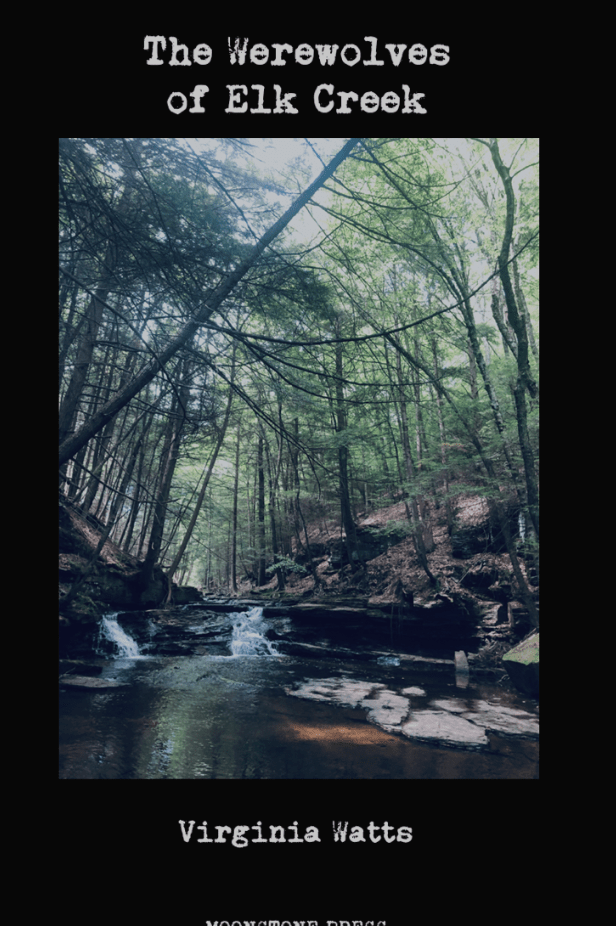
Virginia Watts has been fortunate to have published nearly 100 pieces in literary magazines including CRAFT, The Florida Review, Reed Magazine, Pithead Chapel, Permafrost Magazine, Broadkill Review, Two Thirds North, Hawaii Pacific Review, Sky Island Journal, Eastern Iowa Review, Evening Star Review and Streetlight Magazine. Nominated four times for a Pushcart Prize and four times for Best of the Net, in 2019, Watts won The Florida Review Meek Award in nonfiction.
And I bring them up today because when I was thinking about writing this blog post, I was also thinking about all the other blog posts I had to write today, which has turned out to be at least 4, plus the social media to go with it. It reminded me of this Kinks’ classic:
Give it a listen because: The Kinks.
And so that you get the tune, which is important to this post.
My blogging and posting activity made me think of this song because it aligns with my thoughts: She posts it here; she posts it there: on Instagram, and everywhere! She will just keep posting ’till her fingertips go numb ’cause she’s a dedicated marketer of books. Oh yes she is! Oh yes she is! Oh yes she is! Oh yes she is!
Sing it with me.
Are you posting here, and there?
I hope you don’t mind if I remind you of the three Ps of posting: personality, process, and product. You want to sell your books, but you have to find people who know about your book: people in Poughkeepsie, Peoria, and Portland. Have you thought of it that way? Imagine a 25 mile readius (hah! Gotcha! Radius!) around you: that’s probably where people are going to know you enough to buy your book. Imagine your social tree: your family, your friends, friends of your family, and friends of your friends, your co-workers, and your fellow attendees at church or hobbies or etc. Of those people, how many will buy a book? Of the people who buy it, how many will read it? How good is your elevator pitch to tell people about it? How “clean” is your book in terms of proofreading, editing, font choice and size, plot holes? And if you do not live in Poughkeepsie, Peoria, or Portland, how will anyone who does find out about your book and become intersted in it?
With my deepest apologies, you have to post. You have to blog. You blog the most about you, the human, you blog next about the process and proceedures of you, the writer, and lastly you make an open, not subtle, appeal on your product: “You will enjoy this book because….”
Let’s imagine a 30 day grid.
Luckily, with most websites, and certainly with WordPress, you can post them all on the same day if you like, and schedule them to go out.
Friends, if you are unknown, there is no other way to get your book out there. There is no other way.
Most of us are doing the, “La la la la I can’t hear you!” thing when I say this. But, tell me, how else does that reader in Peoria find you?
I interacted with a young author the other day whose horror novel won some book award. I asked her, “Have you posted that on the FB horror reading groups?”
“No,” she replied to me in the women’s writers group. “Those groups are fake, so I don’t waste my time.”
They most certianly are not fake, and if you’re writing horror, you oughta be on them. If you’re writing poetry or short form, are you looking for groups where people are reading those books? And the people in the women’s writers group are not buying her book, because they want to sell their book, not buy hers, but all of them are pitching to the wrong damn audience.
I am so very sorry to need to be the one who tells you Santa ain’t real.
In my experience coaching and attempting to help so many authors, from the ones I taught in college to the ones in that womens’ group, to the ones I publish in Instant Noodles, and on up, authors spend their free time writing their next book or story or poem, and then work their jobs, interact with their families, have some down time, etc. But small business owners never stop. They ask you to buy their newest T-shirt, or their revolutionary toilet paper, or come into their small shop, every single day, and they work overtime if they need to, to get it done.
If you’re a hobbiest writer, enjoy! If you want to go pro… you need to put in the practice hours, which, for this, are posting.
So sing it with me!
I post it here; I post it there: on Instagram, and everywhere! I promise I’ll keep posting ’till my fingertips go numb ’cause I’m a dedicated author of my books. Oh yes I is! Oh yes I is! Oh yes I is! Oh yes I is! And nothing can stop me, and my blog will not go mum ’cause I’m a dedicted author of my books. ‘Cause I’m a dedicted author of my books. ‘Cause I’m a dedicted author of my books!!! Ba-da-da!
April is National Poetry Month, which makes it a great time to enjoy the beauty and power of words! Whether you love poetry or are just starting to explore it, reading a poem each day is a wonderful way to celebrate the art of the poem.
Why Read a Poem a Day?
Poetry helps us express feelings, tell stories, and learn new words. Reading one poem a day can:
Improve Reading Skills – Poems use creative language that helps build vocabulary and understanding.
Inspire Creativity – Poetry makes us think in new ways and see the world differently.
Help You Relax – The rhythm and emotions in poetry can be calming and enjoyable.
Grow Empathy – Poems share different experiences and feelings, helping us understand others better.
Easy Ways to Add Poetry to Your Day
Start Your Morning with a Poem – Read a short poem to begin your day with inspiration.
Read Poetry with Friends and Family – Share a poem out loud and talk about it together.
Use Online Poetry Resources – Websites like Poets.org and Poetry Foundation offer daily poems.
Write About What You Read – Keep a journal to jot down thoughts or even try writing your own poems!
Poets and other resources to Check Out
If you’re not sure where to start, here are some poets you might enjoy:
Classic Poets: Emily Dickinson, Dorothy Parker, Langston Hughes, Elizabeth Bishop
Modern Poets: Amanda Gorman, Mary Oliver, Ellen Bass, Jericho Brown, Ada Limón
Poets from Around the World: Pablo Neruda, Rupi Kaur, Wisława Szymborska, Rainer Maria Rilke
National Poetry Month is the perfect time to enjoy poetry. Challenge yourself to read a poem each day, share your favorites, or even try writing your own! Celebrate the power of poetry—one poem at a time.
What’s your favorite poem? Share it in the comments below!












 OLD SCRATCH PRESS