Compiling My Collection

Clearly the owner of that journal is not doing a good job of compiling her collection because on her journal is a slice of orange she is attempting to dry out, three crystals, and a paintbrush. The book is open and written in with a pencil, not good for preserving writing as (being a teacher for one-zillions years I can tell you) pencil smudges overtime to become indecipherable. She’s also got a pile of vintage mail (definitely older and already been mailed to her, to someone), which is deliciously tantalizing, and reading is much easier and more fun than writing.

Who is this mess of a woman? That’s a stock photo, but it could easily be my desk, with a few dozen highlighters and yesterday’s coffee added to the milieu.

It’s difficult for me to have a clean desk, no lie there. It’s difficult for me to spend time cleaning my desk, and not because I am not a neat person, but because I push my own things back. In fact, though I think of myself as a generally nice and “in a good mood” sort of person, I can get snappy when I feel tooo squeezed out.

I feel thin, sort of stretched, like butter scraped over too much bread.

JRR Tolkien, The Fellowship of the Ring (The Lord of the Rings, #1)

What a great bit of writing that is!

So I have made the bold assertion that I will publish my collection of poetry through Old Scratch Press in 2026. There. I said it to the group, and now I said it to you. I swear I’m gonna do it. I am going to occasionally clean my desk, and push in some room to get my collection together by pushing other things back (other things probably being sleep! Ha!). I just took on a new tutoring student, a few pro bono editing projects (my daughter’s school has a non-profit component to it, and I donated some editing to the auction, and it got bought!), a half dozen or so sample edits, in addition to the regular amount of edits, which is many hundreds of pages per month, and I signed up for a singing course with a friend, have a relative needing assistance for cancer treatments, a teen in need of a lot of “staying on track” help with school work and she is also involved in some theater projects her dad or I need to be the transportation for (and, in general, making sure she eats, remembers her glasses, etc.), and a business to run and a home and family, in addition to trying to squeeze in a daily run. I would love to run well enough to participate in a 5K, and I have been thinking of joining a thing in my neighborhood where I could get a running trainer. Of all of those things I am doing there is nothing I do not want to be doing, except for wishing my relative didn’t have cancer, of course. One friend had told me recently she was stepping back from a project, and I had anticipated it about four months earlier, actually, and I completely get it. My relative, who is staying with me this week and last for her treatments, woke up today and told me she is spending the last few days she needs to be local for her tests at a friend’s because she needs a change of scenery. I had expected that too, and I had prepared a to-go coffee for her before she woke up. However I have a HS friend on FB who is every bit as engaged in politics as I am, and worried about the general state of what we see as the slide into authoritarianism, and another HS classmate said to him, “We liked it better when you just wrote about your kids and scouting. You don’t have a lot of chapters (she actually wrote chapters!) left; don’t waste them on this.” and I could not agree less. Age, chapter of life, has nothing to do with wanting to accomplish things and caring about things outside of ourselves, so, no, I do not think he should stop fighting the good fight. Yet I feel that I do have an understanding that we literally cannot do it all, and don’t want to, and I respect it, and think it is a good thing, and I flatter myself that I am especially good at reading the room, and can see when change is coming. But, I’m not good at, “No.” I’m not good at giving up on something I’ve begun, even if it does not realize my own dream. It’s an obstacle because in order to publish one of my many projects, I assumed I would have to come up with a good, firm, “No.” And I simply can’t. So I have decided instead to come up with a good, slightly quavering, “Yes.” I’m outing myself that I am going to put my damn book out. I am saying it, and affirming it, and treating it, as much as possible, as a done deal. I think if I normalize it, the way I normalize all the other things, I will simply do it because it has a due-date, or a do-date. Both!

And so, here is my question to you:

If you have been writing short stories, short non-fiction, flash, poetry, for some time now (I’m not going to say I’ve been writing for decades, but at least since the synth-pop craze and the resurgence of skinny ties (the best kind of ties)), how do you choose what to include, and what to leave behind, resting, forever lost in a permanent dream state in the “my writing” file on your desktop? Though the synth-pop craze wasn’t what I would describe as a serious time in the world, I was a serious writer; I took myself very seriously, and I think that “me” has somehow stuck around, and I judge that writing to be more profound, when in reality for pretty much all of us our early writing is awful. I remember writing a poem laden with love and portent that was about a page long and contained only the word “baby” written over and over again in different combinations with possessive pronouns and a few sappy adjectives. Songs, when sung, can add meaning through cadence, tone, etc., but, with that “baby” experiment I learned that mere words on a page cannot do that. It was a piece of absolute dreck. I do not regret deleting it!

So, those old pieces hold special meaning for me, but most are not very good (I confess I still think some of them are genius!), and almost all are not even remotely relevant to who I am now. Though I am still a whiny liberal with a moral bent, and that still is there, even in the new pieces.

And this is it, my one chance to publish my poetry, to put it out there in the world. When I was in my MA and MFA programs I knew who the “it” poets were in the world of poets who published, and I wanted to join them, to earn their respect. And as I tried I very much felt borne farther away from them. Primarily by life circumstances and that inability to say no, that pushing back of my own things, more than anything else. And that very much was a tell (an inadvertent behavior or mannerism that betrays) that I didn’t belong among them. Writers who are successful (and success looks different for a poet than a novelist, or self-help book author, etc.) almost all have a modicum of selfishness that allows them to push things away that don’t serve them, and also leads them to self-preserve. They’re not going to be dumb enough to share their “baby” poem with their thesis advisor. Selfishness belongs on the seven deadly sins list, IMHO. But success almost needs it, like a plant needs water, to survive.

So, for better or for worse, committing a deadly sin or not, I am going to get this thing done as if it is not even my thing, so I will not be being selfish; I will simply be doing another job on the list.

But, again, I have this question: if you could put together a collection of your writing (or publish one of your novels, if you write long-form) how do you choose? How do you group? How do you look back over your body of work and say, “This goes; this doesn’t?” And if you could have your book published next year, what would you want on your cover, and why? While working with OSP one thing that has continually surprised me is that the authors seem to know what the cover needs to be. How in the heck….?

So, what about you? Would you know? I’m super curious to hear! Drop me a comment below!

🙂 Dianne

The Art of Storytelling: New Perspectives on Old Fairy Tales

By Nadja Maril

Perhaps it was the illustrations that captivated me when I’d pour through the fairytale books, the dragons and the princesses with long gowns and tresses, but of all the picture books in my room when I was a young child, I liked the fairytales the best.

I can still remember many of those books, the way they looked with their ornate borders and their detailed portraits of the handsome Puss N’ Boots or the angry face of Rumpelstiltskin as he stamps hard enough to crash through a floor and into oblivion. Styles evolve and change, and the animated images of the Walt Disney studios who’ve popularized many fairy tales by converting them into cartoon movies, don’t have the same depth of detail as those old illustrations. I love the old woodcut and color plate illustrations, but many contemporary artists add new magic and perspective to an old story.  When you read a fairytale or any story for that matter, the possibilities for elaboration are endless.

“Happily Ever After” isn’t always the case in some of the Hans Christian Anderson Tales, such as “The Red Shoes” and “The Little Mermaid.”  But as fairy tales have been told and retold so many times, multiple versions circulate. Children today probably have no idea that the original “Little Mermaid” is a tragic story of desire and loss. The little mermaid was unable to permanently become a human. Her attempts at transformation cause her to lose her life as a mermaid. What remains, is her hope that one day she’ll become part of the eternal universe.

In the hands of the Disney writing team, however, “The Little Mermaid,” became a story about family conflict, friendship, love, and fulfillment. The result is a story with a happy ending.

What story would you like to write?

But that’s okay, because fairy tales are part of our oral tradition and why not use the familiar tropes from our childhood as building blocks to create new stories or retell old ones. I think it is important to remember and learn from what went before. However, the stories of our lives keep evolving. So, what story would you like to tell?

To get you started, I’m sharing the work of several writers who were and still are inspired by fairy tales.

Many poetry enthusiasts will probably be familiar with the poem “Goblin Market “by Victorian era British poet Christina Rossetti(1830-1894). It utilizes the folklore of goblins to set the scene with lines like these:

"Pricking up her golden head:
"We must not look at goblin men
We must not buy their fruits:
Who knows upon what soil they fed
Their hungry thirsty roots?”
“Come buy,” call the goblins
Hobbling down the glen."

To read the entire poem and learn more about Christina Rossetti, click here.

Another writer, Anne Sexton (1928-1974) took fairy tales as a launching point to reimagine social norms.

American poet Anne Sexton is considered a pivotal figure in the confessional poetry movement that emerged in the mid-20th century. Her work holds nothing back as it shares her personal struggles. Themes she explores include: mental illness, sexuality, and the complexities of womanhood. Her poetry collection Transformations contains seventeen poems inspired by Grimm Fairy Tales, that include Red Riding Hood, Rapunzel and CInderella, that challenged the prevailing norms of her times. I highly recommend adding this volume of poetry, the contents of which are unavailable online, to your library.

“The Cinder Girl Burns Brightly” by Theodora Goss is a different take on the Cinderella fairytale, told in poetry. Hungarian American author Theodora Goss (1968–) is a prolific author of novels, short stories, poetry and essays, and more of her work can be accessed at this link.

And finally I share a short story by American writer Michael Cunningham, famous for his novel The Hours, this little story, Wild Swan is inspired by the Hans Christian Anderson fairytale “The Wild Swans.” Brilliantly he takes the premise of the original story and creates an alternate re-telling set in modern times that focuses on one of the enchanted princes.

Need a writing prompt? Just read a favorite fairytale and think about how you’d like to retell it differently or take just one character or element and spin it into a poem or story.

Thank you for reading. Please sign up to follow Old Scratch Press here on WordPress and on Facebook.

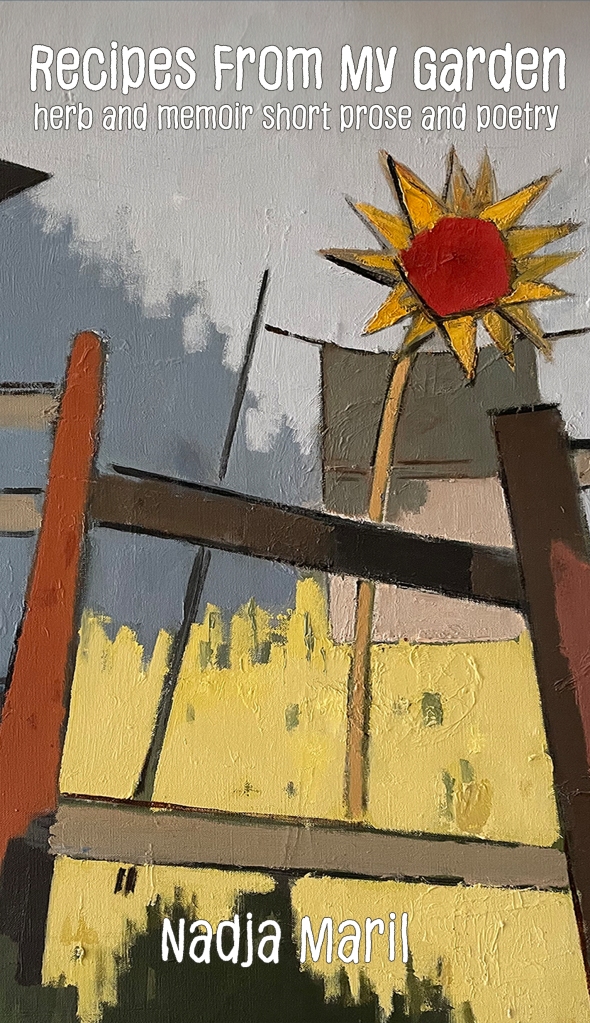
Nadja Maril is an award winning writer and poet who has been published in dozens of online and print literary journals and anthologies including: Lunch Ticket, Spry Literary Journal, Invisible City Literary Review, Instant Noodles and The Journal of Compressed Creative Arts. She is the author of Recipes From My Garden, published by Old Scratch Press (September 2024), a Midwest Review California Book Watch Reviewer's Choice. An Anne Arundel County Arts Council Literary Arts Award winner, her work has been nominated for the Pushcart Prize and The Best of the Net. She has an MFA in creative writing from Stonecoast at USM. 


Look Over Here!

Sitting on a bench sharing a coffee with old friends in a little northern Pennsylvania village, I saw it for myself. How much poetry in public places matters, even there, in remote mountains, where only about a hundred people reside year-round. Dangling from the willing arms of trees, laminated cards with phrases from poems or short poems that captivated both young and old. Children read them to each other aloud. Adults stopped on their morning walk to pause, read, reflect, nod, sigh or smile. Even some hard to please teenagers stopped their bike tires to read. What I didn’t expect to feel is how much it meant to them and to me. Poetry matters, folks. It matters big time. All writing matters. The Arts make all the difference in the world. 

            This little town is reflecting other larger movements to display poetry in outdoor places from around the world. Many people have heard of the Poetry in Motion initiative launched 1992 by the NYC Metropolitan Transportation Authority and the Poetry Society of America to bring poetry to millions of harried and stressed commuters. Poetry was displayed is subway cars and digital screens in stations. Each poem was accompanied by artwork. By 2002, 150 poems had been shared from all over the world, spanning the centuries. The poems reached out and met people in their own busy lives and enriched them. Readers reported looking forward to a new poem. They would snap pictures and send them to their friends. The world was different, changed and better.

            The Poetry in Motion Initiative was relaunched in 2012 under MTA Arts and Design. You can visit their website to read poems and learn of upcoming programs. Over 30 other US cities launched similar initiatives in the wake of Poetry in Motion including Philadelphia, LA, Nashville, San Francisco and Providence. Public poetry has popped up in many other places such as cafes, libraries, playgrounds and picnic tables in seven national parks thanks to Ada Limon our 24th Poet Laureate who championed the idea of transforming picnic tables into public art by including a historic poem with some connection to the park. 

            There is also a Facebook page “The Poetry in Public Places Project” that encourages everyone, you and me, to display poetry outdoors. You can visit this page to enjoy creative and inspiring ideas. For example, from Hoboken, NJ, a photo of a box of poetry where people are invited to TAKE ONE, yard signs from the Mercer County Library System, a poem painted on a breakwater in Milwaukee. 

             I wondered what poems went first in the NYC Poetry in Motion. There were four of them. “Crossing Brooklyn Ferry” by Walt Whitman, “When You Are Old” by William Butler Yeats, “Let There Be New Flowering” by Lucille Clinton and one of my favorites. Enjoy this poem and cheers to more poetry in the open air and hope!

—Ginny


“Hope” is the thing with feathers

“Hope” is the thing with feathers –
That perches in the soul –
And sings the tune without the words –
And never stops – at all –
And sweetest – in the Gale – is heard –
And sore must be the storm –
That could abash the little Bird
That kept so many warm –
I’ve heard it in the chillest land –
And on the strangest Sea –
Yet – never – in Extremity,
It asked a crumb – of me.

                                                                Emily Dickinson


If the New York Subway System asked you for a poem, what would you write?


Virginia Watts has been fortunate to have published nearly 100 pieces in literary magazines including CRAFT, The Florida Review, Reed Magazine, Pithead Chapel, Permafrost Magazine, Broadkill Review, Two Thirds North, Hawaii Pacific Review, Sky Island Journal, Eastern Iowa Review, Evening Star Review and Streetlight Magazine. Nominated four times for a Pushcart Prize and four times for Best of the Net, in 2019, Watts won The Florida Review Meek Award in nonfiction.

Virginia’s new book is now available from Old Scratch Press:

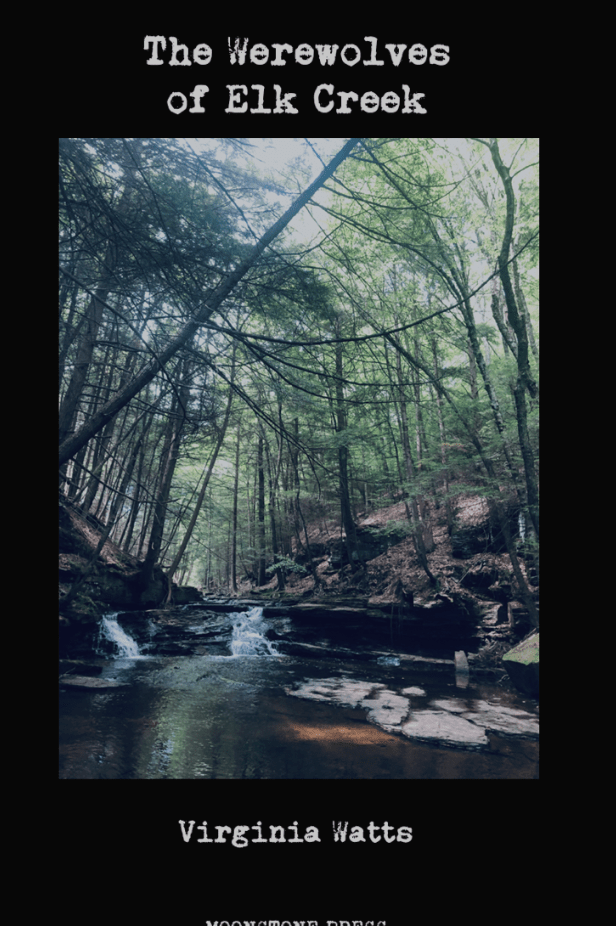
Her prior poetry chapbooks Shot Full of Holes and The Werewolves of Elk Creek 

 are available from Moonstone Press. And her debut short story collection Echoes from the Hocker House is not to be missed!

Like a blot from the blue: Are you reading your work?

Recently Robert Fleming was nice enough to get Old Scratch Press booked on Like a blot from the blue. Robert Fleming, Gabby Gilliam, Anthony Doyle, Alan Bern, Virginia (Ginny) Watts, and I showed up. I gave a little information on Old Scratch Press; Gabby gave some information Instant Noodles, and Anthony and Ginny read from their new books. Being there and presenting to an international audience was a fantastic opportunity for us, and the folks there were great.

What I liked even more were the other people who showed up.

I’m going to guess that there were about 30 people who showed up who were not us, one of whom was Fin Hall, the blot-in-chief. It was clear that many of these folks had been attending regularly for quite some time. One at a time, in turn, based on when they signed up, Fin called on each person, and the author read 1-3 poems, depending on length.

When I was in my twenties and thirties, which, sadly, I am not any more, I used to read at LIP (live, in person) open mics all the time, and I would often have to hang in until midnight to get my chance. Usually these were held in bars in Philadelphia, or in West Chester, Pennsylvania. I did my best to dress as “punk rock” as possible, and my general aim, if I’m honest, was to get laid. It’s frankly shocking how few times that happened, when that was clearly my intent. I usually had on a mini skirt and was showing cleavage, but, in truth, people who knew me then told me then, and will reiterate the very same thing today, that me punked-out and showing cleavage was, somehow, still giving Julie Andrews when what I was going for was Grace Slick. Ah well.

In any case, the thrill of reading, and the thrill of possibly getting lucky, and the location (always bars) also meant that, in all likelihood, by the time they got to me on the sign-up list, I was hella drunk. I was a smoker (Benson and Hedges 100s back then), but because I was also a poser: at those events I came with a pack of Dunhill Blue.

Waaaay too expensive to smoke all the time, but on open mic nights I always stopped at the news agent’s (Philadelphia had news agents!) to get a pack beforehand.

A few times/year the venues would ask me to be the featured reader, and I think that was because I was also volunteering with a little Zine called Magic Bullet (run by Andrew Craig, wherever he is today), which I had quite a few publications in, and, who knows, maybe I was good.

I was working my way through an MA and then an MFA from my twenties into my thirties, and my professors seemed to think I was good, as well, and I won the student awards each year, so maybe. When I read at the school events I was not drunk, but neither was I nervous, perhaps because my professors made me feel gifted.

And then, sometime around the end of my last degree, life took a turn. My very long relationship went very south. Another relationship pooped too quickly, and flamed out just as fast, and I remember I felt, while I was still prolific as a poet, that I had somehow lost at life. I wanted, you see, to become a published poet and a professor, and a spouse, and a parent, and I wanted all four things to work out perfectly, and just none of them did.

My life, then, became a series of edits. If it didn’t work to have the man with the red hair, then cut him from the piece, and write in another man, one with cheap beer on his lips. It was so time-consuming to send out work, one poem here, and one there, through the mail, keeping track of where it went, and keeping a lookout for the SASE to bring it back, and seeing if it was in decent enough condition to be mailed back out again, and I remember for awhile I was printing on onion skin to save money (who knows what that is?), and digging up the two dollars or eight quarters to send the piece of onion skin back out, and waiting for the SASE again to return, and each time writing a letter of introduction, sometimes including letters of introduction from my professors who were consistently and kindly encouraging. I remember two of them, who seemed to think my writing was the bee’s knees, were flummoxed that my poems weren’t getting entry, but maybe the long narrative style went out with Wordsworth. And life became more about driving from 9-5 job to college job to relationship, to moving out, to moving over there, to trying again, to keep on trying, to being, frankly, trying.

Little by little, returned SASE by SASE, edited dream by edited dream, the writing dribbled to a stop. Drip, drip, dr—

It was so quiet in my head.

Well, in the poetry part of my head at least.

And a decade and a half ran through my fingers.

And then I started writing again. Not only poetry, and not the plays I wrote in my twenties, but fiction, and memoir, which is, I guess, what this is.

I found myself in a place where the place, the locale, was so small and local, it felt small enough that I dared to go to a reading again.

But over the intervening years something just awful seemed to have happened. When I showed up to read at the open mics, even when I went with friends, I could not make it through a single poem without devolving into tears. And maybe there’s a reason for this shocking behavior, and maybe there isn’t, but it seems as inevitable to me as hair going grey, and as unavoidable as the red dot from a sniper’s gun in one of those movies with snipers.

And yet, at the simple evening with Blot from the blue I felt encouraged. The readers were great, and seemed normal (for the most part… I mean, poets, right?), and kindly, and on Zoom my head is no bigger than a Cerignola olive, so I am going to say I felt safe. I think it would be quite okay to join in, and I asked him later, and Fin said yes, folks can join. And folks could mean me, or you.

So what the hell, let’s try it!

Find out about Blot here.

And use this email to express interest likeablotfromtheblue@gmail.com.

And if you show up, be a goooood listener first, and a good reader second.

I’m not much of a drinker these days, so if I show up it will probably be very sober, and there hasn’t been any nicotine in these lungs for a long spell. I will, however, be caffeinated. And that’s at least something. The poem I am thinking of reading has some sound effects in it, which is probably ill-advised. But after I read, and make whatever sort of a fool of myself I am destined to be, I can write a new poem: Pearce With Her Pants Fallen Down.

Nadja often finishes her posts with a writing prompt, so here is me, stealing that excellent idea:

Think of an “edit” you made in your own life, by choice or by force. How did it work out for you?

Or

Have you ever read at an open mic? Write a flash memoir piece describing your experience.

Thanks for reading!

Dianne

Final Two Meet and Greets for New Members

Are you a flash fiction, poetry, or short memoir writer with a finished manuscript—or one nearly ready to go? Old Scratch Press, a collaborative collective supported by Current Words Publishing, is now accepting applications for two new members to join us in 2026.

We’re a tight-knit, skill-sharing group that publishes each other’s books, runs the lit mag Instant Noodles, and supports each other with editing, design, marketing, and community.

We are hosting meet and greets on August 6th and August 13. To be invited you have to send a small sample. There are no fees to submit, and there are no fees to join, and there are no fees to publish your collection. There are no fees. Who else you gonna find to collaborate with who dedicates an entire issue of a literary magazine to that most magical of elixirs… gravy?
If you’re eager to grow as a writer and be part of something creative and weird and wonderful, we’d love to meet you.

👉 Apply with a sample here:
https://duotrope.com/duosuma/submit/form.aspx?id=6idG3Mj-O0jFm-15Y7r2p

Spots are limited. Let’s make good things together.

Poetry in the Scroll: How Social Media is Reimagining the Poem

Poetry has always moved with the times, and it is about time for me to drag myself along with it. From verses passed down orally to broadsides nailed to doors, from hand-sewn chapbooks to poems read over the radio, the form has never been fixed. Now, in the digital age, poetry has found a new home in the scroll.

And by scroll, I mean the swipe of a finger across a screen. On platforms like Instagram and TikTok, a younger generation is shaping how poetry is written, read, and shared. But this isn’t just for the under-30 crowd. If you insist on thinking this way, you may well get left behind. More and more poets of all ages are exploring these platforms—not to go viral, but to connect in quiet, and sometimes beautiful ways. And if you’re a poet who’s been writing for decades, or just starting out later in life, there’s a place for you in this unfolding form. (Even if that means asking your children, or grandchildren, for help—which they might then turn around and use for content on Instagram or TikTok later).

This is not about abandoning your favorite notebook or legal pad. It’s about discovering what the poem becomes when the “page” can move, speak, and shimmer.

What’s Happening in Poetry Right Now?

Social media poetry isn’t a trend—it’s a growing corner of the literary landscape. Here’s how the form is evolving, and why it might just inspire something new in you.

1. Short and striking poems are thriving

Poems written for screens are often brief—just a few lines that catch the eye and echo in the mind. In many ways, it’s a return to the epigram, the haiku, or the Dickinsonian lyric. These poems are intimate and distilled. Think of them as poems meant to be read in the space between moments—waiting in line, sipping coffee, catching your breath.

2. Poems paired with image and rhythm

Instagram poetry often appears one line at a time across a series of images, like flipping through a visual journal. Some use soft colors or textured backgrounds. Others feature the poet’s handwriting, scrawled on a napkin or journal page. On TikTok, many poets read their work aloud over quiet imagery—footsteps on a forest trail, candlelight flickering, steam rising from a teacup.

It’s not performative. It’s present. The screen becomes a small stage for the inner voice.

3. It’s not about perfection—it’s about presence

You don’t need to be tech-savvy or camera-ready (well, it helps, or, again, you can ask your kids) And, you don’t even need to post anything publicly. For many writers, playing with these tools becomes part of the creative process. Recording yourself reading a poem on your phone, overlaying it on a favorite photo, or sharing it with a few close friends—these are all meaningful ways to engage with your own voice.

How You Might Try It

Here are a few gentle ways to dip your toe into the scroll-space:

  • Take a short poem you love—or one of your own. Try formatting it so that each line stands on its own. How does it feel to see each phrase alone, framed by white space?
  • Record a reading. Use your phone’s voice memo app to record yourself reading your poem aloud. Don’t worry about background noise or perfect delivery. Sometimes the quiet rustle of real life is part of the music.
  • Use a free design tool. Sites like Canva.com let you pair text with images. Choose a background—an old photo, a sunset, a textured piece of fabric—and overlay your poem.
  • Share it—or don’t. You might post it on social media, email it to a friend, or simply keep it in a folder. The act of making something new is what matters.

As for me, let me just say I am a SLOW work in progress. Good luck to all of us over age 60 and remember to think of moving our creative work onto social media as just another way to flex our creative muscles, have fun, and play!

Ellis Elliott

Founding Member, Old Scratch Press
Bewilderness Writing
Bewildernesswriting.com

Submitters Beware

There has been much in the news within literary circles lately about literary journals with questionable practices, mostly focused upon submission fees and how these fees are used. No one should question the idea that it is expensive to run a literary magazine with such costs as editing and overhead, and most importantly, not everything about submission fees should be seen as negative. It is possible that when writers must pay a nominal fee to submit their work to literary magazines, they may be inspired to submit a more edited and stronger piece. However, it’s one thing to pay $3.00 to one journal to submit but let’s face it, most writers must submit the same piece to many magazines if they want to increase their chance of having it published. This is why submission fees can really add up. There is also the idea that if submission fees are charged, less submissions will come in and this will lead to faster publication decisions by editors. Like it or not, it does seem that submission fees are here to stay. If we accept that fact, then we must understand some realities about submission fees.

I am not going to name names here, but some well know literary journals have been engaging in practices that are shameful. It’s hard enough and expensive enough to be a writer trying to get work published in literary journals without these bad actors but, unfortunately, they do exist. One well known journal accepted submissions and charged for over a year but had already stopped reading and publishing new word. They later folded and changed their name. I have personally submitted to journals several times only to realize they had gone defunct. I was never able to get my submission fees back. Recently, several well-known journals held contests, charged the high submission fees customary in literary contests, and never announced any winners. Suffice it to say that just because something calls itself a literary journal doesn’t mean it should. 

So, what is a writer to do? How can we protect ourselves from unethical practices and scam journals? Here are some practical ideas to consider.

  1. Is the journal listed on reputable databases such as Poets and Writers, Submittable, NewPages.com, Clifford Gastang Literary Magazine Rankings, MLA International Bibliography, JSTOR
  2. Is the journal’s website polished, free of grammatical and spelling errors. Is it easy to navigate? Does is look professional? A poor website design might be a cause for concern.
  3. Do their publication terms comply with normal industry standards. Publication guidelines should always be clear and concise and include all requirements such as formatting parameters. 
  4. Be very concerned if a journal is asking for all rights to your work. They should be asking only for first serial rights. 
  5. RED FLAG: Is their submission fee unreasonably high? Are they charging $15.00 as an example when most journals are at $3.00. This should worry you.
  6. Do they explain why they are charging a submission fee of any amount?
  7. If they do charge submissions fees, do they also have yearly contests where they offer a monetary prize?
  8. It should never be difficult to find contact information on the journal’s website, and there should be some explanation of who the editors are and what their editorial process is. A journal should have a physical address and an email address.
  9. Look at their publication history. Have they been publishing consistently? Can you purchase copies of the journal on their website? Look at the most recent issue. Look at the quality.
  10. If the journal has a blog on their website, is it being maintained? 
  11. Does the journal submit work to contests such as Pushcart Prize or/and O. Henry Awards?
  12. Do they have a social media presence such as Facebook where they regularly promote the work they publish?
  13. Be aware of any unrealistic or boastful claims about readership. 
  14. If you are submitting to a contest, look to see if the list of winners from last year’s contest is listed on the journal’s website. It should be.
  15. Be aware if a journal repeatedly pushes back contest deadlines. 

I have been submitting to literary journals for many years and have been lucky to have some level of success. Be aware of where you are sending your writing, but don’t let a few bad apples dissuade you from submitting to literary journals!!! The overwhelming majority are ethical to a fault and the writing world would be lost without literary journals. They are an invaluable part of our art form. I read literary journals, subscribe to them, admire them immensely and thank them for all the wonderful writing they bring to the world. So, happy submitting to my fellow writers and the best of luck to you all!

~Ginny

Virginia Watts has been fortunate to have published nearly 100 pieces in literary magazines including CRAFT, The Florida Review, Reed Magazine, Pithead Chapel, Permafrost Magazine, Broadkill Review, Two Thirds North, Hawaii Pacific Review, Sky Island Journal, Eastern Iowa Review, Evening Star Review and Streetlight Magazine. Nominated four times for a Pushcart Prize and four times for Best of the Net, in 2019, Watts won The Florida Review Meek Award in nonfiction.

Virginia’s new book is now available from Old Scratch Press:

Her prior poetry chapbooks Shot Full of Holes and The Werewolves of Elk Creek 

 are available from Moonstone Press. And her debut short story collection Echoes from the Hocker House is not to be missed!

It’s Awkward

That’s a photo of my local Trader Joe’s, where I was yesterday buying dog treats and ice cream and flowers and frozen gnocchi. I like Trader Joes. I like it because it is small, and what I mean by small is there are limited choices. I can easily super-overload a cart because I am curious… Ooo, what’s that fruit? I should buy six of those! I like Trader Joe’s because it saves me from that. BUT, I hate checking out there. I HATE IT. Why? It challenges all the introvert things about me. Their checkers are trained? told? naturally? forced to be? chatty!

I am horrible at small talk. I am awkward, and dorky. And I am exhausted afterwards (mentally). I am more a fan of self-checkout, but I do feel like I’m taking someone’s job every time I use one. I long for the A&P days, where the checker was (usually) a woman, and she was too tired on her feet to talk, though she’d smile, and be efficient.

Yesterday the TJ’s was fairly empty, so there was no need for a bagger at my check-out, and I always will bag, but the extra person helps diffuse the awkwardness, because then there’s two people to make annoying small talk with. Usually I end up pulling out my phone to show them a photo of my dog, and they pretend to care. My dog is extra cute though, but I still know we’re all pretending.

Oliver… The Trader Joe’s display photo.

Yesterday the guy checking me out was trying to talk to me, and I was rapidly bagging (I bring huge bags, and try to organize by FREEZER, FRIDGE, PANTRY, but I’ll get desperate to keep up and be done talking, and just start chucking stuff in.). He was trying to talk, but his heart wasn’t in it, and neither was mine because, that checker, he kinda looked like this:

He looked quite a bit like that photo, which is a photo of my brother circa 1978 or so.

That TJs checker looked so much like my brother. A little taller, but otherwise spot on, and I have been checked out by him before, but yesterday it was the light or something, or the quiet between us. I know people not in California think TJs are tripping hazards here, and they’re not. They’re usually a good 20-40 minutes apart, so I kinda wish this guy would get another job. You know what I’m saying? Because there isn’t another TJs close by, and because that checker looks like my brother circa 1978.

My brother died in 2020, in June or July I don’t really want to remember the date. I found out he was dying hours before he did. He was up in a hospital in PA while I was two hours south in DE. Covid was raging, so they were not going to let us come see him. He didn’t have Covid, He had gangrene, probably from a bladder infection he had never fully recovered from, and he didn’t like doctors because they made him feel mortal and dumb, and he hadn’t gone to one for about five months while everything in his body was probably going bananas, and when Covid hit he was really afraid of dying from it, and probably feeling pretty sick most days anyway. My sister-in-law didn’t force him to do anything about it, probably because he was grumpy, and she is an avoider, and they both were potheads and pill heads and whatever when they could get it. They both had a tendency to approach family gatherings with something in their systems to take the edge off of my mother, and, I sometimes think, maybe that is the best way to approach her. Maybe I missed something great about coping there. Which makes me laugh to think of, and would have made my brother laugh his butt off.

My brother was very funny. He raised me to love George Carlin and The Three Stooges. One of the times he most liked in our history together was when he was visiting us in Los Angeles, and I got us all singing narcissistic songs. You take any song that is about romance/lust, etc. and you turn it into a song about yourself. So, Gladys Knight’s classic, “Best Thing That Ever Happened to Me” becomes [I’M the] “Best Thing That Every Happened to Me.” Divinyls’ “I Touch Myself” becomes [When I think about ME] “I Touch Myself.” Get it? We laughed our butts off, and he always talked about it, and we often tried to recreate it, but sometimes with humor the success is situational (you had to be there), and that perfect night was like that. And maybe he was a little high too, and I didn’t know it.

You can’t recreate those perfect moments in life, and trying often leaves you cold. My brother was a great practitioner of trying to recreate the things he loved, trying to hold onto vapor.

Here is his band in the early ’70s:

Bill is in the front right.

So cute. And here they are in the late 2010s:

Bill is in the front left.

Bill is gone, but the ones who are still here are still playing together at the bars local to Ridley Park, Pennsylvania. Most of those guys, living and dead, never got their shit quite all the way together. They could always play, and play well, but they were still partying like the Rolling Stones circa 1968. And maybe still being able to get out there and rock the house is a sort of having it together that’s just a bit different from how I would define it.

I miss my brother, and it’s awkward to have a checker at TJs remind me of him so completely that it renders me unable to make small talk or even flash the photo of my dog. My brother had a lope-y way of walking not unlike Shaggy in Scooby Doo, and this guy moves like that. It’s awkward because grief is awkward and comes casually loping up behind you at the most unexpected times. Someone told me grief is a metal ball in the glass jar of your life, and as you move away from the time of your loss the jar gets bigger, but the ball is permanently there, and rolls around, bumping up against everything, sometimes quietly, sometimes banging the glass hard enough that you think it will crack. Poetry is a very helpful receptacle for grief. I think poetry works well because it is often short, and emotional, and vague, not pinning grief down to a specific grief style or emotion or reason. Poetry might move the ball away from the glass, or give you a little breathing room when your lungs have constricted so much you feel like your ribs have laced up extra tight around them. My favorite brother poem has long been this one, and was so even before my brother winked so quickly out of existence.

But today I found another one. It loosens up the tight ribs too, if by loosening them you mean jabbing an ice pick in there. But ice pick or not, it does what it’s supposed to do, connects you directly to the pain, so you can feel it, instead of dodging it all the time. Then you can move on with your life, even as the brother you miss cannot move on with his, which feels supremely unfair to me, and I really value being fair, so there’s that. But for that day, that moment, at least, you can get back to what you were doing that you are doing because your life is still going. This poem is by William E. Stafford, and is called “Brother.”

We’re so lucky The Poetry Foundation exists, and has this database of poems just waiting to tend to our needs.

If someone gave you some paper, scissors, glue, rocks, crayons, clay, wire, papier-mâché, bowling balls, aluminum foil, fabric scraps, paint, sea glass, what would you create? What would your sculpture of grief look like? What medium would you use? What shape would you make? If you were only allowed eight words, one for each day in a week and one extra just in case, what words would you write? How would you arrange them? Would they be poetry, lyrics, a string of obscenities lobbed at the world, or a short burst of prose? Would they be quiet, loud, or snap, crackle, and pop? And would you want them to tighten up your ribs, or let them loose? Could you share it with the world or would it be too awkward for prime time?

Some of us come to that hard, clinking, lurking ball-bearing version of grief mercifully later in life than others. The less time you have to carry it the better: it means you had a longer shot at joy. But it finds us all eventually. I think that when we’re younger we grieve for ourselves: all the things we haven’t put into place yet that we long for, all the things we want to be that we just haven’t attained. As we get older, from any point in space because we all live at our own pace, we grieve more for others, and our missed opportunities to be with them. But Bill was. He lived. I had a brother.

Independent Reading

Are you finding it difficult to get into the holiday spirit this Independence Day? Artists have been exploring the concepts of freedom and independence through their art for ages. While fireworks light up the sky and flags wave proudly on July 4th, it’s also the perfect time to spark something else: a love of reading. Independence Day is about more than history—it’s about the ideals that shape our country: freedom, courage, justice, and hope. What better way to explore these themes than through reading?

Whether you’re holiday plans include relaxing at the beach, enjoying a backyard BBQ, or cooling off indoors, there are many ways you can bring some great reading with you.

Art can remind us where we came from, challenge us to think critically about the present, and inspire us to shape a better future.

Here is a poem by Langston Hughes that explores how he felt about America.

Or you might try an Abecedarian by Varsha Saraiya-Shah.

And if you want to stir your patriotism and spark some hope, try this poem by Carlos Bulosan.

This July 4th, don’t just celebrate with fireworks—celebrate with a poem or story.

If you’re a writer, there are some places looking for work on American themes.

WWPH is looking for American themed haiku. Submissions run through July 6.

Gnashing Teeth publishing is also looking for American themed poems, but their submissions close today, so you’ll have to write fast!

Missed the deadline? No problem! You can still enjoy reading their selections tomorrow!