Thank you for reading. Please sign up to follow us on Facebook and to follow us here on WordPress to expand your knowledge about poetry and short form writing as well as to receive the latest news about publication opportunities.
When I was in school studying writing, I had some just lovely, encouraging professors. One of them was Christopher Buckley.
Chris was always telling me other poets I reminded him of. One of those was Charles Simic, and another was Diane Wakowski. Chris was so wonderful, in fact, that he had studied with Diane, and he helped me organize for her to come and do a reading on campus, from Michigan to West Chester, Pennsylvania. It was a little bit strange, meeting Diane, because I had imagined her to be like if Twiggy and Patti Smith were merged into a single person who wrote kick-ass poetry. In reality she was a tiny thing, and a little prickly around the edges. I was star-struck and shy. I had read (lord knows how, as we didn’t have the internet, maybe in one of her poems) that she was a huge fan of freshwater pearls, and I bought a necklace and bracelet to give to her. She didn’t open the gift in my presence, and I never heard from her to hear if she liked them. But, in my very young mind, I thought she was everything I wanted to be: full-time professor, writing poetry all the time, and just generally badass, which, I guess, included being a little prickly and unfriendly. As introverted as I am, I am also a people-pleaser, so though I don’t want to talk in situations where I don’t know everyone, I do talk, because I am worried about not being nice enough to everyone else. And then I am exhausted after. Maybe Diane had already learned the art of taking care of herself. She was born the year after my dad, so she was well into middle-age when I met her.
The book I have pictured at the start of this post is the one that made me love her: The Motorcycle Betrayal Poems. I mean, she got on motorcycles. My sister (younger than me by 8 years) once had a motorcycle boyfriend, in fact he was a sweet guy, and we’re all still friends with him, and he once let me climb on behind him so that he could drive me around Sea Isle City on his motorcycle. But, to stay on behind a rider, you have to hold on to the rider’s body, and Reuel (the boyfriend) was incredibly fit and hot, like Brad Pitt in Thelma and Louise hot. I felt so afraid of falling off and dying and so wrong for gripping onto his body for dear life that I cut the ride short. Diane would not have cut the ride short even if it was with her sister’s hot boyfriend. Diane has always seemed to me like a woman who knows who she is and what she wants, and gets what she wants. She might have been the Taylor Swift of the 1970s, because to date her, and to break up with her, was to have a vicious poem written about you.
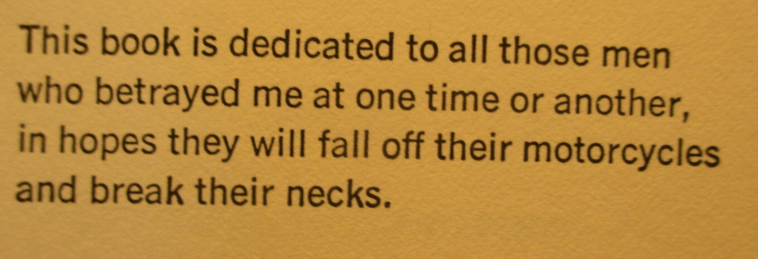
Dedication in the original The Motorcycle Betrayal Poems
At that point in my life I thought I had all possibilities ahead of me, as young optimistic people do. I thought I could become a thin woman who rode on the back of motorcycles and penned vicious poems about love. Diane also seemed… horny, which, raised by a very Methodist mother who got pregnant as a teenager, I was not allowed to be, so that seemed very flash and exciting to me too.
Honestly, you may think it silly yo say, because poetry is just poems, no big deal, but being a poet was such a monumental thing to me that I’m still trying to give myself permission to do it. Permission Diane never seemed to need, but Dianne definitely needs, to this very day.
If Diane was a sort of a hero, but not the warmest or nicest hero, why bring her up to you? Why not just let her, and her work, slide into obscurity?
I think because she is an unapologetic woman; she is who she is, lusty, strong, angry, successful (even if success did mean getting stuck in Michigan!), and felt no need to be mushy with a grad student who idolized her. No grad students have idolized me, but I expect it could be annoying as well as nice.
I told my sister last week that we’ve lost two Diane’s this year, Keaton and Ladd, both single Ns, unlike my double. Wakowski is up there, and also a single N. I don’t know if I can lose another one this year, so I hope she’s not on a motorcycle these days. And, then again, I kinda hope she is.
“She digs her teeth into the slaveries of woman, she cries them aloud with such fulminating energy that the chains begin to melt of themselves. Reaching into the hive of her angers, she plucks out images of fear and delight that are transparent yet loaded with the darknesses of life. Diane Wakoski is an important and moving poet.”–The New York Times
In 1971, Diane Wakoski published The Motorcycle Betrayal Poems to tremendous acclaim. Relevant, moving–at times shocking–it is Wakoski’s honesty and bravery as an artist that continues to astonish, delight, inspire, and liberate readers.
Wakoski responds to betrayal in a variety of ways including fantasies such as drilling bullet holes into the bodies of unfaithful lovers. But even her anger can be winking, as in the book’s sly dedication to “all those men who betrayed me at one time or another, in hopes they will fall off their motorcycles and break their necks.”
“The Bouquet”
“I Have Had to Learn to Live with My Face”
Have you heard of Diane Wakowski? What do you think of her? If you found any links to video of her, send it this way!
Words. They fascinate me, the way some words like dust can have two very different meanings. You dust the house, removing small particles of dirt and cobwebs. You dust the cake with confectioner’s sugar making it sweet.
The word weather has two opposite meanings as a verb. The new wood shingles on the house will look better when they weather and turn a soft natural gray. Or used differently you could write, When the next hurricane arrives, I’m not sure if we can weather the storm. As a noun, the meaning of weather is constant. The noun describes meteorological conditions. Nice fall weather we’re having.
Applying Word Meanings to Getting Published
Every Monday when I read the updated lists of publishing opportunities in literary magazines, I read theme call-outs that generally consist of one word. Write to the theme, they ask, but sometimes that word can be open to wide interpretation. However, that’s the job of a creative writer; to put our own perspective into our poems and stories.
I read the word dirt and I might picture a pile of soil or imagine filth within a house or think instead of scandalous information about a crooked politician. Playing in the dirt making mudpies can be a joyful experience for a child whereas cleaning away mounds of accumulated filth a tedious chore. The diverse interpretations of how we interpret words can be what makes a collection of writing interesting.
The diverse interpretations of how we interpret words can be what makes a collection of writing interesting.
So, I was surprised when a friend told me their spouse had purchased my new book (Recipes From My Garden; herb and memoir short prose and poetry) and with the cold weather coming, they were planning on trying out some of my recipes.
i’d written a book of prose poems and memoir and my friend thought I’d just published a cookbook!
How Word Choice for Your Title Affects Marketing
Recipes. Yes, the word can mean instructions on food preparation, ie try my recipe for chicken soup, but it can also mean a way or approach to doing things. You might say I’ve got the recipe for a successful children’s birthday party, one adult for every child. Or on the opposite end of the spectrum, you might hear about a class trip to the amusement park with no parent chaperones and say, That’s a recipe for disaster.
I thought I was being clever when I chose the title to my little chapbook. I imagined that readers seeing the words memoir, prose, and poetry would understand the book’s double meaning. It does contain a few actual recipes and many references to food and kitchen gardens, but primarily I was thinking of the word recipe as a way or approach of doing things. As memoir, the usage becomes personal. As a poet, I’m sharing how I see the world, starting specifically with what is accessible to me: the sunflowers, tomatoes, a walk on the beach.
The good news for me is if there is any doubt, the silver lining is people do talk about what they read and like. But if you are new to thie site and you are just reading about my chapbook for the very first time, I also have a book trailer. My talented publishers were able to use some of the video my husband took of our giant sunflowers along with old family photographs and more recent ones to create a wonderful book trailer. You can watch by clicking on the link: https://youtu.be/HxmwOx3-_QY
And going with the theme of the multiple meanings of words, here is a word WRITING PROMPT
To get you started I have chosen a few ambiguous words: long, cleave, bar, and duck. Select a word, choose a meaning, and start writing a scene. Take the word and use it with an alternate meaning. How many different ways can you use the same word and shade the meaning in different ways? Try using the word in a poem and play with the multiple meanings. Have fun.
Thank You for reading! To read more of my work sign up for FREE to follow me on WordPress, Substack or Medium and visit my website at www.Nadjamaril.com.
Don’r forget to follow Old Scratch Press on Facebook and on WordPress.
Published by Nadja Maril
Nadja Maril’s prose and poetry has been published in literary magazines that include Change Seven, Lunch Ticket, Thin Air, and The Compressed Journal of Creative Arts. She is the author of Recipes From My Garden, a chapbook published by Old Scratch Press that includes both poetry and creative nonfiction prose. Author of two children’s books illustrated with paintings by her father Herman Maril, as well as Who IS Santa? for which she did her own illustrations, Nadja is also the author of two reference books on antique American Lighting, published by Schiffer. A former journalist and magazine editor, Nadja has an MFA in Creative Writing from the Stonecoast Program at the University of Southern Maine. To read more of her work and follow her weekly blog posts, visit Nadjamaril.com https://nadjamaril.com/ View more posts
Steps Toward Your First Acceptance in a Literary Journal
To my fellow writers out there, I began submitting prose and eventually poetry to literary magazines in 2014. Since that time, I have been published over a hundred times. How did I do it? I learned the ropes and never gave up. More importantly, I never wrote for the purpose of being published. It’s an honor, a wonderful feeling, to have a piece accepted, but in the end of the day, the real joy for me as it is for most writers, is the creative process. Publishing is a very small piece of this magical puzzle. Even so, as writers, most of us would like our work to be read so here are some tips I learned along the way.
Present your best work always. If you have written something, set it aside for some time and return to it later for perspective. ALWAYS have feedback through a professional writing group. One or two friends reading your work will not do. You need professional critique and then you must listen and learn to edit accordingly. None of us can judge our own writing. We simply cannot. Don’t let your ego get in the way of your success.
Prepare a third-person biography. Include information like your location, your publications if you have some, your social media handles and website. If you have not been published, simply say nothing about that or mention that this would be a debut publication. Don’t try to be funny or clever. Be professional.
Prepare a cover letter and keep it simple and professional as well. Address the editor by name if you can. Start with something like: I appreciate the opportunity to submit my fiction story titled “Wind Warp” of 4900 words. Follow with your biography. End by thanking the editor for considering your work. That’s it.
Make a list of journals where your work appears to be a fit as you prepare to submit your work. This will mean reading some of the work the journals have accepted in the past. Lucky for us, many journals are online now or have some excerpts online. Consult resources by Erika Krouse or Clifford Garstang for a ranking of literary journals.
At first, I tried to select mostly smaller, well-respected journals for the bulk of my submissions. Once I got some traction, I aimed higher. If you can find a local journal that limits submissions to local writers, even better. One example of this is Philadelphia Stories, a journal that only publishes writers who are living in or originally from Pennsylvania, Delaware or New Jersey. A smaller pool helps your odds. There is nothing wrong with submitting to a new journal either. In fact, I recommend it. New journals need our support.
I would send a piece to at least twenty journals to start with and see how it goes.
Use standard manuscript format 12-point font Times New Roman. Double Space prose. Single Space poetry. And don’t forget page numbers.
Be encouraged if editors write you a personal note about enjoying your work even though it was not accepted or asking you to submit more work in the future or telling you that you made it to the final cut. All of these are a very big deal so be happy!
You will receive a lot of rejections. I submitted for about a year and a half before I received my first acceptance. Since then, I have had times where I have been “hot” and times of drought. Don’t give up and don’t get discouraged. There are many reasons a piece is not chosen that have nothing to do with the quality of the writing. You get used to the rejections. Promise me. The way I look at it is this writing that I am submitting is what I have to offer. I’ve got nothing else! This is me. I write what comes to me and what I want to write about. Above all, I just hope to tell a good story. I give every poem or story my all. There have been stories that I never placed, and I am okay with that. Some of these did get out in the world in later collections of mine alongside published stories. Be true to yourself and what your heart wants to write about and you will be fine.
Do not follow up with inquiries about your work after it is submitted. If you don’t hear anything for a year, consider the piece unaccepted and move on.
Make sure you keep a list of all the places you submit a piece so when you do have an acceptance, you can quickly withdraw it from other journals considering your piece.
Remember too that when submitting to always follow the guidelines such as whether the journal wants to read blind or not.
Set up a Submittable account because most journals use that now for submissions although some still have their own Submission System or they accept submissions via email only.
Another good idea is to go out for dinner and some glasses of wine with fellow writers submitting their work to share your experiences. Laughter is the best medicine, and you can learn from each other.
I wish all of you the very best in your writing journey!
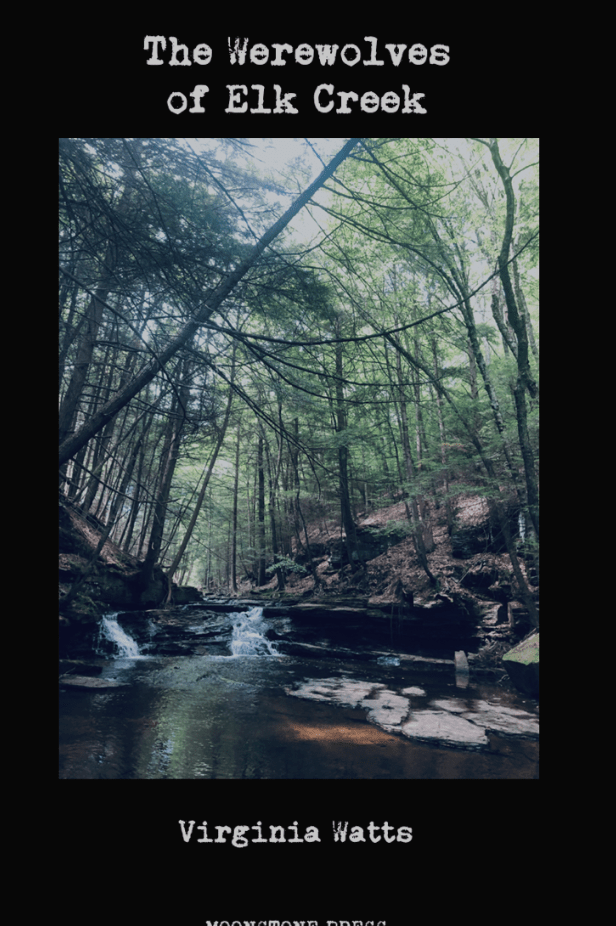
Virginia Watts is the author of poetry and stories found in The MacGuffin, Epiphany,CRAFT, The Florida Review, Reed Magazine, Pithead Chapel, Eclectica Magazine among others. She has been nominated four times for a Pushcart Prize. Her debut short story collection Echoes from the Hocker House was short listed for 2024 Eric Hoffer Grand Prize, selected as one of the Best Indie Books of 2023 by Kirkus Book Reviews, and won third place in the 2024 Feathered Quill Book Awards. Please visit her.
Virginia’s new book is now available from Old Scratch Press:
Alan Bern is more than just the author of DREAMS OF THE RETURN—he’s also one of the founding voices of Old Scratch Press, a collective born from a group of terrific writers with a deep love of traditional and hybrid poetry, prose, and art. As a retired children’s librarian and cofounder (with Robert Woods) of the fine-press publisher Lines & Faces, Alan has long pursued the merging of word, image, and place.
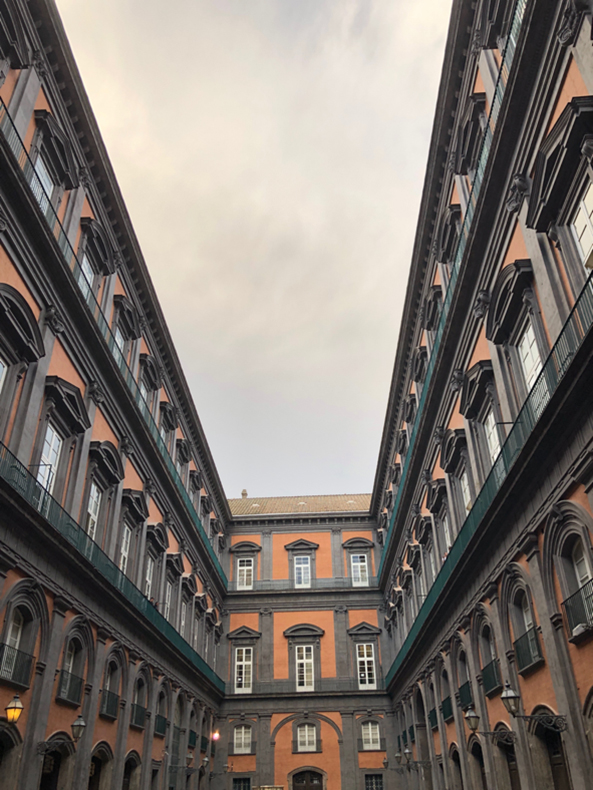
In DREAMS OF THE RETURN, he turns his lens to Italy—in particular the South—bringing to life landscapes both storied and luminous through his own photographs and through classic Italian poetry, delivered both in its original form and in his own translations. The journey is lyrical, immersive: it’s not merely a travel guide, but a portrait of longing, place, memory, and beauty.
And that’s something Alan does beautifully—his artistry weaves together what he’s done throughout his life: poetry, prose, photography, memoir, all fueled by a love for Italy. Within the OSP community, he is known for “photo-poems,” a daily practice in which images and language overlap, inviting the reader to travel with him across geographies and inward, into self.
In addition to poems and photographs, DREAMS OF THE RETURN also includes intimate personal essays that layer history, memory, and lived experience. In “The Good One,” for example, Alan recounts a walk through Naples’ Quartieri Spagnoli with his friend Marco. What begins as a conversation about Jewish philosopher Don Isaac Abravanel and the sacred geography of southern Italy turns into a heartbreaking encounter with a community altar for “o’ Bono”—a young man accidentally killed during a New Year’s Eve celebration. Through this story, Alan reveals how place, tragedy, resilience, and human connection are intertwined in ways both profound and ordinary.
A true perfectionist, Alan (pictured left) worked closely with his good friend, Peter Truskier, to ensure that the photos selected would sparkle in the book just like the locations did in real life.
DREAMS OF THE RETURN is, in effect, another way Alan invites us to travel: through light and verse, through time and place. It’s a book to savor—start with a wind-soft sun, ruins, olive trees and history; consume it slowly with pizza margherita and red wine; linger into the evening with the sweetness of roccoco napoletani and an espresso kissed with Sambuca. You can order a copy of your own here:
Clearly the owner of that journal is not doing a good job of compiling her collection because on her journal is a slice of orange she is attempting to dry out, three crystals, and a paintbrush. The book is open and written in with a pencil, not good for preserving writing as (being a teacher for one-zillions years I can tell you) pencil smudges overtime to become indecipherable. She’s also got a pile of vintage mail (definitely older and already been mailed to her, to someone), which is deliciously tantalizing, and reading is much easier and more fun than writing.
Who is this mess of a woman? That’s a stock photo, but it could easily be my desk, with a few dozen highlighters and yesterday’s coffee added to the milieu.
It’s difficult for me to have a clean desk, no lie there. It’s difficult for me to spend time cleaning my desk, and not because I am not a neat person, but because I push my own things back. In fact, though I think of myself as a generally nice and “in a good mood” sort of person, I can get snappy when I feel tooo squeezed out.
I feel thin, sort of stretched, like butter scraped over too much bread.
JRR Tolkien, The Fellowship of the Ring (The Lord of the Rings, #1)
What a great bit of writing that is!
So I have made the bold assertion that I will publish my collection of poetry through Old Scratch Press in 2026. There. I said it to the group, and now I said it to you. I swear I’m gonna do it. I am going to occasionally clean my desk, and push in some room to get my collection together by pushing other things back (other things probably being sleep! Ha!). I just took on a new tutoring student, a few pro bono editing projects (my daughter’s school has a non-profit component to it, and I donated some editing to the auction, and it got bought!), a half dozen or so sample edits, in addition to the regular amount of edits, which is many hundreds of pages per month, and I signed up for a singing course with a friend, have a relative needing assistance for cancer treatments, a teen in need of a lot of “staying on track” help with school work and she is also involved in some theater projects her dad or I need to be the transportation for (and, in general, making sure she eats, remembers her glasses, etc.), and a business to run and a home and family, in addition to trying to squeeze in a daily run. I would love to run well enough to participate in a 5K, and I have been thinking of joining a thing in my neighborhood where I could get a running trainer. Of all of those things I am doing there is nothing I do not want to be doing, except for wishing my relative didn’t have cancer, of course. One friend had told me recently she was stepping back from a project, and I had anticipated it about four months earlier, actually, and I completely get it. My relative, who is staying with me this week and last for her treatments, woke up today and told me she is spending the last few days she needs to be local for her tests at a friend’s because she needs a change of scenery. I had expected that too, and I had prepared a to-go coffee for her before she woke up. However I have a HS friend on FB who is every bit as engaged in politics as I am, and worried about the general state of what we see as the slide into authoritarianism, and another HS classmate said to him, “We liked it better when you just wrote about your kids and scouting. You don’t have a lot of chapters (she actually wrote chapters!) left; don’t waste them on this.” and I could not agree less. Age, chapter of life, has nothing to do with wanting to accomplish things and caring about things outside of ourselves, so, no, I do not think he should stop fighting the good fight. Yet I feel that I do have an understanding that we literally cannot do it all, and don’t want to, and I respect it, and think it is a good thing, and I flatter myself that I am especially good at reading the room, and can see when change is coming. But, I’m not good at, “No.” I’m not good at giving up on something I’ve begun, even if it does not realize my own dream. It’s an obstacle because in order to publish one of my many projects, I assumed I would have to come up with a good, firm, “No.” And I simply can’t. So I have decided instead to come up with a good, slightly quavering, “Yes.” I’m outing myself that I am going to put my damn book out. I am saying it, and affirming it, and treating it, as much as possible, as a done deal. I think if I normalize it, the way I normalize all the other things, I will simply do it because it has a due-date, or a do-date. Both!
And so, here is my question to you:
If you have been writing short stories, short non-fiction, flash, poetry, for some time now (I’m not going to say I’ve been writing for decades, but at least since the synth-pop craze and the resurgence of skinny ties (the best kind of ties)), how do you choose what to include, and what to leave behind, resting, forever lost in a permanent dream state in the “my writing” file on your desktop? Though the synth-pop craze wasn’t what I would describe as a serious time in the world, I was a serious writer; I took myself very seriously, and I think that “me” has somehow stuck around, and I judge that writing to be more profound, when in reality for pretty much all of us our early writing is awful. I remember writing a poem laden with love and portent that was about a page long and contained only the word “baby” written over and over again in different combinations with possessive pronouns and a few sappy adjectives. Songs, when sung, can add meaning through cadence, tone, etc., but, with that “baby” experiment I learned that mere words on a page cannot do that. It was a piece of absolute dreck. I do not regret deleting it!
So, those old pieces hold special meaning for me, but most are not very good (I confess I still think some of them are genius!), and almost all are not even remotely relevant to who I am now. Though I am still a whiny liberal with a moral bent, and that still is there, even in the new pieces.
And this is it, my one chance to publish my poetry, to put it out there in the world. When I was in my MA and MFA programs I knew who the “it” poets were in the world of poets who published, and I wanted to join them, to earn their respect. And as I tried I very much felt borne farther away from them. Primarily by life circumstances and that inability to say no, that pushing back of my own things, more than anything else. And that very much was a tell (an inadvertent behavior or mannerism that betrays) that I didn’t belong among them. Writers who are successful (and success looks different for a poet than a novelist, or self-help book author, etc.) almost all have a modicum of selfishness that allows them to push things away that don’t serve them, and also leads them to self-preserve. They’re not going to be dumb enough to share their “baby” poem with their thesis advisor. Selfishness belongs on the seven deadly sins list, IMHO. But success almost needs it, like a plant needs water, to survive.
So, for better or for worse, committing a deadly sin or not, I am going to get this thing done as if it is not even my thing, so I will not be being selfish; I will simply be doing another job on the list.
But, again, I have this question: if you could put together a collection of your writing (or publish one of your novels, if you write long-form) how do you choose? How do you group? How do you look back over your body of work and say, “This goes; this doesn’t?” And if you could have your book published next year, what would you want on your cover, and why? While working with OSP one thing that has continually surprised me is that the authors seem to know what the cover needs to be. How in the heck….?
So, what about you? Would you know? I’m super curious to hear! Drop me a comment below!
Sitting on a bench sharing a coffee with old friends in a little northern Pennsylvania village, I saw it for myself. How much poetry in public places matters, even there, in remote mountains, where only about a hundred people reside year-round. Dangling from the willing arms of trees, laminated cards with phrases from poems or short poems that captivated both young and old. Children read them to each other aloud. Adults stopped on their morning walk to pause, read, reflect, nod, sigh or smile. Even some hard to please teenagers stopped their bike tires to read. What I didn’t expect to feel is how much it meant to them and to me. Poetry matters, folks. It matters big time. All writing matters. The Arts make all the difference in the world.
This little town is reflecting other larger movements to display poetry in outdoor places from around the world. Many people have heard of the Poetry in Motion initiative launched 1992 by the NYC Metropolitan Transportation Authority and the Poetry Society of America to bring poetry to millions of harried and stressed commuters. Poetry was displayed is subway cars and digital screens in stations. Each poem was accompanied by artwork. By 2002, 150 poems had been shared from all over the world, spanning the centuries. The poems reached out and met people in their own busy lives and enriched them. Readers reported looking forward to a new poem. They would snap pictures and send them to their friends. The world was different, changed and better.
The Poetry in Motion Initiative was relaunched in 2012 under MTA Arts and Design. You can visit their website to read poems and learn of upcoming programs. Over 30 other US cities launched similar initiatives in the wake of Poetry in Motion including Philadelphia, LA, Nashville, San Francisco and Providence. Public poetry has popped up in many other places such as cafes, libraries, playgrounds and picnic tables in seven national parks thanks to Ada Limon our 24th Poet Laureate who championed the idea of transforming picnic tables into public art by including a historic poem with some connection to the park.
There is also a Facebook page “The Poetry in Public Places Project” that encourages everyone, you and me, to display poetry outdoors. You can visit this page to enjoy creative and inspiring ideas. For example, from Hoboken, NJ, a photo of a box of poetry where people are invited to TAKE ONE, yard signs from the Mercer County Library System, a poem painted on a breakwater in Milwaukee.
I wondered what poems went first in the NYC Poetry in Motion. There were four of them. “Crossing Brooklyn Ferry” by Walt Whitman, “When You Are Old” by William Butler Yeats, “Let There Be New Flowering” by Lucille Clinton and one of my favorites. Enjoy this poem and cheers to more poetry in the open air and hope!
—Ginny
“Hope” is the thing with feathers
“Hope” is the thing with feathers – That perches in the soul – And sings the tune without the words – And never stops – at all – And sweetest – in the Gale – is heard – And sore must be the storm – That could abash the little Bird That kept so many warm – I’ve heard it in the chillest land – And on the strangest Sea – Yet – never – in Extremity, It asked a crumb – of me.
Emily Dickinson
If the New York Subway System asked you for a poem, what would you write?
Virginia Watts has been fortunate to have published nearly 100 pieces in literary magazines including CRAFT, The Florida Review, Reed Magazine, Pithead Chapel, Permafrost Magazine, Broadkill Review, Two Thirds North, Hawaii Pacific Review, Sky Island Journal, Eastern Iowa Review, Evening Star Review and Streetlight Magazine. Nominated four times for a Pushcart Prize and four times for Best of the Net, in 2019, Watts won The Florida Review Meek Award in nonfiction.
Virginia’s new book is now available from Old Scratch Press:
Poetry has always moved with the times, and it is about time for me to drag myself along with it. From verses passed down orally to broadsides nailed to doors, from hand-sewn chapbooks to poems read over the radio, the form has never been fixed. Now, in the digital age, poetry has found a new home in the scroll.
And by scroll, I mean the swipe of a finger across a screen. On platforms like Instagram and TikTok, a younger generation is shaping how poetry is written, read, and shared. But this isn’t just for the under-30 crowd. If you insist on thinking this way, you may well get left behind. More and more poets of all ages are exploring these platforms—not to go viral, but to connect in quiet, and sometimes beautiful ways. And if you’re a poet who’s been writing for decades, or just starting out later in life, there’s a place for you in this unfolding form. (Even if that means asking your children, or grandchildren, for help—which they might then turn around and use for content on Instagram or TikTok later).
This is not about abandoning your favorite notebook or legal pad. It’s about discovering what the poem becomes when the “page” can move, speak, and shimmer.
What’s Happening in Poetry Right Now?
Social media poetry isn’t a trend—it’s a growing corner of the literary landscape. Here’s how the form is evolving, and why it might just inspire something new in you.
1. Short and striking poems are thriving
Poems written for screens are often brief—just a few lines that catch the eye and echo in the mind. In many ways, it’s a return to the epigram, the haiku, or the Dickinsonian lyric. These poems are intimate and distilled. Think of them as poems meant to be read in the space between moments—waiting in line, sipping coffee, catching your breath.
2. Poems paired with image and rhythm
Instagram poetry often appears one line at a time across a series of images, like flipping through a visual journal. Some use soft colors or textured backgrounds. Others feature the poet’s handwriting, scrawled on a napkin or journal page. On TikTok, many poets read their work aloud over quiet imagery—footsteps on a forest trail, candlelight flickering, steam rising from a teacup.
It’s not performative. It’s present. The screen becomes a small stage for the inner voice.
3. It’s not about perfection—it’s about presence
You don’t need to be tech-savvy or camera-ready (well, it helps, or, again, you can ask your kids) And, you don’t even need to post anything publicly. For many writers, playing with these tools becomes part of the creative process. Recording yourself reading a poem on your phone, overlaying it on a favorite photo, or sharing it with a few close friends—these are all meaningful ways to engage with your own voice.
How You Might Try It
Here are a few gentle ways to dip your toe into the scroll-space:
Take a short poem you love—or one of your own. Try formatting it so that each line stands on its own. How does it feel to see each phrase alone, framed by white space?
Record a reading. Use your phone’s voice memo app to record yourself reading your poem aloud. Don’t worry about background noise or perfect delivery. Sometimes the quiet rustle of real life is part of the music.
Use a free design tool. Sites like Canva.com let you pair text with images. Choose a background—an old photo, a sunset, a textured piece of fabric—and overlay your poem.
Share it—or don’t. You might post it on social media, email it to a friend, or simply keep it in a folder. The act of making something new is what matters.
As for me, let me just say I am a SLOW work in progress. Good luck to all of us over age 60 and remember to think of moving our creative work onto social media as just another way to flex our creative muscles, have fun, and play!
There has been much in the news within literary circles lately about literary journals with questionable practices, mostly focused upon submission fees and how these fees are used. No one should question the idea that it is expensive to run a literary magazine with such costs as editing and overhead, and most importantly, not everything about submission fees should be seen as negative. It is possible that when writers must pay a nominal fee to submit their work to literary magazines, they may be inspired to submit a more edited and stronger piece. However, it’s one thing to pay $3.00 to one journal to submit but let’s face it, most writers must submit the same piece to many magazines if they want to increase their chance of having it published. This is why submission fees can really add up. There is also the idea that if submission fees are charged, less submissions will come in and this will lead to faster publication decisions by editors. Like it or not, it does seem that submission fees are here to stay. If we accept that fact, then we must understand some realities about submission fees.
I am not going to name names here, but some well know literary journals have been engaging in practices that are shameful. It’s hard enough and expensive enough to be a writer trying to get work published in literary journals without these bad actors but, unfortunately, they do exist. One well known journal accepted submissions and charged for over a year but had already stopped reading and publishing new word. They later folded and changed their name. I have personally submitted to journals several times only to realize they had gone defunct. I was never able to get my submission fees back. Recently, several well-known journals held contests, charged the high submission fees customary in literary contests, and never announced any winners. Suffice it to say that just because something calls itself a literary journal doesn’t mean it should.
So, what is a writer to do? How can we protect ourselves from unethical practices and scam journals? Here are some practical ideas to consider.
Is the journal listed on reputable databases such as Poets and Writers, Submittable, NewPages.com, Clifford Gastang Literary Magazine Rankings, MLA International Bibliography, JSTOR
Is the journal’s website polished, free of grammatical and spelling errors. Is it easy to navigate? Does is look professional? A poor website design might be a cause for concern.
Do their publication terms comply with normal industry standards. Publication guidelines should always be clear and concise and include all requirements such as formatting parameters.
Be very concerned if a journal is asking for all rights to your work. They should be asking only for first serial rights.
RED FLAG: Is their submission fee unreasonably high? Are they charging $15.00 as an example when most journals are at $3.00. This should worry you.
Do they explain why they are charging a submission fee of any amount?
If they do charge submissions fees, do they also have yearly contests where they offer a monetary prize?
It should never be difficult to find contact information on the journal’s website, and there should be some explanation of who the editors are and what their editorial process is. A journal should have a physical address and an email address.
Look at their publication history. Have they been publishing consistently? Can you purchase copies of the journal on their website? Look at the most recent issue. Look at the quality.
If the journal has a blog on their website, is it being maintained?
Does the journal submit work to contests such as Pushcart Prize or/and O. Henry Awards?
Do they have a social media presence such as Facebook where they regularly promote the work they publish?
Be aware of any unrealistic or boastful claims about readership.
If you are submitting to a contest, look to see if the list of winners from last year’s contest is listed on the journal’s website. It should be.
Be aware if a journal repeatedly pushes back contest deadlines.
I have been submitting to literary journals for many years and have been lucky to have some level of success. Be aware of where you are sending your writing, but don’t let a few bad apples dissuade you from submitting to literary journals!!! The overwhelming majority are ethical to a fault and the writing world would be lost without literary journals. They are an invaluable part of our art form. I read literary journals, subscribe to them, admire them immensely and thank them for all the wonderful writing they bring to the world. So, happy submitting to my fellow writers and the best of luck to you all!
~Ginny
Virginia Watts has been fortunate to have published nearly 100 pieces in literary magazines including CRAFT, The Florida Review, Reed Magazine, Pithead Chapel, Permafrost Magazine, Broadkill Review, Two Thirds North, Hawaii Pacific Review, Sky Island Journal, Eastern Iowa Review, Evening Star Review and Streetlight Magazine. Nominated four times for a Pushcart Prize and four times for Best of the Net, in 2019, Watts won The Florida Review Meek Award in nonfiction.
Virginia’s new book is now available from Old Scratch Press: